
A property manager rarely discovers a gap in security officer skills during a quiet afternoon. The test arrives after midnight, when a resident is upset, a contractor wants access without the right authorization, a camera shows something unclear, or an alarm sounds in a part of the building nobody visits often.
A uniform and a post assignment establish presence, but they don't guarantee sound judgment. Across California offices, residential communities, retail centers, construction sites, and multi-property portfolios, reliable protection depends on how an officer communicates, uses technology, respects legal boundaries, responds under pressure, and documents what happened. Those abilities must also be supported by training, supervision, and accountability systems.
A Tuesday Night That Shows What an Officer Actually Does
At 11:40 p.m., an officer assigned to a Class A office tower in Irvine hears a muffled alarm from a sub-level area. It isn't loud enough to identify immediately, and the building is mostly empty. The officer radios dispatch, gives the location, and checks the available camera feed through the Security Operations Center before moving toward the stairwell.
The elevator would be faster, but the stairwell provides a more controlled approach and avoids putting the officer directly into an unknown situation. The camera shows a delivery vehicle near a service entrance, with one door propped open. The officer moves carefully, keeps dispatch informed, and finds a driver attempting to bring equipment through an access point that isn't authorized for the delivery.
The first decision is communication. The officer asks the driver to step away from the door, explains the access issue, and gives clear lawful directions without turning a procedural violation into a confrontation. The driver complies. The officer maintains control of the situation, follows the site's detention and notification procedures without claiming authority the role doesn't provide, and contacts the property manager.
Before the shift ends, the officer completes an incident report. It records the time, location, people involved, what the officer directly observed, the driver's explanation as an attributed statement, actions taken, notifications made, and any unresolved question about the delivery.
That short event exposes the difference between presence and professional performance. Situational awareness identified the unusual sound. Communication prevented unnecessary escalation. Legal restraint kept the response within proper boundaries. Technology gave the officer better information. Documentation allowed the manager to review the event without relying on memory.
Those are the security officer skills that matter when a situation unfolds at 2 a.m.
The Five Skill Categories Every Officer Brings to Your Property
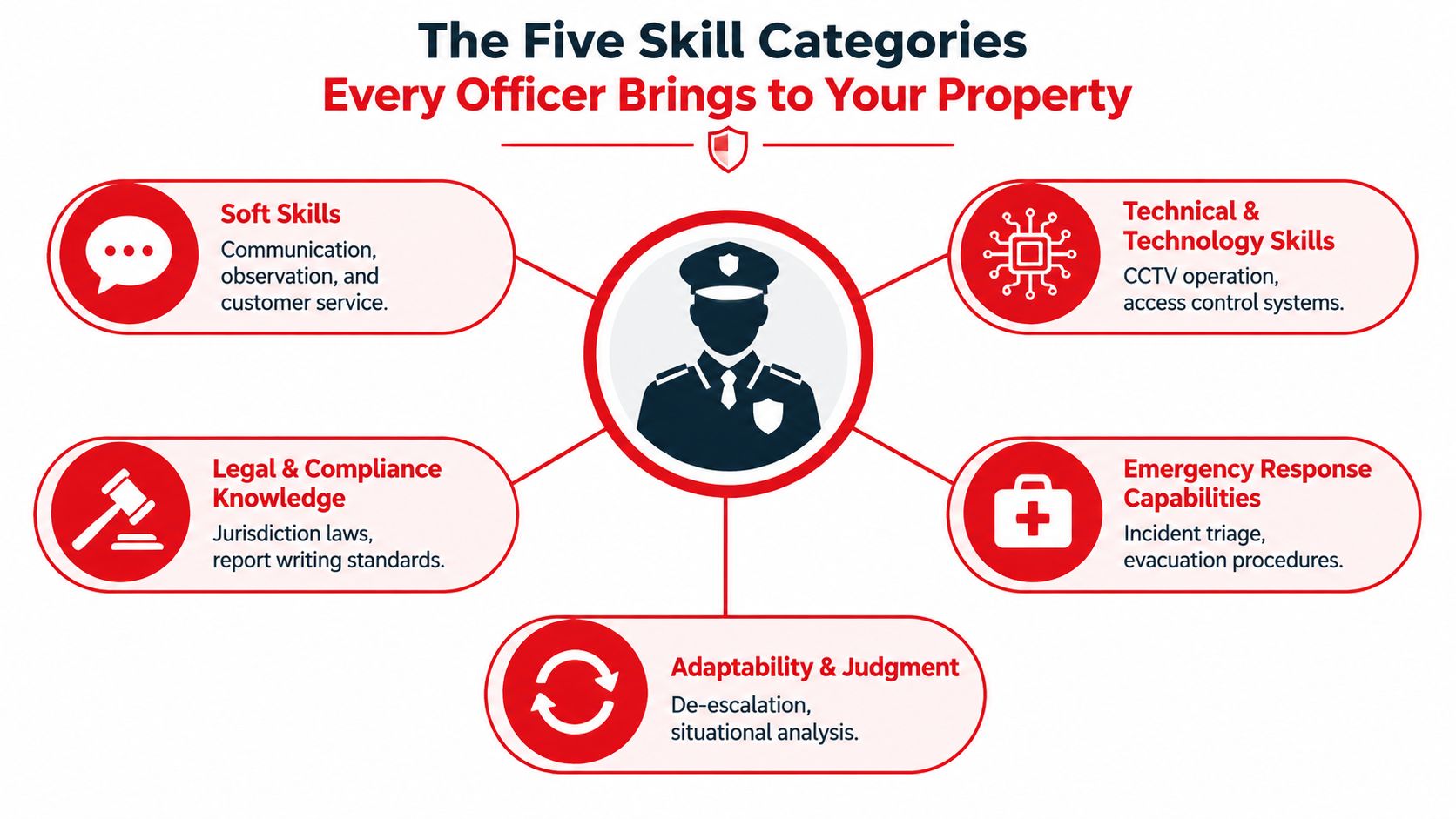
A useful evaluation model starts with five connected categories. Each describes a different part of the job, and none works well in isolation.
Soft skills
Soft skills include communication, emotional control, observation, listening, and judgment. They're the officer's voice and decision-making ability. A confused visitor may need patient directions, while an angry trespasser may require firm boundaries and deliberate pacing.
The 2021 frontline security professional competency report, which covered more than 10,000 respondents across nine countries, identified customer service, emergency response, and situational awareness as the top three duties rated at a high competence level. It also found that verbal communication and site familiarity were each rated high by 49% of respondents. Those findings support what property managers see in practice, communication and local knowledge affect nearly every interaction.
Technical and technology skills
Technical skills are the officer's eyes and reach. They include access control, CCTV operation, radio procedure, digital reporting, GPS tour tools, and familiarity with alarms and building systems.
Access control isn't a vague personal quality. The IFPO competency model states that officers must learn, understand, and apply the rules and regulations specific to the site, which is why customized post orders matter. A guard who knows the general idea of access control but doesn't understand your loading dock, visitor process, or after-hours credentials still presents a risk.
Legal and compliance knowledge
Legal knowledge is the officer's leash. It defines what the officer may do, what requires escalation, and where a well-intentioned response could become an overreach.
The Security Guard Series 0085 framework ties progression to general and specialized experience, including protection against theft, damage, accident, trespass, and threats to life. It also recognizes training in physical security procedures, local laws, and investigative techniques as relevant experience at GS-4. A professional officer understands that authority comes from law, policy, and post orders, not from confidence alone.
Emergency response capabilities
Emergency response is muscle memory. Officers need to recognize a developing problem, communicate the right facts, protect life, follow evacuation or lockdown procedures, and summon the appropriate resources.
Customer service orientation
Customer service is the officer's handshake with tenants, residents, visitors, vendors, and employees. The UK government security officer profile describes requirements such as challenging people politely but firmly, staying calm under stress, working with others, paying attention to detail, and remaining alert.
These categories must travel together. An officer with strong presence but weak report-writing discipline can fail a review, while an excellent writer who cannot calm a frustrated resident may create a larger operational problem. Even seemingly adjacent responsibilities, such as understanding how to secure loads for compliance, reinforce the same principle: reliable site protection depends on clear rules, practical judgment, and consistent execution.
What Each Skill Looks Like in Real Behavior
A résumé can claim composure, vigilance, and professionalism. A property manager needs to see those qualities in conduct. The following behaviors create a practical scoring rubric for hiring, training, and oversight.
Observable evidence on site
| Skill Category | Observable Behavior on Site | What a Manager Should See |
|---|---|---|
| Soft skills | Uses a calm tone, listens, maintains appropriate eye contact, and gives clear directions | A confused visitor receives help without being dismissed, and a frustrated person gets boundaries without needless provocation |
| Technical and technology skills | Uses correct radio etiquette, follows GPS tour requirements, and enters accurate activity or incident data | Communications are concise, patrol activity is verifiable, and digital logs match the actual sequence of events |
| Legal and compliance knowledge | Verifies identification consistently and avoids exceeding authority during a trespass or access dispute | The officer follows site rules, preserves options, and escalates to supervisors or law enforcement when appropriate |
| Emergency response capabilities | Performs drills correctly, identifies priorities, and initiates lockdown or evacuation procedures without avoidable delay | The officer knows the plan, communicates the right information, and doesn't improvise beyond training |
| Customer service orientation | Greets tenants, assists visitors, follows up on complaints, and protects the experience while enforcing policy | People receive professional treatment even when the answer is no |
The difference between a trained behavior and a personality impression matters. A friendly officer who allows unauthorized access isn't providing strong customer service. A stern officer who follows procedure but humiliates residents isn't demonstrating professional control.
Incident reporting provides another clear test. Professional reports should distinguish direct observations from assumptions, preserve chronology, identify notifications, and explain what remains unresolved. Guidance on security guard reports and client accountability emphasizes who, what, when, where, how the officer learned of the event, actions taken, and supporting evidence. GPS records, photographs, and logs can support a report, but they don't automatically prove that an officer performed quality work.
Practical rule: Score what a manager can observe, verify, and coach. Don't score confidence, appearance, or polished interview language as substitutes for performance.
For multi-site portfolios, standardized behaviors also make comparisons fairer. Managers can review response intervals, exception patterns, unresolved issues, and report quality across properties without reducing the evaluation to whether an officer merely checked in.
How to Screen for These Skills Before You Hire
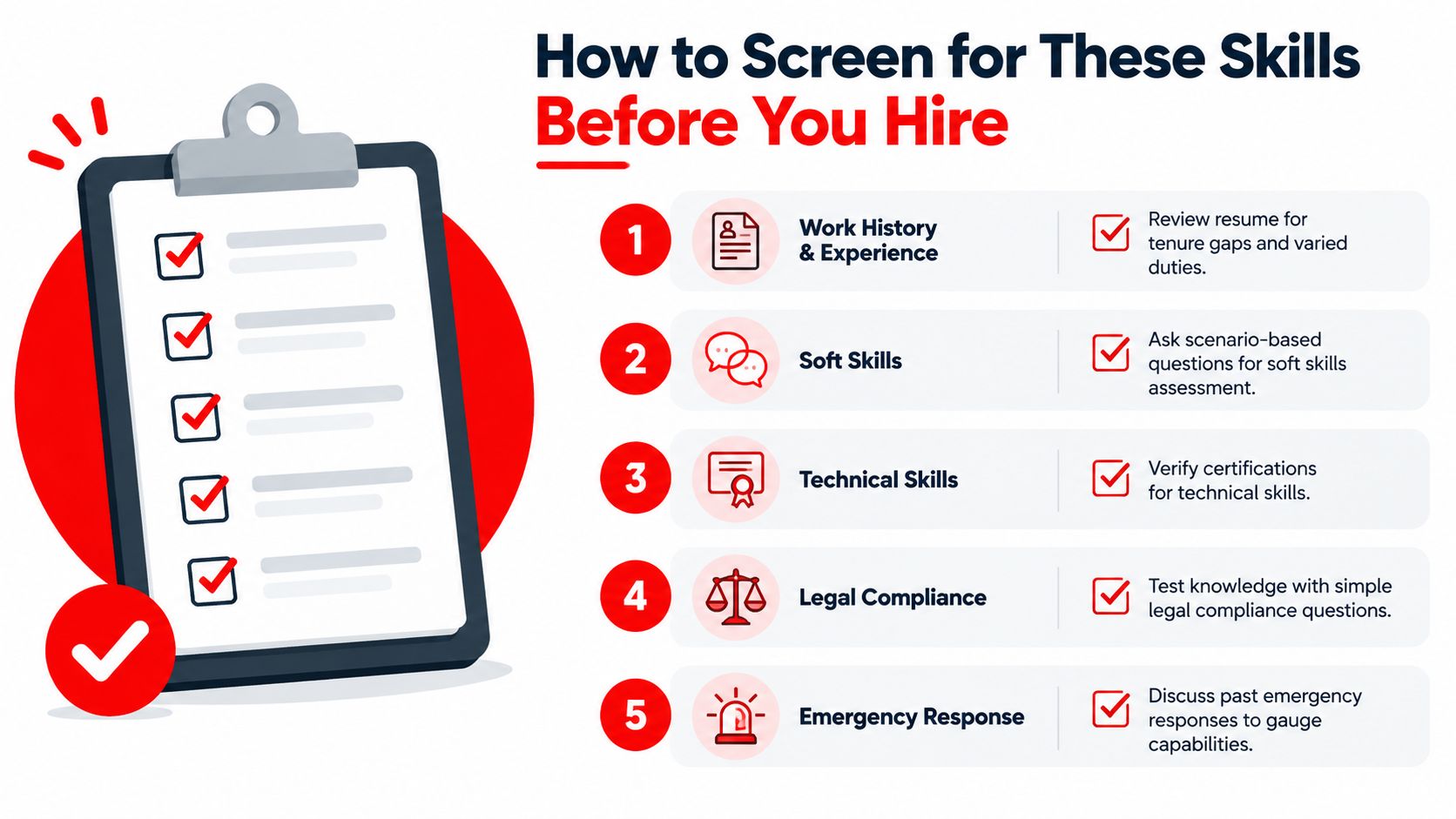
Hiring should begin with evidence, not the uniform. Review the application for tenure patterns, certification status, prior property types, and the duties the candidate performed. Someone who has worked a residential lobby, a construction site, and a retail center may have useful adaptability, but the interview must establish what they personally handled.
Behavior-based questions work better than broad prompts such as “Are you good with people?” Ask the candidate to explain a past event in sequence.
- Reconstruct an incident: “Walk me through a difficult incident minute by minute. What did you notice first, what did you say, who did you notify, and what did you document?”
- Test access-control judgment: “Tell me about a time someone refused to follow an access rule. How did you respond, and what happened next?”
- Explore escalation decisions: “When would you call law enforcement, and when would you continue handling an issue within site procedures?”
- Check observation: “Describe a time a routine patrol revealed something unusual. What details did you record?”
- Probe accountability: “What should a supervisor find in a complete incident report?”
Strong answers include facts, sequence, decisions, and ownership. They don't need to sound dramatic. A candidate who can explain a quiet, well-managed access problem often demonstrates more useful judgment than someone who only describes emergencies.
Use a competency-based approach such as the HiredBySkill assessment guide to keep questions tied to observable abilities rather than personality impressions. Review the role's actual duties with the candidate through a security guard job description before making assumptions about fit.
Red flags worth taking seriously
- Vague answers: The candidate talks about “handling things” but can't describe actions or timing.
- No examples: Every answer is hypothetical, with no evidence of prior responsibility.
- Blaming previous employers: The candidate describes every failure as someone else's fault.
- Weak post-order knowledge: The candidate can't explain how written instructions guide decisions.
- Appearance over substance: The candidate presents well but can't demonstrate report-writing or de-escalation ability.
Before commitment, use a supervised test ride or site evaluation where lawful and appropriate, complete reference checks focused on reliability, and verify credentials. Give soft-skill evidence greater weight than uniform appearance. A polished presentation matters, but it doesn't tell you how the person will behave when a resident refuses to leave a pool deck or a delivery driver challenges the loading dock rules.
Training Officers So Skills Stick Shift After Shift
A classroom can introduce a procedure. Repetition, coaching, and review make that procedure usable during a stressful shift.
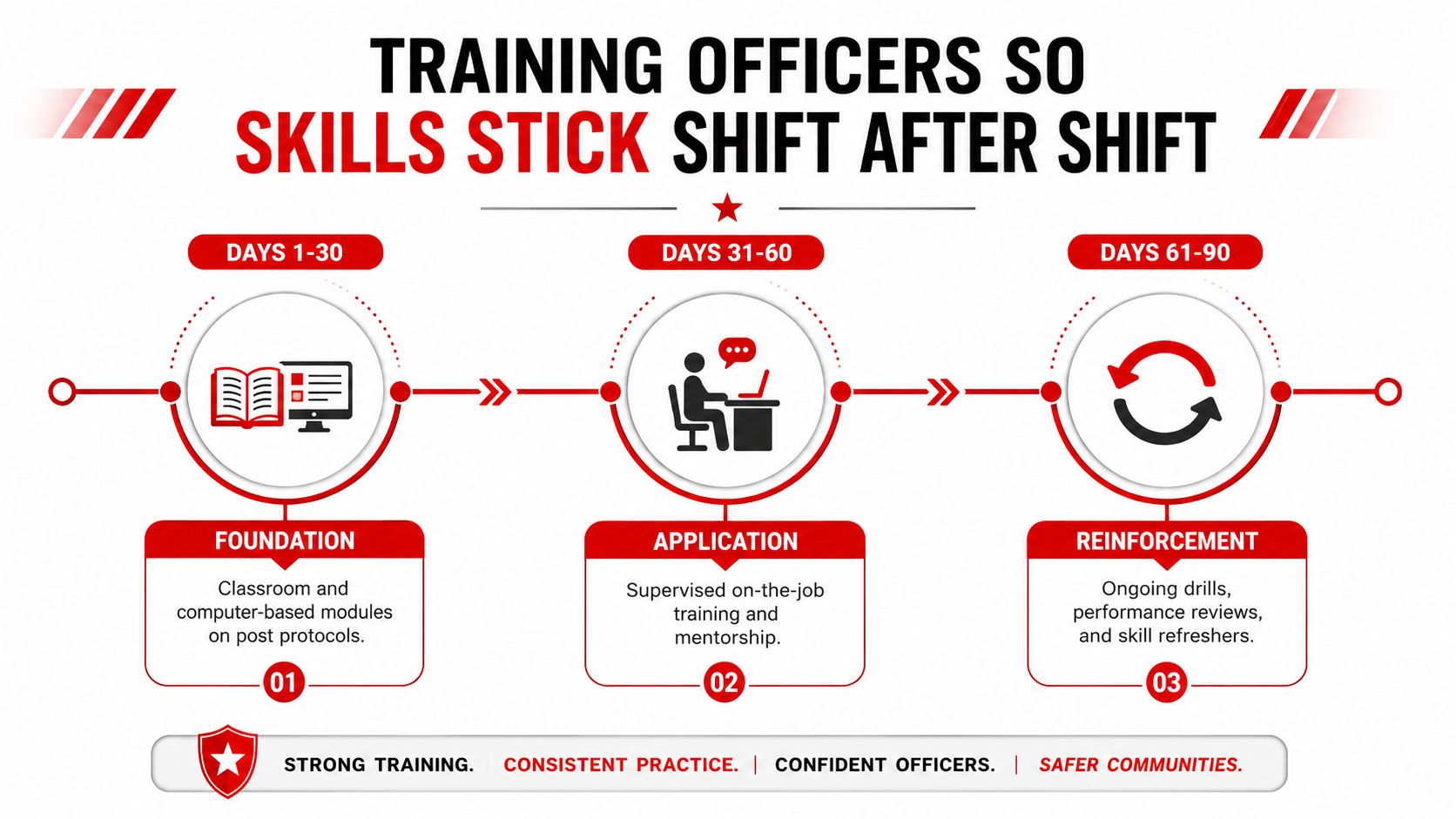
A practical onboarding path moves through foundation, application, and reinforcement. During the first phase, officers study post orders, access rules, report writing, radio procedure, emergency plans, and de-escalation through classroom and computer-based modules. Training should use the actual site, not only generic examples. An officer assigned to a San Jose medical office building needs different decision practice from one assigned to a Los Angeles construction site.
The next phase places the officer beside an experienced colleague. A senior officer can demonstrate how to greet tenants, inspect a perimeter, handle a disputed credential, use the reporting platform, and call the SOC with concise information. Mentorship exposes the small decisions that manuals usually miss, such as where to stand during a tense conversation or how to preserve a scene without blocking emergency access.
Independent post work should begin with scheduled coaching rather than immediate isolation. Supervisors can review reports, observe radio calls, and ask the officer to explain why a particular decision was made.
Reinforcement needs a rhythm
Recurring practice can include:
- Tabletop scenarios: Discuss access violations, medical calls, suspicious activity, and severe weather responses.
- Live response exercises: Practice evacuation, lockdown, fire-watch, and communications procedures under controlled conditions.
- Report reviews: Compare incident narratives against camera footage, radio traffic, and notification records.
- Supervisor observations: Use ride-alongs, randomized site visits, and post-order checks to identify drift.
- Microlearning refreshers: Send short reminders through the guard tour management system between larger training sessions.
Formal training can be substantial and role-specific. India's Security Officers and Patrol Services Competency Model states that security officers may need 250 hours of training on defined subjects, demonstrating that professional work requires operational knowledge rather than presence alone. Overton's security officer training programs are one example of a provider describing training around officer preparation and site needs.
The coaching loop should close through after-action reviews. Managers should connect lessons to actual incident reports, update post orders when conditions change, and recognize officers who handled difficult situations correctly. Training that never changes field behavior is an expense. Training reinforced through observation becomes a working capability.
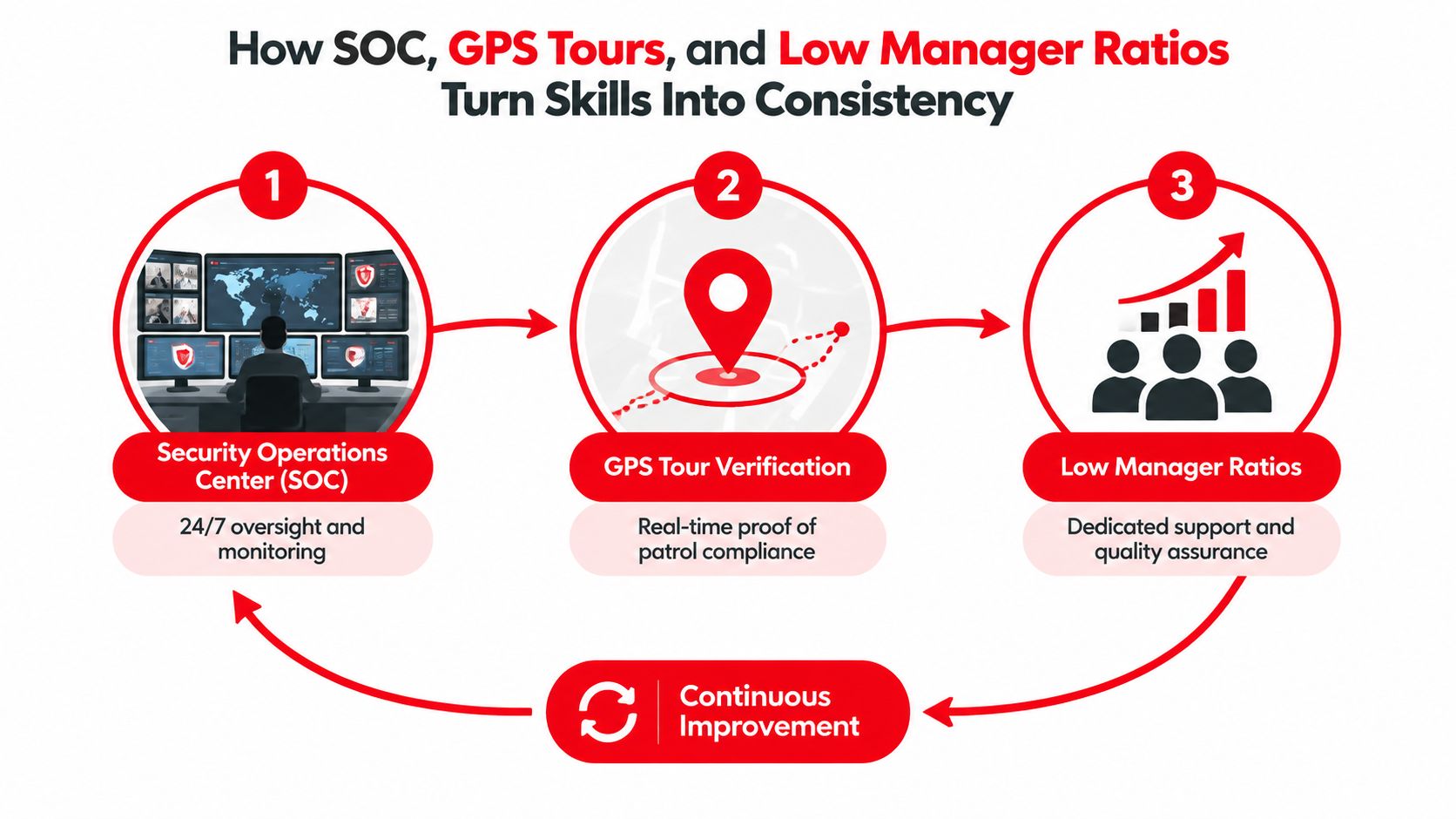
How SOC, GPS Tours, and Low Manager Ratios Turn Skills Into Consistency
An officer may know what to do, yet performance can still vary by shift, property, or supervisor. Infrastructure closes that gap by connecting the human skill to a record, a review, and a responsible manager.
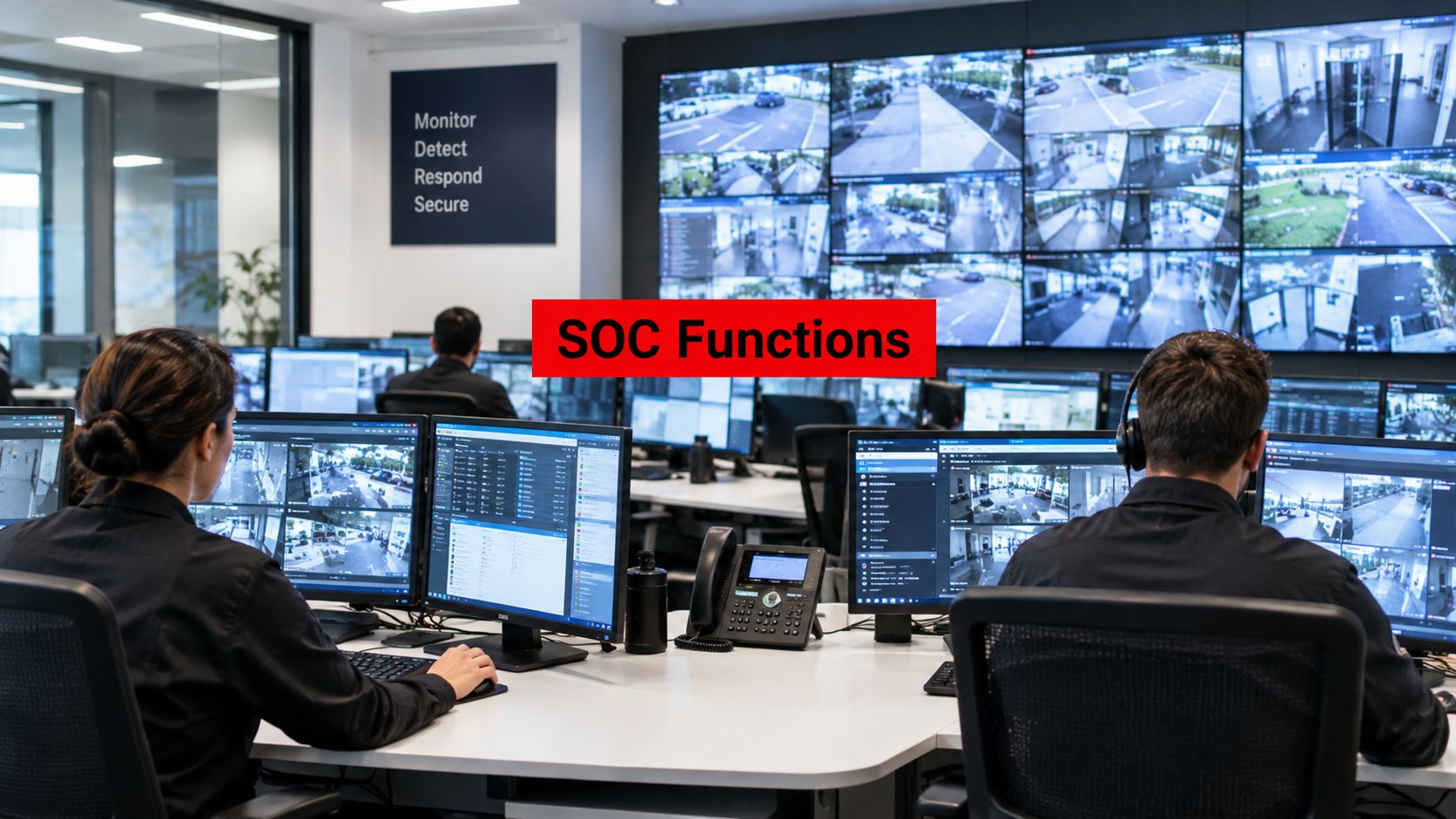
A Security Operations Center adds continuous oversight beyond the individual post. It can monitor check-ins, patrol activity, incident traffic, wellness needs, and escalation workflows. When a patrol is late or a response requires support, the SOC can identify the exception and contact the field officer before the client has to discover the problem independently.
GPS-enabled tours add a second layer. Checkpoints, timestamps, route deviations, photographs, daily activity reports, and exception records help establish what happened during a patrol. The information isn't a substitute for judgment. A completed checkpoint doesn't prove that an officer noticed a damaged gate or spoke appropriately with a resident. It does create a useful starting point for review.
The third layer is management attention. A low manager-to-client ratio allows an account manager to know the site's risks, walk the property, review patterns, and follow up with the officer and client. A dashboard may identify a missed checkpoint, but a manager must determine whether the cause was poor performance, a blocked route, a changed construction condition, or a technology issue.
Technology should support judgment
Modern officers increasingly work with cameras, access-control platforms, remote monitoring, digital reports, and escalation workflows. The 2025 ISC2 workforce study found that 95% of teams had at least one skills need, 59% reported critical or significant shortages, and AI was the top reported skill need at 41%, ahead of cloud security at 36%. Although those figures describe cybersecurity teams, they highlight a broader operational reality: technology creates value only when people can use it accurately and interpret what it shows.
The World Economic Forum reported that only 14% of organizations said they had the talent needed to meet cybersecurity objectives, while two out of three reported moderate-to-critical skills gaps in its 2025 outlook. Physical security operations aren't identical to cybersecurity, but the lesson carries across both environments. Automation can flag an anomaly, record a route, or display a camera feed. It can't replace an officer's conversation, context, restraint, or responsibility for a lawful response.
A coordinated model such as security operations center automation can connect technology oversight with human escalation. The result is more defensible service across offices in Irvine, retail properties in Long Beach, residential communities in San Diego, and multi-site portfolios throughout California.
Why Hiring for Skills Beats Hiring for Headcount
The lowest hourly rate rarely produces the lowest total cost. An under-trained officer may create a report that police can't use, mishandle an evacuation, escalate a tenant complaint, or miss a pattern that later becomes a larger property problem.
That doesn't mean every higher-priced proposal is better. It means the procurement question must move beyond coverage hours. A vendor should be able to explain who trains officers, how supervisors review performance, how post orders change, and what evidence the client receives after a patrol or incident.
A skilled officer can prevent many issues. They challenge an unauthorized person before access is gained, redirect a frustrated resident before the conversation becomes a disturbance, recognize a change in a gate or camera view, and document the event while details are fresh. Those actions may not create a dramatic headline, but they reduce uncertainty for property managers.
Evaluate proposals against practical variables:
- Training depth: Ask which courses and site-specific modules officers complete.
- Supervisor access: Review the supervisor-to-site or manager-to-client structure.
- Retention practices: Ask how the provider supports professional officers and limits avoidable turnover.
- Audit evidence: Request examples of report reviews, patrol records, and corrective action.
- Technology use: Confirm whether tools assist field judgment or merely create activity logs.
The broader skills versus degree hiring discussion offers a useful hiring principle here. For security work, demonstrated judgment and reliable behavior often matter more than a polished résumé alone.
You aren't buying hours. You're buying risk reduction, dependable response, and accountable service.
Your Next Step and a Short Site Skills Checklist
A short site review can reveal whether your current program develops the abilities your property needs. Use this checklist during vendor reviews, officer observations, and contract renewals.
Site skills checklist
- Soft skills: Can the officer remain composed, communicate clearly, listen, and make sound decisions under pressure?
- Technical skills: Can the officer apply access-control rules, operate CCTV and radio equipment, use incident software, and complete required patrol checkpoints?
- Legal knowledge: Does the officer understand BSIS expectations, trespass procedures, site-specific post orders, and the limits of private security authority?
- Emergency response: Can the officer explain first-aid responsibilities, evacuation routes, fire-watch duties, lockdown procedures, and active-threat escalation?
- Customer service: Does the officer greet tenants, assist visitors, de-escalate conflict, and protect the resident or customer experience while enforcing policy?
Run three practical checks this week. First, pull a sample of last month's incident reports and score each for clarity, chronology, direct observations, notifications, actions, and unresolved issues. The Office of Justice Programs' material on report writing for security personnel reinforces the need for factual reporting, involved persons and witnesses, and actions recorded in order.
Second, ride along or observe a random shift without announcing the exact timing in advance, subject to your contract and applicable rules. Watch how the officer greets people, checks access points, uses the radio, handles interruptions, and responds when routine conditions change.
Third, request the contractor's training calendar and the last two supervisor site-visit logs. You should be able to see whether coaching is recurring, site-specific, and connected to actual performance rather than limited to initial onboarding.
A 20-minute walkthrough can compare this checklist with your current provider's coverage without committing to a change.
Overton Security provides onsite unarmed and armed officers, vehicle patrols, concierge security, construction and commercial coverage, GPS-enabled reporting, and 24/7 SOC oversight across California. Visit Overton Security to discuss how trained officers, hands-on management, and real-time accountability can support your property's specific needs.