Are operational costs creeping up while tenant complaints are piling on? In a real estate market as dynamic as Dallas, effective facility management is no longer just about fixing what's broken—it's a core strategic advantage. Shifting your approach from reactive to proactive can transform your property from a constant cost into a valuable, efficient, and secure asset.
Building Value in the Dallas-Fort Worth Metroplex
For property managers and HOA board members, the unique challenges of the Dallas market can feel relentless. We're dealing with explosive urban growth, evolving tenant expectations, and aging infrastructure that demands more than just a simple repair schedule. This is where an integrated facility management plan becomes the central nervous system for your building, ensuring people, processes, and technology work together seamlessly.
A strong strategy goes deeper than basic upkeep. It’s about creating an environment that boosts productivity, ensures safety, and improves the daily experience for every tenant, employee, or resident. That effort directly impacts your bottom line by extending asset life and keeping tenants happy—and more likely to renew. In a competitive market like this, a smoothly run building is what sets you apart.
The Foundation of a Successful Property
Think of your facility as a complex machine. Every part, from the HVAC system on the roof to the security patrols making their rounds, has to work in harmony. A breakdown in one area can create a domino effect, leading to expensive repairs, frustrated tenants, and even potential legal trouble.
To keep things running smoothly, focus on a few key areas:
- Operational Efficiency: This is about optimizing energy use, streamlining maintenance schedules, and managing vendor contracts to keep costs in check without sacrificing quality.
- Tenant and Occupant Experience: Ultimately, it's about making sure the environment is clean, comfortable, and safe—a place people genuinely want to be. That's how you reduce turnover.
- Asset Preservation: Implementing preventative maintenance is key to getting the most out of your critical systems, whether it's the roof, plumbing, or electrical grid.
- Risk Mitigation: Having a proactive plan is crucial for protecting your property. This includes understanding potential issues like emergency water damage prevention and restoration.
A proactive facility management program doesn't just solve problems—it prevents them, protecting your investment and reputation.
Ultimately, mastering Dallas facility management means creating a reliable, high-performing asset. That takes a partner who understands the local landscape—from the summer heat that punishes HVAC systems to the specific security needs of a major urban hub. To get a better idea of our reach, take a look at the Texas cities Overton Security supports and see how we deliver expertise right where you need it.
Understanding Core Facility Management Services
So, what does a facility management partner actually do? Their job is to ensure a property is safe, efficient, and comfortable for every person who walks through the door.
To understand this, it helps to break the work into two main categories: hard services and soft services.
Think of hard services as the building's vital organs—the essential systems that are physically part of the structure. You can't just unplug and move them. If they fail, the entire operation can grind to a halt.
On the other hand, soft services are all about the human experience. These are the elements that create a positive, clean, and secure atmosphere, directly shaping how tenants, employees, and visitors feel about the space.
This next graphic shows how these elements come together—tying people, processes, and technology into a seamless operation.
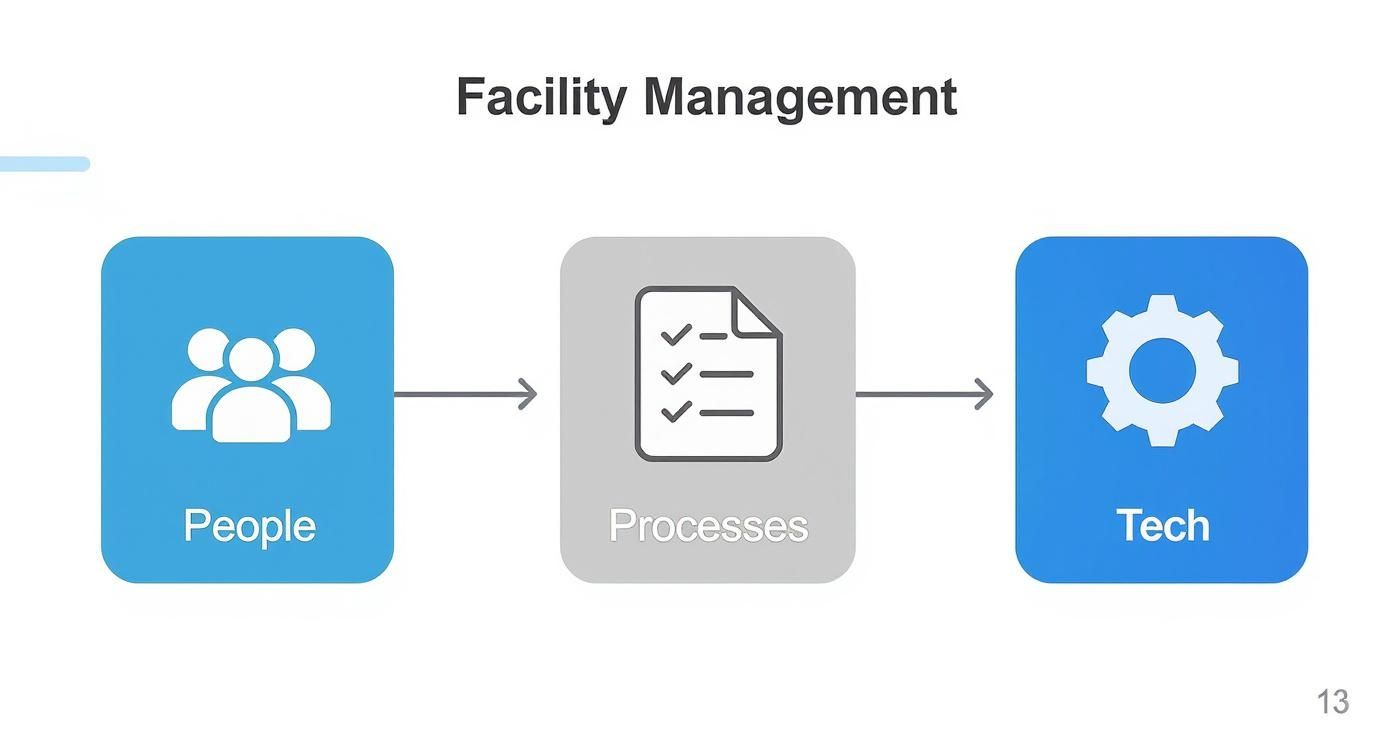
As you can see, you need skilled people following smart processes, all backed by the right technology to keep things running smoothly.
Key Facility Management Services Breakdown
To make this clear, here’s a table that breaks down the most common hard and soft services in Dallas, showing how they impact a property.
| Service Category | Specific Functions | Impact on Property Value & Tenant Experience |
|---|---|---|
| Hard Services | HVAC maintenance, electrical system upkeep, plumbing repairs, fire safety system inspections, structural repairs. | Prevents costly failures and downtime. Directly impacts safety and comfort, preserving the building's long-term asset value. |
| Soft Services | Onsite security, janitorial services, landscaping/groundskeeping, pest control, waste management. | Shapes daily perceptions and satisfaction. High-quality soft services create a welcoming environment, boosting tenant retention and curb appeal. |
This breakdown highlights the two sides of the facility management coin: one focused on the physical asset, the other on the people who use it. Both are absolutely critical for success.
Hard Services: The Building’s Engine
Hard services are the heavy lifters—the critical infrastructure that keeps your property operational. If these slip, you’re looking at catastrophic failures, significant emergency repair bills, and major disruptions. For any Dallas property, mastering these is non-negotiable, especially with our climate’s demands.
These are the big ones:
- HVAC Systems: This includes everything from routine filter changes to emergency repairs. A failed AC unit in a Dallas July isn't just an inconvenience; it's a crisis.
- Electrical and Lighting: This involves managing the entire power grid, ensuring wiring is up to code, and keeping interior and exterior lighting in perfect working order.
- Plumbing and Water Management: This covers the full spectrum—from fixing a simple leak to managing complex irrigation and fire suppression systems.
- Fire Safety Systems: Regular, documented inspections of alarms, sprinklers, and extinguishers are legally required and crucial for protecting lives.
A proactive preventative maintenance schedule for hard services is one of the most effective ways to control long-term operational costs. It shifts your budget from expensive, reactive repairs to predictable, planned upkeep.
Properly managing these systems doesn't just prevent disasters. It extends the life of your most expensive assets, protecting your investment for years to come.
Soft Services: The Human Experience
While hard services keep the building standing, soft services are what make it a place people want to be. These are the functions that tenants, employees, and customers interact with every day, and they completely shape their perception of your property.
In a market as competitive as Dallas, a top-notch tenant experience can be your key differentiator. That’s where effective Dallas facility management comes in, ensuring these people-focused services are executed flawlessly.
Key soft services include:
- Security Services: This is a broad category, covering everything from uniformed officers at the front desk and vehicle patrols to access control systems and camera monitoring. Professional security creates a safe environment and provides invaluable peace of mind.
- Janitorial and Cleaning: A spotless facility is often the first thing people notice. This means daily cleaning, trash removal, and specialized work like window washing and floor polishing.
- Landscaping and Groundskeeping: Curb appeal is real. Manicured lawns, clean parking lots, and healthy plants create a powerful first impression and contribute to property value.
- Pest Control: Proactive pest management is essential for keeping a property healthy, clean, and desirable for tenants.
These services have a direct impact on tenant satisfaction and retention. A residential community with visible security patrols and immaculate grounds will retain residents far longer than one that looks neglected. Likewise, a Class A office tower maintains its prestige with pristine common areas and a sharp, professional security presence.
Navigating the Unique Dallas Real Estate Market
The Dallas-Fort Worth real estate market has its own unique rhythm, driven by incredible growth and constant change. If you're involved in Dallas facility management, you know that understanding these local trends isn't just helpful—it's essential for making smart decisions that protect and grow property value.
The region’s population boom is fundamentally reshaping demand for both commercial and residential spaces. This creates a dynamic environment filled with as many opportunities as challenges. A strategy that worked five years ago might be obsolete today. As a facility director, you have to stay ahead of these shifts to keep your properties competitive.
The Rise of Adaptive Reuse and Mixed-Use Properties
One of the biggest trends in Dallas facility management is the push toward adaptive reuse. As corporate needs change, many older office buildings no longer serve their original purpose. Instead of demolition, developers are creatively converting this underused real estate into vibrant mixed-use properties or much-needed residential units.
This transformation presents a unique set of challenges for facility managers. Retrofitting aging infrastructure to meet modern standards is a significant task. It often involves:
- Upgrading Core Systems: This means integrating new, energy-efficient HVAC, plumbing, and electrical systems into a building not originally designed for them.
- Meeting New Code Requirements: You have to ensure these repurposed spaces comply with all current fire safety, accessibility, and residential building codes.
- Managing Diverse Tenant Needs: A single mixed-use property might have retail shops, corporate offices, and apartments under one roof, each with different operational and security requirements.
This is a significant market movement. The DFW commercial real estate market is evolving fast, with a major increase in office space conversions. A massive population influx, including 46,200 net new millennials in 2023 alone, is driving this demand. You can discover more insights on DFW's adaptive reuse trends and what they mean for the market.
Differentiated Expectations Across Property Classes
Not all Dallas properties are created equal, and their facility management needs aren't either. The expectations for a new Class-A high-rise in Uptown are completely different from those for an older, Class-B industrial park. A winning facility management strategy must recognize and adapt to these distinctions.
For Class-A properties, the game is all about providing a premium, seamless experience. Tenants expect immaculate common areas, the latest technology, and professional, concierge-style security. Here, facility management is a core part of the property's brand and a critical tool for attracting high-value tenants.
In the world of Class-A real estate, proactive and visible facility management isn't just a service—it's a luxury amenity that justifies premium rents.
For older or more functional properties like Class-B or C buildings, the priority shifts to reliability, cost-efficiency, and safety. The goal is to maximize operational uptime and ensure core systems are dependable without overspending on cosmetic extras. For these assets, preventative maintenance, responsive service, and solid security are the cornerstones of effective management.
Understanding these nuances allows you to allocate resources wisely, ensuring every dollar spent contributes directly to that property’s specific goals.
How to Manage Costs and Budgets Effectively
Keeping operational costs under control without letting quality slip is the classic balancing act for any facility manager. Especially in a competitive market like Dallas, you need to make every dollar in your budget count. This means moving from a reactive "fix-it-when-it-breaks" mindset toward a proactive, data-informed strategy.
Effectively managing a facility's budget isn't about cutting corners; it's about making smart, strategic investments. A solid budget protects the property's value, keeps tenants happy, and demonstrates your value to stakeholders. It turns your operational plan from a list of expenses into a powerful tool for long-term asset preservation.
Proactive Budgeting Versus Reactive Spending
Nothing drains a facility budget faster than unplanned, emergency spending. When a pipe bursts or an HVAC unit fails in August, you're dealing with more than just the repair bill. You have tenant disruption, potential secondary damage, and the premium you’ll pay for emergency labor. This is where proactive budgeting, built around preventative maintenance, changes the game.
Think of it like managing your health. A routine check-up is always cheaper and less disruptive than emergency surgery. The same logic applies to your building's critical systems.
A good preventative maintenance plan helps you:
- Forecast Expenses Accurately: By scheduling regular service for your HVAC, plumbing, and electrical systems, you can budget for these costs with confidence.
- Extend Asset Lifespan: Well-maintained equipment simply lasts longer, pushing back the massive capital expense of a full replacement.
- Reduce Emergency Calls: Proactive checks catch small issues before they become catastrophic failures, saving you from costly after-hours repair bills.
Understanding Cost Drivers in the Dallas Market
Part of managing a budget for Dallas facility management is keeping a sharp eye on local and national economic trends that will affect your bottom line. The costs for labor and materials are not static, and staying informed is critical for creating a realistic forecast.
Recent data makes this trend clear. Facility management costs in Dallas are feeling the effects of rising expenditures across the U.S. Nationwide, total facilities spending jumped by 7% year-over-year in Q1 2025. Budgets are now 47% higher than they were in Q1 2019. This is largely fueled by labor rates that have climbed by about 4% annually over that same period. Even specialized trades like HVAC have seen invoice costs swell by 8% annually. You can explore more about these spending trends to better inform your financial planning.
When you understand these larger economic factors, you can build a budget that is stronger and more defensible. It accounts for real-world cost inflation instead of leaving you blindsided.
Strategic Vendor Sourcing and Performance Benchmarking
Your vendors are your partners, and selecting the right ones is a major budgetary decision. The lowest bid is rarely the best value. Strategic sourcing is about finding reliable partners who deliver quality work, communicate well, and understand the specific needs of your property.
When evaluating vendors, consider the following:
- Proven Local Experience: A vendor who knows the Dallas climate and local regulations will be more effective from day one.
- Transparent Pricing: Always ask for detailed quotes that break down the costs for both labor and materials.
- Strong References: Talk to other property managers about their real-world experiences with the vendor.
Once you have partners on board, use performance benchmarking to ensure you're getting the return on investment you expect. Track key metrics like response times, work order completion rates, and tenant feedback. This data empowers you to have productive conversations with vendors and make informed decisions at contract renewal.
Managing Dallas's Industrial and Logistics Properties
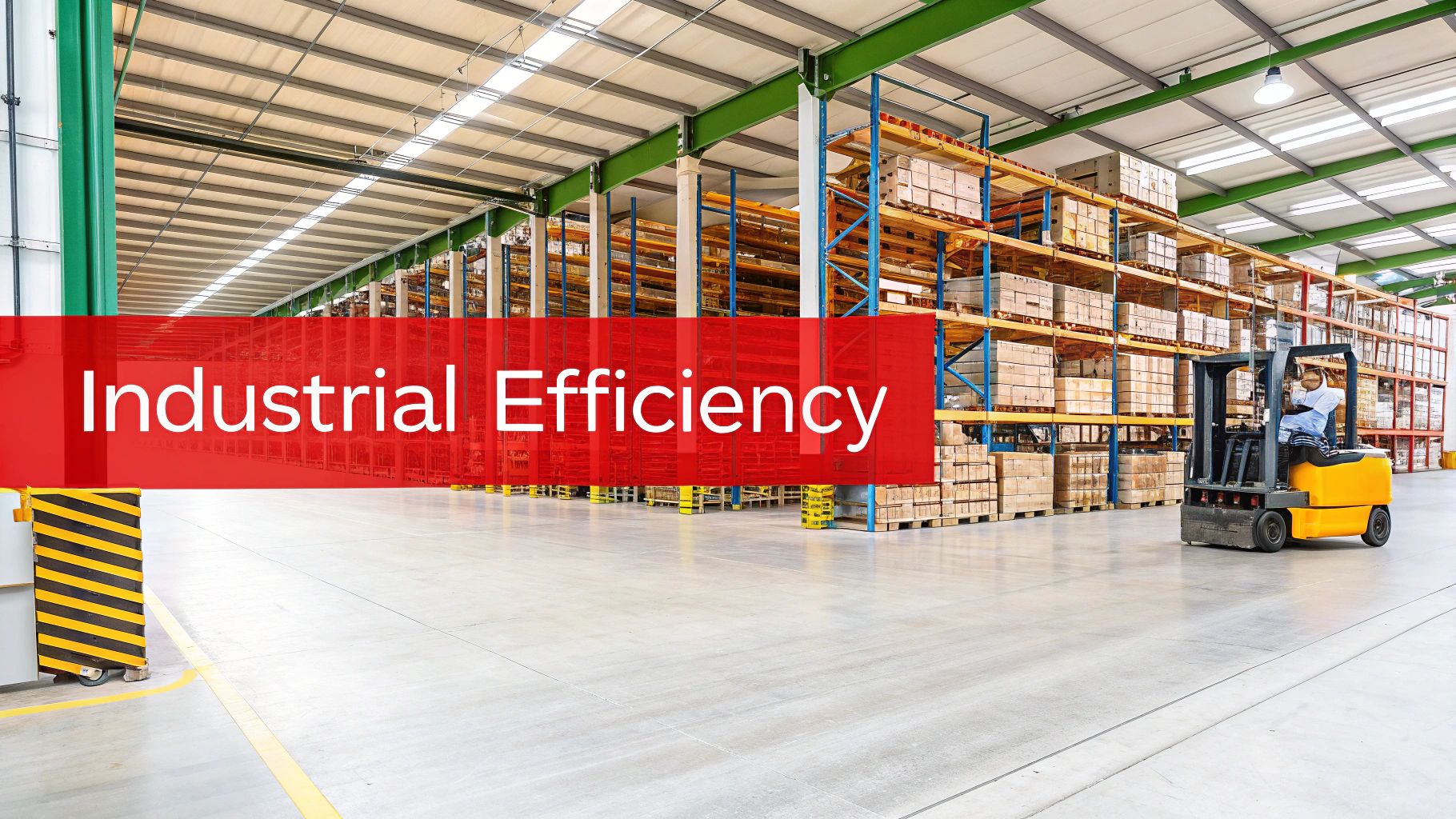
Dallas is at the heart of America's logistics and industrial engine. Its landscape of warehouses, distribution hubs, and manufacturing plants creates a unique world of facility management challenges. These aren't just large buildings; they're high-velocity environments where efficiency and safety are paramount.
Consider the scale. A broken door in an office is an inconvenience. A broken high-traffic loading dock door is a critical bottleneck that can halt operations. Expert Dallas facility management for industrial sites demands a sharp focus on durability, traffic flow, and the complex machinery that keeps goods moving.
The Booming Industrial Landscape
The DFW industrial market is expanding rapidly, which brings both massive opportunities and intense operational pressure. For facility managers, this growth means overseeing a portfolio that's becoming more complex and demanding.
The numbers tell the story. In the first quarter of 2025 alone, Dallas saw almost 2.7 million square feet of new industrial space come online. The market absorbed nearly 4 million square feet, largely thanks to major bulk deals.
With another 11.9 million square feet currently under construction, the need for skilled, forward-thinking facility management will only continue to grow.
Core Focus Areas for Industrial Facility Management
When managing an industrial property, you have to focus on the components that take the most wear. Many of these facilities run 24/7, and their core systems must be tough enough to handle the constant strain.
A few areas require dedicated attention:
- Flooring and Pavement: Warehouse concrete floors take a beating from heavy forklifts and machinery. A solid maintenance plan for fixing cracks and sealing surfaces is non-negotiable to prevent safety hazards.
- Loading Docks and Doors: These are the arteries of any logistics facility. Dock levelers, seals, and overhead doors are mission-critical. Regular inspections and maintenance keep them working safely and prevent bottlenecks.
- HVAC and Ventilation: Controlling air quality and temperature in such large spaces is a major undertaking. Systems must be robust and serviced regularly to protect inventory and manage energy costs.
Integrating Safety, Security, and Technology
Beyond the physical structure, modern industrial sites are intricate ecosystems of people, equipment, and technology. An effective management strategy ensures all these pieces work together safely. Following state-specific rules is also a must, including ensuring all equipment handling meets standards like the Texas-specific forklift safety guidelines.
Security is a primary concern. These facilities house millions of dollars in inventory, making them a target for theft. A comprehensive security strategy is a core part of facility management. This means tight access control, visible perimeter patrols, and thorough camera surveillance. Our team is experienced in developing effective security plans for industrial and commercial properties that safeguard assets and keep operations running.
In a logistics facility, every minute of downtime directly translates to lost revenue. Proactive management isn't just about maintenance—it's about protecting the core business function of the property.
As automation becomes more common, facility managers are also becoming responsible for robotic systems and advanced sorting equipment. This requires a new approach that blends traditional building upkeep with high-tech oversight.
Blending Technology and Security for Modern Properties

Running a facility effectively today has moved beyond clipboards and spreadsheets. Smart technology is what separates reactive, costly property operations from those that are proactive and efficient. By implementing the right systems, you gain a clear, real-time picture of your property’s health, from energy use to security.
This evolution allows facility managers in Dallas to get ahead of problems before they affect tenants or operations. Instead of waiting for a call about a broken HVAC unit, you get an automated alert and can dispatch a technician, resolving the issue with minimal downtime. It’s about using data to make smarter, faster decisions.
Integrating Facility and Security Systems
The real value emerges when different systems communicate with each other. A Computerized Maintenance Management System (CMMS) is great for tracking work orders, but when integrated with modern security platforms, you create a truly intelligent and protected property.
Imagine this scenario: your access control system, CCTV network, and mobile patrol reporting are all connected. An unauthorized person tries to gain entry after hours. The system can automatically:
- Log the exact time and location of the event.
- Direct specific cameras to that entry point.
- Send an instant alert to your 24/7 security operations center.
- Notify the on-duty mobile patrol with the precise location.
This seamless integration eliminates dangerous delays and ensures a fast, documented response.
Human Expertise Meets Smart Technology
Technology is a powerful tool, but it works best when guided by human expertise. The goal isn’t to replace skilled people but to arm them with better information and greater accountability. This is where Overton Security’s approach to Dallas facility management stands out, combining our 26 years of experience with purpose-built technology.
Our systems are designed to create total transparency and accountability. For a facility manager, this means no more wondering if patrols were completed or what an officer observed during their shift.
Technology-driven transparency provides the proof of service that builds trust. It turns security from an expense into a verifiable, value-added component of your facility management strategy.
Our solutions deliver real-time visibility that keeps you in control:
- GPS-Enabled Patrol Tracking: Live tracking shows you exactly where our officers are, confirming they’ve covered every critical checkpoint on your property.
- Detailed Digital Reports: Officers submit Daily Activity Reports (DARs) with photos and time-stamped notes from the field, giving you an undeniable record of every shift.
- 24/7 SOC Oversight: Our Security Operations Center provides constant support, ensuring protocols are followed and incidents are escalated correctly.
This blend of experienced officers and reliable technology ensures your property isn't just running smoothly—it's secure. And for an added layer of assurance, solutions like remote video monitoring services give you eyes on your property from anywhere, anytime.
Answering Your Top Dallas Facility Management Questions
When you're managing a property in Dallas, questions are inevitable. Whether you're on an HOA board, a property manager, or a business owner, getting clear answers is the only way to make sound decisions.
Here are a few of the most common questions we hear from those navigating the DFW market.
What Is the Biggest Challenge for Dallas Facility Management Right Now?
Without a doubt, the biggest challenge is managing rising operational costs while keeping up with the region's explosive growth.
On one side, you have labor and material costs climbing, putting serious pressure on your budget. On the other, a constant stream of new construction and property conversions makes the market more competitive than ever. The path forward requires facility managers to become masters of strategic budgeting and preventative maintenance to control expenses without letting service quality decline.
How Can I Improve Tenant Retention Through Better Facility Management?
At its core, improving tenant retention is about creating an environment so safe, clean, and responsive that people genuinely want to stay. It starts with being proactive—handling maintenance before it becomes a disruptive problem.
When service requests do come in, resolving them quickly and professionally is crucial. The same goes for maintaining high standards for soft services like cleaning and security. Visible investments, like modernizing a lobby or upgrading access control, also send a powerful message that you are committed to your tenants' well-being and satisfaction.
A well-managed property doesn't just reduce complaints. It actively builds a community where tenants feel secure and valued, making them far more likely to renew their lease.
What Should I Look for When Outsourcing Facility Management Services?
When bringing in a partner, prioritize a company with proven local experience and a solid reputation. A provider who understands the Dallas market—from our summer heat to unique commercial real estate trends—will deliver far more value than a generic national chain.
Look for these signs of a quality partner:
- A Low Manager-to-Client Ratio: You want a team that provides personalized, hands-on attention, not one that's stretched too thin.
- Transparent Reporting Systems: Insist on tools like digital reports and GPS tracking for full accountability.
- A Commitment to Retaining Staff: A company that invests in its people provides more consistent, high-quality service. Low officer turnover is a strong positive indicator.
Ready to partner with a security provider that brings 26 years of experience and technology-driven transparency to your facility? Contact Overton Security today to discuss how we can protect your Dallas property. Learn more at https://www.overtonsecurity.com.