Have you ever walked your property and wondered if your security team is truly prepared for a real incident? It's a common concern for any property manager or business owner responsible for safety. The truth is, not all security services are created equal. The difference between a security officer being a liability versus an asset often comes down to one critical factor: professional training.
Effective security officer training programs are the engine that transforms a person in a uniform into a genuine security professional—someone capable of preventing threats before they escalate.
The Critical Role of Effective Security Training
At its core, hiring a security partner is about managing risk. Whether you're overseeing a busy retail center in Los Angeles or a quiet residential community in San Jose, your goal is to prevent incidents that could disrupt operations, harm people, or damage your reputation.
The training an officer receives is the single most important factor in their ability to achieve that goal. Untrained personnel are often reactive; they respond after something has already gone wrong. A properly trained professional, in contrast, is proactive.
An untrained guard might only notice a problem once the damage is done. A well-trained officer, however, is taught to spot pre-incident indicators, de-escalate potential conflicts, and follow established protocols with calm confidence. This isn’t just about having a presence—it's about having competence.
Why Professional Training Is a Non-Negotiable Asset
Investing in a security partner who prioritizes training isn't an expense; it's an investment with tangible returns. It protects your bottom line and provides genuine peace of mind.
Consider the significant financial impact of a single security failure. Physical security incidents can negatively affect a company's value—one event can potentially slash a public company's market valuation by an average of 32%. You can review the full report on the financial impact of security incidents to grasp the stakes.
A security officer is more than a uniform; they are your first line of defense against liability. Their training determines whether they are a shield that protects your assets or a weak point waiting to be exposed.
For property managers and HOA boards, the benefits extend beyond preventing major incidents. A professionally trained officer helps create a safer, more welcoming environment for everyone. Their ability to handle tense situations calmly and communicate clearly improves the experience for tenants, visitors, and employees, becoming an active part of your community's safety culture.
This investment in people has been a core principle at Overton Security for over 26 years. It’s what separates basic coverage from a true security partnership and ensures the officers protecting your property are equipped, prepared, and professional.
Trained vs. Untrained Security: A Clear Impact
The difference in outcomes between a professionally trained officer and an undertrained guard is stark. It's not just about qualifications on paper; it's about the real-world impact on your property's safety, reputation, and financial health.
| Area of Impact | Professional Security Officer (Trained) | Basic Guard (Untrained) |
|---|---|---|
| Incident Response | Proactive threat detection and de-escalation. Follows established protocols calmly and effectively. | Reactive response, often after an incident has occurred. May escalate situations due to a lack of training. |
| Liability & Risk | Significantly reduces liability through proper documentation, procedure adherence, and risk mitigation. | High potential for liability due to improper actions, poor judgment, or failure to act. |
| Tenant/Customer Perception | Fosters a sense of safety and professionalism, enhancing the property's reputation. | Can create an atmosphere of indifference or tension. May be seen as ineffective or unprofessional. |
| Operational Efficiency | Acts as a helpful resource, assisting with access control, reporting maintenance issues, and providing information. | Limited to a basic presence. Often lacks the training to contribute positively to property operations. |
| Cost-Effectiveness | Prevents costly incidents (theft, vandalism, lawsuits), providing a high return on investment. | A low-cost line item that can lead to significant expenses when an incident occurs. |
A trained officer is a strategic asset who actively protects and enhances the value of your property. An undertrained guard, conversely, can become a significant financial and reputational risk.
Building the Foundation of a Professional Security Officer
Think of building a house. You wouldn't install premium finishes before pouring a solid foundation. The same principle applies to professional security. An officer's value isn't based on one specific skill but on a rock-solid foundation of essential training that prepares them for the realities of the job.
This foundational curriculum is the non-negotiable starting point for any reputable security provider.
First, this training must meet all state-mandated licensing requirements. In California, for example, every officer is required to complete the coursework to earn their BSIS Guard Card. But that's just the starting point. Real foundational training goes deeper, focusing on the legal framework that dictates an officer's actions on your property.
This means having a clear understanding of the lawful use of force and the specific powers of a citizen's arrest. An officer who is unclear on these legal lines isn't just ineffective—they can quickly become a serious liability.
Core Competencies Every Officer Must Master
Beyond legal knowledge, foundational training is about building practical, on-the-ground skills. It’s what turns a person who simply watches a property into a professional who actively prevents incidents. A strong way to ensure these skills are retained is through competency-based training, which focuses on mastering measurable abilities rather than just logging classroom hours.
Any robust security officer training program should be built around these key areas:
- Strategic Patrol Techniques: This is more than walking a set path. It’s learning to vary patrol times and routes, identify vulnerabilities, and maintain a visible, proactive presence that deters potential issues.
- Keen Observation Skills: Officers are trained to spot small details that are out of place—a propped-open door, an unfamiliar vehicle, or behavior that deviates from the norm. This skill is critical for identifying risks before they escalate.
- Effective Report Writing: A detailed, clear, and accurate report is often an officer's most important tool. Proper training ensures every incident is documented professionally, which is vital for your records, potential insurance claims, or legal proceedings.
This infographic breaks down how comprehensive training can be the deciding factor between an officer who is a valuable asset and one who is a potential liability.
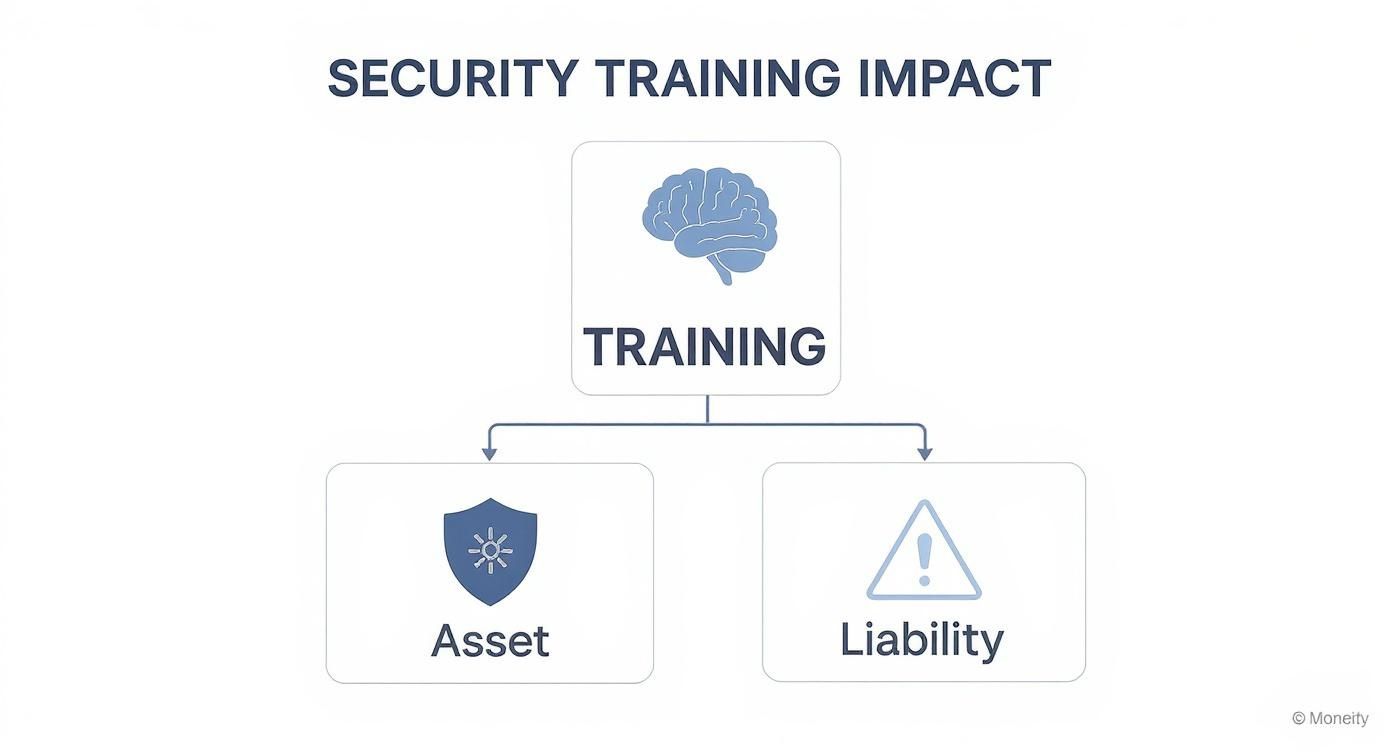
As you can see, a structured training program isn't just a "nice-to-have"—it's the central pillar that supports every positive outcome, transforming a uniform into a proactive security asset.
Why the Foundation Matters to You
As the person responsible for your property's safety, understanding these foundational elements gives you an advantage. It equips you to ask the right questions when vetting a security provider. You can look past the price tag and determine if a company is genuinely investing in the people they send to protect your site.
This commitment to fundamentals is a cornerstone of how Overton Security operates. We believe that investing in our team's core skills is the first and most critical step in delivering service you can count on. You can see how we structure our comprehensive security guard training to build these essential skills from day one, ensuring our officers arrive prepared, professional, and ready to be a true asset.
Developing Elite Officers with Advanced Training Modules
Once an officer masters the fundamentals, what separates an adequate guard from an elite security professional? The answer is continuous, advanced training. Foundational skills are the starting point, but specialized modules prepare officers for the complex and unpredictable situations they may face on your property.
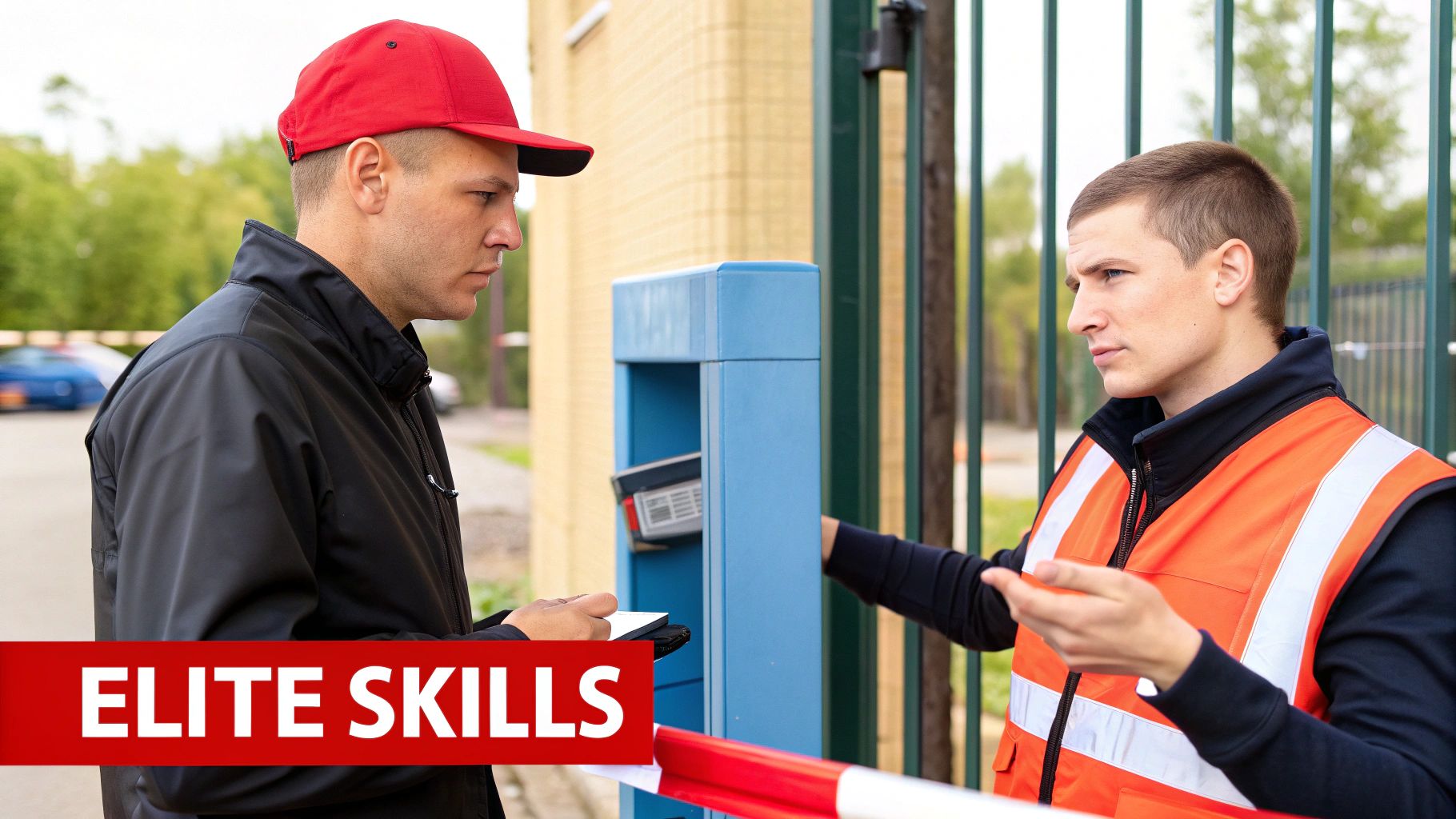
This next level of training moves beyond routine patrols and into the nuanced, people-focused skills that truly matter. It gives officers the confidence to manage challenging human interactions, transforming them from passive observers into active problem-solvers. Across every industry, the demand for these advanced skills is growing.
The global security awareness training market, valued at around USD 5.77 billion in 2025, is projected to reach USD 12.70 billion by 2030. This growth shows how seriously business and property owners are taking advanced preparedness. You can read the full analysis on the security training market to see this industry-wide trend.
Key Advanced Training Modules
A truly comprehensive security officer training program builds on the basics with specialized modules that tackle real-world challenges. These are essential skills for reducing liability and making your site safer and more pleasant for everyone.
-
Verbal De-escalation Techniques: This is arguably the most critical advanced skill an officer can possess. It involves using communication, tone, and body language to defuse tense situations before they turn physical, protecting everyone involved and minimizing legal exposure.
-
Customer Service and Concierge Skills: For an officer stationed at a front desk or in a residential lobby, being approachable and helpful is just as important as being vigilant. This training blends security awareness with exceptional customer service, creating an environment that feels both welcoming and secure.
-
Comprehensive Emergency Response: This goes far beyond a basic fire watch. Officers learn detailed procedures for a range of crises, including medical emergencies, natural disasters, and site-specific threats, enabling them to respond with calm, decisive action.
An elite officer isn't defined by their ability to react to a crisis, but by their training to manage and mitigate it. Advanced modules provide the tools to turn potential disasters into controlled situations.
The Power of Site-Specific Training
No two properties are the same. A sprawling construction site in Los Angeles has different security needs than a luxury high-rise in San Francisco. That’s why generic, one-size-fits-all training is insufficient.
The best security partners invest heavily in training that is specific to your site. Before an officer begins their first shift, they should be thoroughly briefed on your property’s unique layout, access points, emergency exits, and your specific post orders.
They need to learn the "rhythm" of your property—who belongs there, what normal activity looks like, and what stands out as a potential concern. This tailored preparation ensures the security presence is an intelligent, integrated part of your operational environment.
How Technology Enhances Modern Security Training
Today's most effective security solutions blend human expertise with smart technology. While technology can never replace a well-trained officer, the right tools can transform their capabilities, providing property managers with a new level of transparency and accountability. Modern security officer training programs now integrate technology as a core part of the job.
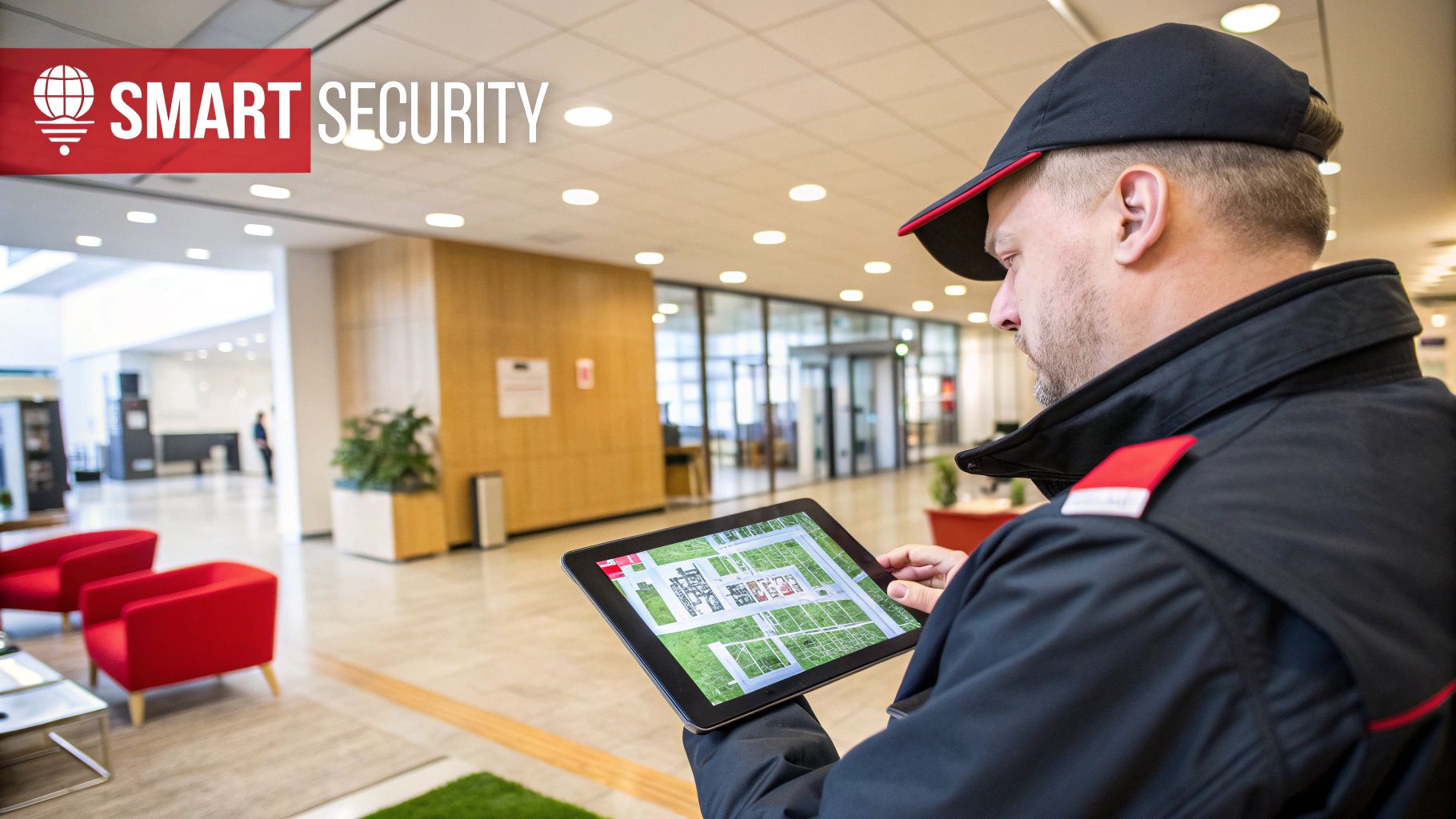
The days of handwritten paper logs are over. Today, officers are trained on digital reporting software, typically on a smartphone or tablet. This allows them to log patrols, attach photos to incident reports, and file everything in real-time.
For a facilities director or HOA board, this means receiving verifiable proof of service directly. You no longer have to wonder if patrols were completed; you have time-stamped, geotagged data confirming every action.
Key Technological Training Components
Effective training ensures officers don't just use technology, but master it. The goal is to make these tools a seamless extension of their professional judgment.
Key training areas include:
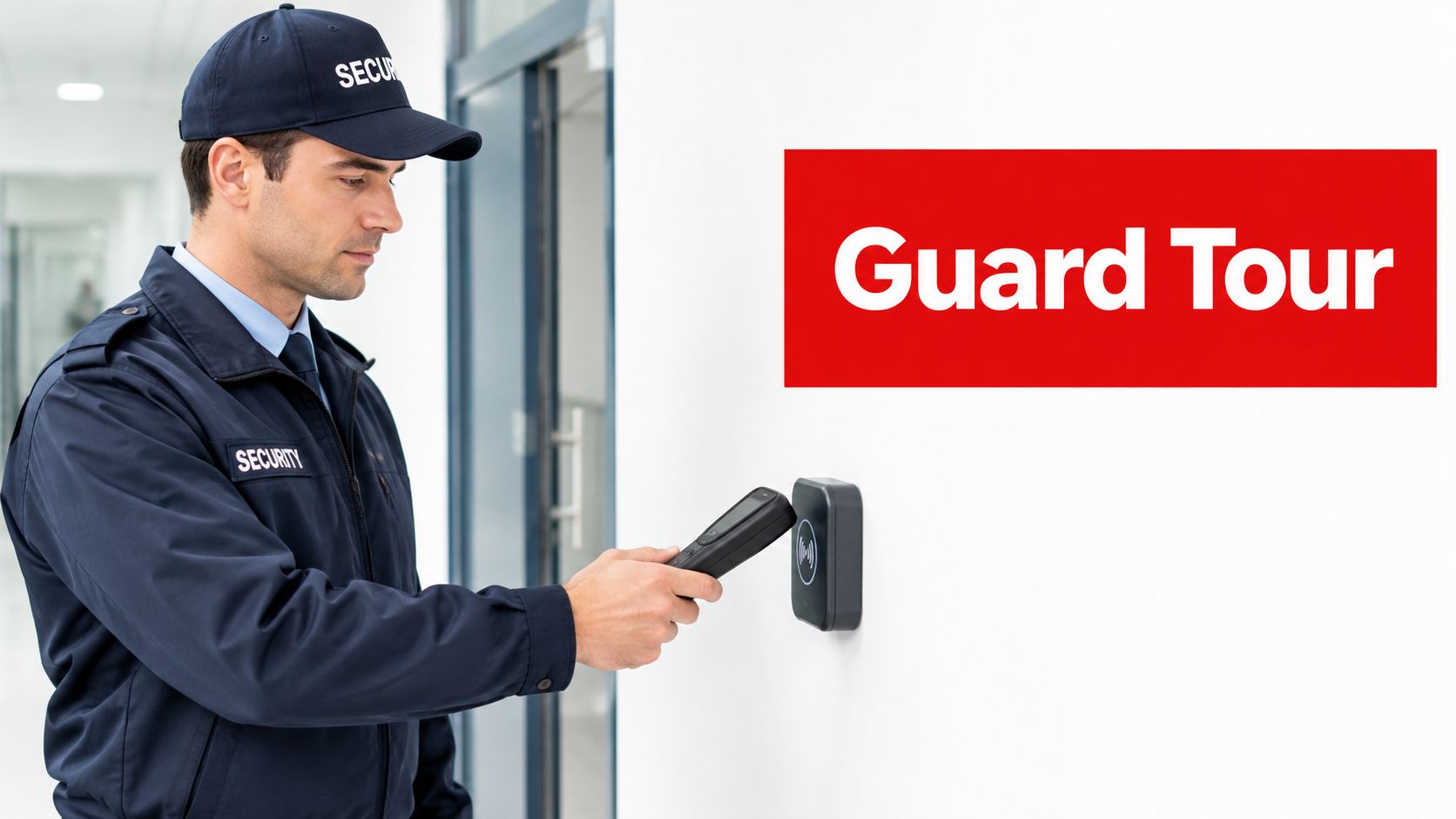
- GPS-Enabled Tour Systems: Officers learn to use systems that track and verify their patrol routes in real-time. This technology confirms that every critical checkpoint on your property is physically checked as scheduled.
- Integrated Communication Tools: Officers are trained on devices linking them directly to a 24/7 Security Operations Center (SOC). This provides a constant lifeline for support and a formal channel to escalate issues that need an immediate response.
- Real-Time Incident Reporting: Instead of waiting until the end of a shift, officers are trained to report issues the moment they are observed. A maintenance issue or a suspicious vehicle can be documented with photos and sent instantly, allowing for a faster resolution.
Technology doesn’t replace a skilled officer; it empowers them. It turns their observations into actionable data, providing you with a clear, verifiable record of security operations on your property.
This focus on technology is central to delivering the accountability our clients expect. Since our founding 26 years ago, we have continuously integrated proven tools that support our officers. When technology and training work together, the result is a security solution that is more transparent, effective, and reliable.
You can learn more about the specific security technology we deploy and how it provides clients with complete peace of mind. This approach ensures you receive not just a security presence, but a verifiable, data-driven service that protects your assets.
The Overton Security Approach to Officer Development
In an industry known for high turnover, our philosophy at Overton Security is simple but makes all the difference: we invest in our people. While many security providers treat officers as interchangeable, we see them as the heart of our service. Our entire approach to officer development is designed to build careers, not just fill shifts.
We focus on quality over quantity, which is reflected in our intentionally low manager-to-client ratio. This structure allows our managers the time for hands-on mentorship, providing real support and guidance to their teams in the field. It’s a commitment to helping our people grow professionally.
More Than Just Meeting Minimums
Our in-house security officer training programs are rigorous and go well beyond state-mandated minimums. We don't just train people to pass a test; we work to instill a culture of excellence, proactive thinking, and professional responsibility. This investment is key to retaining good officers, which means a more stable, experienced team for our clients.
A structured development framework is how you transform a job into a real career path, giving officers the motivation to build long-term expertise. For a property manager, this means the person protecting your site is a dedicated professional, not a temporary placement.
At Overton Security, we believe a supported officer is an effective officer. Our investment in their success translates directly into a more reliable, consistent, and motivated security presence for your property.
A People-First Philosophy with Proven Results
This people-first approach isn't just a talking point—it's a strategic advantage recognized by security leaders worldwide. A 2025 World Security Report found that 87% of chief security officers stressed that investing in people through training is vital for recruitment and retention. You can discover more insights from this global security report and see this industry-wide consensus.
For over 26 years, this has been our guiding principle. Our clients don’t just get a uniform; they get a reliable, well-supported professional who is part of a team that values their contribution. This focus on officer development is the foundation of the trust we build and the consistent service we deliver, whether protecting commercial properties in Los Angeles or residential communities in San Jose.
How to Vet a Security Company's Training Program
Choosing a security partner is a decision that directly impacts the safety of your people and the reputation of your property. To get past the sales pitch and understand the real quality of a provider, you have to ask the right questions.
Arming yourself with a few specific, insightful questions will help you separate companies that are just checking a box from those truly invested in developing security professionals.
The Make-or-Break Questions for Any Potential Vendor
Before signing a contract, dig into the depth and consistency of a company’s training. The answers you receive will tell you everything you need to know about their operational philosophy.
Here are essential questions every property manager, HOA board member, or facilities director should ask:
- Going Beyond the Basics: "Can you walk me through what your initial officer training covers after the state-required minimums?" This reveals if they teach advanced skills like de-escalation or customer service from day one.
- Commitment to Growth: "What does your mandatory continuing education schedule look like for your officers?" A solid provider will have a regular, structured calendar for ongoing training.
- Property-Specific Onboarding: "What is your process for preparing an officer for our specific property before their first shift?" A vague answer is a red flag. You want a detailed plan that includes a review of post orders and a site walkthrough.
- Proof of Competence: "How do you test your officers to verify they've mastered the training, both in the classroom and in the field?" This separates companies that value proven skills from those who just track attendance.
These questions help you build a clear picture of what you're really buying. To give you a more structured tool, here's a checklist you can use when speaking with potential security vendors.
Vendor Evaluation Checklist: Key Training Questions
| Question Category | Specific Question to Ask | Why It Matters |
|---|---|---|
| Initial Training | "What topics are covered in your initial training beyond state requirements? (e.g., customer service, de-escalation, report writing)" | Reveals if they are building well-rounded professionals or just meeting the bare minimum for compliance. |
| Ongoing Education | "How often do you conduct mandatory in-service or continuing education? Is it quarterly, annually?" | Shows a commitment to keeping skills sharp and officers updated on new threats and procedures. |
| Site-Specific Prep | "Describe the step-by-step process for preparing a new officer for our site." | A detailed process indicates they value preparedness and won't just place an unprepared person on your property. |
| Skill Verification | "What methods do you use to test officer competency? (e.g., written tests, field evaluations, role-playing)" | Proves they measure for true understanding and skill, not just attendance. |
| Supervisory Training | "What specialized training do your supervisors and field managers receive?" | Strong supervisors are key to quality control. They need leadership and mentoring skills, not just a promotion. |
| Technology Training | "How do you train officers on the specific security technology used at our site? (e.g., access control, surveillance systems)" | Ensures their team can effectively operate your systems from day one, reducing risk and liability. |
Using this checklist will give you the confidence that you're hiring a true partner dedicated to your property's safety.
For more in-depth advice on vetting potential partners, our full guide on how to hire security guards provides a complete framework to help you make the right choice.
At Overton Security, we don't just welcome these questions—we encourage them. We're proud of the investment we make in our team, and our 26-year history is built on a foundation of superior officer development. It's how we deliver a higher standard of security, and we're always ready to show you the difference it makes.