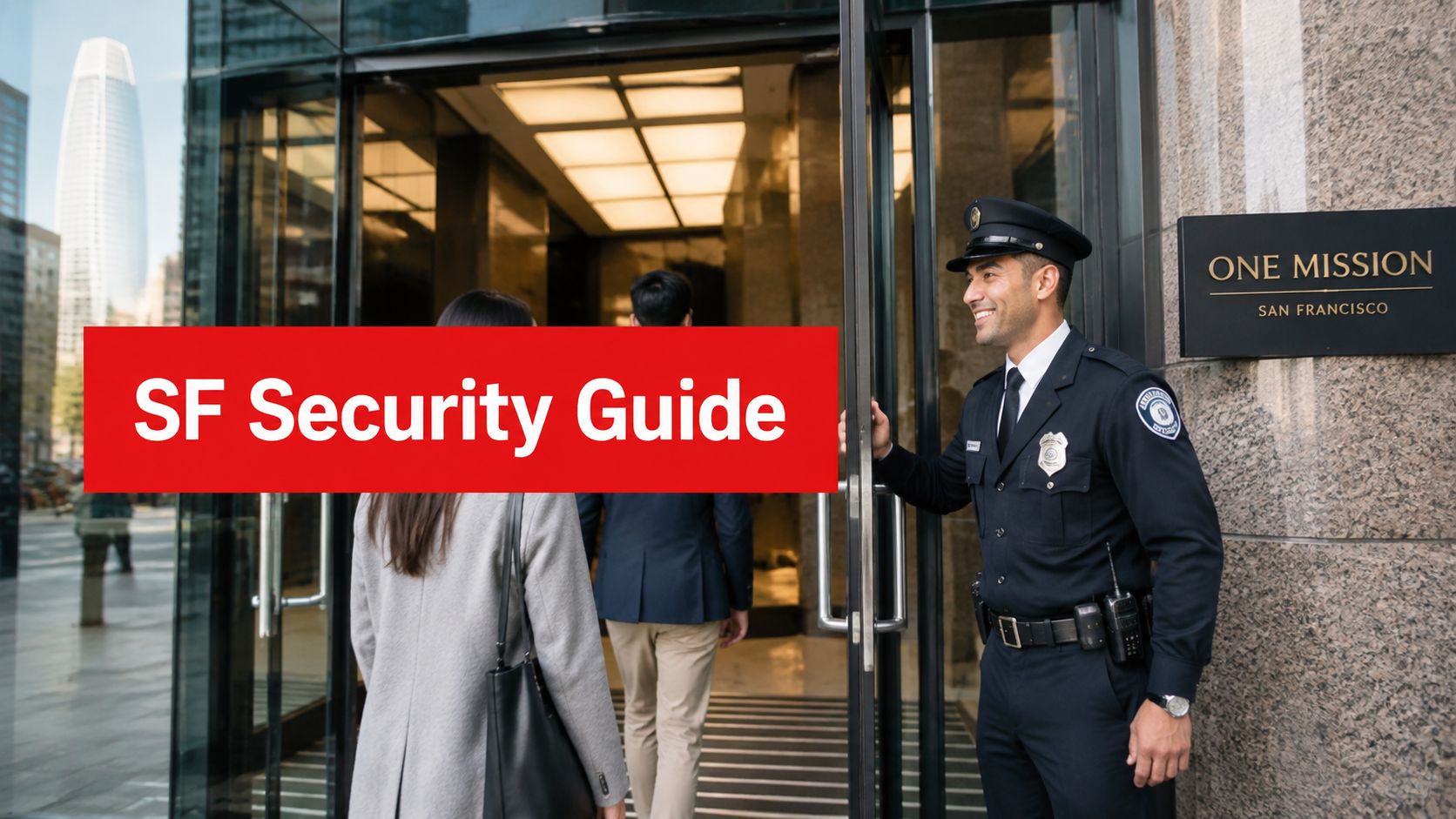

Effective highrise security in San Francisco is about much more than just protecting property. It’s a complete strategy that safeguards your assets, ensures tenant safety, and upholds your building's hard-earned reputation. For property managers and HOA boards, a sophisticated approach is required to meet the unique challenges of vertical communities in a bustling city.
The New Reality of San Francisco High-rise Security
Securing a high-rise in San Francisco today is a far cry from simply posting a guard at a lobby desk. It’s a complex operational puzzle. These vertical communities are their own ecosystems, often blending private residences, corporate offices, and street-level retail into one tower.
This mix of public and private space creates security challenges a generic plan cannot handle. The goal isn't just reacting to problems—it's proactively managing risk while enhancing the tenant experience. It's a delicate balance of creating an environment that feels both completely secure and genuinely welcoming.
Evolving Expectations for Modern Towers
Today’s residents and corporate clients expect a higher standard of safety and service. A single security breach, a poorly handled incident, or even a chaotic lobby can damage your building’s reputation and impact occupancy rates. In that sense, professional security has become a critical part of your property’s brand.
A modern approach to high-rise security begins with understanding the flow of the building. This means asking the right questions:
- Access Point Management: Who is coming and going? How are you tracking movement through lobbies, parking garages, and delivery bays?
- Vertical Risk: How do you secure elevators and stairwells to keep unauthorized individuals off private floors?
- Mixed-Use Vulnerabilities: How does a busy ground-floor coffee shop affect the security of private residences twenty floors up?
- Emergency Preparedness: Does your team have a clear, practiced plan for everything from a medical emergency to a city-wide power outage?
These questions highlight why a one-size-fits-all solution is inadequate for San Francisco’s premier properties.
A high-rise isn't just a tall building; it's a vertical neighborhood. Its security plan must function with the same level of nuance and awareness, protecting the community within while thoughtfully managing its connection to the city outside.
Beyond a Fear-Based Approach
While awareness of potential threats is crucial, excellent security is built on professional reassurance, not fear. A calm, capable, and visible security presence acts as a powerful deterrent and a valuable amenity. The strategy should focus on preventing issues through smart planning, consistent protocols, and well-trained professionals.
For property managers juggling these complex assets, the goal is peace of mind. As you consider your building's unique needs, it can be helpful to review resources on property management for condos, as they often face similar challenges. A successful high-rise security program is one that runs so smoothly that residents and tenants can live and work with complete confidence.
Understanding San Francisco's Core Security Threats
To build an effective security plan, it’s important to be realistic about the specific risks facing high-rise buildings in San Francisco. This isn't about vague warnings; it's about understanding how the city's unique pressures directly impact your property, from the sidewalk to the penthouse. The challenges on the street inevitably find their way to your front door.
A significant factor is the consistent presence of property crime. Security in San Francisco's commercial high-rises is heavily influenced by a surge in organized retail crime (ORC) and general property crime, which puts strain on every building's defenses. To put this in perspective, California saw a 39% rise in retail theft in 2023, reaching levels not seen since 2000. Additionally, the San Francisco–Oakland area was ranked the second-worst metro in the nation for ORC last year. This is a reality that demands a serious, robust security posture for any premium building. You can get more context by reviewing the top security threats to California commercial properties.
This environment can create real concerns for property managers, increasing tenant anxiety and raising questions about liability.
From Street Level to Secure Floors
A high-rise is a complex ecosystem with multiple points of weakness that can be exploited. Each zone demands its own strategy, because a threat that starts in one area can quickly affect the entire community. Thinking through these zones is the first step toward creating a defense that works.
A comprehensive highrise security San Francisco strategy must address several distinct risk profiles within the same tower:
- Lobby and Common Areas: These are your front lines. They are public-facing and the first line of defense against unauthorized access, loitering, and opportunistic theft. The key is a professional but firm security presence that can manage access without making the building feel like a fortress.
- Parking Garages: Garages are often isolated and out of sight, making them prime targets for vehicle break-ins and personal safety incidents. Consistent, visible patrols and reliable surveillance are non-negotiable.
- Delivery and Service Entrances: The constant flow of packages, food deliveries, and maintenance crews presents a significant access control challenge. Without strict verification protocols, these entrances can become an easy entry point for unauthorized individuals.
- Tenant Floors and Residences: Once someone gets past initial security layers, they have access to private floors. The risk of theft, vandalism, and other serious disturbances increases significantly at this point.
The True Cost of a Security Lapse
A single security incident has a ripple effect. For a property manager, the fallout can damage tenant trust, hurt occupancy rates, and tarnish the building's reputation in the market. In a city as competitive as San Francisco, being known as an "unsafe" building is a label that's incredibly hard to overcome.
The goal of a modern security program isn't just to react to problems—it's to prevent them from ever happening. It's an investment in stability, tenant retention, and the long-term value of the property itself.
Handling these threats means adopting a multi-layered approach that shores up every potential weak point. It’s about shifting from a passive "observe and report" mindset to a security program that is proactive, visible, and integrated into the building's daily operations. Once you understand these core challenges, you can start building a security foundation that genuinely protects your assets and the people who rely on you.
Designing Your Layered Security Blueprint
Moving from knowing the threats to building a defense against them requires a strategic framework. A solid highrise security San Francisco plan isn't about disconnected gadgets and guards. It's about creating a layered blueprint where every piece works together, protecting your property from the outside in.
Think of it like a modern fortress. Every wall, gate, and watchtower has its own job, but their real power comes from how they support each other. This approach shifts you from a reactive mindset into proactive defense. By weaving different security elements together, you build a system that’s much harder to defeat. A single failure won't compromise the entire system, which is key for keeping tenants safe and operations running smoothly.
The Three Foundational Layers of Highrise Defense
A truly comprehensive security blueprint stands on three main pillars, blending human expertise with smart technology. When implemented thoughtfully, these layers form a seamless shield around your people and property. Each layer tackles different weak spots, and together they deter, detect, and help you respond to potential incidents.
Here’s a breakdown of how these essential pieces fit together in a high-rise setting:
- Access Control Systems: This is your first line of defense, dictating who gets in and where they can go. Modern systems include visitor management software, secure elevator controls, and detailed entry logs, stopping unauthorized people long before they reach sensitive areas.
- Intelligent Surveillance: High-definition cameras are the eyes of your security program. Placed strategically in lobbies, garages, and other key zones, they provide real-time monitoring and crucial evidence if an incident occurs. When paired with smart analytics, they can automatically flag unusual activity for immediate review.
- Professional On-Site Officers: This is the human element that technology cannot replace. A trained officer can interpret a complex situation, de-escalate a conflict, and provide the reassuring presence that makes people feel safe. They are the brain of the operation, making critical judgment calls and responding with skill.
Managing who comes and goes is fundamental. For a deeper dive into this, check out our guide on access control best practices. It's packed with insights for strengthening your building’s most critical defense layer.
Integrating Technology and Human Oversight
The best high-rise security programs are those where technology empowers the people on the ground. Your surveillance system should feed useful information to your on-site team, and your access control logs should help officers spot patterns or potential risks. When these dots are connected, you create a powerful force multiplier.
For instance, an alert from a smart camera can direct a security officer to investigate a specific area immediately. This synergy turns passive monitoring into an active response, ensuring your team is always focused where they’re needed most and making your entire security operation sharper and more effective.
The following table breaks down how these layers function together in a typical San Francisco highrise.
Core Components of a Layered Highrise Security Strategy
| Security Layer | Primary Function | Highrise Application Examples |
|---|---|---|
| Perimeter Control | Deter and control entry to the property's exterior. | Gated parking garages with RFID readers, well-lit exteriors, and visible security patrols. |
| Access Management | Govern who can enter the building and access specific floors/areas. | Key card/fob systems for main entrances and elevators, visitor management kiosks in the lobby, biometric scanners for sensitive zones like data rooms. |
| Interior Surveillance | Monitor common areas and critical zones for unauthorized activity or incidents. | HD cameras in lobbies, hallways, mailrooms, and loading docks; smart analytics that detect loitering or unusual package deliveries. |
| Human Response | Provide on-site judgment, de-escalation, and emergency response. | Uniformed security officers in the lobby to greet tenants and manage visitors, mobile patrols for garages and grounds, and a 24/7 command center to coordinate responses. |
Each layer builds on the last, creating a resilient system where a weakness in one area is covered by the strength of another.
Building a Cohesive Emergency Response Protocol
A blueprint is only as good as the action plan behind it. Your emergency response protocol brings all your security layers together during a crisis, whether it's a medical emergency, a fire alarm, or a security breach. This plan needs to be documented, clearly communicated, and practiced regularly.
This diagram illustrates how a solid emergency plan is built on two key elements: staff training and clear communication channels.
As you can see, a successful response depends on well-prepared people and reliable systems to get information out quickly and accurately. In a crisis, a well-trained team is your single greatest asset.
The Irreplaceable Value of On-Site Security Officers
While technology provides the essential eyes and ears for a modern security program, it’s the on-site officer who brings the judgment, presence, and critical thinking that no camera or sensor can replicate.
In any effective highrise security San Francisco strategy, skilled professionals are the cornerstone. They are the human element that transforms a collection of systems into a responsive, intelligent, and truly secure environment. The role of a modern security officer goes far beyond watching a monitor; they are the building's first impression, its frontline responders, and its daily ambassadors. Their presence is a powerful deterrent, signaling that the property is actively protected.
More Than Just a Uniform in a Lobby
The outdated "guard-in-a-chair" model, where an officer's main job is simply to be seen, falls critically short of what a premier San Francisco high-rise needs. A truly professional security officer is an active participant in the building's ecosystem, trained to handle a wide range of situations with calm, professional authority.
Their value is proven not just during a crisis, but in countless daily interactions. They are the ones who notice a delivery person seems out of place, who calmly de-escalate a dispute in the lobby, or who provide clear direction during a fire alarm. This level of engagement requires a unique blend of skills that only well-trained individuals possess.
A camera can record an incident, but a trained officer can prevent it. Their ability to read human behavior, make swift decisions, and act with professional composure is the irreplaceable heart of a strong security plan.
Key Functions of a Professional Highrise Officer
The responsibilities of an effective officer are multifaceted, directly impacting both the safety and the perceived quality of your property. They are trained to be proactive problem-solvers, not just passive observers. This active engagement is a core part of our approach to providing exceptional commercial security guard services.
Here are a few of the critical functions they perform:
- De-escalation and Conflict Resolution: Officers are trained to step into verbal disputes or confrontations, using proven techniques to defuse situations before they escalate.
- Emergency Response Coordination: During a medical emergency, fire, or other crisis, the on-site officer is often the first to respond, coordinating with first responders and managing evacuations to ensure a swift and orderly response.
- Access Control Enforcement: An officer provides the essential human checkpoint for your access control system, verifying visitor credentials and managing deliveries while politely but firmly enforcing building rules.
- Building Ambassador and Customer Service: For tenants and guests, the security officer is often the most visible staff member. A professional, courteous officer who can provide directions or assistance enhances the tenant experience, making security feel like a premium amenity.
The Overton Difference: Investing in People
The security industry is known for high turnover, which leads to inconsistent service and a frustrating cycle of retraining. At Overton Security, we built our 26-year reputation on a different philosophy: we invest in our people.
By offering competitive pay, ongoing training, and a supportive management structure with a low manager-to-client ratio, we retain high-caliber professionals who are committed to their roles. This focus on quality over quantity means our clients benefit from officers who know their property, understand its unique challenges, and build positive relationships with the community they protect. This consistency is the foundation of a reliable and effective security program.
How Technology Empowers Your Security Team
While a professional security officer brings crucial judgment to your property, modern technology acts as a powerful force multiplier. It gives your team the tools they need to be more effective, accountable, and responsive. The best highrise security San Francisco programs seamlessly blend technology with human expertise, creating a smarter system where data-driven insights help officers protect your building more intelligently.
For property managers and HOA boards, this integration delivers verifiable performance. It shifts security from a subjective feeling to a measurable service where you can see exactly what you’re paying for. Instead of wondering if patrols were completed, you get clear, time-stamped proof.
Real-Time Reporting for Total Transparency
Gone are the days of handwritten, end-of-shift reports. Today's security operations are driven by real-time digital reporting systems—a game-changer for property managers who need clear, immediate, and actionable information.
Here’s how these systems provide a data-driven view of your security operations:
- Instant Incident Documentation: When an officer spots a maintenance issue or a security incident, they can document it instantly from a mobile device with photos and notes, which are immediately available to you.
- GPS-Enabled Patrol Tracking: GPS and checkpoint systems verify that officers are walking their designated patrol routes, providing an indisputable record of their movements and ensuring all critical areas are checked on schedule.
- Actionable Data Insights: Over time, this digital data paints a detailed picture of your property's security landscape. You can spot recurring issues, track response times, and make informed decisions about where to focus your resources.
This level of transparency ensures accountability and builds trust, turning your security provider into a true operational partner.
The 24/7 Security Operations Center Advantage
A lone officer in a lobby is an important asset, but their effectiveness is magnified when backed by a dedicated support team. A 24/7 Security Operations Center (SOC) acts as the central nervous system for your entire security program. It’s a command hub staffed by trained professionals who provide constant oversight and support to the officers in the field.
A Security Operations Center transforms an on-site officer from a single point of defense into the tip of the spear, backed by a coordinated team and real-time intelligence. It ensures no officer is ever truly alone, and no incident goes unmonitored.
This constant oversight is more critical than ever. By mid-2025, San Francisco saw a remarkable 21.6% year-over-year jump in office building traffic, the strongest recovery among major U.S. cities. While this signals a healthy return to the office, the increased foot traffic also heightens the demand for sophisticated security protocols. You can read more about San Francisco's office recovery on SFGATE.
The SOC acts as this essential support layer. It can monitor live camera feeds, dispatch backup if an incident occurs, and serve as a calm, professional point of contact during an emergency. This infrastructure is a key differentiator, providing a level of resilience and coordination that an unsupported on-site team cannot match. Integrating services like remote video monitoring with SOC support can dramatically extend your building’s protective reach.
Ultimately, technology doesn’t replace skilled people; it empowers them. By equipping a professional team with tools that provide transparency, accountability, and real-time support, you create an intelligent and responsive security program.
Finding the Right Security Partner in San Francisco
Choosing a provider for highrise security in San Francisco is one of the most important decisions a property manager or HOA board will make. This isn't just about hiring a guard; it's about entrusting a partner with your building's safety, your tenants' peace of mind, and your reputation. It’s essential to look past the sales pitch and ask the tough questions that reveal how a company truly operates.
An informed decision comes from seeing proof, not just hearing promises. The right partner will be transparent, experienced, and focused on delivering consistent, high-quality service that is tailored to the unique world of a vertical community.
Vetting Potential Partners: What to Ask
Before signing a contract, dig into the details of a potential provider's operations. A strong partner will welcome your questions and have clear, confident answers. This checklist can help ensure you’re handing the keys to a professional and capable organization.
Here are the questions every property manager needs to ask:
- Local Experience and Portfolio: Can you show us other high-rise buildings you secure here in San Francisco? A track record with properties like yours is the best predictor of future performance.
- Manager-to-Client Ratio: How many other properties is our account manager responsible for? A low manager-to-client ratio—a core principle at Overton Security—guarantees you get hands-on attention.
- Officer Training and Retention: What is your officer turnover rate, and what ongoing training do you provide? High turnover is a significant red flag in this industry and almost always leads to inconsistent service.
- Proof of Insurance and Licensing: Can we see a current Certificate of Insurance and proof of all required state and local licenses? This non-negotiable step protects your property from serious liability.
These questions help you identify companies committed to a long-term partnership, not just a "set it and forget it" model.
When evaluating a security provider, focus on their operational depth, not just their price. A low bid often hides high employee turnover and weak management, which can ultimately cost you far more in risk and service issues.
The Difference Between Service and Simple Coverage
Many security companies can offer "coverage"—placing a person in a uniform on your property. Very few deliver true service. Service means proactive problem-solving, detailed reporting, and a genuine understanding of your building's specific needs.
At Overton Security, we’ve built our 26-year reputation on that distinction. We focus on quality over quantity. Our hands-on leadership and deep commitment to supporting our officers mean you get a security team that is engaged, professional, and accountable. Our entire approach is designed to provide genuine peace of mind, not just a security presence.
To dig deeper, ask a potential partner about their technology and reporting:
- Transparency and Accountability: What systems do you use for patrol verification and daily reports? Look for modern, GPS-enabled systems and real-time digital reports that provide clear, verifiable data.
- Emergency Protocols: How does your team coordinate with SFPD and other first responders in San Francisco? A partner with established local relationships can make a world of difference during a critical incident.
Choosing the right security partner is a direct investment in your property's stability and value. By asking the right questions, you can build a partnership that enhances safety, improves the tenant experience, and protects your building for years to come.
Ready to see what a true security partnership looks like? Contact Overton Security today for a comprehensive, no-obligation assessment of your high-rise security needs.
Got Questions About High-Rise Security?
Property managers in San Francisco often have the same key questions when securing their high-rise. Here are answers to some of the most common ones to help you map out the best path forward for protecting your tenants, property, and reputation.
Where Do I Even Begin?
The most important place to start is with a comprehensive security assessment. This isn't just a quick walkthrough; it's a professional audit that examines your building's specific vulnerabilities—from its layout and access points to current procedures.
An experienced provider will use a structured process to identify real gaps in your security. This provides a data-driven foundation to build on, ensuring you invest in solutions that address your actual risks.
How Can We Be Secure Without Making the Building Feel Like a Fortress?
The answer lies in blending high-level security with a concierge's touch. A welcoming atmosphere and solid security can and should coexist. The key is to have professional on-site officers trained in both customer service and security protocols.
They can manage access and verify visitors with a firm but polite approach. When done right, security feels like a premium amenity, not a hassle. This fusion of service and safety is the standard in San Francisco’s premier high-rise properties.
True security integration means residents and guests feel both safe and valued. The goal is a seamless experience where polite, professional officers enhance the building’s prestige while diligently protecting it.
Are We Better Off with a Long-Term Security Contract?
While every building is different, long-term partnerships generally deliver better results. When a security provider works with your property over time, they learn its nuances, build trust with residents, and can anticipate your needs as the building evolves.
This consistency is invaluable. When vetting partners, look for those that prioritize officer retention and consistent service. It’s a strong indicator that they're committed to building an effective relationship, not just fulfilling a short-term contract.
For over 26 years, Overton Security has been the trusted partner for San Francisco's most discerning property managers. We provide the experience, consistency, and hands-on service needed to protect your high-rise community. To discuss your building’s unique security needs, contact us for a professional assessment.