A lot of retail managers are carrying the same quiet burden right now. You’re dealing with nuisance loitering near entrances, repeat shoplifting in the same departments, after-hours concerns in parking areas, and staff who are increasingly uneasy about confrontation. At the same time, ownership still expects a clean customer experience, strong store performance, and no surprises.
That’s why security in retail has to be treated as an operating system, not a last-minute staffing decision. A single guard at the front door can help. A few cameras can help. But neither is a real program unless people, technology, and policy are working together in a way that fits the property, the merchandise, the hours, and the risk level.
For California retail centers, mixed-use projects, and multi-site portfolios, that matters even more. Los Angeles, San Francisco, San Jose, Sacramento, and San Diego all bring different traffic patterns, different exposure points, and different expectations from tenants and customers. The right answer is rarely a one-size-fits-all post.
The Growing Challenge of Security in Retail
The daily pressure often starts small. A store manager notices the same group lingering by the entrance. A tenant complains about aggressive behavior near the parking lot. A regional manager wants fewer losses but also wants the store to feel welcoming. None of those issues live in a neat category. They overlap.
That overlap is exactly why retail security has become more demanding. According to the National Retail Federation, U.S. retail shrinkage escalated to nearly $112 billion in 2023, the highest on record. External theft, including organized retail crime, accounts for 37% of these losses, which is why retailers are rethinking how they protect stores, shopping centers, and employees, as noted in the NRF retail shrinkage data.

Why old retail security habits fall short
Many stores still rely on fragmented measures:
- Visible presence only: A uniform at the door may deter some activity, but it won’t solve receiving-area exposure, parking lot issues, or internal process failures.
- Camera systems without response: Recording an incident is useful after the fact. It’s far better to detect a problem early and direct someone to act on it.
- Generic post assignments: Officers who aren’t trained on the property’s traffic flow, theft patterns, and tenant concerns usually end up reacting instead of preventing.
A modern retail environment needs more than presence. It needs coordination.
What a practical program looks like
A strong program does three things at once. It discourages theft, supports staff, and gives management real visibility into what’s happening on the property.
Practical rule: If your security plan only answers who stands where, it’s incomplete. It also needs to answer who monitors, who documents, who escalates, and who reviews patterns over time.
That’s the difference between hiring coverage and building a system. The rest of the work comes down to understanding the actual risks, then matching the right staffing model, tools, and procedures to those conditions.
Understanding Today's Top Retail Security Risks
Not all retail losses come from the same behavior, and treating them as one problem leads to weak decisions. A store dealing with casual grab-and-go theft needs one kind of response. A center dealing with aggressive repeat offenders, employee theft concerns, and parking lot incidents needs another.
Theft is only one part of the risk picture
Shrink is still a major concern, but it breaks into different categories operationally. Opportunistic shoplifting usually happens where sightlines are poor, staffing is thin, or merchandise is easy to conceal and exit with. Internal theft is different. It often involves process gaps, poor supervision, weak receiving controls, or unauthorized access to inventory and refund activity.
Organized retail crime adds another layer. These crews are more deliberate, more mobile, and more willing to test weak locations repeatedly. They also pressure staff in ways that can turn a property issue into a workplace safety issue.
For store and portfolio managers, that means you can’t look only at missing product. You also have to look at entry points, blind spots, loading docks, returns, parking areas, and how quickly supervisors receive actionable information.
Physical and digital exposure now overlap
Retail risk also includes payment systems, customer data, e-commerce tools, and vendor access. A location may look secure from the sidewalk while still being exposed through weak credentials, poor device controls, or unprotected administrative access. Teams reviewing payment handling should understand the basics of PCI DSS compliance because payment security failures can create operational and reputational problems well beyond a single incident.
Common retail risk areas include:
- Sales floor theft: High-value items near exits, blind aisles, and weak zone coverage.
- Employee theft: Refund abuse, inventory manipulation, sweethearting, and stockroom access issues.
- Common-area disorder: Loitering, trespass, vandalism, disruptive behavior, and after-hours congregation.
- Parking lot liability: Vehicle break-ins, personal safety complaints, and poor lighting awareness.
- Cyber entry points: Credentials, POS access, vendor tools, and connected store systems.
What managers should look for first
Start with patterns, not anecdotes. Which locations generate repeated complaints? Which doors are propped open? Which incidents happen during shift change, break coverage, or close? Which stores call for help late, after the issue has already escalated?
A practical early step is to review operational weak points alongside loss events. For managers focused specifically on front-end theft and floor tactics, this guide on how to stop shoplifting is useful because it connects deterrence with floor visibility, staffing, and reporting habits.
The strongest retail security plans don’t chase every incident equally. They identify the few conditions that keep producing incidents and fix those first.
Choosing the Right Onsite Security Staffing Model
The staffing model shapes everything else. If you choose the wrong one, even good officers will struggle because the assignment itself doesn’t match the property. In retail, the right fit usually falls into three categories: onsite guards, mobile patrols, or concierge-style security.

Onsite guards for steady visibility and immediate response
A dedicated onsite officer works best when the property needs continuous presence. That may be a grocery anchor with repeat theft, a shopping center with ongoing trespass issues, or a store where managers need fast response inside the building.
Onsite officers are most effective when their duties are precise. They can handle access control to restricted areas, interior patrols, incident response, vendor checks, and customer-facing deterrence. They also become familiar with regular staff, repeat offenders, and normal daily patterns. That familiarity matters. Officers who know the environment usually spot abnormal behavior sooner.
For managers evaluating this model, it helps to look at what onsite security guards are expected to do on your property. In some stores the priority is visible deterrence. In others it’s de-escalation, receiving-area control, or after-hours walkthroughs.
Vehicle patrols for plazas and multi-site coverage
Vehicle patrols fit properties that need broad coverage rather than one fixed post. Think neighborhood centers, standalone retail locations, parking-heavy sites, or portfolios spread across Los Angeles, Oakland, San Jose, or Fresno. A patrol officer can check vulnerable access points, make random or scheduled passes, verify lockups, and respond to issues that don’t justify full-time onsite staffing.
This model works well when:
| Property condition | Why patrols fit |
|---|---|
| Large parking areas | Officers can circulate visibly and check remote corners |
| Multiple tenants | Patrols can cover common areas and shared exterior risk points |
| After-hours concern | Lockup checks and alarm response become more consistent |
| Multi-site portfolios | One program can scale across dispersed locations |
Shared patrols are cost-efficient when risks are moderate and timing is flexible. Dedicated patrols make more sense when one client or one group of properties needs tighter response windows and more focused attention.
Concierge security for customer-facing retail environments
Some retail environments need a different tone. Luxury retail, lifestyle centers, mixed-use projects, and high-end lobbies often need an officer who can greet, assist, observe, and intervene professionally without creating an overly hard posture.
That’s where concierge security has value. It blends service and security. The officer gives directions, supports tenant and guest experience, watches traffic patterns, notices suspicious behavior, and calls in support when needed. In the right setting, that balance improves safety without making the property feel tense.
A simple comparison helps:
- Choose onsite guards when the site needs fixed coverage and fast in-person response.
- Choose vehicle patrols when the site is spread out, exterior-heavy, or part of a broader portfolio.
- Choose concierge security when brand experience matters as much as deterrence.
A professional security presence should match the property’s culture. A discount store, a suburban plaza, and a luxury mixed-use development shouldn’t be staffed the same way.
The strongest programs often combine these models. A center may use a lobby or entrance officer during business hours, vehicle patrols at night, and management review of incidents by location and shift. That’s where staffing stops being generic and starts becoming strategic.
Integrating Technology as a Security Force Multiplier
Technology works best when it supports decision-making. It should help officers see more, verify more, and respond faster. It shouldn’t create noise, false confidence, or a stack of disconnected systems no one uses.
Cameras matter most when someone owns the response
Retail properties have relied on CCTV for years, but the biggest mistake is treating cameras as a passive archive. If footage is only reviewed after a loss, the system is doing less than it could. Better use comes from camera placement tied to actual risk points such as entrances, cash handling paths, loading areas, stockrooms, and parking-lot approaches.
Remote monitoring strengthens that setup because it turns video into a live operational tool. Supervisors or monitoring staff can spot a developing issue, contact the officer, confirm whether a door check was completed, or escalate when a location goes quiet during a period that should be active.
A SOC adds oversight beyond the property line
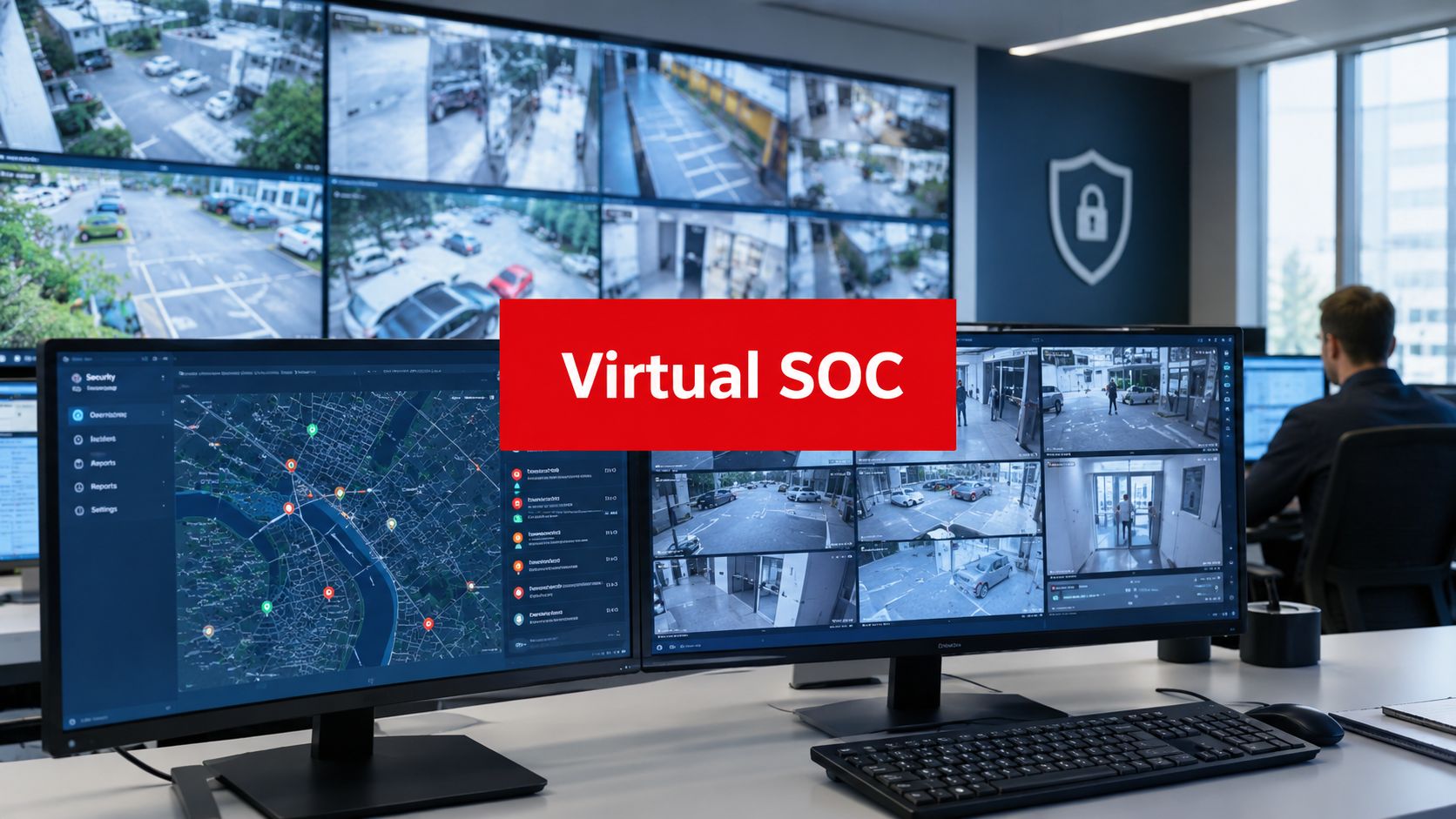
A Security Operations Center, or SOC, is often the missing layer in retail programs. It provides centralized monitoring, communications support, dispatch coordination, officer wellness checks, and escalation. For field teams, that means they aren’t operating alone. For clients, it means there’s another set of eyes on activity and reporting.
That’s especially useful for multi-site retail, where one manager can’t personally confirm every patrol stop, every incident report, or every late-night callback. A SOC creates continuity between the field and leadership.
One example of this integrated model is an integrated security system that combines field reporting, monitoring, and operational oversight. In practice, that kind of setup helps connect patrol activity with reporting and review rather than leaving each task in a separate silo.
GTMS creates accountability you can verify
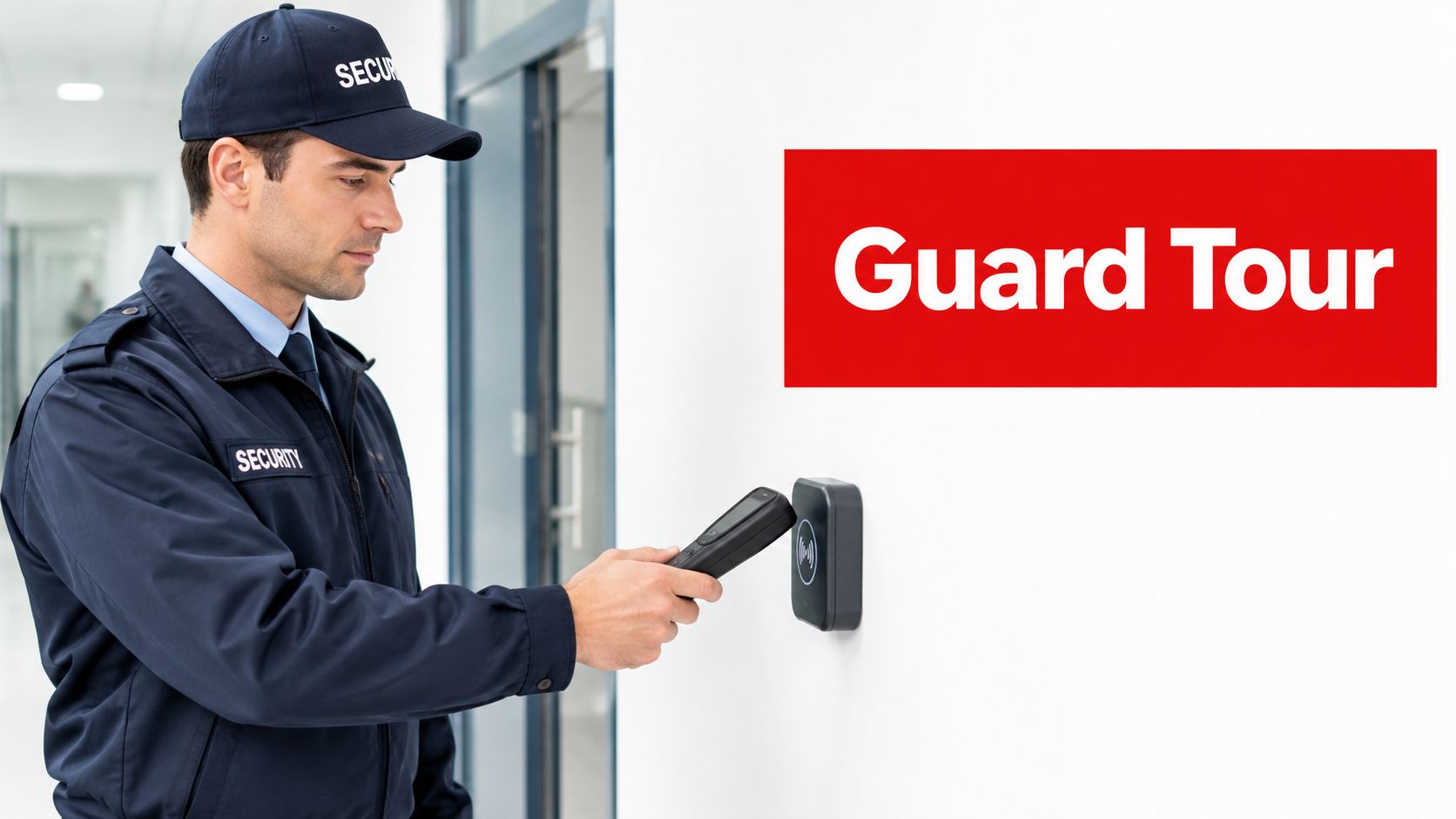
Guard Tour Management Systems are less glamorous than cameras, but they’re one of the most practical tools in security operations. A GPS-enabled GTMS gives management a time-stamped record of patrol activity, checkpoint scans, notes, and supporting photos. For retail, that means loading docks, rear corridors, electrical rooms, gate lines, and perimeter checkpoints can all be documented consistently.
That transparency solves a common problem in contract security. Managers shouldn’t have to guess whether patrols happened. They should be able to review them.
Useful GTMS outcomes include:
- Checkpoint verification: Officers confirm they reached required locations.
- Better incident documentation: Photos and notes are attached closer to real time.
- Pattern review: Management can compare incident frequency by time, place, and shift.
- Client visibility: Property teams can see what was checked and what was found.
Cybersecurity belongs in the same conversation
Retail security now includes network access, payment tools, and account protection. Verizon's 2025 Data Breach Investigations Report highlighted the retail sector's vulnerability, with ransomware and phishing being primary attack vectors. Implementing Multi-Factor Authentication is a critical countermeasure, proven to reduce unauthorized access by 99% even when credentials are stolen, according to this analysis of the changing retail cybersecurity threat landscape.
That matters at the store level because local teams often handle shared accounts, devices, and systems with direct operational impact. A modern retail program should treat physical and digital safeguards as connected, not separate.
Good technology reduces uncertainty. It tells managers what happened, when it happened, and whether the required response actually took place.
Developing Proactive Training and Security Policies
A uniform and a camera system can create the appearance of control. Policies and training create actual control. In retail, that distinction matters most when a situation gets tense.
Post orders need to be site-specific
Generic instructions create generic performance. Strong post orders tell officers what to watch, where to stand, when to patrol, what to document, who to contact, and what not to do. They also reflect the specific property. A suburban power center with loading-dock exposure needs different procedures than a luxury retail entrance in San Francisco or an open-air center in Long Beach.
Good post orders usually cover:
- Priority zones: Entrances, stockrooms, loading areas, parking lots, and known blind spots
- Response thresholds: Which issues require observation, intervention, manager contact, or law enforcement notification
- Documentation standards: What details go in a report, what gets photographed, and how evidence is preserved
- Tenant coordination: Who to notify when an issue affects multiple stores or common areas
Without that level of clarity, officers improvise. Improvisation is where service quality drops and liability starts to rise.
De-escalation is no longer optional
Employee safety has become central to retail security planning. With 70% of retailers reporting an increase in assaults and violence from organized retail crime in 2025, proactive training on de-escalation and safe intervention protocols for both retail staff and security officers is no longer optional, but an essential component of employee safety and risk management, as outlined in this guidance on a layered approach to securing retail entrances against theft.
That doesn’t mean every incident should trigger confrontation. In many cases, the safest and most effective response is controlled observation, coordinated communication, and disciplined escalation. Security officers and store teams should know when to engage verbally, when to create distance, when to move customers away, and when to shift immediately to law enforcement support.
Training has to include store staff too
Retail security programs often fail because only the officer receives instructions. Store supervisors, cashiers, assistant managers, and receiving staff also need simple, practical guidance.
A useful staff training approach includes:
Recognition
Teach staff what suspicious behavior looks like in their specific environment.Communication
Give them a clear reporting path. Who gets called first? What details matter?Safety boundaries
Set clear limits on pursuit, physical intervention, and employee positioning during incidents.Recovery
After an incident, document quickly, preserve footage, and communicate lessons to the next shift.
Written policy protects people before it protects paperwork. When staff know the plan, they make fewer risky decisions under stress.
The right security partner doesn’t just fill a post. They help build the instructions, the response standards, and the training rhythm that make the post useful.
How to Build Your Custom Retail Security Program
Most retail properties don’t need more random security activity. They need a program that matches the site, the tenants, the operating hours, and the actual incident pattern. That starts with a disciplined assessment and ends with a repeatable operating model.

Start with a real assessment
Walk the property at different times, not just during the calmest hour of the day. Review entrances, rear access points, tenant corridors, dock areas, camera views, lighting, parking patterns, and previous incident logs. The point isn’t to create a thick report. It’s to identify where exposure is present.
That review should answer practical questions:
- Where do people enter without being noticed?
- Which areas are poorly observed after dark?
- Which incidents repeat by time, location, or tenant type?
- Where do employees feel least supported?
- Which stores need full coverage, and which need periodic support?
A useful security plan is built on conditions, not assumptions.
Layer people, technology, and policy
The next step is design. Here, many properties oversimplify the problem and default to “add a guard.” Sometimes that’s right. Often it isn’t enough on its own.
A layered design usually combines several elements:
| Layer | What it does in practice |
|---|---|
| Human presence | Deters misconduct, handles in-person response, supports staff |
| Surveillance and monitoring | Extends awareness beyond line of sight |
| Patrol verification | Confirms that required checks were completed |
| Written procedures | Standardizes decisions and reporting |
| Staff training | Helps store teams respond safely and consistently |
Retail leaders who want a broad framework for planning can also review these general security principles. The value isn’t in generic theory. It’s in applying a few core principles consistently across real operating conditions.
Plan differently for multi-site portfolios
Single-store advice doesn’t solve portfolio problems. Regional managers need consistency across different locations, but they also need flexibility because no two sites carry the same mix of traffic, merchandise, tenant behavior, and neighborhood conditions.
That’s why this point matters: while most security guides focus on single-store solutions, a critical gap exists in addressing multi-site retail portfolios. NRF data highlights the rise of Organized Retail Crime, yet few resources explain how to use integrated remote SOCs and GPS-verified vehicle patrols to create scalable deterrence across dispersed locations in markets like California, as discussed in this article on reducing retail theft through security presence and planning.
For a portfolio, a practical model often looks like this:
- Tier one sites: High-incident locations get onsite officers during peak risk hours.
- Tier two sites: Moderate-risk centers receive frequent vehicle patrols, lockup checks, and remote oversight.
- Tier three sites: Lower-risk stores use alarm response, periodic patrols, and incident-driven support.
GPS verification and centralized oversight matter. A regional manager in Sacramento or Los Angeles shouldn’t need to rely on verbal updates alone. They should be able to review patrol completion, site activity, and incident trends across the portfolio.
One operational example is Overton Security, which uses GPS-enabled patrol verification, digital reporting, and SOC oversight as part of retail and commercial programs. The value in that model is straightforward. It gives property teams documented activity rather than assumptions.
Measure performance like an operation, not a feeling
A custom program needs review points. Not just “Does the property feel better?” but “What changed after implementation?” Use your own incident logs, tenant feedback, repeat-call locations, after-hours nuisance patterns, and response consistency to judge whether the plan is doing its job.
Look for signals such as:
- fewer repeat issues at the same access point
- improved after-hours lockup consistency
- faster manager awareness of incidents
- stronger documentation for tenant or ownership review
- better staff confidence in reporting and escalation
If one layer isn’t working, adjust it. Move patrol times. Rewrite post orders. Reposition cameras. Add support during closing shifts. A retail security program should be managed like any other operating system. It gets reviewed, tuned, and improved.
The best retail security plan isn’t the one with the most visible hardware. It’s the one where staffing, oversight, reporting, and response all support each other every day.
Your Partner in California Retail Security
Retail properties need more than coverage. They need structure, consistency, and a security approach that fits the environment. That’s especially true in California markets where a shopping plaza in San Diego, a mixed-use site in Oakland, and a flagship location in Los Angeles can have very different exposure.
The most effective security in retail comes from combining the right officer model, the right monitoring tools, and clear procedures that staff can follow. When those pieces work together, security supports loss prevention, employee confidence, tenant relations, and day-to-day operations.
Overton Security has spent 26 years building programs around that reality. The company’s reputation has come from hands-on leadership, a low manager-to-client ratio, support for professional officers, and systems that give clients real visibility into what’s happening on their properties. That kind of consistency matters when you’re responsible for one site or an entire portfolio.
If you’re reviewing your current setup, a no-pressure property assessment is usually the best place to start. It helps clarify what needs a fixed post, what can be handled through patrols and remote oversight, and where policy or training changes will have the biggest impact.
Frequently Asked Questions About Retail Security
The questions below come up often with retail center managers, facilities leaders, and multi-site operators. They’re worth answering directly because they affect budget, tenant confidence, and day-to-day execution.

Does visible security hurt the customer experience
Not when it’s done correctly. Poorly selected officers can make a retail environment feel tense or unwelcoming. Professional officers who understand customer interaction usually do the opposite. They create order, assist with directions, notice unusual behavior early, and reassure tenants and shoppers that the property is being managed.
The key is matching the officer style to the property. A neighborhood center, urban convenience location, and luxury retail site each need a different posture.
Should I choose shared patrols or dedicated patrols
Choose based on timing and consequence. Shared patrols work well when the goal is visible deterrence, lockup checks, and broad common-area coverage across several sites. Dedicated patrols fit properties that need tighter response expectations, more frequent checks, or focused attention on a specific group of stores.
If your problem is occasional trespass, a shared model may be enough. If you’re managing repeated dock tampering, ongoing after-hours issues, or a cluster of problem locations, dedicated coverage is usually the better operational fit.
Are tools like EAS enough on their own
They help, but they aren’t a complete program. Studies on loss prevention tools like Electronic Article Surveillance show they can reduce shoplifting by up to 70%, which makes them useful as part of a broader plan, according to this retail security guide covering EAS systems.
That said, EAS works best when stores also have clear procedures, attentive staff, and a response plan for alarms and suspicious behavior. A tag at the door can deter some theft. It won’t solve parking lot issues, internal theft, policy gaps, or after-hours access concerns.
How do I justify the budget internally
Frame security as business continuity, staff support, and operational control. Ownership may focus on direct loss, but managers also understand tenant retention, employee confidence, documented incident handling, and reduced disruption. A good security program protects more than merchandise. It protects the daily function of the property.
What’s the first improvement most retail sites should make
Clarify responsibilities. Many sites add personnel or devices before they define who monitors, who responds, who documents, and who reviews trends. Once that is clear, it becomes much easier to choose the right mix of guards, patrols, cameras, and reporting tools.
If your retail property or portfolio needs a more structured approach, Overton Security can help you evaluate vulnerabilities, staffing options, patrol coverage, and monitoring needs with a practical, no-obligation assessment.