
Hiring a security agency is a significant decision. It’s about much more than just placing a guard at your front door—it’s about building a reassuring, strategic partnership to protect what matters most. The process hinges on first getting clear on your own risks and needs, and then methodically finding a partner with the right experience, accountability, and training to match.
Conducting Your Initial Security Risk Assessment
Before you begin calling security companies, you need to know exactly what you’re trying to protect. This isn’t just a quick walk around the property. A thoughtful security risk assessment is the bedrock of your entire security plan. It helps you identify, analyze, and prioritize your unique vulnerabilities.
Without this clarity, you risk wasting money on services you don’t need or—even worse—leaving your most critical assets exposed.
For a property manager of a high-rise in Los Angeles, the primary concerns might be preventing unauthorized access to amenities and stopping package theft. But for a construction superintendent in San Jose, the real challenge is preventing after-hours theft of expensive materials and equipment vandalism. Each situation calls for a completely different approach.
Pinpoint Your Specific Vulnerabilities
Start by listing your biggest security concerns. Think about what could go wrong and what the impact would be for your business, your tenants, or your bottom line.
- Access Control Gaps: Where are people getting in who shouldn’t be? Look for unsecured gates, propped-open side doors, or lobbies without a formal check-in process.
- Asset Protection: What are your most valuable physical assets? For a retail store, it’s merchandise. For a construction site, it’s copper wiring and heavy machinery. For an office building, it might be a server room with sensitive data.
- Liability and Safety Risks: Where are accidents or confrontations most likely to happen? Poorly lit parking garages, common areas where individuals tend to loiter, and vacant floors are common trouble spots.
Many people focus on preventing major crimes like a significant burglary. In our experience, it’s often the persistent, low-level issues like trespassing, graffiti, and safety hazards that do more damage to a property’s reputation and budget over time. A true security partner helps you address both proactively.
This is what a well-planned, professional security presence looks like in action. It’s about proactive protection, not just reacting to problems.
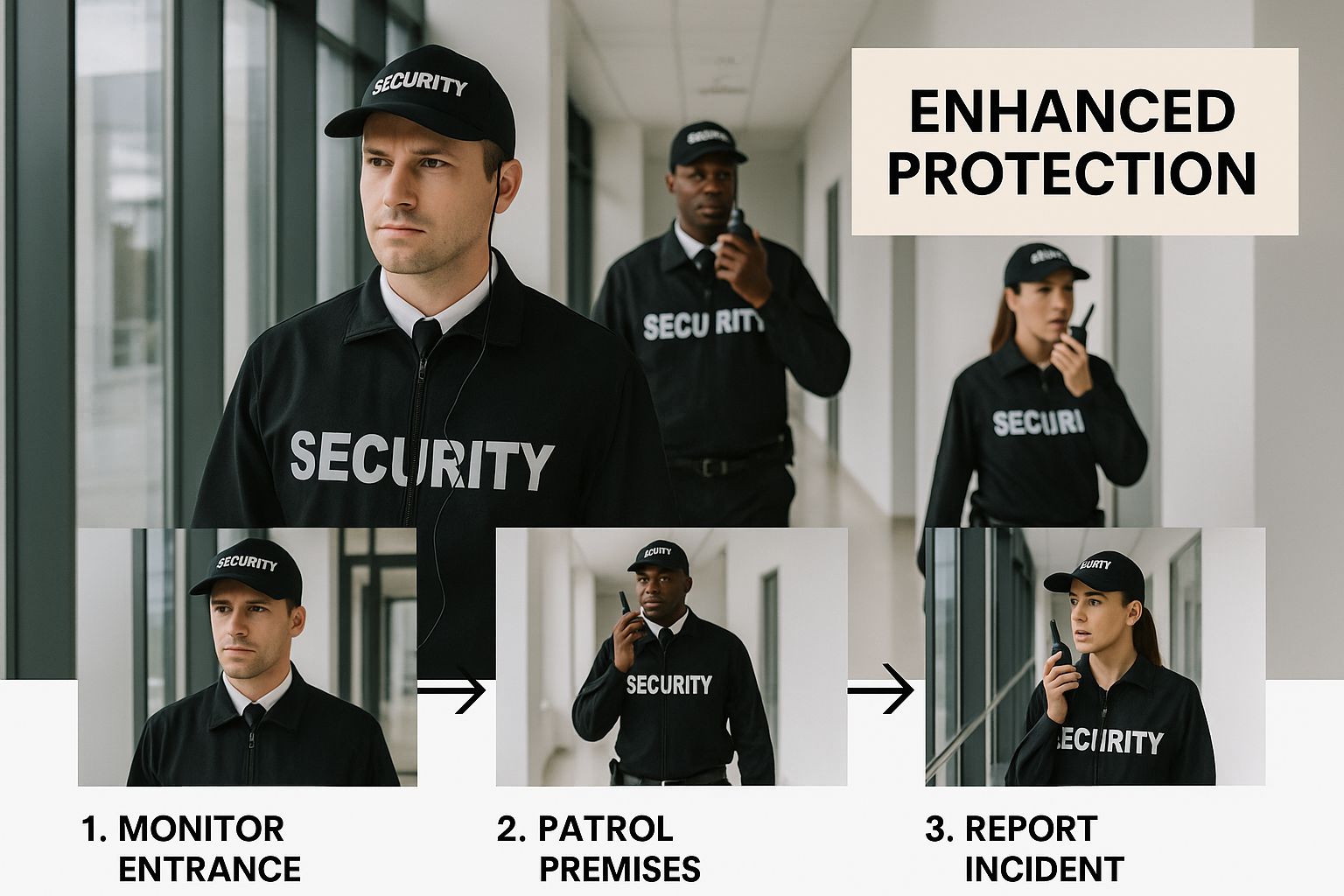
Moving from a reactive to a proactive security model is what separates a basic service from a professional partnership.
Compare Different Security Agency Models
Not all security firms operate the same way. They generally fall into one of three categories: low-bid, tech-focused, or service-focused. Understanding these differences is key to finding the right fit for your specific needs and budget.
| Characteristic | Low-Bid Agency (Cost-Focused) | Tech-First Agency (Automation-Focused) | Service-First Agency (Partnership-Focused) |
|---|---|---|---|
| Primary Goal | Provide a basic presence at the lowest possible price. | Use technology like cameras and software to reduce labor costs. | Deliver a customized security solution and build a long-term relationship. |
| Officer Quality | Often lower-paid, higher-turnover staff with minimal training. | Can be a mix; some officers are skilled system operators. | Typically higher-paid, professional officers with extensive training and support. |
| Best For | Properties needing a simple, visible deterrent on a tight budget. | Sites that can be monitored effectively with technology and fewer guards. | Complex properties that need proactive problem-solving and a hands-on partner. |
| Potential Downside | High turnover, lack of engagement, and minimal problem-solving. | Can feel impersonal; technology failures can create major blind spots. | Higher initial cost, which may not be justifiable for very simple security needs. |
This table should give you a good starting point for figuring out what kind of agency aligns with your priorities. Are you just checking a box, or are you looking for a genuine partner to help you solve problems?
Prioritize Threats By Impact
Once you’ve listed your vulnerabilities, it’s time to rank them. This is how you ensure your security budget is spent where it will have the greatest impact. A broken fence might be an annoyance, but an unsecured server room is a critical risk.
Getting this level of detail right is essential when you start talking to potential security providers. This isn’t just a local concern, either. A recent report from the International Security Ligue found that global critical infrastructure scores only 52.5 out of 100 on preparedness for major threats. That’s a significant gap that professional security agencies are meant to close. You can read the full Global Security Barometer 2025 report here.
By taking the time to do this self-assessment, you completely change the conversation. You go from saying “I need a guard” to “I need a partner who can solve these specific problems.” This positions you to find an agency that delivers a real solution, not just a uniform.
How to Vet and Select a True Security Partner
Once your risk assessment is done and you have a shortlist of potential agencies, the real work begins. Hiring a security provider isn’t like buying office supplies; you’re choosing a partner you can trust with the safety of your people, property, and assets.
To find a reliable partner instead of a basic vendor, you have to look beyond the price tag.
The initial consultation is your first—and best—opportunity to gauge the depth of an agency’s expertise. Come to these meetings prepared with questions that uncover how they operate, not just what they charge. Their answers will tell you everything you need to know.
Asking the Right Questions
Don’t be hesitant to dig into the details of their operations. Vague answers are a significant red flag. A professional, service-oriented agency will be proud to walk you through its processes.
Here are a few essential questions to get the conversation started:
- “What is your manager-to-client ratio?” A low ratio is a positive sign—it means your property gets more attention from leadership. A high ratio often means account managers are stretched thin, leading to inconsistent communication and slow responses.
- “How involved is your leadership team with active accounts?” At Overton Security, our leadership has remained hands-on, a principle we’ve maintained for 26 years. It’s the only way to ensure our high standards are met on the ground, every day.
- “Can you describe your officer training program beyond the basic state requirements?” You’re listening for details about de-escalation tactics, site-specific training, and customer service protocols. Generic answers usually indicate they only do the bare minimum.
A key indicator of a quality agency is its officer retention rate. The industry is known for high turnover, which is a major challenge for clients who must constantly retrain new people. Ask directly about their turnover and what they do to support and retain their officers.
Verifying Credentials and Experience
Never just take a company’s claims at face value. When you’re hiring a security agency, due diligence is essential. This verification process protects you from serious liability and ensures you’re partnering with a legitimate, professional organization.
Create a quick checklist to keep things organized:
- State Licensing: First, confirm their state security license is active and in good standing. This is the absolute minimum requirement.
- Insurance Coverage: Request their certificate of insurance. You need to personally verify their liability and workers’ compensation coverage. If their insurance is inadequate, you could be left financially responsible if an incident occurs.
- Industry-Specific Experience: Ask for references from clients in your industry, whether you manage a residential HOA, a retail center, or a construction site. A company with proven experience in your field will already understand your unique challenges. For more on this, our guide on how to choose a security company in San Jose has extra tips that apply anywhere in California.
Following this vetting process changes your perspective. You stop looking for just a guard and start looking for a long-term partner who is invested in your property’s security. This is how you find an agency that doesn’t just react to problems—they help you prevent them.
The Role of Technology in Modern Security
When you’re hiring a security agency, it’s easy to focus on the guards. But after years in this business, we’ve learned that the technology backing those officers is just as critical. Today, the right tech doesn’t replace skilled professionals—it empowers them, creating a system of transparency that gives you undeniable proof of service.
A quality partner uses technology to give you a direct window into the work being done on your property. This isn’t about flashy gimmicks; it’s about delivering real value and peace of mind. Without it, you’re left to hope that your property is being patrolled as promised.
Technology That Delivers Real Accountability
The best security firms seamlessly blend human expertise with smart, practical tools. These systems are all about providing clear, actionable information and ensuring your security plan is followed precisely. As you vet potential agencies, ask for a demonstration of their technology platform.
You should be looking for these core features:
- GPS-Enabled Patrol Tracking: This is non-negotiable. It verifies an officer’s exact location and movements in real time. This is how you confirm patrols are happening on schedule and that every critical checkpoint, whether it’s a back gate or a sensitive mechanical room, is being physically inspected.
- Real-Time Digital Reporting: The days of illegible, handwritten reports are over. A modern system allows officers to instantly log detailed reports, complete with photos and notes, directly from their device. You get timely, crucial information as it happens.
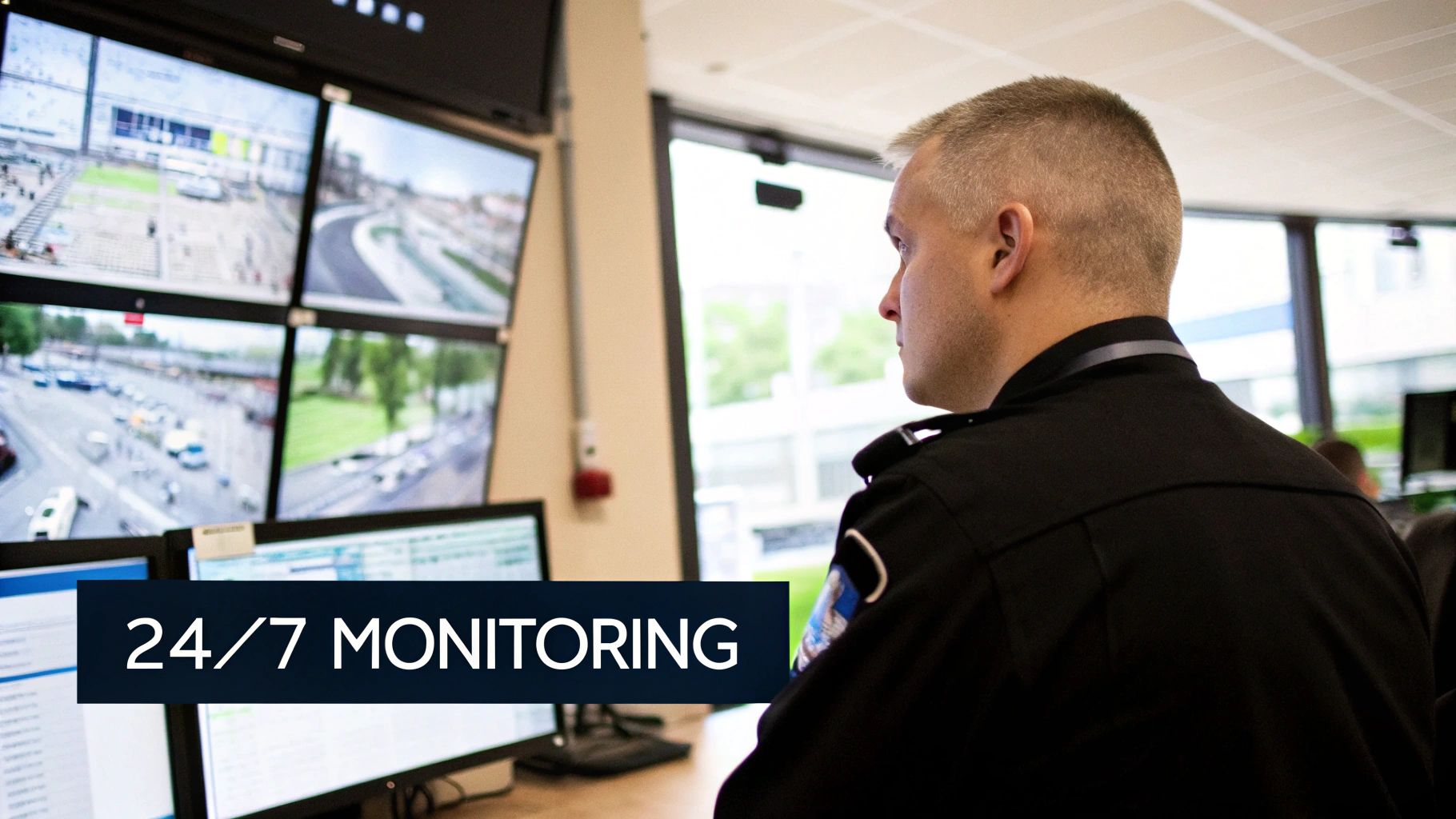
- 24/7 Security Operations Center (SOC): A professional SOC acts as the command center for all field operations. It’s an essential layer of oversight that supports officers during incidents and ensures a trained professional always has eyes on your property’s status.
The true measure of an agency’s tech is how it performs in the real world. Imagine getting an instant alert at 2 a.m. with a time-stamped photo showing that a loading bay door was left unlocked. That’s not a marketing bullet point; that’s actionable intelligence that just prevented a potential loss.
Separating Service Tools from Marketing Gimmicks
The global demand for security is growing rapidly. The Security & Surveillance market is projected to grow from $58.7 billion in 2025 to nearly $110.793 billion by 2033. This growth is driven by understandable concerns over public safety and asset protection. You can read more about the trends shaping the surveillance industry to get a feel for the market.
With this boom, you’ll find plenty of companies using “technology” as a buzzword without the robust systems to back it up. The difference is in the details. A true service tool gives you detailed, accessible, and actionable information. When you review a sample report, ask yourself: Is this data genuinely useful? Can I immediately see what happened, when it happened, and what the officer did about it?
At Overton Security, we’ve spent 26 years building our reputation by integrating technology that genuinely improves our service, not just helps us sell it. Our systems are designed for complete transparency, giving our clients a clear view into our operations and ensuring our officers have the support they need to keep your property safe. This combination of experienced people and proven technology is the hallmark of a true security partner.
Getting the Service Agreement Right
The service agreement is more than paperwork; it’s the foundational blueprint for your entire security partnership. Before signing, it’s vital to review every clause. This document dictates the agency’s responsibilities, sets performance expectations, and outlines your rights as the client.
You can think of the contract as the final test in the hiring process. A reliable partner will provide a clear, detailed agreement that leaves no room for ambiguity. If you see vague language or a reluctance to define specifics, that’s a major red flag that could lead to misunderstandings and service gaps later on.
Key Clauses That Demand Your Attention
While every contract is different, a few sections always require your full focus. These clauses are the operational heart of your security program. An experienced agency like Overton Security will ensure these are spelled out with precision, reflecting the conversations from your vetting process.
You must know what you’re paying for. Look for these critical elements:
- Scope of Work & Post Orders: This is the most important section. It should detail everything—officer duties, patrol frequencies, specific checkpoints, and procedures for handling visitors or responding to incidents. If it isn’t written in the post orders, it may not get done consistently.
- Reporting Requirements: The contract must specify the type and frequency of reports you’ll receive. Will you get real-time digital reports with photos and GPS stamps, or just a basic end-of-shift email? This defines the level of transparency you will receive.
- Liability and Insurance: The agreement must clearly state the agency’s insurance coverage limits. Critically, it should also name your company as an additionally insured party. This simple step helps protect you from liability if an incident involving their officers occurs on your property.
Spotting Hidden Costs and Vague Language
A common pitfall is a pricing structure that looks appealing at first glance but is filled with hidden charges. Scrutinize the contract for any language that could lead to unexpected fees.
The bill rate you agree on should be all-inclusive. Some agencies may try to add separate charges for fuel, administrative overhead, or even uniform maintenance. A transparent partner provides one straightforward rate that covers all operational costs, keeping your budget predictable.
Also, focus on the termination clause. You need to know the exact notice period required to end the agreement and if there are any penalties for early termination. A fair contract will always provide a reasonable exit strategy if the partnership isn’t working out.
Taking the time to review these details carefully ensures the agreement protects your interests. This final step turns promises into binding commitments, setting you up for a successful, long-term security relationship.
Onboarding Your New Security Team for Success

A signed service agreement feels like the finish line, but it’s really just the beginning. The success of your security program now rests on a smooth, thorough, and collaborative onboarding process. This is the moment where promises made during vetting become a reality.
A well-handled onboarding doesn’t just place guards on your property; it integrates them into your team. A rushed process can lead to confusion, unmet expectations, and a security presence that feels disconnected from your site’s actual needs. The first 30 days are particularly important for setting the tone of the entire relationship.
The First 30 Days: Your Foundational Period
This initial month is all about alignment and integration. Your goal is to get the new security team up to speed quickly and make them feel like valued members of your staff—not just third-party contractors. Being proactive here prevents future headaches and builds a strong working relationship.
A few items should be at the top of your to-do list:
- Conduct a Joint Site Walk-Through: Do this not just with the salesperson, but with the agency’s operations manager—the person responsible for your account. Walk the property together, pointing out specific areas of concern, tricky access points, and unique site challenges.
- Introduce Officers to Key Staff: This is a simple but powerful step. Ensure your new officers meet your facilities manager, front desk staff, and key tenants. This builds rapport and makes it easier for everyone to work together during an incident.
- Refine Post Orders in the Real World: The initial post orders are a great starting point, but they almost always need adjustments once officers are on-site. Work with the agency’s leadership to tweak duties based on real-time observations.
A critical—and often overlooked—part of onboarding is establishing clear communication channels. You should know exactly who your point of contact is for daily reports, scheduling questions, and emergency escalations. This prevents confusion when you need answers quickly.
Fostering a True Partnership
The best security outcomes happen when officers feel a sense of ownership and pride in the property they protect. At Overton Security, we’ve learned over 26 years that this comes from treating officers with respect and integrating them into the site’s culture. They are your eyes and ears on the ground.
The security industry is constantly evolving, driven by new technology and higher client expectations. You can discover more insights on shifting security trends to see how much the landscape is changing.
This new environment makes a strong partnership more vital than ever. When you bring on a security agency, the onboarding process becomes a key part of your own security posture. This is especially true for sensitive roles, as explored in our guide on what to consider when choosing executive security companies.
By investing time and effort into a comprehensive onboarding, you’re setting your new team up for success and ensuring they are ready to execute your security plan effectively from day one.
Answering Your Key Security Questions
As you get close to hiring a security agency, it’s normal to have a few final questions. This is a significant decision and a serious investment in your property’s safety. You deserve to feel fully confident in the partner you choose.
Over our 26 years in the business, we’ve found that most property managers, HOA boards, and business owners have a similar set of questions. Here are some straightforward answers to help you get the clarity you need.
How Do I Decide Between Armed and Unarmed Security?
This decision should always be based on your specific risk assessment. For most situations, an unarmed officer provides the right level of security. They act as a powerful visual deterrent and are trained in observation, reporting, and de-escalation—perfect for most commercial properties, residential communities, and events where the main goals are access control and proactive presence.
Armed officers are for situations with a clearly identified, elevated threat, such as protecting high-value assets or securing a location with a documented history of violent crime. A true security partner will analyze your risks with you to determine the appropriate level of protection, ensuring you don’t pay for services you don’t need.
What Should Security Services Actually Cost?
The cost of security is more than a simple hourly rate. It’s a combination of the officer’s training, whether they’re armed or unarmed, the complexity of their duties (post orders), and the technology used for accountability. The bill rate covers the officer’s wages, insurance, ongoing training, supervision, and company overhead.
Be cautious of bids that seem too good to be true. An unusually low price is almost always a red flag. It often means the agency pays low wages, leading to high officer turnover and minimal supervision. This not only results in poor service but can also increase your own liability.
A quality provider will give you a transparent proposal that breaks down the costs and clearly shows the value and reliability you’re paying for.
What Kind of Accountability Should I Expect?
Real accountability comes from a combination of hands-on management, transparent reporting, and the right technology.
Here’s what a strong accountability system looks like:
- Active Supervision: The agency should have a low manager-to-client ratio. This is crucial, as it means your property gets regular, direct attention from company leadership.
- Verifiable Technology: Modern tools are essential. Look for GPS-tracked patrols and real-time digital reporting systems that include timestamps and photos. This is undeniable proof of performance.
- 24/7 Oversight: A dedicated Security Operations Center (SOC) or a 24/7 dispatch provides an extra layer of support for officers and a constant point of contact for you.
We’ve learned that asking the right questions is the most important step in finding a great security provider. For a more detailed list, take a look at our guide on the important questions to ask executive security companies. The advice applies to any serious security decision.
The right security partner does more than just watch over your property—they deliver genuine peace of mind. At Overton Security, we’ve spent more than 26 years building that kind of trust through transparent operations and a deep commitment to service. If you’re looking for a reliable partner to protect what matters most, we’re ready to help.
Contact Overton Security today for a complimentary security consultation.
Article created using Outrank