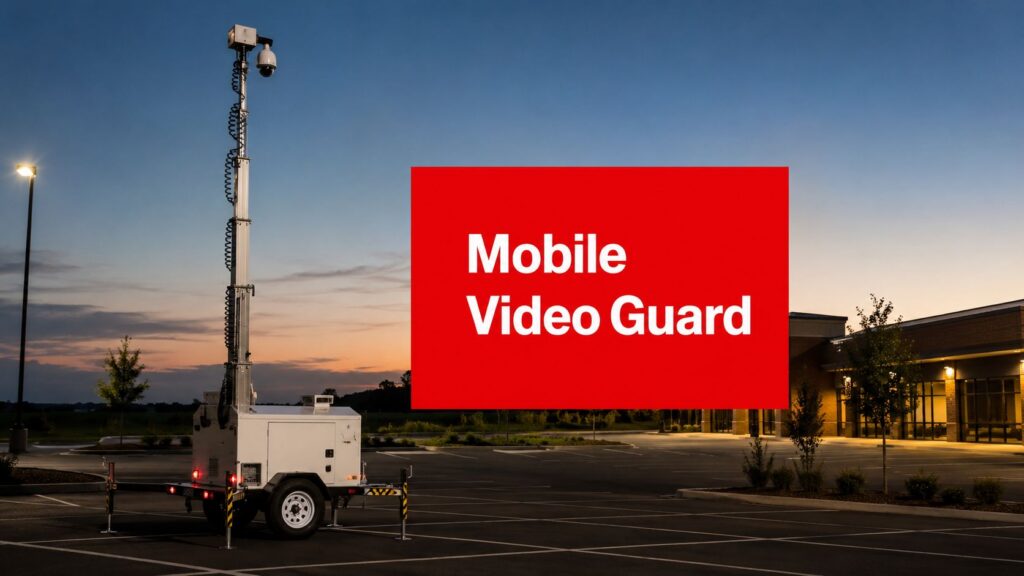
You open the gate in the morning, walk the perimeter, and find the same problems again. A cut fence behind the laydown yard. Spray paint on the rear wall. Tire tracks near stored equipment that shouldn't have moved overnight. For a property manager or construction superintendent, that kind of discovery is more than frustrating. It creates delay, paperwork, tenant complaints, and budget pressure.
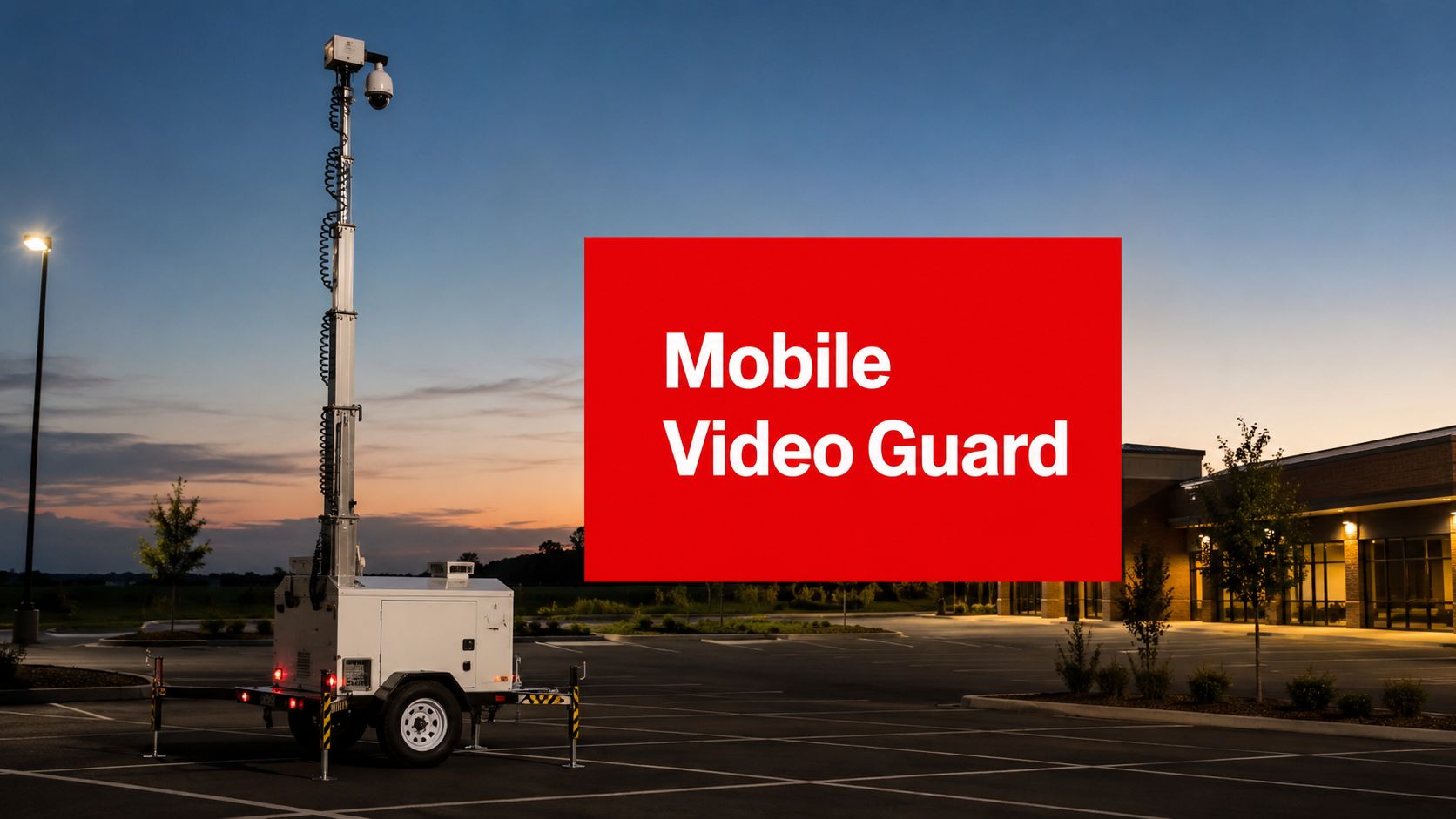
That's why more sites are moving beyond passive cameras and basic drive-through checks. They need coverage that stays alert after hours, especially on exposed properties like construction projects in San Jose, retail parking lots in Los Angeles, vacant buildings, and equipment yards with multiple access points. A Mobile Video Guard fills that gap by combining deployable surveillance, live monitoring, and immediate escalation when something happens.
Securing Your Property in a Changing World
A lot of security problems don't happen during business hours. They happen when the site is quiet, dark, and spread too thin for one person or one patrol route to cover continuously. That's the reality for large parking lots, fenced construction projects, industrial yards, and vacant commercial properties.
A mobile video guard is a portable, actively monitored surveillance unit designed for those conditions. Think of it as a temporary security post with cameras, communications, and remote oversight built in. It's not just there to record evidence after the fact. The goal is to spot suspicious activity early, verify it quickly, and trigger a response before a loss turns into a claim.
Why adoption is rising
The shift toward these systems isn't theoretical. The global mobile video surveillance market is projected to grow from USD 2,468.0 million in 2024 to USD 5,257.1 million by 2030, reflecting growing demand for deployable remote monitoring that helps reduce theft and unauthorized access, according to Grand View Research's mobile video surveillance market analysis.
For property teams, that growth makes sense. Traditional patrols still matter, but they can't watch every corner of a large site at once. A mobile unit can extend visibility over entrances, perimeter gaps, equipment storage, loading zones, or after-hours parking areas without requiring permanent infrastructure.
Where it fits in a real security plan
A well-placed unit usually works best where risk is predictable:
- Construction sites: material staging areas, fence lines, and vehicle gates
- Retail centers: rear service alleys and oversized parking fields
- Vacant properties: entry points, loading docks, and dumping hotspots
- Temporary operations: event perimeters, pop-up lots, and project-based work zones
Practical rule: If a site changes faster than fixed security infrastructure can keep up, a mobile solution usually deserves a serious look.
For managers comparing options, the useful question isn't whether technology should replace people. It's whether the site has blind spots that need persistent coverage. In many cases, the right answer is a layered program that combines officers, patrols, and an integrated security system built around real-time visibility.
How a Mobile Video Guard System Works
A mobile video guard works best when you think of it as a digital watchtower. The hardware gives you eyes on the site. The software filters activity. A live operator decides what matters and what needs a response.
That matters because passive CCTV often fails at the exact moment you need it most. It captures video, but nobody acts until the next morning. A mobile video guard is built around a different sequence: detect, verify, and respond.

Detection starts the chain
The system watches defined areas such as gates, fence lines, loading areas, or restricted zones. When motion or unusual activity appears, the unit generates an alert instead of waiting for someone to review footage later.
Good deployments don't treat every movement the same. The camera view should be set around the site's actual risks. A construction entrance after midnight deserves a different threshold than a parking lot near a public sidewalk.
Analysis reduces noise
The software's utility becomes clear. Instead of flagging every shadow, rain burst, or passing animal as a threat, analytics help sort routine movement from activity that looks like intrusion, loitering, or unauthorized access.
A lot of disappointment with remote surveillance comes from poor setup here. If the view is too wide, too cluttered, or pointed at busy public traffic, the system generates noise. If the view is built around chokepoints and vulnerable assets, the alerts become much more useful.
A camera system becomes protective when somebody can tell the difference between movement and risk.
Verification creates confidence
Once the system pushes an alert, a live operator reviews the event in real time. That step matters because it prevents overreaction and gives the responder context. Is it a trespasser cutting across the property, a delivery arriving off schedule, or a crew member who still has authorized access?
This human review is what separates active monitoring from a camera that only stores clips. A trained operator can confirm whether the situation needs intervention and document the sequence clearly.
Response closes the gap
If the event is legitimate, the operator can escalate. That might include an audio warning through the unit, a dispatch to patrol, a call to site contacts, or law enforcement notification depending on the post orders and the severity of the incident.
In practical terms, the value isn't just visibility. It's speed with context. A mobile video guard gives a property manager a tool that does more than watch. It helps convert information into action while the incident is still unfolding.
Key Technical Components and Features
The difference between an effective mobile video guard and an underperforming one usually comes down to components. On paper, many units sound similar. In the field, image quality, night visibility, communications stability, and power resilience decide whether the footage is useful and whether the system stays online when the site needs it.

The camera package
Start with the cameras. You want a unit that can produce clear identification footage, not vague shapes. Night performance matters most because many incidents happen after hours, and that's where weaker systems fall apart.
Advanced systems achieve reliable nighttime operation with smart IR LED arrays that illuminate up to 30 meters (98 feet) in total darkness while supporting 4K resolution capture, and they pair that with 120dB wide dynamic range to handle difficult lighting transitions, according to this technical camera specification sheet from Uniview.
That matters on sites with headlights, loading dock lights, sunrise glare, or deep shadow around perimeter fencing. If the camera can't handle contrast, you may have footage without usable detail.
The support hardware
A mobile unit also needs to survive the site itself. Look closely at the platform, mast, enclosure, and power setup.
A practical checklist includes:
- Stable mounting: The tower or trailer needs to hold camera views steady in wind and routine site vibration.
- Independent power: Solar and battery backup are often the deciding factors on early-phase construction or remote yards.
- Reliable connectivity: Cellular communication keeps the system tied to remote monitoring without relying on local internet.
- Weather resistance: Outdoor deployment means heat, dust, rain, and long unattended stretches.
The analytics layer
Software matters, but not in the buzzword sense. What you want is simple. The system should help security teams focus on exceptions, not drown them in clips.
Teams evaluating detection quality may find this practical guide to defect detection useful because it explains, in plain language, how computer vision systems distinguish meaningful anomalies from background noise. The same principle applies on a property. If the model and rules aren't tuned to the environment, your operators waste time on low-value alerts.
Field note: The best camera in the world won't help if the placement is wrong. Coverage design usually matters more than the spec sheet.
For managers comparing vendors, the real question is whether the unit can deliver usable coverage on a changing site. That's where dedicated mobile surveillance units tend to outperform fixed cameras installed too early or in the wrong place.
How Mobile Video Guards Enhance Traditional Security
The most common mistake in security planning is treating technology and personnel as competing line items. On a working property, they perform different jobs. A mobile video guard handles persistent observation. Human officers handle judgment, presence, contact, and physical response.
That combination is stronger than either one alone.
The force multiplier effect
An officer can inspect doors, walk a stairwell, check a mechanical room, and speak with tenants or contractors. But that same officer can't stand at the rear fence, watch the loading dock, and monitor the overflow lot all at once. A mobile video guard fills those observation gaps without fatigue or distraction.
That changes how patrol time gets used. Instead of spending the whole shift trying to be visible everywhere, officers can focus on what people do best:
- Physical verification: checking a suspicious vehicle, open gate, or damaged barrier
- Detailed inspections: looking for tampering, unsafe conditions, or signs of unauthorized occupancy
- Visible reassurance: giving tenants, employees, or visitors confidence that security is actively present
- Escalation support: arriving with context after a verified alert rather than walking into the unknown
Why coordination matters
Technology only helps if somebody owns the response process. Overton Security's 24/7 National Security Operations Center provides that live oversight with real-time monitoring, dispatching, and GPS tracking that connects the virtual guard to the physical response of field officers, as described on Overton Security's main company site.
That kind of coordination turns separate tools into one operating picture. The operator sees the event. The patrol officer gets the location and context. The client receives cleaner reporting and a clearer timeline of what happened.
What works on larger sites
This layered model is especially useful on large commercial properties, apartment communities, distribution yards, and campuses where one type of coverage alone leaves gaps. A mobile unit can watch the exposed edge of the property while patrol handles doors, common areas, and policy enforcement.
For some properties, even the response vehicle matters. On large private communities, campuses, or event grounds, low-noise platforms can improve maneuverability and visibility. This overview of best security golf cart solutions is a useful example of how mobility choices support the patrol side of the security plan.
If the camera verifies the incident before a patrol officer rolls, the response is usually faster, safer, and more purposeful.
For managers building coverage across a parking field, business park, or mixed-use site, the goal isn't to reduce people. It's to make mobile patrols more effective by giving them verified information instead of guesswork.
Common Use Cases for Property and Facility Managers
Most property managers don't buy security technology because they want new hardware. They buy it because the same problem keeps coming back. The use cases below are where mobile video guard deployments tend to make the most operational sense.

Construction sites with moving risk
A construction site changes every week. Materials arrive, fencing shifts, trades rotate, and power availability may still be limited. What worked during grading may fail during framing or finish work.
A mobile unit works well here because it can be repositioned as the project evolves. One week, the priority may be the equipment laydown yard. Later, it may be copper storage, a newly exposed access road, or a temporary trailer cluster. The point isn't permanent infrastructure. It's adaptable coverage.
Large parking lots after hours
Retail centers and office complexes often have oversized parking areas that feel manageable during the day and exposed at night. Loitering, vehicle break-ins, vandalism, and unauthorized gathering usually happen in the low-traffic corners that nobody watches continuously.
A mobile video guard gives those edges a defined presence. It can cover entrances, cross-aisles, and dark perimeter areas where passive lighting alone doesn't do enough. For a manager in Los Angeles or San Diego, that's often the difference between reacting to tenant complaints and preventing the pattern from becoming routine.
Vacant buildings and transition properties
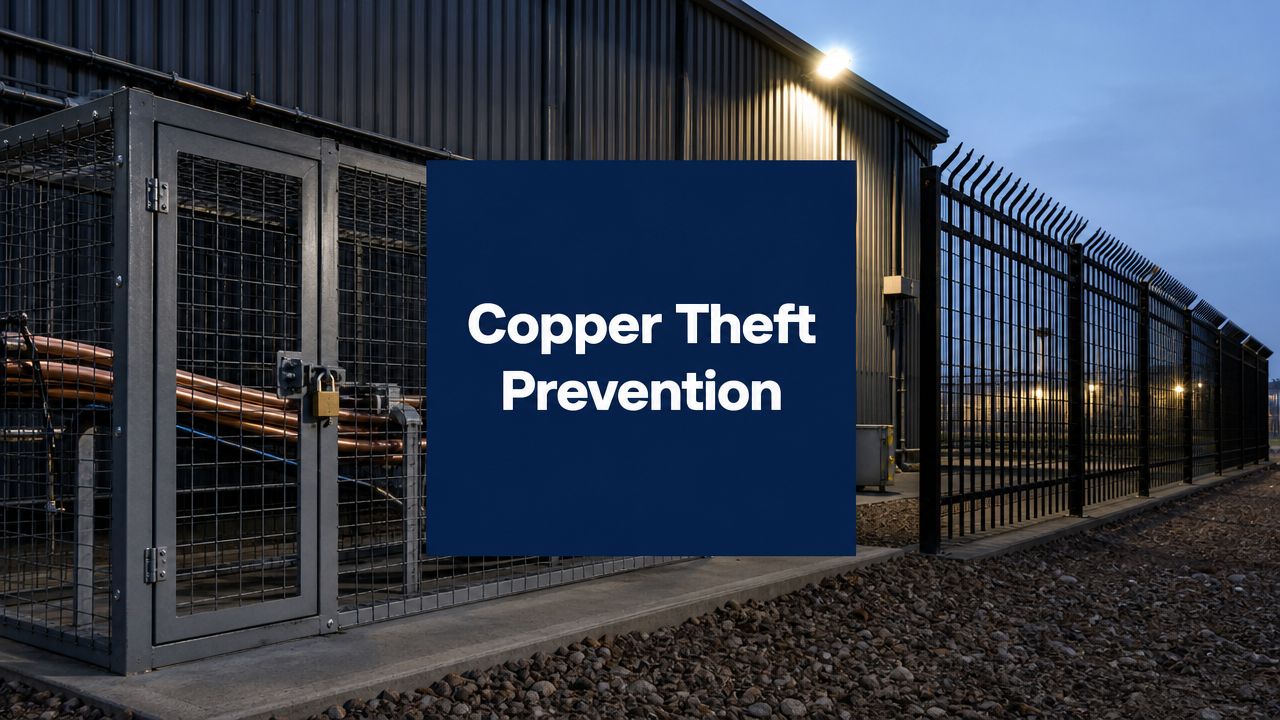
Vacant commercial spaces invite the wrong kind of attention. Illegal dumping, squatting, copper theft, and repeated trespass become more likely when a building looks unwatched.
These sites benefit from a visible, temporary security layer that doesn't require major installation. Managers can place a unit where access is most likely, usually near the lot entry, dock area, or the side of the building screened from street view.
Event spaces and temporary operations
Short-term uses create their own security problems. Event planners, facilities teams, and logistics managers often need coverage for a defined period without wanting to install fixed systems they'll remove a week later.
Here's where a mobile video guard makes operational sense:
- Outdoor events: monitor fenced perimeters, vendor areas, and overnight equipment storage
- Distribution yards: cover trailer rows, gate approaches, and detached storage zones
- Overflow parking: deter unauthorized access in temporary lots
- Seasonal retail operations: add surveillance during peak periods without changing the permanent site plan
A temporary risk usually needs a temporary security tool. That's where mobile systems tend to outperform permanent installs and underused guard posts.
Deployment Costs and ROI Considerations
Most property managers don't need a sales pitch on security. They need a decision framework. The key comparison isn't “camera versus guard.” It's what level of coverage the site needs, how long the risk will last, and which option controls loss without overcommitting the budget.
A mobile video guard is often most attractive on temporary or high-risk sites because it can provide continuous observation without requiring a full-time fixed post. That matters on construction jobs, large lots, and remote yards where risk is concentrated after hours rather than all day.

A practical deployment checklist
Before comparing proposals, get clear on the site conditions. These factors usually decide whether the deployment performs well and whether the ROI case is strong.
Map key risk areas
Focus on gates, blind perimeter segments, material storage, isolated parking zones, and any area with a history of trespass or vandalism.Confirm power and connectivity
Some sites need fully self-contained units. Others can support a simpler setup. Early-phase construction and remote properties often need more independence.Set response rules
Decide what triggers an audio warning, when patrol should be dispatched, who gets notified, and when law enforcement should be contacted.Review the coverage timeline
A six-month project, a lease-up period, or a seasonal parking problem may not justify permanent installation.
How to think about ROI
ROI gets clearer when you compare the system against the cost of inaction. On construction properties, theft at U.S. sites costs the economy an estimated $1 billion annually, and that's why the business case for a mobile video guard often becomes obvious after one prevented major incident, as noted by Mobile Video Guard's construction security discussion.
For a property manager, the return usually shows up in several ways:
- Loss avoidance: fewer stolen tools, materials, fixtures, or vehicles
- Operational continuity: less disruption, fewer replacement delays, fewer emergency calls
- Smarter guard allocation: use officers where physical presence matters most
- Better documentation: stronger incident timelines for internal review and claims handling
A simple comparison mindset
Use this lens when reviewing options:
| Security need | Usually better fit |
|---|---|
| Constant observation of a large exposed area | Mobile video guard |
| Customer service, access control, physical presence | Onsite officer |
| Verified response across a route of properties | Mobile patrol |
| Temporary project with shifting coverage needs | Mobile video guard plus patrol |
Budget test: If the site needs eyes everywhere but hands only when something is verified, a mobile video guard often makes more financial sense than staffing for continuous fixed observation.
Frequently Asked Questions About Mobile Video Guard Systems
Property managers usually ask the same three questions before approving a deployment. They're the right questions.
What about privacy
Privacy starts with placement and policy. On most commercial, industrial, retail, and multifamily properties, the focus should stay on public-facing perimeters, entrances, parking areas, loading zones, and other operational spaces where the property already manages access and safety.
Good deployments avoid aiming into private living areas or spaces where occupants reasonably expect seclusion. Clear signage, documented post orders, and a defined purpose for monitoring help keep the program practical and defensible.
Do these systems hold up in rough weather
They should, because many of the best use cases involve outdoor environments with little shelter. The unit has to keep working through heat, rain, dust, and long unattended periods.
When evaluating a system, ask practical questions instead of accepting general claims:
- Can the mast and housing tolerate outdoor exposure for the full deployment period?
- Does the power system support operation when site conditions change?
- Will the connectivity remain stable enough for remote review and escalation?
If a vendor can't answer those clearly, the issue usually shows up later as downtime, missed alerts, or poor footage.
What happens if an audio warning doesn't stop the person
That's where procedure matters more than hardware. A serious security program doesn't assume every trespasser leaves after a speaker warning. It sets an escalation path in advance.
A solid sequence usually looks like this:
- The alert is reviewed in real time.
- The operator determines whether the activity is unauthorized.
- An audio intervention or warning is issued when appropriate.
- If the person remains, a patrol officer or law enforcement response is initiated based on the site instructions.
The system works best when every alert has a decision path, not when everyone improvises in the moment.
That's also why mobile video guard deployments work best as part of a broader operating plan. The camera sees. The operator verifies. The responder arrives with context.
If you're weighing remote monitoring against guard coverage for a construction site, retail center, parking lot, or vacant property, Overton Security can help you evaluate the trade-offs clearly. With 26 years of experience, a quality-over-quantity approach, and a 24/7 SOC that supports real-time accountability, Overton helps California property managers build security programs that fit the site, the risk, and the budget.