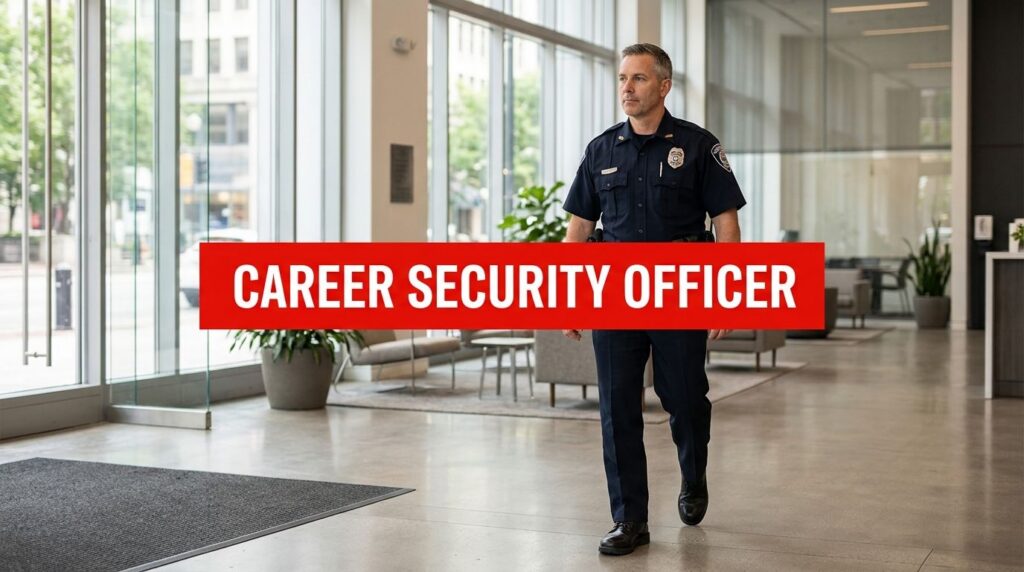
You may be looking at security because your current work feels temporary. Retail hours change every week. Gig work pays only when the app is busy. Office jobs sound stable until you realize you want something more active, more useful, and more visible to the people around you.
That's where a lot of strong security careers begin.
A career security officer isn't just someone who stands at a post. The good officers become the calm person at the front desk when a tenant is upset, the first responder when a gate is damaged, the sharp observer who notices a pattern before it becomes an incident, and the reliable professional a property manager trusts at 2 a.m. in Los Angeles, San Jose, or San Diego. In residential communities, retail centers, construction sites, and office buildings, that kind of presence matters every day.
Beyond the Badge A Modern Look at the Security Profession
The old stereotype misses what the job really is. On a live site, a security officer handles access control, patrols, incident documentation, customer service, policy enforcement, and emergency response. On some properties, the role feels close to hospitality. On others, it feels operational. At the best posts, it combines both.
That matters because the industry is large enough to support a real long-term path. The U.S. security services industry is valued at $49.1 billion in 2026 and projected to grow to $154.3 billion by 2035, and 1,272,400 security guards are employed in the United States, with 73.69% working for contract security companies according to security guard industry data compiled here. For someone building a career, that means most opportunities will come through contract security firms serving many types of clients.
What the work actually looks like
A residential concierge officer in San Francisco may spend the morning managing visitor access, coordinating deliveries, and helping residents while keeping an eye on cameras and entry patterns. A construction site officer in Oakland may spend the night checking fencing, locking points, lighting conditions, and signs of tampering. A retail officer in Long Beach may focus on presence, professionalism, and fast reporting when a disturbance starts to build.
Same field. Different environments. Different skill mix.
Practical rule: Don't choose security by uniform style. Choose it by post type, supervisor quality, and whether the company treats the role like a profession.
Why people stay in this profession
The right fit gives you something many jobs don't. You can see the value of your work in real time. A resident gets safely into the building. A contractor finds equipment untouched in the morning. A facilities director receives a clean report with photos, timestamps, and clear notes instead of guesswork.
That's why serious people stay. They find a lane they're good at, build credibility, learn the operational side, and move up.
A security career also offers variety without forcing you to start over. You can begin in unarmed post work, move into patrol, specialize in concierge or construction, take on lead responsibilities, and eventually handle site operations or client relationships. That's a very different picture from the “just a job” mindset that keeps many officers stuck.
Your California Licensing and Training Roadmap
California gives you a straightforward path into the profession, but many new applicants make it harder than it needs to be. The process feels bureaucratic until you break it into steps and understand why each step exists.

Start with the required training
For a career security officer in California, the training path begins with a minimum of 8 hours of pre-employment training, followed by 16 hours of on-the-job training within 30 days, and another 16 hours within the first six months according to this security officer training overview. Those hours aren't busywork. They prepare you for access control, incident documentation, and emergency response.
The practical lesson is simple. Take the early training seriously. Officers who treat the first hours like a box-checking exercise usually struggle later with report writing, legal boundaries, and post discipline.
Five steps that keep the process manageable
Confirm you're eligible
You'll need to meet the basic requirements tied to legal work status and background review. Handle this first so you don't waste time on a process you can't complete.Complete the initial training
Get the mandatory course done through a legitimate provider. If you want a detailed local walkthrough, review California security guard licensing steps before you submit anything.Submit your application
At this stage, attention to detail is key. Incomplete paperwork slows people down more than the training itself.Complete Live Scan fingerprinting
This part supports the background check. Schedule it promptly so your application doesn't sit idle.Finish your follow-up training on time
New officers sometimes forget that the first course is only the beginning. The additional training inside the first month and first six months is part of becoming employable on better assignments.
What new officers often get wrong
A lot of applicants think the Guard Card is the whole game. It isn't. The license gets you in the door. Your readiness for the post is what keeps you there.
Get licensed fast if you need to. But once you're hired, slow down enough to learn the post orders, site layout, reporting standard, and emergency procedures.
Think beyond the card
If you plan to stay in the field, look at training as a career tool, not a compliance burden. Some assignments require more maturity, cleaner communication, stronger report writing, or greater comfort with visitors and tenants. Others demand a sharper operational rhythm and confidence with patrol patterns, alarms, and documentation.
That's why the best early move isn't chasing every possible credential at once. It's getting licensed, showing up on time, learning a post well, and building the habits that supervisors trust.
Skills That Define an Elite Security Officer
Licensing gets you legal entry into the field. Skills determine whether you remain a basic guard or become a trusted professional.
The strongest officers don't rely on one trait. They combine observation, reliability, communication, and judgment. In practice, that means they can notice a problem early, speak to people calmly, document what happened clearly, and follow site procedures without creating unnecessary conflict.
Foundation skills that employers notice quickly
Some abilities show up in the first week.
- Reliability under routine: Can you arrive early, stay alert on a quiet post, and handle repetitive tasks without getting sloppy?
- Accurate writing: A weak incident report creates headaches for clients, supervisors, and sometimes law enforcement.
- Professional presence: This isn't about looking tough. It's about looking composed, approachable, and in control.
- Observation with restraint: Good officers notice details. Great officers know which details matter and what action is appropriate.
A Class A office lobby in San Francisco won't reward the officer who acts aggressive. It rewards the officer who can maintain policy, protect the property, and still leave tenants feeling respected.
The soft skills that raise your value
Here, many careers accelerate.
Emerging data shows that unarmed officers in major markets like Los Angeles and San Francisco with specialized hospitality certifications and proven soft skills can command $20 to $24 per hour, according to this security officer job market snapshot. That's an important correction to the common idea that higher pay only comes from armed work.
Soft skills that matter most include:
- Calm verbal de-escalation: You lower tension before it turns into an incident.
- Customer-facing communication: Essential in concierge security, residential communities, and commercial properties.
- Empathy with boundaries: You can be respectful without becoming permissive.
- Clear phone and radio communication: Short, precise updates save time when something changes fast.
Officers who can protect the site and preserve the client relationship are usually the ones managers remember when better openings appear.
Technical fluency still matters
Modern security work includes digital reporting, CCTV awareness, alarm response, and checkpoint accountability. Officers who adapt well to digital systems tend to make fewer reporting mistakes and give clients more usable information.
For structured development, many officers look at security officer training programs that focus on practical post performance instead of generic theory.
The officers who advance tend to blend both sides of the job. They can stand a post professionally, write a solid report, use the reporting tools correctly, and handle a difficult interaction without turning it into a scene.
Salary Expectations and Job Outlook in California
Let's be honest about pay. Security has opportunity, but not every job in the field pays well. If you choose the wrong employer or stay in low-skill posts too long, your income can flatten out fast.
The national baseline gives useful perspective. The median U.S. security guard wage is $38,370 annually, and the field produces 162,300 job openings each year due to turnover, according to these security guard industry statistics. That second number tells you something important. Openings exist, but many of them exist because companies fail to keep officers.
What this means in California
In California, location and assignment matter. Los Angeles, San Francisco, San Diego, San Jose, and Oakland all contain posts where clients expect more than simple visibility. Residential towers need officers who can manage access and resident interactions. Commercial properties need clean reporting and policy consistency. Construction sites need dependable patrol discipline and after-hours awareness.
That creates a split in the market:
| Type of role | Typical value to employer | Career effect |
|---|---|---|
| Basic post coverage | Fills a schedule gap | Easy to enter, harder to grow from if you stay too long |
| Specialized unarmed work | Supports service, image, and policy enforcement | Better path for advancement |
| Leadership-track assignments | Helps train officers and stabilize accounts | Strongest route into supervision |
How officers increase earning potential
A better paycheck usually comes from becoming more useful, not just from waiting longer.
- Choose stronger sectors: Concierge, commercial, healthcare-style environments, and complex residential accounts often reward professionalism and communication.
- Build a reputation for stability: Employers value officers who stay steady on difficult posts and don't create management problems.
- Pursue specialized assignments: A post with more responsibility often becomes a bridge to lead roles.
- Understand armed pay realistically: Armed roles can raise earnings, but they also bring tighter expectations and not every officer wants that path. If you're comparing options, armed security guard pay factors in California can help frame the trade-off.
The real outlook
The broad outlook isn't about explosive hiring. It's about consistent need, constant turnover, and a clear opening for officers who are dependable. In practical terms, California security rewards people who stay disciplined, learn higher-trust environments, and avoid companies that treat staffing like a revolving door.
Charting Your Advancement From Officer to Manager
Many officers leave the field because they can't see the next step. That's usually a company problem, not a profession problem. A quality operation should make the ladder visible.

The ladder is real when the company supports it
A common progression looks like this:
| Role | Core focus | What changes |
|---|---|---|
| Security Officer | Executes post orders | Learns consistency, reporting, and site procedures |
| Lead Officer | Supports shift performance | Helps newer officers and keeps the post running smoothly |
| Supervisor or Team Lead | Manages operations | Handles scheduling issues, coaching, and field oversight |
| Account or Site Manager | Owns account performance | Works with clients, staffing, quality control, and service delivery |
The jump from one level to the next isn't mostly about seniority. It's about whether people trust you with more moving parts.
What advancement looks like in practice
A Security Officer succeeds by mastering the basics. That means punctuality, clean uniform standards, accurate reports, proper patrol execution, and solid judgment. If you can't do that consistently, no title change will help you.
A Lead Officer becomes the person others ask when something is unclear. You may help onboard new officers, reinforce post orders, and steady the shift when a supervisor is off site. This role often reveals whether you can teach, not just perform.
Strong leads don't just correct mistakes. They prevent them by setting a clear standard at the start of the shift.
A Supervisor or Team Lead has to think wider. Now you're watching staffing coverage, documenting performance issues, checking sites, and communicating upward before a small problem becomes a client complaint.
An Account or Site Manager carries the business side of security. You're responsible for service quality, client communication, officer stability, and operational follow-through. At this level, writing, professionalism, and judgment matter just as much as field experience.
How to prepare before the promotion comes
Promotion conversations usually happen after you've already shown the habits of the next role.
Build evidence that you can lead:
- Train newer officers well: If people improve after working with you, that gets noticed.
- Handle conflict professionally: Managers need officers who lower drama, not spread it.
- Write with clarity: Clear emails, reports, and notes often separate future managers from career post-fillers.
- Track your examples: If you're updating your application materials, these leadership examples for your resume are useful for translating shift responsibility into language hiring managers understand.
A real career path in security should feel concrete. If your company never talks about lead roles, field supervision, or account management, that tells you a lot.
Why Your Choice of Employer Matters Most The Overton Difference
Most security career advice focuses on licenses, gear, or post assignments. Those things matter, but your employer shapes almost everything else. Training quality. Scheduling discipline. Site support. Promotion visibility. Whether you feel like a professional or a disposable body in uniform.
That's where the field separates sharply.

What poor employers get wrong
Bad operators staff first and manage later. They overload supervisors, rush onboarding, leave post orders vague, and replace burned-out officers with the next applicant. From the client side, that creates inconsistency. From the officer side, it kills careers.
You can usually spot this model early:
- Managers disappear after placement
- Schedules change constantly without explanation
- Reports go unread unless something went wrong
- New officers learn the post from whoever happened to work yesterday
That environment doesn't build professionals. It creates churn.
What a stable company does differently
Overton Security was founded in 1999 and has over 26 years of operational history as of 2025, and the company uses a low manager-to-client ratio as a core service metric, as described on Overton's company background. For officers, that matters because hands-on management usually means more site support, clearer standards, and better follow-up.
This kind of structure changes the day-to-day experience. A field team with real oversight can correct issues faster, visit sites more often, and coach officers before a client loses confidence. For a property manager, facilities director, or HOA board, that creates steadier service. For an officer, it creates a workplace where performance gets seen.
If you want a long career, choose the company that notices your work before something goes wrong.
The practical model many serious firms aim for includes strong post orders, real-time accountability tools, GPS-backed patrol verification, digital incident reports, and active operations support. That's not about buzzwords. It's about reducing confusion in the field and giving clients cleaner documentation.
This is also the one place where a company's philosophy shows up in the work itself. A provider such as Overton Security combines on-site security, patrol support, digital reporting, and 24/7 SOC oversight in a way that can give officers clearer accountability and faster support on active assignments.
The standard to look for
When you interview, ask direct questions:
- Who visits the site regularly
- How officers receive post-specific training
- What happens when an officer needs field support
- Whether managers are stretched across too many accounts
- How the company handles retention and advancement
A career security officer needs more than a paycheck. You need a company with standards, structure, and enough leadership attention to help you grow.
Specializing Your Career for Higher Growth
Not every officer should follow the same path. Some thrive in polished environments with heavy public interaction. Others prefer rugged sites, overnight patrols, or high-tempo response work. Security becomes a stronger career when you choose a specialization that matches your temperament.

Comparing common career tracks
Here's how several common paths differ in practice.
| Specialization | Best fit for | Daily emphasis |
|---|---|---|
| Concierge and corporate security | Officers with strong people skills | Access control, tenant interaction, polished communication |
| Construction site security | Officers who like patrol routine and site awareness | Perimeter checks, equipment protection, after-hours deterrence |
| Retail security | Officers comfortable around the public | Presence, incident response, customer-facing professionalism |
| Healthcare security | Officers with patience and emotional control | De-escalation, safety response, sensitive interactions |
How to choose your lane
Concierge and corporate security suits officers who are calm, organized, and comfortable speaking with residents, executives, tenants, and vendors. In a San Jose office building or a luxury residential property in Los Angeles, the officer often becomes part of the client experience. Sharp appearance, visitor handling, and measured communication matter every shift.
Construction site security fits people who prefer patrol-driven work and clear physical site responsibilities. On these assignments, you're thinking about gates, fencing, lighting, parked equipment, and timing. The work can feel more independent, especially after hours.
The best specialization is usually the one that matches how you naturally work under pressure.
Retail security demands quick judgment in public. You'll deal with loitering, suspicious behavior, customer concerns, and moments that can escalate fast if handled poorly. Officers who do well here tend to be visible, composed, and concise.
Healthcare security requires emotional control and maturity. Even when a company doesn't place you in a hospital setting immediately, learning healthcare-style de-escalation habits can improve your performance anywhere people are stressed, tired, or confused.
Horizontal growth is still real growth
Specialization isn't a backup plan for people who don't want management. It's another way to become more valuable. A polished concierge officer, a disciplined patrol officer, and a reliable construction specialist each solve different client problems.
That's also why smart property managers and facilities leaders don't ask for “just a guard.” They look for the officer type that matches the site. An HOA in San Diego needs a different profile than a retail center in Fresno or a commercial property in Oakland.
If you're building a long-term path, don't ask only, “How do I get hired?” Ask, “What environment fits me well enough that I can become excellent in it?”
If you're ready to build a real career path in California security, take a close look at the standards, training, and support systems behind the company you join. For officers who want structured growth, hands-on leadership, and assignments across residential, retail, construction, and commercial environments, Overton Security is a practical place to start exploring next steps.