Monday starts with three avoidable headaches. A delivery driver shows up at the loading dock with no work order on file. A former vendor's badge still opens a side door. A tenant calls because a guest was waved through the lobby and sent to the wrong suite.
That's access control in real life. It isn't just a door, a card reader, or a receptionist desk with a uniform nearby. It's the daily discipline of deciding who gets in, where they go, how they're logged, and what happens when something doesn't match the plan.
For California property managers, that discipline affects more than security. It affects tenant experience, contractor flow, after-hours operations, incident documentation, and liability. The problem is that many properties rely too heavily on hardware or too loosely on habit. Readers, cameras, and intercoms help. They don't replace judgment.
A strong access control security guard fills that gap. The officer becomes the human decision-maker at the point where policy meets reality. That matters in office towers, multifamily communities, medical buildings, industrial sites, and mixed-use properties where the volume of visitors, vendors, and deliveries changes by the hour.
Your First Line of Defense in Property Management
A commercial building can look secure on paper and still fail at the front door.
A badge system may be active. Cameras may be recording. The lobby may have sign-in procedures. But one weak handoff can undo all of that. A contractor arrives early and says engineering approved the visit. A food delivery courier follows a tenant through a controlled entrance. A frustrated visitor insists they “always go upstairs without checking in.” If no one on site can make a calm, informed decision, the property ends up relying on guesswork.
That's why an access control security guard is more than a visible deterrent. This role puts a trained person at the exact point where mistakes usually happen. The officer verifies identity, applies site rules, redirects unauthorized visitors, and keeps the interaction professional so tenants don't feel like they're entering a fortress.
The broader security industry reflects that reality. Access control is the primary responsibility for security guards, with 54% of officers reporting it as a core duty, ahead of physical patrols and surveillance at 48%, according to Security Magazine's review of guard responsibilities. That tracks with what property teams see every day. The front desk, gate, lobby, dock, and service entrance generate most of the friction, and most of the preventable risk.
Where technology helps and where it stops
Card readers are fast. Cameras are useful after the fact. Intercoms are helpful when they're answered.
None of those tools can judge intent, read a situation, or de-escalate a person who's angry about being denied entry. They also can't explain policy in a way that protects the tenant relationship.
A secure property still needs a person who can say “no” clearly, document it properly, and keep the lobby calm.
What property managers usually need
Most California properties don't need theatrics. They need consistency.
That means an officer who can:
- Screen people without slowing the building down
- Apply rules the same way at 9 a.m. and 9 p.m.
- Handle exceptions without creating new liability
- Represent the property well in front of tenants, guests, and vendors
When access control works, the building feels organized. When it fails, everyone notices.
The Core Role of an Access Control Security Guard
An access control security guard regulates movement into and out of a property or restricted area. That sounds simple until you consider how many different categories of people can show up in a single day. Employees, residents, guests, maintenance vendors, delivery drivers, job applicants, inspectors, movers, couriers, and former contractors all need different handling.
The role is built around one question. Is this person authorized to be here right now, under this site's rules?
More than a gatekeeper
A weak version of the role is passive. The officer sits, watches, and reacts late.
A professional version is active. The officer verifies credentials, checks authorization, documents entry, communicates with tenants or management when needed, and controls the pace of movement through the site. That's a very different standard.
An access control post also protects more than physical assets. It protects people, restricted spaces, tenant confidence, and in some buildings, confidential information. At a medical office building, that may mean separating public visitors from staff-only corridors. At a construction site, it may mean controlling gate entry so unauthorized vehicles don't reach equipment or materials. At a residential high-rise, it may mean confirming guest approval before elevator access is granted.
How this differs from other security roles
A patrol officer covers wider ground. Loss prevention focuses on retail theft. A fire watch officer concentrates on life safety conditions when systems are offline.
An access control security guard has a narrower and more disciplined mission. The post is about ingress, egress, verification, and documentation.
That usually includes:
- Authorization checks for people, vehicles, or deliveries
- Entry control at lobbies, gates, docks, or service corridors
- Recordkeeping that supports investigations and management review
- Policy enforcement without unnecessary confrontation
- Escalation when a person, package, or request doesn't line up with instructions
Why the role depends on written rules
The officer can only be as clear as the property's own instructions.
Access control procedures need clear written rules for employees, visitors, vendors, and deliveries, with no ambiguity about who is authorized to enter and what documentation is required for each category, as outlined in Overton Security's guidance on hiring guards. That point is often missed. Property managers sometimes assume a seasoned guard will “figure it out.” That creates inconsistency, tenant complaints, and unnecessary exposure.
Operational rule: If two officers would handle the same visitor differently, the property doesn't have a guard problem. It has a post-order problem.
The role works best when expectations are exact. Who can approve after-hours visitors. Which vendors need COIs on file. What counts as acceptable ID. Whether food deliveries stop in the lobby or go upstairs. Those details decide whether a post feels controlled or chaotic.
Key Duties and On-Site Responsibilities
Daily performance at an access post comes down to small, repeatable actions. None of them are glamorous. All of them matter.

The duties that actually protect the site
A reliable access control security guard usually handles a mix of these responsibilities:
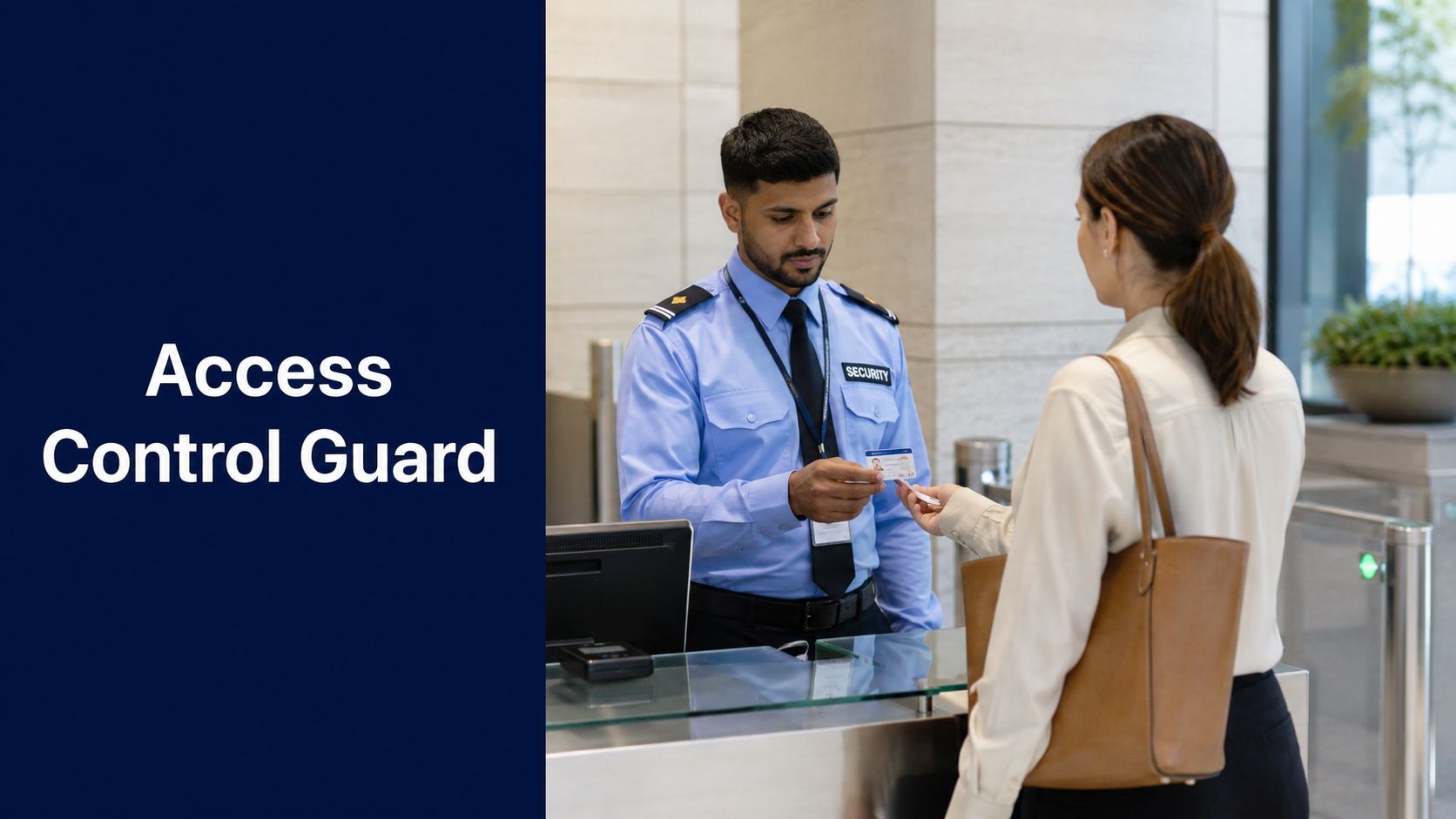
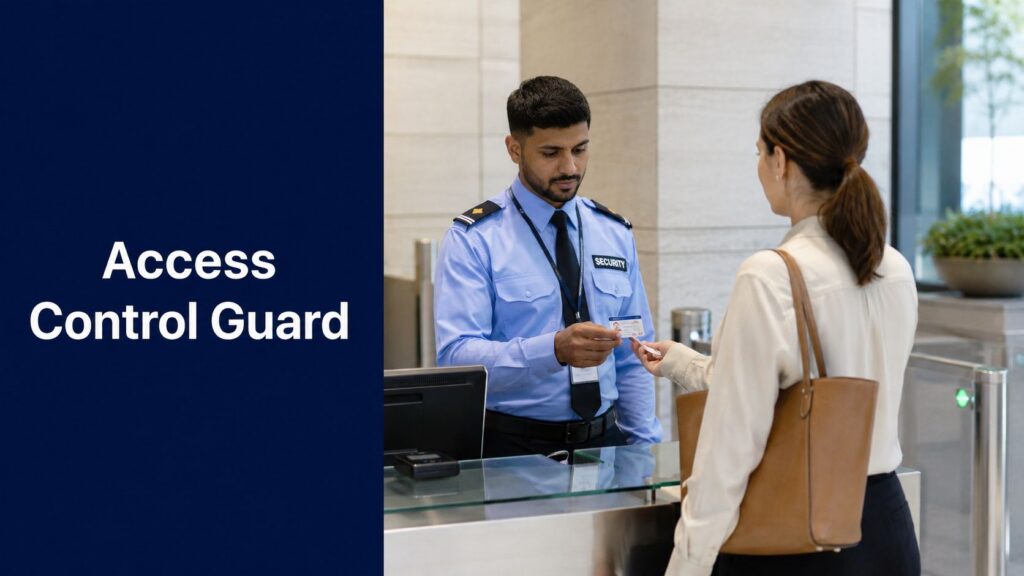
Verify credentials at entry points. That includes checking badges, government ID, tenant approval, or vendor authorization before anyone moves past the controlled point. The why is straightforward. Most access failures happen when staff assume familiarity equals authorization.
Manage visitor registration. Officers sign in guests, confirm hosts, issue temporary passes, and make sure visitors understand where they can and can't go. Good visitor handling improves security and also prevents the lobby from turning into a help desk line.
Control vendor and contractor access. Service providers often arrive with urgency and partial information. A good officer checks work orders, suite authorization, scheduled time windows, and loading or freight procedures before granting access.
Screen deliveries. Deliveries create constant exceptions. Some can be accepted in the lobby. Others need dock routing, tenant confirmation, or escort procedures. Without clear handling, packages end up in the wrong hands or in the wrong place.
Maintain accurate logs. Entry records matter after an incident, not just during one. A detailed, time-stamped log helps management reconstruct who entered, who approved it, and whether procedures were followed. For a practical breakdown of related responsibilities, see security guard duties in day-to-day operations.
Front-facing service still matters
Access control is security work, but it's also customer-facing work.
At office and residential properties, the officer often becomes the first person a tenant, guest, or applicant meets. That means the post has to balance firmness with professionalism. The wrong tone can create complaints even when the officer is technically right. The right tone protects the property while keeping the interaction calm.
The best access officers don't make people feel ignored or intimidated. They make the process feel organized.
Responsibilities during irregular situations
The test of the post isn't the easy check-in. It's the exception.
When something is off, the officer may need to:
- Deny entry and document why
- Call a tenant contact or on-call manager for confirmation
- Route the person to a waiting area instead of letting them linger near secure space
- Flag suspicious behavior to site leadership
- Coordinate with patrol, engineering, or emergency responders if the issue escalates
A property manager should expect those actions to be deliberate, not improvised. If the officer has to guess during every exception, the post will break down during the first busy afternoon.
Integrating Guards with Modern Security Technology
A modern access post works like a cockpit. The officer is the decision-maker, but the systems around that officer provide visibility, control, and support.
That's the model property managers should want. Human judgment in front. Reliable tools behind it.

The officer is the human interface
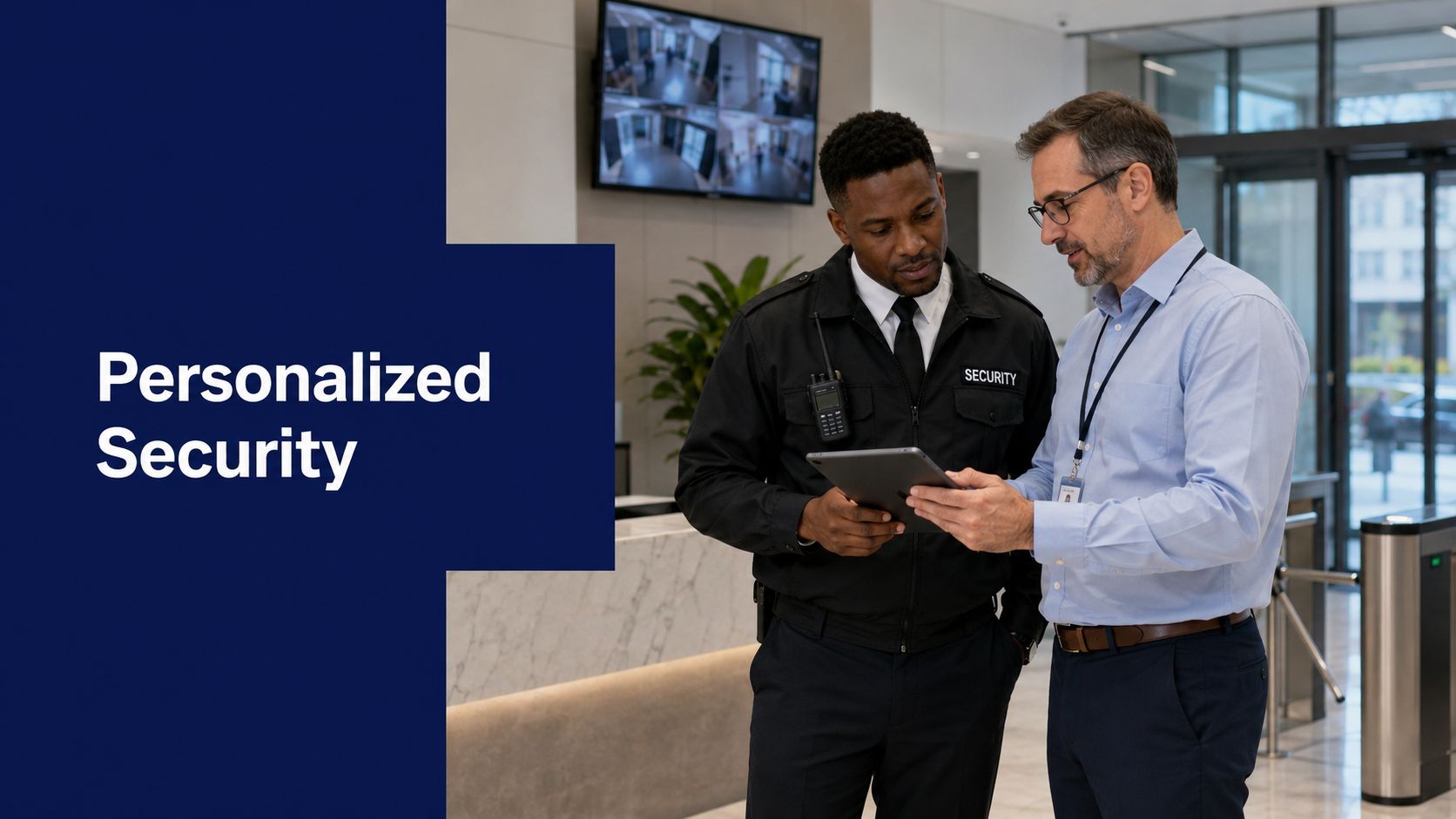
Electronic access control systems can approve badges, store permissions, and trigger alerts. CCTV gives visibility. Visitor management platforms create cleaner records. Intercoms and communication tools connect the post to tenants, engineering teams, and emergency contacts.
But each tool still needs a person who can interpret what's happening.
A card reader can reject a badge. It can't decide whether the person at the door is a locked-out employee, a terminated contractor, or a visitor trying the wrong entrance. A camera can show a tailgating incident. It can't stop it, question it, or redirect the individuals involved.
That's why the officer has to be comfortable operating within a system, not just standing next to one.
What practical integration looks like
On a well-run property, the officer should be able to move between several tools without losing control of the post.
That usually means:
- Access card systems for checking permissions, temporary activations, and denied-entry events
- CCTV feeds to verify who approached a side entrance or loading dock
- Visitor management software for pre-registered guests, badge issuance, and audit trails
- Alarm and communication platforms for escalation if forced entry, suspicious activity, or after-hours issues arise
Property teams that are updating surveillance often benefit from outside technical guidance on security camera setup for businesses, especially when camera placement needs to support lobby screening, loading areas, and secondary entrances.
Accountability matters as much as hardware
Technology shouldn't just watch the guard. It should support the guard and give the client clean visibility.
That's where systems like a guard tour platform, digital reporting, and a true operations center matter. For example, electronic access control system support is most effective when it's paired with active oversight, real-time reporting, and clear escalation channels. In practice, some firms also pair field officers with a 24/7 SOC and GPS-based reporting tools so the client can review incidents, patrol confirmation, and activity logs without waiting for a paper binder at the end of the week.
Field reality: Technology works best when it removes uncertainty. If a manager still has to ask who was on site, who approved entry, and what happened afterward, the system isn't doing enough.
The point isn't to replace the officer. It's to make sure the officer has better information, better backup, and better documentation.
Best Practices for Effective Deployment and Management
The quality of an access post depends on the structure behind it. Even a solid officer will struggle if the site has vague instructions, poor scheduling, and outdated reporting.
That's where many properties underperform. They hire a guard and assume the post will run itself.

Start with post orders that leave no room for guessing
A front desk or gate post needs specific instructions, not broad goals.
The officer should know:
- Who may authorize entry after hours
- What documents are required for vendors, deliveries, and movers
- Which doors, elevators, and routes different visitor types may use
- What to do when a badge fails, a person refuses to sign in, or a tenant asks for an exception
- Who gets called first during an incident, from property management to engineering to emergency services
If those rules live only in someone's memory, the post won't stay consistent.
Replace manual habits where possible
Manual sign-in sheets feel simple. They also create gaps.
Existing content rarely addresses the high variance in human error rates for access control guards when relying solely on manual logs versus digital systems, despite data showing that digital tracking reduces missed entries by up to 40% in high-traffic commercial buildings. A 2025 industry study also found that rotating guards every 3 hours reduces unauthorized entry attempts by 25% compared to static postings, according to Belfry's access control analysis. For a property manager, that translates into two practical decisions. Use digital reporting where possible, and don't let one officer stand in the same screening posture too long without rotation.
If a post handles steady foot traffic all day, fatigue becomes a security issue, not just a staffing issue.
Train to the site, not just to the license
Basic licensing matters, but it won't teach an officer how your building works.
A California property should expect site-specific training on lobby flow, freight and dock procedures, elevator control, tenant contacts, delivery policy, emergency exits, and after-hours approval chains. Medical buildings need different handling than residential towers. Construction gates need different handling than a Class A office lobby in Los Angeles or San Jose.
Properties with more advanced infrastructure should also understand how their back-end support works. If your vendor talks about an operations center, it's worth reviewing how a Technovation DFW cybersecurity overview of a security operations center describes centralized monitoring and escalation. The physical security version should offer the same kind of clarity. Who watches, who escalates, and who responds when the on-site officer needs backup.
Build scheduling around alertness
This part gets overlooked because it feels like the vendor's problem. It isn't.
If your property needs strict credential screening at a busy entrance, staffing plans should account for breaks, relief coverage, traffic peaks, and post rotation. A tired officer becomes slower, less accurate, and more likely to wave through someone they should have stopped. Good scheduling protects the officer, the tenant experience, and the property.
A California Property Manager's Vendor Selection Checklist
California property managers have to evaluate more than hourly rates and whether a vendor can fill a shift. Access control is now tied to both labor quality and technology support, and the broader market is moving in that direction.
The global security guard market is projected to expand to $357.20 billion by 2033, while the global access control market is valued at USD 12.72 billion in 2026, according to Cognitive Market Research's security guard market report. That combination tells you something useful. Buyers are putting value on firms that can combine people, process, and systems instead of treating guards as a commodity.
Security Vendor Evaluation Checklist for California Properties
| Evaluation Criteria | What to Ask / Look For | Why It Matters |
|---|---|---|
| BSIS licensing and compliance | Ask for current California licensing details, proof of compliance, and confirmation that assigned officers meet state requirements for the role. | If the basics aren't tight, everything else is built on risk. |
| Insurance coverage | Request certificates and review limits, endorsements, and whether the policy matches your property type. | Coverage gaps become your problem fast after an incident. |
| Site-specific training | Ask how officers are trained for your building, not just for general guard work. Request examples of post orders and onboarding steps. | A lobby, loading dock, HOA gate, and construction entrance all require different handling. |
| Supervisor involvement | Ask who visits the site, how often, and how issues are corrected. | A vendor with weak field supervision usually delivers inconsistent posts. |
| Manager-to-client ratio | Ask how many accounts each manager handles. | If one manager is stretched too thin, your account gets reactive service. |
| Reporting system | Ask whether reports are digital, time-stamped, and available quickly. Review sample DARs and incident reports. | Clean documentation supports incident review, tenant communication, and liability management. |
| Operations center support | Ask whether the company has a real monitoring and dispatch function or just an after-hours answering line. | A serious support structure helps with escalation, officer safety, and accountability. |
| Access control experience | Ask for experience with office buildings, multifamily, retail, medical, or industrial sites similar to yours. | The wrong background creates friction at the front door. |
| Staffing stability | Ask how the company supports officer retention and replacement coverage. | High churn usually means more retraining, more inconsistency, and more tenant complaints. |
| Local market familiarity | Ask about active experience in markets such as Los Angeles, San Diego, the Bay Area, Sacramento, or San Jose. | California properties differ widely in traffic patterns, tenant expectations, and operating risks. |
What strong answers sound like
You're looking for clarity, not sales language.
A good vendor should explain how badge exceptions are handled, how visitors are logged, who updates post orders, how quickly supervisors respond, and what happens when the assigned officer calls off. If answers stay vague, the service probably will too.
One practical way to separate firms
Ask to see a sample incident report and a sample post order.
That request cuts through marketing fast. A well-run company will have both ready, and both should read like operating documents, not placeholders.
Choosing a Partner Not Just a Provider
A working access control program doesn't come from putting a uniform in a chair. It comes from matching the right officer to the right post, giving that officer clear instructions, supporting the post with useful technology, and managing the account closely enough that problems get corrected early.
That's the standard property managers should hold. Especially in California, where tenant expectations are high and liability questions follow every avoidable lapse.
A dependable access control security guard protects more than the front entrance. The role protects building order. It protects documentation. It protects how your property is experienced by tenants, guests, and vendors. When the post is staffed and managed well, daily operations feel smoother because the rules are being applied calmly and consistently.
This is also where a quality-focused provider stands apart from a coverage-focused one. Overton Security has 26 years of experience in California and operates with a low manager-to-client ratio, hands-on leadership, digital accountability tools, and support structures designed to help officers stay consistent on post. If you're comparing firms, review top considerations when choosing a security outsourcing partner before making a decision.
The right security partner doesn't just fill a schedule. They help your property run better.
If your current access post feels reactive, inconsistent, or too dependent on one person's memory, it's time to tighten the system around it.
If you'd like a practical review of your lobby, gate, dock, or after-hours entry procedures, contact Overton Security. A site assessment can help identify where policy, staffing, and reporting need to be aligned so your property stays secure without creating friction for tenants and visitors.