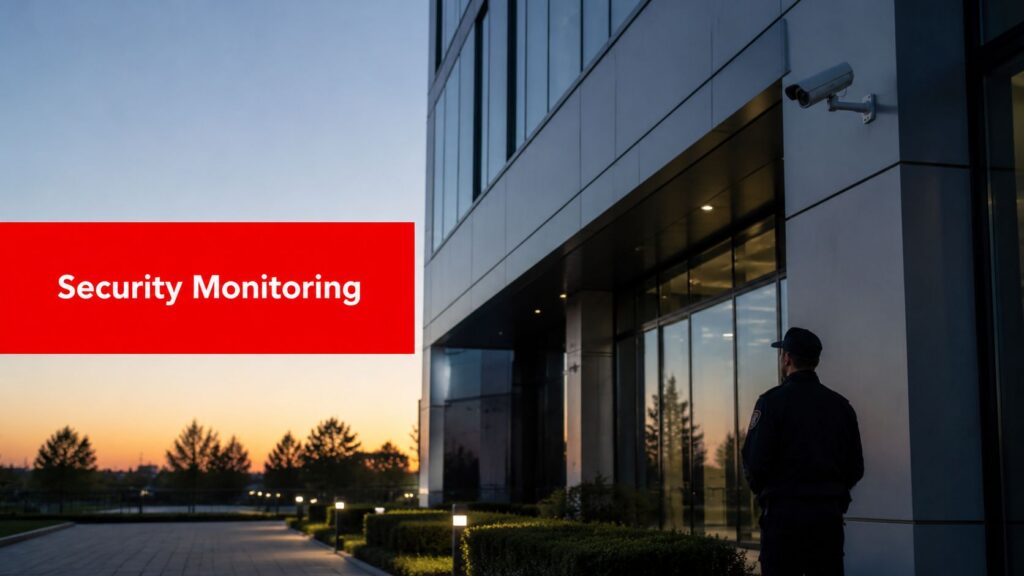
If you manage a property, you already know the uneasy hours. The building is closed, the parking lot is mostly empty, a vendor says a side gate was left unsecured, and the only report you have the next morning is a note that something “looked unusual.” That's the gap most managers want to close.
Security monitoring closes it by turning scattered signals into real oversight. Instead of waiting for a theft report, a tenant complaint, or footage review after the fact, you get a structured way to watch conditions, verify what happened, and respond while the issue is still manageable.
For property managers in Los Angeles, San Jose, San Diego, Sacramento, and other busy California markets, that matters because risk rarely shows up neatly. It shows up as tailgating at a garage entrance, loitering near a retail tenant, a propped-open service door, an after-hours delivery in the wrong place, or a patrol route that wasn't completed the way it should've been.
A strong program combines live awareness, disciplined response, and clear documentation. If you're comparing options, it helps to understand how a modern remote alarm monitoring system fits into day-to-day property operations, not just into a technical security stack.
Your Property's Watchful Eye When You're Not There
It is 11:40 p.m. A service door is propped open, a car has been circling the garage longer than it should, and a patrol officer is on the other side of the property handling a noise complaint. By morning, each issue may look minor on its own. In real operations, those disconnected moments are exactly how losses, tenant complaints, and hard questions from ownership begin.
Property managers do not usually have a hardware problem. They have a coordination problem. Cameras record, alarms trigger, access systems log events, and officers make rounds, but those inputs often sit in separate lanes. Without a monitored process to verify, prioritize, and respond, the site still runs reactively.
Why reactive security falls short
After-the-fact review has its place. It helps with investigations, insurance documentation, and post-incident reporting. It does not help much if the goal is to interrupt the event, direct the right response, and show that site controls were working in real time.
That distinction affects cost.
A broken gate, a brief trespass, or a door left unsecured can turn into overtime, tenant friction, vendor callouts, and time lost reconstructing basic facts. I have seen properties spend more money sorting out preventable incidents than they would have spent catching them early.
Property managers usually want four things from a monitoring program:
- Earlier awareness: notice issues while staff or responders can still contain them
- Verified accountability: confirm patrols, post orders, and access procedures were followed
- Useful documentation: produce a clean record for owners, tenants, and insurers
- Lower operating drag: reduce the hours your team spends chasing video, logs, and conflicting reports
What security monitoring changes
Security monitoring connects detection to action. For a property, that means cameras, alarm activity, access events, analytics, officer check-ins, and dispatch decisions are reviewed as part of one operating picture instead of a pile of separate alerts.
The integrated model is what makes the difference. Technology sees patterns and records evidence. Trained SOC operators decide what needs verification, what can be dismissed, and when to escalate. Mobile patrols or on-site officers handle the field response. Firms that built their model around that combination, including Overton, solve a problem that tech-only and guard-only programs both leave behind. One gives you alerts without judgment. The other gives you presence without broad visibility.
A well-run remote alarm monitoring system for commercial properties supports that workflow by turning scattered signals into a documented response process.
Good monitoring answers three operational questions fast. What happened, does it require action, and who owns the response?
That standard applies whether you manage a multifamily community, office building, retail center, or yard with after-hours deliveries. The tools may differ by site, but the business value stays consistent. Fewer avoidable losses, faster incident handling, and a clearer record of who did what and when.
The same principle shows up in residential programs such as home security monitoring in Perth, but commercial properties have a higher burden. More access points, more vendors, more liability, and more pressure to prove accountability. Monitoring earns its keep when it helps you reduce that exposure without staffing every corner of the property around the clock.
What Security Monitoring Really Means for Your Property
When people ask what is Security Monitoring, they usually expect a simple answer like “watching cameras” or “receiving alarm alerts.” That's part of it, but it's too narrow to be useful for a property manager making budget and risk decisions.
At a practical level, security monitoring is a system for detecting issues, verifying that your controls are working, and preserving a reliable record of activity. Those three functions matter just as much in a mixed-use property as they do in a high-security technical environment.
Detection is only the first job
Yes, monitoring helps catch incidents in progress. A trespasser enters a parking structure. A loading dock door opens after hours. A person lingers near a tenant entry longer than normal. Good monitoring identifies that activity and gets it reviewed quickly.
But detection by itself can still fail if everything around it is disconnected. That's why isolated tools often miss the bigger story. A multi-domain view matters because attacks and violations often move across separate areas instead of staying in one lane. Vectra's discussion of security monitoring notes that organizations often monitor domains in isolation, creating gaps where multi-domain attack paths go unseen, and cites 73% of enterprises reporting incidents originating from those cross-domain paths.
For a property, the equivalent is familiar. A gate event, camera alert, visitor entry, and patrol observation may each seem harmless on their own. Together, they can show a pattern.
Monitoring proves whether your safeguards are real
One of the most overlooked uses of monitoring is verification. A locked door policy sounds solid. A parking rule sounds clear. A visitor procedure looks fine on paper. Monitoring tells you whether any of that is being enforced.
NIST describes continuous monitoring as a strategic framework for monitoring control effectiveness, security status, and reporting, with automation used wherever possible for collection, analysis, and reporting (NIST SP 800-137). That's a technical standard, but the management lesson is simple. If a prohibited event keeps appearing in your event stream, your control isn't working the way you think it is.
Good records protect you after the event
There's another layer many managers don't appreciate until they need it. Monitoring creates a documented timeline.
Beyond just detecting threats, a core purpose of security monitoring is to verify if security controls correctly enforce policy. It also creates a legal record with verifiable integrity and chain of custody, which 68% of organizations now use for forensic scope analysis after breaches (ScienceDirect on security monitoring).
That principle translates directly to property operations:
- Liability review: You can verify who entered, when, and what staff did next.
- Insurance support: You have time-stamped activity, not rough recollections.
- Dispute resolution: You can separate assumption from documented fact.
For readers comparing residential system options, this broader definition also helps explain why services like home security monitoring in Perth are framed around active oversight rather than hardware alone. The value isn't just the device. It's the response and the record.
The Integrated Layers of Modern Security Monitoring
Effective monitoring comes from coordination. Cameras, analytics, operators, and field response each do a different job, and the system performs well only when those jobs are connected.
A property manager does not need to master every platform or protocol. You do need to know which layer detects activity, which layer verifies it, and which layer turns it into action.

Layer 1: Technology on site
The first layer is the equipment installed at the property. Cameras, intrusion alarms, door contacts, intercoms, access control panels, perimeter sensors, and lighting controls produce the raw inputs.
These tools are good at seeing, sensing, and recording. They are not good at deciding what matters. A camera can capture someone entering a stairwell. An access system can show a badge used after hours. A gate sensor can report that an opening lasted longer than policy allows.
That distinction matters in real operations. Hardware gives you visibility. It does not give you judgment.
Layer 2: Data collection and analysis
Once those devices start generating events, the next question is whether the system can connect them in a useful way. In building security, that usually means a video management platform, alarm rules, access control history, and analytics that tie separate signals into one usable picture.
Good analysis cuts noise. If motion appears on one camera, the system should help an operator see whether a door opened at the same time, whether that area has a recent incident pattern, and whether anyone on site already responded.
Managers reviewing an integrated security system should look closely at this orchestration layer. A long device list looks impressive in a proposal, but the business value comes from how those devices work together.
Layer 3: Human oversight and response
This is the layer that determines whether monitoring saves money or just creates more notifications.
A trained SOC operator reviews the alert, checks video and event history, applies site instructions, and decides what should happen next. The response may be a voice warning, a call to the property contact, a dispatch request, or coordination with law enforcement. The right action depends on context, tenant profile, time of day, and the operating rules for that site.
After years of reviewing incident programs, I have seen the same mistake repeatedly. Sites buy better cameras but leave decision-making unclear. The result is predictable. Staff get flooded with low-value alarms, real events are buried in the queue, and confidence in the whole program drops.
Technology detects. People verify, prioritize, and respond.
That hybrid model usually outperforms tech-only setups and guard-only coverage. Cameras and analytics give constant visibility. SOC operators apply judgment. Mobile patrols or on-site officers close the loop in the field. For many properties, that mix produces better coverage per dollar than relying on full-time guard presence everywhere or expecting software to handle every exception on its own.
Layer 4: Strategic review and optimization
The final layer improves results over time. Every alert, dispatch, officer check, false alarm, and incident report should feed back into site planning.
That review usually includes:
- Pattern review: Repeated garage tailgating, recurring blind spots, or frequent after-hours access exceptions
- Post order updates: Changes to patrol routes, call lists, vendor access rules, or lobby procedures
- Accountability checks: Comparing the expected response with what happened
- Budget alignment: Deciding where remote monitoring, on-site officers, or mobile patrols fit best
Experienced firms differentiate themselves from hardware resellers through their operational models. Overton Security's remote monitoring model, for example, combines smart cameras, SOC review, and field support so alerts can be checked before escalation. That structure gives property managers clearer accountability and usually better cost control than buying standalone devices and asking the site team to manage the workflow internally.
The Tangible ROI of Proactive Security Monitoring
A property manager usually feels the cost of poor security long before it shows up in an annual budget review. It hits at 6:15 a.m. when a tenant reports broken glass, at 9:40 a.m. when staff start piecing together what happened, and again later when ownership asks whether the current program is reducing incidents or just documenting them after the fact.
That is why ROI in security monitoring should be measured in fewer losses, faster resolution, stronger documentation, and better use of labor. The integrated model matters here. Cameras and analytics spot activity early, SOC operators verify what needs attention, and mobile patrols or on-site officers handle the response on the ground. Property managers get a system with accountability built in, not just a stack of devices or a guard tour with limited visibility.

Prevention usually costs less than cleanup
The clearest return often comes from incidents that never fully develop. A trespasser who is identified early and met by a patrol officer before damage occurs is far less expensive than a vandalism claim, a tenant complaint chain, and an urgent repair call.
That difference is not theoretical. On commercial properties, randomized patrol activity paired with monitored video review usually creates a stronger deterrent than fixed patrol schedules alone. Overton Security uses that combined approach because it gives managers a documented chain of observation, decision, and field response. From an operating standpoint, that means fewer avoidable disruptions and less management time spent cleaning up predictable problems.
Better records lower soft costs
A large share of security expense never appears as a line item called "security loss." It shows up as staff hours. Teams lose time sorting out parking disputes, checking after-hours vendor access, answering tenant complaints, and responding to allegations with limited facts.
Good monitoring shortens that cycle. When events are time-stamped, reviewed, and tied to an operator action or patrol response, managers can verify what happened quickly and communicate with more confidence. I have seen this make a measurable difference on busy properties where the site team was spending too much of the week reconstructing minor incidents that should have been resolved in minutes.
A practical ROI lens looks like this:
| Business concern | Monitoring benefit |
|---|---|
| Repeated nuisance activity | Faster intervention and more consistent deterrence |
| Liability claims | Time-stamped records that support due diligence |
| Staff overload | Less time spent reconstructing incidents |
| Tenant frustration | Faster answers and clearer communication |
A visible presence helps. A documented and accountable response gives ownership a clearer view of what the program is producing.
Efficiency matters too
Proactive monitoring also improves day-to-day operations. It can confirm whether patrols were completed, show where access control habits are slipping, and reveal recurring maintenance weaknesses such as gates left unsecured or loading doors propped open after hours. Those are operational problems, but they carry security consequences and real cost.
For managers who want a disciplined way to review results, a small set of practical security performance indicators helps. Response consistency, report quality, repeat incident patterns, and post order compliance show whether the program is reducing friction or just generating activity.
The same logic applies to vehicle operations. If your security program includes patrol cars, service vehicles, or field supervisors, tools that improve fleet safety with smart dashcams can strengthen driver accountability and incident documentation without adding another full-time layer of oversight.
Security Monitoring in Action Across Industries
Theory is helpful, but property managers usually decide based on what happens at 10:30 p.m. on a real site.
The same monitoring model can solve very different problems depending on the environment. Retail, construction, residential, and healthcare properties all need visibility, but not in the same way.

Retail centers and mixed-use properties
A retail center manager often deals with loitering, parking misuse, after-hours tenant concerns, and activity that sits in the gray area between nuisance and threat. In such situations, integrated monitoring proves beneficial. Cameras and analytics detect unusual behavior near storefronts or loading areas. A monitoring center reviews the alert and decides whether it's a real issue. If needed, a mobile patrol officer is dispatched to check the area, make contact, and document the outcome.
That sequence matters because retail problems often escalate when there's a delay between observation and intervention.
A typical win in this setting isn't dramatic. It's more consistent. Fewer unresolved incidents. Better tenant confidence. Cleaner records when a store manager asks what security did about an ongoing problem.
Construction sites and industrial yards
Construction security is different. The risk often concentrates after hours, when there are fewer legitimate reasons for people to be on site and higher-value materials are sitting in temporary storage.
A strong setup uses perimeter cameras, lighting, mobile units, and dispatch-ready patrols. If a person enters through a material laydown area, the monitoring team verifies the event and sends a response instead of waiting until the superintendent arrives the next morning to discover missing equipment or cut fencing.
For properties with vehicle movement, contractor fleets, or patrol units covering large perimeters, adjacent technologies can strengthen the picture. Tools that improve fleet safety with smart dashcams can add useful visibility for vehicle-based operations, especially when managers want cleaner records around driving incidents, perimeter checks, or contractor accountability.
Residential high-rises and healthcare environments
In residential towers and healthcare properties, the challenge is less about perimeter-only deterrence and more about controlled access, professionalism, and accurate handling of frequent human interaction.
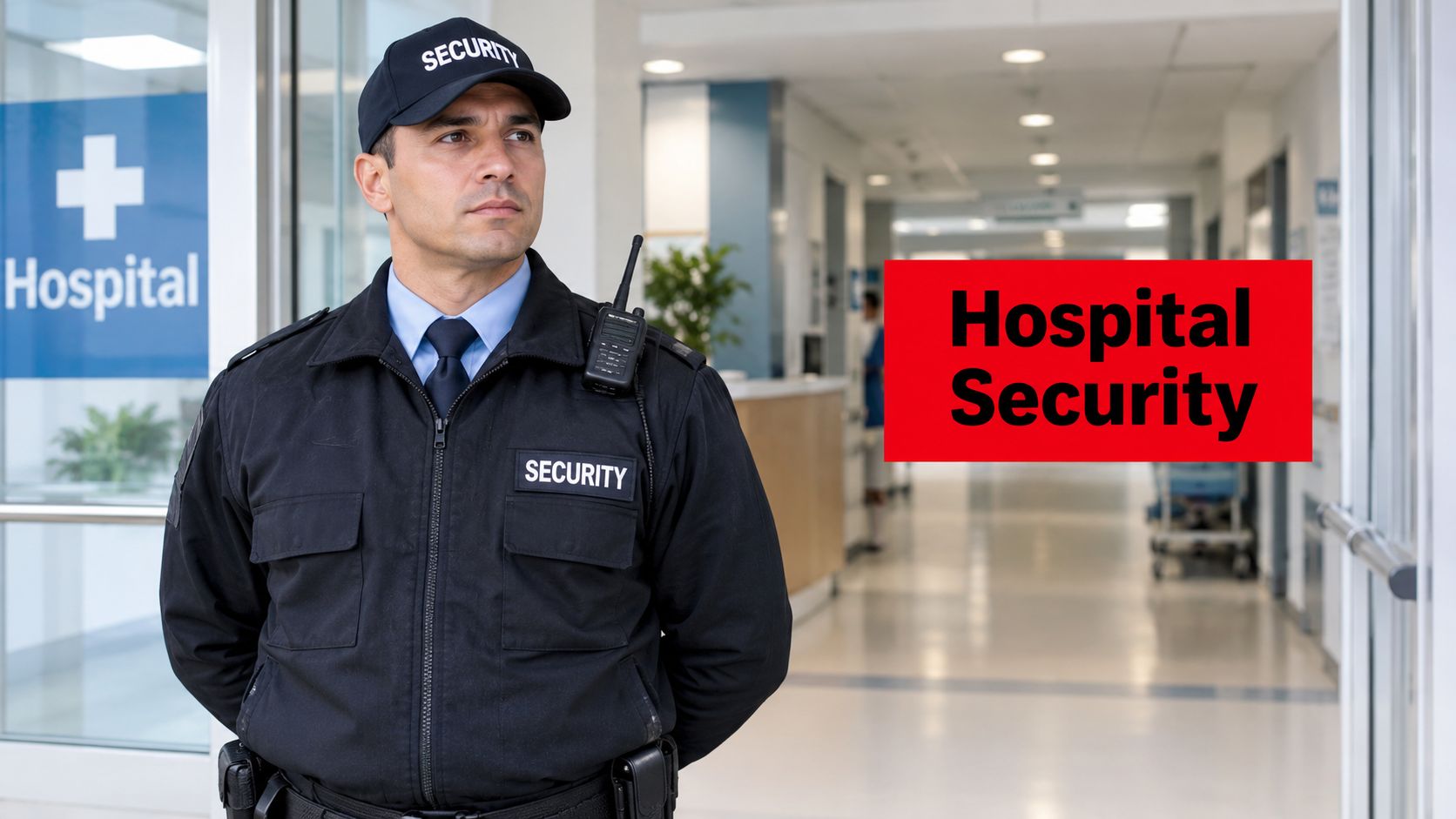
A concierge desk, visitor management process, camera coverage, and after-hours monitoring need to work as one system. If a delivery arrives late, a resident disputes guest access, or a restricted corridor is used improperly, the property team needs a quick answer and a reliable log. In healthcare settings, that same need for documentation becomes even more important because the environment is active, public-facing, and operationally sensitive.
The best monitoring program fits the property's daily rhythm. A construction site needs a different response model than a luxury residential tower or a medical office building.
How to Choose the Right Security Monitoring Partner
Choosing a monitoring partner is an operations decision, not just a security purchase. If an intrusion alert fires at 2:13 a.m., the key question is not whether a camera recorded it. The question is who reviewed it, who verified it, who responded, and what record you will have by 8:00 a.m.
The right provider builds that chain of action into one service. For property managers, that usually means a better return on budget because cameras, SOC operators, on-site staff, and mobile patrols support each other instead of working as separate vendors.

Ask how they run the operation, not just the platform
A polished demo can hide a weak service model. Ask who monitors alerts after hours, how supervisors review officer performance, how dispatch decisions are documented, and how often account managers inspect the site in person.
Staffing discipline matters because turnover creates service gaps. Firms that invest in hiring, training, and supervision usually deliver more consistent officer performance and fewer post-order errors. You can review broader retention and turnover context in the security labor market through the U.S. Bureau of Labor Statistics occupational data for security guards and gambling surveillance officers.
In practical terms, stable staffing means familiar officers, better tenant interaction, and less time spent reteaching your property rules.
Look for proof, not promises
A good partner should make performance easy to verify. If you have to chase three people for an incident summary, the reporting model is already failing.
Ask for examples of:
- Time-stamped reporting: Digital activity reports, incident logs, and photo documentation
- Patrol accountability: GPS confirmation, checkpoint scans, and route verification
- Escalation records: Who was notified, when, and what action followed
- Client visibility: Whether managers can review activity without waiting for a monthly summary
Ask to see an actual incident workflow. A serious provider should be able to show how an alert moved from detection to review to response, with timestamps and names attached.
Check whether they can design a hybrid program
Properties rarely need technology alone or guard coverage alone. They need the right mix.
A retail center in San Jose, a Class A office tower in Los Angeles, and a gated HOA in San Diego each have different traffic patterns, liability concerns, and tenant expectations. The strongest monitoring partners know how to combine remote review, on-site presence, and mobile response into a model that fits the property instead of forcing the property to fit a standard package.
That integrated approach is where experienced firms such as Overton stand apart. The value is not just in installing cameras or assigning officers. The value is in making sure alerts become decisions, decisions become action, and action becomes a documented record you can use for operations, tenant communication, and claims defense.
Choose the team that can show how your monitoring program performs on an ordinary Tuesday night, not just how it looks in a sales presentation.
Frequently Asked Questions About Security Monitoring
Property managers usually come to this stage with practical questions, not abstract ones. A camera may record an event, but that alone does not protect the property. What matters is who reviews the alert, who responds, how fast they can act, and whether the whole chain is documented.
Is remote monitoring enough, or do I still need on-site guards
For some sites, remote monitoring can cover the need. That tends to work best where activity is predictable, after-hours traffic is low, and the main goal is to watch specific entry points or open areas.
For many properties, a hybrid model performs better. Remote operators handle live review and escalation. On-site officers or mobile patrols handle physical presence, tenant interaction, lockups, access issues, and response on the ground. That mix usually costs less than staffing every hour with on-site personnel alone, while giving the property a faster and more accountable response than cameras alone can provide.
Can monitoring work with my existing camera system
Often, yes.
The question is whether the current system produces footage and alerts that a monitoring team can use with confidence. That means camera placement, nighttime image quality, network stability, retention, and how events are surfaced for review. I have seen older camera systems perform well after a few targeted fixes, and I have seen newer systems fail because the views were wrong or the alerts were noisy.
A good provider should be willing to say which parts of your setup can stay and which parts need to be corrected before live monitoring begins.
What happens if power or internet service goes down
A serious program plans for that before service starts. The property manager should know what fails over locally, what signals an outage, who is notified, and whether a patrol or officer is dispatched if visibility drops for too long.
Outages are not unusual. Poor outage planning is the primary problem.
Ask the provider to explain the exact procedure in plain language. If the answer is vague, the response during a real interruption will usually be vague too.
How quickly can a patrol or responder be directed to the right place
Speed depends on coordination, not just staffing levels. A monitoring team that can see officer status, patrol location, camera views, and site maps will usually direct the response more efficiently than a team working from phone calls and handwritten logs.
That is one reason integrated programs outperform stand-alone services. When SOC operators, patrol units, and camera systems work together, responders arrive with context. They know which gate, which stairwell, which loading area, and what triggered the call. That reduces wasted time and improves the odds of intercepting a real issue before it spreads into property damage, tenant complaints, or a police report.
Will monitoring create too many false alarms for my staff
It can. Poorly configured monitoring creates noise, and noisy systems lose credibility fast.
The fix is not more alerts. The fix is better filtering and human review. Good monitoring programs tune analytic rules to the property, account for normal traffic patterns, and put trained operators between raw events and your staff. Your team should hear about events that need action, not every motion clip, shadow, or delivery truck.
That human layer is a big part of the return on investment. Technology flags activity. Experienced operators sort routine activity from real risk, then dispatch patrol, notify management, or document the event based on the site's instructions. That integrated approach gives property managers fewer distractions, clearer records, and better control over how incidents are handled.
From Reactive Security to Proactive Peace of Mind
The shift is simple. Security monitoring moves a property from delayed discovery to active oversight.
That doesn't mean technology replaces people. It means cameras, analytics, SOC review, patrol response, and reporting all work as one operating system for the site. For a property manager, the payoff is practical. Fewer blind spots. Better accountability. Faster answers. Stronger documentation when ownership, tenants, or insurers need facts.
If you've been relying on after-the-fact reports or disconnected vendors, that gap is fixable. A well-built monitoring program gives you more than coverage. It gives you control and a calmer way to manage risk across the property.
If you want a no-obligation property risk assessment, Overton Security can review your site, identify visibility gaps, and help you determine whether remote monitoring, mobile patrols, on-site officers, or a hybrid approach makes the most sense.