A pipe lets go after hours. Water starts moving across a partially finished floor, a subcontractor left materials too close to an exit path, and the first two calls people make don't answer. By the time someone reaches the site, the problem isn't just the leak. It's access, documentation, cleanup responsibility, and whether anyone can prove what happened and when.
That's where people often misunderstand the role of a Site Safety Manager. A good one doesn't just walk the site with a checklist and point out violations. They create order before a problem starts, and they make sure the response stays calm, documented, and defensible when something does go wrong.
For a property manager, superintendent, or facilities director, that difference matters. The win isn't only “no citations.” The win is a site that runs predictably, workers who know what's expected, incidents that get handled without confusion, and records that stand up when questions come later.
In New York City, a licensed Site Safety Manager is required on certain major construction sites under Chapter 33, including projects involving buildings exceeding 7 stories or 75 feet in height, or lot areas over 100,000 square feet, with qualification standards that include five years of direct supervisory experience within the past eight years and an 18-month on-the-job training program under a certified Site Safety Manager, as outlined by NY Super Safety's overview of the role. That tells you something important. On complex sites, this role is treated as a serious operational control, not an administrative extra.
After 26 years in security and site accountability work, one lesson keeps holding up. Sites perform better when safety is treated as a partnership between field leadership, operations, and documentation systems. That's true on a high-rise in Los Angeles, a retail renovation in San Jose, and a mixed-use property in San Diego. Compliance matters, but partnership is what keeps a manageable issue from becoming a claim, a delay, or a shutdown.
Introduction Beyond Compliance to True Site Partnership
A jobsite rarely fails all at once. It usually slips. One gate isn't secured. One trench check gets rushed. One piece of equipment stays in service longer than it should. Then an incident exposes all the small shortcuts that were sitting there untouched.
A professional Site Safety Manager stops that drift. The role is practical. Maintain the site safety plan. Inspect conditions daily. Identify hazards before work proceeds. Verify that required credentials are in place. Respond quickly when conditions change. Those responsibilities sound basic on paper, but in the field they shape the pace and discipline of the whole project.
What a true partner actually does
The strongest Site Safety Managers work like operating partners to the superintendent and property team. They don't wait for a bad event to become visible. They track recurring weak spots, press for corrective action, and make sure the same issue doesn't reappear under a different name next week.
That includes work those outside the field never see:
- Pre-task risk review so crews don't walk into predictable exposure
- Daily inspection follow-through so hazards noted in the morning aren't still open by late afternoon
- Clear escalation paths so people know who makes the call when conditions change
- Credential verification so workers on site hold the required training cards and site access approvals
- Record discipline so the file reflects reality, not just intention
Practical rule: If a hazard is serious enough to talk about, it's serious enough to document, assign, and close out.
Why owners and managers should care
Property teams usually feel the impact of safety failures in indirect ways first. Schedule disruption. Contractor disputes. Insurance friction. Tenant complaints. Missing documentation. Conflicting accounts after an incident. By then, the site has already lost control of the story.
A Site Safety Manager helps prevent that by making sure operations, communication, and documentation move together. That's the shift from compliance to partnership. The site isn't just trying to avoid being wrong. It's trying to stay organized, credible, and ready.
The Core Responsibilities of a Site Safety Manager
A lot of job descriptions make the role sound broader than it is, or narrower than it should be. In practice, site safety manager responsibilities fall into five core pillars. Together, they create a working safety system instead of a pile of forms.

Hazard assessment and planning
This starts before the walk-through. A Site Safety Manager has to understand the work sequence, the equipment involved, public exposure points, subcontractor overlap, and any condition that could turn routine work into a loss event.
On a vertical construction site, that may mean focus on open edges, scaffold integrity, hoist activity, and controlled access. On a distribution or industrial project, it may shift toward vehicle movement, loading areas, electrical work zones, and contractor coordination. The point isn't to use one template everywhere. The point is to match controls to the actual site.
Daily inspections and field correction
Routine inspections are where the role earns its value. A DOB-certified Site Safety Manager must have expertise in OSHA-CFR 1926 and NYC Department of Buildings Chapter 33 regulations, including routine inspections for hazards such as unprotected edges, open trenches, and faulty scaffolding, while creating site-specific protocols for emergency routes, first aid, and PPE requirements, according to NY Super Safety's licensed Site Safety Manager guidance.
What works is direct observation tied to immediate action. What doesn't work is a long deficiency list that nobody owns.
A useful inspection cycle usually includes:
- Area review: Confirm conditions in active work zones before crews fully engage
- Equipment observation: Look for damaged, bypassed, or improperly used tools and machinery
- Access and egress checks: Keep exits, stairs, gates, and perimeter points clear and functional
- Correction tracking: Assign each issue to a person, deadline, and closure method
Training and communication
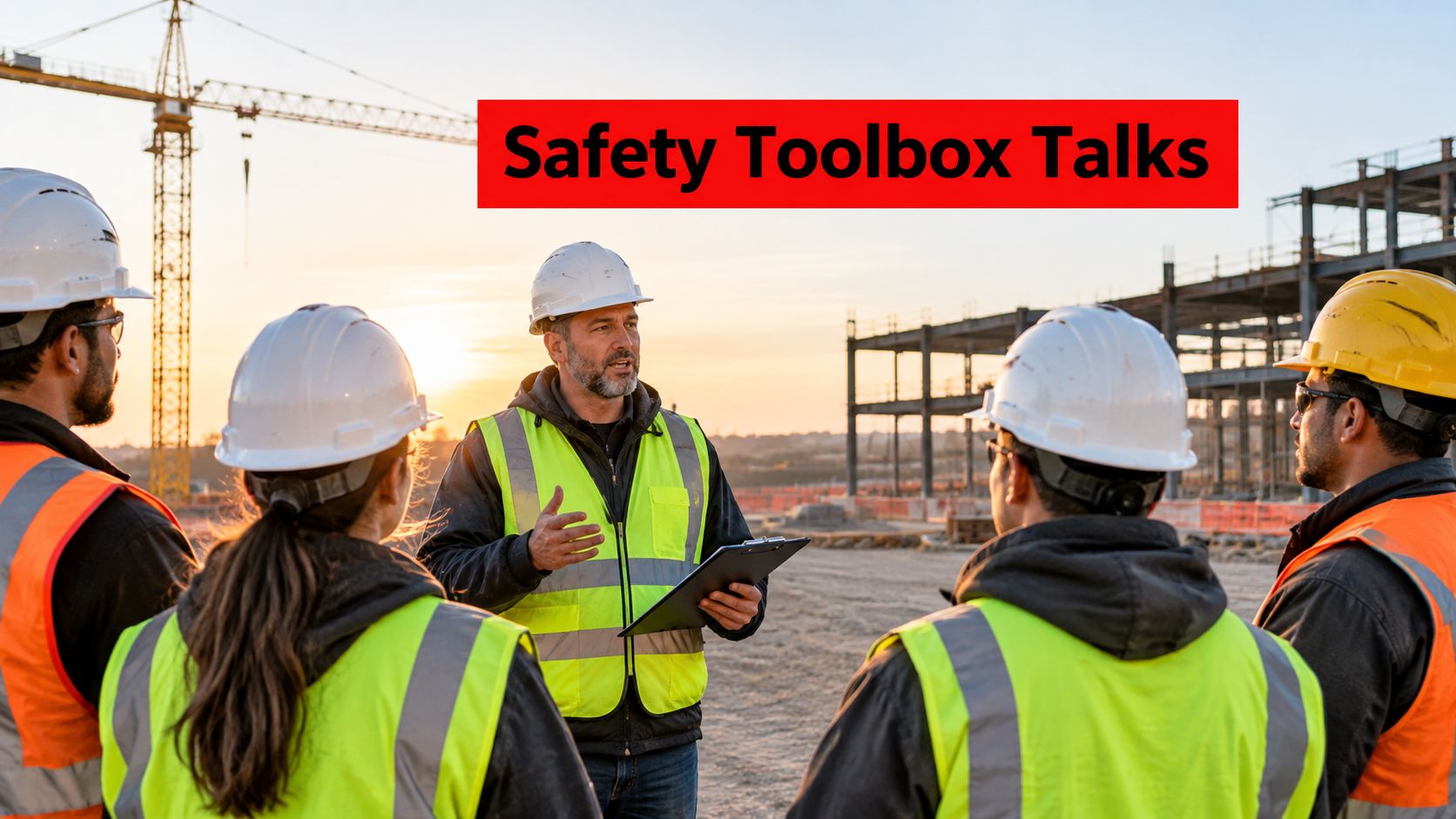
Safety training isn't a box to check on day one. Workers need onboarding, refreshers, and toolbox talks that match the actual hazards in front of them. Good managers also know that training fails when it's too generic or delivered after the crew has already normalized the wrong behavior.
One helpful way to think about this is through the broader lens of security risk management. Risks aren't isolated. They involve people, procedures, timing, and accountability.
The best training is specific enough that a worker can apply it before the next task starts, not after the shift ends.
Incident response and investigation
When an accident or near miss happens, the Site Safety Manager must facilitate a formal investigation to determine root causes and implement corrective and preventive actions, as noted by HazTek's construction safety manager overview. That matters because weak investigations usually focus on who touched what, while good investigations focus on why the condition existed, why it wasn't interrupted, and what has to change to prevent recurrence.
Compliance and documentation
Documentation is one of the most overlooked site safety manager responsibilities. It's also one of the most protective. The national average compensation for a Construction Safety Manager is approximately $78,000 annually, reflecting the strategic nature of the role, and a core responsibility is building detailed site safety plans in collaboration with project owners to foster an open culture of safety, according to Procore's Construction Safety Manager overview.
A practical hiring screen for this role should include:
| What to look for | Why it matters |
|---|---|
| Direct field supervision experience | The role requires judgment, not just paperwork |
| Working knowledge of OSHA and local rules | Compliance has to be translated into site action |
| Inspection and reporting discipline | If it isn't recorded properly, it becomes harder to defend |
| Communication skill with trades and management | Corrections only stick when people understand and accept them |
How Safety Duties Adapt to Your Property Type
A Site Safety Manager shouldn't run a hospital campus like a concrete pour, and shouldn't manage a residential community like a distribution yard. The fundamentals stay steady, but the emphasis changes based on who uses the property, what the daily risks look like, and how visible the operation is to the public.

Construction sites
On active construction projects, the safety manager's day is built around moving conditions. Crews change, equipment rotates, and yesterday's safe access route may be blocked by noon. The focus is heavily operational. Hazard recognition, work-area control, equipment condition, credential checks, and immediate correction all sit at the front of the line.
The public side matters too. Site perimeter conditions, deliveries, pedestrian conflict points, and after-hours vulnerability can all create exposure for the owner and the general contractor.
Commercial and retail properties
In retail and mixed-use environments, safety duties shift toward public interaction and business continuity. The same manager may be looking at loading docks, contractor work zones, wet-floor response, alarm handling, or storefront access points, often while the property remains occupied.
What works here is clean coordination between facilities, tenants, vendors, and security staff. Heavy-handed enforcement tends to fail in public-facing spaces because it creates friction without solving the root problem.
In commercial settings, the best safety decision is often the one that protects people without disrupting normal use of the property.
For managers dealing with incident exposure on occupied properties, it's useful to understand the basics of securing premises liability compensation because liability questions often turn on notice, response, and documentation.
Healthcare environments
Healthcare properties require a different posture. Patient movement, controlled access, emergency pathways, sensitive materials, and continuous operations make the environment less forgiving. A safety manager has to think about work permits, contractor separation, infection-sensitive zones, and response protocols that won't interrupt critical care areas.
In these settings, diplomacy matters as much as technical knowledge. A manager who can't coordinate with clinical leadership will create delays and resistance.
Residential communities
Residential properties bring a different set of pressures. Residents expect safety, but they also expect normalcy. Amenity areas, garages, package rooms, pool decks, vendor access, and after-hours disturbances all require consistent handling without making the property feel hostile.
Here's a simple comparison that owners and community managers can use:
| Property type | Primary safety concern | Common failure point |
|---|---|---|
| Construction | Active hazard control | Open items not corrected fast enough |
| Retail and commercial | Public safety and continuity | Poor coordination during occupied work |
| Healthcare | Sensitive operations protection | Inflexible contractor management |
| Residential | Resident-facing safety and access | Inconsistent response and weak communication |
Actionable Safety Checklists and Reporting Workflows
Checklists still matter. The problem is that many sites treat them like paperwork instead of control tools. A paper checklist signed at the end of the shift may show effort, but it rarely gives a property manager or superintendent what they need, which is proof of condition, timing, follow-up, and closure.

What should be checked and when
A practical workflow usually runs on three rhythms.
Daily checks
- Work area condition: Walk active zones for immediate hazards, blocked egress, and housekeeping issues
- Equipment review: Confirm visible operating condition and remove questionable tools from use
- PPE observation: Verify workers are using required protective equipment for the task at hand
Weekly checks
- Crew communication: Hold toolbox talks and review active concerns with supervisors
- Permit review: Confirm current work permits match ongoing activities
- Waste and storage control: Inspect disposal areas, laydown zones, and flammable material handling
Monthly checks
- Incident pattern review: Look for repeat locations, repeat crews, or repeat failure modes
- Emergency readiness: Test drills, route clarity, and response coordination
- Training records: Audit completion status and expired credentials
Why digital workflow beats static paperwork
A safety manager must maintain accurate records of inspection reports, injury logs, and compliance documents to satisfy OSHA and local codes, and failure to compile them can create legal liability and even loss of project certification, according to NASP's guidance on construction safety management documentation.
That's why digital reporting has become more than a convenience. It creates a time-stamped record, ties photos to observations, and shows whether an issue was noted, escalated, and closed. For managers trying to build clearer site instructions, strong security post orders help connect the checklist to real field behavior.
One workable model is a GPS-enabled Guard Tour Management System that logs checkpoint scans, digital activity reports, and incident photos in real time. Overton Security uses that kind of GTMS structure with officer reporting and SOC support as one documented option for site visibility. The value isn't the software by itself. The value is that the record becomes easier to audit, easier to share, and harder to dispute.
If your crews or vendors need a plain-language reference on addressing unsafe work environments, that resource can support internal reporting conversations without turning every issue into a confrontation.
A checklist protects the site only when somebody can prove it was completed, acted on, and followed through.
Navigating the Maze of Certifications and Legal Duties
Most owners don't need to memorize every code section. They do need to understand what competence looks like. Legal compliance starts with having the right person in the role, then making sure that person has authority, site access, and enough operational support to enforce corrections.
What qualifications signal competence
The exact requirements depend on the jurisdiction and the property type, but there are some common markers. You want someone who understands field operations, knows how to inspect active work, can communicate with trades without escalating every issue into a standoff, and can keep records that hold up under review.
For major New York City construction work, the role is highly structured. A licensed Site Safety Manager is tied to specific site thresholds and qualification standards, and the manager's core duty is maintaining an approved Site Safety Plan while conducting daily inspections and hazard assessments under NYC Building Code Chapter 33 and OSHA expectations, as outlined earlier in the article.
Why legal knowledge has to translate into action
A DOB-certified Site Safety Manager must have expertise in OSHA-CFR 1926 and NYC Department of Buildings Chapter 33 regulations, conduct routine inspections to identify hazards like unprotected edges and faulty scaffolding, and create site-specific safety protocols, according to the earlier cited guidance from NY Super Safety. This insight applies to California property teams as well. The code only matters if the manager can turn it into workable site practice.
In California, that means paying close attention to Cal/OSHA expectations, permit-sensitive activities, contractor controls, and documentation quality. Owners and facilities directors don't need a lecture on legal terminology. They need to know whether the site has someone who can spot a problem early, require correction, and preserve a clean record of what was done.
What weak compliance programs usually get wrong
Weak programs tend to fail in predictable ways:
- Paper expertise without field control: The manager knows the rule but doesn't influence the site
- Inspection without closure: Hazards are noticed, logged, and left hanging
- Training without relevance: Workers hear general safety language that doesn't match the current task
- Documentation without credibility: Reports are too vague, too late, or too inconsistent to help
A strong compliance posture feels less dramatic than people expect. It looks like routine discipline. Clear site plans. Repeatable inspections. Consistent correction. Accurate logs. Calm escalation when needed.
The legal duty isn't just to know the rules. It's to apply them consistently enough that the site can show its work.
The Modern SSM Managing Digital Evidence and Liability
The modern Site Safety Manager does more than reduce hazards. On serious incidents, that person also becomes the keeper of the timeline. That means preserving what the site knew, what it saw, who responded, and what changed after the event.

Why this responsibility has grown
Recent 2025-2026 data shows a 30% increase in construction litigation where conflicting digital versus physical evidence was the primary cause of liability escalation. That makes the SSM's role in managing the digital evidence chain of custody, including real-time GPS data and camera feeds, a critical legal defense responsibility.
That changes the job. If witness statements differ from GPS logs, checkpoint scans, camera footage, app activity, or dispatch notes, the site needs one disciplined process for preserving and organizing the record. Without that, people start arguing from fragments.
What good evidence handling looks like
A defensible workflow usually includes:
- Immediate capture of site condition, access status, and visible hazards
- Preservation of digital logs before routine overwrites or deletions occur
- Controlled access so edits, downloads, and reviews can be tracked
- Integrated reporting that aligns field observations with system data
- Retention discipline so records stay available through the claim cycle
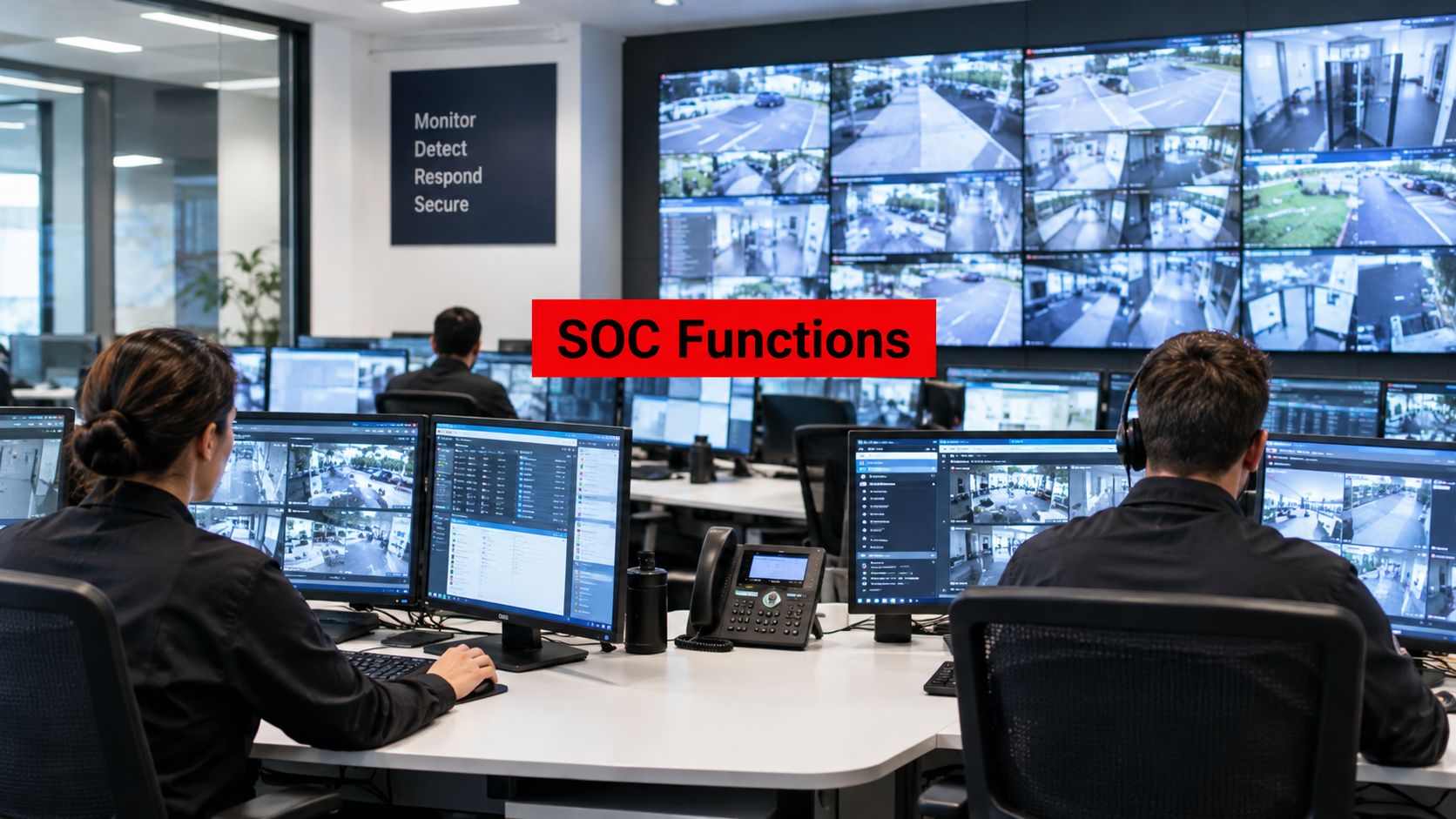
Security technology and safety operations finally meet in a practical way. A site that uses remote video monitoring alongside field reporting, GPS activity records, and SOC oversight is in a better position to establish sequence, confirm response times, and defend against conflicting accounts.
What doesn't work is collecting digital evidence casually after the fact. By then, clips may be missing, timestamps may not align, and too many people may have touched the file. The Site Safety Manager who treats evidence handling as part of the response plan gives the owner something invaluable. A record that's organized before legal pressure arrives.
Conclusion Your Partner in Proactive and Accountable Safety
The best understanding of site safety manager responsibilities goes well beyond inspections and rule enforcement. A strong Site Safety Manager helps shape the daily rhythm of the property or project. They identify hazards early, keep communication usable, push corrective action, and maintain records that support both operations and liability control.
That's why this role shouldn't be viewed as a cost center or a compliance accessory. On active properties and complex projects, it's a stabilizing function. The manager protects people, supports continuity, and creates accountability that stands up when decisions are questioned later.
The job has also changed. Today's SSM needs field judgment, regulatory fluency, and the discipline to manage digital evidence when incidents trigger competing narratives. That combination is what separates a site that reacts from a site that stays in control.
For property managers, superintendents, facilities directors, and portfolio teams, the standard is straightforward. Look for a safety partner who can operate calmly, document accurately, and align people, process, and technology in real conditions.
If you'd like a practical review of your current site procedures, reporting gaps, or after-hours accountability measures, contact Overton Security for a personalized site safety assessment.