The call came in late, as it usually does. A property manager is juggling three sites, a tenant says the garage gate was left open, a contractor reports missing tools, and an owner wants to know why the incident log is thin. By the time everyone starts asking for documentation, the question is no longer whether something happened, it's whether the site team can prove what happened and when.
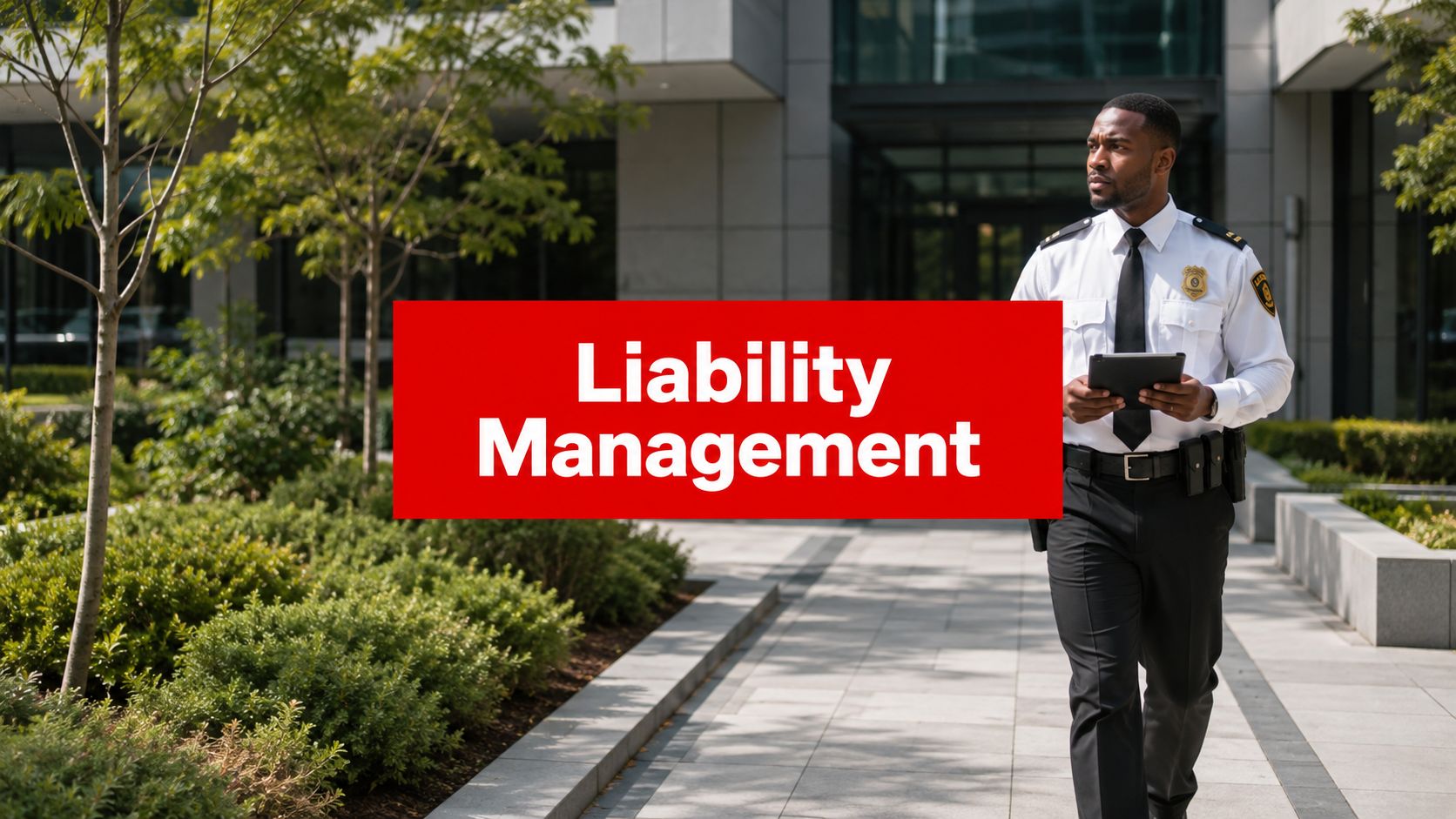
That's where liability management becomes practical instead of abstract. In property operations, it's the discipline of reducing exposure through patrol discipline, clear post orders, training, incident records, and response routines that hold up when tenants, insurers, attorneys, or board members start asking hard questions. It's less about a binder on a shelf and more about what your officers, supervisors, and managers do on the property every day.
Modern liability management didn't start in a boardroom. In banking, it emerged as an active discipline in the 1960s and 1970s when institutions began managing the liability side of the balance sheet more deliberately, and that same mindset translates well to property and facilities work. You don't wait for trouble to show up. You build a system that makes trouble easier to spot, contain, and document.
Understanding Liability Management in Property Operations
A commercial property manager with three buildings doesn't usually lose sleep over theory. They lose sleep over the things that are easy to miss, like a patrol that wasn't logged, a post order that hasn't been updated since a tenant moved in, or a blurry photo attached to an incident report that never makes the sequence of events clear. Those small gaps matter because they become the first places a claim, a tenant complaint, or a dispute can take hold.
From incident response to operational discipline
In property operations, liability management means treating risk as a daily management function, not a once-a-year insurance exercise. It includes how security officers patrol, how they escalate concerns, how they document incidents, and how managers keep the site instructions aligned with reality. That's different from generic risk talk, because the focus is on what can be controlled on the ground.
A good program doesn't wait for an incident to force accountability. It makes accountability visible through consistent patrols, clear reporting, and trained responses that can be repeated across sites. For mixed-use buildings, retail centers, HOA communities, and construction sites, that usually means the same basic question gets answered every day, who did what, when, where, and what happened next.
Practical rule: if an event can't be reconstructed from the report trail, the operation still has a liability problem, even if no one was injured.
That's why property teams should think of liability management as a living process. It's not separate from security, maintenance, or tenant service, it's woven into each one. The strongest sites don't rely on memory after the fact, they rely on routine, documentation, and follow-through.
Legal Insurance and Operational Risk Drivers
The biggest liability exposures usually come from three directions at once. A site might have a legal problem, an insurance problem, and an operational problem, and the worst incidents are the ones where all three overlap. That's why good managers look beyond the headline event and ask what conditions made the event possible in the first place.

Legal exposure starts with the site itself
Premises liability usually shows up where the property wasn't maintained, supervised, or controlled well enough for the use it was serving. On a residential property, that might be a dark stairwell, a broken latch, or a recurring access issue. On a retail center, it could be loitering near an entry, a poorly managed loading area, or inconsistent enforcement around prohibited behavior.
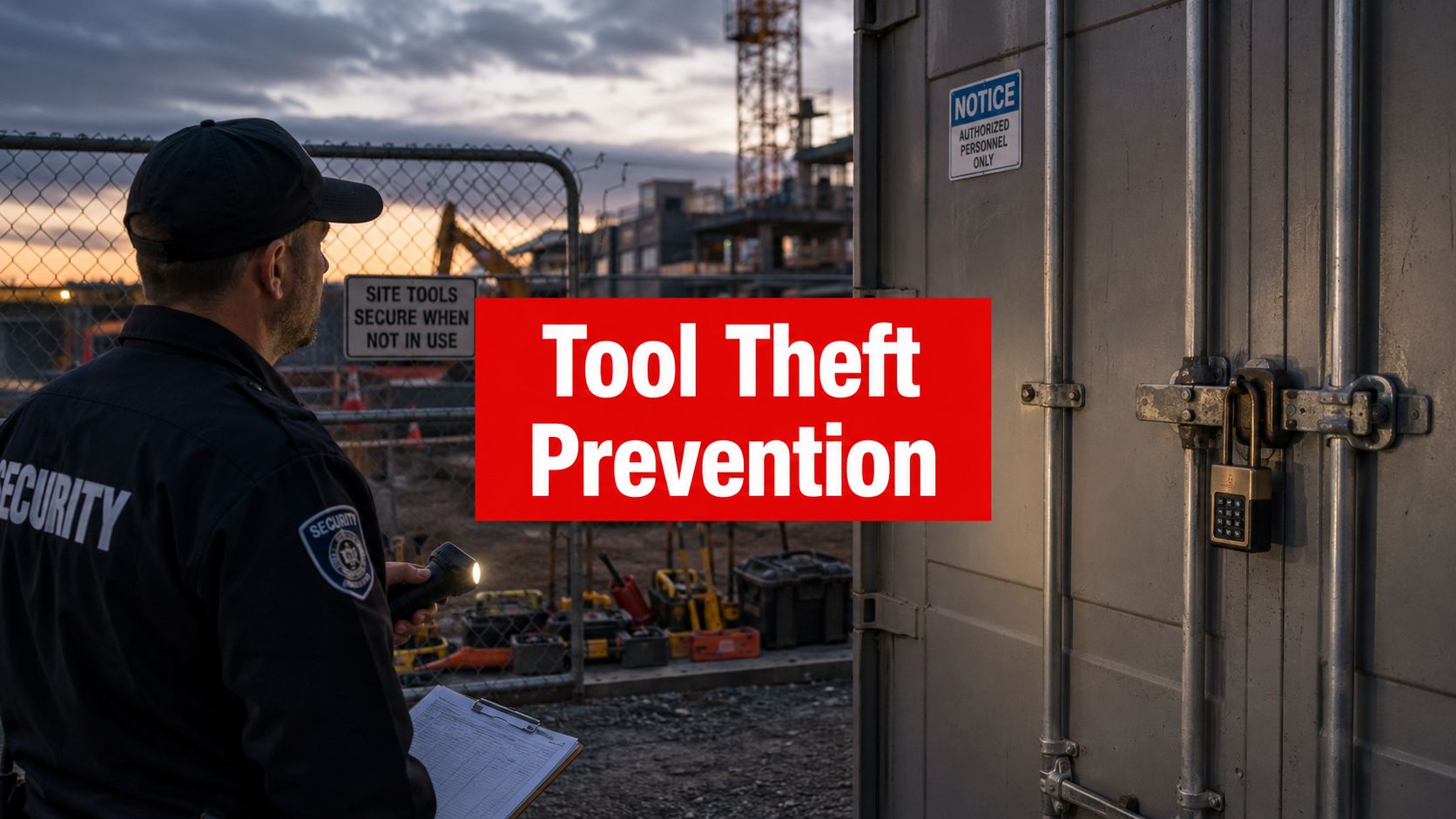
Negligent security claims are a different path to the same problem. If a site has known vulnerabilities and no visible plan to address them, the legal argument often centers on foreseeability and response. Construction sites add another layer, because temporary layouts, equipment storage, and changing access points can make control harder if the security plan doesn't keep up.
Insurance carriers care about proof, not promises
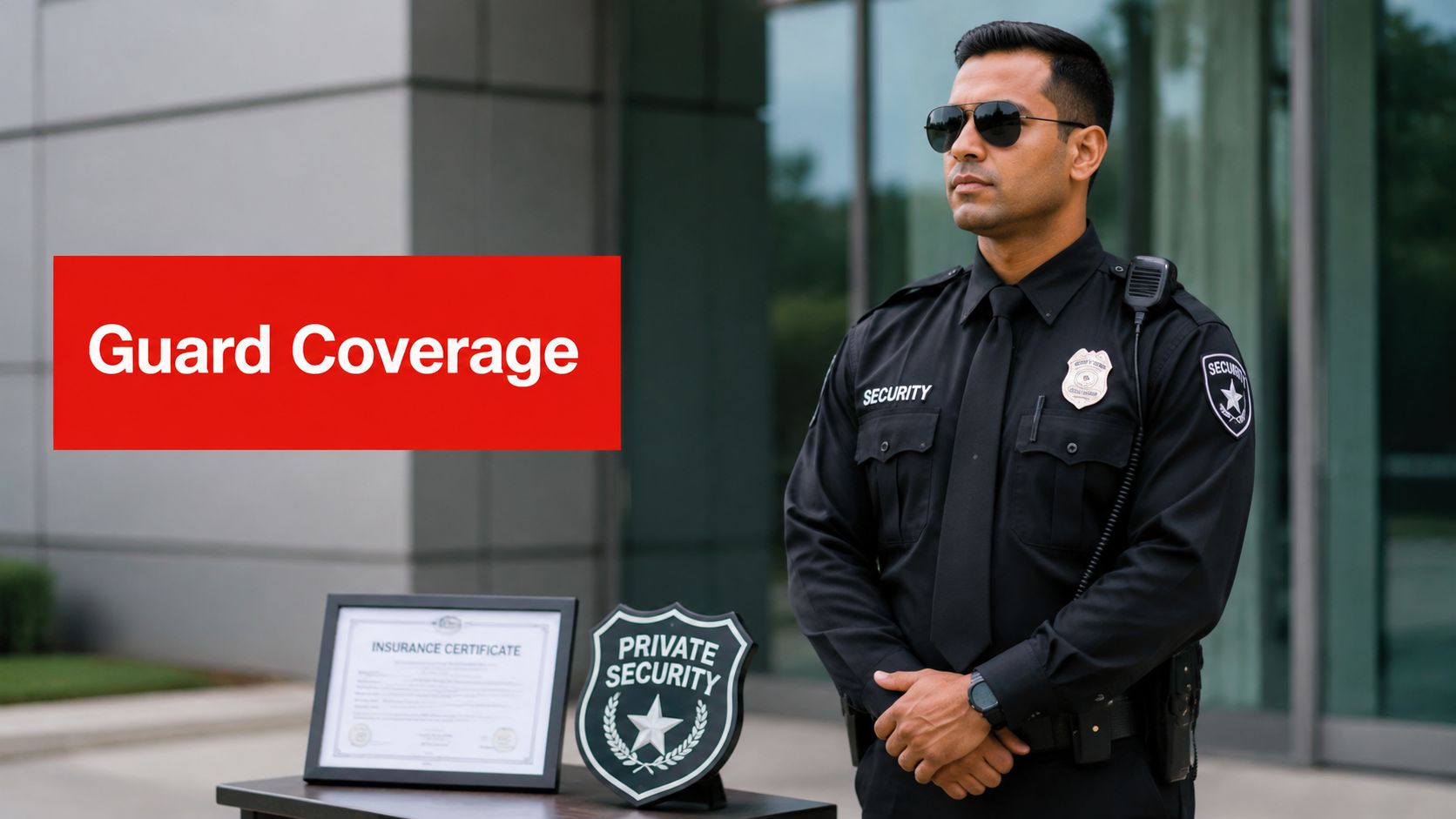
Insurance exposure usually becomes real when documentation is weak. Carriers want a record that shows the property took the issue seriously, and they look closely at the claim history, the consistency of incident reporting, and whether the site can show what actions were taken. If the records are incomplete, the story becomes harder to defend.
Operational failures create the conditions for both
Most liability problems begin with ordinary operational misses. A patrol is skipped. A new officer doesn't know the site-specific priority areas. A supervisor never reviews the last week's reports. Those are not dramatic failures, but they create the opening for legal and insurance problems to grow.
For a useful overview of how organizations think about insurance-side exposure, a practical modern insurance risk management guide can help frame the carrier perspective. On the claims side, teams that need a deeper look at incident follow-up can review Overton Security's insurance claim investigations, especially when they're trying to understand how documentation and response quality shape the outcome.
A site with decent cameras and weak documentation still has a liability gap. The footage may show the event, but the report trail tells the story that decision-makers rely on.
Building a Comprehensive Liability Management Framework
A strong framework starts with control points that people can execute. Security officers need to know which entrances matter most, which hours carry the most exposure, and which events require escalation instead of informal handling. If those basics aren't defined, the site is relying on individual judgment in moments that should already be covered by policy.
Security controls that reduce exposure
Access management is the first line. That means gates, sign-in procedures, visitor handling, patrol routes, and visible deterrence all have to match the property's real risks. A downtown office tower won't use the same control mix as a construction yard or a residential garage, but both need the same clarity around who can enter, how they're checked, and what happens when something looks off.
Patrol scheduling matters just as much. A random walk-through that no one records is easy to challenge later. A well-run mobile patrol with predictable checkpoints, verified coverage, and a record of what was seen is much harder to dispute.
SOPs, training, and records need to match each other
Standard operating procedures should tell officers how to respond, when to escalate, and how to interact with tenants and visitors without improvising the core steps. Training then turns those procedures into habits. If the post order says an officer must photograph a broken gate, the reporting system should make that easy to do right away.
Documentation needs to be auditable, not decorative. The report should show the time, the location, the people involved, the condition observed, and the follow-up taken. For multi-site portfolios across California, consistency matters as much as detail because managers need to compare sites without guessing whether one team is reporting differently from another.
Best practice: if a post order can't survive a shift change, it's not ready for the field.
For properties evaluating security accountability tools, one useful reference point is the security analytics platform, especially when the goal is to connect patrol records, reporting, and oversight into one reviewable process.
Technology Integration for Verifiable Accountability
Technology shouldn't replace judgment. It should make judgment visible. In the field, that matters because liability disputes often begin with conflicting memories, incomplete notes, or reports that were written too long after the event. A system that captures patrol activity as it happens cuts down on those gaps before they become arguments.
GPS, digital reports, and SOC oversight work together
GPS-enabled guard tour systems create time-stamped, location-verified patrol records. That helps prove coverage, but it also helps supervisors see whether the patrol matched the plan. Daily activity reports with photos and real-time incident uploads do something similar for documentation quality, because they preserve details while they're still fresh.
A 24/7 Security Operations Center adds another layer. When officers can reach a live SOC for guidance, the decision isn't just made in the field, it's witnessed, recorded, and tracked. That matters when a site has to show not only that something was handled, but that it was handled in a disciplined way.
The accountability chain has to stay intact
The strongest programs connect patrol checkpoint, incident response, supervisor review, and client visibility. If one part is missing, the chain weakens. If the officer logs a problem but nobody reviews it, the site still has an exposure.
The common adoption mistake is buying technology and leaving the process unchanged. A digital report system with bad habits still produces bad reporting. The tool works only when officers are trained to use it consistently and managers review what's submitted.
A practical site team usually needs three things from its technology stack.
- Verified patrol evidence: checkpoint scans, timestamps, and route visibility that show the officer was where the schedule said they should be.
- Cleaner incident narratives: photos, notes, and immediate uploads that reduce ambiguity after the shift ends.
- Supervisor visibility: live oversight that lets managers correct problems before they repeat.
Implementation Roadmap and Performance Metrics
A liability management program gets real when it has deadlines, owners, and measures. Without that, it becomes another policy idea that sounds good during a meeting and fades once the first busy week hits. Property managers need a rollout plan that fits the operational pace of the site.
A phased rollout that doesn't overload the team
The first 30 days should focus on a risk audit. Walk the property, identify high-exposure zones, review current post orders, and check where incident records are weak. Assign one person to own each gap so nothing gets lost in a group email thread.
The next 60 days should tighten SOPs and training. Officers need refreshed instructions, supervisors need review standards, and managers need a clear escalation path for recurring issues. If a site has multiple shifts or multiple locations, the language should be standardized so the same event gets handled the same way.
The final 90 days should lock in technology verification and reporting discipline. That means patrol records, incident reports, and supervisor review all need to live in the same rhythm. The point isn't more paperwork, it's cleaner proof.
| KPI Category | Metric | Target Benchmark | Measurement Frequency |
|---|---|---|---|
| Response | Incident response time | Site-specific baseline improvement | Weekly |
| Documentation | Report completeness | All required fields completed | Daily |
| Patrol compliance | Scheduled patrol completion | Every required checkpoint verified | Daily |
| Claims | Claims frequency trend | Downward or stable over time | Monthly |
| Insurance | Premium trajectory | Reviewed against loss history | Renewal cycle |
What good reporting looks like in practice
A useful post order says what the officer checks, how often, and what triggers escalation. A useful incident template asks for the people involved, the exact location, the condition observed, the immediate action taken, and whether a supervisor or client was notified. Those details make it easier to defend the property's response later.
For operators building internal benchmarks, the security performance indicators resource can help frame what should be measured and reviewed regularly.
Proactive Versus Reactive Liability Approaches
A tenant reports that a contractor badge was still working after the access list changed, and the site team has to piece together who approved the change, who notified security, and which shift missed the update. That is the reactive pattern. The proactive pattern closes that gap before the contractor shows up, by syncing access changes, post orders, and supervisor checks so the wrong badge never stays active on the reader.
Side by side on the property
On a construction site, the difference shows up at the gate. A reactive team notices the issue after a delivery driver is waved through the wrong entrance or a subcontractor is allowed past a restricted zone, then tries to reconstruct who gave the instruction. A proactive team updates the access roster before the next shift, confirms the revised route at roll call, and has the guard log the change in a way that can be checked later. That reduces the gap between the rule on paper and the way the gate is run.
The same split appears in a mixed-use property or a commercial garage. A reactive team waits until a tenant complaint or an insurance request forces a review, then discovers the coverage note or incident record is thin. A proactive team treats those weak spots as part of daily operations, with supervisor verification, consistent report language, and a clear handoff when a post changes.
The cost of waiting is usually hidden
The first cost is obvious, because the incident already happened. The harder cost is the time spent rebuilding the sequence, collecting witness statements that may not line up, and explaining why the site records do not match the event. That usually shows up as tension with tenants, more back-and-forth with claims staff, and a weaker position when the property has to defend what happened.
A proactive site reduces that scramble by making the record part of the response. Officers log the event while details are fresh, supervisors check for missing information before the shift ends, and management can see whether the control failed at the gate, in the patrol route, or in the follow-up. That gives property managers a practical way to reduce drift without pretending every incident can be prevented.
Practical rule: if your team only improves after a complaint, you are paying for each lesson twice.
Property managers do not need perfect conditions. They need a repeatable process that catches a weak point while it is still small, so the next shift does not inherit the same problem in a new form.
Making Liability Management a Strategic Advantage
A property with a strong liability record is easier to defend in front of a landlord, a lender, or a board. The conversation changes when managers can show that incidents are tracked, responses are consistent, and site controls are reviewed before a problem turns into a claim. That kind of record can affect renewal discussions, capital planning, and how much confidence stakeholders place in day-to-day operations.
It also changes how the site is valued internally. A clean record does not erase risk, but it gives property teams a clearer basis for decisions about staffing, patrol frequency, access control, and where to tighten supervision. For owners and managers, that is the practical value of liability management. It turns security work into evidence that supports operating decisions instead of leaving the property to explain gaps after the fact.
Overton Security's operating model fits that kind of work because it pairs 26 years of experience with hands-on leadership and technology-driven transparency. Security officers, supervisors, and clients get a clearer view of what happened on-site and what still needs attention, which helps turn daily activity into information that can be reviewed by management.
Property managers should still start with a straightforward self-check. Are post orders current, are incidents documented the same way every time, and can the team prove patrol coverage without chasing paperwork? If the answer is no on any of those points, the liability problem is operational, and it will keep showing up in claims, tenant concerns, and management reviews.
The stronger question is whether your current process would stand up in a renewal meeting, a board packet, or an insurance review without a scramble to recreate the record. If the answer is uncertain, the site is still treating liability as a reaction instead of a management tool.