
A Denver property manager usually doesn't call a security vendor because everything's calm. They call after a string of car break-ins in the lot, a trespasser keeps slipping through a gate, or a board member is tired of hearing that “someone should handle it” after dark. At that point, the wrong hire turns into a recurring problem, while the right one gives you coverage you can manage.
Denver is a good market for security buyers, but it's also crowded and uneven. You've got a mature industry, a growing guard workforce, local licensing rules that don't match the rest of Colorado, and a lot of vendors selling the same-sounding promises. The job isn't to buy “security services” in the abstract. It's to choose the model, the controls, and the operator that fit your site.
The Denver Security Market and Why It Matters Now
A board member usually spots the problem in the details. The gate code gets shared too widely, the pool area keeps attracting after-hours visitors, or the retail center's back lot starts looking like a staging area for theft. In Denver, those issues show up in a market that is already crowded and active, so the split between a real operator and a body-shop becomes obvious fast.
The local market is not thin or experimental. The U.S. security services industry reached $50.4 billion in market size in 2026, with 114,000 businesses nationwide and a 5.7% CAGR from 2021 to 2026, while Colorado's related Security Alarm Services segment is estimated at $745.8 million, with 1,906 businesses and 4,454 employees IBISWorld. That matters because Denver County sits in one of the state's highest-concentration areas for security-alarm businesses, so you are buying inside a mature market, not a niche one.
Why the local pressure is real
Denver's licensed guard pool also moved sharply. The city had 6,425 licensed security guards in January 2021, rising to 8,156 in January 2024, an increase of 1,731 guards, or about 26.9% Private Officer News. At the same time, RTD reported 34,000 security-related calls for service in 2025, and 2,728 calls in January 2026 alone, which was about one call for every 1,900 boardings that month RTD. The market is bigger, busier, and more visible than many buyers assume.
That combination sets the bar for any serious provider. You need staffing depth, reporting discipline, and enough operational structure to handle recurring demand, not just a warm body in a polo shirt. In Denver, a vendor proves its value when the site gets messy, after hours, or both.
If you are comparing service models or trying to separate a real operator from a sales-heavy shop, start with a practical security service breakdown and match the offer to the site, not the brochure. If you also need a reference point for layered protection, the Perth security system installation guide is a useful example of how cameras, alarms, and guard work should support each other.
Practical rule: if a proposal looks cheap only because it ignores after-hours response, reporting, or supervision, you are not saving money. You are pushing the cost into the first incident.
Core Service Types and When Each One Makes Sense
Denver buyers waste time when they treat all security models as interchangeable. They're not. A lobby officer, a patrol vehicle, and a monitoring desk solve different problems, and if you use the wrong one, you'll pay for presence without getting control.
Use onsite guards when the site needs a human face
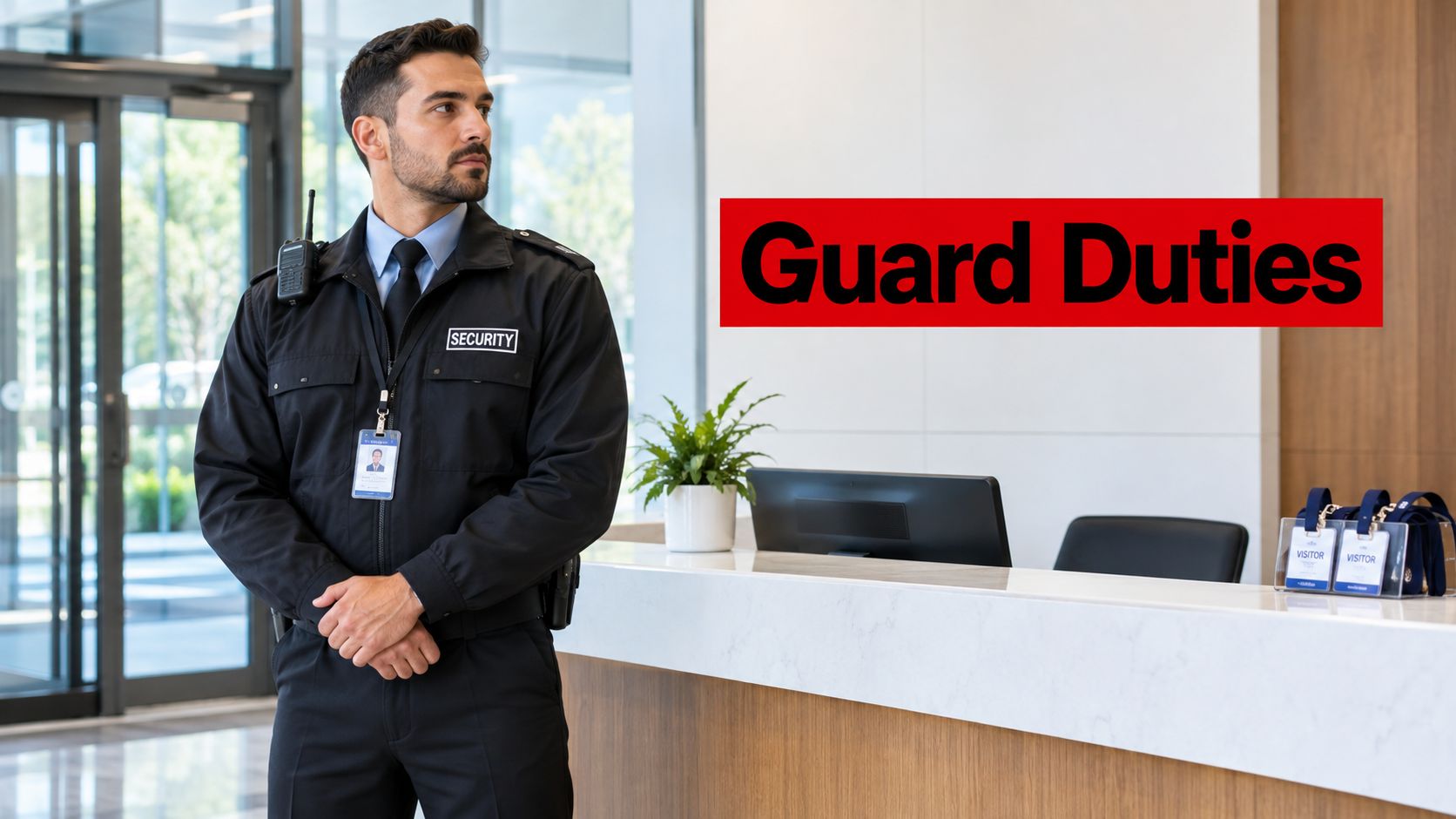
Unarmed guards fit retail entrances, residential lobbies, and event access points where visibility, access control, and customer interaction matter. Armed guards make sense for higher-risk environments where a site's profile justifies the additional layer of deterrence and response, such as sensitive assets or threat conditions. If your problem is constant foot traffic, badge checking, or guest screening, put a person at the point of contact.
Use mobile patrols when you need coverage across space
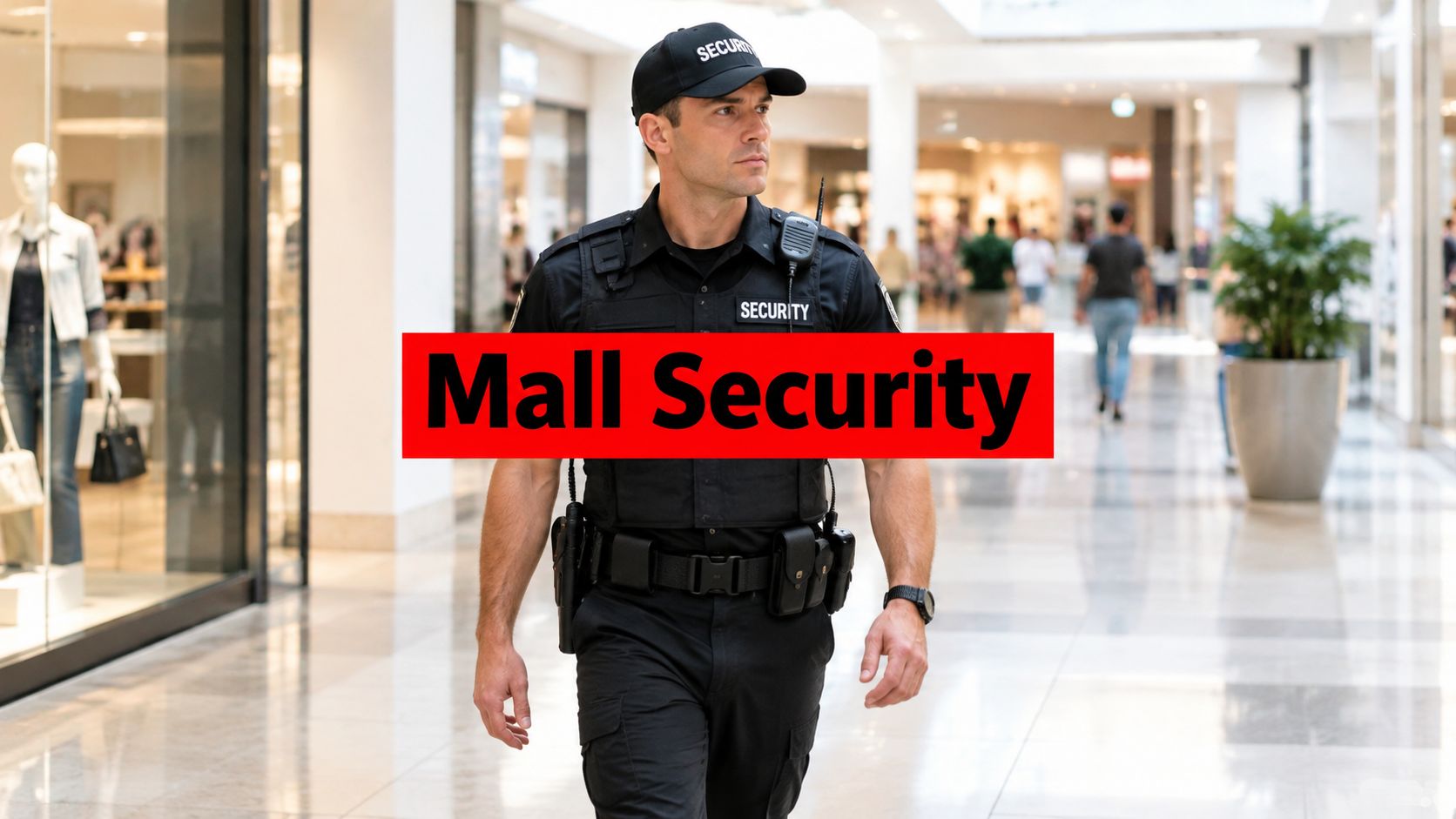
Mobile patrols work best for apartment communities, surface lots, and sprawling commercial sites where one fixed post can't cover the whole property. A patrol vehicle gives you unpredictable visibility, which is exactly what trespassers and loiterers hate. If the site has multiple access points or blind corners, patrol often beats a single stationed guard.
Use concierge or monitoring when service quality matters as much as deterrence
Concierge security fits Class A lobbies and high-rise residential properties where the officer is part greeter, part gatekeeper. Surveillance systems and remote monitoring are smart add-ons when you need eyes on the property after hours or across multiple locations. For event staffing and special screenings, K9 units belong in a narrower role, usually tied to sensitive sites or temporary needs.
If you want a deeper comparison of guard, patrol, and concierge models, the types of security guard services overview is worth reading before you sit through another sales pitch. It helps to compare the model first, then choose the vendor.
For buyers who want to see how another market frames the planning side of a security install, Securitec's Perth security system installation guide is a useful reference point. Different city, same lesson. The system has to match the site, not the brochure.
Denver Licensing, Compliance, and What to Verify Up Front
Colorado is a patchwork. There's no statewide regulation of security guards or security companies, and a 2020 Denver Post report said six of Colorado's 10 largest cities did not license them, while Denver was one of the four that did Denver Post. That alone should make every buyer more careful, not less.
Denver's rules are stricter than many buyers assume
Denver tightened its private security licensing rules in 2023. The city now requires an FBI background check instead of only a Colorado Bureau of Investigation check, requires any employer of security guards to hold a private security employer license, and requires guards to complete at least 16 hours of pre-licensing training plus 8 hours at renewal Denver7. If a vendor can't speak clearly about those rules, keep looking.
| Jurisdiction | Requires Guard License | Background Check | Pre-Licensing Training |
|---|---|---|---|
| Denver | Yes | FBI background check | 16 hours |
| Many Colorado cities | Not consistently | Varies by city | Varies by city |
| Colorado statewide | No statewide rule | No statewide rule | No statewide rule |
What to ask before you sign
Ask for the individual guard's licensing proof, the company's employer license, and written training records. Then ask for insurance certificates, incident reporting samples, and the name of the person who handles escalations. If the answer is a sales rep talking in circles, that's your warning sign.
A vendor that can't produce compliance paperwork on day one usually won't become more organized after an incident.
This matters most for HOAs, mixed-use sites, retail centers, and construction properties where a guard's action can create liability for the owner, not just the vendor. You want proof, not assurances.
Pricing Ranges and What Really Drives Cost in Denver
Most buyers ask the wrong first question. They ask, “What's your rate?” The better question is, “What coverage model are you quoting, and what does it include?” A low number can hide weak supervision, poor reporting, and coverage gaps that cost more later.
Compare the structure, not just the hourly line
A 24/7 post costs differently from a part-time evening shift because staffing, relief coverage, and supervision all change. A dedicated patrol vehicle costs differently from shared patrol because the vendor is tying up assets for your site instead of spreading them across a route. If the proposal includes SOC oversight, GPS tour management, or detailed digital reporting, those are real operational inputs, not fluff.
The Burnham Yard scope from CDOT is a good example of how serious sites are priced. It expected 8,760 hours per year of unarmed security, with two guards on duty at all times and each in a separate company vehicle CDOT Burnham Yard scope. That tells you the price is driven by redundancy, vehicle utilization, patrol logic, and documentation requirements, not just wage math.
What should move the price up or down
Look for these cost drivers in every Denver proposal:
- Coverage span, because overnight and weekend hours change the staffing math.
- Post count, because more entrances, lots, or lobbies require more hands.
- Patrol method, because dedicated patrol is more expensive than shared coverage.
- Reporting burden, because better documentation takes time and supervision.
- Callout readiness, because after-hours support requires backup systems.
If you want a baseline for how vendors package those variables, review the security guard services pricing guide. Use it to compare structure, not to hunt for the cheapest offer.
Matching Security Models to Denver Property Types
The right model changes by property type. A high-rise needs a different posture than a warehouse, and a community association shouldn't buy like a logistics yard. That sounds obvious, but plenty of Denver contracts still fail because the vendor sold a generic patrol package to a site that needed access control, or sold a lobby officer to a property that really needed vehicle coverage.
High-rise residential and Class A office
Use concierge security when the lobby is part security checkpoint, part tenant experience. Combine it with unarmed guards or mobile patrols if the building has after-hours access problems, package handling issues, or garage traffic that needs attention. The win here is controlled access without making the front desk feel hostile.
Retail centers and shopping plazas
Choose a visible security officer presence that can deter loitering, keep an eye on loading areas, and support staff when the property gets busy. In these environments, the officer is part of the customer experience whether you like it or not. If the center has a large parking field or multiple storefronts, add patrol so the back edges of the property don't become easy targets.
Healthcare and medical campuses
Use a model that supports access control, visitor management, and calm incident handling. Healthcare sites don't need theatrics, they need officers who can follow instructions, coordinate with staff, and keep the flow of patients moving. If your vendor can't explain how they handle restricted areas and front-desk interactions, they're not ready for a medical property.
Construction sites, HOAs, and multifamily communities
Construction sites usually need dedicated coverage or disciplined patrol because theft, vandalism, and unauthorized access are repetitive problems. HOAs and multifamily properties often do better with shared patrol programs when the goal is visible deterrence at a manageable cost. The deciding factor is simple, foot traffic, asset value, and how often the site gets breached after hours.
If you're choosing between a guard post and patrol, pick the option that best matches the property's weak point. A gated community with visitor confusion needs front-end control. A warehouse yard with perimeter issues needs movement, visibility, and fast escalation.
Technology Integration That Actually Improves Accountability
Technology should make a vendor easier to audit, not harder to understand. If a security company throws around app names and dashboard language but can't explain what supervisors review, the tech is decoration. Good systems tighten accountability, shorten response time, and make bad coverage easier to spot.
What a serious operations setup looks like
A Security Operations Center, or SOC, should do more than watch screens. It should support wellness checks, escalation, and after-hours dispatch so officers in the field aren't left improvising on every issue. GPS-enabled guard tours with checkpoint scans give you proof that patrols happened when they were supposed to happen, and digital reports create a time-stamped record you can audit later.
That matters in environments where coverage has to be continuous. One RTD Denver contract requires maintenance, testing, repair, inspection, and emergency call services 24 hours per day, 365 days per year RTD procurement document. If a vendor promises that kind of readiness, the tech stack has to support it in practice.
What to keep and what to skip
Keep these tools:
- GPS tour verification for patrol accountability.
- Digital incident reports with photos and timestamps.
- Centralized escalation for after-hours issues.
- Camera integration when the site has blind spots or multiple entrances.
Skip anything that only adds cost without changing response. A shiny dashboard doesn't matter if the supervisor never checks it, and camera access doesn't help if nobody owns the follow-up. The point is visibility, not software theater.
For a closer look at how systems and monitoring fit together, the integration of security systems overview shows how the pieces should connect. Use that standard when you evaluate any provider, whether you're buying patrol, a lobby post, or both.
Questions to Ask and a Denver Vetting Checklist
A lot of vendors can sound competent for fifteen minutes. Fewer can survive a real compliance review. Before you hire anyone in Denver, make them prove they can staff, document, and escalate the way your property needs.
Ask these questions in the first call
- Do you have the Denver employer license and guard licensing records ready to show?
- Who supervises the site after hours, and how quickly do they respond?
- What proof of liability and workers' compensation coverage will you provide?
- How do you handle incident reporting, photo documentation, and client review?
- What happens when a guard calls out sick or a shift needs emergency coverage?
The answers should be specific. If the vendor keeps saying “we can handle that,” ask how. Staffing depth is the test, not the pitch.
Use this checklist before signature
- Verify the company's license status and local business presence.
- Review insurance certificates and ask who the carrier contact is.
- Read the incident reporting format, not just the contract summary.
- Check cancellation terms before you commit to a long term.
- Ask for references from Denver properties similar to yours.
A good operator also has a clear onboarding sequence. In the first 30 days, you should see post orders, supervisor visits, and reporting cadence locked in. By 60 days, the vendor should have adjusted for site realities. By 90 days, you should know whether they're stable or still guessing.
If a provider can't explain how they'll staff callouts, they're selling hope, not coverage.
Choosing Your Next Denver Security Partner
Start with your site's real risk profile. Then shortlist two or three vendors whose model matches that risk, not the ones with the loudest marketing. A retail center, a condo tower, and a construction yard should not all be buying the same package.
The cheapest proposal rarely wins over time. In a dense market like Denver, stability, training, and accountability control the outcome when something goes wrong. If one vendor can't show license records, reporting samples, and a sane backup plan, cross them off.
Here's the short version I'd give any property manager or HOA board:
- Match the model to the problem.
- Verify compliance before you discuss price.
- Insist on reporting and supervision you can audit.
- Pilot the highest-risk area first, then scale.
A few questions come up over and over.
How long do contracts usually run? Long enough to prove service quality, not long enough to trap you in a bad fit. Read the exit language before you sign.
Do most properties need armed guards? No. Most need the right mix of visibility, access control, and patrol discipline. Armed coverage is a narrower decision than most sales pitches suggest.
What if a guard underperforms? Escalate it immediately, document it, and require a correction plan. A vendor worth keeping won't argue about accountability.
If you're reviewing security services Denver options for an HOA, retail center, construction site, or multi-site portfolio, Overton Security can walk the property, compare coverage models, and build a practical plan around patrols, onsite officers, concierge coverage, and monitoring. Visit Overton Security to start a conversation about the site you manage and the level of accountability you want on day one.