You're probably not thinking about your lobby officer until something feels off. A visitor's waiting too long, a door's propped open, or a tenant asks who let a contractor upstairs. That's usually when a facilities director realizes a corporate security guard isn't just coverage on a schedule. The officer is either running a clear system, or the building is running on habit.
A Typical Morning at a Guarded Office Building
At 6 a.m., the lobby is quiet enough to hear the elevators. Your officer walks the space before tenants arrive, checking that stairwell doors latch, the loading dock is clear, and no one's left a side entrance propped for a delivery. It's unglamorous work, and that's the point. Problems caught now don't become tenant complaints at 8 a.m.
The First Wave
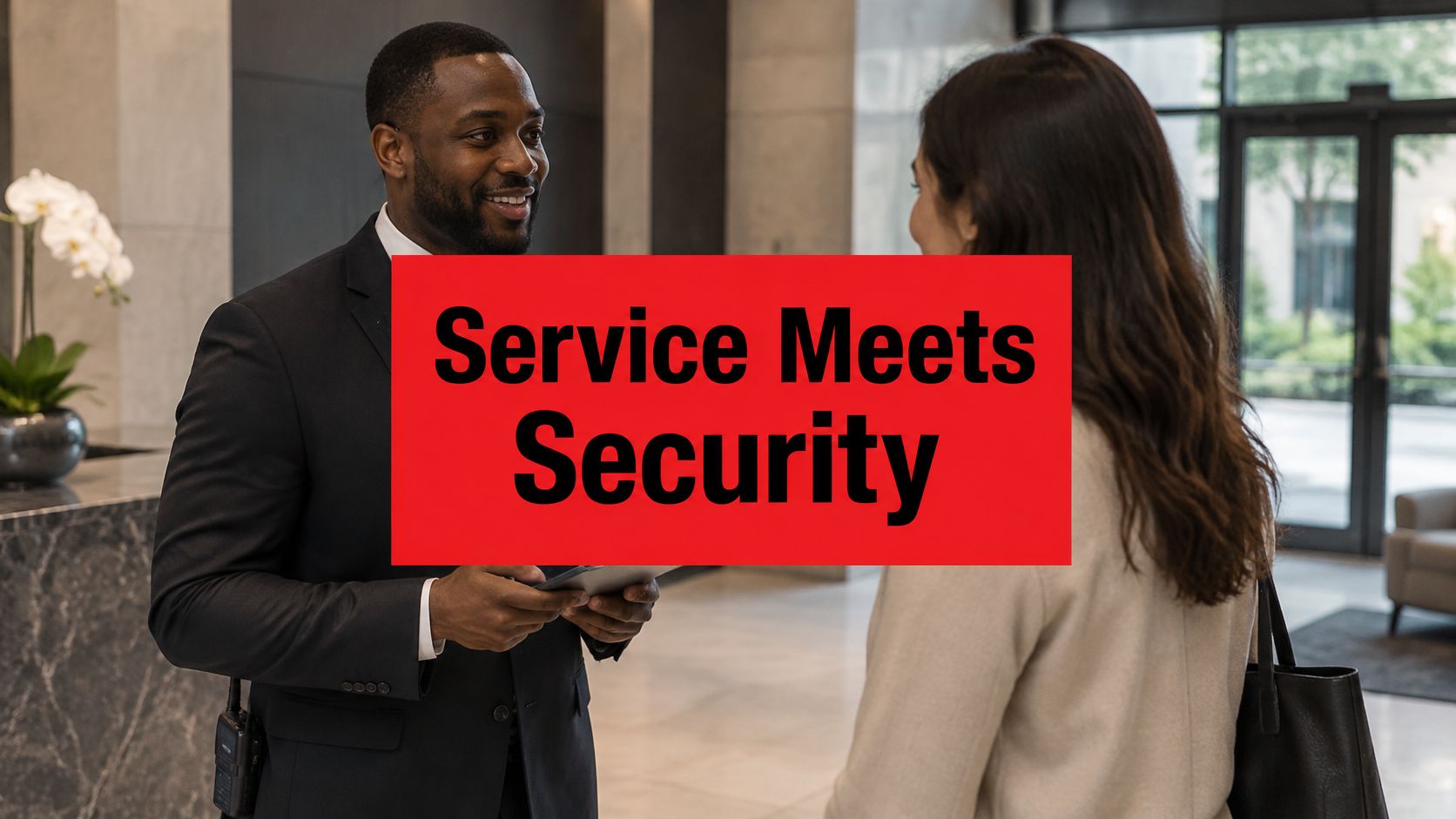
By 7:30, the building changes character. Cleaners are leaving, early tenants badge in, and a courier needs dock access while a vendor waits to service an elevator. The officer isn't just greeting people. He's sorting them, quickly and politely, into groups the building already decided how to handle.
- Known tenants badge through and get a brief, familiar greeting
- Scheduled vendors sign in, show identification, and wait for their escort or work area access
- Unexpected visitors stay in the lobby until a host confirms they're expected
That sorting sounds simple until five people arrive at once. Then you see the difference between an officer working from post orders, the written instructions for that specific post, and one improvising.
A tenant forgets her badge and is already late for a meeting. A trained officer doesn't wave her through because he recognizes her, and he doesn't lecture her either. He verifies her identity the way the post orders require, issues a temporary credential, and logs it. She makes her meeting, and the building keeps an honest record.
A good morning in a lobby looks boring from the outside. Inside the log, every exception has a name, a time, and a reason.
At 9 a.m., a delivery driver insists he was told to use the freight elevator without checking in. The officer stays calm, calls the tenant, and holds the delivery in the dock until someone authorized confirms it. No confrontation, no bottleneck at reception. By mid-morning, tenants barely notice security at all, which is exactly what a well-run post feels like when the small judgments keep landing correctly.
What a Corporate Security Guard Actually Does
Start with the question locks and cameras can't answer. A camera records a man tailgating through a secured door, and a badge reader logs that the door opened. Neither one walks over, asks who he's visiting, and decides what happens next. That human judgment, applied consistently, is the core of the job.
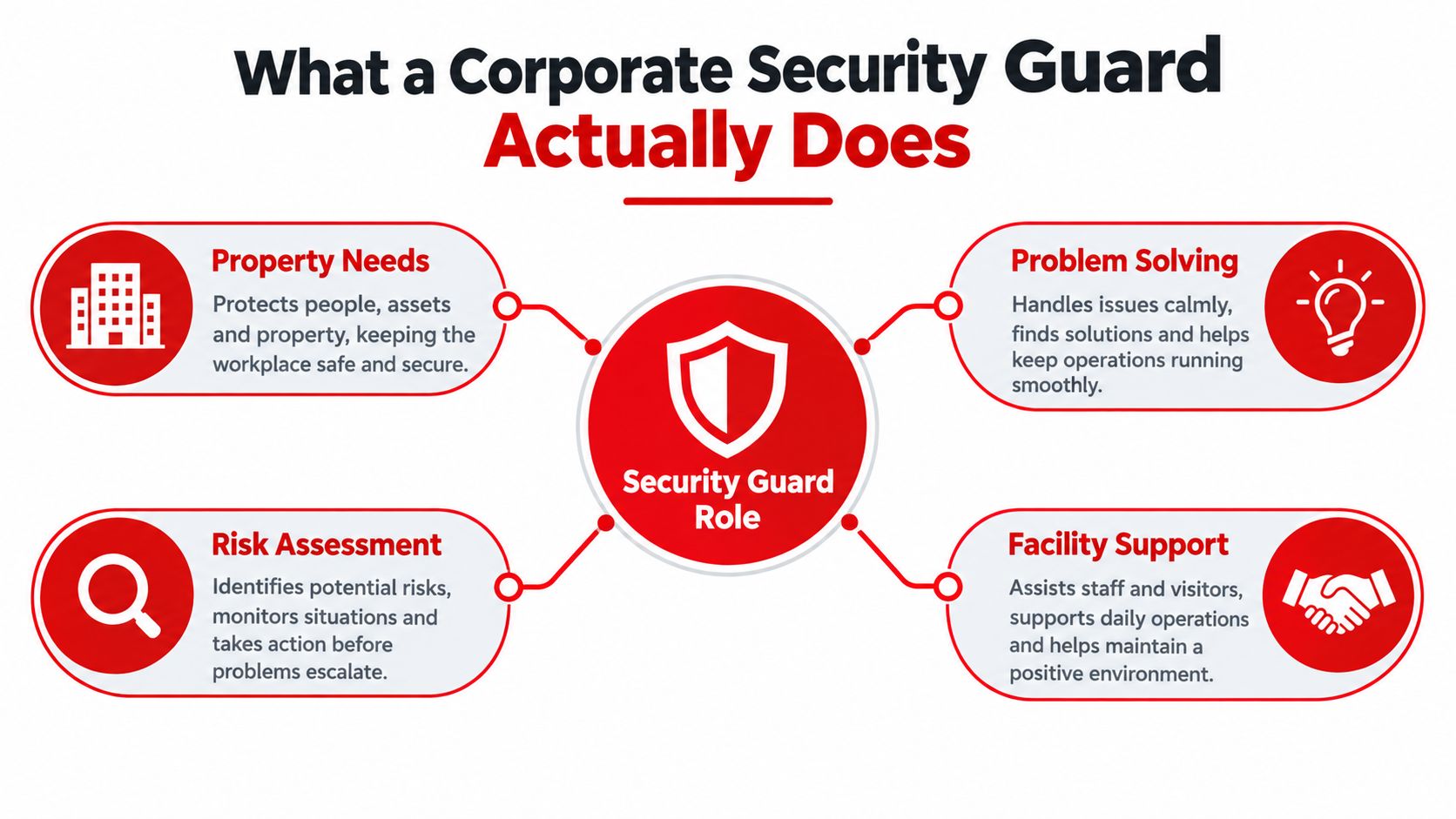
Think of the role in layers. Federal physical security guidance describes security in depth as multiple interdependent layers, including barriers, intrusion detection, CCTV, guards, access control, and lighting, as outlined in the Interagency Security Committee guide to planning physical security resources. The guard is the layer that connects the others. He notices the alarm, checks the camera, walks to the door, and reports what he found.
This isn't a small or unusual occupation. The Bureau of Labor Statistics occupation profile for security guards reported approximately 1.3 million jobs for security guards and gambling surveillance officers in 2025, with guards making up the overwhelming majority. That scale matters because it means you're hiring from a large, established workforce where training and supervision, not just availability, separate good programs from weak ones.
Presence Versus a Program
Routine presence means someone's in the lobby during business hours. A program means that officer works from documented procedures tied to your building's risks. The difference shows up in details like these.
- Deterrence that's visible and predictable to tenants, less predictable to someone testing the building
- Detection through patrols, camera checks, and attention to doors, docks, and parking areas
- Delay created by controlled entry points that slow an unauthorized person down
- Response that follows written steps, from a calm verbal challenge to calling a supervisor or emergency services
If your officer can't explain which of those four jobs he's doing at a given moment, you've bought presence. If he can, and the reports prove it, you've bought a program. That distinction is the lens for everything that follows.
The Six Core Duties of a Corporate Security Guard
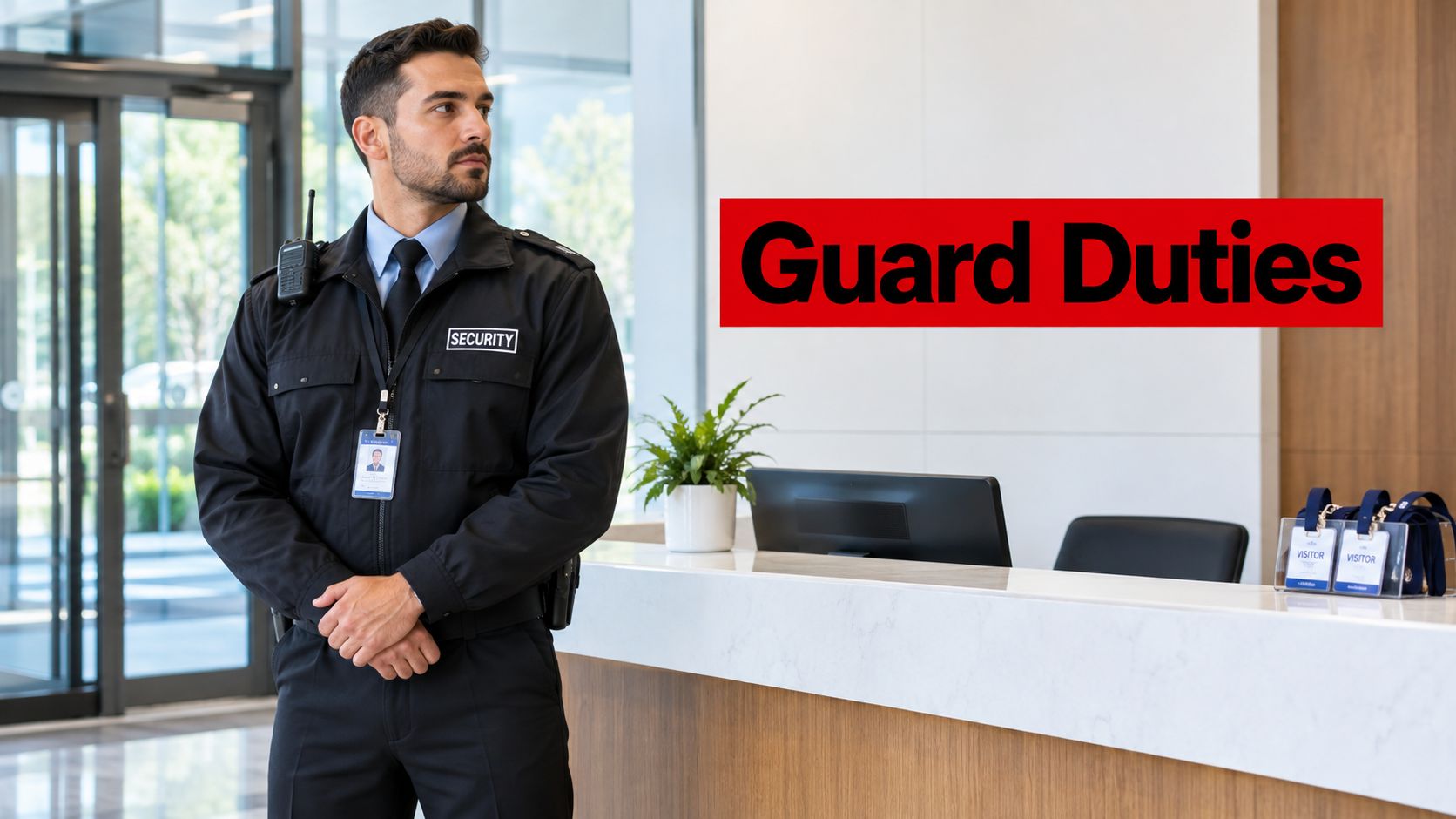
Six duties anchor most credible office programs. You'll recognize the labels, but watch what each one requires day to day. A duty that exists only in a proposal, with no procedure and no record behind it, is a gap waiting for a bad morning.
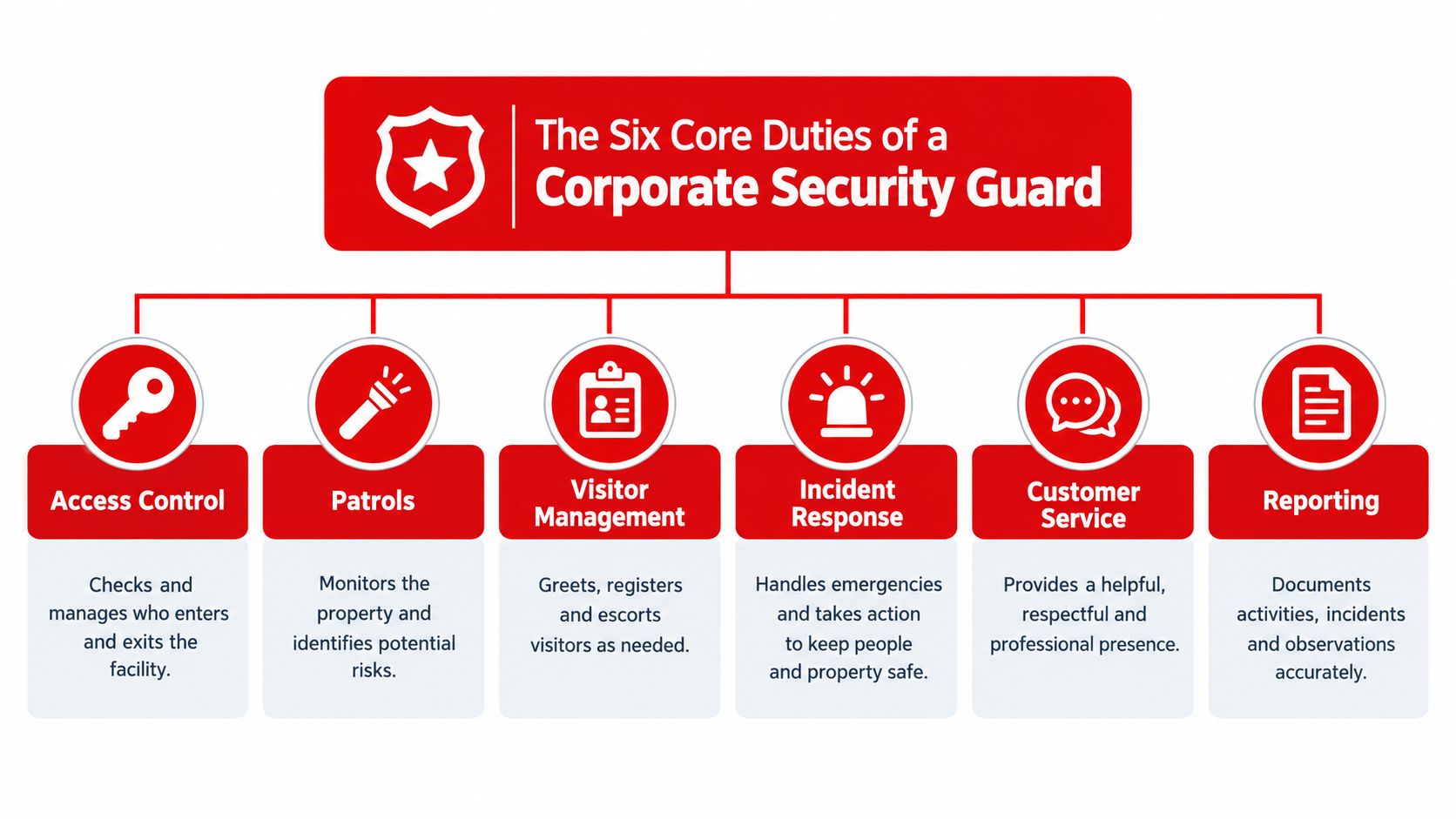
Access control is the front door decision, repeated hundreds of times. The officer verifies badges, watches for tailgating, and keeps secured doors secured. When the underlying hardware needs attention, property teams sometimes find local security installers to price repairs or upgrades, but the officer is the one who notices the reader that fails intermittently and reports it before tenants start propping the door.
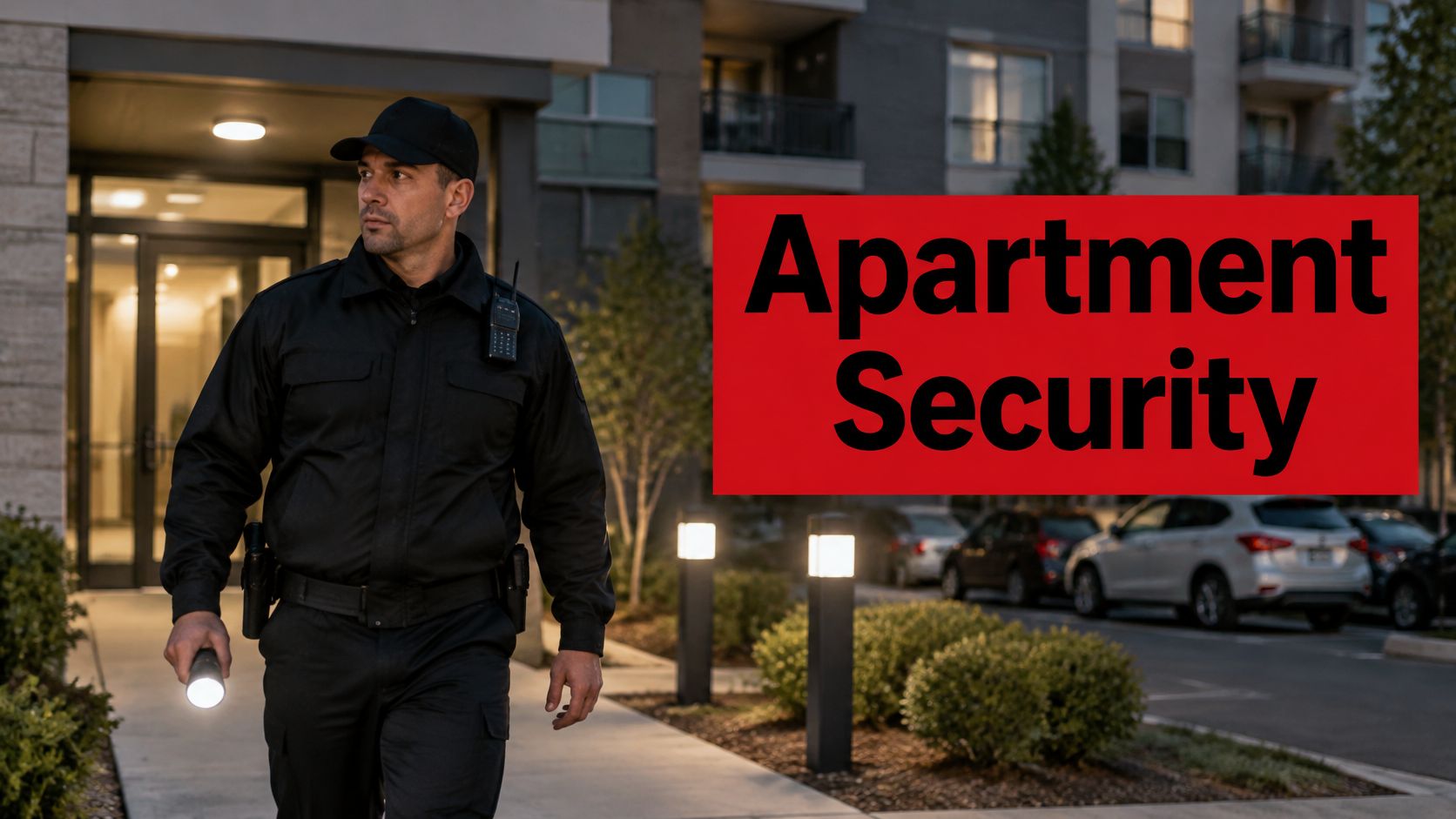
Patrols take the officer away from the desk on a defined route. He checks stairwells, restrooms on vacant floors, mechanical rooms, the garage, and the dock. Property managers sometimes ask why rounds are logged at checkpoints instead of trusted. The honest answer is that a scanned checkpoint proves the third floor was checked at a specific time, which matters when a tenant later reports a door found open.
The Duties Tenants Actually Feel
Visitor management and customer service are where security and tenant experience meet. The same officer who denies entry to an unconfirmed visitor might walk a nervous employee to her car in the garage after a late meeting. Both acts are security. One controls access, the other reduces the chance someone walks alone through a dim, isolated space.
- Incident response covers the medical call in the lobby, the alarm at the dock, and the agitated visitor at reception
- Reporting turns all of it into a record your team can review, question, and act on
None of this works on instinct alone. The Bureau of Labor Statistics factsheet on security guard training requirements reported that in 2025, on-the-job training was required for more than 99.5% of security guards, while prior work experience was required for only 10.8%. So the practical question for any provider is how they train an officer for your specific post, not what the officer did somewhere else.
Ask this first: Can the provider show you the site-specific training and post orders for your building, or only a generic officer handbook?
Map these six duties against your own property. Most managers find three or four are solid and one or two, usually reporting or after-hours patrol verification, are missing. That missing duty is where your next conversation with a provider should start.
Onsite Officers, Concierge Security, and Mobile Patrols Compared
These three models get quoted interchangeably, but they solve different problems. Choosing between them starts with your building's hours, foot traffic, and how much of the risk sits at the front door versus spread across the property. Price matters, but fit matters first, because the wrong model fails even when it's staffed perfectly.
| Coverage Model | Best Fit | Primary Strength | Watch Out For |
|---|---|---|---|
| Onsite officer | Busy single building with steady visitors | Constant presence and immediate response | Cost of full-time coverage during quiet hours |
| Concierge security | Class A lobbies and high-end residential | Hospitality skills paired with access control | Officers pulled into non-security tasks |
| Mobile patrol | Multi-building sites and after-hours checks | Visible checks across a large footprint | Gaps between visits when no one's onsite |
An onsite officer is the right answer when people flow through your property all day. He's there when the alarm sounds, not driving back from another site. For a headquarters or a busy medical office building, that immediacy is the whole argument.
Concierge security suits properties where the lobby sets the tone for leasing. The officer greets residents by name, handles packages within the rules your team sets, and still enforces access control. The risk is drift. If concierge tasks keep growing, patrols and door checks gradually shrink, so the post orders need to protect the security duties explicitly.
Matching the Model to Your Hours
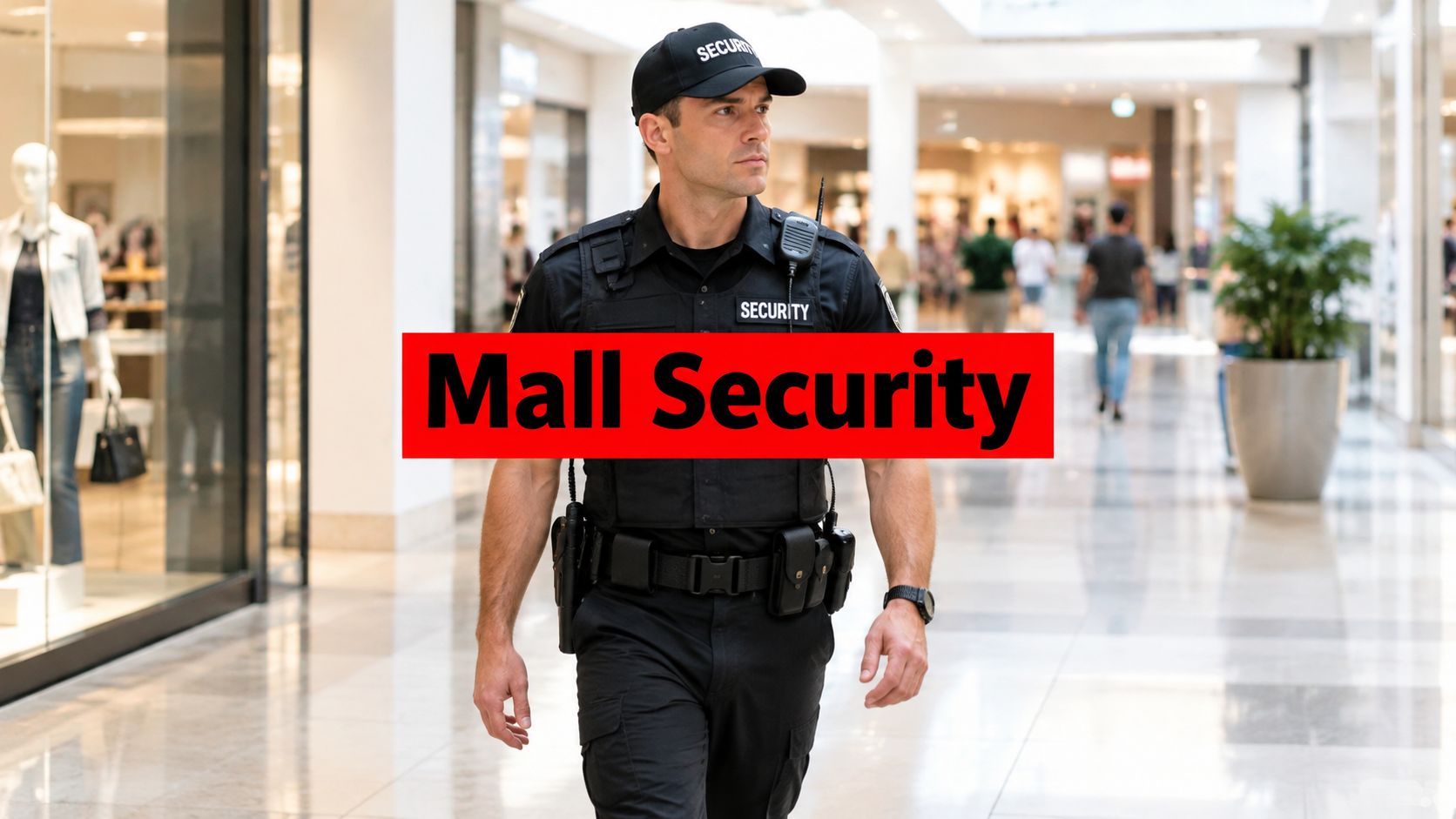
Mobile patrols work when your risk is mostly after hours or spread across several buildings, like a business park in San Jose or an industrial property near Long Beach. A marked vehicle checks doors, lighting, and parking areas on scheduled or randomized visits. What you give up is presence between visits, which is why patrol frequency and verified reporting matter so much in this model.
Many portfolios blend models, with an onsite officer during business hours and mobile patrols overnight. If you're weighing that split, the comparison of onsite security officers and security patrol services walks through the trade-offs in more detail. The right question isn't which model is best in general. It's which hours and locations at your property genuinely need a person standing there.
How Visitor Management Works Day to Day
Follow one visit from start to finish and the whole system makes sense. A consultant is coming to your fourth floor tenant at 10 a.m. In a well-run building, her experience was shaped before she arrived, because the tenant or the officer sent her simple instructions about parking, check-in, and identification.
That pre-arrival step isn't a courtesy extra. Federal access control guidance encourages giving employees and visitors information about procedures and identification before they arrive, as described in the Interagency Security Committee facility access control best practice. A visitor who knows what to bring doesn't argue at the desk, and the officer isn't forced to improvise.
A Visit in Five Steps
- Pre-arrival notice tells the visitor where to park, where to check in, and what identification to bring
- Check-in confirms her identity and her host, and the visit is logged with a time stamp
- Badge issuance gives her a visible, dated credential that shows where she's allowed to be
- Escort or notification sends her up with her host, or the officer calls the host down, based on your building's rule
- Check-out closes the record when she leaves, so you know the building is clear at day's end
Software helps, and the overview of visitor management systems for commercial properties covers the technology side. But the officer is the process. He's the one who notices the badge from yesterday, or the visitor heading toward a floor that isn't on his credential.
Friction isn't the enemy of tenant experience. Confusion is. A clear, predictable check-in feels professional even when it takes a minute.
Exceptions are where programs get tested. An executive's guest arrives without identification, or a vendor shows up a day early. A good officer doesn't bend the rule or hide behind it. He follows the exception path in the post orders, usually a call to the host or property management for approval, and he documents who approved it. That single habit, documented exceptions, is what makes your access records trustworthy when something later needs investigating.
For multi-tenant buildings, consistency across tenants matters as much as the steps themselves. If one suite waves guests up and another requires escorts, visitors learn which door is soft. Your guard program should enforce one building standard, with site-specific rules only for sensitive areas like data rooms or executive floors.
Reporting That Turns an Hour Into Accountability
An hour of guard coverage is hard to evaluate after the fact. Either you have a record of what the officer did, where he went, and what he found, or you're trusting memory. Reporting is the mechanism that converts presence into something you can manage.
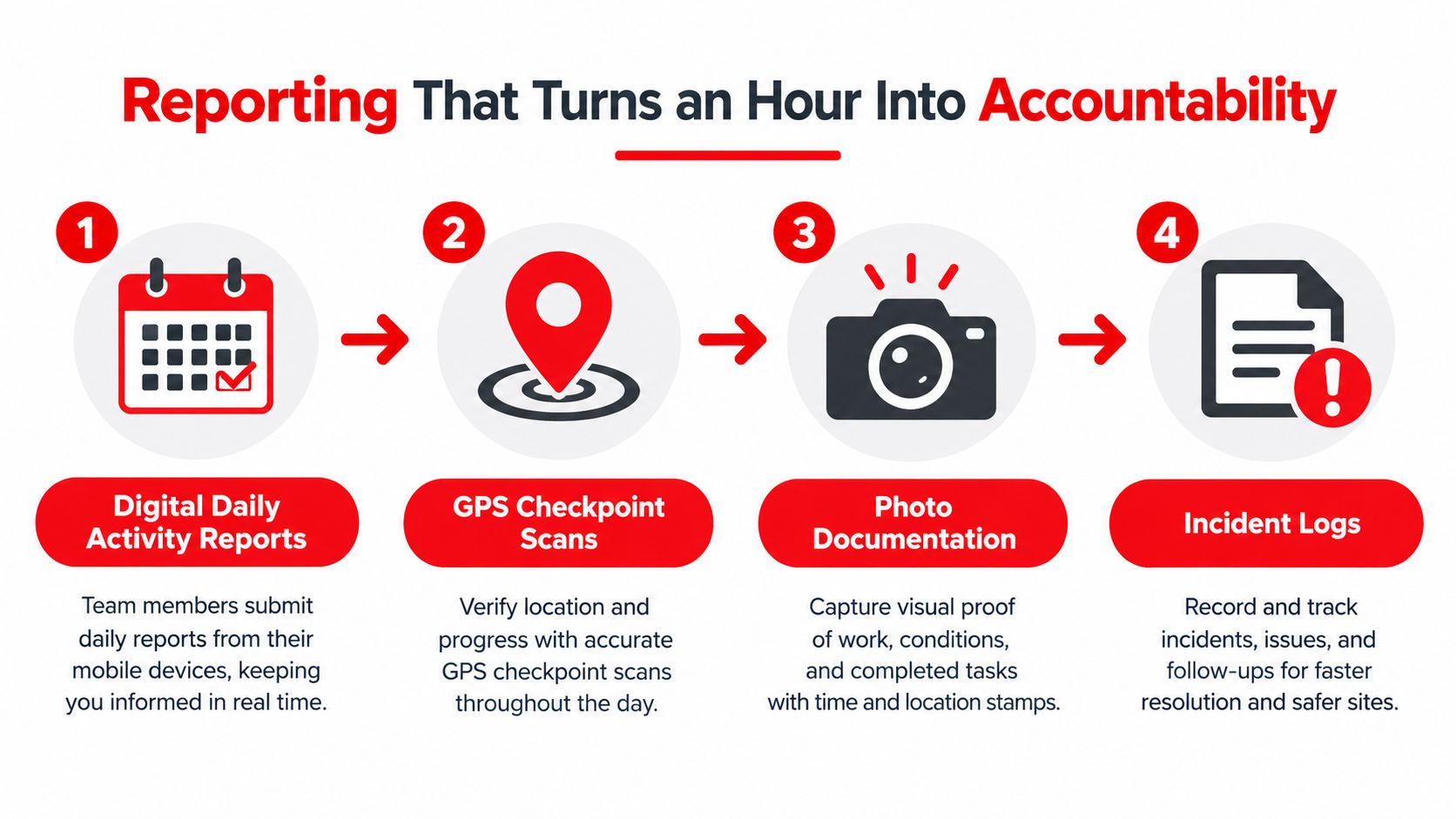
A useful daily activity report isn't a paragraph saying all was quiet. It's a time-stamped sequence combining patrol checkpoint scans, door checks, visitor exceptions, and anything unusual, with photos where they help. The background on security incident reporting practices shows how incident records build on that daily foundation when something does happen.
Federal guidance supports treating this as audit data, not paperwork. NIST physical access monitoring guidance recommends monitoring facility access, reviewing physical access logs, and coordinating findings with incident response. In plain terms, your badge events, visitor log, camera time stamps, and patrol scans should line up into one timeline you can reconstruct.
What to Ask Your Provider
- What's captured on every shift, and can you see a sample report from a comparable property
- Who reviews it besides you, and how quickly does a supervisor see a missed checkpoint or an incident
- How long records are kept, and who can access them
Oversight closes the loop. When officers know a supervisor or a 24/7 operations center reviews scans and reports in real time, the work gets done as written. If you're curious how that monitoring layer works conceptually, live safety monitoring explained is a helpful primer on the idea.
The payoff isn't bureaucracy. When reports show repeat door faults at one entrance or loitering at the same garage corner, you can change a patrol route or fix lighting based on evidence. That's a guard program improving your property, not just occupying it.
When More Guards Are Not the Right Answer
When an incident rattles a building, the first request is usually more officers. Sometimes that's right. Often, the underlying problem is that the officers you have don't know what to watch for, who to call, or what they're authorized to do, and adding headcount multiplies the confusion.

The concern behind that reflex is real. A 2025 survey of security chiefs reported by G4S covering 2,352 security chiefs at medium and large companies across 31 countries found that 42% reported a significant increase in threats against company executives over the previous two years, while 49% had enhanced security procedures such as background checks or weapons screening. Note what those companies changed. Procedures, not just staffing.
OSHA makes the same point from the workplace safety side. Its guidance describes reducing violence risk through a coordinated program of engineering controls, administrative controls, and training, as set out in the OSHA guidelines for preventing workplace violence. Barriers, controlled doors, lighting, and clear exits do part of the work. Trained guards operating inside that system do the rest.
Fix the Design Before the Headcount
- Sharpen reporting channels so employees tell security about concerning behavior early, not after an incident
- Set escalation thresholds in writing, so an officer knows exactly when to call a supervisor, property management, or police
- Rehearse the hard moments, like a terminated employee arriving at reception, through documented drills
A smaller team with clear post orders, working radios, and a direct line to supervision will outperform a larger team that's guessing. Before you approve more hours, ask what information your current officers receive at shift start. If the answer is nothing beyond a post location, fix that first. Coverage decisions should follow a risk picture, and the risk picture comes from reporting, tenant communication, and honest incident reviews.
Choosing a Corporate Security Guard Partner in California
Use a short checklist when you interview providers for properties in Los Angeles, San Francisco, San Diego, Sacramento, or anywhere else in the state. You're not buying uniforms. You're buying training, supervision, and proof of work.
- Site-specific post orders written for your building, not copied from another account
- Documented training records you can request, covering emergency procedures and communication
- Verified patrols through GPS or checkpoint scans, with reports you receive without asking twice
- Real supervision, meaning a manager with a small enough client load to visit your site and know your officers
- Officer retention practices, because constant turnover means constant retraining at your expense
Contract structure matters too. About 60% of U.S. guards work for contract security firms rather than directly for the sites they protect, according to a UC Berkeley Labor Center analysis of the security guard workforce, so evaluating the firm's management capacity is evaluating most of the service. Property owners weighing in-house versus outsourced operations may also find the landlord's guide to property management useful context.
One option is Overton Security, a California provider with 26 years in business that staffs onsite officers and concierge posts with GPS-enabled patrol verification, digital reporting, and 24/7 operations center oversight. Whoever you choose, insist on seeing the reporting before you sign. The sample report tells you more than the sales presentation.
If your current program provides hours but not evidence, a conversation about post orders, reporting, and supervision is a sensible next step. Overton Security builds corporate guard programs around trained officers, verified patrols, and hands-on account management for California properties of all sizes. Visit Overton Security to talk through what coverage at your building should look like.