
As you budget for security, the first question is always the same: "What's this going to cost?"
While there’s no single price tag, understanding the typical range is a helpful starting point. Generally, you can expect unarmed security officers to range from $25-$55 per hour. For guards with specialized training and licensing, armed officers typically cost between $35-$75+ per hour, though this can vary based on your exact needs and location.
Your Guide to Security Guard Service Costs
But determining "How much should I pay for security?" goes deeper than just an hourly rate. The real value comes from understanding what drives those numbers. Whether you're a property manager, an HOA board member, or a business owner, your goal is to find the right balance between robust protection and a sensible budget.
This guide will pull back the curtain on the pricing process. We'll break down the key factors that shape your final quote, from guard duties and site complexity to contract length. Our goal is to help you move from a simple price comparison to a strategic decision about your property’s safety and your peace of mind.
What Determines the Final Price
Every security quote is built on a few core components. Understanding these is the first step toward making a confident, well-informed choice.
Here’s what influences the cost:
- Guard Type and Duties: An unarmed officer monitoring a lobby has different responsibilities than a highly-trained armed officer patrolling a high-risk site. The required training, licensing, and duties are significant factors.
- Property Location: Like real estate, location matters. Regional labor costs and local risk levels will impact the rates you see.
- Scope of Service: The amount of coverage you need—more hours, more days per week, or a longer contract—will influence the overall investment.
- Provider Quality: A security company's price reflects its investment in its people. Proper training, consistent supervision, and modern technology all factor into the cost and, more importantly, the quality of service you receive.
Ultimately, a quote says a lot about a provider's operational standards. A quality-focused partner like Overton Security, with 26 years of experience, builds proposals designed to ensure officer retention and deliver truly reliable service.
For a deeper look into the entire process, check out our detailed guide on how to hire security guards. It's also helpful to see how these costs fit into your overall operational budget by using a cost of doing business calculator.
The 5 Key Factors That Shape Your Security Quote
When you receive a security proposal, it's easy to focus only on the final hourly rate. But the real story is in the building blocks of that price. Understanding how your quote is constructed helps you move from comparing numbers to strategically investing in the right protection.
Think of it like commissioning a custom suit instead of buying one off the rack. Every detail—the fabric, the cut, the stitching—influences the final product and its price. A security solution works the same way; it’s tailored to your specific environment, risks, and operational needs.
This infographic breaks down the core components that build a security quote, showing how each piece contributes to the final cost.
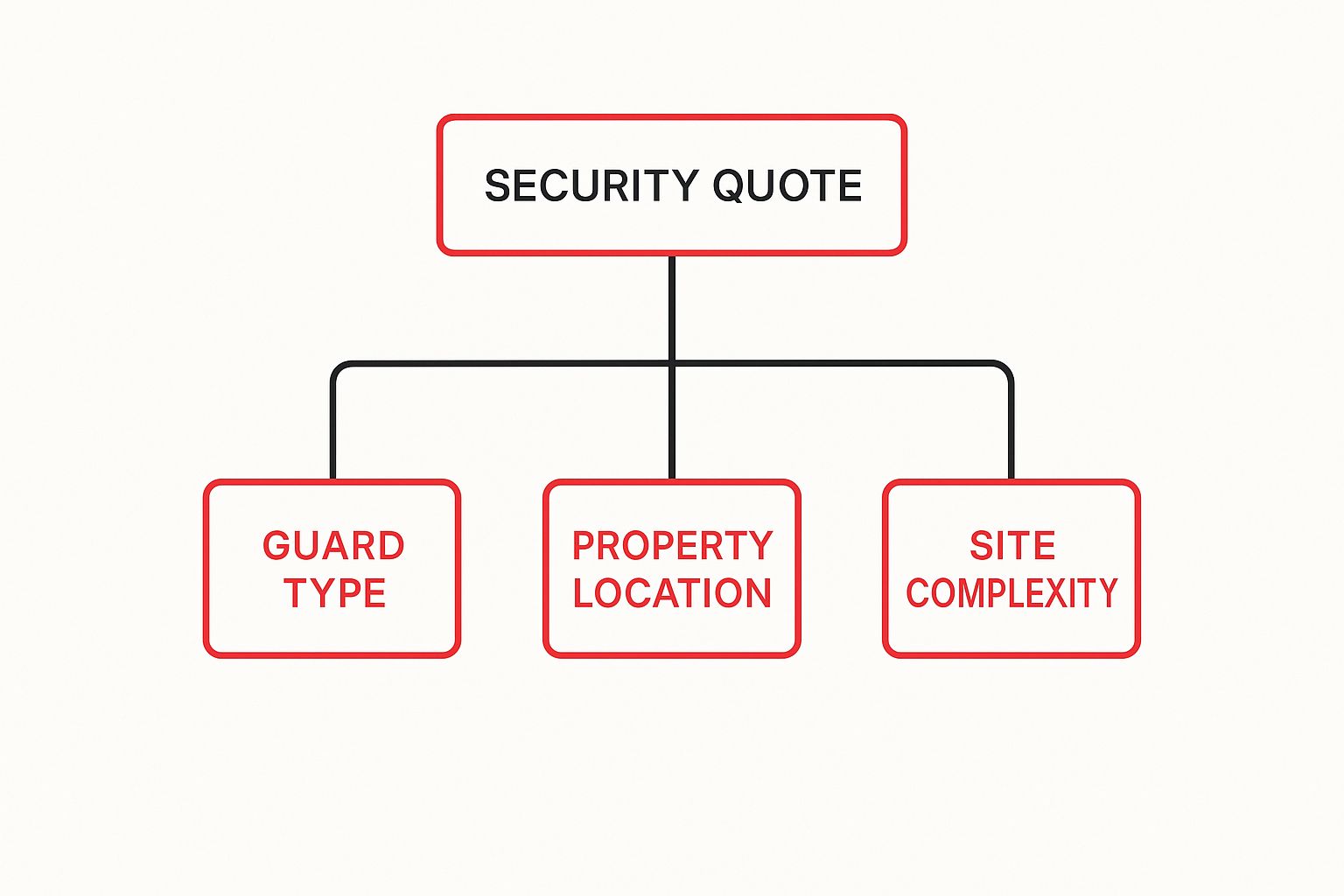
As you can see, your unique situation is the foundation of the pricing structure. This ensures the service you receive is the one you actually need.
1. Type of Security Guard
The most direct impact on cost comes from the type of officer you require. Each level of service demands different training, licensing, and responsibilities, all of which are reflected in the hourly rate.
-
Unarmed Security Guards: These officers are an excellent choice for general deterrence, access control, and monitoring. They are a great fit for locations like residential communities, office lobbies, and retail centers where a professional presence is the primary goal. Their role focuses on observation, reporting, and customer service.
-
Armed Security Guards: When a site faces a higher risk profile—such as locations with high-value assets or a history of serious security incidents—armed officers provide an elevated level of protection. These professionals undergo extensive firearms training, de-escalation drills, and use-of-force protocols. Their advanced skills and the associated liability coverage naturally command a higher rate.
-
Concierge or Lobby Security: This specialized role blends security with high-level hospitality. You’ll often find these officers in Class A office buildings or luxury residential towers, where they manage front desk operations, greet tenants, and act as a welcoming first point of contact while maintaining a secure environment.
2. Site Complexity and Risk Level
No two properties are the same. A quiet suburban HOA has entirely different security needs than a sprawling construction site in downtown Los Angeles. A professional security provider will conduct a thorough assessment to determine your site’s specific risk level.
A low-risk site might be a gated community with minimal public access. A high-risk site could be a 24/7 distribution center with constant vehicle traffic and valuable inventory. This assessment directly shapes the post orders, officer training, and ultimately, the cost.
This is a critical factor. Higher risk demands more experienced officers, more intensive supervision, and tighter operational protocols to be effective.
3. Contract Duration and Scope of Work
The scale of your security program is another key piece of the pricing puzzle. A one-time event requiring ten guards for eight hours is priced very differently than a long-term contract for 24/7 coverage at a single post.
Longer contracts often allow for more competitive hourly rates because they provide stability for the security company. Conversely, short-term or temporary assignments may have higher rates to cover the administrative and logistical costs of a limited deployment. The total number of weekly service hours is a primary multiplier in your final quote.
4. Required Training and Certifications
Beyond standard guard licensing, some sites require specialized skills. Does your property need officers with advanced first aid and CPR certifications? Are there specific protocols for handling sensitive data or interacting with the public that require extra training?
For example, a healthcare facility might require guards trained in HIPAA compliance and patient interaction. A high-tech campus may need officers familiar with proprietary access control systems. These additional qualifications represent an investment in a higher caliber of service, and that is reflected in the price.
5. Technology and Support Systems
A modern security quote isn't just about personnel; it's also about the technology that ensures accountability and performance. At Overton Security, we believe this isn’t an "add-on" but a core part of providing reliable service.
Our quotes factor in our 24/7 Security Operations Center (SOC), which provides real-time support to officers in the field. They also include our GPS-enabled guard tour management system, which provides you with transparent, detailed digital reports on every patrol and activity. This tech-driven approach ensures you always know what’s happening on your property.
How Location Influences Security Service Pricing

Just as the price of a house can change dramatically from one zip code to the next, the cost of security guard services is tied directly to geography. If you manage properties across different cities, understanding these regional price shifts is crucial for building a realistic budget. It’s no surprise that a security guard in downtown Los Angeles will command a higher hourly rate than one in a quieter, more remote town.
This isn't arbitrary pricing—it’s rooted in local economics. The area's cost of living, specific wage laws, and the supply and demand for licensed security professionals all come into play. A city with a higher minimum wage, for example, sets a new floor for what an officer must be paid, and that cost naturally factors into the client's bill rate.
Urban Centers vs. Suburban and Rural Areas
The most significant price difference is often between major metropolitan hubs and less populated areas. Large cities come with higher operating costs for security companies, including increased insurance premiums, more competitive wages needed to attract and retain talent, and greater logistical challenges.
A security provider in San Jose is dealing with a different economic reality than one based in Fresno. These local market conditions are a key factor in answering the question, "How much should I pay for security guard services?"
This gap between urban and rural pricing is a consistent trend. You can expect metropolitan areas to command 20-40% higher rates for the same security services due to elevated labor and living costs. For instance, a contract for continuous coverage in a major city might run $110,000 annually, while a similar post in a smaller city could be closer to $50,000 per year. You can get a deeper look at how security guard costs are calculated and what business owners should know in 2025.
Why Local Expertise Matters
Beyond the raw numbers, a company’s familiarity with a city's specific security landscape is invaluable. A company with deep roots in a particular area, like Overton Security's 26 years of experience across California, has an intimate understanding of the unique risks and challenges of that environment. That local knowledge is essential for crafting effective post orders and deploying officers who are prepared for what they will encounter.
A security partner who knows a city's specific trouble spots—whether it's patterns of property crime in a business district or chronic loitering at a shopping center—will build a much smarter and more efficient security plan. That local insight is a critical part of the value you're paying for.
Ultimately, your property's location will be one of the biggest lines in your security budget. By acknowledging these regional differences from the start, you can set realistic expectations and make a more informed decision when comparing proposals.
What a Quality Security Quote Actually Includes
When determining how much to pay for security guard services, it's tempting to simply choose the lowest hourly rate. However, the cheapest bid often hides gaps in service, training, and accountability.
A true security partner provides a transparent, detailed quote that shows you exactly what your investment covers. This isn't just about placing a person on your property; it’s about deploying a complete, reliable security ecosystem.
Beyond the Bill Rate
A low bill rate might look appealing, but it can mean critical corners are being cut. The quote from a professional security company will reflect the investment they make in the foundational elements that deliver reliable and effective protection.
These core components are non-negotiable for dependable service:
- Liability Insurance: This protects your business from risk if an incident occurs. Underinsured providers leave you exposed to significant financial and legal challenges.
- Ongoing Officer Training: A quality firm continually invests in its people. This includes training in de-escalation, site-specific procedures, and emergency response that goes far beyond basic state licensing requirements.
- Dedicated Supervision: A low manager-to-client ratio ensures your property gets hands-on attention. Consistent site visits and active supervision from management are hallmarks of a provider who is invested in your success.
These aren't "add-ons"—they are the bedrock of a professional security program. Understanding what security guards can and can't do in California also makes it clear why proper training and oversight are so essential.
The Technology and Support Infrastructure
Today, a guard is only as effective as the support system behind them. The best security partners blend human expertise with smart technology to deliver accountability you can see and measure.
A professional security quote accounts for the operational backbone that supports every officer in the field. This includes a 24/7 Security Operations Center (SOC) for real-time dispatch and support, plus GPS-enabled guard tour systems that provide verifiable, time-stamped reports.
This tech-driven transparency is a key differentiator. It proves that patrols are being completed correctly and gives you detailed digital reports, so you’re never left wondering what’s happening on your property. At Overton Security, these systems come standard, because they’re essential for delivering the consistent, high-quality service our clients have relied on for over 26 years.
A Checklist for Comparing Security Quotes
Use this checklist to look beyond the hourly rate and evaluate the true value and reliability offered in each security proposal.
| Service Component | What a Low-Bid Provider Includes | What a Quality Partner Includes |
|---|---|---|
| Insurance Coverage | Minimum state-required liability, leaving you exposed. | Comprehensive liability, auto, and workers' comp insurance. |
| Officer Training | Basic guard card certification only. | Ongoing training in de-escalation, emergency response, and site-specific duties. |
| Management & Supervision | One manager for 50+ clients; rare, unscheduled site visits. | Dedicated manager with a low client ratio; regular, documented site visits. |
| Technology | Paper-based reports, if any. No real-time tracking. | GPS-tracked guard tours, digital incident reports, and a 24/7 operations center. |
| Officer Pay & Benefits | Minimum wage with no benefits, leading to high turnover. | Competitive pay and benefits to attract and retain professional, career-oriented officers. |
| Transparency | Vague service descriptions and hidden fees. | A detailed proposal outlining all services, costs, and performance metrics. |
When reviewing proposals, remember you're not just buying an hourly service—you're investing in peace of mind. A quality partner's quote will reflect that commitment from top to bottom.
Using Technology to Enhance Your Security Investment
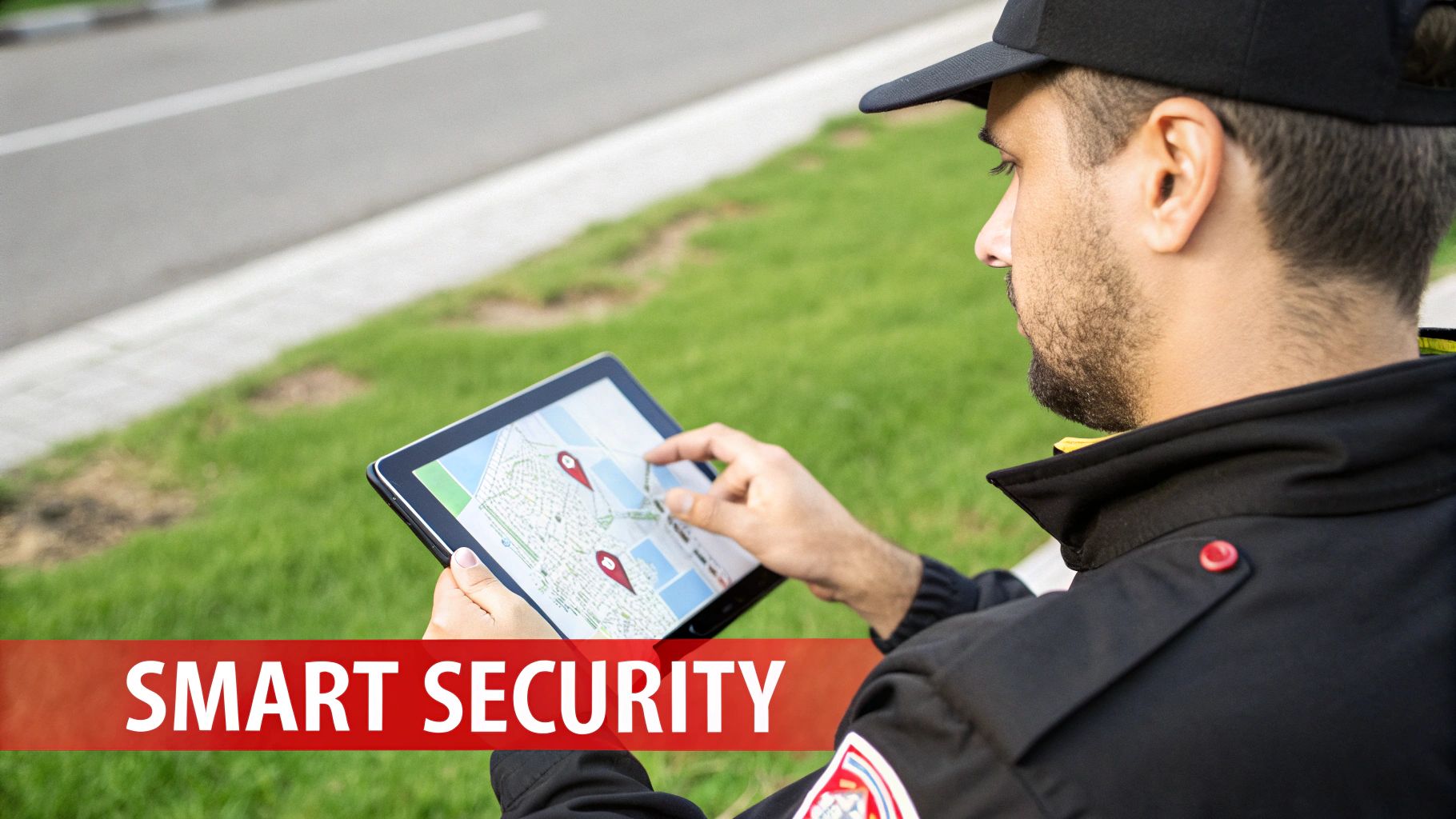
Modern security is about more than having a person in a uniform on-site. It's about smart, efficient protection that provides a real return on your investment. When budgeting for security guard services, view technology not as an added cost, but as an essential tool for accountability and effectiveness.
Integrating tools like GPS-enabled patrols and instant digital reporting creates a level of transparency that old-school paper logs can't match. It's the difference between hoping a patrol was done and knowing it was. This technology ensures every round is completed, every incident is documented, and you have a clear, verifiable record of the services you're paying for.
The Strategic Advantage of Outsourcing Security
An increasing number of businesses are entrusting their security needs to specialized firms for reasons of both effectiveness and economics.
The market for outsourced security services grew from approximately $22 billion in 2014 to $33 billion by 2022. This trend highlights a simple truth: building and managing a professional, tech-savvy security team in-house is often more expensive and complex than it appears. You can read more about the growth of the contract security market and its driving factors to see the full picture.
When you partner with a dedicated security provider, you gain access to their advanced systems, industry expertise, and trained workforce without the significant upfront investment. It’s a strategic decision that delivers a sophisticated and reliable security program that fits your budget.
By outsourcing, you’re not just hiring guards; you’re adopting an entire security infrastructure. This includes the technology, the 24/7 operational support, and the experienced management needed to make it all work seamlessly.
Technology That Delivers Real Value
A security partner should blend human expertise with smart solutions that enhance protection and provide peace of mind. These tools aren't just features; they are fundamental to delivering quality service.
At a minimum, your provider's technology should include:
- GPS-Enabled Guard Tours: This is non-negotiable for verifying that officers are patrolling the right routes at the right times, ensuring consistent coverage.
- Real-Time Digital Reporting: Officers should be able to log activities and upload photos with incident reports, giving you a clear, up-to-the-minute view of on-site events.
- 24/7 SOC Oversight: A Security Operations Center (SOC) acts as a central command, providing a critical support link for officers and an escalation point for any serious incidents.
These systems work together to create a robust security net. For properties that need an even stronger visual deterrent, adding options like remote video monitoring can dramatically extend your protective reach, often at a fraction of the cost of adding another officer.
Partnering for Smarter Security Solutions
Choosing a security provider is a significant decision. It’s an investment in the safety of your property, your reputation, and your peace of mind. The right partner does more than place a guard at a post; they deliver a complete security solution that actively reduces risk and protects what matters most.
As we've explored, the answer to "How much should I pay for security guard services?" depends on your specific needs, and a quality provider will be transparent in how they build your quote.
The demand for professional security continues to grow. The global security services market is projected to expand from $101 billion in 2025 to over $154 billion by 2035, signaling how critical these services have become. You can explore the full market projections to see these trends for yourself. This growth underscores why finding a forward-thinking partner is more important than ever.
With over 26 years of hands-on experience, Overton Security is more than a vendor—we are a trusted advisor. We work collaboratively with you to find the ideal balance between your budget and real-world protection.
We invite you to contact our team for a straightforward security assessment. We’ll provide a clear, no-obligation quote tailored to your property, so you can make the best choice with confidence.
Is It Cheaper to Hire Security In-House?
This is a common question. On the surface, hiring your own guards can seem less expensive, but that rarely accounts for the full picture. Once you factor in all the associated costs, a different story emerges.
When you hire in-house, you are responsible for much more than an hourly wage. You must cover benefits, unemployment insurance, training, uniforms, and the entire management structure to oversee the team. Outsourcing to a professional security partner is almost always more cost-effective and significantly reduces your liability. We handle all the operational heavy lifting for you.
Can I Negotiate the Price with a Security Company?
Yes, a security partner should be open to a conversation about tailoring a solution to your budget. However, focusing only on the hourly bill rate can be limiting.
Instead of trying to shave a dollar off the hourly rate, consider other factors. Could you negotiate a longer contract term for a better overall price? What about bundling services? Combining on-site guards with mobile patrols, for example, can often create a more valuable and budget-friendly package.
The best negotiations shift the conversation from finding the lowest price to securing the best overall value. A true partner works with you to build a security plan that meets your operational needs and financial goals without compromising on quality.
Why Is There a Minimum Number of Service Hours?
We understand why this question comes up, especially for smaller or temporary needs. Placing a professional security officer on your property involves more than just their time on-site. There are logistical and administrative costs tied to scheduling, supervision, and ensuring consistent, reliable coverage.
These minimum hour requirements help us cover those fixed costs, which allows us to maintain the high standards of service you expect. It ensures that regardless of the job size, we can deliver the professional, dependable protection your property deserves.
Ready to get a clear, straightforward quote designed specifically for your property? The team at Overton Security is here to help you find the perfect balance between robust protection and your budget. Contact us today for a no-obligation security assessment.