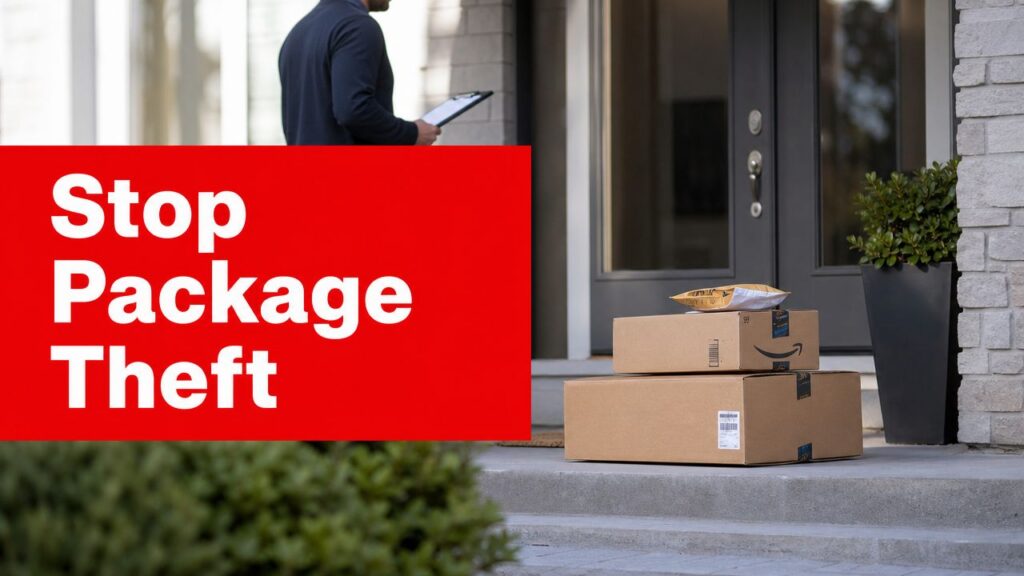
A resident forwards the same message every property manager dreads: the carrier marked a package delivered, but nothing is outside the unit door, nothing is in the lobby, and now the resident wants answers. By noon, another complaint comes in from a different building entrance. By the end of the week, leasing staff is fielding questions they can't fully resolve because delivery habits, building access, camera coverage, and resident expectations aren't aligned.
That's why package theft prevention can't be treated as a gadget purchase or a one-time memo to residents. At residential communities, mixed-use properties, and condo buildings, stolen packages usually expose a workflow problem. A delivery arrives, someone leaves it in the wrong place, no one retrieves it quickly, cameras don't capture the handoff clearly, and staff responds inconsistently after the fact.
The properties that handle this well don't rely on one fix. They combine site assessment, physical design, surveillance, staffing, and resident policy into one operating system. That approach is more practical, easier to manage, and far more dependable than chasing single-point solutions.
The Rising Challenge of Package Theft for Properties
For most managers, package theft starts as a customer service problem before it's recognized as a security issue. A resident is frustrated. The leasing office gets pulled into a delivery dispute. Online reviews start mentioning safety, responsiveness, or poor building management, even when the root cause is a weak package handling process.
At apartment communities, the pattern is familiar. Couriers stack boxes in a visible lobby corner because there's no designated drop zone. In a garden-style property, drivers leave deliveries at exterior doors where they're easy to see from the street. In a high-rise, the front desk may accept some packages but not others, depending on who's working and how busy the shift is.
Package theft rarely comes from a single failure. It usually comes from several small gaps that line up at the same time.
What makes this issue difficult is the overlap between convenience and control. Residents want flexible delivery. Carriers want speed. Staff wants a process that doesn't consume the whole day. Security needs consistency. If even one part of that chain breaks down, the building absorbs the complaint.
Why residents judge management for delivery losses
Residents usually don't separate the retailer, the shipper, and the property. They see one living experience. If packages disappear repeatedly, many assume the property isn't organized, doesn't monitor common areas closely, or doesn't take incidents seriously.
That affects more than the current complaint. It can influence lease renewals, resident referrals, and the tone of everyday interactions with onsite teams.
What actually works
The most reliable response is a layered package theft prevention plan. Good properties define where deliveries go, control who can access those areas, monitor them visibly, assign staff responsibilities, and communicate resident expectations clearly. When an incident happens anyway, the response is fast, calm, and documented.
That's the difference between reacting to package theft and managing it.
Conducting a Site-Specific Risk Assessment
Before spending money on lockers, extra cameras, or unarmed guards, walk the property as if you're following a package from curb to doorstep. The goal is simple. Find out where control is lost.
A useful assessment doesn't need to be complicated, but it does need to be honest. Most sites already know where problems occur. The issue is that no one has mapped those weak points into one clear process.

Start with the delivery path
Trace the route a driver takes from arrival to drop-off. At each point, ask two questions. Who can enter here, and who can see what happens here?
Look closely at these areas:
- Main lobby access. Are doors propped open during delivery windows? Can non-residents follow a courier inside without challenge?
- Mailroom flow. Is the package area visible from a staffed desk, or tucked into a hallway where no one notices loitering?
- Garage and side entrances. These often become informal access points for delivery drivers and, unfortunately, for anyone watching their routines.
- Exterior unit doors. In suburban apartment layouts, these create convenience for residents but expose packages for longer periods.
Look for friction that causes bad delivery behavior
Couriers default to the fastest option. If the package room is hard to find, the intercom process takes too long, or access instructions are inconsistent, drivers will improvise. That's when boxes end up on call boxes, beside planters, or just inside unsecured doors.
Use a short checklist during your walk:
- Lighting quality. Can staff identify faces and package handling clearly in the early morning, evening, or shaded areas?
- Camera usefulness. Does the camera show a doorway, or does it show a recognizable person, package, and direction of travel?
- Concealment. Are there alcoves, stairwells, site walls, or oversized lobby furnishings that give someone cover?
- Access control reliability. Do fobs, call boxes, and smart locks work the same way every day, or do staff use workarounds?
- Resident behavior. Do residents leave packages overnight in shared areas or ask carriers to leave deliveries in unsecured spots?
Practical rule: If a space makes it easy to leave a package but hard to track custody, it needs attention first.
Turn observations into action items
A risk assessment only matters if it changes operations. Separate findings into three buckets: fix immediately, improve this quarter, monitor going forward. That keeps the work practical and budget-aware.
If you want a more formal framework for documenting site vulnerabilities and turning them into post orders, a structured security risk assessment process can help standardize what your team reviews and what gets escalated.
Strengthening Physical and Technological Defenses
Once the weak points are clear, choose defenses that support the way your property operates. The wrong system usually fails for simple reasons. It needs too much staff time, it confuses drivers, it doesn't fit the building footprint, or residents won't use it consistently.
The best setup usually combines controlled delivery space, visible surveillance, and clear chain-of-custody practices. The exact mix depends on property type.

Dedicated package rooms versus smart lockers
A dedicated package room works well when the property has enough square footage, a predictable delivery volume, and staff or security officers who can monitor the area consistently. It also gives managers flexibility for oversized items, grocery deliveries, and carrier variation.
Smart lockers solve a different problem. They create individual compartments, automate notifications, and reduce the handling burden on staff. They're often a strong fit for mid-rise and high-density communities that need controlled pickup without turning the front office into a package center.
Here's the practical comparison:
| Option | Best fit | Main advantage | Main trade-off |
|---|---|---|---|
| Dedicated package room | Large residential buildings, luxury communities, properties with onsite staffing | Handles varied deliveries and presents a professional experience | Needs space, upkeep, and tight access control |
| Smart lockers | Mid-size and high-volume communities with recurring package traffic | Creates structured pickup and better individual accountability | Capacity can become a problem during peak delivery periods |
A common mistake is choosing based only on appearance. A polished package room won't help if it's left open or poorly monitored. A locker system won't solve much if carriers bypass it because setup and instructions are inconsistent.
Cameras should deter, not just document
Many properties install cameras after theft complaints, then discover the footage isn't useful. The angle is too wide. The lens faces glare from glass doors. The package area is visible, but hands, faces, and movement paths aren't.
Effective package theft prevention uses cameras in three ways:
- Entrance coverage that shows who entered and with whom
- Delivery-zone coverage that captures drop-off and pickup clearly
- Exit-path coverage that shows where a person went after handling a package
For managers reviewing placement or planning upgrades, this overview of CCTV camera coverage for property security is a practical starting point.
If you're also comparing installation quality issues such as sightlines, mounting height, and blind spots, this guide to DLG Electrical Brisbane camera installation is useful because it translates common camera planning mistakes into plain language.
Layer the system, don't isolate it
Physical barriers and technology work best when they support each other. A controlled package room without camera coverage creates disputes. Cameras without access control create records of preventable failures. Smart lockers without a backup process create bottlenecks when oversized parcels arrive.
Good security design removes ambiguity. People should know where deliveries go, who can access them, and what happens if the normal process fails.
That clarity matters in residential towers, mixed-use properties, and retail-adjacent housing where foot traffic changes throughout the day.
Implementing Proactive Security Patrols and Staffing
Technology does a lot, but it doesn't replace presence. A visible officer in the lobby, a concierge who notices delivery patterns, or a mobile patrol checking access points at the right times changes behavior in ways cameras alone usually don't.
At this point, many package theft prevention plans either become effective or fall apart. If no one owns the human side of the process, systems drift. Doors get left unsecured. Delivery drivers stop following instructions. Residents begin asking staff for exceptions, and exceptions quickly become the new routine.
What onsite officers do that devices can't
At a residential high-rise, a concierge-style officer can manage visitor flow, direct carriers to the correct drop area, and intervene when someone tries to tailgate through an entry point. At a garden apartment community, an unarmed guard can check package zones during vulnerable windows, document suspicious behavior, and report maintenance issues that contribute to theft, such as broken gates or dark corridors.
Those are not dramatic interventions. They're operational ones. And they matter because package theft often comes from opportunity, not sophistication.
A professional officer also helps with the gray area that frustrates management teams most:
- Questioning unfamiliar people in common areas without escalating unnecessarily
- Redirecting carriers who leave packages in the wrong places
- Documenting patterns that leasing or maintenance staff may notice but not formally record
- Supporting residents after an incident with calm, consistent communication
Mobile patrols for larger properties
Not every site needs a full-time lobby officer. At larger communities, retail centers, or multi-building properties in places like San Jose or Los Angeles, vehicle patrol can be the better fit. The advantage isn't just mobility. It's unpredictability and coverage.
A marked patrol vehicle entering at varied times can disrupt the routine of anyone testing weak spots around package rooms, mail kiosks, side gates, or parking structures. Patrol officers can also verify whether doors are secured, whether packages are left in exposed zones, and whether lighting or camera problems need immediate attention.
Accountability is what separates patrol from appearance
The weak version of patrol service is simple visibility. A vehicle drives through, maybe someone gets out, maybe they don't, and the client receives little more than a reassurance that checks occurred.
The strong version is documented accountability. GPS-enabled patrol tracking, checkpoint scans, digital daily activity reports, and real-time photo uploads create a record of what happened, where it happened, and when. That matters when you're trying to identify recurring package loss windows or confirm whether staff followed procedure.
Residents feel the difference between a property that has security on paper and a property where officers are actively engaged.
For managers, officer quality matters as much as headcount. High turnover creates inconsistency. Inexperienced officers may avoid interaction, miss environmental cues, or fail to document details that become important later. Stable staffing, clear post orders, and active field supervision usually produce better outcomes than merely adding more bodies.
That's especially true at mixed-use and residential sites where the officer isn't just a deterrent. They're part of the resident experience.
Establishing Clear Resident Policies and Communication
Even a strong physical setup won't hold if residents don't know how the delivery system works. Clear policies reduce confusion, set expectations early, and give staff a consistent script when problems arise.
The tone matters. Residents respond better when management frames package security as a shared process, not a list of warnings.

Policies residents can actually follow
Keep the policy short enough to read and specific enough to enforce. It should answer five basic questions:
- Where packages are delivered
- When residents should retrieve them
- What staff will and won't accept
- How oversized or special deliveries are handled
- How residents report missing packages
A simple policy statement can sound like this:
For package security, residents should use the designated delivery location listed in the resident portal and retrieve deliveries as soon as possible after notification. Management can't guarantee items left outside unit doors or in unauthorized locations.
That language is firm, but not confrontational.
Use more than one communication channel
A lease clause alone won't fix behavior. Residents need reminders where they already pay attention.
Use a mix of:
- Welcome materials for new move-ins
- Resident portal messages before holiday delivery peaks
- Lobby signage near package rooms and mail areas
- Email notices after any process change
- Concierge or front desk scripts so staff gives the same answer every time
Give residents useful instructions
Good communication tells residents what to do, not just what to avoid. That can include:
- Use delivery notes carefully. Ask carriers to use the package room or locker, not to leave boxes at exposed exterior doors.
- Retrieve quickly. Shared spaces are for short-term holding, not long-term storage.
- Report suspicious activity promptly. A person lingering near package shelves may matter even if no theft has been confirmed yet.
- Choose secure retailer options. Signature-required delivery, scheduled delivery, and carrier hold locations can help for high-value items.
One of the most helpful things a manager can do is normalize reporting. Residents shouldn't feel they need proof before speaking up. They should know who to contact, what details to provide, and when they can expect a response.
Creating an Efficient Incident Response Workflow
A theft report is a service test. Residents don't expect every loss to be prevented, but they do expect the property to respond in an organized way. If staff seems unsure, delays footage review, or gives conflicting answers, trust drops quickly.
The solution is a repeatable workflow. Staff should know exactly what happens from first report to final follow-up.

Build a standard response sequence
When a resident reports a missing package, gather the basics first. Don't start by debating whether it was stolen, misdelivered, or accepted by someone else.
Use a simple intake sequence:
- Confirm delivery details. Carrier, tracking reference, delivery photo if available, estimated delivery time, and stated drop location.
- Verify resident actions. Did the resident check the package room, front desk, neighboring unit area, and delivery notifications?
- Review footage by window, not by assumption. Start before the reported delivery time and continue after it. Many teams look too narrowly and miss the actual handoff or removal.
- Preserve evidence quickly. Save relevant clips, still images, officer notes, and access records before systems overwrite routine footage.
- Guide the resident through next steps. That may include police reporting and contacting the retailer or carrier.
- Document the incident internally. Note location, time pattern, access issue, and any procedural gap.
Keep communication calm and precise
Residents don't need dramatic language. They need a clear update. A good message sounds like this: management received the report, reviewed the relevant time period, identified or did not identify useful footage, and will provide any available documentation for the resident's carrier or police report.
If your team doesn't already have a formal process, a practical security incident response planning guide can help you turn ad hoc handling into a standard operating procedure.
When staff follows the same workflow every time, residents experience competence even when the outcome is frustrating.
Review the incident for operational lessons
Every theft report should trigger one internal question. What made this incident possible? Sometimes it's resident delay. Sometimes it's poor delivery placement. Sometimes it's a door, a blind spot, or a staffing issue.
That review should lead to one of three actions:
- No process change needed, but resident support and documentation were appropriate
- Minor adjustment needed, such as signage, lighting, or delivery instructions
- Structural change needed, such as access control updates, patrol timing changes, or camera repositioning
This is where organized reports and searchable video archives save time. They reduce guesswork and let the property respond with facts instead of assumptions.
Measuring Success and Optimizing Your Strategy
A package theft prevention plan shouldn't sit unchanged once the initial fixes are in place. Delivery patterns change. Resident habits change. Carriers change routes and routines. Good properties review the system before problems reappear.
Success isn't measured only by whether a theft was reported. It's also measured by whether staff can explain the delivery process clearly, whether residents use it correctly, and whether incidents are resolved without confusion.
What to monitor over time
Use a short review cycle and ask practical questions:
- Are complaints concentrated in one area such as side entrances, exterior unit doors, or one package room?
- Are certain delivery windows riskier because no one monitors the area closely?
- Are residents bypassing the intended process by requesting deliveries to unsecured locations?
- Are your cameras and access controls producing usable records, or only partial information?
- Do staff and officers handle reports consistently, or does the response depend on who is on duty?
A useful security program evolves in small adjustments. You move patrol timing, refine resident notices, improve lighting, tighten access procedures, or redesign how carriers enter the property. Those operational changes often do more than expensive add-ons that don't fit the site.
The strongest results usually come from ongoing oversight. A property needs someone paying attention to details, revisiting assumptions, and making sure policy, technology, and human performance stay aligned. That's where experience matters. Not as a slogan, but as a management discipline.
If you're dealing with recurring delivery issues at an apartment community, mixed-use property, retail center, or multi-site portfolio, Overton Security can help you build a practical package theft prevention strategy that fits the site. With 26 years of experience, hands-on leadership, a low manager-to-client ratio, GPS-enabled patrol accountability, digital reporting, and 24/7 SOC oversight, Overton brings the kind of structured support that helps property teams solve today's package problems and stay ahead of the next one.