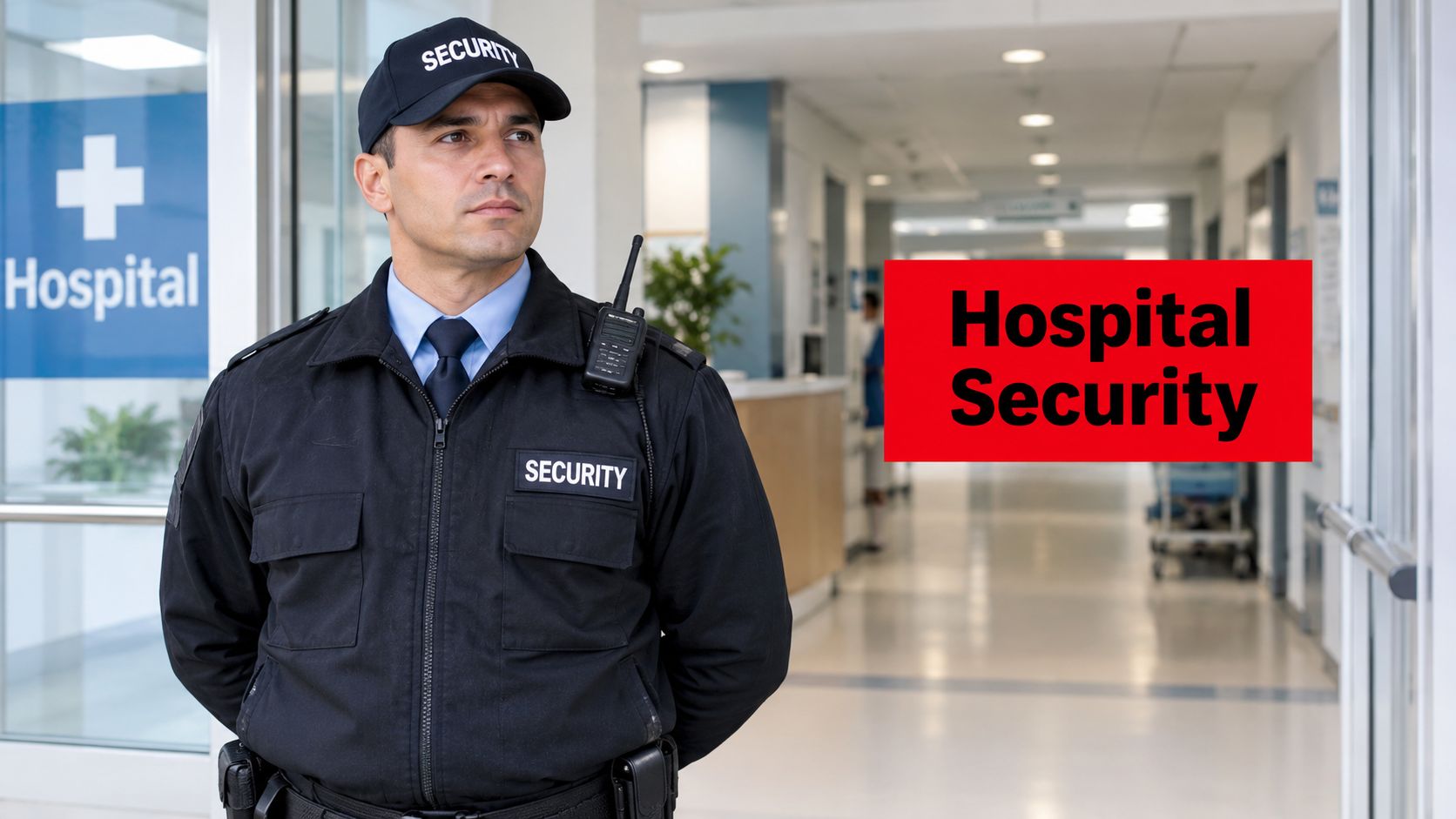

Are you looking for a way to secure your property without the high cost of a dedicated, full-time guard? Mobile patrols offer a smart, effective solution. This is a security strategy where highly trained officers in clearly marked vehicles perform regular—and sometimes random—checks on your property. This creates a powerful visible deterrent against common issues like vandalism, trespassing, and theft, providing peace of mind at a fraction of the cost.
Understanding Mobile Patrols: A Smarter Security Solution
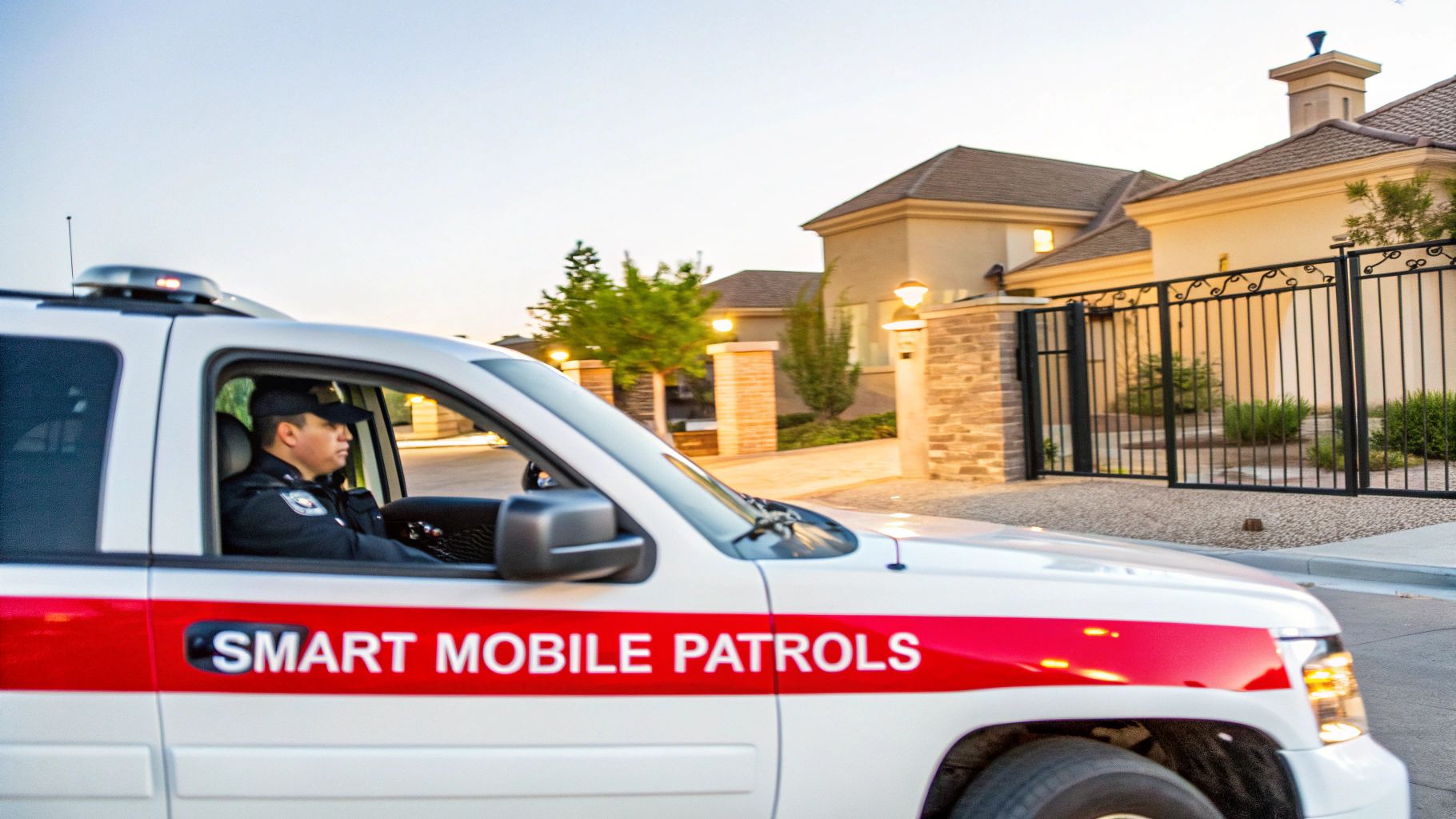
For many property managers, the expense of a dedicated onsite guard is a significant barrier. Yet, leaving a property entirely unprotected after business hours can invite trouble. Mobile patrols are designed to fill this gap perfectly, offering a flexible and intelligent middle ground.
Think of it as a shared security model. Instead of one guard remaining at a single location all night, a mobile patrol officer efficiently serves multiple properties along a planned route. This approach allows businesses and communities to share the cost while benefiting from consistent, professional oversight from a real security presence.
The Core Functions of Mobile Security Patrols
A professional mobile patrol officer does more than just drive by. They become an active, integrated part of your property’s defense. While every site’s needs differ, their duties typically focus on a few key functions that protect your assets and maintain order.
These core responsibilities include:
- Visible Deterrence: The simple sight of a marked security vehicle is often enough to persuade a potential criminal to move on to an easier target.
- Property Inspections: Officers leave their vehicles to physically check that doors are locked, windows are intact, gates are secured, and perimeters are sound.
- Incident Response: When an alarm is triggered or a disturbance is reported, mobile patrols act as your first responders, ready to investigate and manage the situation calmly and professionally.
- Rule Enforcement: In communities or commercial lots, officers can address issues like parking violations, loitering, or noise complaints, ensuring your policies are upheld.
- Detailed Reporting: Every visit, check, and observation is meticulously documented in real-time. This provides you with a verifiable record of service and a clear, ongoing status of your property.
A Cost-Effective and Growing Security Strategy
This flexible, on-demand approach has made mobile patrols an essential tool for modern property management. What was once a specialized service is now a major segment of the global security industry, driven by the real-world need for affordable, effective solutions.
The bottom line is clear: replacing just one overnight guard post with a well-structured mobile patrol schedule can reduce direct security spending by 30–60%. You still receive a regular security presence and the ability to respond quickly when it matters most. You can explore the market's growth in recent security industry analyses.
For anyone managing an HOA, construction site, or retail center, this model offers an ideal blend of prevention and affordability. It provides the reassurance that comes with professional eyes on your property without the significant financial commitment of a full-time guard, making it a perfect fit for protecting assets after hours or across large areas.
Blending Human Expertise with Smart Technology
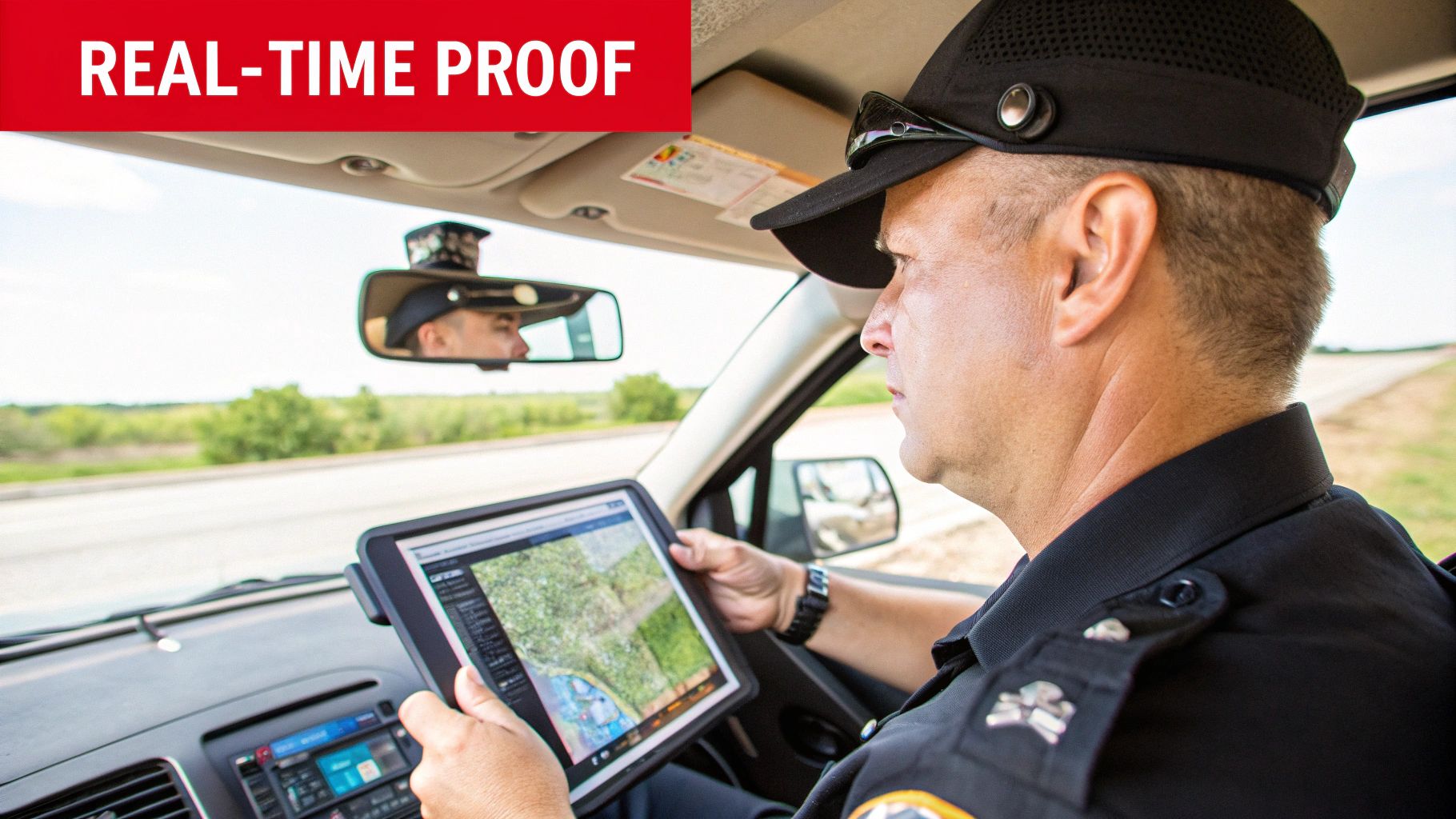
An effective mobile patrol isn't just about a vehicle driving through your lot. It’s about the seamless combination of a trained officer’s professional judgment and the verifiable proof that modern technology provides. Here at Overton Security, we’ve spent 26 years perfecting that balance, building a service on trust and proven performance.
Our philosophy is centered on quality over quantity. While some security companies stretch their teams thin, we maintain a low manager-to-client ratio. This ensures your account manager knows your property and its unique needs, providing personal, attentive service rather than making you feel like just another number.
This hands-on leadership is the human side of our promise. Technology is what makes it all transparent and accountable. We equip our officers and vehicles with tools that give you undeniable proof of service, turning every patrol into a collection of useful, data-rich insights.
The Power of GPS and Guard Tour Management Systems
At the core of our accountability is a sophisticated Guard Tour Management System (GTMS). This system creates a digital trail that confirms every action our officers take on your property. Instead of outdated handwritten logs that can be lost or inaccurate, our system generates an indisputable record of the work performed.
Here’s how this technology empowers our patrols:
- GPS-Enabled Vehicles: Every patrol car is tracked in real-time, confirming its location on your property and logging the precise duration of each visit. Many modern patrols also utilize advanced car security systems for an added layer of protection.
- Digital Checkpoints: We place small, durable NFC tags at critical points you want checked—such as pool gates, laundry rooms, or equipment storage areas. Officers must physically scan these tags, which time-stamps their presence at each key location on their route.
- Real-Time Incident Reporting: If an officer discovers a broken lock, an unauthorized vehicle, or signs of a security breach, they can create a report on the spot. This report can include photos and is sent directly from the field, so you know what’s happening, as it happens.
Oversight from Our 24/7 Security Operations Center
Technology in the field is just one part of the equation. The other is our 24/7 Security Operations Center (SOC), which serves as the central command for our teams. This professional oversight is what distinguishes a true security partner from a basic patrol service.
Our SOC team actively monitors patrol progress, verifies that every checkpoint is scanned, and provides immediate support to our officers. This constant oversight ensures your instructions are followed meticulously and any issue is addressed promptly.
This combination of field technology and centralized command provides complete peace of mind. You receive detailed, time-stamped digital reports with photos delivered directly to your inbox. It’s a level of transparency that proves your property is being watched over exactly as promised. This cohesive approach is a key part of our strategy, and you can learn more about its benefits in our guide to the integration of security systems.
When you're looking to hire a mobile patrol service, one of the first big decisions you'll face is choosing the right service model. This choice directly impacts everything from your property's safety to your security budget. Not all patrol services are created equal, and understanding the core differences is the key to getting exactly what you need.
Ultimately, the decision boils down to two main approaches: shared patrols and dedicated patrols.
Shared Patrols: A Cost-Effective Presence
A shared patrol model is like a professional neighborhood watch. In this setup, a single, highly visible security vehicle serves several properties within a defined geographic area. The real advantage here is cost-effectiveness. Because the officer, vehicle, and operational overhead are split among multiple clients, you get a strong security presence without the price tag of a full-time guard.
This model is a fantastic fit for properties that need a visible deterrent and routine checks but don't necessarily need an officer on-site 24/7. For many HOAs, smaller retail centers, or quiet office parks, shared patrols hit that sweet spot between security presence and budget reality.
Dedicated Patrols: Your Exclusive Watchdog
On the other side of the coin, a dedicated patrol operates more like having your own private security detail. This model assigns an officer and vehicle exclusively to your property—and only your property—for the entire shift. They don't get pulled away to handle issues at another client's site; their focus is 100% on you.
This approach delivers a much higher level of presence and dramatically faster response times for anything that happens on your grounds. It's really the only way to go for larger or more complex sites, like:
- Sprawling industrial parks or busy logistics hubs.
- Large-scale construction projects with millions in equipment on site.
- Massive residential communities with multiple entrances and amenities.
- High-traffic retail centers that need constant monitoring and a rapid response.
Yes, the investment is greater, but the payoff is an officer who learns the rhythm of your property inside and out. They know what's normal and what's not, allowing them to spot and react to potential issues instantly.
To help you decide, let's break down the key differences.
Shared vs. Dedicated Patrols: Which is Right for You?
This table should help you quickly see which model aligns best with your property's needs and budget.
| Consideration | Shared Patrol Model | Dedicated Patrol Model |
|---|---|---|
| Budget | Highly cost-effective; costs are split among multiple clients. | Higher investment; you cover the full cost of the officer and vehicle. |
| Presence | Intermittent but regular and randomized presence; acts as a deterrent. | Continuous and constant presence on your property during the shift. |
| Response Time | Slower; officer may be at another client’s property when an incident occurs. | Immediate; officer is already on-site and can respond in moments. |
| Scope of Duties | Limited to basic checks: lock-ups, general patrols, and visible deterrence. | Highly customizable; can include access control, incident response, and specific tasks. |
| Property Knowledge | Officer has a general familiarity with multiple properties in their zone. | Officer develops deep, expert knowledge of your property’s layout and routines. |
| Best For | HOAs, small retail, office parks, properties needing a budget-friendly deterrent. | Large construction sites, industrial parks, large communities, high-risk properties. |
Deciding between a shared or dedicated patrol really comes down to a simple question: Do you need a deterrent, or do you need a response? Answering that will point you in the right direction.
Vehicle Patrols vs. Foot Patrols: The One-Two Punch
Beyond the service model, you also want to get clear on the method of patrol. The best mobile security services use a hybrid approach, combining the strengths of both vehicle and foot patrols. They aren't mutually exclusive; they're two sides of the same coin.
Vehicle patrols are all about covering ground and being seen. They create a broad security presence across parking lots, expansive perimeters, and access roads. A marked car rolling through is often enough to make an opportunistic criminal think twice and move on. It's your first and most visible line of defense.
But the real, detailed work happens during foot patrols. This is where the officer gets out of the car to physically put eyes and hands on your critical assets. It’s the difference between driving past a building and actually walking up to check the lock.
This includes crucial tasks like:
- Physically checking that doors and windows are locked tight on your commercial buildings.
- Ensuring pool gates and clubhouse doors are secured in a residential community.
- Walking the entire fence line of a construction site to spot breaches or weak points.
- Patrolling through multi-level parking garages where a car simply can't go.
The most effective mobile patrol programs masterfully blend both. The officer uses the vehicle to move efficiently from one zone to another, then gets out to conduct targeted foot patrols at key checkpoints. This dual approach ensures you get the best of both worlds: high visibility and meticulous, boots-on-the-ground inspection.
How Mobile Patrols Protect Different Properties
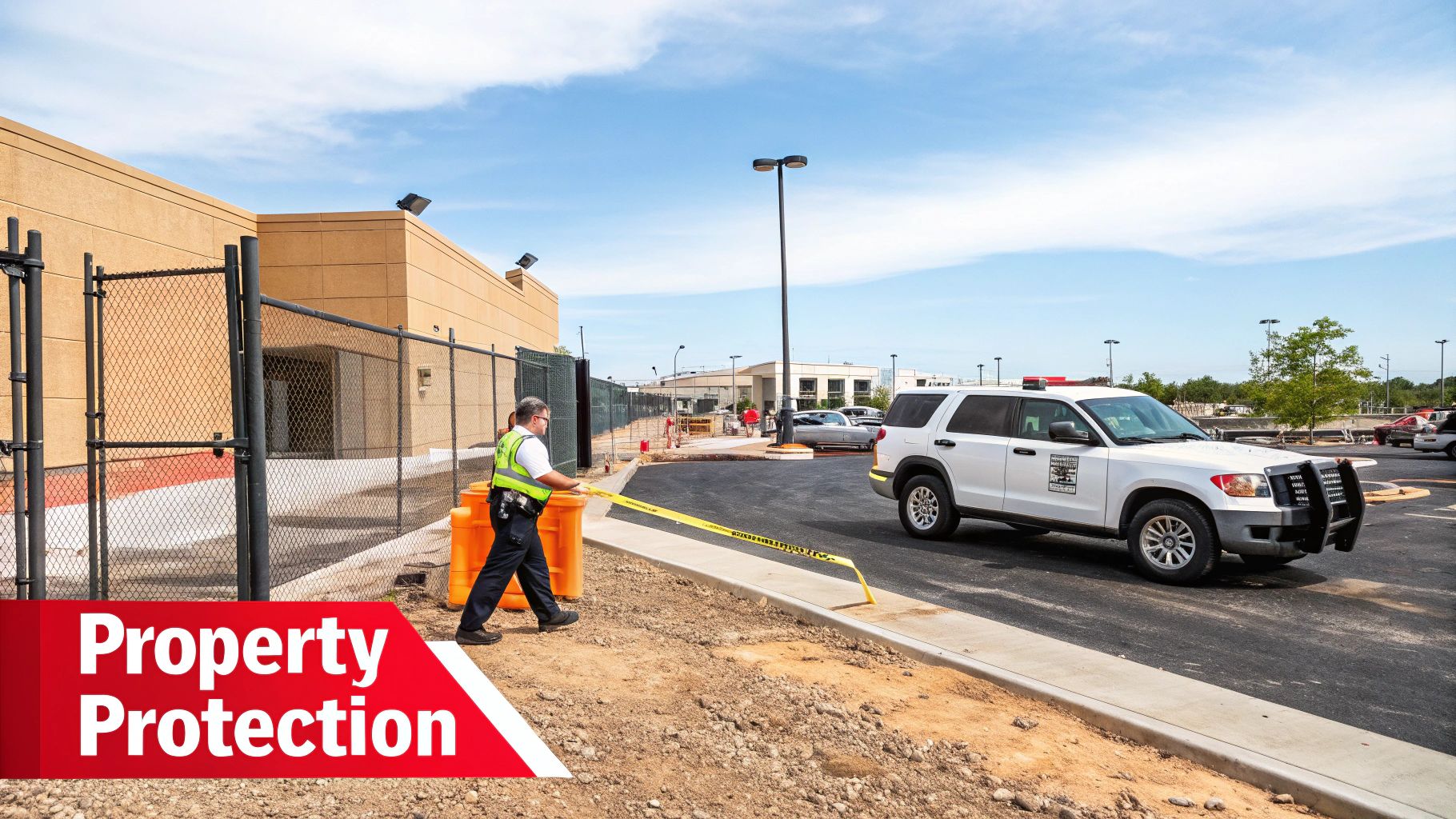
The true value of mobile patrols is seen in how they handle the day-to-day challenges property managers face. This isn't a one-size-fits-all service. It's a flexible security tool that adapts to solve the unique issues of your environment, whether it’s a quiet residential community or a busy construction site.
Seeing these patrols in action makes it clear how a proactive security presence prevents small problems from escalating into major incidents. It's about maintaining order, protecting assets, and providing peace of mind for everyone who uses the property.
Safeguarding Residential Communities and HOAs
For HOA board members and property managers, creating a safe and peaceful environment for residents is the top priority. Mobile patrols become your eyes and ears after hours, addressing common issues that can disrupt that sense of security.
These officers act as an extension of your management team, routinely handling:
- Enforcing Parking Regulations: Patrols can identify and address unauthorized vehicles, helping free up spots for residents and guests while upholding community rules.
- Securing Common Areas: Officers physically check that pool gates are latched, clubhouse doors are locked, and laundry rooms are clear after closing, preventing vandalism and unauthorized use.
- Deterring Loitering and Noise Complaints: The presence of a patrol car is often enough to discourage late-night gatherings in common areas, helping to keep noise levels down and maintain a tranquil atmosphere.
Protecting Commercial and Retail Properties After Hours
Once tenants lock up for the night, their properties can become targets for theft, trespassing, and vandalism. For anyone managing a retail center or commercial building, mobile patrols are an efficient way to keep the site secure until business resumes.
The hours between closing and opening are when a property is most vulnerable. Mobile patrols bridge this security gap, acting as a powerful deterrent when no one is around to ensure a minor issue doesn’t become a costly overnight disaster.
In a commercial setting, their key duties often include:
- Lock-Up Verification: Officers get out of their vehicles to physically check doors, gates, and other access points to confirm they are locked, closing off opportunities for intruders.
- Parking Lot Security: Patrols monitor large lots for suspicious vehicles, loitering, or signs of car break-ins, protecting both tenant and customer property.
- Alarm Response: When an alarm is triggered, a mobile patrol unit can often be the first on the scene. They can quickly assess the cause, liaise with law enforcement, and re-secure the building.
Securing High-Value Construction Sites
Construction sites are particularly vulnerable. They are often open, poorly lit, and filled with valuable equipment and materials—from copper wiring to heavy machinery. Theft not only results in financial loss but also causes project delays and increased insurance premiums.
Mobile patrols provide a critical defense against these risks, offering a dynamic layer of security that a simple fence cannot.
A patrol strategy for a construction site focuses on:
- Perimeter Integrity Checks: Officers walk the entire fence line, looking for cut wires, weak points, or any signs of an attempted breach.
- Equipment and Material Protection: Patrols arrive at random, unpredictable times throughout the night, making it difficult for thieves to plan a theft.
- Preventing Vandalism and Trespassing: A marked security vehicle serves as a clear warning to anyone considering entering the site to cause damage or engage in other unauthorized activities.
By tailoring their approach, mobile patrols become much more than a simple drive-by service. They become an active, intelligent part of your property's security plan, designed to solve the specific problems you actually face.
How to Evaluate a Mobile Patrol Provider
Choosing a mobile patrol provider is a significant decision that directly impacts the safety of your property. With many companies to choose from, it's essential to look beyond the price tag and examine how a company operates, the technology it uses, and its commitment to its people.
A true security partner delivers a reliable, verifiable service backed by a solid infrastructure. After 26 years in this business, we know that a transparent evaluation is the only way property managers can find a provider they can trust. You are not just hiring a vendor; you are seeking an extension of your own team.
Licensing and Insurance Verification
Before discussing patrol routes or pricing, you must confirm the fundamentals. Proper licensing and insurance are non-negotiable for any legitimate security operation. This isn't just about compliance—it protects you from significant liability risks. A professional provider will have this documentation readily available.
Ensure you see proof of:
- State Security License: Verify that the company holds a current, valid license from the relevant state authority, like California's Bureau of Security and Investigative Services (BSIS).
- General Liability Insurance: The company must carry sufficient coverage to handle any property damage or incidents that may occur during patrols.
- Workers' Compensation Insurance: This is crucial. It covers their officers if they are injured on your property, ensuring you are not held financially responsible.
Technology and Reporting Systems
In today's security landscape, verifiable proof is essential. Vague assurances that a patrol was completed are no longer sufficient. A top-tier mobile patrol provider uses technology to provide complete transparency and accountability for every minute they spend on your property.
Ask for a live demonstration of their systems. Specifically, you want to see their Guard Tour Management System (GTMS) in action. This software should provide GPS tracking of their vehicles, show digital checkpoints that officers scan, and generate real-time reports with photos and notes. This is the hard proof that your property is being patrolled exactly as promised.
A provider's willingness to showcase their reporting dashboard reflects their confidence. If they are hesitant to provide a demo or their reports lack detail, consider it a major red flag.
Officer Training and Retention
The quality of the security officer at your site depends on the company's commitment to hiring, training, and retaining good people. The security industry is known for high turnover, which leads to inconsistent service and officers unfamiliar with your property's needs. A provider that invests in its people is investing in your security.
Ask direct questions about their team:
- What does your initial and ongoing training for mobile patrol officers include?
- What is your average officer retention rate? A low turnover rate is a strong indicator of a healthy company culture and a professional workforce.
- How do you train officers on our property’s specific post orders and emergency plans?
Leadership and Client Support
Finally, assess the company’s support structure. When an issue arises at 2 AM, who will you call? A great mobile patrol provider has a strong support system, including accessible managers and a 24/7 dispatch or operations center. A low manager-to-client ratio is a key indicator that you will receive personalized service.
A proactive account manager who conducts regular site visits and performance reviews is invaluable. This ensures your security plan evolves with your needs. To simplify this process, we’ve created a helpful resource. You can download our comprehensive Security Patrol Checklist Template to guide your questions and compare providers effectively.
A Step-by-Step Guide to Implementing Mobile Patrols
Selecting the right provider is the first step, but how they implement that service on your property is what truly matters. A smooth, professional implementation process is the foundation of a solid security partnership. With an experienced team, it’s a straightforward journey from identifying your security concerns to creating an actionable plan for our officers.
The goal is to ensure that from day one, patrols are effective, efficient, and aligned with your security objectives. This process begins with a thorough understanding of your property.
Initial Site Assessment and Risk Analysis
A great security plan starts with understanding the lay of the land. That's why we always begin with a comprehensive site assessment and risk analysis. This involves a senior account manager physically walking your property with you to gain a firsthand look at potential vulnerabilities, high-risk areas, and your primary concerns.
We look at your property through a security expert's lens to identify potential trouble spots before they become problems.
- Are there poorly lit corners in the parking lot that might attract unwanted activity?
- Are there hidden access points along a back fence line?
- Are there common areas where loitering is a consistent issue?
This on-the-ground analysis allows us to build a proactive security strategy designed to prevent incidents before they happen.
Developing Custom Post Orders and Patrol Routes
Once we've identified the risks, we translate that knowledge into clear, actionable custom post orders. These are not generic templates but detailed, site-specific instructions for our mobile patrol officers. They cover everything from lock-up procedures to parking enforcement, ensuring you receive consistent and correct service on every shift.
At the same time, we design an intelligent and efficient patrol route. We strategically place digital checkpoints for our Guard Tour Management System at key locations—like a remote equipment shed, a community pool gate, or a rear service door. This provides verifiable proof that our officers are physically inspecting the areas you care about most.
The graphic below shows the core of this vetting and onboarding process.
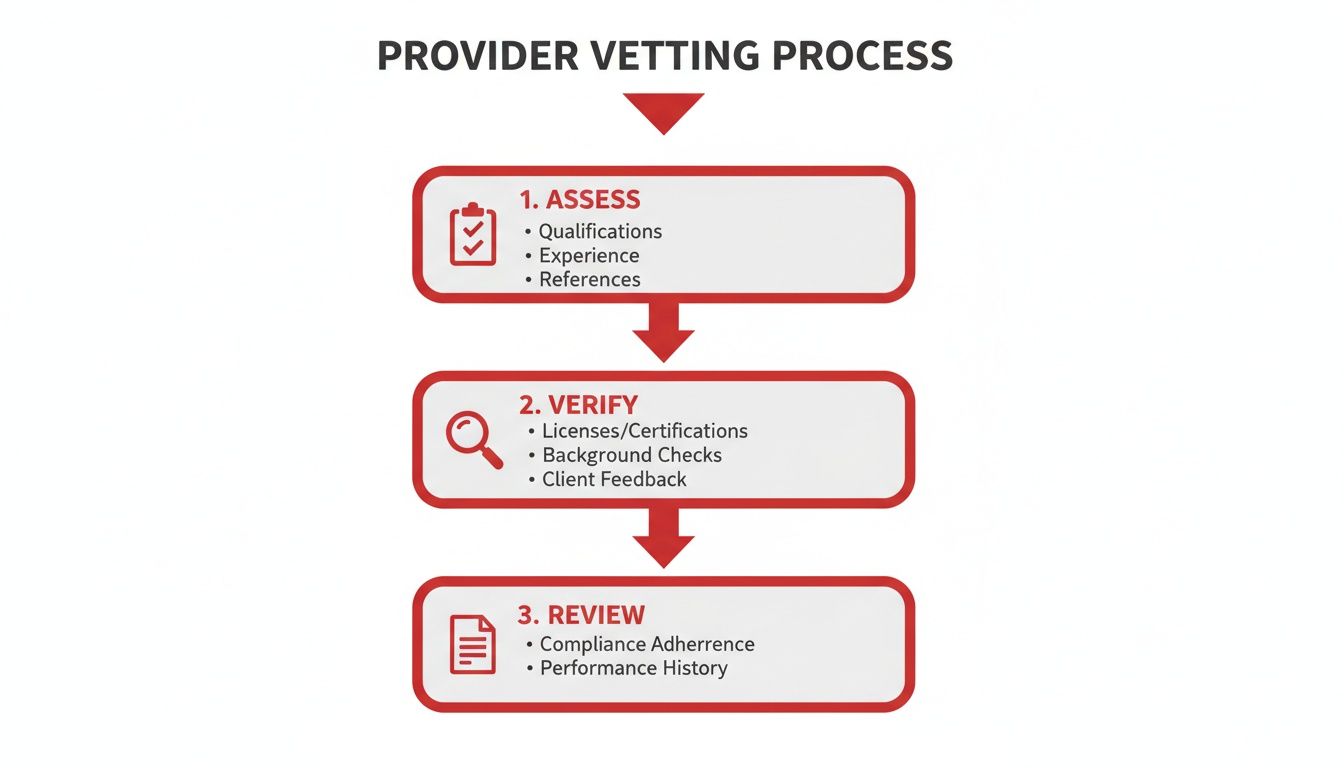
It’s all about building a patrol service based on a clear assessment and backed by verified action.
Communication Protocols and Ongoing Reviews
Clear and consistent communication is essential. From the beginning, we establish how you’ll receive daily activity reports, instant incident alerts, and how to reach our 24/7 support. For properties requiring broader protection, integrating remote video monitoring with physical patrols can create a powerful, layered security solution. Additionally, running a top-tier patrol service means mastering fleet safety management essentials to keep our team and your property secure.
A security plan is not a "set it and forget it" document. It's a living strategy that should adapt to your property's changing needs, seasonal trends, or new challenges that arise.
Finally, getting started is just the beginning. Our intentionally low manager-to-client ratio means your dedicated account manager is always available. They'll conduct ongoing reviews with you to tweak and perfect the patrol plan, making sure your mobile patrol service stays sharp, responsive, and effective for years to come.
Got Questions About Mobile Patrols? We’ve Got Answers.
Even after a detailed overview, it's common for property managers to have a few more questions. We understand. That's why we’ve put together straightforward answers to the most common inquiries we receive.
Our goal is to ensure you have complete clarity and confidence when you partner with us.
How Do I Know Your Officers Actually Patrolled My Property?
This is perhaps the most important question, and our answer is based on verifiable proof, not just promises. We use a powerful combination of technology and human oversight to create a system of complete accountability.
- GPS Tracking: Every patrol vehicle is equipped with live GPS, allowing our 24/7 Security Operations Center (SOC) to see its exact location in real-time.
- Guard Tour Management System (GTMS): We place small digital checkpoints around your property. Our officers must physically scan these tags, creating a time-stamped digital record of their patrol route.
- SOC Oversight: Our SOC team actively monitors patrol progress, ensuring every checkpoint is scanned and all your specific instructions (post orders) are followed. You receive detailed digital reports, often with photos, providing an undeniable log of all activity.
What Happens If an Officer Finds a Problem?
Our officers are trained to be proactive problem-solvers. When an officer discovers an incident—from a water leak or a broken window to a trespasser—they follow a strict and proven response protocol.
First, they assess the situation to ensure safety. Then, they document everything with photos and detailed notes in their digital reporting tool. Finally, they follow the custom escalation plan we developed with you, immediately notifying your designated contacts and, if necessary, coordinating directly with law enforcement or emergency services.
Can You Customize the Patrol Service for My Property?
Absolutely. In fact, we insist on it. We believe security is never a one-size-fits-all solution. Our process begins with a thorough site assessment where we walk your property to understand its unique vulnerabilities and operational needs.
From there, we work with you to develop custom post orders that outline the specific duties you require. Whether you need strict parking enforcement, verification that all doors are locked at a certain time, or intentionally random patrol patterns, we tailor the service to meet your exact security goals. This ensures you only pay for what truly adds value and protection to your property.
A proactive security strategy is one of the smartest investments you can make in your property. To see how Overton Security can build a transparent and effective mobile patrol program just for you, get in touch with our team for a complimentary site assessment.