
A security patrol checklist template is the blueprint for a security officer's shift. It lays out all the routine duties and critical checkpoints, ensuring every patrol is consistent, thorough, and holds officers accountable. This simple document is what transforms a casual walk-through into a structured, effective security inspection.
Why Generic Checklists Put Your Property at Risk
Is your current security patrol a genuine deterrent or just a box-checking exercise? For many property managers and HOA board members, a generic checklist downloaded from the internet creates a false sense of safety. While it might cover the basics, it overlooks the unique vulnerabilities of your specific property.
A one-size-fits-all approach can leave you exposed. That generic template won’t account for the unsecured equipment on a developing site in San Jose or the chronically malfunctioning pool gate in a Los Angeles residential community. These are the property-specific details where the real risks lie.
A truly effective security patrol checklist is more than just paper; it’s a dynamic risk management tool. It must be directly tied to your site’s operational needs and security goals to have a real impact.
At Overton Security, we've spent over 26 years building security plans, and we've seen firsthand how customized checklists are the key to preventing incidents. A generic list says, "Check doors." A tailored plan says, "Verify the northeast service entrance deadbolt is engaged after 7 PM and check for signs of forced entry."
That level of detail is what turns a routine patrol into proactive protection. The checklist, combined with the detailed instructions behind it—what we call post orders—creates a reliable security framework.
We cover this in-depth in our guide on how to develop effective security guard post orders. For now, let's focus on how you can transform a simple template into a powerful asset that delivers measurable protection and genuine peace of mind.
Laying the Groundwork: Your Foundational Security Checklist
Before tailoring a patrol checklist to a specific site, it’s essential to establish the fundamentals. These are the core elements that form the backbone of any solid security patrol, whether it's for a high-rise in Sacramento or a residential community in San Diego.
Skipping this step undermines the entire process. A good checklist is more than a to-do list; it’s a tool that provides structure and ensures every officer, rookie or veteran, covers the essentials. This is how you build consistency and accountability into your operations from the ground up.
The Core Components of Any Patrol Checklist
Every effective security patrol checklist should be built around these five fundamental areas:
- Patrol Start and End Protocols: This goes beyond clocking in and out. It involves a formal handover—confirming possession of keys and communication devices, receiving a detailed brief from the previous shift's log, and completing a proper sign-off.
- Access Point Verification: An officer must physically check every designated entry point. This means checking doors, windows, gates, and other access routes to confirm they are locked and secured, noting any damage or signs of tampering.
- Systems and Lighting Checks: Are alarm systems armed? Are all critical lights operational? A single non-functioning light in a dark corner of a parking garage can create a security vulnerability. This check ensures your deterrents are working as intended.
- Proactive Hazard Identification: Security patrols are not just about deterring crime. Your officers are the first line of defense against operational risks, positioned to spot water leaks, potential fire hazards, or slip-and-fall risks before they become major liabilities.
- Standardized Incident Reporting: The checklist must include a clear, simple section for documenting anything out of the ordinary. A consistent format for noting the date, time, location, and a brief description of an event ensures that even minor incidents are properly logged.
These foundational elements are your baseline for operational excellence. Once they are in place, you have a solid framework that makes your patrols thorough, consistent, and proactive.
This structured approach is especially critical in retail environments, where loss prevention is a primary concern. Inventory shrinkage costs retailers billions annually, with theft being a major contributor. A well-designed checklist ensures officers are consistently checking high-risk areas like loading docks and storefronts, actively deterring potential losses.
You can learn more about how these checklists directly improve security protocols at Novagems.com. Getting this framework right is the essential first step for any property you're tasked with protecting.
Tailoring Your Checklist for Different Properties
A one-size-fits-all security patrol checklist is simply not effective. While a basic template is a fine starting point, its true power comes from customizing it to the specific property you’re protecting. The risks facing a commercial high-rise in San Francisco are worlds apart from those at a residential community in Fresno or an active construction site in San Diego.
Making your checklist effective means looking at a property with a security expert's eye. You need to identify the unique vulnerabilities and operational quirks a generic form would miss. It’s the difference between a vague "check all doors" and a specific "confirm the roll-up door at the loading bay is locked and the magnetic sensor is active." That level of detail makes a patrol truly effective.
Think of the following areas as the foundational blocks of any good checklist. These are the non-negotiables you'll build upon.
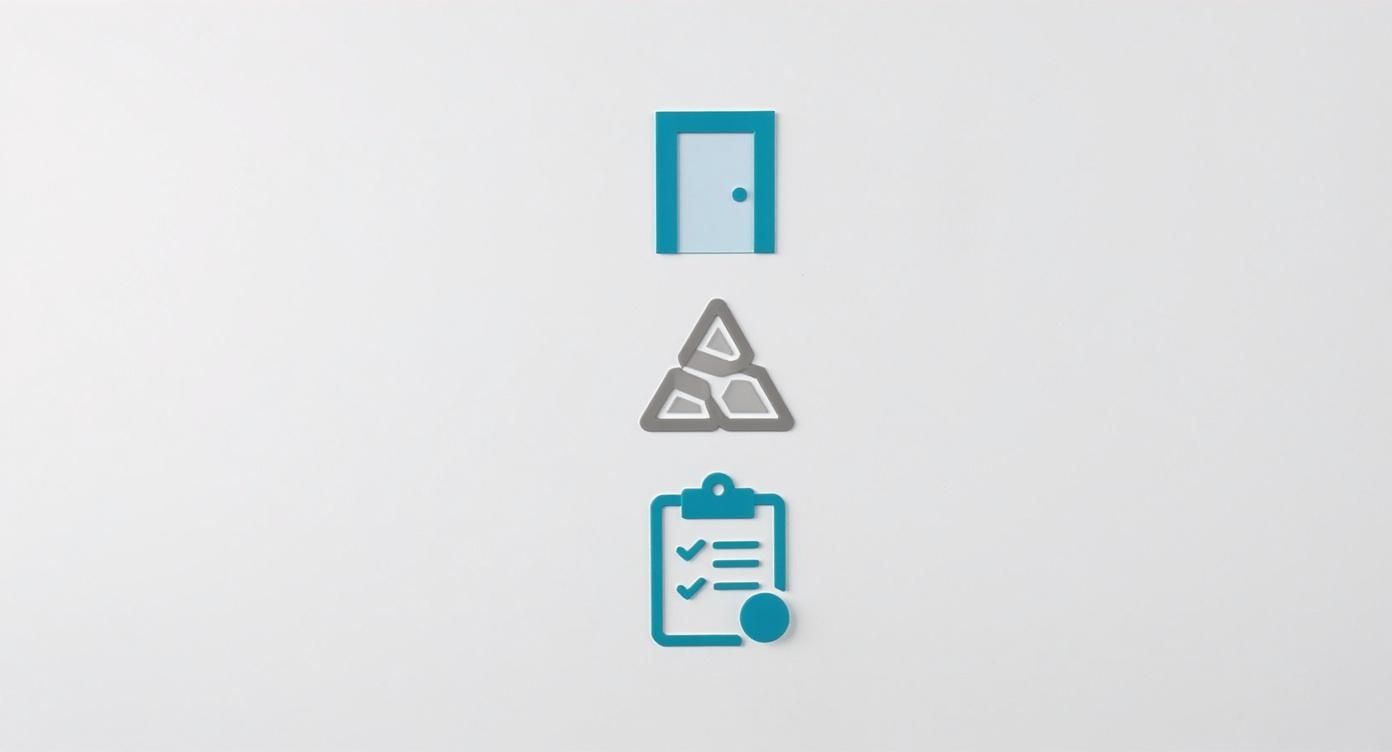
These core checks are your starting line. Now, let’s get into the specifics of adapting them for different environments, because that's where the real security work begins.
To illustrate, let's look at how a standard checklist evolves based on the property. Each location has different priorities and goals that need to be reflected in the patrol officer's duties.
Property-Specific Checklist Customizations
| Property Type | High-Priority Checklist Items | Key Security Goal |
|---|---|---|
| Residential Community | Amenity access (pools, gyms), parking enforcement, common area patrols (mailrooms). | Maintain safety and quality of life for residents. |
| Commercial Building | After-hours tenant/vendor access, parking structure security, hazard checks (server rooms). | Protect assets and ensure operational continuity. |
| Construction Site | Perimeter fence integrity, heavy equipment logs, material staging area checks. | Prevent theft of high-value materials and equipment. |
As you can see, the core idea of "checking an area" becomes much more focused and valuable when tailored to the environment's specific needs and risks.
Adapting Checklists for Residential Communities
If you're an HOA board member or property manager, your security plan is as much about maintaining quality of life as it is about preventing crime. Your checklist needs to cover the community's unique rules and amenities.
- Amenity Access: Add specific checks for pool gates, gym doors, and clubhouse access points after hours. Are they locked down? Are there any signs of forced entry?
- Parking Enforcement: Tasks should include identifying unauthorized vehicles in resident or guest parking, confirming valid permits are displayed, and documenting any violations.
- Common Area Patrols: Ensure officers are inspecting mailrooms for unsecured packages, checking laundry facilities for damage, and monitoring playgrounds for vandalism.
Customizing for Commercial and Retail Buildings
In a commercial environment, the focus shifts to asset protection, controlled access, and maintaining a professional, safe atmosphere. A facilities director needs a checklist that blends security with operational oversight.
- Tenant and Vendor Access: Document patrols of lobbies, service hallways, and loading docks after business hours. Note any propped-open doors or unauthorized individuals in restricted areas.
- Parking Structure Security: Your checklist should include checkpoints for every level of a parking garage. Instruct officers to look for lighting outages, suspicious vehicles, or people loitering.
- Hazard Identification: Go beyond security by tasking officers with checking server rooms for temperature alerts or inspecting mechanical rooms for leaks that could signal a major operational problem.
Securing Construction Sites
Construction sites are a prime target for theft. They contain valuable materials and equipment, often left relatively exposed. A superintendent’s checklist has to be laser-focused on perimeter control and asset protection.
Your checklist must be rigorous and detailed, including items like:
- Perimeter Integrity: Mandate a full walk of the entire fence line on every patrol. Officers must check for cuts, gaps, or any signs of climbing.
- Equipment Logs: Require officers to log the location and status of heavy machinery—like excavators, skid-steers, and generators—at the end of each workday.
- Material Staging Areas: Add specific checkpoints for laydown yards and shipping containers to confirm they are locked, sealed, and undisturbed.
To learn more about this area, our guide on security for construction sites offers more in-depth strategies. For even more detail, this specialized construction site security guide breaks down the unique assets and risks you need to account for.
Integrating Technology with Your Security Patrols
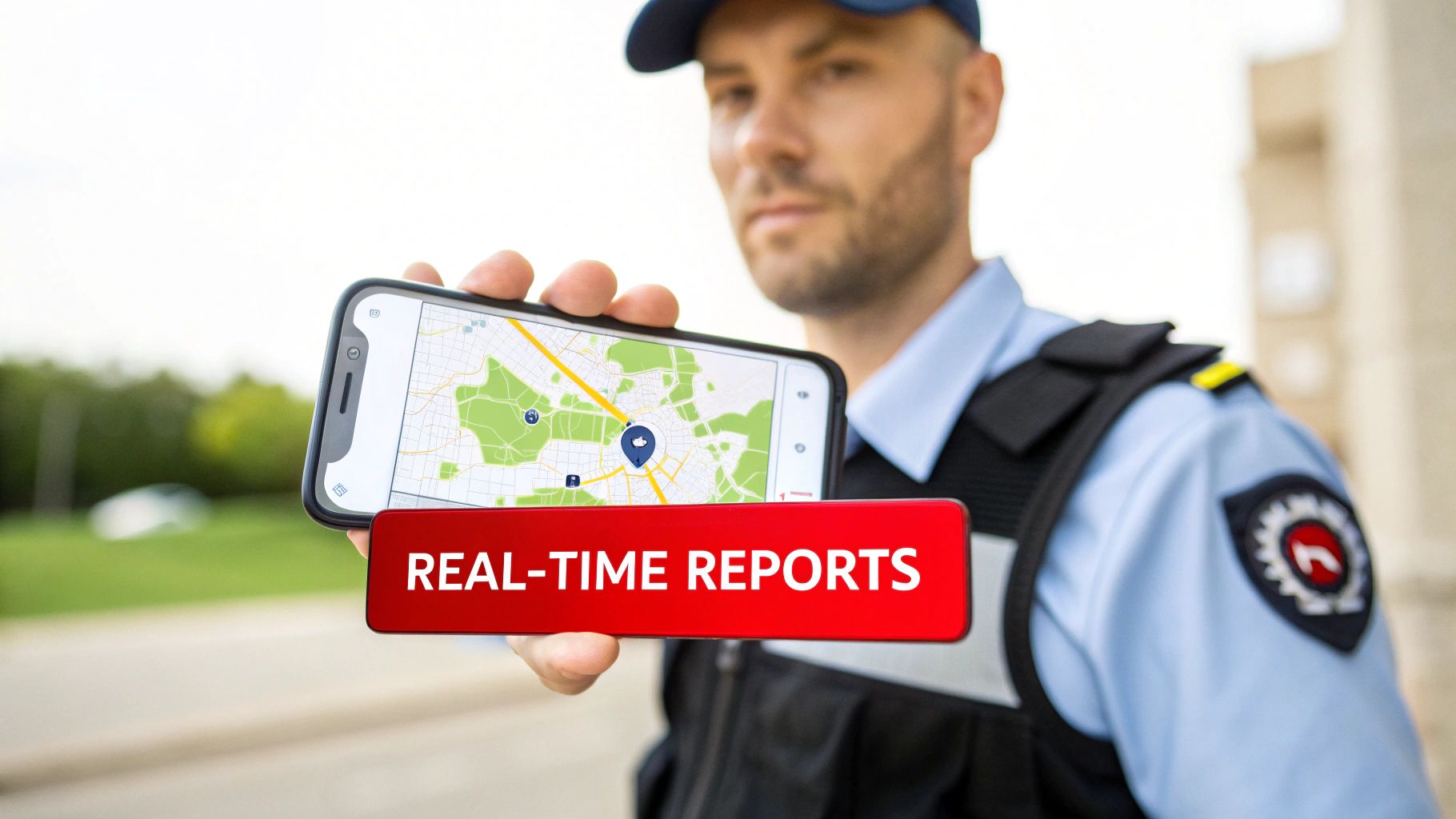
A paper checklist has significant limitations. In a world of instant information, relying on handwritten logs that may not be reviewed for hours creates an accountability gap. For a property manager, that delay means you won't hear about a potential issue until long after an officer's shift is over.
Modern security technology closes that gap. It transforms a static security patrol checklist template into a dynamic, data-driven tool that verifies the work was done. The goal is to move from hoping tasks are completed to having undeniable proof.
The Shift to Digital Accountability
At Overton Security, we blend human expertise with smart technology. Our officers use GPS-enabled guard tour systems that provide real-time, verifiable insights into every patrol. This elevates a simple checklist into a comprehensive performance record.
Here’s what that integration looks like:
- GPS-Verified Checkpoints: Instead of just ticking a box, officers scan tags at critical locations. This creates a time-stamped digital record proving every checkpoint was visited and eliminates "pencil whipping."
- Instant Digital Reports: The moment an officer logs a report—whether it's a maintenance issue or a photo of a suspicious vehicle—it’s immediately available in your client portal. No more waiting until the next business day to learn what happened overnight.
- Photo and Video Documentation: If a door lock is broken or an unauthorized car is parked on-site, our officers can attach high-resolution photos directly to their reports, providing clear, objective evidence for any necessary follow-up.
This shift to digital isn't just about convenience; it's about providing unquestionable transparency. You should never have to wonder if your property was properly patrolled. With the right technology, you’ll always have the data to prove it.
This approach is becoming an industry standard. Many security firms have adopted some form of digital reporting because it can significantly reduce time spent on manual paperwork. That’s more time officers can spend actively observing your property.
Of course, on-site patrols are just one piece of a complete security strategy. Advanced surveillance like cloud-managed security cameras can be a powerful force multiplier, working hand-in-hand with services like our remote video monitoring to provide a comprehensive view of your property's security.
Turning a Template into Your Security Command Center
A solid security patrol checklist is an excellent start, but true security isn’t about a document; it’s about the strategic oversight and active partnership you receive from an experienced team. This is where you graduate from a DIY approach to a professionally managed security solution.
To transform that checklist from a static document into a living security plan, you need collaboration. It’s about having a dedicated partner who works with you to build, implement, and continually refine your protocols based on what’s happening on the ground.
More Than Just Guards; A True Partnership
At Overton Security, we are known for our low manager-to-client ratio, which means our leadership is always hands-on and directly involved with every property we protect. Our managers don’t just dispatch officers; they become a core part of your operational team, ensuring every item on your checklist is executed with precision.
A checklist tells an officer what to check. An experienced partner ensures they understand why it matters. That’s the difference between just going through the motions and actively managing risk.
Our focus is on building a lasting partnership that delivers consistent, high-quality protection and gives you genuine peace of mind. We bring the expertise to ensure your security plan doesn’t just look good on paper but stands up to real-world challenges. That commitment is how a simple template becomes the bedrock of a security solution that protects your assets, day in and day out.
A Few Common Questions About Patrol Checklists
Even with a great security patrol checklist in hand, questions often arise when putting it into practice. Addressing these common queries from the start builds confidence and ensures your security program is working for you.
We've pulled these answers from our 26 years of hands-on experience helping property owners across California refine their security protocols. Think of this as turning a simple document into a genuinely powerful tool for your team.
How Often Should a Checklist Be Updated?
A security checklist shouldn't be a "set it and forget it" document. We recommend a full review at least once a quarter to keep it relevant to your property's operations and current risks.
That said, certain events should trigger an immediate update:
- Following any significant security incident.
- When the property's use changes, such as a new commercial tenant moving in.
- Before the start of new construction or a major renovation project.
Keeping your checklist current ensures it's always focused on the real-time priorities of your property.
What Are the Common Mistakes When Creating Checklists?
The single biggest mistake we see is being too generic. A template that just says "Check all back doors" is not very effective. It's worlds away from one that specifies, "Verify the deadbolt on the service door behind Unit 10B is engaged and pull-tested."
Vague instructions are a security risk. A truly effective checklist is packed with specific, granular detail that leaves no room for interpretation. This ensures every critical point is checked with precision, every single time.
Specificity is what turns a basic guide into a rock-solid security protocol.
How Do I Make Sure Guards Actually Follow the Checklist?
This is where technology provides accountability. Relying solely on paper checklists and trust is an outdated model that is insufficient to guarantee performance.
Modern guard tour systems give you undeniable proof of activity on the ground. Through GPS-verified checkpoints, real-time digital reports, and photo verification for incidents, you get a transparent, unchangeable record of every patrol. This technology keeps officers accountable and gives you confidence that every item on your list is being handled correctly, shift after shift. It completely removes the guesswork.
A proactive security plan is built on clarity, customization, and accountability. At Overton Security, our team partners with you to develop and implement security solutions that protect your property and provide genuine peace of mind.
Ready to move beyond a generic template? Contact Overton Security today to build a security plan that truly works for you.