Effective security for a construction site is more than just a fence and a warning sign. A truly effective security strategy is a proactive partnership. It combines physical deterrents, smart technology, and trained professionals working in sync to prevent theft and vandalism before they can disrupt your project.
This approach moves beyond basic perimeter control. It's about understanding the specific risks your project faces at every stage and deploying active measures to protect the high-value assets—materials, tools, and heavy equipment—that are the lifeblood of your job site.
Why Construction Sites Are Prime Targets for Crime
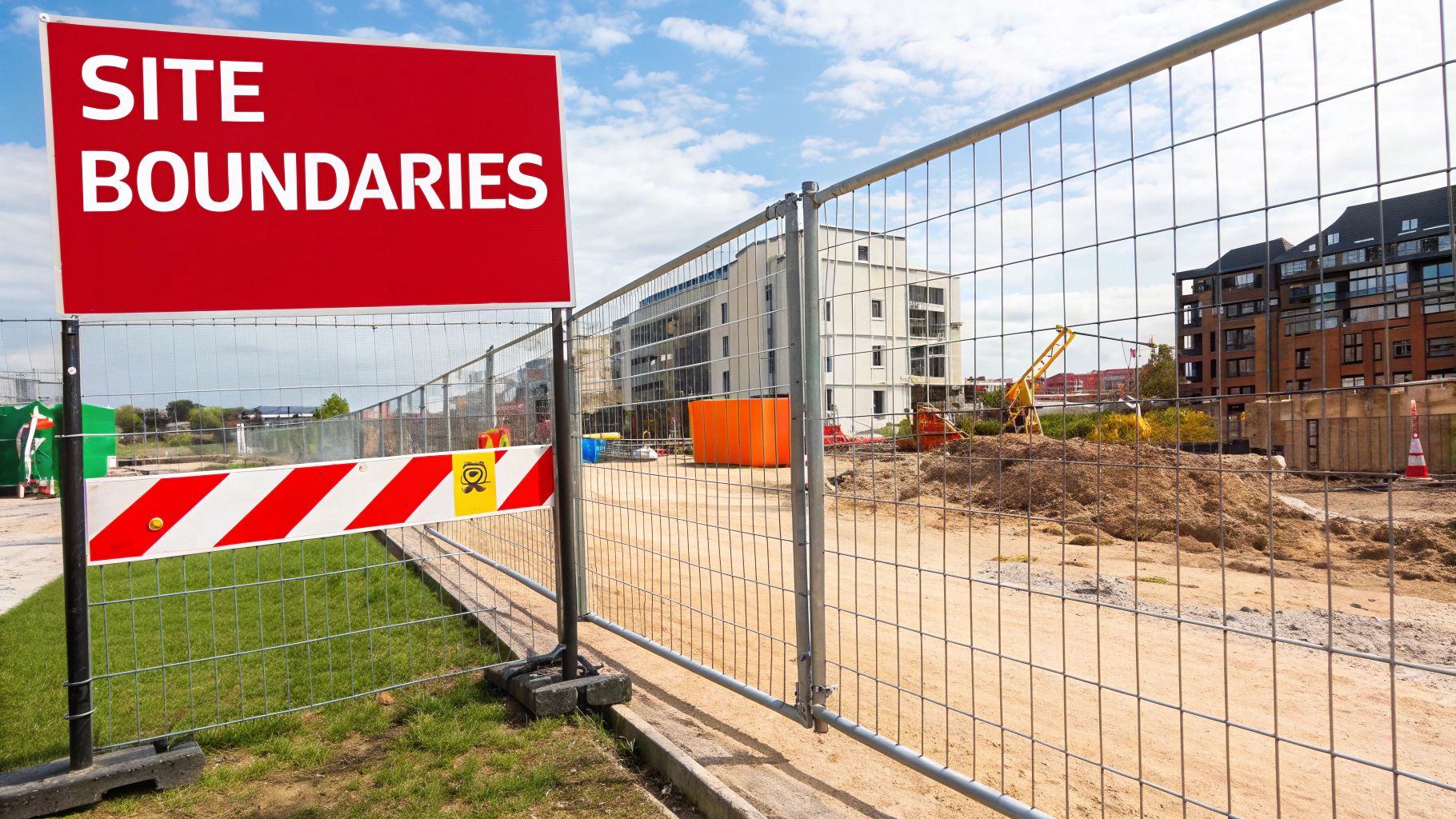
Let's be direct: your construction site is a temporary, high-value target. It's filled with valuable, easily transportable assets, and its layout is constantly changing, making it an attractive target for opportunistic criminals. Leaving a job site unsecured is like leaving a retail store unlocked overnight—it's an open invitation for a costly incident.
The consequences of a security breach extend far beyond the loss of a few power tools. A single event can trigger a ripple effect of delays and disruptions that can throw an entire project off schedule and over budget.
The True Cost of a Security Breach
The financial impact of a security incident goes far beyond the replacement cost of what was stolen. It can set off a chain reaction of problems that affects your budget and your timeline. For any construction superintendent or project manager, these challenges are all too familiar:
- Valuable Materials: Copper wiring, lumber, and pallets of finishing materials are essentially cash on the secondary market.
- Essential Equipment: Losing heavy machinery or even specialized tools can bring work to a halt, leading to significant project delays.
- Operational Disruption: A breach means stopping work to file police reports, navigate insurance claims, and reorder supplies, wasting valuable time.
- Rising Insurance Premiums: A history of claims, or even one significant loss, can cause your insurance costs to rise on future projects.
To get a clearer picture, it helps to see the threats laid out. Here’s a quick look at the most common risks and the damage they can cause.
Primary Threats to Construction Site Security
| Threat Type | Common Targets | Primary Impact |
|---|---|---|
| Material Theft | Copper wiring, lumber, plumbing fixtures, metal components | Project delays, reordering costs, budget overruns |
| Equipment Theft | Skid steers, generators, compressors, hand/power tools | Work stoppages, expensive rental fees, replacement costs |
| Vandalism | Finished work, windows, walls, heavy machinery | Rework costs, schedule disruptions, decreased morale |
| Trespassing | Entire site, particularly after hours | Liability risks, potential for injury, minor theft |
As you can see, the impact of these threats is cumulative. What begins as a simple theft can quickly spiral into a major operational and financial challenge.
The threat isn't just theoretical; it's a measurable and growing problem. The construction sector faces significant security challenges, with crime costing the industry billions annually due to theft and vandalism.
A Growing and Costly Problem
In fact, equipment theft is a major issue. While we often think of large machinery being stolen, it’s the smaller, portable tools that are targeted most frequently because they’re easier to move and sell. Recent data shows that equipment theft has increased by nearly 20% in the past year alone, highlighting the urgency of implementing a solid security plan. You can read more about the latest construction security trends to understand the evolving risks.
Ultimately, proactive security for a construction site isn't an expense—it's an investment in keeping your project on track and profitable. By creating a strong deterrent, you aren’t just protecting assets; you’re protecting your budget and your deadlines from entirely preventable setbacks.
Conducting a Thorough Construction Site Risk Assessment
An effective security plan begins long before the first guard arrives on site. The foundation of strong security for a construction site is a detailed risk assessment. This means walking the property with a specific goal: to stop seeing it as a project manager and start seeing it through the eyes of an opportunistic thief.
This change in perspective is critical. Instead of seeing progress and deadlines, you begin to notice the weak points. Where is the easiest place to breach the fence? Are there dark corners that offer cover for someone after hours? Which gates or entrances are unsecured? A proper assessment finds these answers before a criminal does.
A trusted security partner is invaluable here, helping you pinpoint risks you might have overlooked. The goal is to map out every potential vulnerability before it can be exploited.
Identifying Your Core Vulnerabilities
The first step in a risk assessment is a methodical walk-through of the entire site. This isn't a casual stroll; it's a careful inspection looking for specific security gaps. It requires organization, detailed notes, and close attention to several key areas.
Here are the critical elements to examine:
- Perimeter Integrity: Inspect your fencing up close. Look for gaps, damaged sections, or areas where overgrown brush or stacked materials create blind spots. Every hidden area is a potential entry point for thieves.
- Access Control Points: How many ways can someone enter your property? Document every gate and entrance. Determine which are essential for daily operations and which can be secured to reduce your exposure.
- Lighting Conditions: Walk the site at night, or at least visualize it. Where are the shadows? Dark spots around material stockpiles or near expensive equipment are significant vulnerabilities. Poor lighting not only aids criminals but also poses a safety hazard for your crew.
- High-Value Asset Inventory: Create a list of the most tempting targets. This includes tool trailers, spools of copper wire, heavy machinery, and pallets of high-end finishing materials. Knowing what's most valuable tells you where to focus your protection.
One of the biggest missteps we see is creating a security plan on day one and never revisiting it. A construction site is a dynamic environment—its security needs change constantly as the project progresses.
This concept of dynamic risk is crucial. The security you need for an empty lot at groundbreaking is completely different from what you'll need when the building is nearly finished and filled with valuable fixtures. Your security plan must be flexible, adapting alongside your project. A reliable security partner will help you anticipate these changes, ensuring your protection always keeps pace with your progress.
Building a Layered Construction Site Security Plan
Relying on a single security measure, like a chain-link fence, is like using one lock to protect a bank vault. It's simply not enough. Effective construction site security is never about a single solution; it’s about building intelligent, overlapping layers that work together to deter, detect, and respond to threats.
This multi-faceted approach ensures that if one layer is bypassed, another is already in place to stop an intruder. A truly robust strategy stands on three essential pillars: physical barriers, modern technology, and professional personnel. When woven together correctly, these elements create a formidable defense that protects your assets from every angle.
The First Pillar: Physical Deterrents
Your first line of defense is the physical environment. The goal here is simple: make unauthorized entry as difficult and conspicuous as possible. While a standard fence is a start, a truly secure perimeter goes further. Consider anti-climb fencing, which is harder to scale and sends a clear message that the site is well-protected.
Lighting is just as critical. A well-lit site is a powerful deterrent because it eliminates the shadows where criminals and vandals operate. There's nowhere to hide.
This infographic breaks down the main types of security lighting you’ll find on construction sites.
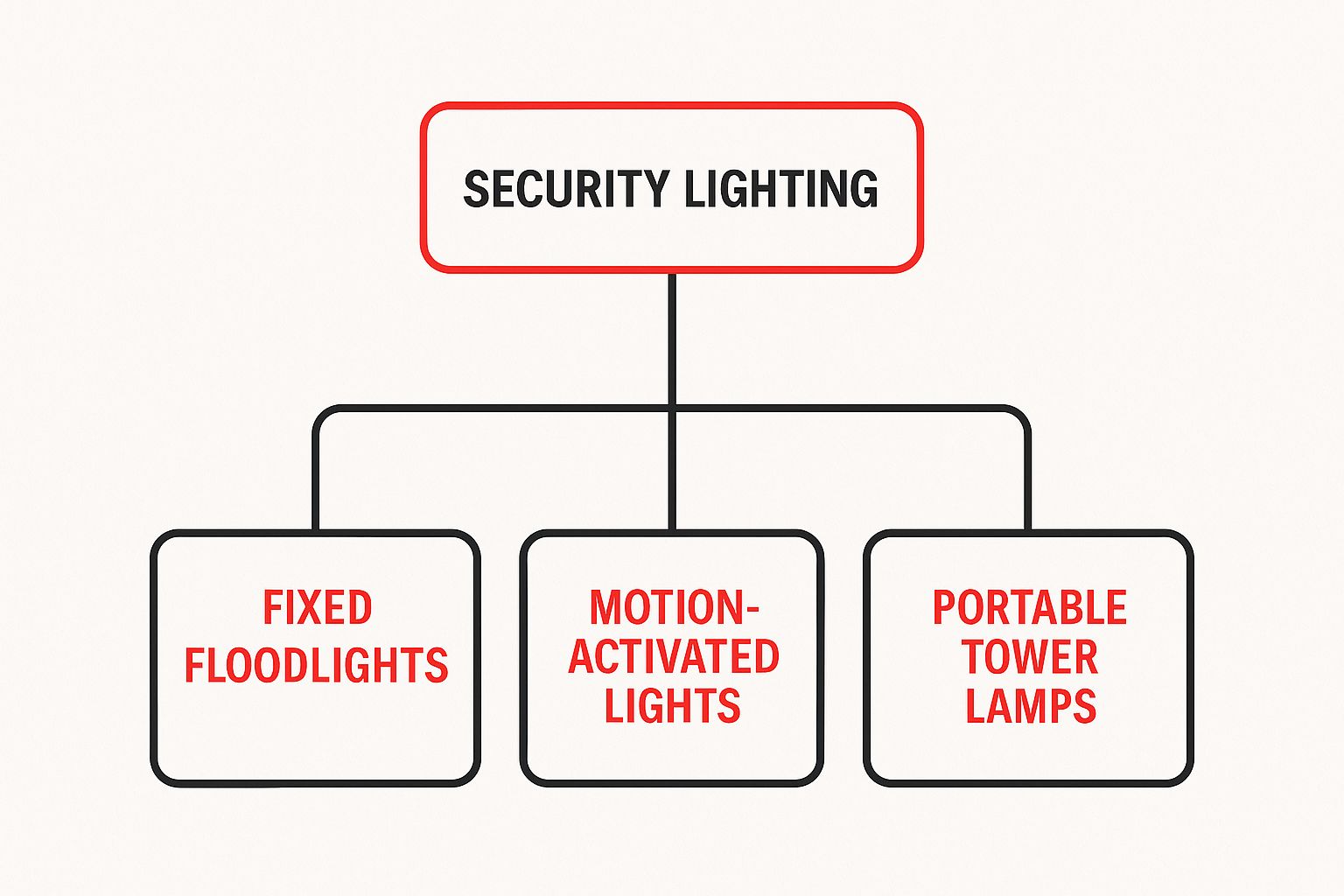
As you can see, a smart mix of fixed, motion-activated, and portable lighting lets you create comprehensive coverage tailored to your site's specific layout and needs.
The Second Pillar: Technology and Monitoring
The next layer is technology, which acts as your tireless digital watchdog. This includes the tools that monitor the site 24/7, capture evidence, and alert you and your security team to potential issues the moment they happen.
- Security Cameras: When placed strategically, cameras don't just record incidents—they act as a powerful visible deterrent. They are most effective when covering high-value areas like material storage zones, equipment lockups, and all primary access points.
- Motion-Activated Alarms: These systems can detect movement in restricted zones after hours, immediately triggering sirens or notifying a remote monitoring center to dispatch a response.
This reliance on technology and professional services reflects a major industry trend. Globally, the construction site safety service market was valued at around $22.56 billion in 2025 and is projected to climb to $37.60 billion by 2033. This growth is fueled by stricter regulations and a greater focus on protecting both assets and people.
The Third Pillar: Professional Security Personnel
The final and, in many ways, most crucial layer is the human element. While barriers and cameras are effective, they are ultimately passive. Professional security officers provide an active, thinking, and responsive presence that technology alone can never replicate.
A stationary guard controlling access at the main gate serves a different purpose than a patrol officer making random, unpredictable rounds. The static guard prevents unauthorized entry, while the mobile patrol creates a sense of constant oversight across the entire property.
This is where having a dedicated partner makes all the difference. An experienced team can deploy officers in roles that best suit your site’s unique risks, from gatehouse access control to highly visible mobile patrols. For instance, our approach to security patrol services focuses on creating an unpredictable presence that keeps potential criminals guessing—and keeps them away from your valuable assets.
By combining these three pillars, you transform your job site from an easy target into a resilient, well-defended asset.
How We Blend Experienced People with Smart Technology
Real security for a construction site is never just about one thing. A camera can see a theft, but it can’t stop it. A security officer without the right tools is working with blind spots. The only way to achieve truly effective security is to empower seasoned professionals with technology that makes them smarter, more accountable, and completely transparent.
The security industry is known for high turnover, which makes experience and consistency incredibly valuable. After 26 years of proven performance, we know the common "burn and churn" approach to staffing simply doesn't deliver reliable results. We've built our reputation by investing in our professional security officers—it's the single most important element of delivering dependable protection. This commitment starts at the top, with hands-on leadership and a low manager-to-client ratio to ensure every project gets the focus it deserves.
The Foundation: Experienced, Supported Officers
A security officer is not a commodity; they are your first line of defense, the person making critical decisions in the middle of the night. This is why we focus so heavily on officer retention and professional development. An officer who has been on your site for months knows its unique rhythms. They can spot when a vehicle is out of place or de-escalate a situation before it becomes a real problem.
Our commitment to our people translates directly into better security for you. When an officer feels valued and supported, they're more engaged, proactive, and invested in protecting your property. It’s the difference between just having a uniform on-site and having a genuine security partner looking out for your interests.
The Amplifier: Smart Accountability Systems
We then amplify this human expertise with a full suite of smart technology built for one purpose: total accountability. This is how we ensure our high standards are met on every patrol, during every single shift.
Our system provides you with documented, undeniable proof of service. It removes the guesswork about what’s happening on your property long after your crew has gone home.
Here’s a look at how our technology supports our officers and gives you peace of mind:
- GPS-Verified Patrols: Our officers use a GPS-enabled guard tour system to scan checkpoints at key locations across your site. This creates a digital record, verifying that every critical area—from the material laydown yard to the tool containers—is physically inspected on schedule.
- Real-Time Digital Reporting: The days of sloppy, handwritten logs are over. Our officers file detailed digital activity reports (DARs) right from the field, complete with time-stamped photos and notes. You receive these clear reports directly for full visibility.
This blend of dedicated people and verification technology is our core promise. It’s not just about placing a guard; it’s about delivering a complete, reliable security system tailored to the unique challenges of a construction environment.
By combining the sound judgment of a trained professional with the hard data from our accountability systems, we deliver a level of security for a construction site that is both dependable and fully transparent. It’s a modern, reassuring approach built on decades of hands-on experience.
The Overlooked Link Between Site Security and Safety
It's easy to think of construction security as just a way to prevent theft. Protecting expensive equipment and materials is a top priority for any project manager. But there's a crucial, often-missed connection between solid security and the overall safety of your job site. A dedicated security presence is your first and most effective defense against a significant liability: unauthorized people wandering into a hazardous work zone.
Every unsecured fence or open gate is an invitation—not just for thieves, but for anyone who could be seriously injured by the countless hazards on a construction site. This risk to the public can become a tremendous liability for your company. When a professional security officer controls access, they ensure only authorized personnel are on-site, dramatically reducing the odds of a tragic accident involving a member of the public.
More Than a Guard, An Extra Set of Eyes
Beyond manning the gate, a trained officer becomes an extra set of eyes on the ground, actively spotting and reporting safety issues during their regular patrols. This elevates them from a simple deterrent to an essential part of your site management team. Their focus isn't just on looking for intruders; it's on noticing the everyday operational risks that can lead to injuries or project delays.
A proactive security partner contributes as much to personnel safety as they do to asset protection. They act as a force multiplier for your own safety protocols, reinforcing a culture of vigilance across the entire project.
This blend of security and safety is more critical than ever. The U.S. construction sector employs nearly 8.3 million workers as of early 2025. Yet, it remains one of the most dangerous industries in the country. Incidents of both fatal and non-fatal injuries are on the rise, primarily from falls, slips, and trips. You can get a deeper look into these industry trends and best practices in construction safety on ISHN.com.
How Security Reinforces On-Site Safety
A professional officer is trained to see potential hazards that a busy crew might overlook during the workday. This includes things like:
- Unsecured Equipment: Spotting ladders that are not stored correctly or identifying machinery left in an unsafe position.
- Potential Fire Hazards: Reporting piles of flammable debris or improper storage of combustible materials.
- Perimeter Flaws: Finding a torn fence or other structural issues that could become a trip-and-fall risk.
- Lighting Deficiencies: Documenting poorly lit areas that pose a danger to both after-hours patrols and the early-morning crew.
By flagging these issues in their detailed digital reports, our officers provide you with actionable information to fix safety gaps before an incident can occur. This dual focus on security and safety provides a much greater return on your investment, creating a more secure, professional, and well-managed job site.
How to Choose the Right Construction Security Partner
Selecting a security provider is a decision that can significantly impact your project. It's not just about covering an asset; it directly affects your budget, your timeline, and your peace of mind. We have seen too many site managers choose the cheapest hourly rate, only to find it was the most expensive mistake they made.
When you're dealing with the high stakes of a construction site, the real value isn't on the price tag. It's in the reliability, professionalism, and accountability of the team you hire. A true security partner won't just give you a quote; they will welcome your toughest questions and provide straight, transparent answers. Their experience, officer training, and the systems they use to document their work are the true measures of their worth.
Vetting Your Potential Security Provider
When you begin speaking with potential security companies, it's important to cut through the sales pitch. Focus on the core areas that separate seasoned professionals from less dependable operators. A quality company will have a solid, demonstrable track record of securing job sites just like yours.
For a deeper dive into the vetting process, check out our guide on how to choose a security company in San Jose. The advice is invaluable for anyone hiring security in California. The goal is to ensure you’re getting a real partner, not just a warm body in a uniform.
The most important question isn't "What's your hourly rate?" but "How do you prove your officers are doing their job?" Accountability is everything.
A quality provider will have clear, verifiable answers about how they use technology and supervise their team. If they become vague on this topic, it's a significant red flag.
When you're evaluating a security firm, a structured approach helps ensure you cover all the critical bases. The right questions can reveal a great deal about a company's operational integrity and whether they're the right fit for the unique demands of a construction environment.
Security Provider Vetting Checklist
| Evaluation Category | Key Questions to Ask | Why It Matters |
|---|---|---|
| Construction Experience | How many construction sites have you secured in the last year? Can you describe how you adapt strategy as a project moves from grading to final finishes? | Construction sites are dynamic. A provider needs to understand the changing risks at each phase, not just offer a one-size-fits-all solution. |
| Officer Training & Retention | What is your officer turnover rate? What site-specific training do your officers receive for a construction project? | High turnover is a sign of a poorly managed company and leads to inconsistent service. You want officers who are trained specifically for job site hazards. |
| Technology & Accountability | Do you use a GPS-enabled guard tour system to verify patrols? Can I see examples of your digital activity reports? | This is proof of service. Without modern reporting and tracking, you're simply hoping the patrols are being done. You should demand verifiable data. |
| Licensing & Insurance | Can you provide a current copy of your state license and a certificate of insurance that meets our project’s requirements? | This is non-negotiable. Proper licensing and insurance protect you from massive liability if an incident occurs on your property. |
Asking these pointed questions helps you look past the sales pitch and see the real operational substance of a potential partner. It's the difference between hiring a liability and investing in a genuine asset for your project.
At Overton Security, we've built our 26-year history on a foundation of consistency and professionalism. We invest heavily in our officers, which is why we have such low turnover and can provide the kind of reliable service that construction managers depend on.
Common Questions About Site Security
If you're a construction superintendent or project manager, you've likely considered these questions. We hear them often from our clients. Let's get straight to the answers to help you make informed decisions to protect your project.
How Much Does Construction Site Security Cost?
The cost depends on your site's size, location, and the level of protection you need. However, the most important number to consider isn't the price, but the return on investment (ROI).
Think of it this way: the cost of preventing a single major theft of heavy equipment or high-value materials like copper can easily pay for months of professional security services. It’s not an expense; it’s an investment in keeping your project on track and on budget.
What Is the First Step to Secure a New Job Site?
Your very first move should be a professional risk assessment, ideally conducted before you even break ground.
An early assessment allows you to establish a secure perimeter and build your security plan from day one. This proactive strategy is far more effective—and less stressful—than scrambling to solve a problem after it has already occurred.
Can I Just Use Cameras Instead of Security Officers?
This is a common question. While cameras are fantastic tools for recording evidence after an incident, they are entirely passive. They can show you a theft happened, but they can't physically stop it while it's in progress.
A professional officer, on the other hand, provides an active, physical deterrent that criminals see and avoid. They can intervene on the spot to prevent a crime, manage access control, and respond to safety issues a camera simply can't handle. Determining the right blend of technology and people is a crucial part of hiring a professional security agency that understands the unique demands of your site.
Your project's timeline and budget are too valuable to leave to chance. With 26 years of experience, Overton Security delivers the reliable, professional security solutions you need to protect your assets and give you peace of mind.