Preventing retail theft requires a layered strategy that brings together smart store design, modern technology, and—most importantly—a well-trained, observant team. For business owners and property managers, the most effective approach focuses on proactive deterrence. This means optimizing your store layout for maximum visibility, training your team in customer engagement, and implementing visible security measures like cameras and professional security officers.
Confronting the Reality of Modern Retail Theft
For any retail manager or business owner, a rising shrinkage report is a significant concern. Those numbers represent more than just lost inventory; they are a direct hit to your bottom line, a disruption to your operations, and a strain on the morale of your hardworking team.
Today's retail theft has evolved beyond simple, opportunistic shoplifting. It is a serious operational challenge, fueled by economic pressures and, increasingly, the calculated work of Organized Retail Crime (ORC) rings.
These groups are shockingly efficient, targeting high-value goods to resell online, which makes the threat more persistent and damaging than ever before. This new landscape requires a strategic and comprehensive approach to loss prevention to protect your assets and maintain a safe environment.
The Financial and Operational Toll
The true cost of retail theft extends far beyond the price tag on a stolen item. It sends ripples across your entire business, impacting everything from inventory management to the safety and confidence of your staff and customers.
Consider these secondary costs:
- Reduced Profitability: Every item that walks out the door eats directly into your profit margins. This can force price increases, which risks pushing away your loyal customer base.
- Operational Disruption: Frequent thefts bog down your staff with incident reports and inventory checks. This is valuable time they could be spending assisting paying customers.
- Negative Employee Impact: When theft is a constant problem, it creates a stressful and sometimes unsafe work environment. This can lead to higher employee turnover and make it difficult to retain good people.
- Damaged Customer Confidence: If shoppers witness theft or notice empty shelves where popular items should be, they may feel unsafe or perceive the store as poorly managed. That can be enough to make them decide not to return.
Understanding the Escalating Threat
Recent statistics on retail crime paint a stark picture of a growing problem. Losses from retail theft have been skyrocketing, with analysts projecting that total losses could reach around $115 billion by the end of 2025.
That’s a significant jump from $86.6 billion in 2022. It's no wonder this trend has pushed approximately 30% of retailers to increase resources for loss prevention. You can dig deeper into these retail theft trends and their impact on businesses to see the full scope of the issue.
While the threat is more complex, effective prevention is entirely within your reach. The key is shifting from a reactive mindset—catching thieves after the fact—to a proactive one that creates an environment where theft is difficult, risky, and simply not worth the trouble.
At Overton Security, we have spent over 26 years protecting businesses across California. We know that a strong defense is built in layers, blending smart store design, the right technology, and the unmatched value of well-trained, observant people. This guide offers a clear-eyed look at the problem and the practical, proven strategies needed to protect your assets, your team, and your peace of mind.
Designing Your Store for Natural Theft Deterrence

Before investing in new cameras or security tags, take a hard look at your store's physical layout. It's one of your most powerful—and often overlooked—security assets. A thoughtful design can quietly and effectively shut down theft opportunities before they even begin.
This approach is grounded in a field called Crime Prevention Through Environmental Design (CPTED). The goal is not to turn your store into a fortress but to make your space an inherently tougher and less appealing target for thieves, all while keeping it welcoming for your customers.
The core idea is simple: a store that feels open, bright, and easy to monitor is a nightmare for shoplifters. They rely on blind spots, hidden corners, and general chaos to operate. By designing those opportunities out of your floor plan, you can prevent theft before it starts.
Optimizing Visibility and Sightlines
The single most critical element for deterring theft is maintaining clear, unobstructed sightlines across your sales floor. When your staff can easily see from one end of the store to the other, you create an environment of natural surveillance. This alone can be a game-changer.
Here are a few practical ways to open things up:
- Keep fixtures low. Use shelving and displays that are below eye level, ideally under five feet high, so you don’t accidentally build walls that block visibility.
- Install convex mirrors. Place these in blind corners and at the ends of long aisles. They are a low-cost, incredibly effective way to give your team a much wider field of vision.
- Keep your windows clear. Avoid cluttering your main windows with large displays that block the view into or out of your store. This visibility works both ways—your team can see out, and people walking by can see in, adding another layer of observation.
By designing your store with natural surveillance in mind, you send a clear message: we are paying attention. This subtle but constant visibility is often a more powerful deterrent than a camera that is only reviewed after an incident has already occurred.
Strategically Placing Merchandise and People
Where you place your products and your people matters immensely. Tucking your most valuable, high-theft items into a remote, unstaffed corner is an open invitation for trouble.
Instead, place your most desirable goods—like premium cosmetics, designer handbags, or small electronics—in areas with constant employee traffic and maximum visibility. The best spots are often near checkout counters, customer service desks, or within locked displays that require a team member to open. This simple move forces interaction and makes it incredibly difficult for someone to just grab and go.
Finally, think about your checkout area. It should always be located near the main exit with a clear, commanding view of the entrance. This positioning turns your cashiers into a final checkpoint, and an attentive cashier with good sightlines is one of the most effective tools you have for preventing retail theft.
Leveraging Technology for Proactive Security
Technology is a crucial component in any modern loss prevention strategy. While a basic CCTV system is a good starting point, the tools available today go far beyond simply recording a theft after it has happened. The right technology empowers your staff and any on-site security officers to act decisively and stop incidents before they escalate.
These systems are about creating a proactive security posture. They sharpen human awareness, capture clear evidence, and act as a powerful psychological deterrent to would-be thieves. When implemented correctly, technology doesn't replace your team—it makes them smarter and more effective.
Beyond Basic Surveillance
Modern security tech is about layering different types of protection that work together. As a retail manager figuring out how to prevent theft, you should look at a blended solution that includes both passive monitoring and active deterrence.
Some of the most effective tools in the field include:
- Electronic Article Surveillance (EAS): These are the classic security tags that trigger an alarm if they pass through sensors at exits without being deactivated. It’s a time-tested and highly effective way to protect individual, high-value items.
- AI-Powered Video Analytics: Smart cameras can be configured to spot suspicious behaviors in real time, such as an individual loitering in a high-theft area or grabbing an armful of products. The system can send an immediate alert to your team or security personnel, allowing for a swift, proactive response.
- Digital Reporting Systems: At Overton Security, our officers use GPS-enabled systems to file detailed activity reports in real time. This creates a transparent, accountable record of every patrol and security check, giving our clients complete confidence and oversight.
The impact of this technology is significant. For instance, some retailers have seen AI-powered cameras cut theft rates by approximately 20%. In stores that use facial recognition, there's been about a 30% drop in incidents from repeat offenders, as they can be identified upon entry.
The goal isn’t just to install more cameras. It's to integrate technology that provides actionable intelligence, empowering your team and any security partner to make smarter, faster decisions.
This is especially true when technology is paired with smart environmental design.
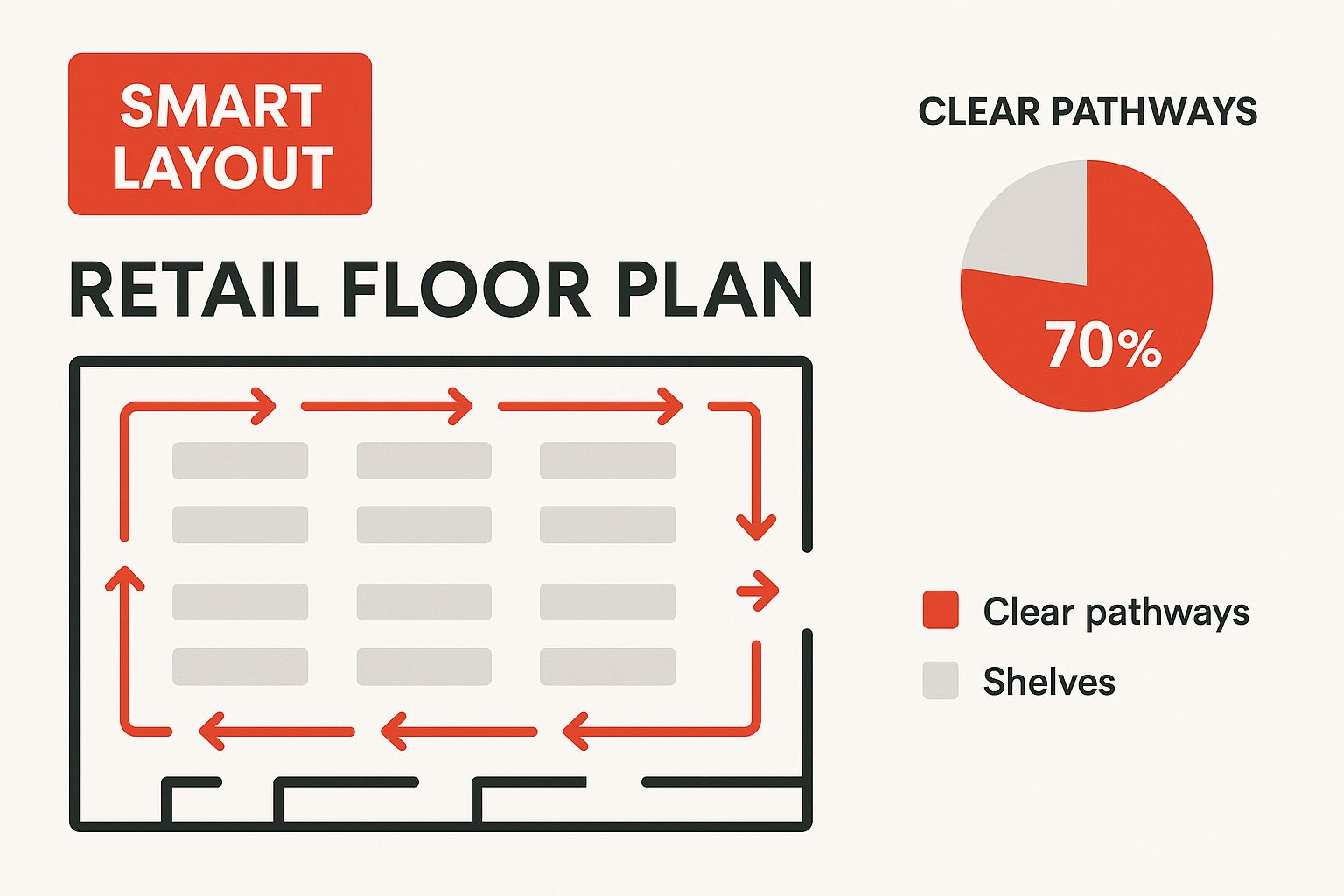
As the image shows, a well-thought-out store layout with clear sightlines and strategic product placement, when boosted with visible security tech, creates an environment where it's naturally much harder for thieves to operate.
Impact of Security Technology on Retail Theft Prevention
To put the effectiveness of these tools into perspective, here's a look at how different technologies stack up based on recent studies and our own field observations.
| Technology Type | Reported Reduction in Theft/Incidents | Primary Use Case |
|---|---|---|
| EAS Systems | 40-60% on tagged items | Protecting individual, high-value merchandise from being carried out. |
| AI Video Analytics | ~20% overall reduction | Detecting suspicious behavior, loitering, and large-quantity removals. |
| Facial Recognition | ~30% decrease in repeat offenses | Identifying known shoplifters upon entry for proactive monitoring. |
| Digital Reporting | 15-25% reduction in incidents | Ensuring patrol accountability and providing detailed incident logs. |
| Visible Public View Monitors | ~10-15% deterrent effect | Making potential shoplifters aware they are being actively recorded. |
This data clearly shows that a multi-layered approach, combining different technologies, offers the most robust defense against retail crime.
Integrating Human Expertise with Smart Tools
Technology is most effective when it supports skilled professionals on the ground. An alert from an AI camera system is just data, but when that alert goes to a trained Overton Security officer, they can discreetly investigate, assess the threat, and respond appropriately.
This combination of human judgment and technological precision is the foundation of a modern security plan. It ensures every alert is handled professionally, with proper de-escalation tactics when needed. This blend of human expertise and smart technology creates a security presence that is both seen and felt, giving staff and customers true peace of mind.
To dive deeper into how these elements work in tandem, you can explore our detailed guide on the role of technology in modern retail security solutions.
The Human Element: Empowering Staff and Security
All the technology and clever store design in the world are ultimately support systems. While powerful, the most dynamic and effective defense you have is human intuition and presence. When it comes to preventing retail theft, the single most important investment you can make is in your people.
After all, it’s people who protect people. A well-trained team, from cashiers to security officers, builds a culture where security is second nature and everyone feels confident and prepared. This human element bridges the gap between passively watching a camera feed and actively preventing a crime.
Building Your First Line of Defense: Your Staff
Your employees are your greatest asset in loss prevention. They're on the floor every day, interacting with customers and understanding the natural rhythm of your store. With the right training, they can become a surprisingly effective deterrent.
The key is to instill a sense of security awareness without turning your sales associates into confrontational loss prevention agents. It's about empowering them with the skills to spot and deter potential theft through positive, proactive customer engagement.
For instance, you can teach your team to watch for specific behaviors that often signal intent, like:
- Looking more at employees or cameras than at merchandise.
- Showing excessive nervousness or fidgeting while handling products.
- Walking in and out of the store multiple times without buying anything.
- Carrying large, empty bags or wearing bulky clothing on a warm day.
When an employee spots these red flags, their response should be simple and non-confrontational: offer friendly help. A quick, "Hi, can I help you find a size in that?" lets a potential thief know they've been seen. That small act of customer service is often all it takes to make them rethink their plans.
A team trained to be attentive, engaging, and observant sends a powerful message to would-be thieves: we are aware, and we are paying attention. This active presence is often more effective than any passive security measure.
The Unmatched Value of Professional Security Officers
While a sharp, well-trained staff is vital, some situations require a dedicated security presence. A professional, uniformed security officer provides a level of deterrence and response that your employees cannot—and should not have to—provide. Their visible presence sends a clear message that your business takes security seriously.
At Overton Security, we provide experienced officers who understand the nuances of a retail environment. With over 26 years of experience, we know a security officer's role is a delicate balance of being an approachable resource for customers and an undeniable deterrent to offenders. Our commitment to quality over quantity means we focus on supporting and retaining professional officers, which sets us apart from the high-turnover model common in the industry.
Our officers are trained in de-escalation, incident management, and proper reporting, taking a significant burden off your staff. For any business owner, learning more about the benefits of professional retail security guard services can clarify how to implement this critical layer of protection. A skilled officer transforms your security from a passive concept into an active, reliable reality.
Countering Organized Retail Crime Operations
The rise of Organized Retail Crime (ORC) is more than just an uptick in shoplifting; these are sophisticated criminal networks running calculated operations. These are not crimes of opportunity but planned attacks. ORC groups target specific, high-value goods—like premium electronics or designer apparel—and often hit multiple stores in a coordinated blitz.
To effectively counter ORC, you must adopt an organized, intelligence-led strategy. This goes beyond standard in-store tactics and requires a smart approach that protects your inventory without disrupting your daily business. This is a challenge you meet with data, collaboration, and a dynamic security presence.
The scale of this issue is staggering. Since 2019, shoplifting incidents in the United States have shot up by an alarming 93%, with another 14% jump reported in 2024, largely fueled by ORC. You can get more details on these escalating retail crime trends on i3international.com.
Building a Network of Intelligence
Because ORC groups don't operate in a vacuum, your defense can't either. One of the most powerful tools at your disposal is an information-sharing network. Protecting only your own four walls is no longer enough.
This means opening direct lines of communication with:
- Local Law Enforcement: Proactively share data on patterns, suspect descriptions, and vehicle information. Building a strong relationship can turn police into a proactive partner.
- Neighboring Retailers: Talk to other businesses in your shopping center or district. ORC crews often hit multiple stores in one area. A quick heads-up from you could prevent them from hitting your neighbor, and vice-versa.
Using Data to Uncover Patterns
Every ORC operation leaves a data trail. By analyzing your loss prevention reports, you can spot recurring themes: what is being stolen, when is it happening, and what methods are being used?
Here’s a real-world example: You notice the same brand of high-end power tools has been stolen from three of your locations, always on a Tuesday afternoon. That's not a coincidence; it's a pattern. Now you can get strategic by stationing a visible security officer in that department during those high-risk hours.
This data-first approach is fundamental to how you can reduce shrinkage across your entire operation. It’s about turning reactive incident reports into a proactive security plan.
At Overton Security, we help clients connect these dots by integrating our digital reporting with their loss prevention data. This provides a deeper layer of analysis to help you stay ahead. A smart mix of visible security officers and discreet surveillance, all guided by this intelligence, creates an unpredictable environment that is difficult for organized criminals to exploit.
Your Questions on Retail Theft Prevention Answered
Running a retail business is demanding enough without becoming a security expert overnight. We often speak with store managers and small business owners who want to stop theft without turning their shops into fortresses. It’s a delicate balance.
Here are some of the most common questions we hear, along with straightforward, experience-based answers.
Will Visible Guards and Locked Cases Make My Store Feel Unwelcoming?
This is a valid and common concern. The goal is not to create an intimidating atmosphere but to be smart and strategic. A reassuring, professional security presence can actually make shoppers feel safer and more at ease.
An officer from Overton Security is trained to be an approachable part of your team, enhancing the safe, welcoming vibe that brings customers back. The same applies to locked cases. By strategically securing only your highest-risk items, you demonstrate practicality, not paranoia, keeping the rest of your store open and accessible for a positive shopping experience.
I Am a Small Business Owner on a Tight Budget. Where Do I Even Begin?
When working with a tight budget, focus on high-impact, low-cost solutions. Luckily, some of the most powerful deterrents are also the most affordable. Your best starting point is your own team.
Train every employee to greet every customer who walks through the door. A simple, warm "Hello, let me know if you need anything!" and maintaining an attentive presence on the floor is a massive deterrent. It sends a clear message to a potential thief: "I've been seen."
Once that's in place, review your store's layout to eliminate blind spots.
- Use convex mirrors in corners and at the ends of long aisles. They're inexpensive and highly effective.
- Keep your checkout counter clean and uncluttered so your cashier has a clear view of the entrance and sales floor.
- Avoid high shelving that blocks sightlines. You should be able to see across most of your store from any given point.
These simple, low-cost steps create a solid security foundation before you invest in high-tech solutions.
When Is It Time to Hire a Professional Security Service?
Your team and a smart layout are a great start, but there are times when you need to bring in professionals. Relying on your staff to handle all security situations is not only ineffective beyond a certain point—it can be dangerous.
It's time to seriously consider a dedicated security service if you notice any of these red flags:
- You're located in a high-risk area, or crime has spiked nearby.
- Your store carries a lot of high-value inventory like jewelry, electronics, or designer goods that are difficult to secure completely.
- You've experienced repeated theft incidents, or you've noticed shoplifters becoming more aggressive or brazen.
A camera can record a crime, but a trained security officer provides an active, physical deterrent that can prevent it from happening. Officers are specifically trained to de-escalate tense situations and manage incidents safely and professionally—a task you should never ask of your sales associates. They bridge the crucial gap between just watching and actively preventing.
A layered, proactive security plan is the most effective way to protect your business, your team, and your customers. If you're ready to add that professional human element to your strategy, Overton Security has over 26 years of experience creating customized security solutions for retailers across California. Our hands-on leadership and low manager-to-client ratio ensure you always receive attentive, high-quality service.