
As a business or property manager, you've likely seen "shrinkage" on a balance sheet. It's often treated as a small, unavoidable cost of doing business. But when you step back, those seemingly minor losses add up to a significant drain on your resources and profitability.
Shrinkage is the total loss of inventory or assets from the moment you acquire them to the moment of sale. It quietly chips away at your bottom line, and understanding how to reduce it is critical for sustainable growth.
Confronting the Real Cost of Shrinkage
Learning how to reduce shrinkage begins with acknowledging its true impact. This isn't just about a few missing items; it's a direct hit to your financial health that can limit your operational budget and stall expansion plans.
For a retail manager, it can be the deciding factor between a profitable quarter and a painful loss. For an HOA board or property manager, it’s the recurring expense of replacing stolen packages or repairing vandalized common areas.
The Primary Drivers of Loss
To build a solid defense, you first need to understand the threats. Shrinkage typically stems from a few key sources, and each requires a thoughtful, tailored approach.
Most business owners and property managers we partner with are dealing with a combination of the following.
| Source of Shrinkage | Description | Common Examples |
|---|---|---|
| External Theft | Losses caused by individuals outside your organization. This is the most visible form of shrinkage. | Shoplifting, organized retail crime (ORC), residential break-ins, package theft from lobbies, theft of construction materials. |
| Internal Theft | Losses caused by employees or internal staff. This can be harder to spot and more damaging over time. | Stealing cash or products, fraudulent returns, time theft, giving unauthorized discounts to friends or family. |
| Administrative & Paperwork Errors | Non-malicious mistakes that still result in financial loss and inventory discrepancies. | Incorrect data entry during receiving, pricing errors, misplaced inventory, processing mistakes. |
These drivers paint a clear picture of the vulnerabilities that many businesses and properties face every day.
-
External Theft: This ranges from casual shoplifting in a retail store to sophisticated organized retail crime (ORC) crews targeting high-value goods. In commercial and residential properties, this manifests as break-ins, brazen package theft, or thieves walking off with expensive materials from a Los Angeles construction site.
-
Internal Theft: This form of loss can be particularly challenging, as it comes from a place of trust. Often considered more damaging in the long run, employee theft is difficult to detect. It could be as simple as pocketing cash from the register or as complex as processing fraudulent returns. These individuals know your security weaknesses from the inside out.
-
Administrative & Paperwork Errors: These are honest mistakes that still cost you money. Things like incorrect data entry, pricing goofs, and misplacing inventory can create phantom inventory numbers that mask other types of theft and disrupt your entire operation.
This image helps visualize where most of these losses originate.
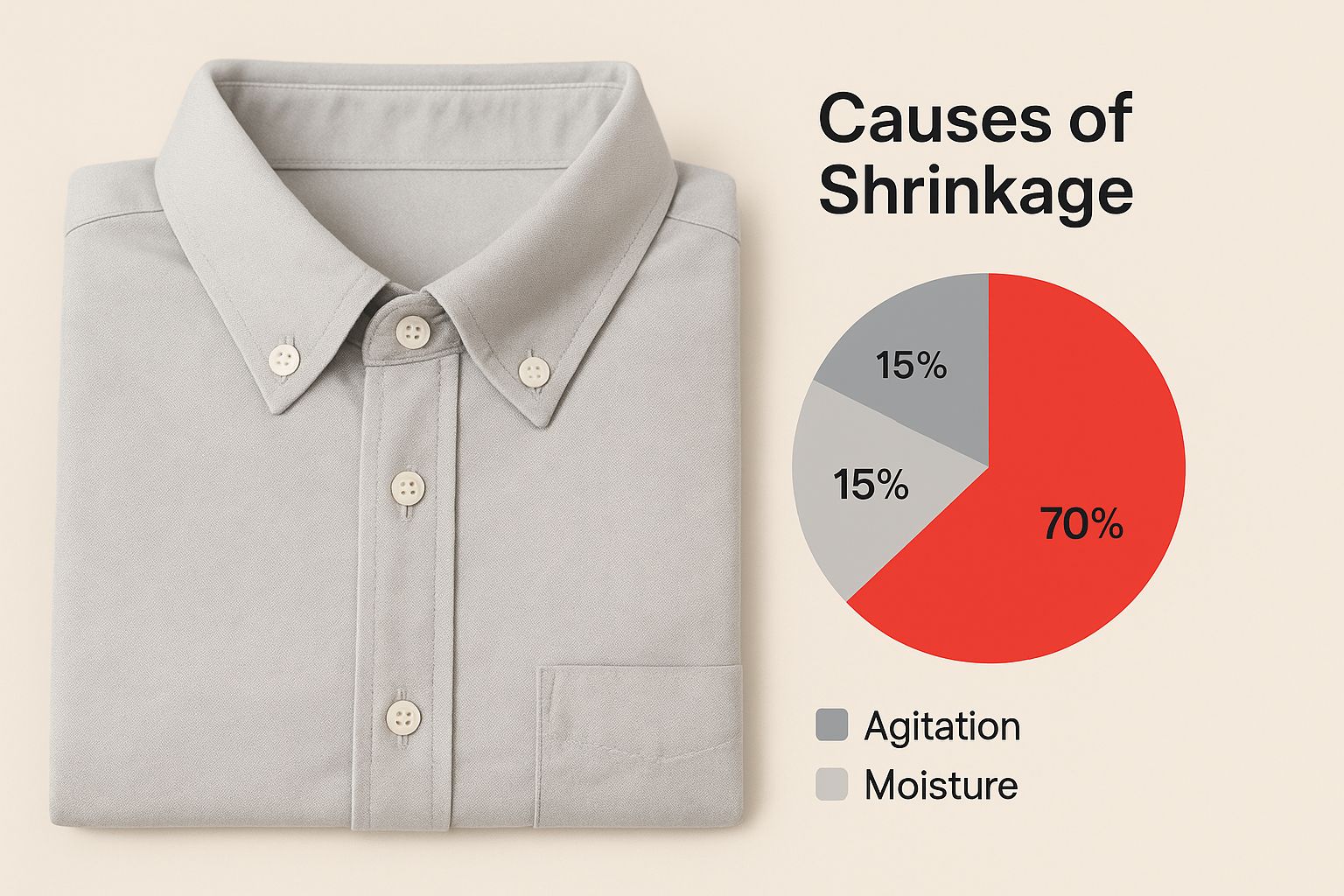
As you can see, theft—both external and internal—consistently makes up the lion's share of losses. This is precisely why a visible, professional security presence is the cornerstone of any effective shrinkage reduction strategy.
The first step for any business owner, whether you’re a retail manager in San Jose or on an HOA board in San Diego, is to stop accepting these vulnerabilities and start addressing them head-on.
Deterring External Threats with Proactive Security

While administrative errors can certainly impact your bottom line, external threats—from casual shoplifters to organized retail crime—often pose the most significant and unpredictable risk. A strong defense is a proactive one. The goal is to make your property an unappealing target from the start using a multi-layered approach designed to disrupt criminal plans before they begin.
At the heart of this strategy is visible deterrence. A person looking for an easy opportunity will almost always bypass a location that has a clear, professional security presence. It’s about creating a powerful psychological barrier.
The Power of a Visible Presence
A uniformed security officer is more than just a person in a uniform; they are a clear signal that your property is actively protected. In many cases, their presence alone is enough to convince potential thieves to move on to softer, less-guarded targets. This is especially true for busy retail centers, residential lobbies, and commercial building entrances, where an alert officer shows the premises are being monitored.
This same principle applies to mobile security patrols. For larger properties—such as shopping plazas, sprawling construction sites, or apartment communities in Los Angeles—the sight of a marked security vehicle making regular but unpredictable rounds is a powerful deterrent. It breaks the pattern of opportunity that opportunistic criminals rely on, as they can never be sure when a patrol might arrive.
A proactive security presence does more than just respond to incidents; it actively works to prevent them from happening in the first place. This shift from a reactive to a preventive mindset is fundamental to reducing shrinkage caused by external threats.
Optimizing Your Physical Environment
Beyond having a security team on-site, the physical layout of your property plays a huge role in deterring theft. It’s important to view your property through the eyes of someone searching for a weak spot. Do you see poorly lit areas? Blind corners? Uncontrolled access points?
Here are a few practical ways to harden your location and make it less attractive to criminals:
- Strategic Lighting: Ensure all entryways, parking lots, back alleys, and storage areas are brightly lit. Criminals prefer to operate in the shadows, and consistent, powerful lighting removes their cover.
- Clear Sightlines: Trim overgrown bushes and remove anything that creates hiding spots near windows and doors. Your security team and cameras need unobstructed views of the property's perimeter.
- Controlled Access: Keep the number of entry and exit points to a minimum. For commercial or residential buildings, this means securing and monitoring all secondary doors. For a retail store, it means designing a floor plan that naturally guides foot traffic past employee workstations.
For retailers, one of the simplest and most effective tactics is proactive customer service. Training your team to greet every person who enters the store accomplishes two things at once. It creates a welcoming environment for legitimate shoppers and, just as importantly, sends a clear message to would-be shoplifters: "We see you." That small act can dramatically reduce casual theft.
Ultimately, when you combine a visible security team with smart environmental design, you create a formidable defense. You're sending an unmistakable message that your property is well-managed, closely watched, and simply not worth the risk.
Strengthening Your Defenses Against Internal Theft

It’s natural to focus on external threats like shoplifters or burglars. However, the more persistent risk often comes from within. Internal theft is a challenging issue because it not only impacts the bottom line but can also erode trust and morale. Addressing it isn't about fostering suspicion; it's about implementing smart prevention measures and building a culture of integrity.
Many business owners are surprised by the scale of the problem. According to recent industry data, U.S. retail shrinkage has swelled to $112.1 billion. Theft—split between external and internal sources—accounted for nearly two-thirds of that total, making employee theft a massive piece of the puzzle. You can explore these findings in reports on the state of retail shrinkage.
Bolstering your internal defenses means establishing a framework of accountability that protects your assets as well as your honest employees.
Establishing Robust Internal Controls
Your first line of defense is a set of clear, fair, and consistently enforced internal controls. This is not about micromanaging your team; it's about closing procedural loopholes where temptation can arise. When everyone understands and follows the same process, it's easier for them to do the right thing.
A few effective controls we have seen deliver results include:
- Thorough Pre-Employment Screening: This is a standard but critical step. A professional background check helps verify a candidate’s history, ensuring you’re bringing trustworthy individuals onto your team from the start.
- Clear Cash Handling Policies: If your business handles cash, you need strict procedures with no exceptions. This includes regular till counts, manager sign-offs for all voids and refunds, and secure deposit protocols.
- A "Buddy System" for High-Value Items: Requiring two employees to be present when receiving shipments or moving expensive inventory creates a simple check-and-balance that significantly reduces opportunities for items to disappear.
The purpose of internal controls isn't to create suspicion. It's to build a transparent system where accountability is a shared responsibility, which ultimately protects everyone involved.
Creating Accountability Through Process and Technology
Written policies are essential, but they need to be supported by practical systems. This is where technology becomes a powerful ally, offering objective oversight without making your team feel as though they are under a microscope.
An access control system, for instance, creates a clear digital record of who enters sensitive areas like a stockroom or server room, and at what time. It’s an effective deterrent for unauthorized entry, and if an incident occurs, you have objective data to review.
Regular audits and random inventory spot-checks are also vital. When framed as routine operational tasks rather than "gotcha" moments, these checks can catch issues early—whether they stem from theft or simple clerical errors. This process naturally reinforces the importance of accuracy and diligence across your staff.
In the long run, a positive work culture is one of the most effective tools for reducing internal theft. When employees feel valued, respected, and fairly compensated, they become genuine partners in the company's success. An engaged team that trusts its leadership is your best defense, creating a secure environment from the inside out.
Using Smart Technology for Modern Loss Prevention
The most effective security plans today blend experienced human oversight with intelligent technology. We've moved far beyond the days of basic, unmonitored CCTV. Modern strategies for reducing shrinkage rely on a connected ecosystem of tools that not only deter threats but also provide valuable operational data. A well-designed technology stack makes your property smarter, safer, and more accountable.
The need for this is clear. With global retail shrinkage hovering around 1.82% of annual sales, a figure that costs businesses billions, smart companies are investing in data-driven loss prevention—a fusion of advanced surveillance, analytics, and professional human oversight.
Accountability Through Advanced Reporting
At the heart of any modern security program is real-time accountability. The era of messy, handwritten logs and wondering if patrols were actually completed is over. At Overton Security, we blend our officers' field expertise with a GPS-enabled guard tour management system that creates a transparent, indisputable record of activity.
This technology allows our officers to:
- Scan NFC tags at key checkpoints, creating a time-stamped log of their patrol route.
- File detailed digital incident reports from their smartphone, complete with photos.
- Communicate instantly with our 24/7 Security Operations Center (SOC) for guidance or support.
For a property manager in Los Angeles or a retail owner in San Jose, this means you receive straightforward, verifiable reports detailing every action taken on your property. This digital trail is crucial for spotting patterns, resolving issues quickly, and ensuring you receive the service you are paying for.
Integrating a Multi-Layered Tech Defense
A truly robust strategy integrates several technologies into one seamless system. Think of it as building a fortress—each tool addresses a different vulnerability, creating multiple layers of defense that work together to protect your assets.
The goal isn’t just to record incidents after they happen, but to actively prevent them. When you integrate smart technology with professional monitoring, your security system transforms from a passive observer into an active deterrent that protects your bottom line.
For instance, a comprehensive security solution for your business isn't a one-size-fits-all product. It's a custom blend of the following:
- High-Definition Surveillance: Strategically placed cameras monitored by our SOC provide live oversight, allowing for the immediate dispatch of patrol officers the moment suspicious activity is detected.
- Sophisticated Access Control: For commercial and residential properties, electronic access systems are a game-changer. They create a digital log of everyone who enters sensitive areas, effectively securing stockrooms, server rooms, or residential floors from unauthorized access.
- Electronic Article Surveillance (EAS): A non-negotiable for retail, EAS systems trigger an alarm when unpaid merchandise passes through an exit. It’s a simple, powerful, and highly visible deterrent to shoplifters.
By weaving these elements together, you build a formidable defense that not only helps you reduce shrinkage but also provides invaluable insights to make your entire operation run more smoothly.
The Unmatched Value of Professional Security Officers
Technology is a critical layer of defense, but it cannot replace the judgment and presence of a trained security professional. A uniformed officer is often the single most effective deterrent, bringing adaptability, de-escalation skills, and human interaction that technology simply cannot replicate.
An officer's value goes far beyond simply being a uniform. It’s about active observation, intelligent de-escalation, and immediate, professional response. For property managers and business owners, this human element turns passive monitoring into active, hands-on protection. It’s how you transform security from a line-item expense into a true asset that safeguards your bottom line.
More Than Just a Uniform
The role of a professional security officer is not one-size-fits-all. It adapts to fit the specific environment, making them a remarkably versatile tool in loss prevention. Their responsibilities are shaped by the unique vulnerabilities of your property, whether it's a bustling retail center in San Francisco or a quiet residential community in San Diego.
Consider how their duties differ across settings:
- In a commercial high-rise, they act as a concierge, greeting tenants and visitors while discreetly monitoring access and checking credentials.
- For a retail store, they serve as a powerful deterrent to shoplifters and organized retail crime, observing behavior and providing a calm yet firm presence.
- On a sprawling construction site, they conduct vehicle patrols after hours to ensure high-value materials and equipment do not leave the job site.
This is precisely why human expertise remains so critical. An experienced officer can distinguish between a lost customer and a potential threat. They can de-escalate a tense situation with a loiterer before it requires police involvement. Technology, for all its strengths, cannot handle these nuances.
The Impact of a Proactive Human Presence
A well-trained officer on-site directly counters the most common drivers of external shrinkage. Shoplifting alone costs U.S. retailers over $13 billion annually, and theft accounts for a staggering 36% of all retail losses. With data from sources like these eye-opening shoplifting statistics showing the widespread nature of the problem, a proactive security presence is more important than ever. An officer can spot suspicious behavior and intervene appropriately, stopping losses before they occur.
A security officer does what no camera can: they make eye contact, offer assistance, and communicate authority. That simple human interaction is often all it takes to convince a potential thief that your property is not the easy target they were looking for.
At Overton Security, we understand that this level of service depends entirely on the quality of our team. With 26 years of experience, we have built our reputation on officer stability and retention. Our hands-on management approach and low manager-to-client ratio ensure our officers are supported, well-trained, and prepared to protect your assets. This commitment to quality is a key reason we excel at helping clients reduce shrinkage and, as you can learn here, how security patrols improve your business’s financial health.
Common Questions About Reducing Shrinkage
When it comes to protecting your property and profits, it’s natural to have questions. Here are some of the most common inquiries we receive from business and property managers about preventing loss, with practical answers based on our decades of hands-on experience.
What’s the Biggest Cause of Inventory Shrinkage?
While this can vary by industry, external theft is almost always a significant part of the equation. This includes everything from petty shoplifting to more sophisticated, organized retail crime.
However, it is a mistake to overlook internal theft. Employee theft is often a very close second and can be far more damaging over time because employees have sustained access and an insider's understanding of your procedures and their weaknesses.
It’s also crucial to remember that administrative mistakes and even supplier fraud contribute to the total. A truly effective strategy must address shrinkage from all of these angles.
How Can I Reduce Employee Theft Without Creating a Negative Environment?
This is an excellent question, and the answer lies in focusing on prevention and culture, not constant suspicion. The goal is to build a team that protects the business because they feel a part of its success.
Start with clear, fair, and consistently enforced policies for tasks like cash handling, merchandise returns, and inventory access. From there, you can strengthen your defenses by:
- Training Your Team: Don't just hand them a rulebook. Explain the why behind your policies and show them how preventing loss benefits everyone.
- Conducting Background Checks: A thorough, professional screening process is a foundational step in building a trustworthy team.
- Using Non-Intrusive Tech: Systems like access control are ideal for this. They create an objective log of who enters sensitive areas without making honest employees feel watched.
Most importantly, foster a positive work culture where your team feels genuinely valued and respected. An engaged staff that views itself as a partner in your success is your single most powerful defense against internal shrinkage.
An environment built on mutual trust and clear expectations is far more effective than one built on suspicion. When employees feel respected, they are more likely to protect the company's assets as if they were their own.
Are Security Cameras Enough to Stop Shrinkage?
Cameras are a valuable tool, but on their own, they are rarely enough. Think of them as one important piece of a larger security puzzle. They are excellent for investigating incidents after they occur and can certainly act as a deterrent, but they are primarily a reactive measure, not a proactive one.
For genuine prevention, cameras must be part of a layered security strategy.
The most secure properties we protect combine technology with a human element. An effective approach integrates your surveillance system with a visible security presence—like uniformed officers or mobile patrols—along with good lighting and strong internal procedures. It’s this combination that makes your property a truly hard target for criminals.
For more insights on assembling the right team, our guide on what to consider when hiring a security agency can help you build out the human element of your strategy.
Ready to build a comprehensive security plan that actively reduces shrinkage and protects your bottom line? The team at Overton Security has over 26 years of experience combining professional officers with smart technology to create safe and secure environments. https://www.overtonsecurity.com