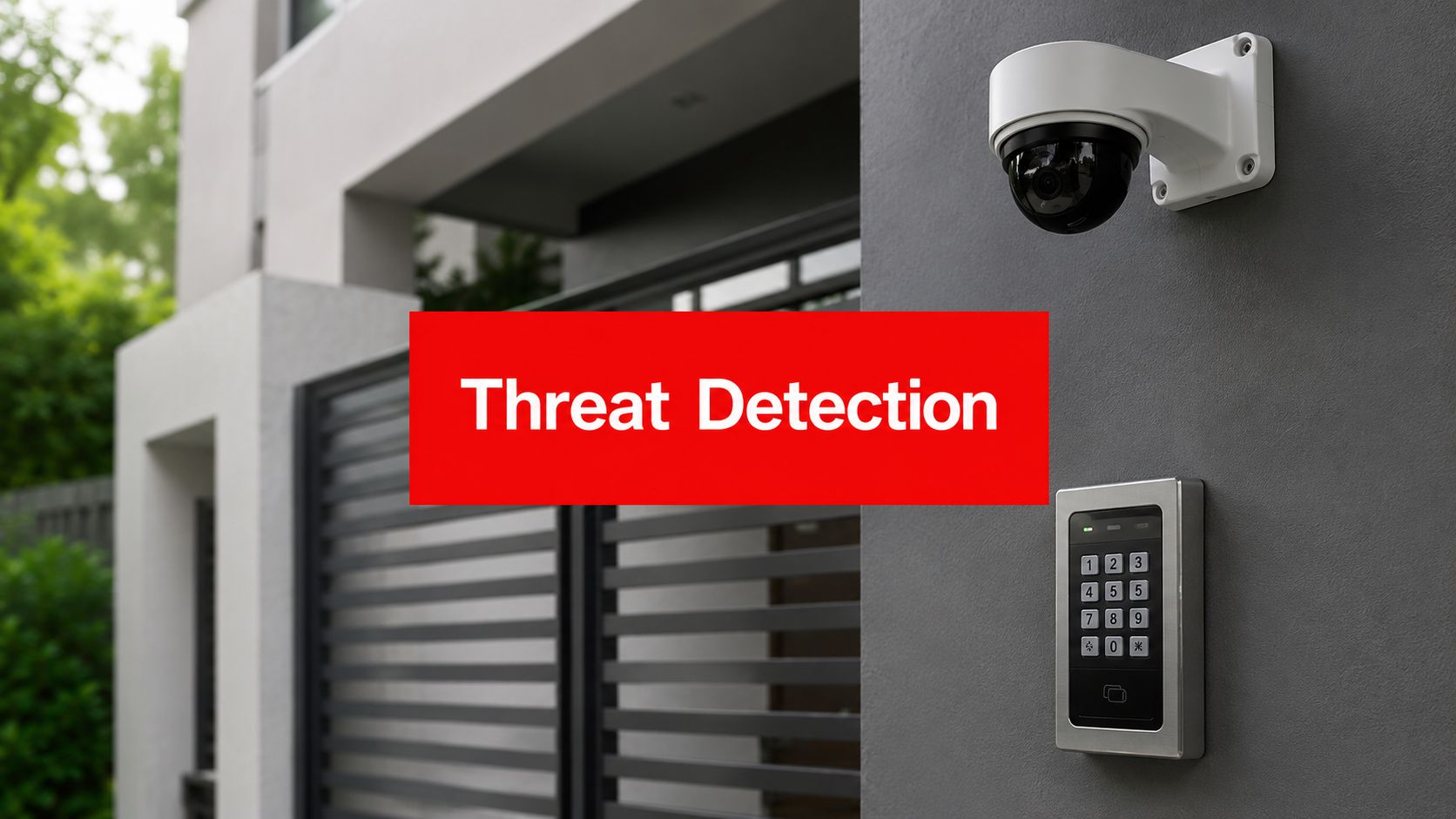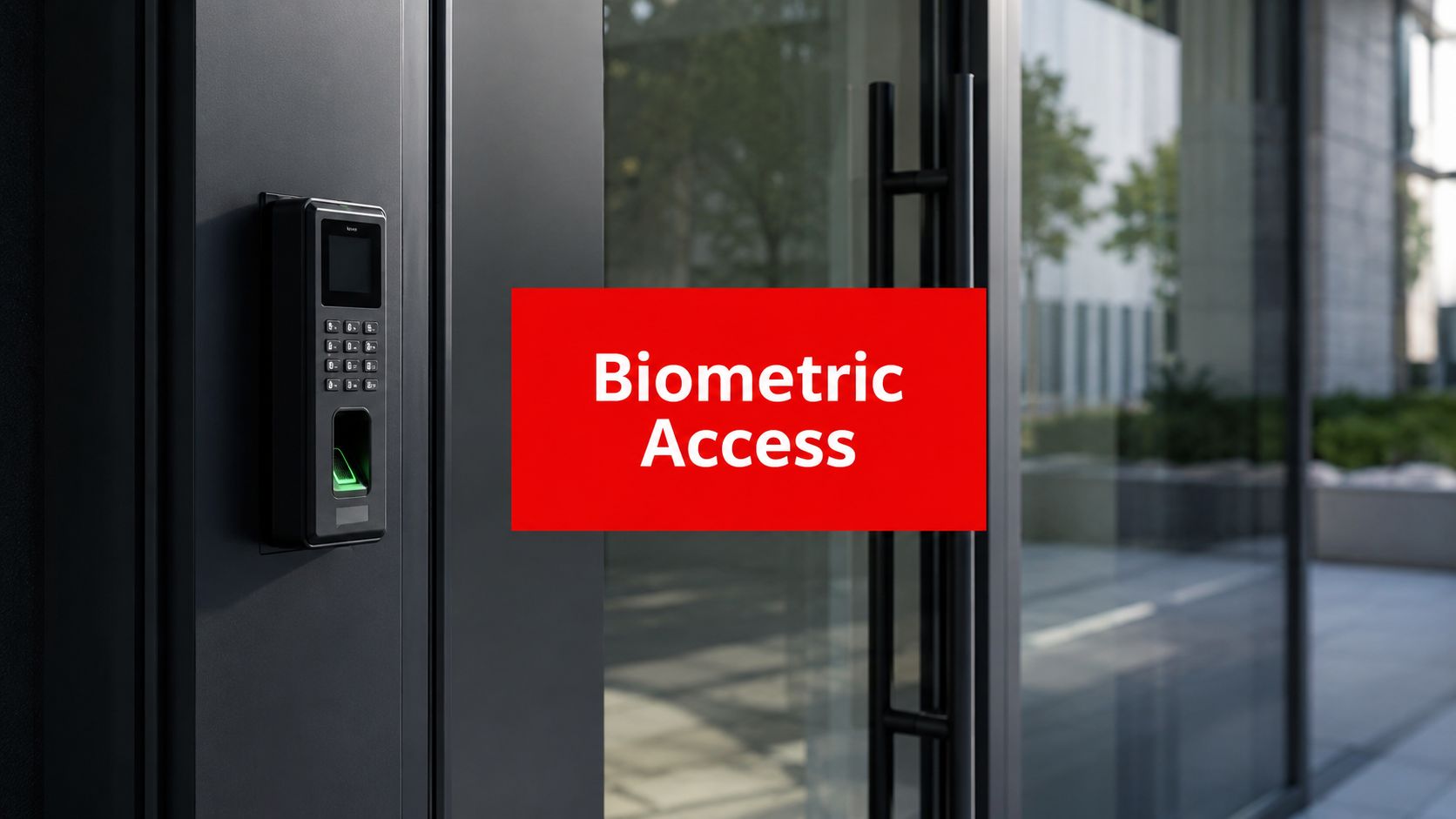

Dealing with vandalism requires shifting from a reactive "clean-up" mindset to a proactive prevention strategy. The goal is to make your property an unappealing, high-risk target before anyone considers tagging a wall or breaking a window. For property managers, HOA board members, and business owners, this means establishing control and sending a clear message that your site is actively protected.
A successful strategy rests on three pillars: enhancing visibility with smart environmental design, using robust surveillance technology, and maintaining a consistent, professional security presence.
Conducting a Proactive Security Assessment
The first step is to see your property through the eyes of a potential vandal. Whether it's a commercial building in Los Angeles, a residential community in San Jose, or a construction site, you must identify the weak points that invite trouble. A proactive security assessment is the foundation of any effective protection plan.
Walk your property specifically looking for high-risk zones. Where are the dark, poorly lit corners? Are there access points left unsecured after hours? What about alcoves, dense landscaping, or recessed doorways that offer easy concealment? These areas can feel unmonitored and forgotten, making them prime targets.
Identifying Common Vulnerabilities
Every property has its weak spots. For a property manager, the service alley behind a retail plaza is a classic example—dark, quiet, and out of public view. For an HOA board, the community park’s gazebo can become a magnet for unwanted activity after sundown. Construction superintendents know that unfenced perimeters or unlocked equipment containers are practically an open invitation.
This process is a core principle of Crime Prevention Through Environmental Design (CPTED), which uses smart environmental planning to discourage negative behavior. It’s all about making your property look controlled, cared for, and, most importantly, actively watched.
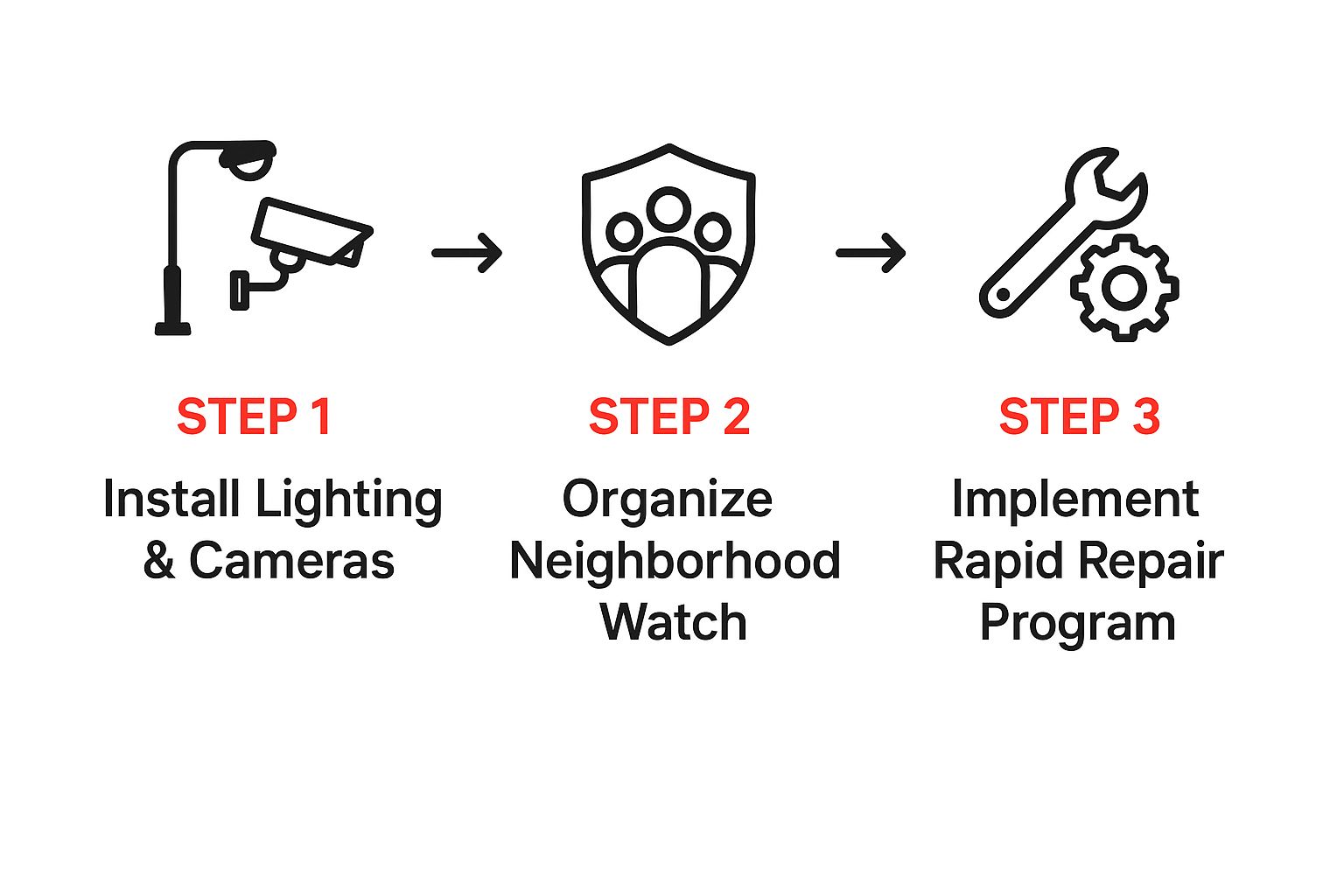
As the image above illustrates, a layered approach combining physical deterrents, community awareness, and prompt maintenance creates a defense that’s much stronger than any single solution.
Using a checklist to guide your initial walkthrough helps you focus on the most common problem areas and identify immediate, practical solutions.
Initial Vandalism Risk Assessment Checklist
| Area of Concern | What to Look For | Immediate Action |
|---|---|---|
| Lighting | Deep shadows, burned-out bulbs, inconsistent coverage | Install motion-sensor lights, upgrade to brighter LEDs, trim landscaping blocking light |
| Access Points | Unlocked gates, broken fences, propped-open doors | Repair/replace locks, establish a clear lock-up procedure, reinforce weak fencing |
| Landscaping | Overgrown bushes, large trees offering concealment | Trim shrubs below window level, thin out dense tree canopies near buildings |
| Sightlines | Dumpsters, walls, or structures blocking views | Relocate dumpsters, install mirrors in blind corners, redesign obstructive elements |
| Signage | Lack of warning signs, unclear property boundaries | Post "No Trespassing" and "Under Surveillance" signs, clearly mark private property lines |
This table provides a solid starting point for spotting the low-hanging fruit that vandals often exploit.
A thorough site assessment does more than just spot weaknesses; it provides the crucial intelligence needed to build a security plan that delivers real value. It informs where to place cameras, what patrol routes are most effective, and how to allocate your security budget for maximum impact.
Remember, this assessment isn't a one-time task. Vulnerabilities can emerge as seasons change, landscaping grows, or property use shifts. Regular reviews are essential to maintaining a strong security posture. This is where partnering with an experienced security firm like Overton Security pays dividends. With over 26 years of experience, we understand these nuances. As you move forward, knowing how to choose a security company in San Jose or your local area will help you find a partner that prioritizes this kind of detailed, proactive planning.
Using Strategic Lighting and Visibility as Deterrents

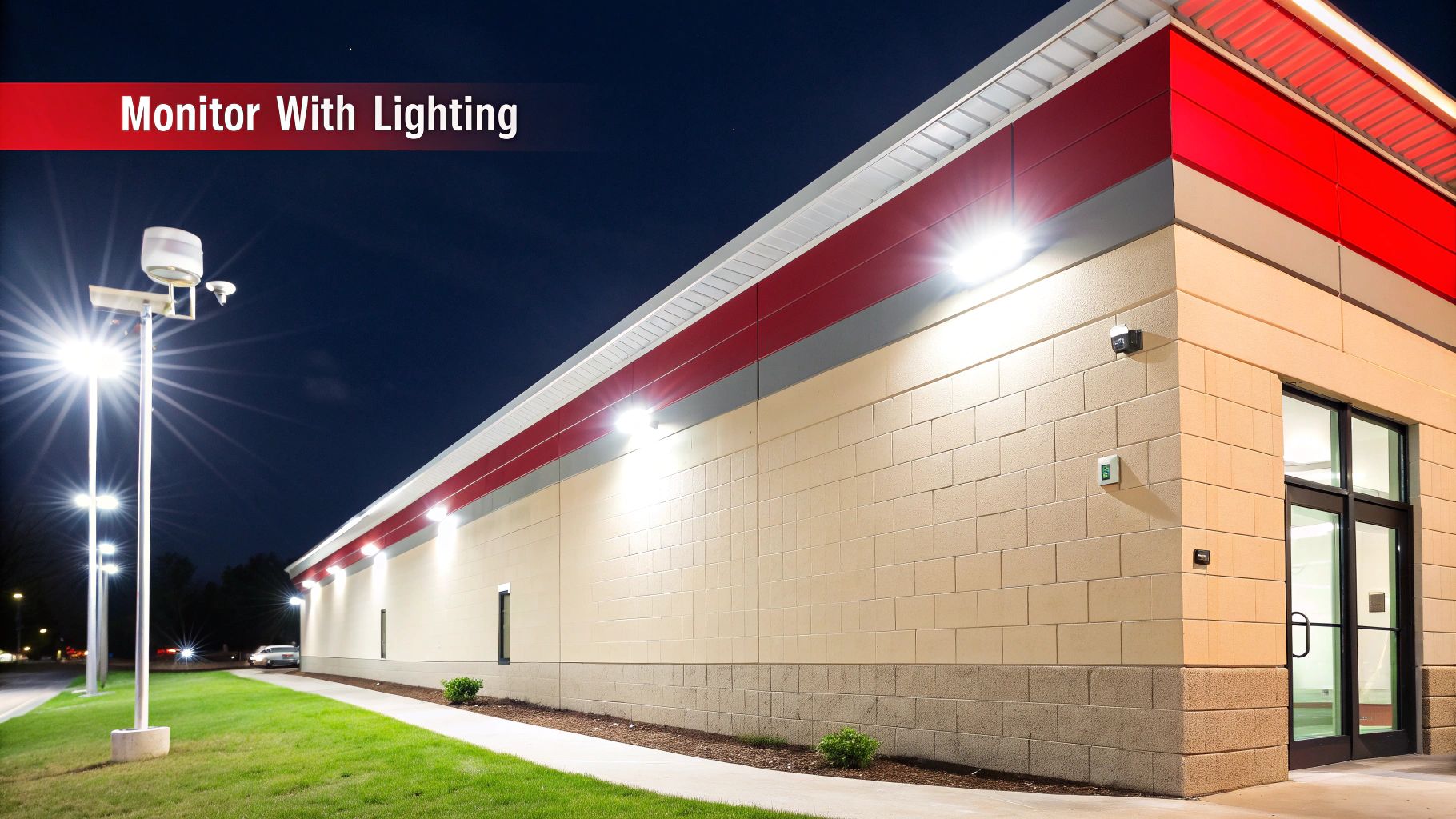
Vandalism almost always thrives in the shadows. That’s why strategic lighting and clear visibility are two of the most powerful and cost-effective tools in your security arsenal. An effective plan uses illumination to create a psychological barrier, making your property a much less inviting target.
The goal isn't just brightness; it's consistency. A common mistake is installing a few powerful lights, which creates intensely bright spots while casting even deeper, more concealing shadows elsewhere. This doesn't solve the problem; it just moves it from one dark corner to the next.
Creating an Environment of Exposure
The most effective lighting strategies focus on one thing: uniform coverage. To achieve this, you need to walk your property at night and get a true sense of where the dark spots are—in parking lots, along fences, behind buildings, and within common areas. Modern LED technology is ideal for this, offering bright, consistent light that is far more energy-efficient than older systems.
Another excellent tool is motion-activated lighting. Place these fixtures near doors, gates, service alleys, and other potential entry points. The sudden flood of light is an immediate, startling deterrent that not only exposes a potential vandal but also signals that the property is being monitored.
Good security lighting does more than illuminate a space; it sends a clear, non-verbal message that the property is cared for and observed. That alone is often enough to convince a would-be vandal to move on to an easier target.
Maximizing Natural Surveillance
Lighting is most effective when paired with clear lines of sight—a concept known as natural surveillance. Vandals feel safer when they can hide. By thoughtfully managing your landscaping, you remove their cover and increase the chances they’ll be seen by residents, patrols, or passersby.
This doesn't mean you have to strip your property bare. It's about strategic maintenance with a few key goals:
- Trim tree canopies that block light fixtures or obscure views of building entrances.
- Keep shrubs and hedges trimmed below window height (around three feet) so they can't be used as hiding spots.
- Remove or relocate anything that obstructs views, like unnecessary partition walls or poorly placed dumpsters.
Consider a residential property with overgrown bushes near a community mail center—a perfect blind spot. Trimming them back immediately makes the area feel more open and secure. For a retail center in a busy area like Long Beach, ensuring parking lot lights can shine through tree branches reduces the shadows where trouble can brew.
When you combine well-designed lighting with clear, open sightlines, you create an environment where vandals have nowhere to hide. This foundational layer of security makes every other measure you take, from cameras to patrols, significantly more powerful.
Using Security Technology for Modern Prevention
While good lighting and clear sightlines build a strong foundation, modern security technology acts as a force multiplier in any plan to prevent vandalism. Strategically placed surveillance cameras do more than record events; their visible presence is a powerful deterrent. However, the real value comes from transforming passive hardware into a responsive security system.
This is where blending technology with human expertise makes all the difference. At Overton Security, we believe a camera system should never be a "set it and forget it" tool. By integrating our clients' surveillance systems with our 24/7 Security Operations Center (SOC), we add a layer of professional oversight that an unmonitored camera simply can't provide.
Turning Data Into Action
A camera may capture an event, but what happens next is what stops future problems. Our officers are equipped with a GPS-enabled guard tour management system, turning patrol data into clear, actionable intelligence for property managers.
When an officer conducts a patrol or checks on an alert, they document everything in real-time, creating detailed digital reports with time-stamped photos and notes. This process offers several key advantages:
- Accountability: You receive a verifiable, digital record of when patrols occurred and what was observed. No more guesswork.
- Evidence: This clear documentation is crucial for law enforcement follow-up or insurance claims.
- Pattern Identification: Over time, these reports can reveal recurring issues or new vulnerabilities, allowing you to proactively adjust your security plan before a small problem escalates.
An integrated security system doesn't just watch; it communicates. It turns raw footage and patrol data into a clear, complete picture of your property's security, empowering you to make smarter, faster decisions.
This proactive stance is more important than ever. For instance, recent data shows a growing problem with intentional damage to critical infrastructure. Between June and December 2024, there were over 5,770 reported incidents of theft and vandalism against communications infrastructure in the U.S. alone. In response, organizations are logically turning to enhanced measures like surveillance, professional security, and tracking technologies to make themselves harder targets.
Integrating Tech with an On-the-Ground Presence
Technology is at its best when it supports, not replaces, a human presence. An alert from a smart camera can instantly dispatch a mobile patrol to investigate suspicious activity. An officer arriving on-site can then use a mobile app to access post orders and report findings directly to the SOC and the property manager.
This seamless integration creates a swift, coordinated response. Instead of discovering damage the next morning, you have a system designed to intervene in the moment. This is a core part of our vehicle security patrol services, which combine the visible deterrence of a patrol car with the solid accountability of modern reporting tech. This blend of human expertise and smart systems shifts your property from a reactive posture to a truly preventative one.
The Power of a Professional On-Site Security Presence
While technology is an essential tool, nothing matches the deterrent power of a professional security officer on your property. A well-placed camera might record a crime, but a trained officer can often prevent it from happening in the first place. Their visible presence shatters the anonymity that vandals and other criminals rely on, creating an environment of active oversight that technology alone cannot replicate.
The key is matching the right service to your property's unique challenges. For a sprawling residential community or an industrial park, a mobile patrol service provides a highly visible and unpredictable deterrent. For a busy retail center or a construction site with valuable assets, a dedicated on-site officer provides constant, focused protection.
More Than Just a Uniform
A common pitfall in the security industry is the "burn and churn" approach to staffing, which leads to high turnover and disengaged officers. At Overton Security, we built our company on a different philosophy.
With over 26 years of experience, our reputation is founded on the quality and consistency of our team. We invest in our officers with comprehensive training, ongoing support, and a commitment to their professional growth. This focus on quality over quantity and our low manager-to-client ratio ensure our team has the hands-on leadership they need.
This means the officer on your property is a well-supported professional trained in proactive problem-solving.
The real value of a security officer isn’t just their ability to respond to an incident, but their skill in observing, assessing, and de-escalating a situation before it results in damage or loss. It’s the human element of judgment and intervention that makes all the difference.
Real-World Deterrence in Action
Imagine a group loitering near a poorly lit service entrance at a commercial property—a classic scenario for graffiti or damage. An officer on patrol doesn’t wait for an alarm. Their visible approach, a professional "Can I help you?", and a calm request to move along is almost always enough to peacefully resolve the situation.
This type of proactive, expert interaction prevents a costly cleanup and sends a clear message: this property is protected.
The same principle applies to construction sites. An officer can spot and secure a gate that was accidentally left unlocked or challenge an unauthorized individual. These simple acts prevent theft and vandalism that might otherwise go unnoticed until the next morning. Exploring what to expect from security guards in Oakland and other urban settings can provide more insight.
Ultimately, preventing vandalism requires a layered strategy. An engaged, professional security officer is the vital human layer that ties your entire security plan together, turning a passive system into a dynamic, responsive shield.
Fostering Community and Ensuring Rapid Response

Cameras, patrols, and lighting are critical, but a comprehensive vandalism prevention plan also harnesses the power of the people who use your property every day. A strong, vigilant community can become your most valuable security asset.
For property managers and HOA boards, the goal is to create a sense of shared ownership. When residents feel invested in their environment, they are more likely to notice and report things that seem out of place. This builds a culture where everyone plays a role in keeping the community safe and clean.
Cultivating a Watchful Community
The foundation of a vigilant community is clear communication. People need to know exactly who to call and how to report suspicious activity without confusion. This simple clarity empowers them to act.
Here are a few practical ways to build this culture:
- Establish Clear Reporting Channels: Create a dedicated phone number, email, or a simple form on your resident portal for security concerns. Post this information in newsletters, on community bulletin boards, and in new resident welcome packets.
- Promote a "See Something, Say Something" Mindset: Regularly encourage residents to report anything unusual, whether it's an unfamiliar vehicle or a new graffiti tag. Quick reporting allows your team to respond before a small issue escalates.
- Organize Community Watch Programs: In a residential setting, a neighborhood watch program can be highly effective, especially with management support and a good relationship with local law enforcement.
The Critical Importance of Rapid Response
Receiving a report is only half the battle; your response time is what truly matters. The speed at which you repair damage or paint over graffiti sends a powerful psychological signal.
A property that is repaired quickly shows that management is present, active, and paying attention. This actively discourages repeat offenses because vandals see their work erased almost immediately, removing the "reward" of their actions.
This concept is often called the "Broken Windows Theory." It suggests that visible signs of neglect, like a broken fence or graffiti that remains for weeks, can attract more serious crime. Your goal should be to clean graffiti or repair damage within 24-48 hours. This rapid response is a core crime prevention tactic.
Investing in proactive measures pays significant dividends. The UNDRR global assessment report highlights that the global cost of disasters, including societal issues like widespread vandalism, can exceed $2.3 trillion annually. This proves that proactive risk reduction saves far more than just the direct cost of repairs. By building a united community and ensuring a swift response, you not only learn how to prevent vandalism but also create a more resilient and desirable property.
Answering Your Top Questions About Preventing Vandalism
As a property manager, HOA board member, or business owner, dealing with vandalism is a frustrating and often personal challenge. Having partnered with clients for over 26 years, we've heard the same questions come up time and again. Here are some straightforward, practical answers.
What’s the Most Cost-Effective First Step I Can Take?
For most properties, the biggest return on your investment comes from a two-part strategy: improving your lighting and clearing your sightlines. Vandals thrive in shadows and hidden spots. By flooding dark corners with well-placed, uniform light and trimming back overgrown landscaping, you remove their primary advantage.
This is a powerful psychological deterrent that costs relatively little upfront. A well-lit, clean-looking property sends a clear message that someone is paying attention, which is often all it takes to convince an opportunistic vandal to move on.
Are Fake Security Cameras Actually a Good Idea?
While it may seem like a budget-friendly option, fake cameras come with serious downsides. Experienced criminals can often spot a dummy camera, rendering it useless. More importantly, relying on fakes creates a false sense of security and provides zero protection or evidence when an incident actually occurs.
A real, monitored security system is always the smarter investment. It’s a genuine deterrent, it captures solid evidence for law enforcement, and it's a security measure that can actually stand up in court. It protects your assets and tenants for real, not just for show.
How Quickly Do I Need to Clean Up Graffiti or Fix Damage?
We always advise our clients to follow the 24-48 hour rule. The faster you can remove graffiti or repair damage, the better. This is about more than just appearances; it's about sending a clear message.
When vandals see their work vanish almost overnight, it robs them of the notoriety they seek. It signals that the property is actively managed and protected, dramatically reducing the likelihood of a repeat offense.
What's the Best Security Setup for a High-Risk Urban Property?
Properties in dense urban areas, such as parts of Los Angeles or Oakland, face more persistent threats and require a layered defense. For these high-risk environments, we almost always recommend a combination of:
- Mobile Vehicle Patrols: A marked patrol car making unpredictable rounds is a powerful visible deterrent. It helps break up loitering and discourages opportunistic crime across the entire property.
- Monitored Surveillance: This involves pairing high-visibility cameras with our 24/7 Security Operations Center (SOC). It ensures suspicious activity is spotted and acted upon in real-time—not just discovered on a recording the next day.
This blend of a visible human presence and constant tech oversight creates a robust, responsive defense built for the unique challenges of an urban setting.
A solid security plan is your best defense against the frustration and cost of vandalism. With over 26 years of hands-on experience, Overton Security creates custom security programs that combine professional officers, smart technology, and proactive strategies to keep your property safe. Contact us today to schedule a complimentary site assessment.