When people think of retail security, they often picture a guard standing by the door. But in reality, it's a much more sophisticated blend of professional personnel, smart technology, and proactive planning. The goal is to protect assets, keep customers safe, and ultimately, support a positive shopping experience.
It’s about moving beyond just catching shoplifters. It’s about creating a secure and welcoming environment that actually helps a retail center thrive. For property managers, this isn't just another line-item expense—it’s a core part of building a successful retail ecosystem.
Why Modern Retail Security Is a Business Asset
Staring at shrinkage reports and worrying about customer safety can feel like a constant battle for any retail property manager. It’s easy to fall into the trap of viewing security as just a cost to be managed. But that perspective misses the bigger picture. A well-designed retail security program is a powerful asset that actively contributes to your property's value and reputation.
The challenges facing today's shopping centers, especially in busy hubs like Los Angeles or San Francisco, go far beyond simple theft. Property managers have to deal with a whole range of issues that can impact everything from profitability to the public’s perception of their center.
Beyond Preventing Theft
While loss prevention is a huge piece of the puzzle, a truly comprehensive security plan covers a much broader spectrum of risks. Think about it:
- Liability and Premises Safety: This means managing slip-and-fall incidents, responding quickly to medical situations, and making sure common areas are kept free of hazards.
- Vandalism and Property Damage: A proactive security presence can deter graffiti, damage to fixtures, and other destructive acts that make a property look run-down and uninviting.
- Access Control and Loitering: It's a delicate balance. You need to maintain a welcoming atmosphere while professionally managing non-customer loitering and keeping unauthorized people out of restricted areas.
- Customer and Tenant Experience: This is the big one. When shoppers and employees feel safe, it directly impacts how long they stay, how much they spend, and whether they decide to come back.
The most effective security strategies recognize that a secure environment is a profitable one. When customers feel safe, they shop longer and spend more, transforming security from a cost center into a direct contributor to your bottom line.
A Foundation for Profitability
At the end of the day, a strong security posture is the foundation of any successful retail center. It builds trust. Tenants feel confident that their investments are protected, and customers choose your location over competitors because it just feels safe and well-managed. To dig deeper into this connection, you can read our article on the top benefits of having security experts for your business.
Here at Overton Security, we've spent 26 years refining our approach to this very challenge. We believe in combining professional, well-supported officers with smart, accountable technology. This integrated strategy ensures your security program isn't just a reactive measure, but a proactive asset that delivers tangible, reassuring returns.
The Building Blocks of a Strong Security Program
A truly effective retail security program is much more than a single guard standing at the front door. It’s a layered system where every piece has a specific job, and they all work together to create a space that’s safe, inviting, and ultimately, profitable. If you’re a property manager, understanding these building blocks is the first step to designing a security plan that’s both effective and perfectly suited to your center.
Think of it like building a house. You wouldn’t just put up walls and call it a day. You need a solid foundation, a weather-proof roof, sturdy locks, and a way to keep an eye on everything. In retail security, each service is one of those essential parts.
This hierarchy shows how these layers of security directly support the things that matter most to a retail property: safety, customer experience, and the bottom line.

As you can see, a smart investment in security isn't just an expense; it’s a direct investment in the safety and experience that drive a retail center's success.
Comparing Retail Security Service Components
To help you visualize how these pieces fit together, here’s a quick breakdown of the core retail security services and where they shine. This table should make it easier to see how you can mix and match to build the right program for your property.
| Service Component | Primary Function | Best For | Example Scenario |
|---|---|---|---|
| Onsite Guards | Visible deterrence and immediate response. | High-traffic areas, main entrances, and as a central point of contact. | An officer at the main mall entrance who deters shoplifters while also helping a lost shopper find a store. |
| Vehicle Patrols | Proactive, wide-ranging property checks. | Large parking lots, multi-building centers, and after-hours monitoring. | A marked security car randomly patrolling a shopping center's parking garage at night, preventing vehicle break-ins. |
| Remote Monitoring | 24/7 surveillance via cameras and sensors. | Covering vast areas, high-value zones, and monitoring properties remotely. | A security operations center (SOC) specialist spots loiterers on camera at 2 AM and dispatches a mobile patrol to investigate. |
| Concierge Security | Blending security with high-end customer service. | Upscale retail, mixed-use properties, and luxury brand storefronts. | A sharply dressed officer in a high-end lobby who greets visitors, manages access, and embodies the property's premium brand. |
| Loss Prevention | Undercover or plain-clothes retail-focused surveillance. | Individual retail stores and high-shrinkage environments. | A plain-clothes agent observes a known shoplifting ring and coordinates with uniformed officers and police for an apprehension. |
Each of these components brings something different to the table. The real strength of a security program comes from combining them strategically to cover all your bases, from the front door to the farthest corner of the parking lot.
Onsite Security Guards: The Visible Foundation
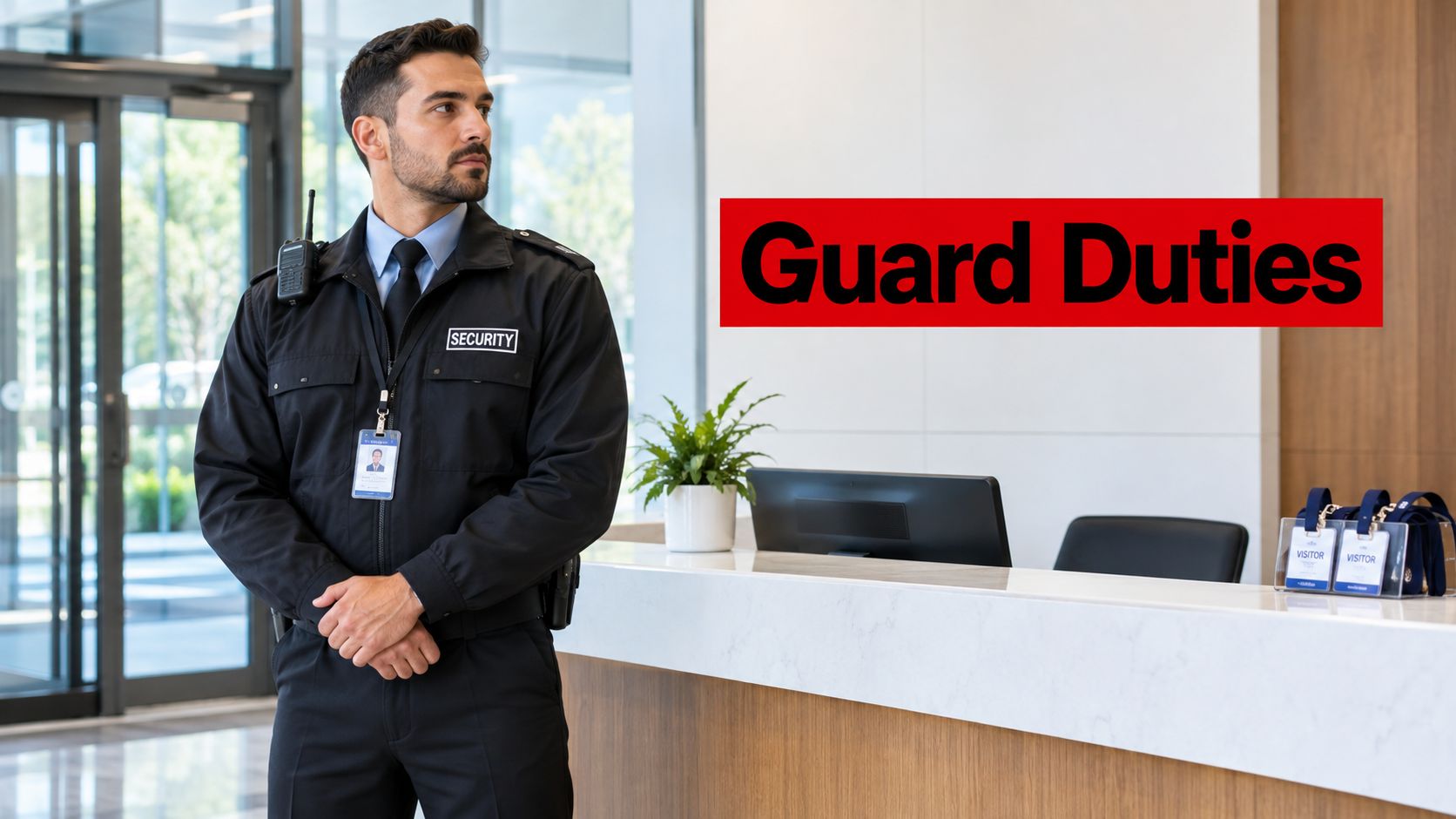
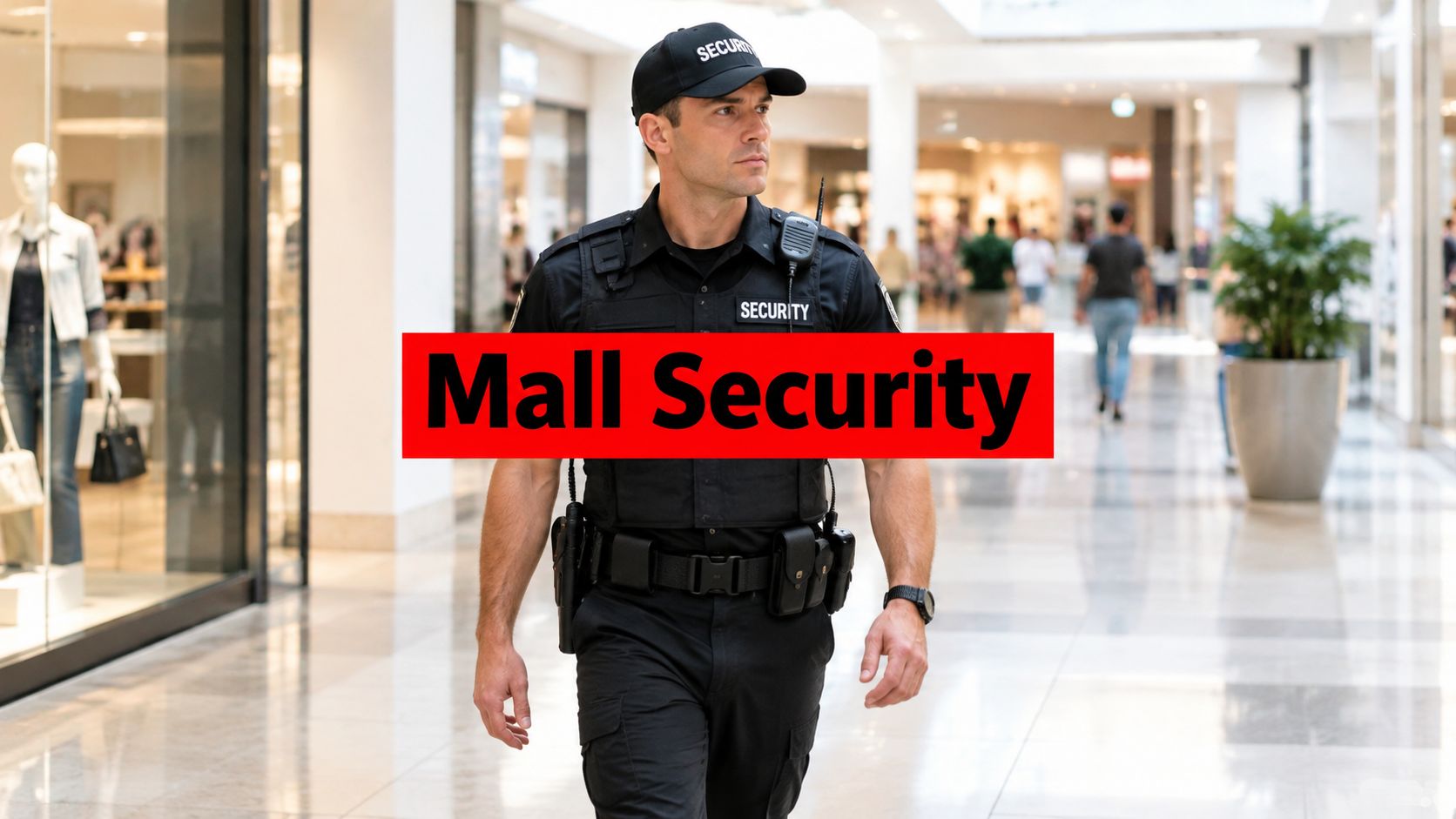
When people think of retail security services, the first thing that comes to mind is usually the onsite security guard. A professional, uniformed officer is an immediate and powerful visual deterrent. Just by being there, they can discourage opportunistic theft, loitering, and vandalism before it starts.
They act as a constant, reliable point of safety and guidance. Soon enough, they become a familiar face for both tenants and shoppers, acting as the go-to person for everything from giving directions to responding to a medical emergency or finding a lost child. Their role is as much about customer service as it is about enforcement, which helps build a controlled and reassuring atmosphere.
Mobile Vehicle Patrols: The Proactive Perimeter
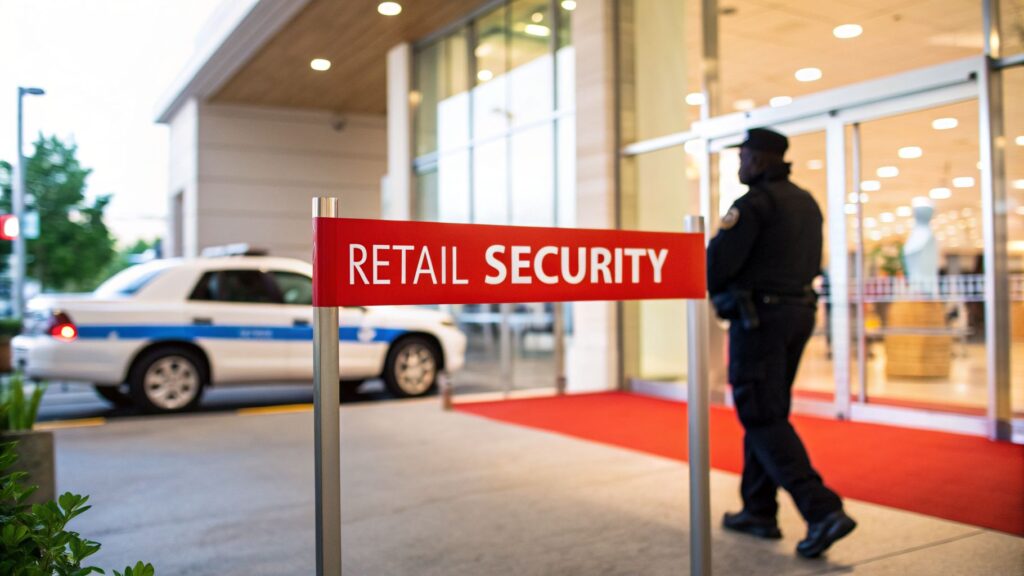
For larger properties—the ones with sprawling parking lots, multiple buildings, or large outdoor common areas—mobile vehicle patrols are essential. These marked security vehicles make both scheduled and random checks, ensuring every corner of your property gets the attention it needs.
Their biggest advantage is their unpredictability. A would-be vandal or car thief never knows when a patrol might come around the corner. This active, mobile presence pushes your security perimeter far beyond your front doors, disrupting opportunities for troublemakers.
Concierge Security: The Elevated Experience
In upscale retail centers or mixed-use properties, security needs to do more than just secure; it needs to fit seamlessly into a high-end experience. This is where concierge security excels. These officers are cross-trained in advanced security protocols and exceptional customer service, making them true brand ambassadors for your property.
You’ll find them in polished lobbies or at key entry points, greeting visitors and managing access control with a calm, professional demeanor. They deliver a level of service that actually enhances the premium feel of the environment. It’s proof that security doesn’t have to be intimidating—it can be a vital part of a positive and memorable customer journey.
A strong security program is not just about stopping negative events. It’s about creating an environment where good things—like customer loyalty and tenant retention—can flourish.
A Cohesive, Multi-Layered Approach
Each of these services provides a different layer of protection, but their true power is unlocked when you make them work together. It's also critical that your security program is built on a solid foundation of corporate compliance, as laid out in this excellent modern playbook for corporate compliance. This ensures every action your team takes is aligned with legal standards, which minimizes your liability.
By combining the steady presence of onsite guards, the broad coverage of vehicle patrols, and the refined touch of concierge security, you create a truly comprehensive defense. At Overton Security, we’ve been designing these integrated solutions for over 26 years, making sure every property gets the right mix. For a deeper dive, check out our guide on the integration of security systems. This holistic strategy turns your security team from a line-item expense into a dynamic asset that protects your people, your property, and your profits.
Measuring the Real ROI of Professional Security
So, how does a solid security program actually help your bottom line? For property managers, it's critical to connect the dots between what you spend on security and the tangible results you get back. The real return on your investment in professional retail security services goes way beyond just stopping a few shoplifters; it adds value across your entire operation.
Think of it this way: a proactive security presence isn't just about deterrence. It's about building a controlled, predictable, and welcoming environment. That stability doesn't just protect your assets—it directly fuels the commercial health of your retail center. When customers and tenants feel safe, positive financial outcomes tend to follow.
The Financial Impact of a Secure Environment
The most obvious number to look at is the reduction in shrinkage. But the financial wins are much bigger than that. A well-run security program moves the needle on several key metrics that property managers and asset owners care about deeply.
Here are a few of the tangible returns you can expect:
- Lower Shrinkage Rates: A visible, professional security team is a powerful deterrent. In fact, well-executed security programs in California retail centers have been shown to lower shrinkage by 25-30%.
- Reduced Vandalism and Repair Costs: When you have proactive patrols and a consistent security presence, incidents like graffiti and property damage decrease significantly. That's real money you save on maintenance and repairs.
- Decreased Liability and Insurance Premiums: A quality security partner manages risks, handles incidents professionally, and keeps detailed digital reports. This can significantly lower your liability exposure, which often leads to better insurance rates over time.
Enhancing Tenant and Customer Value
Beyond the direct cost savings, the biggest ROI often comes from just making your property a better place to be. A safe environment is the bedrock of customer loyalty and tenant retention—two things absolutely essential for long-term profitability.
A secure shopping center encourages customers to hang around longer, visit more often, and spend more money. This turns your security budget from a simple expense into a powerful tool for driving revenue and boosting your property's reputation.
The retail security sector is a huge piece of the global security market, which is on track to hit $154.3 billion by 2035. This growth is largely a response to retail theft, a problem that costs businesses over $100 billion a year worldwide. To tackle this, many are shifting to hybrid models that blend unarmed guards with more concierge-style services to protect assets while making the customer experience even better. You can explore detailed insights on the security services market to get a better sense of these industry dynamics.
This investment in a secure atmosphere directly translates to higher foot traffic and happier tenants. For any retail center, from San Diego to Sacramento, a stable environment is simply non-negotiable for success.
Understanding the full picture here helps clarify the true value of your security program. If you're trying to figure out a budget for these services, check out our guide on how much to pay for security guard services for a detailed breakdown.
Integrating Technology for Smarter Security
In the world of retail security, you can't replace the presence of a professional, experienced officer. It’s the human element—the judgment, the intuition—that truly makes a difference. But the best security programs today don't rely on people alone; they empower their officers with smart technology.
This blend of human expertise with smart technology creates a powerful combination. It’s not just about better security; it’s about delivering a whole new level of transparency and accountability that property managers can actually see and trust.

This is about giving officers the right tools to make their work more efficient, verifiable, and impactful, so you have complete confidence that your security investment is paying off.
The Power of Real-Time Accountability
As a property manager, uncertainty is your enemy. Are patrols actually happening on schedule? What really happened during that incident last night? Modern security tech answers these questions with facts, turning ambiguity into actionable data.
The global retail security system market was valued at $7.3 billion in 2023 and is on track to hit $14.6 billion by 2032. This isn’t just a trend; it’s a fundamental shift. Properties that blend human vigilance with advanced tech have seen incident rates drop by as much as 40%. You can read the full research on the retail security market to see how this is reshaping the entire industry.
At Overton Security, we build our programs on a foundation of trust, and technology is a huge part of that. Here’s a look at the core components we use to make it happen:
- 24/7 Security Operations Center (SOC): Think of our SOC as the central nervous system for your property’s security. It’s a command center staffed around the clock, providing real-time oversight and direct support for every officer in the field.
- GPS-Enabled Guard Tour Management Systems (GTMS): We place discreet GPS and NFC tags at key checkpoints across your property. As an officer makes their rounds, they scan each tag with a handheld device, creating a time-stamped, unchangeable digital record of their exact route and timing. No more guesswork.
- Instant Digital Reporting: The days of chasing down illegible handwritten reports are over. Our officers use their devices to file detailed digital reports—complete with photos and notes—the moment an incident occurs.
From Data to Peace of Mind
This technology framework isn’t just about collecting data; it’s about what that data does for you.
Imagine getting an email at 7 AM with a clear, time-stamped report. It shows that an officer on patrol identified a potential issue in the parking garage at 2:30 AM, investigated it, and resolved it, all documented with photographic evidence. That’s the kind of confidence and reassurance we deliver.
Technology in security isn't about flashy gadgets; it's about delivering proof. It provides the verifiable data that confirms your property is being protected exactly as promised, building the unshakable trust every property manager needs.
This level of detail turns security from a line-item expense into a measurable, value-driven service. You get a clear, unobstructed view of the security operations on your property, backed by data you can rely on.
How Overton Blends People and Technology
Our philosophy is simple: technology should support our people, not replace them. For over 26 years, Overton Security has perfected a model that empowers our highly trained officers while giving our clients genuine peace of mind.
For example, our low manager-to-client ratio means you have a hands-on leader who knows your property inside and out. They don’t just look at dots on a GTMS map; they analyze the data, spot patterns, and use that insight to make strategic recommendations, like optimizing patrol routes to proactively address potential weak spots.
For truly comprehensive retail security, it's vital to consider the foundational aspects of robust systems, including a guide to understanding the intricacies of security in embedded systems, which are often at the core of modern surveillance and access control. It’s this fusion of human expertise and smart technology that separates a simple vendor from a true security partner.
How to Choose the Right Retail Security Partner
Picking the right security provider is one of the most important decisions a retail property manager can make. This isn't just about hiring another vendor; it’s about bringing on a true partner who will protect your assets, elevate the customer experience, and become a reliable part of your daily operations.
The right choice brings consistency and a genuine sense of relief. The wrong one can create more headaches than it solves. You have to look past the sales pitch and dig into the company’s core operational philosophy. A quality security partner is built on a foundation of experience, transparency, and a real commitment to their people—because well-supported officers are the ones who deliver the rock-solid service your property deserves.

Experience and Stability
First things first: look for a provider with a long, verifiable history. A company that’s been in business for decades, like Overton Security with its 26 years of experience, has navigated industry shifts and proven they’re built to last. This points to both financial stability and operational maturity.
Don’t be shy about asking potential partners for case studies or references from properties just like yours. A provider with deep roots in retail environments already knows the unique challenges you’re facing, from managing parking lot liability to de-escalating conflicts in a busy food court.
Officer Training and Retention
The quality of any security program comes down to the quality of the officers on your property. This is where many providers fall short, running a "burn and churn" model that treats officers as disposable. That approach leads to high turnover, inconsistent service, and guards who are just going through the motions.
To avoid this, you need to ask some direct questions about how they hire, train, and retain their people:
- What does your training program cover? Look for answers that go beyond basic state licensing. A quality provider will talk about de-escalation techniques, customer service skills, and emergency procedures tailored to your specific site.
- What’s your average officer turnover rate? A low number here is a positive sign. It indicates the company invests in its team with competitive pay, good benefits, and a culture that makes people want to stay.
- How are your officers supported in the field? The right answer involves active management, regular check-ins, and a 24/7 support system like a Security Operations Center (SOC).
A company that puts its people first will give you a stable, professional team—guards who know your property inside and out and actually take pride in protecting it.
Management Structure and Accountability
One of the biggest frustrations for property managers is dealing with an unresponsive security management team. When an issue arises, you need to be able to reach someone who can actually fix it—right away. That’s why the manager-to-client ratio is a metric you absolutely have to ask about.
A low manager-to-client ratio is your guarantee that the property gets the hands-on attention it needs. It means your account manager isn’t juggling dozens of other sites and can dedicate real time to visiting your property, reviewing performance, and solving problems proactively.
This hands-on leadership is a cornerstone of how we operate at Overton Security. We keep our ratios intentionally low so that every single client has a direct line to a manager who is deeply invested in their property’s success.
The commercial sector, which includes everything from standalone stores to massive mixed-use centers, is the fastest-growing part of the security solutions market, which is on track to hit $523.98 billion by 2030. This boom is fueled by the urgent need for retailers to fight back against rising theft, which is responsible for a staggering $94 billion in annual losses in the U.S. alone. Properties that invest in dedicated vehicle patrols and a Guard Tour Management System (GTMS) often see 35% fewer incidents, proving just how powerful a quality-focused security program can be. You can discover more about the security solutions market on MarketsandMarkets.com.
Vendor Selection Checklist
To help you cut through the noise and identify a truly reliable partner, we've put together a checklist of key questions to ask during your vetting process.
| Category | Question to Ask | Why It Matters (The Overton Standard) |
|---|---|---|
| Experience & Stability | Can you provide references for retail centers similar to ours in size and scope? | A proven track record in retail means they understand your specific challenges, from tenant relations to public safety. We have 26 years of specialized experience. |
| Officer Support | What is your officer turnover rate, and what are your retention strategies? | A low rate signals a company that values its people. We invest in our officers with competitive pay, benefits, and career paths, leading to a stable, dedicated team for you. |
| Training & Development | What does your ongoing training curriculum include beyond basic licensing? | Training should cover customer service, de-escalation, and site-specific protocols. Our comprehensive programs ensure officers are prepared for any situation. |
| Management & Accountability | What is your manager-to-client ratio? How often will my account manager be onsite? | A low ratio ensures you get personalized attention. Our managers maintain a small client portfolio for frequent, meaningful site engagement. |
| Technology Integration | How do you use technology like GTMS and a SOC to enhance security and provide transparency? | Modern security relies on tech for efficiency and accountability. Our Guard Tour Management System (GTMS) and 24/7 SOC provide real-time data and oversight. |
| Partnership & Communication | What does your reporting and communication process look like? | You need clear, consistent updates. We provide detailed reports and maintain open lines of communication, acting as an extension of your management team. |
Asking these pointed questions will reveal a lot about a company's operational integrity and its ability to be the partner you need.
Ultimately, choosing the right partner for your retail security services is about finding a company that aligns with your goals. By focusing on experience, officer support, and management structure, you can find a provider that will deliver consistent protection and become a valued part of your team.
Frequently Asked Questions About Retail Security
When you're managing a retail property, you've got a lot on your plate. It's only natural that questions about security specifics come up. Getting clear, straightforward answers is key to making confident decisions about how to protect your asset, your tenants, and your shoppers.
Here are some of the most common questions we hear from property managers, along with our direct, reassuring answers.
What Is the Difference Between Loss Prevention and Security Guards?
This is a great question, and it's a common point of confusion. The easiest way to think about it is that they are two specialized roles working toward the same goal.
Think of your uniformed security guard as the visible face of safety on your property. They are a powerful deterrent and a reassuring presence. Their main job is to keep the entire environment orderly and safe for everyone—patrolling common areas, managing access, and de-escalating any issues like loitering before they become real problems.
Loss Prevention (LP) officers, on the other hand, are the specialists focused squarely on theft. They are more like detectives, often working in plain clothes inside the stores to spot and stop shoplifters in the act. An effective retail security services strategy uses both. The visible guards create a secure atmosphere for all, while the LP team targets active theft, creating a powerful combination against crime.
How Can I Measure the ROI of My Security Services?
Measuring the return on your security investment comes down to tracking both the hard numbers and the less tangible—but equally valuable—benefits.
On the quantitative side, you can look at a few key metrics:
- A direct drop in inventory loss, or "shrinkage."
- Fewer incidents of vandalism, which means lower repair and maintenance bills.
- Potential long-term savings on your insurance premiums as your risk profile improves.
Qualitatively, the impact on tenant and customer perception is huge. You can measure this by running satisfaction surveys, keeping an eye on online reviews for mentions of safety, or just noticing that foot traffic and shopper dwell times are on the rise. A safe place is a place people want to be.
A great security partner makes it easy to connect their actions to your results. For instance, Overton’s Guard Tour Management System (GTMS) provides detailed digital reports on everything our officers do, from patrols to incident response. This gives you concrete data to plug right into your ROI analysis.
Are Armed or Unarmed Guards Better for a Shopping Center?
This is a critical decision, and the answer should always be driven by your property's specific risk assessment, not a generic industry rule.
For the vast majority of retail centers, professional unarmed security guards are the ideal fit. They deliver a strong visual deterrent and are extensively trained in de-escalation and customer service. This approach creates a secure, welcoming atmosphere that encourages people to shop and relax, rather than feeling intimidated.
Armed guards are a serious tool reserved for higher-risk scenarios. This could mean a property with a documented history of violent incidents or one that houses high-value tenants like banks or jewelers. A true partner won't try to upsell you on a service you don't need. They’ll work with you to conduct a thorough risk analysis and determine the most responsible and effective security posture for your center.
Ready to build a retail security program that protects your assets and enhances your property's value? The experts at Overton Security have spent over 26 years designing customized solutions for retail centers across California.