A lot of properties look secure at first glance. The cameras are visible. The front gate works. The lobby desk is staffed. Then you walk the site and notice the side pedestrian gate doesn't latch cleanly, the loading dock camera has a blind spot after dark, the vendor sign-in sheet is inconsistent, and the smart thermostat panel still uses a default login.
That's the practical starting point for vulnerability assessment security. It isn't just a cyber exercise, and it isn't limited to a guard checking doors. For property managers, it's the discipline of finding weak points across the entire property before someone else does.
After working around security programs for decades, one lesson stays constant. Most serious issues don't come from one dramatic failure. They come from small gaps that line up at the wrong time.
More Than Just Locks on Doors
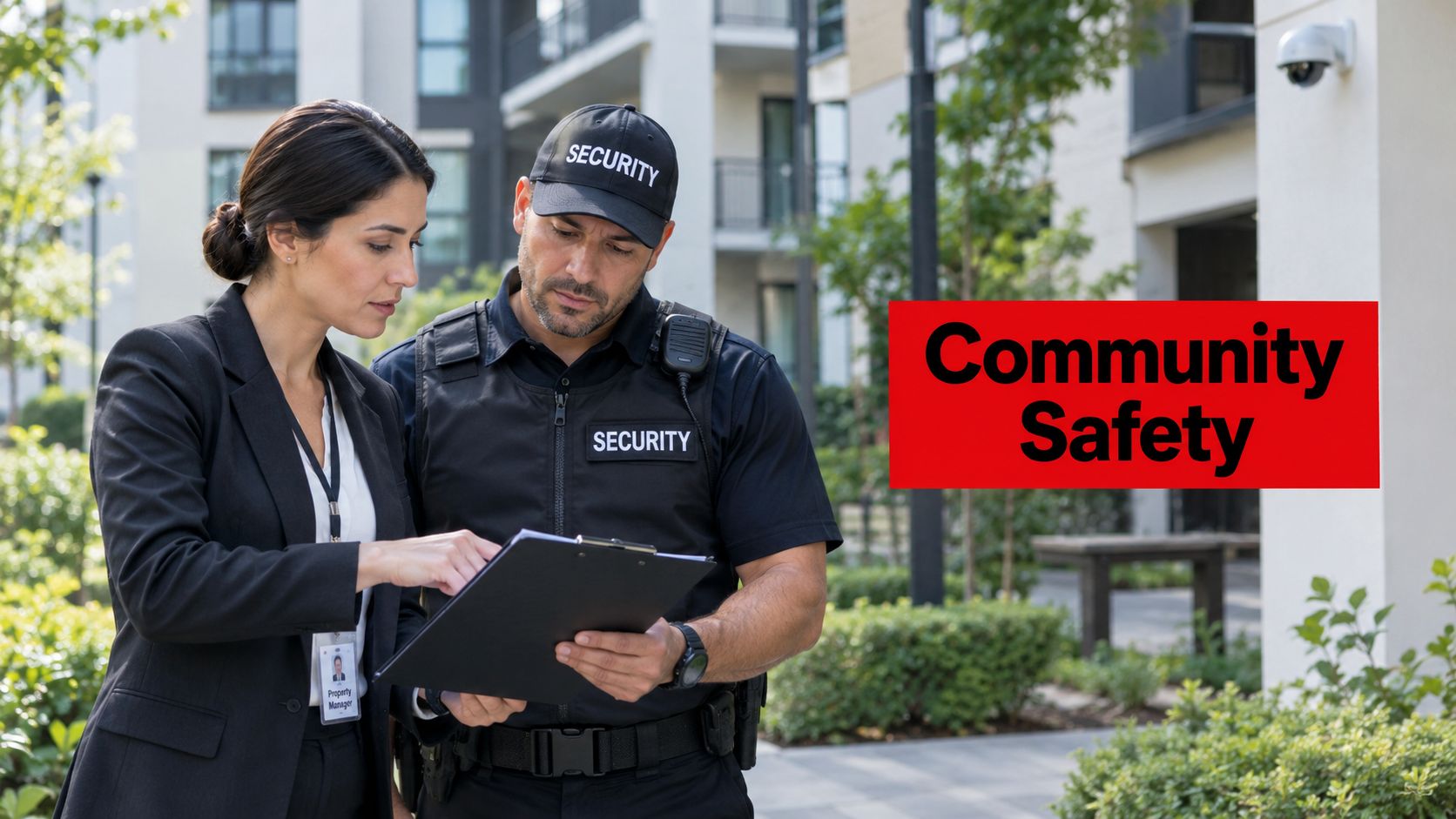
A commercial property manager might inherit a site with strong visible controls and still be carrying hidden risk. That happens all the time. A building can have solid perimeter fencing and still invite trouble through poor lighting near a service corridor. A residential community can have key fob access and still be exposed because residents hold doors open for delivery drivers and no one reviews visitor procedures.
That's why vulnerability assessment security matters. It looks at how the property functions, not just what equipment is installed.
What property managers usually miss
The first gap is often assuming physical security and digital security live in separate worlds. They don't. A camera system is both a physical control and a technology asset. An access control panel is a building device, an operational dependency, and a potential point of digital exposure. A visitor management process is procedural, but it also affects who can reach elevators, server closets, maintenance rooms, and tenant spaces.
A practical assessment asks questions like these:
- Perimeter strength: Can someone approach the property without being seen?
- Access discipline: Are side doors, roof hatches, and service entrances controlled the same way as the main lobby?
- Operational consistency: Do staff and vendors follow the same check-in rules every time?
- Technology hygiene: Are CCTV, keycard, intercom, and IoT systems configured and reviewed with the same care as doors and gates?
The scale of potential weaknesses is constant. In 2025, the National Vulnerability Database contained nearly 300,000 entries, which is a useful reminder that vulnerabilities don't disappear on their own and systematic assessment is how organizations keep pace with emerging risks, even when many of those entries are software-related, according to Astra's vulnerability statistics roundup.
The property view is broader than most people think
For a property manager, the job isn't to memorize technical acronyms. It's to understand where exposure can affect safety, tenant experience, operations, liability, and continuity. That broader view is why a serious review often combines site conditions, staffing patterns, access habits, and connected building systems in one picture.
A secure-looking property can still be an easy property to exploit if routines are predictable and nobody tests assumptions.
If you manage residential, retail, mixed-use, or commercial buildings, a structured look at property management security practices helps turn that broad concern into a workable plan.
Understanding Your Property's Three Security Layers
A resident reports a garage break-in, but the actual failure started earlier. The side gate had been sticking for weeks, the overnight patrol skipped that corner because of a delivery backlog, and the camera covering the lane had gone blurry after a settings change no one caught. That is how property risk usually works. Physical, operational, and digital weaknesses stack up until a routine incident becomes a liability problem.

A useful assessment separates these exposures into three layers, then checks how they interact. Property managers who review only doors and gates miss the procedures that defeat those controls. Teams that focus only on software miss the loading dock door that never latches.
Physical security layer
This layer covers the built environment. Perimeter lines, doors, gates, locks, fences, lighting, sightlines, parking areas, stairwells, landscaping, roof access, and loading zones all shape how easy the property is to approach, enter, hide within, and leave.
A physical weakness is any site condition that lowers effort for trespass, theft, vandalism, or assault. In practice, I look for the details people stop noticing after seeing them every day.
Common examples include:
- Lighting gaps: Walkways, rear alleys, dumpster areas, and parking corners that lose visibility after dark
- Blind approaches: Overgrown landscaping, decorative walls, or poorly placed signage that create cover near entrances
- Weak access points: Propped doors, worn hardware, damaged fencing, or unsecured utility rooms
- Poor natural surveillance: Camera placement that appears acceptable in the control view but misses the route a person would take
Many of these conditions are addressed by Crime Prevention Through Environmental Design principles, especially where layout and visibility make misconduct easier than it should be.
Operational security layer
This is the layer that decides whether the hardware does its job. It covers post orders, patrol patterns, visitor rules, key control, package handling, incident escalation, after-hours vendor access, delivery procedures, and exception approvals.
Properties with decent equipment still fail here all the time. A locked door loses value if vendors are waved through without verification. A camera system loses value if no one reviews recurring tailgating at the same service entrance. A written policy loses value if the night team uses a different standard than the day team.
A few routine failures create outsized risk:
| Operational issue | Why it matters |
|---|---|
| Predictable patrol timing | Repeat offenders learn when areas are unobserved |
| Inconsistent vendor sign-in | Unverified individuals move through the site with borrowed legitimacy |
| Shared credentials or poor key habits | Accountability disappears after an incident |
| Weak incident reporting | Small patterns stay isolated until they become a larger event |
One practical test helps here. If a procedure only works because a particular supervisor remembers every exception, the procedure is weak.
Technological security layer
This layer includes CCTV platforms, access control software, intercoms, alarm integrations, remote monitoring tools, smart locks, building automation devices, network-connected gates, and other IoT systems tied to the property.
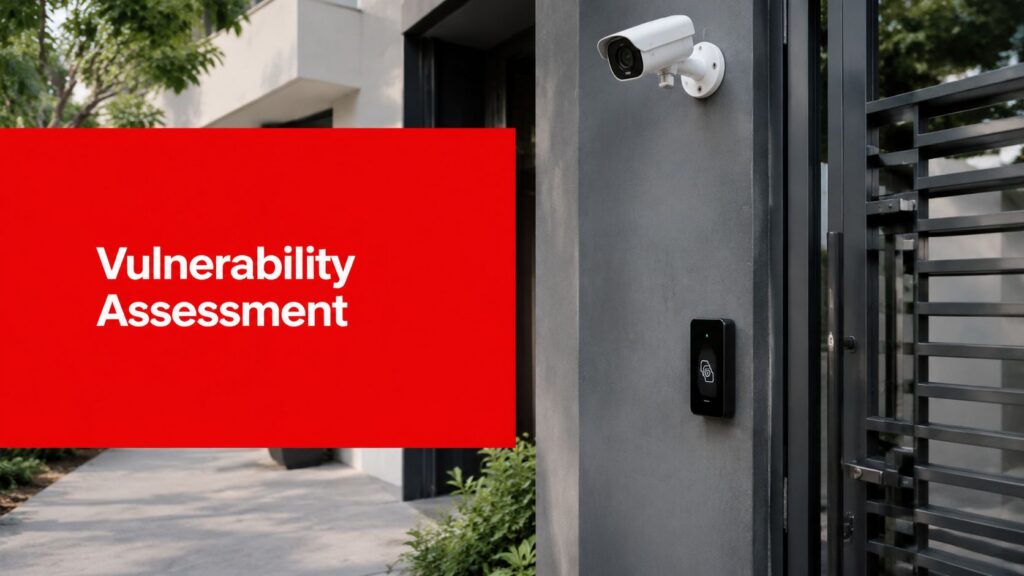
For property managers, physical security and cybersecurity converge. A camera is mounted on a wall, but it also has firmware, login permissions, remote access settings, storage rules, and network exposure. The same is true for gate controllers, smart intercoms, visitor systems, and cloud-managed access platforms. If those settings are neglected, the property can have working hardware and still carry avoidable exposure.
The right question is not whether a device is "IT" or "security." The right question is what business problem follows if it fails, is misconfigured, or is accessed by the wrong person. On one site, that may mean a gate that can be opened remotely. On another, it may mean missing footage during a slip-and-fall claim or a tenant dispute because retention settings were never checked.
That overlap is why outside perspective can help. Even Cleveland area home security insights reflect a practical truth that applies to larger properties too. Entry points, routines, and device upkeep have to be reviewed together, not as separate checklists.
The strongest property programs treat these three layers as one operating system. Site conditions, staff behavior, and connected devices all need to support the same goal: reduce opportunity, catch problems early, and make incidents easier to prevent, document, and resolve.
How a Professional Security Assessment Works
A solid assessment starts before anyone walks the property. At 6:30 a.m., the loading dock opens, a vendor props a side door for convenience, the night camera is still recording to a full drive, and the building engineer is using the same shared login the last contractor used. Nothing looks dramatic. That is usually how exposure shows up in real properties.

It starts with scope and business impact
Good assessors begin by learning how the site operates. A multifamily property, a medical office building, and a mixed-use asset can all have the same doors, cameras, and gates, but the consequences of failure are different. The work starts by identifying what must stay available, what must stay restricted, and what would create cost, liability, or tenant friction if it broke down.
That scoping step usually covers:
- Critical assets such as lobbies, leasing offices, amenity areas, roof access, parking structures, server rooms, package rooms, and management offices
- High-concern scenarios such as unauthorized entry, loitering, vandalism, process failure, or remote tampering with building systems
- Operational constraints like tenant hours, staffing coverage, vendor access, budget limits, and acceptable downtime
Practical reminders can come from outside the commercial sector too. Cleveland area home security insights still reinforce a point property managers deal with every day. Routine entry habits, neglected access points, and inconsistent upkeep create exposure long before a serious incident.
The site review checks physical, operational, and digital controls together
Once the scope is clear, the walkthrough tests whether policy matches reality. The assessor should move through the site the way a resident, delivery driver, contractor, trespasser, or first responder would. That means checking more than hardware.
During this phase, assessors usually review:
- Perimeter conditions and approach routes
- Door, gate, and lock function
- Lighting quality and nighttime visibility
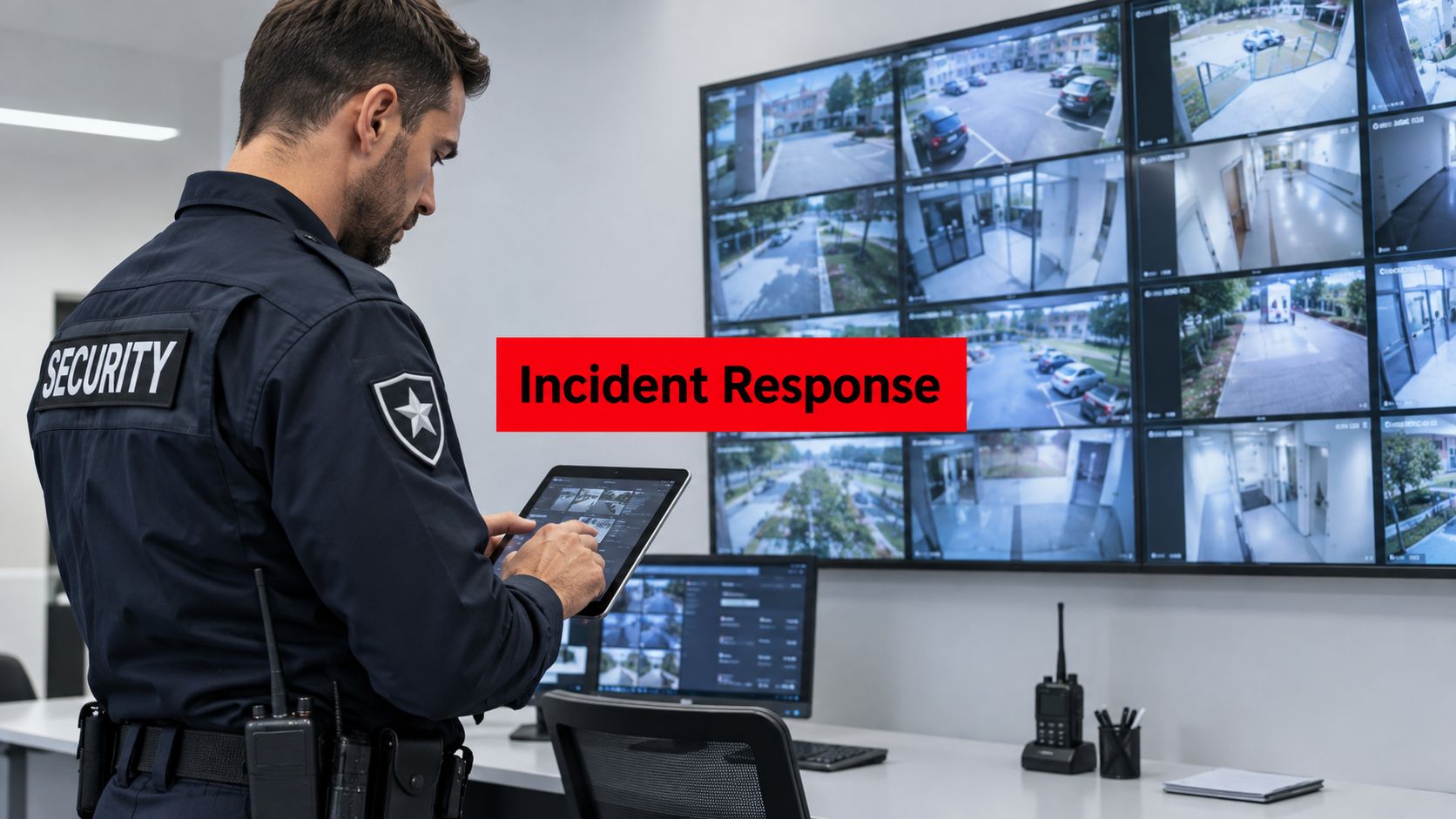
- CCTV placement, retention, and retrieval procedures
- Access control permissions and credential management
- Visitor, vendor, and contractor workflows
- Key control and offboarding practices
- Connected systems such as cameras, intercoms, gate controllers, and cloud-managed building devices
This is also the point where weak handoffs show up. A camera may be installed correctly but assigned a default password. A gate controller may be reliable mechanically but exposed through a poorly managed remote access setting. A visitor policy may read well on paper but fail during busy hours because front desk staff have to choose between speed and enforcement.
Analysis looks for failure paths, not isolated defects
Experienced assessors do not stop at a list of findings. They examine how one weakness makes another easier to exploit.
A blind spot near a service entrance matters more if deliveries are loosely supervised. Shared credentials matter more if former vendors still have remote access. Lost footage matters more if incident response depends on video evidence for claims, disputes, or police reports. In property management, risk usually comes from a chain of small misses rather than one dramatic flaw.
That is why a structured risk assessment service helps. It turns site observations, staff practices, and device exposure into a decision-ready picture of where your property is vulnerable and what needs attention first.
Scoring Risks and Prioritizing What Matters Most
A useful assessment ends with a ranked action plan, not a longer spreadsheet.

Property managers need to know what can wait, what cannot, and what creates risk across more than one layer of the property. That last part matters. A weak door, a sloppy vendor process, and an exposed camera login may look like separate issues during an inspection. In practice, they often create the same failure path.
Good prioritization ties physical, operational, and digital risk together
Risk scoring works best when it combines two questions. How likely is the issue to be used or exploited? What happens to the property if it is?
Severity labels are only a starting point. A technically serious software flaw on a low-value isolated device may rank below a modest issue on a camera system that gives a former vendor remote visibility into loading docks, entrances, and staff routines. The same is true on the physical side. A door defect at a little-used storage room does not carry the same weight as a service corridor entry that connects to management offices, IDF closets, or life safety controls.
The point is to rank weaknesses by business consequence, not by how dramatic they sound in a report. As noted earlier in the article, mature vulnerability management focuses on exploitability, asset value, and operational impact, not just raw severity scores.
A practical property example
Consider two findings on the same site.
One is a cracked upper-floor window with limited public access. The other is a service entrance with weak after-hours supervision, a camera that is recording but not actively reviewed, and a cloud-managed access panel that still has outdated user permissions.
The window still needs repair. The service entrance comes first because it crosses all three layers at once. Physical access is easier. Staff response is weaker. Digital systems tied to entry and video oversight may not catch misuse fast enough. That combination creates a wider business problem, including unauthorized entry, tenant complaints, claims exposure, and avoidable downtime for management.
A simple scoring screen for property managers
Use a decision screen that reflects how the property operates:
| Question | What to ask |
|---|---|
| Likelihood | How easy is it to reach, misuse, or exploit? |
| Exposure | Is it public-facing, after-hours accessible, remotely reachable, or loosely controlled? |
| Asset criticality | Does it affect life safety, access control, tenant data, surveillance coverage, or core building operations? |
| Operational dependence | Do staff, guards, vendors, or incident response procedures rely on this system working as expected? |
| Business impact | Would exploitation disrupt safety, service, reputation, leasing activity, claims handling, or occupancy? |
This method helps teams avoid a common mistake. They stop treating physical defects, procedure gaps, and IoT weaknesses as separate work queues. They start fixing the points where those issues overlap.
Facility leaders already apply this logic in other risk decisions. Wilcox Door Service Inc. risk insights reinforce a practical point. Doors, hardware, procedures, and the people using them should be scored together if you want the priority list to reflect real property risk.
Keeping Your Security Posture Current and Compliant
Properties change constantly. Tenants move in and out. Construction projects open temporary pathways. New vendors get access. Cameras are added, moved, or ignored. Building systems become more connected than anyone realized during the initial installation.
That's why vulnerability assessment security can't be treated as a one-time project. The security field has evolved from periodic, one-time scans to continuous vulnerability management. IBM notes that a vulnerability assessment is the first step in a broader cycle that includes prioritization, remediation, verification, and reporting, making it a recurring operational discipline rather than a compliance checkbox, as described in IBM's overview of vulnerability assessment.
What staying current looks like on a property
For property managers, this usually means formal reassessment at sensible intervals and targeted reassessment after meaningful change. New access hardware, gate upgrades, lobby remodeling, tenant improvement work, and changes in guard coverage all deserve another look.
It also means using day-to-day operations as a feedback loop, not just relying on annual reviews.
- Patrol observations: Officers should document damaged hardware, lighting outages, blocked exits, and suspicious patterns in real time
- Digital reporting: Time-stamped reports and photo documentation help managers spot recurring weak points
- SOC oversight: Remote review adds another layer when onsite staff are handling immediate issues
- Post-order updates: Procedures should change when the property changes
Compliance is useful, but it isn't the finish line. A property is secure when controls still work after people, layouts, and routines change.
The strongest programs treat every patrol, incident report, maintenance request, and access exception as a signal. That's how posture stays current instead of turning into a binder on a shelf.
Your Roadmap to a More Secure Property
It is 7:10 a.m. A tenant reports a garage door stuck open overnight. The guard's activity log shows the patrol happened. The camera covering the lane was recording, but no one reviewed the footage until morning. By then, the issue is no longer a single hardware problem. It is a physical gap, an operational miss, and a digital monitoring failure tied together.

A useful assessment report should help a property manager act on that kind of chain reaction. The goal is not to hand over a thick document that sits in email. The goal is to produce a work plan that connects site conditions, staff routines, and connected systems so the next decision is clear.
What a useful deliverable includes
Different stakeholders need different levels of detail. A property manager needs a short list of actions, timing, and cost implications. Facilities needs exact device locations, photos, and repair notes. Ownership needs to understand business impact, liability exposure, tenant experience, and what can be handled through operations before capital spending is approved.
The best deliverables usually include:
- Executive summary with the highest-priority risks, likely business impact, and immediate actions
- Finding register with locations, affected doors, gates, cameras, access devices, lighting, network-connected systems, and photo evidence
- Priority matrix that separates urgent corrections from planned improvements
- Operations changes for guard post orders, patrol routes, visitor handling, key control, and incident escalation
- Capital plan for upgrades that need budgeting, vendor coordination, or phased implementation
What matters is how well these pieces connect. If a camera blind spot is caused by poor placement, weak lighting, and no after-hours review process, those should appear as one coordinated issue, not three disconnected notes.
Why validation matters before spending money
Security teams waste money when they treat every alert, equipment fault, or software finding as equally urgent. Good assessments use automated tools to surface issues quickly, then rely on human review to confirm what is real, what is exploitable, and what directly affects the property.
That distinction matters in mixed physical and digital environments. A scanner may flag outdated firmware on a camera. Manual review may show that camera is on an isolated segment, pointed at a low-risk area, and due for replacement next quarter. On the other hand, a reader that looks fine on paper may turn out to be propped open every morning by deliveries because the operating procedure is weak.
Both need attention. They do not need the same response.
The report should help you defend priorities and sequence the work in a way the property can actually execute.
That is the practical roadmap. Fix the issues that create immediate exposure. Tighten procedures where a policy change solves the problem faster than new equipment. Schedule larger upgrades where they belong, with budget, ownership approval, and a realistic timeline. When physical controls, staff practices, and IoT or CCTV systems are reviewed together, property managers get a plan they can use, not just a list of defects.
Finding a Partner Invested in Your Success
Choosing a firm for vulnerability assessment security isn't just about who can walk a site with a checklist. You need a partner that understands how physical conditions, human behavior, and connected systems affect one another on a live property.
When evaluating providers, ask a few direct questions:
- How much experience do they have? Look for long-term operating experience across residential, retail, commercial, construction, and mixed-use environments.
- How do they assess risk? If the answer is only equipment-focused or only cyber-focused, that's too narrow for most modern properties.
- What does the reporting look like? You want clear findings, location-specific observations, and a practical order of operations.
- How hands-on is leadership? Security quality usually improves when account oversight is close and consistent.
- How is accountability documented? Real-time reporting, GPS-backed activity records, and strong supervision matter.
- What's the stability of their team? A provider with better officer retention usually delivers better site knowledge and more consistent execution.
Property managers in Los Angeles, San Jose, and across California usually don't need more noise. They need clarity, follow-through, and a provider that can translate risk into action without overcomplicating the job.
The right partner should leave you with fewer blind spots, better documentation, stronger routines, and a plan your team can execute.
If you want a practical review of your site's physical, operational, and technology-related weak points, Overton Security can help you build a clear, workable security roadmap for commercial properties, residential communities, retail sites, and multi-site portfolios throughout California.