That late-night trespassing alert. Another email from a tenant worried about safety. It's a cycle that can leave any property manager feeling stretched thin. True property management security isn't about reacting to problems; it's a comprehensive strategy that shifts your approach from reactive to proactive. It’s about blending well-trained people, smart processes, and the right technology to protect your assets, support tenant satisfaction, and build a stellar reputation for your property.
Why Proactive Security Is Your Best Asset
In a competitive market, a genuine sense of safety is one of the biggest reasons tenants choose to stay. Property managers who treat security as an afterthought are constantly putting out fires—vandalism, unauthorized access, and loitering—all of which can chip away at a property's value and lead to vacancies that impact the bottom line.
A proactive security plan turns this dynamic around. It transforms security from a potential liability into a tangible asset.

This isn't just about placing a guard at the front gate. It's about building a holistic system designed to identify and address risks before they become incidents. By combining a visible, professional presence with intelligent, behind-the-scenes oversight, you create an environment where tenants feel secure and potential issues are deterred. The goal is to build a foundation of safety that directly supports your property's operational and financial health.
Moving Beyond Reactive Responses
Many properties are stuck in a reactive cycle, only dealing with security after a break-in, after a car is damaged, or after a complaint is filed. This approach is not only stressful but also an inefficient way to manage a budget. The costs of repairs, insurance claims, and a damaged reputation almost always outweigh the investment in preventing the issue in the first place.
A proactive strategy, on the other hand, is built on a few key pillars:
- Visible Deterrence: The sight of professional security officers and clearly marked patrol vehicles sends a powerful message: this property is protected.
- Consistent Oversight: Regular patrols, detailed digital reporting, and the 24/7 support of a Security Operations Center (SOC) ensure that nothing falls through the cracks.
- Community Engagement: A skilled security officer is more than a uniform; they become a trusted, familiar presence who builds positive relationships with tenants.
A well-designed security program doesn't just respond to problems—it actively prevents them. It becomes an integral part of the property's brand, signaling to current and prospective tenants that their well-being is a top priority.
For property managers juggling residential communities, busy retail centers, or commercial buildings, this shift is a game-changer. Partnering with a proactive security firm—one with decades of experience like Overton Security—provides peace of mind. It allows you to step back from fighting fires and focus on managing your portfolio, confident that your assets are protected by a reliable, accountable system.
Conducting a Practical Security Risk Assessment
Before you can build an effective security plan, you must first understand your property’s unique vulnerabilities. A practical security risk assessment isn't about ticking boxes on a generic checklist; it's about identifying the specific, tangible threats you face—from loitering at a retail center to unauthorized access at a residential community.
The goal is to see your property through the eyes of a security expert.
This process pinpoints exactly where things could go wrong—theft, vandalism, or trespassing. It’s not about creating fear; it's about making smart, data-driven decisions. Once you’ve identified these risks, you can have a productive conversation with a security partner to build a plan that addresses your actual needs, not a cookie-cutter solution.
Getting this foundational step right separates effective property management security from wasted spend.
Identifying Your Unique Vulnerabilities
Every property has its own risk profile. A high-rise office building in downtown Los Angeles faces different challenges than a garden-style apartment complex in Fresno. The first step is to walk your property with a critical eye, looking for potential weak points.
Start by focusing on these key areas:
- Access Points: Where can people enter and exit? This includes main entrances, service doors, parking garages, and even perimeter fences.
- Visibility and Lighting: Are there poorly lit corners, dense landscaping, or hidden alcoves that could conceal someone? Inadequate lighting is an open invitation for unwanted activity.
- High-Value Areas: Consider where your most valuable assets are located. This could be a mailroom with packages, a maintenance shed with tools, or a leasing office with sensitive data.
- Common Areas: Lobbies, pools, laundry rooms, and clubhouses are hubs of activity and potential friction if not properly monitored.
A great risk assessment answers one simple question: "If I wanted to cause trouble here, how would I do it?" This mindset shift is a powerful tool for uncovering security gaps you might otherwise overlook.
Assessing Impact and Likelihood
Once you have a list of potential risks, the next step is to weigh their impact on your operations, liability, and tenant satisfaction. For each vulnerability, ask two questions: how likely is it to happen, and how significant would the consequences be?
For example, occasional loitering might be a low-impact nuisance. However, recurring car break-ins in a parking garage represent a high-impact problem that requires an immediate solution.
This analysis helps prioritize your security resources. Instead of trying to fix everything at once, you can focus on the threats that pose the greatest risk to your property and residents. Understanding these dynamics is a core part of securing a building effectively.
A truly comprehensive assessment today also has to look at digital vulnerabilities. To make sure you’re not missing anything, a structured framework like a cyber security risk assessment template can be a huge help in evaluating these digital threats alongside the physical ones.
For residential managers, this assessment has to factor in what tenants now expect, because the game has changed. In the United States, an incredible 94 million households now use security systems, with cameras being the number one feature. This trend highlights a stark market reality: tenants expect modern security options. Managers who don't provide them are going to find themselves falling behind the competition. Digging into the latest home security industry statistics can give you a much clearer picture of what today's residents truly value, ensuring your strategy protects both your property and your bottom line.
Matching Security Services to Your Property
Choosing the right security isn't about picking from a catalog; it’s about solving real-world problems. An effective property management security plan is one that directly addresses the unique challenges of your site and the expectations of your tenants. A sprawling apartment community and a Class A office tower have completely different risk profiles, making a one-size-fits-all approach both ineffective and wasteful.
The key is to start by thinking about outcomes. Are you trying to deter after-hours loitering? Improve the tenant experience? Prevent theft from a loading dock? Reduce liability in a parking garage? Each goal points toward a different security solution.
This decision tree gives you a bird's-eye view of the fundamental process every property manager should follow—mapping specific risks to a tailored security plan.

As you can see, a successful program doesn't start with hiring a guard. It starts with a clear-eyed process of identifying and assessing where you're vulnerable before any service is ever deployed.
Residential Community Security
For apartment complexes, HOAs, and gated communities, the mission is typically deterrence and resident peace of mind. Common pain points include loitering, unauthorized use of amenities, and vehicle break-ins.
- Mobile Vehicle Patrols: This is often the most cost-effective solution for covering large areas. A clearly marked security vehicle making random but consistent rounds is a powerful deterrent to opportunistic crime.
- Onsite Guards (at key times): For communities with a history of incidents or high-traffic areas like pools and clubhouses, stationing an unarmed guard during peak evening or weekend hours can prevent disturbances before they start.
A visible security presence does more than deter; it reassures residents that their safety is a priority, which is a major factor in tenant retention.
Commercial and Office Building Security
Class A office buildings and corporate campuses demand a more sophisticated, polished approach. Here, security must blend seamlessly with professionalism and hospitality.
The goal is to protect assets and control access while enhancing the professional atmosphere of the building. Security becomes a key part of the tenant experience, not an obstacle to it.
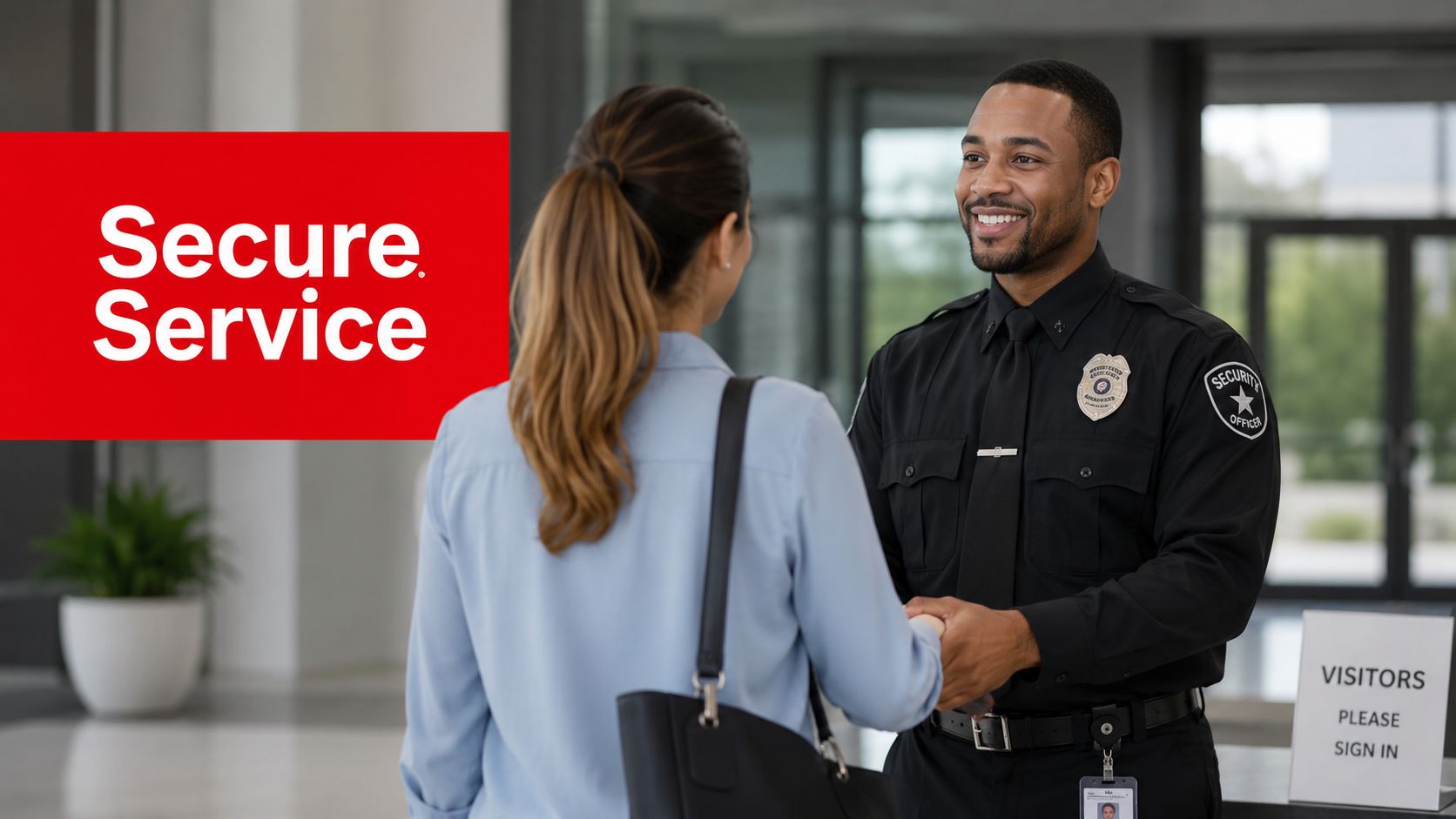
A highly-trained concierge security officer in your lobby does more than check IDs. They greet tenants, assist visitors, and act as a welcoming but authoritative first point of contact. They quickly become a trusted extension of your property management team, directly contributing to your building's premium brand.
Retail Center Security
Open-air shopping centers and retail plazas frequently deal with issues like loitering, panhandling, and parking lot safety. The goal is to create a safe, inviting atmosphere where customers feel comfortable and employees feel secure.
- Uniformed Guards (On Foot or Bike): A friendly but firm security presence can proactively address policy violations and deter unwanted activity. Foot or bike patrols allow for more personal engagement and faster response within a busy shopping environment.
- Mobile Patrols (After Hours): Once stores close, mobile patrols take over to secure the perimeter, check for unsecured doors, and deter potential vandals or burglars.
This dual approach ensures the property is protected around the clock, supporting both daytime commerce and overnight asset protection.
Construction Site Security
Construction sites are magnets for theft. With valuable materials and expensive equipment often left exposed, the security objective is simple: prevent loss.
A dedicated onsite security guard is almost always the most effective solution, especially overnight and on weekends when sites are most vulnerable. They control access points, log visitors, and provide an immediate response to any intrusion. This vigilance safeguards the assets critical to keeping a project on schedule and on budget.
Matching Security Solutions to Property Needs
This table helps connect your property type, primary security concern, and the service designed to solve it.
| Property Type | Primary Security Goal | Recommended Overton Service | Key Benefit |
|---|---|---|---|
| Residential Community | Deter loitering, create peace of mind | Mobile Vehicle Patrol | Cost-effective visual deterrence over a large area. |
| Commercial Office Building | Control access, enhance tenant experience | Concierge Security Officer | Professional, welcoming presence that blends security with hospitality. |
| Retail Shopping Center | Ensure a safe, inviting customer environment | Uniformed Foot/Bike & Mobile Patrols | Proactive engagement during business hours, asset protection after hours. |
| Construction Site | Prevent theft of materials & equipment | Dedicated Onsite Guard | 24/7 access control and immediate response to intrusions. |
| Parking Garage/Lot | Reduce liability, deter vehicle break-ins | Mobile Vehicle Patrol & Camera Monitoring | Visible presence and technological oversight to reduce crime. |
| Healthcare Facility | Manage access, de-escalate incidents | Onsite Guards with Specialized Training | Trained professionals to handle sensitive situations with care and authority. |
Ultimately, the best security plan is one that feels like it was designed just for your property—because it was. By starting with your unique goals, you can build a program that delivers real value and tangible results.
Integrating Technology for Smarter Security
In modern property management, technology should be a force multiplier, not a complication. The right tools bring clarity, accountability, and an effectiveness that a security officer alone cannot match. The blend of smart technology and well-trained professionals is what separates a token security program from a truly effective one.
This isn't about replacing people with gadgets; it's about empowering them. When our officers are supported by intelligent systems, they become more efficient, their actions are verifiable, and their ability to protect your property increases dramatically. This fusion of human expertise and tech oversight is the foundation of a modern, accountable security partnership.

The Security Operations Center: The Nerve Center
Think of a 24/7 Security Operations Center (SOC) as the brain of your security program. It’s a central command hub, staffed by specialists who provide constant oversight and immediate support for every officer in the field. This goes beyond a simple dispatch service—it’s a layer of real-time accountability ensuring your property is always being monitored.
Our SOC handles several critical functions:
- Officer Support and Wellness Checks: The SOC team actively monitors each officer's status to ensure they are safe and responsive, which is especially critical during overnight shifts.
- Incident Escalation: When an officer encounters a situation requiring backup or emergency services, the SOC coordinates the response instantly, with no time wasted.
- Real-time Oversight: With access to GPS tracking and live alerts, the SOC can verify patrol activity and direct officers to investigate any anomalies the moment they occur.
This constant support system means you have more than just a guard on-site; you have an entire team looking out for your property.
GPS-Enabled Systems for Unmatched Transparency
How can you be certain your patrols are being performed correctly? A Guard Tour Management System (GTMS) provides the answer with verifiable data. We place scannable checkpoints at critical areas around your property, such as pool gates, laundry rooms, or secluded corners of a parking garage.
As an officer conducts their patrol, they scan each checkpoint. The system logs the exact time and location, creating a digital record of the entire tour. This data flows directly into Daily Activity Reports (DARs), complete with photos and incident notes, accessible anytime through a client portal.
With a GTMS, you never have to wonder if your security investment is paying off. You get concrete, time-stamped proof of every patrol, every inspection, and every incident. It's the ultimate tool for accountability and peace of mind.
For managers overseeing multiple properties in places like San Jose or Sacramento, this level of detail is invaluable for maintaining high standards across a portfolio.
Extending Your Reach with Cameras and Remote Monitoring
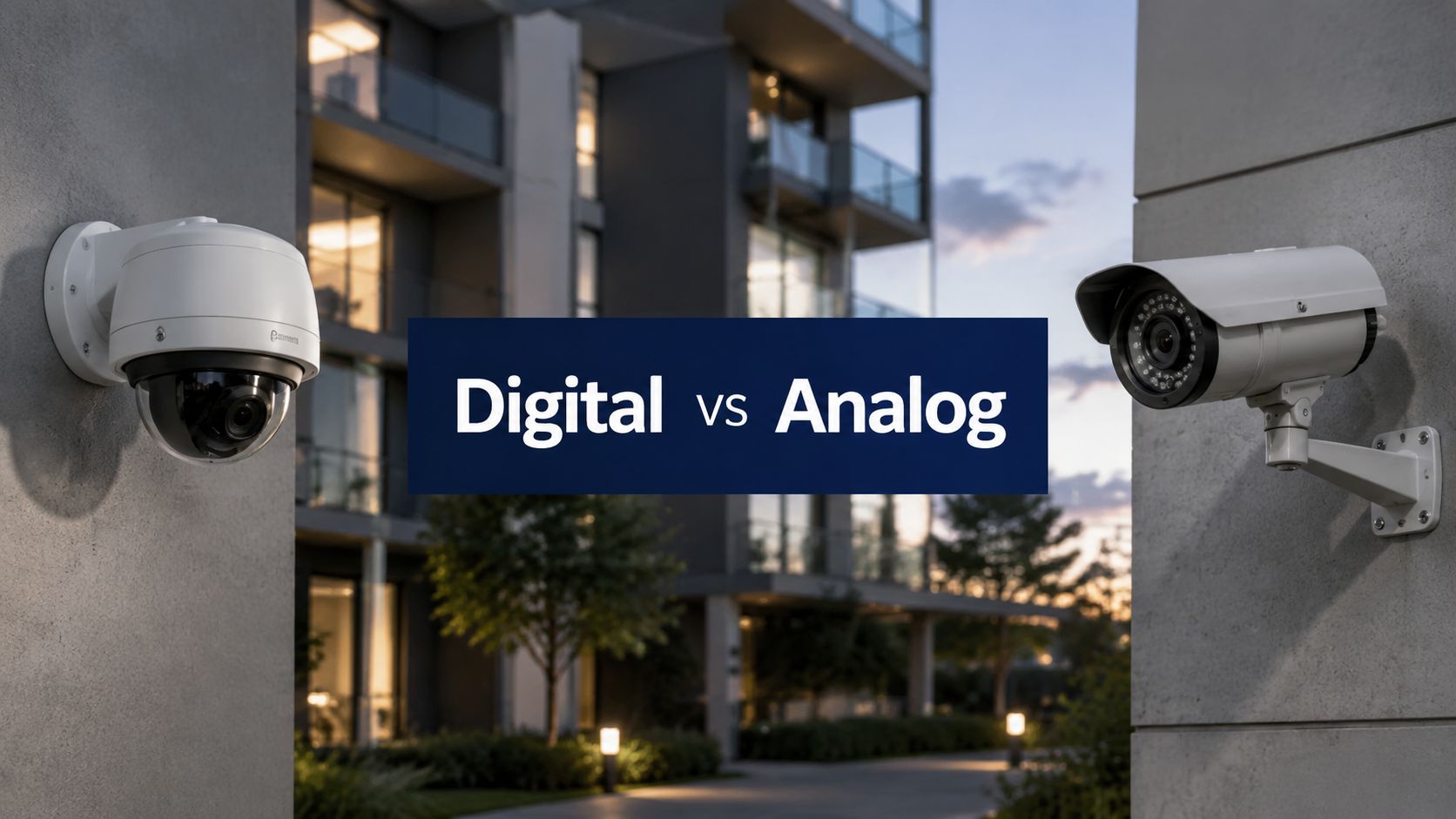
Integrated cameras and remote monitoring serve as your eyes on the ground when an officer can't be everywhere at once. When paired with a professional security service, they create a powerful, proactive defense. To see how all the pieces fit together, you can explore a complete overview of Overton's approach to the integration of security systems.
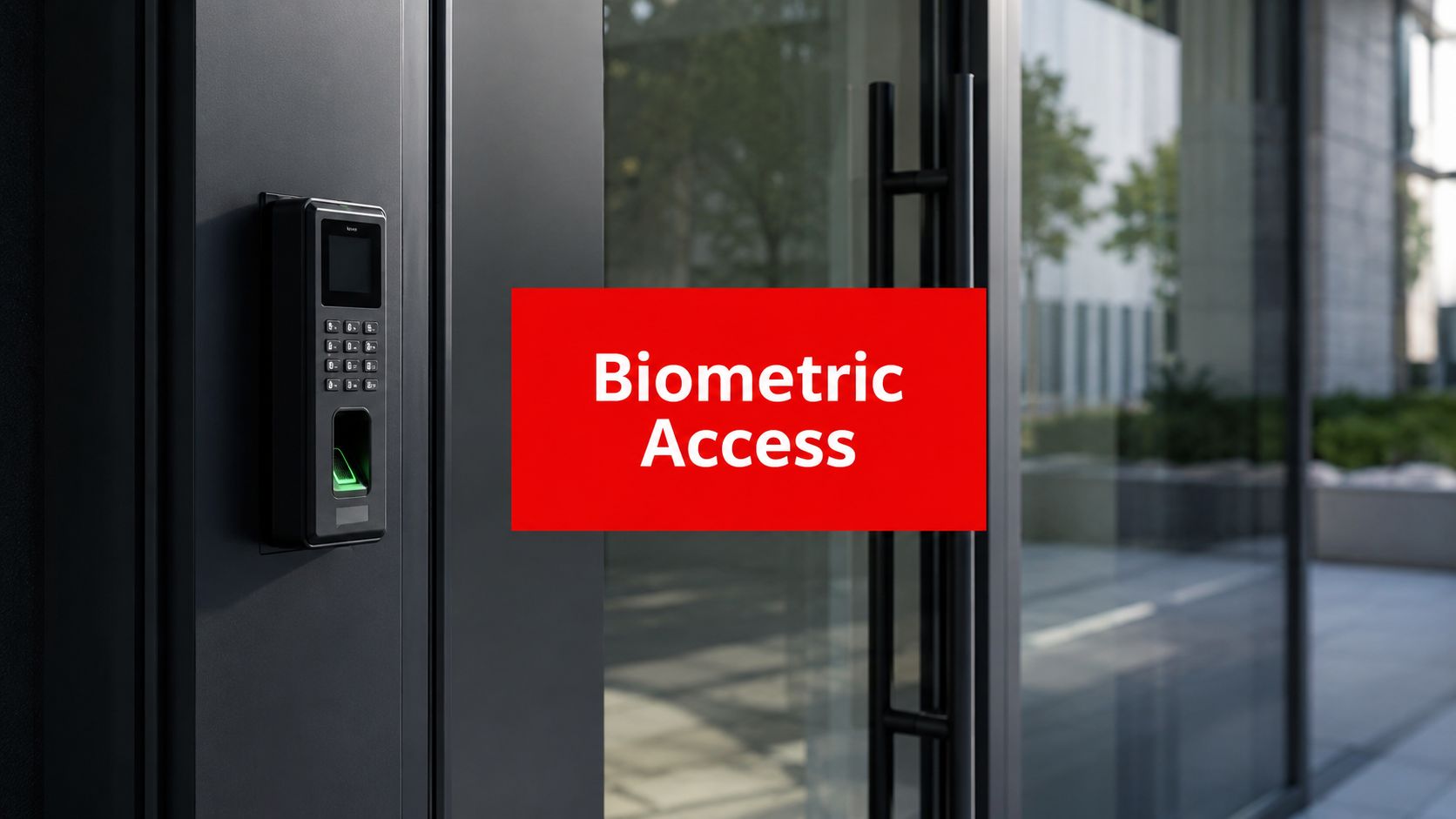
For even smarter security, property managers should look into the various access control system types available to manage and monitor who enters the property. These systems are a cornerstone of modern security, with 84.6% of real estate professionals citing access control and video surveillance as their most-used technologies. As the property management industry keeps growing, using these tools is becoming a key differentiator.
How to Choose the Right Security Partner
Selecting a security partner is one of the most important decisions a property manager makes. This choice goes far beyond comparing hourly rates. The right partner acts as an extension of your management team, proactively protecting your assets and enhancing your property's reputation.
The wrong one, however, can become a constant source of headaches, liability risks, and tenant complaints.
The key is finding a partner invested in service and accountability, not just filling a shift. The real difference is found when you look past the price tag and dig into the operational details that define quality and reliability. A rock-bottom bid often signals high officer turnover, minimal training, and hands-off management—a combination that will always cost you more in the long run.
Look Beyond the Price Tag
The most common mistake property managers make is choosing a security provider based solely on the lowest hourly rate. While budget is always a factor, a suspiciously low price in the security world should be a major red flag. It almost always means a company is cutting corners on the things that directly impact service quality.
Instead of focusing on the hourly rate, prioritize these indicators:
- Officer Training and Retention: Ask about their training programs. A quality partner will have robust, ongoing training. More importantly, ask about their officer retention rate. The security industry is known for high turnover; a company that invests in its people is far more likely to provide consistent, professional officers who know your property.
- Real Management Involvement: This is a huge differentiator. Ask about their manager-to-client ratio. At Overton Security, we maintain a low ratio, ensuring your property gets the hands-on attention it deserves from senior leaders, not just a revolving door of supervisors.
- Proven, Relevant Experience: Have they worked with properties like yours? A vendor with deep experience securing residential communities in Los Angeles will understand the environment far better than a generalist. Always ask for—and check—references from similar properties.
Choosing a security partner is like hiring a key employee for your team. You wouldn't hire the cheapest applicant if they lacked qualifications. The same principle applies here: focus on value, expertise, and long-term reliability.
Ask the Right Questions During the Vetting Process
When meeting with potential security companies, a few well-placed questions can reveal everything about their operational integrity and commitment to service.
Use this checklist to guide your conversations:
- "How do you ensure officer accountability and verify patrols?" A quality provider will use a GPS-enabled Guard Tour Management System (GTMS) that delivers real-time, verifiable reports. You should have access to a client portal with time-stamped data, photos, and incident notes.
- "What kind of support system do your officers have in the field?" Look for a company with a dedicated 24/7 Security Operations Center (SOC). This demonstrates they provide real-time oversight and immediate backup for their officers, which translates to better performance and safety on your site.
- "Can you walk me through your officer screening and hiring process?" A reputable firm will have a rigorous, multi-step process including comprehensive background checks, drug screening, and interviews designed to assess professionalism and judgment.
- "How will you customize the post orders for our property?" A true partner will conduct a thorough site assessment and work with you to build detailed, customized post orders that address your property's unique vulnerabilities and security goals.
Making the right choice comes down to finding a security provider who understands your objectives and has the infrastructure to deliver on their promises. By asking the right questions, you can identify a private security company that will be a genuine asset to your property management strategy.
Measuring the Success of Your Security Program
Signing a security contract isn’t the finish line; it’s the start of a partnership. The value of your property management security program shouldn't be a mystery. True success is something you can see and measure through clear data, consistent communication, and the confidence that your security partner is as invested in protecting your property as you are.

A great security partnership is built on transparent communication, proactive management, and measurable results. It’s a shift from simply "having a guard" to creating a system of accountability you can verify every day.
Establishing Clear Key Performance Indicators
How do you measure effectiveness? It starts with setting clear Key Performance Indicators (KPIs). These are the vital signs of your security plan—specific, measurable metrics that show whether your strategy is working. A quality provider will help you define these from the start.
Some of the most effective KPIs include:
- Patrol Completion Rates: Tracked through a GPS-enabled system, this number should be at or near 100%. It’s concrete proof that every designated checkpoint is being inspected on schedule.
- Incident Response Times: When an alert is triggered, how quickly does an officer respond? This metric is critical, as a fast response can be the difference between a minor issue and a major loss.
- Report Submission Accuracy: Daily Activity Reports (DARs) must be timely, clear, and detailed, often supported by photos.
These metrics turn your security program from a subjective feeling into an objective, data-driven operation. You’re no longer guessing—you know.
The Value of High-Quality Reporting
The Daily Activity Report (DAR) is the cornerstone of a transparent security partnership. It's more than a log of events; it's your daily window into the health and safety of your property, empowering you to make smarter management decisions.
A detailed DAR isn’t just about documenting problems. It’s a proactive tool that identifies potential risks—like a broken fence lock or a malfunctioning light—before they can be exploited. This is how a security partner adds tangible value.
A modern, robust report should be digital and accessible 24/7 through a client portal, including time-stamped photos. This level of detail offers irrefutable proof of service and gives you a clear, ongoing record of everything happening on your property, from routine patrols in Sacramento to incident responses in San Francisco.
This focus on technology and verifiable results is becoming non-negotiable. In fact, the global home security market is projected to skyrocket to USD 87.56 billion by 2032, a trend driven by rising safety concerns and the demand for smart, integrated technologies. This explosive growth sends a clear message: tenants and owners now expect sophisticated, verifiable security. To dive deeper into these trends, you can read the full research on the expanding home security market.
Your Property Security Questions, Answered
Making an important decision about your property's security program naturally comes with questions. With our 26 years of experience, we've heard them all. Here are straightforward answers to what property managers ask us most.
How Do You Figure Out the Cost of a Professional Security Service?
This is a common question, and the honest answer is: it depends. We don't offer "one-size-fits-all" pricing because that's not how effective security works.
The final cost comes down to the type of service you need (such as a dedicated guard versus mobile patrol), the hours of coverage required, and your property's specific risks. We always start with a detailed site assessment to understand your needs. From there, we build a custom proposal focused on delivering real ROI, not just quoting the lowest rate.
What's the Real Difference Between an Onsite Guard and a Mobile Patrol?
Think of it this way: an onsite guard is your dedicated, constant presence, ideal for high-traffic buildings that need immediate response and careful access control. They become part of the daily fabric of your property, providing a strong visual deterrent.
A mobile patrol, on the other hand, is a highly visible officer in a marked vehicle who visits your property at scheduled or random intervals. Patrols are an incredibly cost-effective way to establish a security presence, conduct critical checks, and cover large areas, especially across multiple sites.
How Do You Make Sure Your Security Officers Are Actually Reliable?
Our reliability comes from one thing: we invest in our people. We believe the key to dependable service is creating a place where professionals want to build a career. That’s why we focus on officer retention by offering competitive pay, real benefits, and clear paths for advancement.
Our philosophy is simple: when officers are supported, trained, and respected, they deliver the dependable service our clients trust. We are committed to retaining professionals, not just filling shifts.
Every officer undergoes rigorous screening, in-depth training, and ongoing evaluation. With our hands-on management team and 24/7 operations center backing them up, you can be confident they are professional, accountable, and prepared.
Can I Actually Verify That Patrols Are Being Done Correctly?
Yes, and you should demand nothing less. Absolute transparency is a cornerstone of our operations. We use a GPS-enabled Guard Tour Management System (GTMS) that gives you a real-time window into our officers' activities.
You'll see them scan checkpoints and file digital reports from the field, complete with photos and detailed notes. All this information is available to you 24/7 through a secure client portal. It's verifiable proof that your property is getting the exact service you're paying for.
When it comes to the safety of your property and the peace of mind of your tenants, there's no room for guesswork. With 26 years of boots-on-the-ground experience, Overton Security delivers the reliable, professional, and transparent security solutions you need.
Partner with an expert in property management security today.