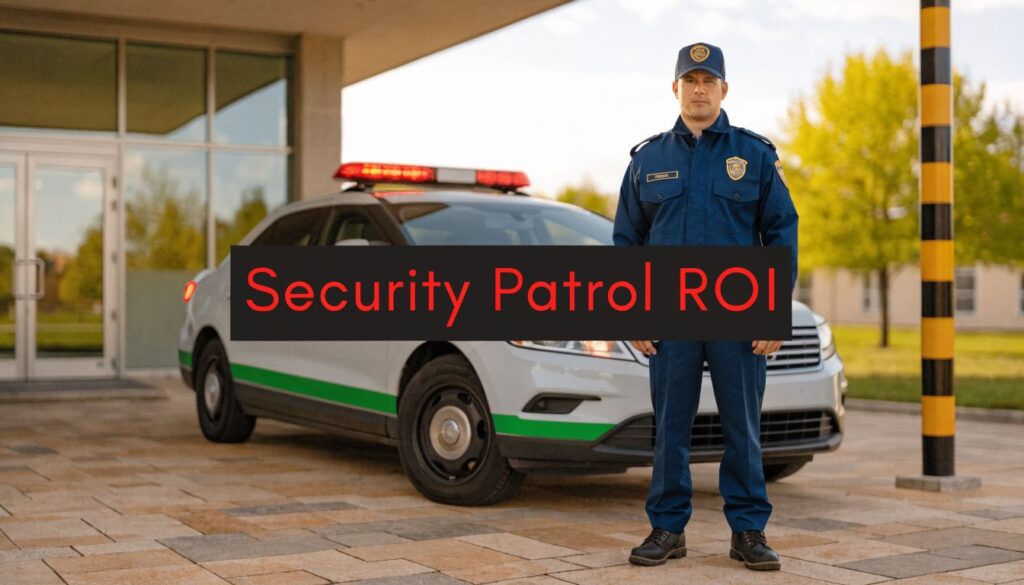
A lot of HOA boards and property managers arrive at the same point. Residents are sending emails about package theft, unknown cars parked overnight, gates left open, noise issues after hours, and a general sense that no one is really watching the property once the office closes.
That doesn’t always mean a community needs a full-time guard at a front desk. It does mean the property needs a plan. A well-run residential security patrol program gives management a practical way to improve order, document activity, respond faster, and show residents that the community is being actively managed.
The difference is important. Security that only looks good on paper rarely helps with resident satisfaction, board reporting, liability defense, or insurance conversations. Security that’s built around patrol design, documentation, and follow-through can.
Is Your Community Facing These Security Challenges
For many communities, the first signs of a security problem aren’t dramatic incidents. They’re recurring operational headaches.
A pool gate keeps getting propped open. Delivery theft becomes a weekly complaint. Residents start asking why strangers are cutting through the property at night. The board wants better control, but also wants to avoid turning the property into something that feels hostile or over-policed.

What managers are dealing with right now
These issues usually show up in clusters:
- Access problems: Side gates, garage doors, and pedestrian entries that residents assume are secure but are frequently bypassed.
- Resident quality-of-life complaints: Late-night disturbances, unauthorized parking, loitering, and misuse of common areas.
- Theft exposure: Delivered packages, bicycles, storage rooms, and vehicles in open or poorly monitored parking areas.
- Management strain: Staff members end up handling security-adjacent problems they weren’t hired or trained to manage.
The broader context explains why this has become harder to ignore. Less than 30% of the 127.59 million households in the United States have a security system, nearly 48% of violent crimes occur at a residence, and 119 million package thefts were reported in 2023, according to home security statistics compiled by SLH Systems.
That combination changes the conversation. Security is no longer just a reaction to a serious incident. For many communities, it’s part of routine property operations.
Practical rule: The earlier a community addresses low-level disorder, the easier it is to avoid larger resident complaints and more expensive response measures later.
Why patrols fit the residential environment
Residential communities need security that’s visible without being intrusive. That’s where patrol services tend to work well.
A patrol officer can check gates, walk amenities, inspect garages, note lighting failures, respond to resident concerns, and document what happened during the shift. That’s different from relying only on cameras or asking onsite staff to “keep an eye out.”
For boards evaluating neighborhood risk more broadly, local context matters too. Buyers and residents often want a realistic view of area conditions before they commit to a property. Resources like these tips for safer home buying decisions can help frame that conversation in a practical way.
A strong patrol program supports more than crime prevention. It supports resident confidence, community standards, and the perception that management is paying attention.
Understanding Residential Security Patrol Models
Not every community needs the same service model. A small HOA with a few entry points has different needs than a large apartment complex with garages, amenities, multiple buildings, and regular vendor traffic.
The mistake is choosing a patrol format based only on price or habit. The better approach is to match the service model to the property layout, the complaint pattern, and the level of coverage residents expect.
The main patrol options
Most residential programs fall into a few categories.
Vehicle patrols work well when a property is spread out, has multiple streets or buildings, or needs broad visible coverage. They’re useful for checking perimeter conditions, parking areas, gates, and exterior common areas.
Foot patrols are better when details matter. Hallways, stairwells, mailrooms, clubhouses, parking garages, and pool areas are easier to assess on foot because the officer can inspect conditions closely and interact with residents when needed.
Dedicated patrols assign coverage specifically to one property or portfolio. This makes sense when the site has frequent activity, complex post orders, or a board that wants consistent visibility.
Shared patrols are a practical fit for communities that want regular checks without paying for full-time exclusive coverage. In that model, an officer services multiple properties on a route and visits according to the agreed schedule or response plan.
Concierge security sits closer to an onsite officer role than a traditional patrol role. It’s often used in high-rises, luxury communities, or properties where access control and resident service are part of the assignment.
For a closer look at how patrol coverage differs from stationed officers, this guide on onsite security officers and security patrol services is useful when you’re comparing staffing models.
Comparison of Residential Patrol Models
| Service Model | Best For | Visibility Level | Relative Cost |
|---|---|---|---|
| Vehicle patrol | Larger communities, perimeter checks, parking areas, exterior deterrence | High | Lower to moderate |
| Foot patrol | Garages, amenities, interior common areas, detailed inspections | Moderate to high | Moderate |
| Dedicated patrol | Communities needing consistent, property-specific coverage | High | Higher |
| Shared patrol | Smaller HOAs or budget-conscious sites needing recurring checks | Moderate | Lower |
| Concierge security | High-rises, luxury residential, controlled access environments | High | Higher |
How to decide what actually fits
A useful way to think about patrol design is to look at where problems occur.
If issues happen mostly at the edge of the property, such as trespassing, gate checks, parking enforcement, or exterior vandalism, a mobile patrol model usually makes sense. If problems happen inside the property, such as unsecured amenity rooms, hallway disturbances, or garage loitering, foot coverage becomes more important.
Some communities need both.
A patrol model should match how people actually move through the property, not how the site map looks in a board packet.
Here are a few practical matches:
- Townhome or garden-style communities: Shared or dedicated vehicle patrols often provide the right balance of visibility and cost control.
- Mid-rise and high-rise properties: Foot patrols and concierge-style coverage usually matter more because access control and common-area presence are central.
- Large mixed residential sites: A hybrid of vehicle and foot patrols often works best, especially where garages, retail edges, and multiple access points overlap.
- Portfolio oversight: Managers with several nearby communities sometimes benefit from route-based service with customized post orders at each stop.
What doesn’t work well
Patrol programs underperform when the service model and the property’s needs don’t line up.
A vehicle-only approach won’t solve recurring problems inside stairwells or clubhouses. A foot-only approach may miss broad perimeter visibility on a large suburban property. A shared patrol can disappoint if the board expects the responsiveness of a dedicated officer but hasn’t scoped or funded that level of service.
The strongest decisions usually come from a simple question: what does the property need an officer to do during a typical shift?
Key Benefits of a Professional Patrol Program
A professional patrol program does more than put a uniform on the property. Value comes from deterrence, documentation, response, and consistency.
That combination matters because residential communities rarely judge security by one incident alone. Residents notice patterns. They notice whether gates stay secured, whether complaints get handled, whether officers know the property, and whether management can show what was done after an issue was reported.

Deterrence is real, but visibility matters
Visible security changes behavior. According to Security Base Group’s review of burglary and deterrence data, homes without security systems are victimized at a rate of 1 in 3, compared with 1 in 250 for homes with systems. The same source notes that 9 out of 10 burglars said they would not target a home if they encountered an alarm or home security system, and residential burglaries produced more than $3.4 billion in victim property losses annually.
For a board or property manager, the lesson isn’t just “buy more equipment.” It’s that visible signs of active protection influence offender decision-making. Patrol vehicles, officer presence, inspections, and active response all contribute to that effect.
The benefits boards actually care about
A good program supports several goals at once:
- Resident confidence: People feel the difference between a property that’s monitored and one that’s left to chance.
- Property condition: Patrols catch open doors, broken lighting, damaged fencing, and misuse of common areas before those issues spread.
- Rule enforcement support: Officers can document parking violations, amenity misuse, after-hours access, and nuisance behavior in a consistent way.
- Liability reduction: When officers identify hazards and management receives documented reports, the property is in a better position to show reasonable oversight.
- Operational relief: Leasing and management staff can stay focused on their jobs instead of acting as informal after-hours security.
The less obvious return
Resident satisfaction isn’t always discussed in security proposals, but it should be.
A community that feels orderly tends to generate fewer escalated complaints. Boards spend less time reacting. Management teams have better documentation when they need to address repeat offenders, vendor issues, or questions about whether a complaint was taken seriously.
Field reality: Patrols are most valuable when officers are expected to notice, document, and communicate. Presence alone is only part of the job.
That’s why a residential security patrol should be designed as an operating function, not a symbolic one. The officer isn’t there just to be seen. The officer is there to help management maintain standards, reduce avoidable problems, and keep small issues from becoming expensive ones.
How to Implement a Successful Patrol Program
Most patrol programs fail in one of two ways. They’re too vague, or they’re too predictable.
A successful rollout starts with site conditions, then turns those observations into post orders, routing rules, documentation requirements, and accountability standards. If any of those pieces are missing, the property pays for activity without getting much control.

Start with a real site assessment
Before selecting hours or writing a contract, walk the property like someone looking for opportunities to exploit it.
Check the obvious areas first: pedestrian gates, vehicle entrances, pool access, mail areas, garages, alleys, stairwells, and perimeter fencing. Then look at the smaller operational details that often drive resident complaints, such as poor lighting, landscaping that blocks sightlines, delivery drop points, and blind corners near amenities.
During that review, identify three categories:
- High-risk locations that need routine inspection.
- Recurring nuisance areas where rule enforcement is likely.
- Critical response points where officers need immediate direction if something happens.
Define what success looks like
“Provide security” is not a useful instruction. A patrol program should have clear objectives tied to property operations.
For one community, success may mean reducing unauthorized pool use and documenting gate failures. For another, it may mean improving parking control, checking vacant units, and making sure garage doors aren’t left open overnight.
Good objectives are specific enough that management can verify them later. That usually includes:
- Patrol scope: Which areas must be checked every shift.
- Expected actions: What the officer does when they find a problem.
- Communication rules: Who gets called, when, and for what type of issue.
- Reporting standards: What must appear in Daily Activity Reports and incident reports.
Build post orders that officers can actually use
Post orders should read like an operating guide, not a sales summary. Officers need direct instructions.
Include property maps, access procedures, resident interaction expectations, escalation contacts, after-hours vendor protocols, and rules for amenities, parking, and suspicious activity. If the community has special concerns, such as package rooms, short-term rental misuse, or repeated garage tailgating, those should be written into the assignment.
What shouldn’t happen is just as important. Don’t rely on generic instructions like “patrol property and report anything unusual.” That language creates inconsistency because every officer interprets it differently.
Eliminate routine patterns
Predictable patrols create openings. That’s one of the biggest reasons professionally managed programs use route variability instead of fixed loops.
According to ASAP Security’s discussion of residential guard protocols, effective patrols use randomized routes verified by NFC/RFID checkpoints and GPS tracking so potential intruders can’t forecast timing or positioning. That matters because criminals often watch for patterns before acting.
Don’t let a patrol become a habit that an outsider can study. If an officer passes the same gate at the same minute every night, the property has created a schedule for the wrong audience.
Train to the property, not just the job title
A residential officer needs more than general guard training. The officer should understand the community’s traffic flow, resident expectations, after-hours procedures, and escalation thresholds.
That includes soft skills. In residential settings, officers often deal with frustrated residents, guest access confusion, parking disputes, and quality-of-life complaints. The best officers stay calm, document clearly, and avoid making management’s job harder the next morning.
A solid launch usually includes a site walkthrough, review of post orders, checkpoint verification, sample report expectations, and direct supervisor follow-up during the first phase of service.
Calculating the ROI of Your Security Investment
Boards rarely struggle to understand why security matters. They struggle to prove what they’re getting for the spend.
That’s where many patrol programs fall short. They talk about deterrence in broad terms but don’t give management a structure for measuring value. A better approach is to evaluate residential security patrol services the same way you’d evaluate any other operational investment: define inputs, track outcomes, and document secondary financial effects.
Look beyond hourly cost
The hourly rate matters, but it doesn’t tell the full story.
A lower-cost patrol that misses incidents, generates weak reports, or turns over officers constantly can create more work for management and more exposure for the property. A higher-quality program may cost more upfront but produce cleaner documentation, better resident handling, and stronger follow-through on repeat issues.
If you want a practical breakdown of what drives security pricing, this article on how security guard services get to a bill rate is a useful starting point.
Measure the right things
ROI in residential security usually shows up across several categories at once.
Track changes in:
- Incident volume: Compare the number and type of incidents before and after program implementation.
- Repeat problem areas: Note whether the same garage, amenity, gate, or parking zone continues generating complaints.
- Maintenance and repair exposure: Vandalism, forced-entry damage, and misuse of shared spaces often show up in maintenance budgets before anyone labels them “security costs.”
- Management time: Count how often office staff and after-hours contacts are pulled into issues that a patrol program could handle or document.
- Resident sentiment: Complaint tone, renewal conversations, and board meeting pressure often improve when residents believe issues are being taken seriously.
Insurance and liability are part of the equation
This is one of the most overlooked parts of the discussion. According to San Diego Security Guards’ discussion of patrol ROI and insurance impact, many insurance providers offer premium discounts of 5-15% for documented security measures, but property managers often don’t have the reporting needed to support those conversations.
That makes documentation central to ROI.
If a patrol provider can show time-stamped activity, checkpoint completion, incident trends, and response history, the property has more than a general claim that “we take security seriously.” It has evidence. That can help during underwriting reviews, claim discussions, and liability questions after an incident.
Security ROI isn’t only about what gets prevented. It’s also about what the property can prove it did.
A practical board-level framework
For many HOAs and management teams, the easiest way to review value is quarterly.
Use a simple report that answers these questions:
- What problems did patrols document most often?
- Which recurring issues improved, stayed flat, or worsened?
- What actions did management take because patrols surfaced them?
- Did the property identify any insurance, claim, or liability advantages from documented activity?
When boards can see operational outcomes instead of just invoices, security stops looking like a vague expense line and starts looking like managed risk control.
Why Overton's Approach Delivers Consistent Results
Many communities already have cameras, gate systems, alarms, and access controls. The gap is usually not hardware. The gap is response.
A camera can record a person testing doors in a garage. It won’t question them, redirect them, notify management with context, or check whether the garage gate was left malfunctioning after the incident. That requires a system where people and technology work together.

Where many patrol programs break down
In practice, residential security often gets split into silos.
The camera vendor handles cameras. The guard company handles guards. Management handles resident complaints. By the time those pieces are stitched together, no one has a complete operating picture.
That’s why integrated oversight matters. As noted in Third Watch Protection’s discussion of residential security protocols, security outcomes improve when trained personnel monitor feeds, interpret suspicious behavior, and respond in real time instead of relying on passive recording alone.
What consistent execution looks like
A workable residential program usually includes these elements:
- Field presence: Officers patrol the property, engage with conditions on the ground, and respond to issues as they develop.
- Live oversight: A Security Operations Center can support officers, receive alerts, help coordinate escalation, and maintain continuity across shifts.
- Guard tour accountability: NFC checkpoints, GPS tracking, digital Daily Activity Reports, and photo uploads create a service record that management can review.
- Hands-on supervision: Account managers who aren’t overloaded can visit sites, adjust post orders, and correct problems before they become recurring failures.
That operating model closes the gap between “an alert happened” and “someone handled it correctly.”
Why officer stability matters
Technology helps. It does not replace officer judgment.
Residential properties run better when the same trained professionals learn the site, understand resident expectations, and recognize what’s normal versus what deserves attention. High turnover usually produces the opposite result: generic interactions, missed nuances, and weak report quality.
Overton Security uses a model that combines field officers, SOC support, and a mobile GTMS with GPS-enabled patrol documentation. In practical terms, that means management can review where patrols occurred, what officers observed, how incidents were documented, and whether instructions were followed. The company also operates with a low manager-to-client ratio and has 26 years of experience, which supports more hands-on account oversight and continuity.
Good technology should make officer performance easier to verify, not harder to understand.
For HOA boards and property managers, that consistency is what turns patrol service into an operational asset. You’re not just paying for rounds. You’re paying for visibility, documentation, escalation support, and a provider that can keep the program aligned with the property as conditions change.
Your Checklist for Choosing the Right Security Partner
If you’re evaluating providers, ask questions that reveal how the program will run after the contract is signed. Sales language is easy. Service discipline is harder.
A solid vendor conversation should leave you with a clear picture of supervision, reporting, officer preparation, and how problems are handled in real time. If those answers stay vague, assume the service will be vague too.
Questions that matter during procurement
Use this list when interviewing any security company:
- Who supervises the account: Ask how often supervisors visit the site, how accessible the account manager is, and how many clients that manager oversees.
- How patrols are documented: Ask whether patrols are verified with GPS, NFC tags, time-stamped reports, photos, and incident logs you can review.
- How officers are trained for residential work: Ask about onboarding for access control, resident interaction, parking enforcement, amenity checks, and after-hours escalation.
- How the company handles turnover: Ask what happens if an officer leaves, who fills in, and how replacement officers are briefed on your post orders.
- How routes are built: Ask whether patrols are randomized or fixed, and how the company avoids predictable schedules.
- How technology and people connect: Ask who monitors alerts, who responds, and how false alarms or suspicious activity are escalated.
- What reports you receive: Ask for sample Daily Activity Reports and incident reports, not just a promise that reporting exists.
- What insurance and compliance coverage they carry: Confirm licensing, insurance, and any client-facing documentation process.
Ask for proof, not reassurance
A capable provider should be able to show you what service verification looks like.
Request examples of:
- Daily activity logs
- Incident reports
- Checkpoint reports
- Supervisor review process
- Client communication flow
For a practical starting point, this security patrol checklist template can help structure your review.
The final filter
The best partner is usually not the one with the flashiest pitch. It’s the one that can explain, in plain terms, how officers are supported, how service is verified, and how the program will adapt to your property’s real conditions.
If a provider can’t tell you how they handle a gate failure at midnight, a resident complaint in a garage, or a suspicious person seen on camera after hours, keep looking.
If you’re reviewing options for a residential security patrol program in California, Overton Security can help you evaluate the right service model, reporting standards, and operating structure for your community.