
Is your team truly prepared to handle a tense situation before it escalates? A workplace violence prevention plan is more than just a formal, written strategy. Think of it as a living document, a playbook that guides your entire organization on how to spot risks, train your team, and respond effectively. It’s what moves your people from a reactive state of surprise to a prepared state of safety.
Why a Prevention Plan Is Non-Negotiable Today
Staring at a blank safety manual can feel overwhelming. But it only takes one unresolved conflict spiraling out of control to understand why a formal plan is essential. This isn't about creating a binder that collects dust or simply checking a compliance box. It's an active strategy to protect your most valuable asset—your people—while ensuring business continuity and safeguarding your reputation.
This isn’t about creating a culture of fear; it’s about building confidence and reassurance. When you establish clear protocols, you empower your team with the knowledge to recognize warning signs and respond appropriately. It fundamentally shifts the workplace culture from one of uncertainty to one of shared responsibility, where safety becomes a natural part of daily operations.
The Growing Need for Proactive Measures
The fact is that incidents of workplace violence are a growing concern. A recent survey revealed that 30% of employees had witnessed violence on the job in the last five years, a noticeable jump from 25% the previous year.
Even more concerning, 15% said they had been directly targeted, up from 12% a year prior. These numbers paint a clear picture: a proactive approach is no longer optional, regardless of your industry. The full report on these findings drives home the urgency of the current landscape.
This data confirms that no workplace is immune. The potential for conflict exists everywhere, from a high-rise in Los Angeles to a construction site in San Jose. A well-crafted plan sends a powerful, reassuring message that you are committed to the well-being of your employees.
A proactive safety plan is one of the strongest signals you can send that you value your team's well-being. It transforms safety from a policy into a core company value, building trust and loyalty from the ground up.
More Than Just a Document
So, what does a truly effective workplace violence prevention plan look like? It's a comprehensive framework built on several key pillars, each working together to create layers of protection.
- Management Commitment and Employee Participation: Leadership has to champion the plan. But it's just as crucial to involve employees in its creation to make sure it addresses the real-world concerns they face every day.
- Worksite Analysis and Hazard Identification: This means taking an honest look at your physical environment, operational procedures, and any potential human-factor risks. No stone should be left unturned.
- Hazard Prevention and Control: This is where the plan is put into action. Think practical measures like better access control, strategically placed surveillance, and clear work practice guidelines that reduce risk.
- Safety and Health Training: Every team member needs regular, role-specific training. They must understand their part in maintaining a safe environment.
- Recordkeeping and Program Evaluation: You have to track what's happening. Meticulous documentation of incidents and regular plan reviews are the only way to adapt and improve your strategy.
Before you start building your plan, it’s a good idea to get familiar with foundational legal and practical requirements, like those detailed in resources like the Australian Workplace Safety Standards. While specific regulations can vary by location, the core principles of assessing and mitigating risk are universal.
The table below breaks down these core components for a quick overview.
Core Components of a Modern Prevention Plan
| Component | Objective | Key Actions |
|---|---|---|
| Leadership Buy-In | Establish a top-down safety culture. | Publicly endorse the plan; allocate resources. |
| Risk Assessment | Identify potential threats and vulnerabilities. | Conduct site walk-throughs; review incident history. |
| Control Measures | Implement physical and procedural safeguards. | Install access controls; create de-escalation protocols. |
| Employee Training | Empower staff to recognize and respond. | Hold regular drills; offer de-escalation training. |
| Incident Response | Define clear steps for handling incidents. | Create an emergency communication plan; establish roles. |
| Evaluation & Review | Continuously improve the plan's effectiveness. | Analyze incident reports; gather employee feedback. |
Ultimately, a modern prevention plan is an ongoing cycle of assessment, action, and improvement, not a one-and-done task.
At Overton Security, our 26 years of experience have shown us that true safety is built on a foundation of proactive planning and consistent execution, not just reaction. Our hands-on leadership and low manager-to-client ratio ensure every detail of your plan is sound.
Conducting a Practical Workplace Risk Assessment
Before you can build a strong defense, you have to know where your vulnerabilities are. A workplace violence prevention plan is only as good as the risk assessment it's built on. This isn't just a paperwork drill; it's about walking your property and looking at your unique environment to find potential threats before they turn into real incidents.
For a property manager of a multi-tenant office building, this means assessing who can access the lobby after hours, monitoring the parking garage, and understanding how tenant disputes are handled. If you're a construction superintendent, it's about evaluating who comes and goes, managing friction between subcontractor crews, and securing materials that might attract theft.
The goal is simple: see your workplace through a security lens. It turns a large, intimidating task into a smart, strategic tool for preparedness.
Breaking Down Your Environment
The best way to tackle a thorough assessment is to break your analysis into three distinct areas. It's like a complete health check-up for your property, ensuring you don't miss the subtle risks hiding in plain sight. This methodical approach helps you protect your team, your assets, and your business's continuity.
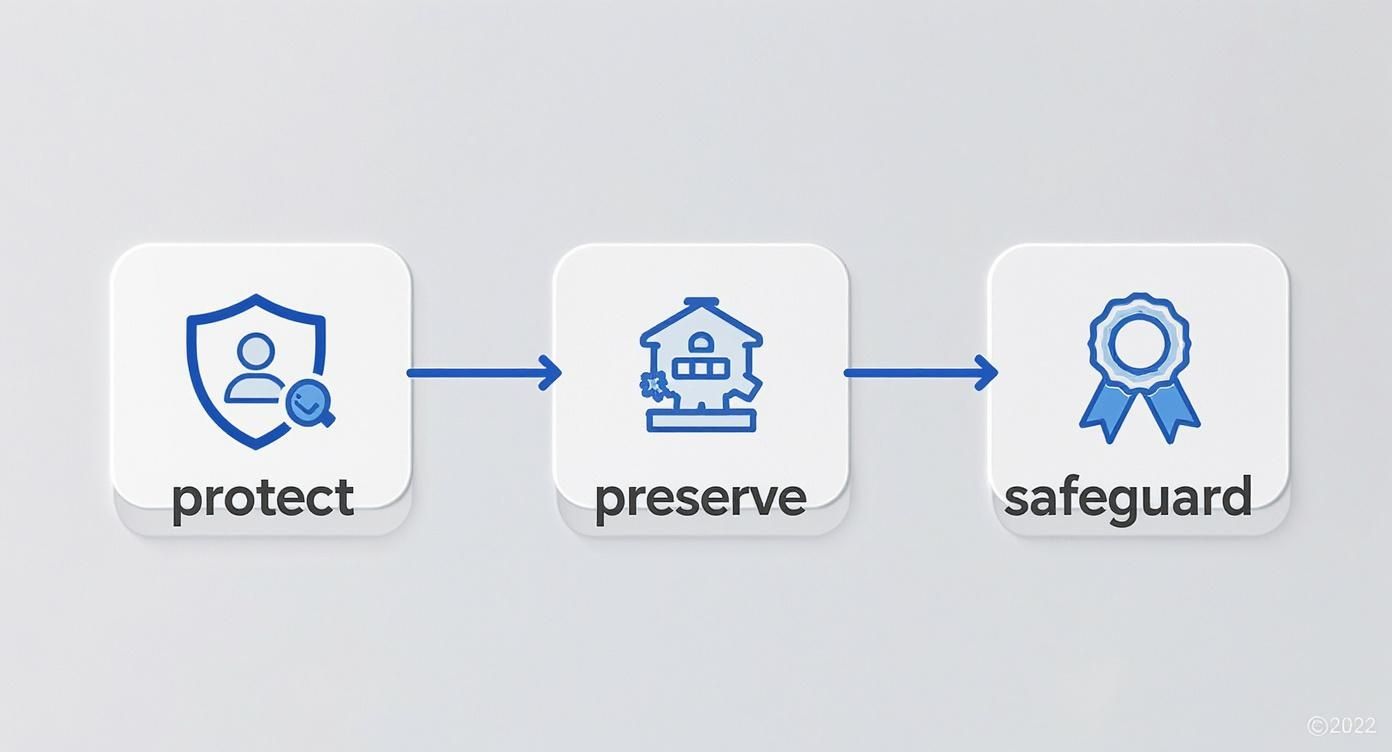
As the flow shows, a solid plan is about more than just rules—it's about protecting people, preserving property, and safeguarding your reputation.
Assessing the Physical Environment
Your property itself is your first line of defense. Start by walking the site at different times, day and night. See how the space is actually used and where weaknesses emerge when fewer people are around. You need to ask some honest questions about the building's layout and structure.
- Access Control: Are all your entry and exit points truly secure? Don't just check the front doors. Look at loading docks, service entrances, and ground-floor windows. Our guide on securing a building is a great resource for making sure your perimeter is solid.
- Lighting and Visibility: Are there dark corners in the parking lot, stairwells, or walkways? Good lighting is one of the most powerful and affordable deterrents available.
- Surveillance: Do your cameras cover key areas? Walk the property and look for blind spots. Ensure cameras are positioned to give you clear, usable footage if needed.
- Barriers and Landscaping: Could overgrown bushes or a poorly placed dumpster provide a hiding spot? Sometimes the smallest changes make the biggest impact.
A well-lit, visible, and controlled environment is a natural deterrent to opportunistic threats. It sends a clear message that you’re paying attention, which is often enough to make a potential aggressor look elsewhere.
With over 26 years of experience protecting properties across California, we've seen firsthand how a professional walk-through can uncover risks you'd easily miss. That's the kind of hands-on attention we provide at Overton Security.
Evaluating Operational Risks
Next, shift your focus from the physical building to your daily routines and procedures. Operational risks are all about how people interact with your space and with each other. A retail manager might zero in on cash-handling safety, while a facilities director at a hospital would prioritize protocols for dealing with distressed patients or visitors.
The reality is, some jobs carry higher risks than others. According to the U.S. Bureau of Labor Statistics, violent acts led to 740 fatal occupational injuries in a recent year alone. Industries like Retail Trade (123 deaths) and Leisure & Hospitality (100 deaths) were hit especially hard, proving why an industry-specific assessment is so critical.
Analyzing Human Factors
Finally, you have to look at the human element—often the most complex piece of the puzzle. This means examining your company culture, communication methods, and employee support systems. A successful prevention plan must be built on a foundation of respect and psychological safety.
Think about these key areas:
- Reporting Mechanisms: Do your employees feel genuinely safe reporting a concern, or do they fear retaliation? You need multiple, confidential ways for them to speak up.
- Conflict Resolution: Is there a clear, trusted process for handling disputes between employees or with frustrated customers?
- Training Gaps: Has your team been taught how to spot the warning signs of escalating conflict? Do they know how to de-escalate a tense situation?
This part of the assessment requires real honesty. It's not about having policies tucked away in a binder; it's about whether your team feels supported and empowered when things get tough. By addressing these three areas—physical, operational, and human—your risk assessment becomes a powerful roadmap for building a plan that actually works.
Developing Policies That People Actually Use
A workplace violence prevention plan is only effective if people trust it, understand it, and use it. A dense, 50-page legal document collecting dust isn't going to help anyone in a crisis. The real goal is to create clear guidelines that become the backbone of your safety culture.
It all starts with clarity. Vague corporate-speak creates confusion, and hesitation is the last thing you want when seconds count. Your policies need to be written in plain language that defines exactly what's expected and what's out of bounds. This isn't about creating red tape; it's about building a safe, predictable environment for everyone.
The Non-Negotiable Foundations
Every solid workplace violence prevention policy is built on a few core principles. Think of these as the pillars holding everything else up—they send an unmistakable message that you take safety seriously.
First, you need a firm, unambiguous zero-tolerance statement. This sets the tone from the start. It makes it clear that no form of violence, intimidation, or harassment will be brushed aside, leaving no room for misinterpretation.
Next, get specific about what's prohibited. Don't leave it to guesswork. Your policy should list behaviors that won't be tolerated, covering the full spectrum of potential issues.
- Verbal Threats: This includes not just direct threats but also intimidating language or comments that create a hostile environment.
- Physical Aggression: This covers all unwanted physical contact, from pushing or shoving to more serious assaults.
- Harassment and Intimidation: Think stalking, aggressive gestures, bullying, and other behaviors designed to frighten or control someone.
- Property Damage: Intentionally destroying company or personal property is an act of aggression and needs to be included.
When you define these things clearly, you empower everyone—from front-line staff to managers—to spot and report problems consistently.
Creating Safe and Accessible Reporting Channels
One of the biggest reasons potential threats go unreported is fear of retaliation. If your team doesn't feel completely safe coming forward, you'll be in the dark until it's too late. That's why an ironclad non-retaliation clause is non-negotiable. It must state that no one will face negative consequences for reporting a concern in good faith.
But a promise isn't enough. You have to back it up with multiple, easy-to-access reporting channels. Not everyone is comfortable talking to their direct supervisor, especially if that supervisor is part of the problem.
Providing multiple avenues for reporting—like a confidential hotline, a designated HR representative, or an anonymous online form—shows a genuine commitment to employee safety. It acknowledges the complexities of workplace dynamics and removes barriers to communication.
This approach is so critical that new regulations are starting to mandate it. For instance, recent drafts of California's workplace safety rules require employers to allow employees to report violence to someone other than their direct supervisor. This signals that a single reporting path is no longer sufficient.
From Policy to Practice
A well-written policy doesn't exist in a vacuum; it has to work hand-in-hand with your physical security measures. This synergy between policy and technology creates a powerful, layered defense.
Just look at the difference between these two policy statements:
- Vague Policy: "Employees should report any concerning behavior."
- Effective Policy: "Employees must immediately report any observed threats, acts of aggression, or intimidating behavior to their manager, the HR department via the confidential hotline at [phone number], or through the anonymous online portal. All reports will be investigated promptly, and no retaliation will be tolerated."
See the difference? The second example is actionable. It tells people exactly what to do, who to call, and what to expect. That level of detail is what turns a policy from a suggestion into a practical, everyday safety tool. When you focus on clarity, accessibility, and a rock-solid commitment to non-retaliation, you build procedures that people can actually rely on.
Implementing Training That Builds Real Confidence
A polished workplace violence prevention plan is a fantastic starting point, but its true value is only unlocked when your team knows how to use it. Effective training is what turns policies on paper into an active, confident defense in the real world. This is about much more than an annual slideshow; it’s about building genuine competence that your people can rely on when feeling stressed or threatened.
The goal is to empower everyone on your team, from the front desk to the executive suite, with the skills to recognize and respond to potential threats. When people feel prepared, they're far more likely to stay calm and make smart decisions. This preparation is the bridge between having a plan and having a true safety culture.
Moving Beyond Compliance Checklists
Many organizations treat safety training as just another compliance requirement. This leads to generic programs that miss the specific risks an employee might face. While it's important to research effective compliance training strategies, true preparedness means going beyond the bare minimum.
Think about the different roles within your company. The training needs for a public-facing retail employee are vastly different from those of a facilities director or an HOA board member.
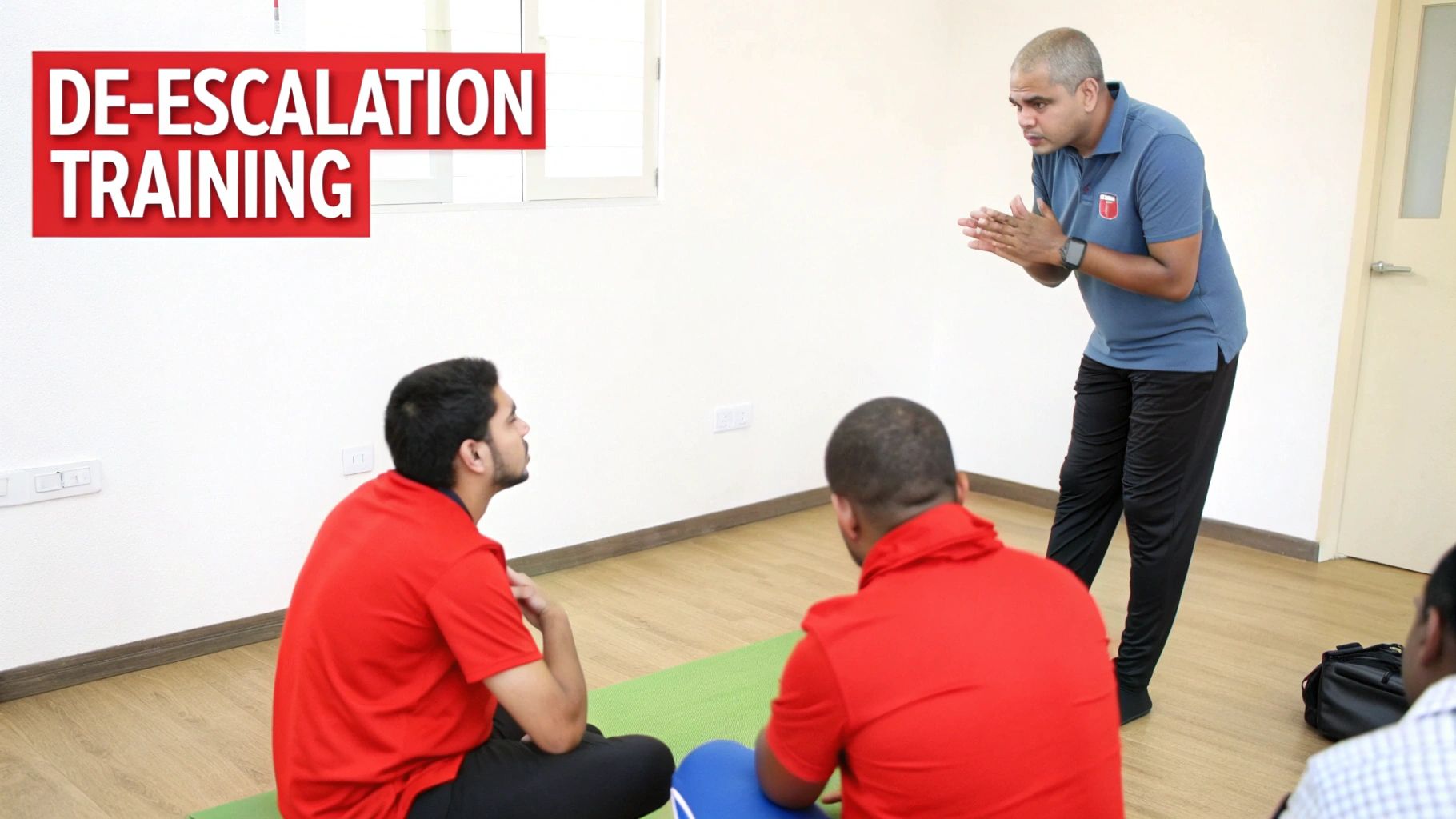
- Frontline Staff: These employees need practical skills in de-escalation. They should be trained to spot verbal and non-verbal cues of a situation getting heated and use techniques to calm agitated people.
- Managers and Supervisors: Their training must focus on recognizing warning signs among their teams, knowing reporting protocols inside and out, and understanding how to support an employee after an incident.
- Response Team Members: This group, which might include security staff and key managers, requires more intensive training. This means running drills for various emergencies, from active threats to medical situations.
This role-specific approach makes the training relevant and provides actionable skills that build real confidence.
The Power of Scenario-Based Learning
The most impactful training is interactive and rooted in realism. Scenario-based training, where employees practice their responses to simulated events, is far more effective than passively watching a video. It helps build the "muscle memory" needed to act decisively under pressure.
For instance, a property manager could run a drill where their team practices responding to an unauthorized person trying to tailgate into the building. A construction superintendent could simulate a heated dispute between subcontractors, letting foremen practice their de-escalation and reporting skills in a controlled setting.
Effective training closes the gap between knowing what to do and having the confidence to actually do it. Scenario-based drills are invaluable because they allow your team to make mistakes and learn in a safe, controlled environment.
This hands-on approach is where a professional security partner like Overton Security adds immense value. Our commitment to supporting and retaining professional officers means they are more than a visual deterrent; they are a calm, authoritative presence trained to manage conflict. This partnership elevates your training from a theoretical exercise to a practical, confidence-building experience.
To see the difference, it helps to compare the standard "check-the-box" approach with the more robust, scenario-based model we champion.
Comparing Training Approaches for Maximum Impact
This table breaks down why one approach builds true readiness while the other often falls short.
| Feature | Compliance-Based Training | Scenario-Based Training |
|---|---|---|
| Focus | Knowledge transfer (the "what") | Skill application (the "how") |
| Method | Passive (e.g., videos, presentations) | Interactive (e.g., role-playing, drills) |
| Outcome | Awareness of policies | Competence and confidence under pressure |
| Retention | Low; information is easily forgotten | High; skills are ingrained through practice |
| Engagement | Often seen as a chore | Viewed as a valuable, practical exercise |
Ultimately, investing in robust, recurring training is one of the most critical parts of your workplace violence prevention plan. It shows a deep commitment to your team’s safety, fostering a culture where everyone feels prepared and empowered to protect themselves and each other.
Managing Incidents and Their Aftermath
How your team responds during and after a crisis is the ultimate test of your workplace violence prevention plan. When an incident occurs and emotions are high, a well-defined response protocol is the only thing that can keep the situation from spiraling. It's about minimizing harm in the moment and guiding a compassionate, effective recovery in the days that follow.
This is where planning and preparation truly pay off. When you have pre-established steps, your team isn’t forced to invent a response under extreme pressure. It gives them structure, clarity, and a path forward during a deeply unsettling time. Your response defines your commitment to employee safety when it matters most.

Immediate Actions During an Incident
The first few moments of an incident are critical. Your plan needs to outline immediate, decisive actions designed to contain the threat and protect lives. The goal here is simple: ensure the safety of everyone present and coordinate seamlessly with first responders.
This is where professional security officers are invaluable. With 26 years of experience, Overton Security trains its officers to be that calm, authoritative presence you need. They are prepared to execute your response plan, acting as the first line of defense and the main point of contact for law enforcement.
Key actions for your immediate response plan should include:
- Contacting Emergency Services: Who is responsible for calling 911? Ensure they know to provide clear, concise information about the location and nature of the incident.
- Securing the Area: Depending on the threat, you'll need to implement lockdown, evacuation, or shelter-in-place procedures. On-site security can lead this process, securing exits and guiding people to safe locations.
- Communicating with Stakeholders: Have a pre-planned communication system (like a mass text or intercom) to give clear instructions to employees, tenants, or visitors. Stick to actionable, fact-based information.
Navigating the Critical Post-Incident Phase
The period immediately following an incident is just as critical as the event itself. This is where leadership must step up and manage the aftermath with care and transparency. The focus shifts from immediate physical safety to the long-term emotional and operational recovery of your organization. Dropping the ball here can cause lasting damage to morale and trust.
The financial and operational impacts are significant. In U.S. hospitals alone, workplace violence is estimated to cost $139.2 million annually in absenteeism and another $183.8 million in lost productivity. These numbers make it clear why a robust post-incident support system is essential for mitigating long-term damage. You can dig into more data on the costs of violence to see the full picture.
The actions you take in the hours and days after an event send a powerful message. Providing immediate, visible support shows your team that their well-being is the top priority. That’s the first and most vital step in rebuilding a sense of safety and community.
Conducting a Thorough and Unbiased Investigation
Once the immediate danger has passed and everyone is safe, a thorough investigation must begin. The goal isn't to assign blame, but to understand exactly what happened, why it happened, and how you can prevent something similar from occurring again.
This should be handled by a designated team, which might include HR, management, and your security partner. Their mission is to gather facts impartially and confidentially.
The process typically involves:
- Preserving Evidence: Securing the scene and collecting any physical evidence, surveillance footage, or relevant documents.
- Interviewing Witnesses: Speaking with everyone involved—victims and witnesses alike—in a private, empathetic setting.
- Documenting Everything: Creating a detailed, chronological report of the incident, complete with timelines, actions taken, and witness statements.
This investigation is the foundation for your post-incident review. Its findings will be essential for identifying gaps in your existing workplace violence prevention plan and making the right improvements to policies, training, or physical security measures. By treating every incident as a learning opportunity, you reinforce a culture of continuous improvement and safety.
Common Questions on Prevention Plan Development
Even with a clear roadmap, building a solid workplace violence prevention plan can bring up some questions. With over 26 years of experience, we've guided countless property managers, HOA boards, and business owners through this exact process.
Let's walk through some of the most common questions we hear and provide the reassuring, fact-based answers you need.
How Often Should We Update Our Plan?
Think of your plan as a living document, not something you create once and forget. A full, detailed review should happen at least once a year. This annual check-in is your chance to make sure the plan is still effective and reflects your current operations.
However, certain events should trigger an immediate update.
- After any significant incident: A real-world event is the ultimate stress test for your plan. Use it as a learning experience to find and fix weak spots.
- Changes to your physical layout: Did you complete a renovation, expand your space, or bring in a new major tenant? Any of these can introduce new vulnerabilities.
- A major shift in operations: Maybe you’ve introduced new public-facing services or changed your operating hours. These kinds of shifts can change your risk profile.
- New legal requirements: Laws change. Staying on top of new regulations is non-negotiable for compliance and liability protection.
Running regular drills is another excellent way to pressure-test your plan. It helps uncover gaps you can patch up before a real crisis hits.
What New Laws Should I Know About?
Legislation around workplace safety is always evolving, and it's critical to keep up. A perfect example is California's SB 553, which took effect on July 1, 2024. This law requires most employers in the state to create, implement, and maintain a comprehensive workplace violence prevention plan.
This isn't just a one-time requirement. The law includes specific annual mandates, like retraining all staff and formally reviewing the plan’s effectiveness. It has officially moved proactive safety planning from a "best practice" to a legal necessity for California businesses.
Staying informed is vital, as non-compliance can result in significant penalties. A security partner who knows the legal landscape can be a huge help in navigating these complex rules and ensuring your plan is fully compliant.
What Is the Biggest Mistake to Avoid?
If there's one mistake we see repeatedly, it's creating a plan in a vacuum. When a management team drafts a plan without any real input from their employees, it’s almost guaranteed to miss the mark.
Your frontline staff—the people on the ground every day—have the best insights. They know about the poorly lit walkway, the broken lock on a side door, or recurring issues with a difficult customer. Ignoring their perspective is a critical error.
A plan developed without employee feedback is just a theoretical document. A plan developed with their input becomes a practical, trusted tool for a safer workplace.
The second huge mistake is a failure to train. You could have the most brilliant strategy on paper, but if your people don't know it exists or don't understand their role, it’s useless when an incident occurs.
Can a Professional Security Service Help?
Absolutely. Bringing in an experienced security partner can make all the difference, both in creating and executing your plan. At Overton Security, we bring a trained eye to your risk assessment, helping you spot vulnerabilities that are easy to miss when you see the same property every day.
We can help you develop practical policies and deliver specialized training on critical skills like de-escalation and emergency response. Most importantly, our professional security officers can become a core part of your response protocol, integrating seamlessly into your safety culture to provide a calm, capable, and authoritative presence when it matters most.
A robust workplace violence prevention plan is more than a document; it's an essential investment in your people, your property, and your business's future.
If you need a trusted partner to help you develop, implement, or improve your safety protocols, Overton Security is ready to help. With over 26 years of hands-on experience, we provide the expertise and support needed to build a security program that truly works.
Learn more about our professional security solutions at Overton Security