A Hayward project can look locked down once the workday concludes and still be exposed where it counts. Materials are stacked in the open. Temporary gates get propped for deliveries. Subcontractors come and go. One weak handoff after hours can turn into missing wire, damaged equipment, a delayed inspection, and an uncomfortable call with ownership before sunrise.
That’s why construction site security Hayward isn’t just about putting a guard at the gate or hanging a few cameras. It’s about protecting schedule, budget, safety, and liability at the same time. The sites that hold up best usually follow a simple principle: make the property hard to enter, easy to monitor, and fast to respond when something goes wrong.
Your Hayward Job Site Is More Vulnerable Than You Think
The problem usually shows up early.
A superintendent arrives before the crew. The lock is cut. Copper is gone. A machine has been tampered with. Now the team is scrambling to confirm what was taken, whether anything is safe to operate, and how much of the day is already lost.

That scene isn't rare. It reflects a broader industry pattern. In 2025, 89% of construction leaders reported that physical security incidents on their jobsites either increased or stayed the same compared to the previous year, according to Pro-Vigil’s report on construction jobsite security entering 2026.
A fence alone doesn’t solve the real problem
Most unsecured losses don’t happen because nobody cared. They happen because the security plan was too thin for the way construction works.
A job site changes every week. Access points shift. New trades arrive. Material value rises and falls by phase. Lighting that worked last month may no longer cover the current laydown yard. A temporary perimeter can also create a false sense of security if nobody is actively checking weak points.
Three conditions make Hayward-area sites especially tricky in practice:
- Open, changing layouts that are difficult to control the same way every day
- After-hours downtime when the site is quiet, dark, and easier to approach unnoticed
- High-value, portable materials that can disappear quickly and delay work immediately
What a good plan protects
The loss isn’t limited to what was stolen.
A strong site plan protects more than tools and equipment. It protects crew productivity, inspection readiness, subcontractor coordination, and the confidence that tomorrow morning starts on schedule.
Practical rule: If your security plan depends on one barrier, one person, or one camera view, it’s too fragile for an active construction site.
The good news is that construction security doesn’t have to be complicated to be effective. It does have to be layered, site-specific, and managed with the same discipline you already apply to safety and scheduling.
The Top Security Risks Facing Hayward Construction Projects
On most projects, risk doesn’t arrive in a neat category labeled “crime.” It shows up as missing material, unauthorized entry, a damaged machine, or a worker asking why a delivery was released without verification.
The cost can be steep. Average annual losses from equipment theft and material loss on a single construction site in major U.S. markets can range from $300,000 to $500,000, and copper wiring and heavy machinery account for 60% of these incidents, while resulting delays can cost upwards of $10,000 per day, according to Secure Source’s review of construction site security challenges.
Material theft hits faster than most teams expect
Copper, tools, fuel, small equipment, and finish materials all move easily. Some are valuable because of resale. Others hurt because they’re essential to the next trade.
When wire, panels, or tools vanish, the direct loss is only part of the problem. The bigger operational hit is usually this chain reaction:
- The affected area has to be checked for safety.
- Replacement orders get pushed through.
- Crews lose productive hours waiting on materials.
- The superintendent has to resequence work.
That’s how a theft event becomes a schedule event.
Equipment damage can be as disruptive as equipment theft
A stolen skid steer gets attention immediately. Tampering often does not.
That’s a mistake. A machine that’s been vandalized, entered, or partially stripped can halt work just as effectively. So can damaged temporary power, broken locks, cut fencing, and disabled lighting. The project then absorbs downtime, emergency service calls, and the administrative burden of documenting the incident.
Trespassing creates a separate liability track
Not every unauthorized entry starts with theft. Some people enter to look for shelter, scrap, or a shortcut through the property. Others may not understand the hazard they’re stepping into.
For site leadership, the risk is broader than loss prevention:
- Safety exposure if someone is injured inside the perimeter
- Property damage from makeshift fires, cut fencing, or disturbed materials
- Claims and disputes over whether access control and warnings were adequate
Internal loss is harder to detect
External threats get most of the attention, but internal loss is often what slips through weak procedures. Unverified pickups, borrowed tools that never return, and materials leaving with the wrong truck all point to the same weakness: poor access discipline.
A site doesn’t need to become hostile to become controlled. It needs cleaner logging, better gate decisions, and clearer accountability for people, vehicles, and deliveries.
On a construction site, “authorized” should never be assumed. It should be verified.
What these risks mean for Hayward projects
Urban and industrial corridors create steady traffic around active jobsites. That means more eyes on your material, more opportunities for casual access, and less room for inconsistent procedures.
The projects that stay stable usually treat security as part of operations, not as an afterthought once something goes missing.
Building Your Defense A Layered Security Strategy
The most reliable construction security plans use layers. Not because more hardware always solves the problem, but because each layer covers a different failure point.
A practical model is deter, detect, delay, and respond. If one measure gets bypassed, the next one still has work to do.

Deter with visibility and control
Start by making the site look managed.
A loose perimeter invites testing. A defined perimeter tells people the property is watched and access is controlled. According to APS on construction security challenges, chain-link fencing enhanced with anti-climb features can reduce unauthorized access by up to 70%, and when paired with high-resolution cameras using AI analytics and motion sensors, the system can detect 85% of intrusions in real time.
That doesn’t mean every Hayward site needs the same setup. It does mean visible deterrence matters.
Use visible deterrents that do real work:
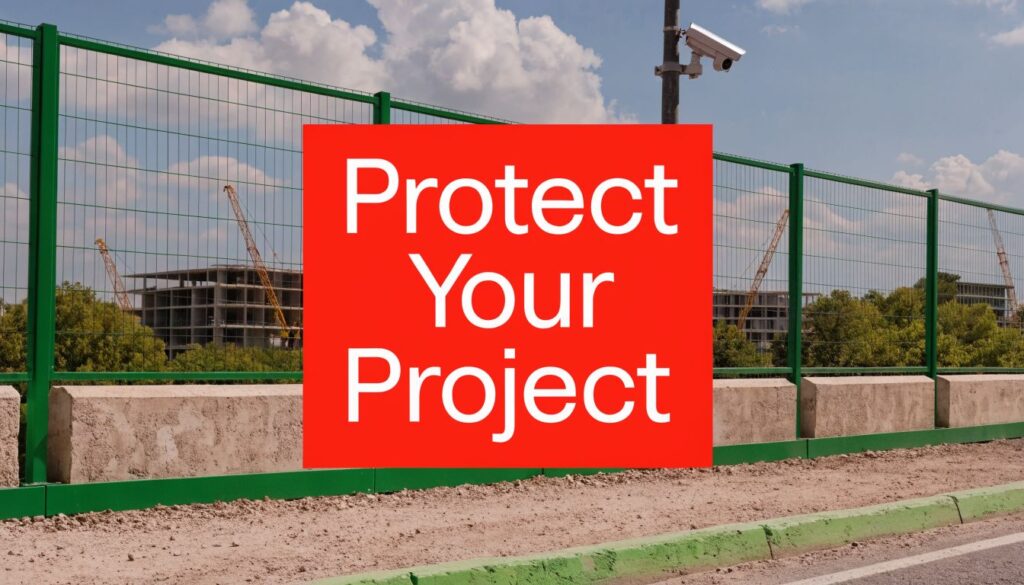
- Perimeter fencing: Keep the line continuous and repair breaches immediately.
- Controlled gates: Limit the number of entrances so supervision stays realistic.
- Signage: Post no-trespassing and check-in expectations where people approach.
- Lighting: Illuminate gates, storage zones, and likely approach paths.
A common mistake is spending money on cameras while leaving the perimeter sloppy. Cameras record. Perimeter control prevents easy access in the first place.
Detect what the eye can’t cover continuously
No site manager can watch every edge of a property all night. Detection tools fill that gap.
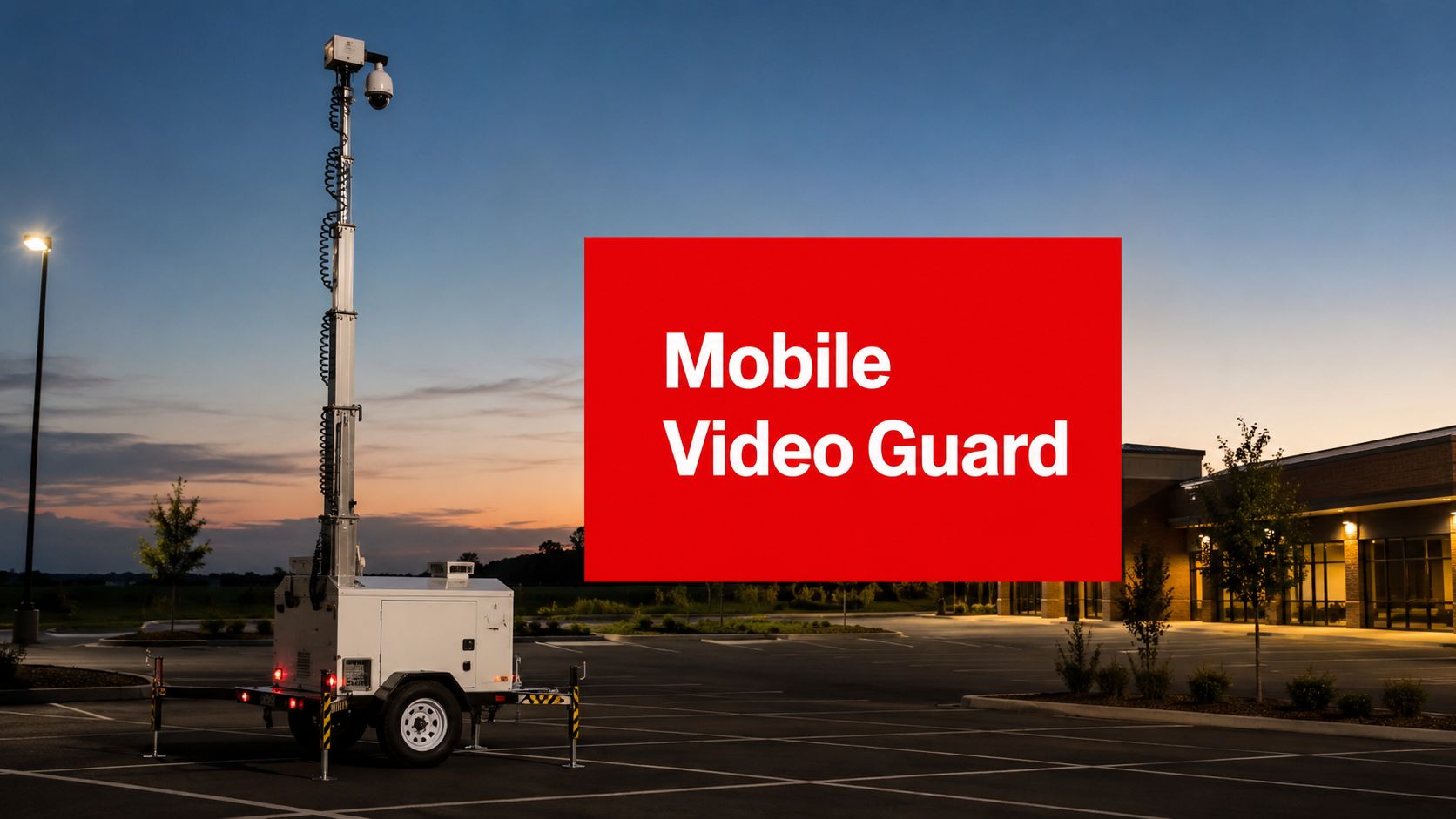
High-value zones usually need more attention than the rest of the site. Think laydown yards, tool containers, temporary power areas, and parked equipment. Detection improves when cameras are placed for purpose, not just coverage.
A practical placement approach looks like this:
| Area | What to watch for | Useful tool |
|---|---|---|
| Main gate | Unauthorized pedestrian or vehicle entry | Camera with motion alerts |
| Material storage | Removal after hours | Focused camera view and lighting |
| Equipment parking | Tampering or access attempts | Camera plus patrol check |
| Blind corners | Fence breaches or loitering | Motion-triggered coverage |
Detection also needs a response path. An alert that nobody reviews until morning isn’t a response tool. It’s evidence collection.
Delay intruders long enough for intervention
Delay is the most underestimated layer.
If someone can cross the fence, reach valuable material, and leave before anyone intervenes, detection alone won’t save the loss. Delay buys time. That can come from anti-climb fencing, locked interior zones, secured containers, wheel locks, and limiting direct routes to valuable assets.
The point isn’t to make a site impossible to enter. That’s rarely realistic on an active project. The point is to make movement slower, noisier, and more difficult.
A good security design forces extra decisions on the intruder and fewer on your team.
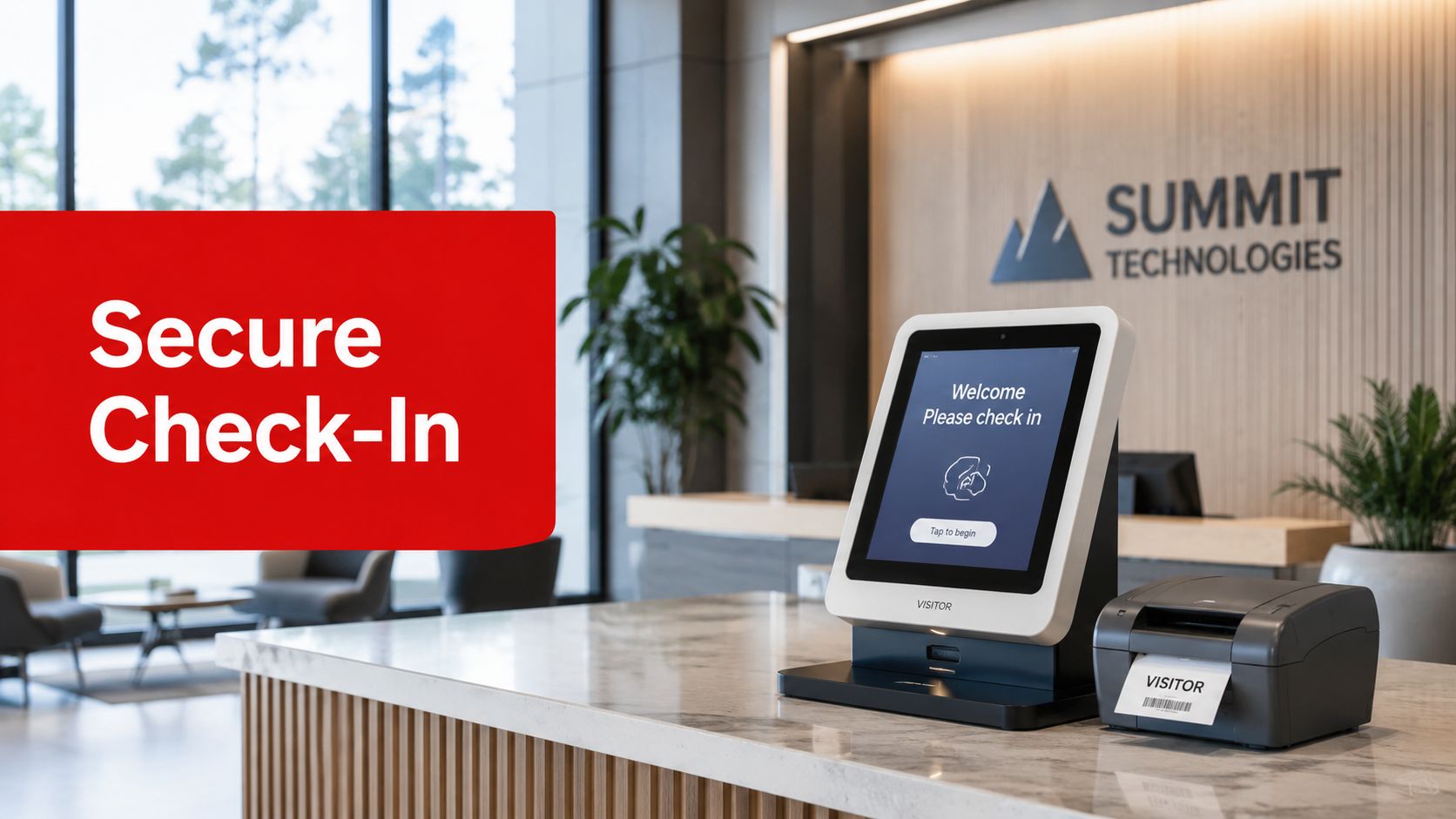
Access control matters. Fewer entry points, stricter sign-in discipline, and verified deliveries reduce casual movement through the site.
Respond with trained people and clear procedures
Response is where many plans break down.
A guard without post orders, a patrol without checkpoint accountability, or a camera system without live escalation creates activity but not much protection. Response needs people, instructions, and documentation.
For many projects, that means combining several elements:
- Onsite officers for gate control, visitor handling, and immediate intervention
- Vehicle patrols for perimeter checks, after-hours inspections, and visible deterrence
- SOC oversight so alerts, officer wellness, and escalation are managed consistently
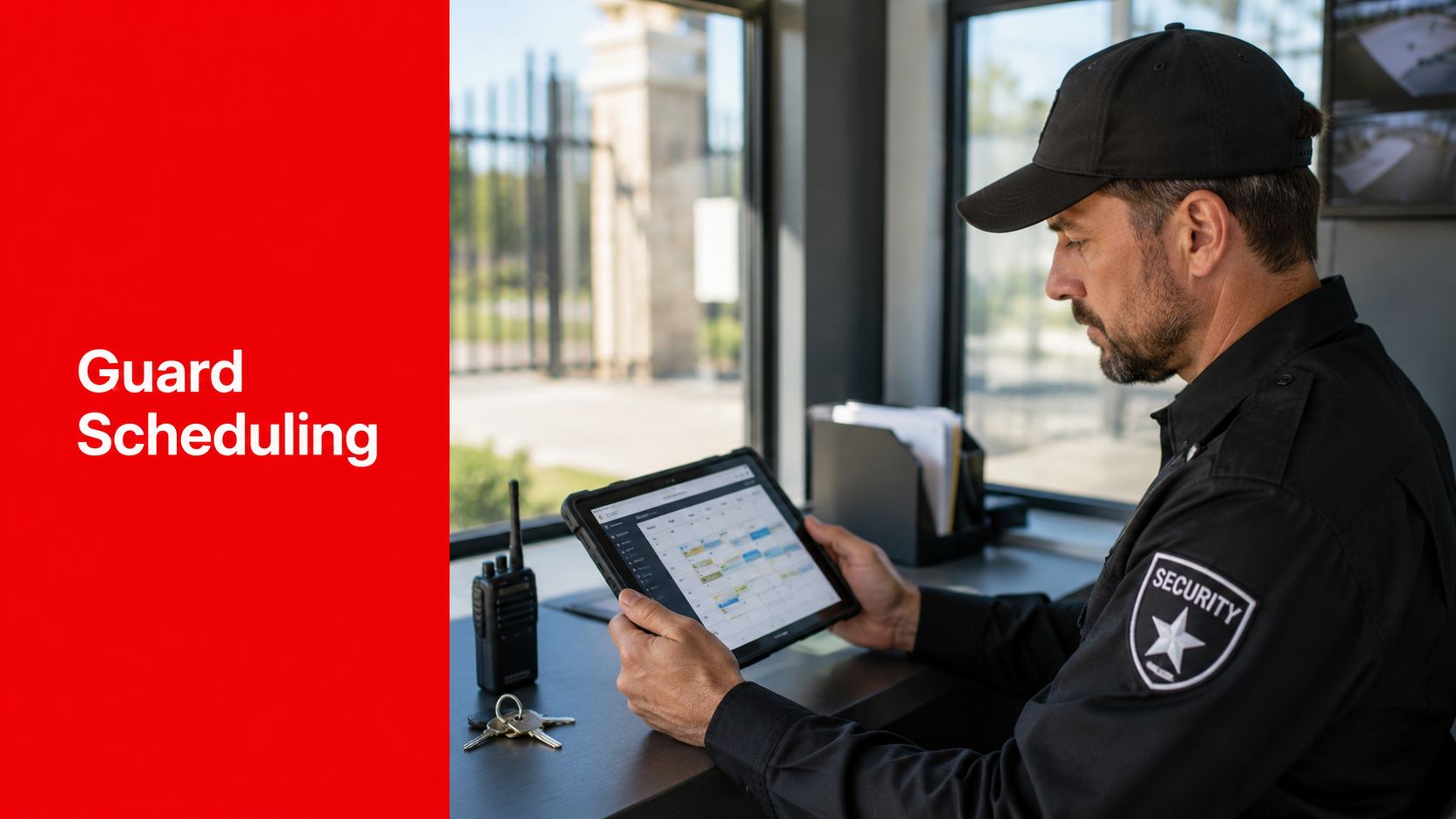
- Digital reporting with time-stamped activity, photos, and incident notes
One option some contractors use is a provider such as Overton Security, which combines GPS-enabled guard tour tracking, digital reports, and SOC oversight for site patrols and officer accountability. What matters most is not the brand name. It’s whether the provider can prove patrol completion, document incidents clearly, and adapt post orders as the project evolves.
Build the plan around the phase of work
A foundation-phase site and a near-completion site don’t carry the same exposure.
As the project changes, your plan should change with it. Early phases often need perimeter and equipment focus. Mid-project phases may need stronger material control and gate management. Late phases usually need tighter access control because finish materials, fixtures, and interior assets become easier to steal and more expensive to replace quickly.
That’s how layered construction site security in Hayward holds up in real life. Not by relying on one tactic, but by stacking practical measures that support each other.
The Human Element Navigating Onsite Challenges in Hayward
Some of the hardest construction security issues aren’t technical. They’re human.
A Hayward site may sit near transit corridors, commercial zones, industrial properties, or areas where unsheltered individuals move through regularly. Temporary fencing, partially enclosed spaces, and stored materials can attract people looking for shelter, privacy, scrap, or a place to rest. If site leadership ignores that reality, the risk usually builds until there’s an incident.

Aggressive handling often makes the site harder to manage
Many teams are uncomfortable talking about this issue, so they swing between two bad options. They either ignore repeated trespassing, or they rely on confrontational enforcement that escalates tension.
Neither works well over time.
Research summarized in this PMC article on homelessness, safety barriers, and intervention dynamics points to a gap in standard security thinking. It notes that approaches combining trained, empathetic personnel with partnerships with local outreach services often result in fewer trespassing incidents and lower community friction than aggressive deterrence alone.
That finding lines up with what experienced field teams already know. People respond better to calm, clear boundaries than to unpredictable confrontation.
What trained site security should do
A construction site still needs firm enforcement. It just needs to be handled professionally.
Officers assigned to these environments should know how to:
- Approach safely: Maintain distance, read the environment, and avoid cornering people
- Set limits clearly: Explain that the site is restricted and hazardous
- De-escalate verbally: Keep tone calm and instructions simple
- Document accurately: Record contact, location, behavior, and follow-up steps
- Escalate appropriately: Involve site leadership, outreach, or emergency services when needed
For projects dealing with recurring trespass concerns, it also helps to align the security team with a specialized construction security plan such as https://www.overtonsecurity.com/construction-site-security-guards/ so procedures are written around hazards, access points, and after-hours conditions rather than borrowed from a retail or office model.
The goal isn’t to win an argument at the fence line. The goal is to keep the site safe, reduce repeat entry, and avoid an incident that becomes a claim.
A humane approach also protects the owner
This isn’t only about community relations. It’s about liability.
If someone enters an active site and gets hurt, the owner and project team may face scrutiny over perimeter integrity, warnings, response, and foreseeability. A documented, consistent, respectful approach shows that the site took the issue seriously.
The strongest programs usually combine three things:
| Need | Poor response | Better response |
|---|---|---|
| Repeated trespassing | Inconsistent removal | Consistent contact and documentation |
| Safety risk | Verbal confrontation only | Hazard-focused redirection and escalation |
| Community friction | Force-first posture | Clear boundaries with respectful conduct |
A site can be secure without being careless about people in distress. In Hayward, that balance matters.
Legal and Regulatory Must-Knows for California Construction
Construction security is also a compliance issue. If access control is weak, the site doesn’t just become easier to steal from. It becomes harder to defend when an injury, dispute, or inspection issue surfaces.
That matters because formal site controls have shown measurable value. The United States loses over $1 billion annually to construction site theft, and after New York City adopted stricter jobsite safety laws, it saw a 24% reduction in incidents and a 30% drop in worker injuries, as discussed in this review of construction access control and safety regulation.
Access control is part of risk control
California contractors already think in terms of safety compliance. Security should be handled the same way.
A controlled site helps answer basic questions that matter after any incident:
- Who was on-site
- Whether that person was authorized
- When they entered and exited
- What area they were allowed to access
- Whether the site had clear perimeter warnings and controlled entry
Those aren’t just administrative details. They shape liability exposure.
Focus on the parts you can actually manage
You can’t remove every hazard from an active project. You can show that the site was managed responsibly.
That usually means tightening the basics:
Perimeter integrity
Keep fencing, gates, and warning signs in working order. A damaged edge that stays open sends the wrong message to both intruders and investigators.Visitor and vendor procedures
Don’t rely on informal recognition. Check in visitors, confirm purpose, and direct them where they’re supposed to go.Credential awareness
Site leaders should know what training and authorization standards apply to workers and specialty trades.Written incident records
If something happens, a clean timeline matters. Time-stamped logs and photos help.
For teams reviewing broader project risk, it can also be useful to understand adjacent compliance concepts outside daily field operations. For example, this plain-English overview of blue sky laws from Homebase is helpful for owners and developers who want a better sense of regulatory obligations tied to how projects are structured and offered.
Your security provider should understand California rules
A site security company doesn’t need to replace legal counsel or your safety director. It does need to understand the California operating environment well enough to support compliance instead of creating new problems.
That includes proper licensing, supervision, reporting discipline, and officer conduct. If you’re vetting providers, review whether they can show current California licensing knowledge and operating standards, not just staffing availability. This resource on https://www.overtonsecurity.com/security-guard-licensing-california/ is a useful starting point for understanding what lawful security guard operation should include in this state.
Security that isn’t documented is hard to defend later, even if the team did the right thing in the moment.
In practice, legal defensibility usually comes down to routine discipline. Controlled entry. Clear post orders. Good reports. Consistent response.
How to Choose the Right Security Partner in Hayward
Most construction firms don’t have trouble finding a guard company. They have trouble finding one that can handle a changing job site without constant hand-holding.
That distinction matters. A weak provider may fill shifts and still leave you with poor reports, inconsistent gate control, and officers who aren’t prepared for construction hazards. A strong provider brings structure to the site and removes work from your superintendent instead of adding to it.

What to ask before you sign anything
A useful screening process is simple. Ask the provider to show how they operate, not just describe it.
Look for these points:
- Construction-specific experience: Ask how they handle deliveries, changing access points, and subcontractor traffic.
- Officer stability: High turnover usually shows up on your site as inconsistent enforcement and repeated retraining.
- Field accountability: Patrol claims should be backed by GPS, checkpoints, photos, and time-stamped reporting.
- Supervision: Find out who checks quality after the launch week.
- Incident handling: Ask for a sample report. If it’s vague, your documentation will be vague too.
- Flexibility: Your site may need standing officers now and patrol coverage later, or the reverse.
Technology should support the people, not replace them
Some vendors oversell hardware. Others oversell labor. Good construction security uses both carefully.
If you’re comparing vendors, it helps to review different models of integrated security solutions so you can separate useful accountability tools from generic sales language. The primary question is whether the technology helps your team verify patrols, review incidents, and adjust post orders quickly.
A few signs the system is practical:
| Question | Good answer |
|---|---|
| Were patrols completed? | GPS or checkpoint record shows it |
| Was the issue documented? | Report includes time, location, photos, and action |
| Can coverage adapt? | Post orders and checkpoints can be revised as the site changes |
The right fit is usually operational, not cosmetic
Uniforms matter. Professional presentation matters. But on a construction project, what matters more is whether the provider can hold standards at awkward hours and in messy conditions.
Overton’s model lines up with that need in a few practical ways: 26 years of experience, a low manager-to-client ratio, support for officer retention, GPS-enabled patrol accountability, and 24/7 SOC oversight. Those details matter because construction clients usually need consistency more than showmanship.
For Hayward projects that need mobile coverage rather than a permanent static post, https://www.overtonsecurity.com/mobile-security-patrol-hayward/ shows the type of patrol structure worth asking any provider about: randomized checks, documented activity, perimeter verification, and a reporting process the client can use.
If the provider can’t explain who supervises the officers, how patrols are verified, and what happens after an alert, keep looking.
The right partner should make the project calmer. Fewer surprises. Cleaner logs. Better handoffs. Less time spent wondering what happened overnight.
From Vulnerable Site to Secure Asset
A Hayward construction site doesn’t become secure because it has a fence, a camera, or a guard. It becomes secure when those pieces work together under a clear plan.
The projects that hold schedule better usually do three things well. They control access, they document activity, and they respond consistently when conditions change. That’s what turns security from a line item into operational protection.
A practical approach is layered. Strong perimeter control deters casual entry. Detection tools help spot problems fast. Delay measures buy time. Trained officers and accountable patrol programs turn alerts into action.
The local piece matters too. Construction site security Hayward has to reflect urban traffic patterns, active subcontractor movement, and sensitive interactions around trespassing and site safety. A one-size-fits-all plan usually leaves gaps.
If your current setup depends too heavily on luck, it’s time to tighten it up. A site assessment can usually identify weak points quickly and turn them into a plan your superintendent can run.
Frequently Asked Questions About Construction Site Security
How much does construction site security usually cost
It depends on the site layout, hours of exposure, number of access points, and whether you need standing guards, patrols, remote monitoring, or a mix. The most useful way to price security is against the operational risk it prevents. A cheaper plan that misses theft, trespassing, or reporting gaps often costs more once delays and claims are factored in.
Do we need armed guards on a construction site
Not always. Many Hayward projects do well with unarmed officers, vehicle patrols, controlled access, and good reporting. Armed coverage may be considered for sites with a specific threat profile, but it shouldn’t be the default answer. The right recommendation depends on the asset mix, neighborhood conditions, work phase, and client policy.
How quickly can coverage be deployed
A professional provider can often move quickly for urgent needs, especially for temporary patrols or short-term coverage after an incident. What matters more than speed alone is whether post orders, checkpoints, contact lists, and escalation procedures are set correctly before launch. Fast deployment without structure usually creates confusion on the first shift.
What kind of reports should we expect
You should expect clear, time-stamped reporting that shows what happened, where it happened, what the officer did, and what follow-up is needed. Good reporting usually includes patrol activity, checkpoint verification, photos when appropriate, visitor or vehicle notes, and incident summaries that a superintendent or project executive can review without guessing what took place.
If you’re reviewing options for Overton Security, the best next step is a no-obligation site assessment. A practical review of your perimeter, access points, after-hours exposure, and reporting needs can usually show where your current setup is solid and where it needs reinforcement.