
As a property manager, facilities director, or business owner, you’re responsible for a complex web of security measures. Imagine every camera feed, access point, on-site officer, and incident alert flowing into a single, intelligent command hub. That, in essence, is a Global Security Operations Center (GSOC).
Think of it as the brain and nervous system for your entire security program. A GSOC provides a unified, real-time view of everything happening across all your properties, whether they’re across town or across the country.
The Nerve Center of Modern Security
For anyone managing property, a GSOC is what transforms a collection of individual security devices into a coordinated, intelligent defense system. It is a dedicated space where experienced professionals use advanced technology to monitor for potential risks, manage incidents as they unfold, and make informed decisions, 24/7.
This centralized approach shifts security from a reactive posture—where you only respond after an incident occurs—to a proactive strategy that protects your people, assets, and reputation.
A well-run GSOC is far more than a room full of monitors. It’s a seamless blend of three key elements: highly trained people, well-defined processes, and integrated technology. This powerful combination delivers complete situational awareness, allowing your security team to identify and address potential issues before they become costly problems.
Integrating People, Process, and Technology
The true strength of a global security operations center lies in its ability to synthesize information from countless sources. An effective GSOC doesn’t just watch cameras; it connects the dots between different events to build a complete, coherent picture of your environment.
Here’s a breakdown of how these pieces fit together:
- People: The GSOC is staffed by skilled operators and analysts. They are trained to spot unusual patterns, verify alarms, and coordinate the appropriate response, providing the critical human judgment that technology alone cannot.
- Processes: Standard Operating Procedures (SOPs) guide every action, from routine system health checks to emergency dispatch. This ensures every response is consistent, professional, and auditable—whether it's a fire alarm at a commercial tower or a suspicious vehicle at a residential community.
- Technology: A GSOC integrates otherwise separate systems—like video surveillance, access control logs, and officer GPS data—onto a single, unified platform. This gives operators one source of truth, helping them make faster, more accurate decisions.
At Overton Security, our GSOC is the backbone of our operations. It provides our clients with peace of mind and our officers with the real-time support they need in the field. With over 26 years of experience, we know this blend of human expertise and smart technology is the key to delivering protection you can count on.
Ultimately, the goal is to turn raw security data into actionable intelligence.
For a facilities director managing a portfolio of properties, it means knowing every site is monitored to the same high standard. For an HOA board, it means having a partner who can dispatch a mobile patrol to investigate an alert at 3 a.m. and deliver a detailed digital report by morning. It’s this proactive and organized approach that defines modern security.
The Core Functions of a Modern GSOC
A Global Security Operations Center, or GSOC, is much more than a room full of monitors. It's the nerve center where people, processes, and technology come together to protect what matters most. For property managers, facility directors, and corporate leaders, understanding how a GSOC works is key to seeing how it turns security from a passive cost into a strategic advantage.
Think of it as the central command post for protecting your people, assets, and even your brand's reputation. Each function is a critical piece of the puzzle, ensuring every potential threat is identified, managed, and resolved according to a clear, professional plan. Let's break down the four essential pillars of a modern GSOC and what they really mean for your organization.
1. Real-Time Monitoring And Threat Detection
The most visible job of a global security operations center is its 24/7/365 monitoring. This isn't just about passively watching camera feeds. Highly trained operators are your first line of defense, actively overseeing a network of integrated security systems and looking for anomalies that could signal a real problem.
For instance, a GSOC operator for a large retail center might spot a vehicle circling a parking lot long after closing. This isn't just a random observation. Using advanced analytics, they can immediately cross-reference this with access control data to confirm if any authorized personnel are on-site. This proactive vigilance turns a simple observation into an actionable security event, allowing for intervention before a break-in can even happen.
This is where the power of integration comes in. A GSOC consolidates countless data streams—from video feeds and access logs to alarm systems and patrol routes—into a single, unified view.
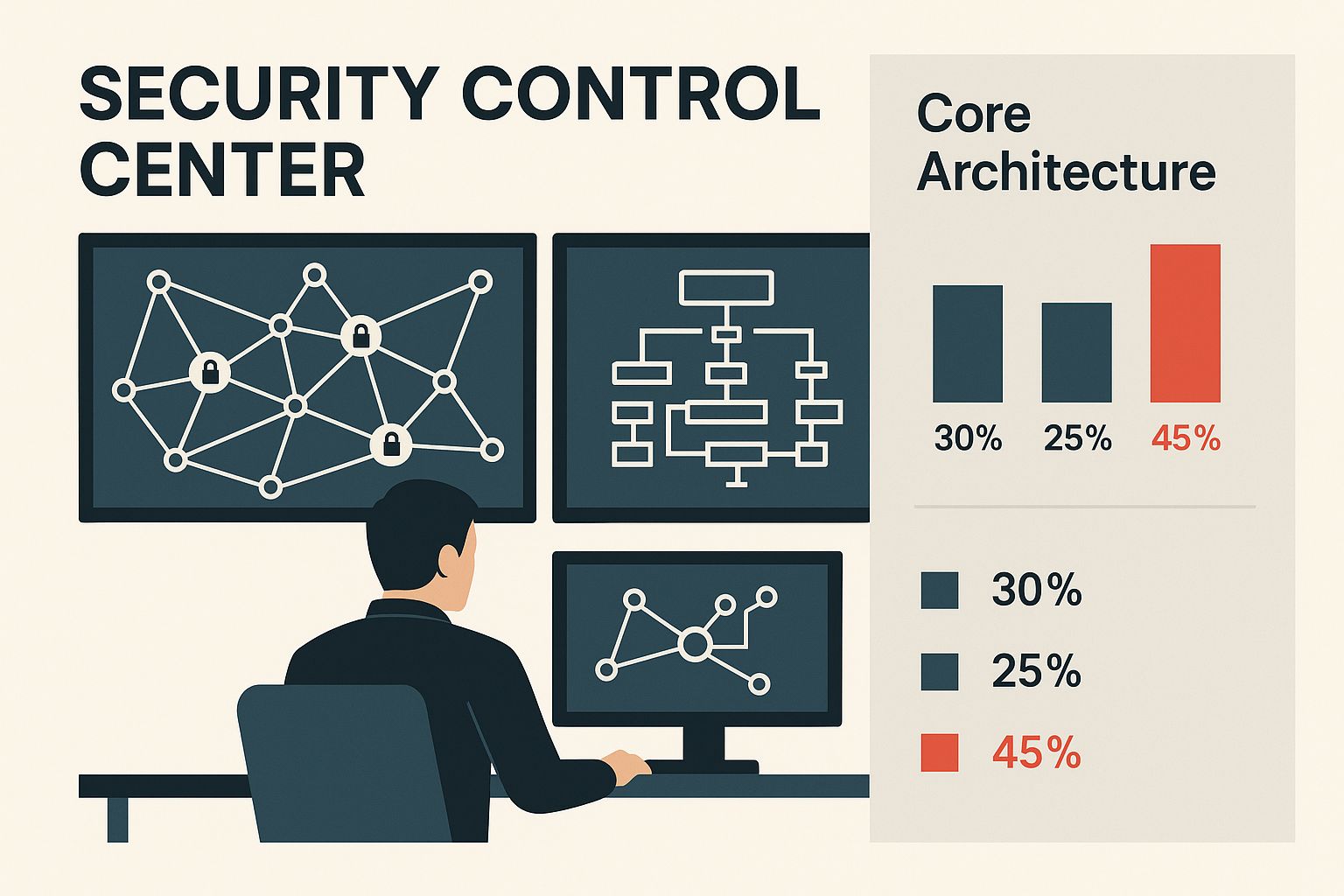
The ability to connect these disparate systems into one manageable interface is what makes effective GSOC operations possible. It gives operators the complete picture they need to make smart, fast decisions.
2. Incident Management And Coordinated Response
When a potential threat is confirmed, the GSOC instantly shifts from monitoring to active incident management. Operators become calm, decisive coordinators, executing pre-approved response plans tailored specifically to your property and situation. This structured, professional approach is what separates a true security partner from simple surveillance.
Picture this: a fire alarm is triggered in a high-rise office building. The GSOC team immediately takes action:
- Verify the alarm: Is it a genuine fire or a false alarm? Operators pull up live camera feeds to get eyes on the situation in seconds.
- Notify authorities: If it's real, they immediately contact emergency services with the precise floor and location details.
- Dispatch resources: On-site officers or mobile patrols are directed to the scene to assist with evacuation and secure the perimeter, keeping everyone safe.
- Communicate with stakeholders: The property manager and other key contacts are kept in the loop according to the established protocol.
This isn't chaos; it's a coordinated response. Every action is swift, efficient, and documented, which dramatically reduces confusion and potential liability.
3. Intelligence Analysis And Proactive Planning
A truly effective GSOC doesn’t just react to events—it helps you see them coming. Operators are constantly gathering and analyzing intelligence from various sources to identify potential disruptions before they can impact your operations. This is where security moves from a purely defensive posture to a proactive one.
For a construction superintendent, this might mean getting an alert about planned protests that could block supply routes to their job site. For a corporate decision-maker overseeing a multi-site portfolio, it could involve trend analysis on regional crime, helping them allocate security budgets more effectively. This intelligence function empowers you to make informed, strategic decisions instead of just reacting to problems.
4. Compliance, Auditing, And Detailed Reporting
The final, and perhaps most underrated, pillar of a GSOC is its role as a meticulous record-keeper. Every single alert, action, and communication is logged in a centralized system. This creates a detailed, time-stamped, and auditable trail that is incredibly valuable for your business.
These reports aren't just for filing away. They serve several critical purposes:
- Internal Reviews: They offer objective data to assess your security's effectiveness and find ways to optimize things like guard schedules or patrol routes.
- Insurance and Legal Matters: In the event of an incident, these detailed records are essential for filing claims and, just as importantly, demonstrating due diligence.
- Regulatory Compliance: For industries with specific security mandates, GSOC reports provide the concrete proof of adherence that auditors require.
For an HOA board, this means having transparent proof that security patrols were completed as promised. For a facilities director, it means having the hard data to justify security spending and prove its ROI to executive leadership. This unwavering commitment to transparency and accountability is the hallmark of a professional security partner.
The table below summarizes how these core functions translate into direct business value.
Core GSOC Functions and Their Business Impact
| Core Function | How It Protects Your Business | Tangible Benefit |
|---|---|---|
| Real-Time Monitoring | Provides constant, vigilant oversight of all physical and digital assets. | Drastically reduces the window of opportunity for threats like theft, vandalism, or unauthorized access. |
| Incident Response | Ensures a rapid, structured, and professional reaction to any security event. | Minimizes damage, reduces liability, and ensures business continuity during a crisis. |
| Intelligence Analysis | Identifies emerging threats and potential disruptions before they happen. | Allows for proactive risk mitigation, better resource allocation, and informed strategic planning. |
| Reporting & Compliance | Creates a detailed, auditable record of all security activities and incidents. | Provides critical documentation for insurance claims, legal defense, and regulatory audits, proving due diligence. |
Ultimately, a GSOC doesn't just watch over your property—it provides the operational intelligence and professional response capability that protects your entire enterprise.
The Technology Powering a Modern GSOC
Behind every top-tier global security operations center, there's a powerful stack of technology. This is what empowers our operators to see everything happening across your properties and act in a heartbeat. For property managers and facilities directors, understanding these tools clears up the mystery of how a GSOC transforms a flood of raw data into decisive, protective action.
Think of it as a central nervous system for your security. It pulls in thousands of data points every second—from cameras, door sensors, and more—and intelligently filters out the noise. What’s left is clear, actionable information presented to a trained security professional, ensuring nothing gets missed.
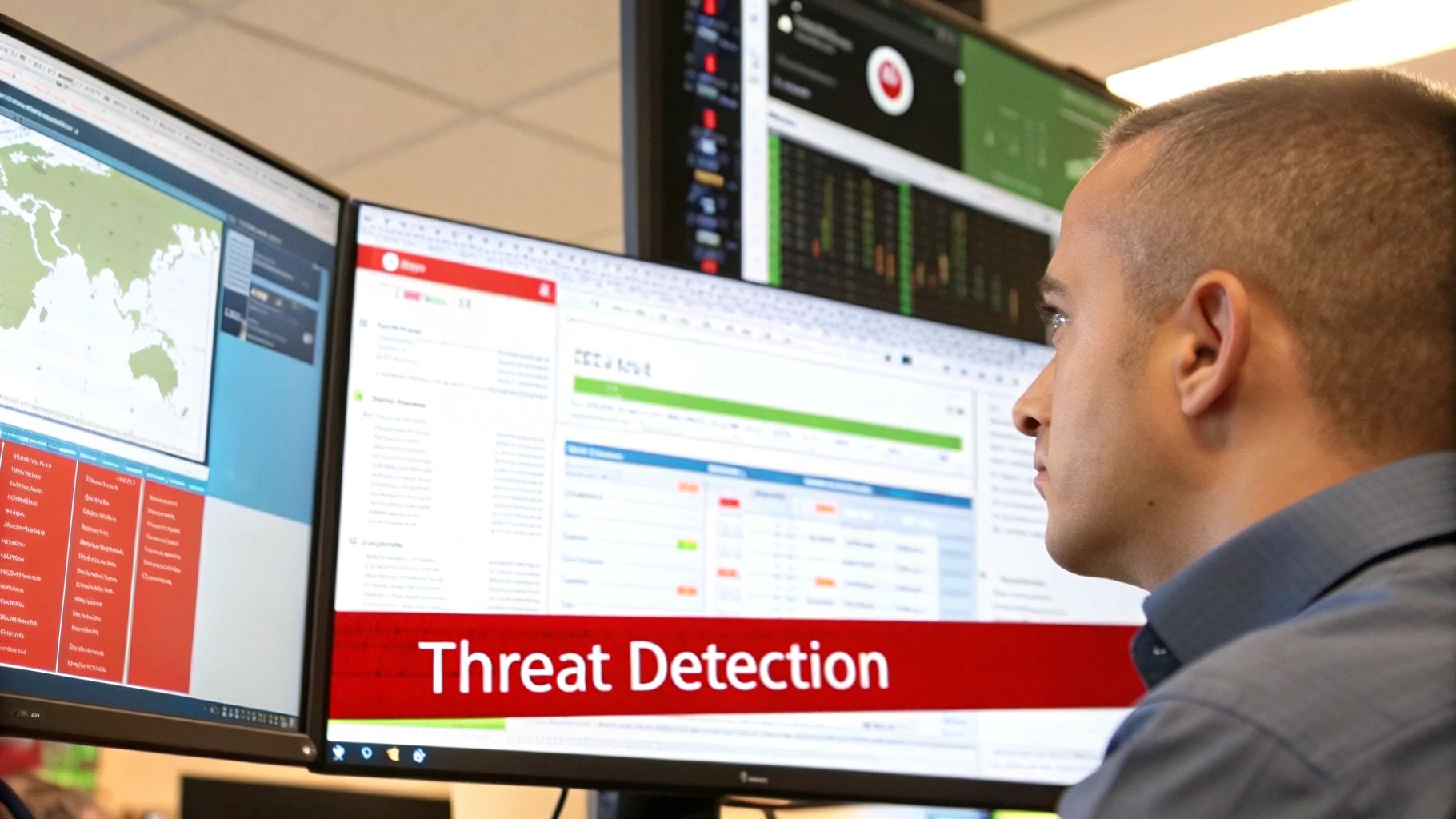
Core Systems: The Building Blocks of Awareness
The foundation of any GSOC starts with the systems that gather basic security data. These are the workhorses of daily operations, providing the essential stream of information that operators rely on to get a baseline understanding of what’s happening on a property.
- Video Management Systems (VMS): A VMS isn't just a simple camera viewer. It's a robust platform that brings together video feeds from hundreds or even thousands of cameras into one unified, easy-to-use interface. This lets an operator instantly pull up the right camera feed from any location, at any time.
- Access Control Systems (ACS): These are the systems logging every card swipe, keypad entry, and door status change. For a GSOC operator, this data is invaluable. It provides critical context, helping them quickly verify if someone in a restricted area is authorized or if a door has been propped or forced open.
While these tools are crucial, they often work in their own separate worlds. The real magic happens when software brings all of this information together into a single, cohesive picture.
The Brain of the Operation: PSIM Platforms
The true nerve center of a modern global security operations center is the Physical Security Information Management (PSIM) platform. You can think of it as the software brain that connects to and understands the data from every single security system you have.
A PSIM pulls in data from your cameras, access control logs, alarm panels, and even the GPS trackers on mobile patrol vehicles. It then displays all this connected data on one intuitive dashboard. Instead of an operator having to jump between four different systems to piece together a story, they see one unified view of the situation.
Example in Action: Imagine an alarm goes off at a construction site at 2 a.m. A PSIM platform instantly and automatically pulls up the live camera feed for that specific zone. At the same time, it displays the access control log showing no one badged in, and maps the real-time location of the nearest Overton Security patrol vehicle. This gives the operator complete situational awareness in seconds, allowing for a much faster and more informed response.
The Rise of AI and Machine Learning in Security
Artificial intelligence (AI) and machine learning (ML) are transforming how GSOCs operate, shifting them from reactive monitoring stations to proactive, threat-hunting engines. These smart systems learn what "normal" looks like at your property and automatically flag anything that deviates from that pattern.
This move toward intelligent automation is a major reason the security operations market is growing so quickly. The global Security Operations Center (SOC) market was valued at over USD 44.2 billion in 2024 and is projected to keep climbing, driven largely by the incredible efficiency gains from AI and ML.
Here’s how AI gives our operators a critical edge:
- Anomaly Detection: AI is brilliant at spotting unusual behavior that a human might miss, like a person loitering in a service corridor late at night or a vehicle parked in a fire lane for too long. When it sees something odd, it creates an alert.
- False Alarm Reduction: We’ve all dealt with alarms triggered by wind shaking a camera or a stray animal. AI analyzes these events before alerting an operator, filtering out the noise so our human experts can focus their attention on genuine potential threats.
This blend of experienced human oversight and smart technology is what modern security is all about. You can read more about how these advancements are being applied by exploring the latest innovative trends in contract security solutions. By integrating these powerful tools, a GSOC ensures that security isn't just present—it's intelligent, effective, and always one step ahead.
Choosing the Right GSOC Model For Your Business
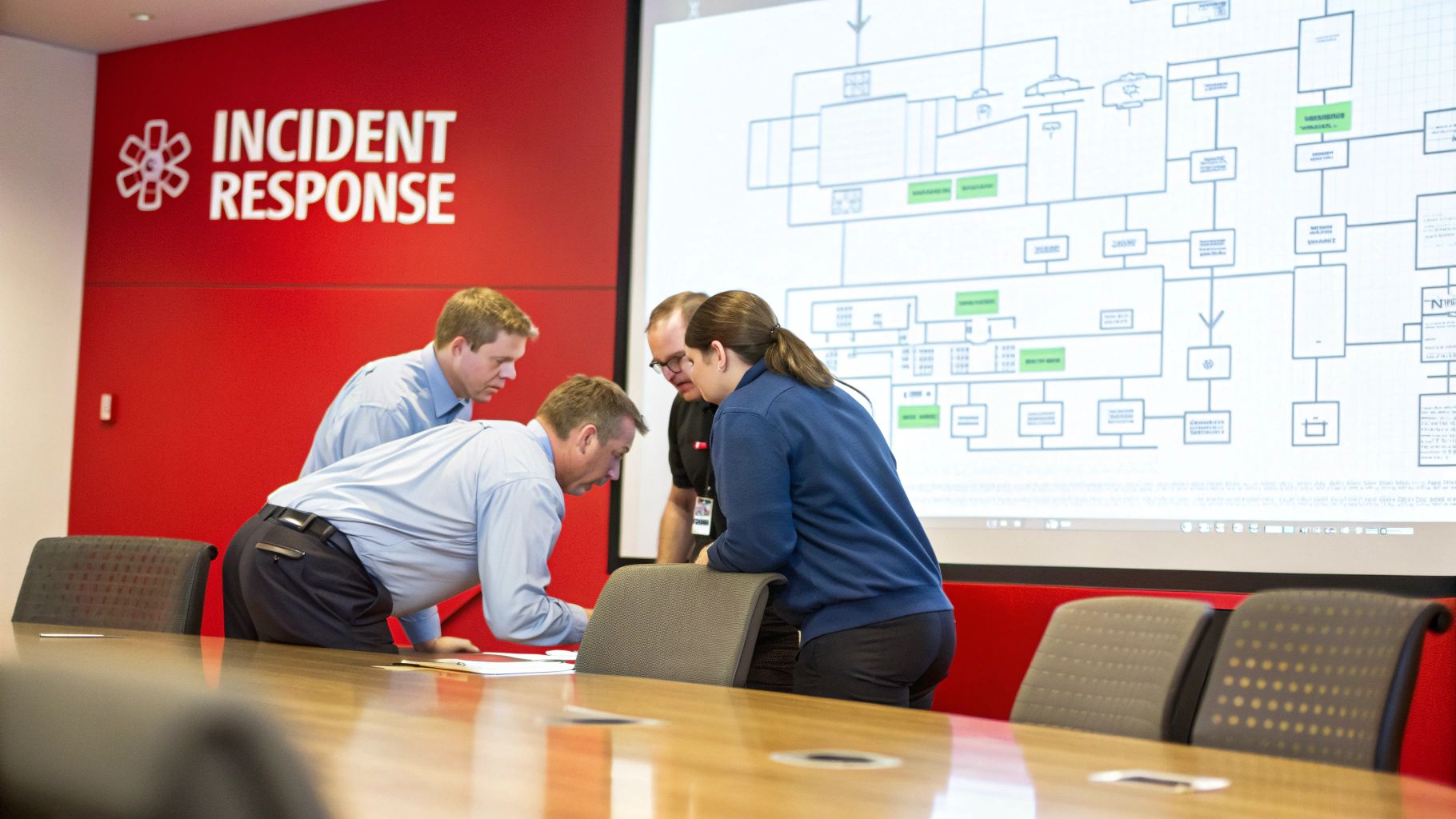
When it's time to implement a global security operations center, you're facing a major strategic decision. There’s no single, off-the-shelf solution that works for everyone. The best path forward depends on your organization's specific size, risk profile, operational demands, and budget.
For property managers, HOA boards, and business owners, the first step is understanding the fundamental differences between the models available. The choice usually boils down to three main options: build it yourself, outsource it completely, or find a middle ground with a hybrid approach. Each path offers a unique mix of control, cost, and expertise.
The In-House GSOC Model
Going the in-house route gives you absolute control over your security operations. Every single process, piece of technology, and team member is managed directly by you. This ensures that every protocol is a perfect fit for your corporate culture and specific risk appetite. It's the ultimate in customization and direct command.
But that level of control doesn’t come cheap. Building and running an in-house global security operations center is a serious commitment of capital and resources. You’ll be looking at significant investment in:
- Technology: Buying, integrating, and maintaining sophisticated platforms like PSIM, VMS, and access control systems.
- Personnel: Finding, training, and retaining a dedicated team of 24/7 security operators, analysts, and managers. This is a significant undertaking.
- Infrastructure: Building out and equipping a physical space that can serve as a resilient command center around the clock.
For massive, multinational corporations with complex security needs, this can be the perfect solution. For most other organizations, the high upfront costs and ongoing operational expenses make it a challenging path.
The Outsourced (GSOC-as-a-Service) Model
For businesses that need enterprise-grade security without the massive price tag, the outsourced model—often called GSOC-as-a-Service—is a fantastic alternative. When you partner with a dedicated security provider like Overton Security, you get instant access to a fully functioning, state-of-the-art command center from day one.
This approach transforms what would be a major capital expenditure into a predictable, manageable operational cost. It's a strategic move for organizations that want to keep their focus on their core business while leaving security to proven experts.
At Overton Security, our GSOC-as-a-Service model is built on 26 years of experience. Our clients get the full benefit of our investment in advanced technology and our commitment to supporting and retaining top-tier professional officers, all under the watch of our hands-on leadership.
The outsourced model is becoming increasingly popular because it offers a scalable and efficient way to elevate your security. The market reflects this trend, with the Security Operations Center as a Service (SOCaaS) sector valued at USD 6.20 billion in 2024 and projected to hit USD 13.56 billion by 2032. This explosive growth shows just how many businesses are choosing managed services to get customized and resilient security. If you're interested in the data, you can learn more about the SOCaaS market growth.
The Hybrid GSOC Model
The hybrid model is a compelling middle ground, blending your internal security team with the specialized skills of an external partner. It's a collaborative approach that lets you keep direct control over some functions while outsourcing others.
For example, a company might use its in-house team to handle initial alerts and minor incidents during business hours. But after 5 PM, on weekends, or during a major crisis, operations are handed off seamlessly to the external GSOC partner. This gives you 24/7 coverage without the enormous expense of staffing your own round-the-clock team.
This model strikes a powerful balance between control and cost-effectiveness, making it a popular choice for companies looking to enhance their existing security capabilities. As you weigh your options, thinking about navigating the benefits of contract security can help you make a smart decision that truly aligns with your business goals.
The Real-World Payoffs of Centralized Security
A Global Security Operations Center is far more than just another line item in your security budget. For anyone managing property—whether you're a facilities director, a property manager, or a corporate decision-maker—a GSOC delivers tangible returns that directly protect your bottom line. Think of it as a strategic investment in making your operations smarter, more consistent, and incredibly resilient.
The most immediate and obvious impact? A massive improvement in how fast your team responds to incidents. That critical gap between an alert going off and a professional taking action all but disappears with a centralized command. This speed is everything. It minimizes potential damage, cuts down on liability, and ensures every situation, from a minor loitering issue to a major emergency, is handled calmly and correctly.
Boost Your Operational Efficiency and Consistency
Beyond just emergencies, a GSOC acts as a powerful engine for efficiency. By pulling in and analyzing data from all your properties, it shows you exactly how to optimize your security resources. For example, detailed reports on patrol routes and incident hotspots can uncover patterns you'd never see otherwise. This lets you build smarter guard schedules and cut out redundant patrols, making sure every dollar in your security budget is working its hardest.
This central hub also enforces a single, high standard of service across the board. If you're managing multiple locations, a global security operations center guarantees that every property gets the same top-tier protection.
At Overton Security, we live by the principle of consistency. Our GSOC ensures the security protocols for a high-rise in Los Angeles are just as strong and professionally handled as those for a retail center in San Jose. It’s all about delivering reliable, predictable protection across your entire portfolio.
Get Measurable Cost Savings and Sharper Strategic Insights
The financial return from a GSOC is both clear and compelling. When you can proactively monitor properties and respond in seconds, you directly reduce costs from theft, vandalism, and property damage. A well-organized, thoroughly documented security posture can also be a game-changer for your insurance premiums, as it clearly demonstrates a serious commitment to mitigating risk.
Even better, a GSOC gives leadership the objective, data-backed insights needed for smart strategic planning. The detailed data and comprehensive reports it produces are invaluable for things like:
- Verifying Service: Get concrete proof that security patrols and checks are being completed exactly as contracted.
- Justifying Budgets: Use hard data to show the real value and effectiveness of your security program.
- Compliance and Audits: Automatically create a clean, auditable trail of all security activities. To dig deeper into this, you can learn about the key benefits of meeting security compliance in our dedicated guide.
Ultimately, a GSOC turns security from a passive cost center into an active, value-driving asset. It doesn't just improve safety; it sharpens your operations and delivers the intelligence you need to protect your business now and for years to come. That kind of strategic oversight is the true mark of a modern, professional security partnership.
Common Questions About Getting a GSOC Started
For property managers, business owners, and HOA board members, implementing a Global Security Operations Center can feel like a huge undertaking. It’s completely natural to have questions about how it all works in the real world. We want to address those common concerns, clarify the process, and help you see just how manageable and rewarding it can be.
Making an informed decision comes down to understanding the practical side of things. How does a GSOC plug into what you already have? What’s the setup actually like? How does the partnership work day-to-day? Let's dive in.
How Does a GSOC Integrate with My Existing Security Systems?
This is probably the most common worry we hear: "Do I have to scrap all my current security equipment?" The answer, almost always, is a reassuring "no." A modern global security operations center is built to be system-agnostic. In plain English, that means it’s designed to work with the diverse mix of hardware you already own.
A trusted partner like Overton Security won’t ask you to start from scratch. Instead, we begin with a thorough technology assessment of your properties. This audit identifies every security asset you have in place, including:
- Different brands and models of security cameras
- Various access control systems on your doors and gates
- Existing alarm panels and intrusion sensors
From there, the GSOC provider uses a central platform, usually a Physical Security Information Management (PSIM) system, to pull all those different data streams into a single, unified view. This approach protects your previous investments. The goal is to weave everything together into one cohesive security network without the headache and cost of a massive "rip and replace" project.
What Does the Onboarding and Setup Process Look Like?
A smooth transition is everything, and a professional GSOC partner will have a structured onboarding plan to make it happen. While no two properties are exactly alike, the journey follows a proven path that’s designed to cause minimal disruption to your daily operations.
It’s a collaborative effort from the start. The process kicks off with an in-depth consultation to truly understand your specific security pain points, your operational goals, and the unique layout of your properties. This isn't just a tech talk; it's about defining what success looks like for you. That could be reducing after-hours loitering at a shopping center or guaranteeing a faster response to incidents in a residential community.
The key stages generally look like this:
- Site Assessment and System Audit: We meticulously map out your current technology and identify any physical security weak spots.
- Protocol Development: This is a critical step where we work directly with you to create custom Standard Operating Procedures (SOPs). We define exactly how our operators should respond to specific events—from a simple door alarm to a major emergency—and who on your team needs to be contacted.
- Technical Integration: Our technicians get to work connecting your systems to our GSOC, making sure every data feed is stable, secure, and reliable.
- Team Training and Go-Live: Before we flip the switch, we walk your team through the new communication and reporting channels. We want everyone to feel comfortable and ready from day one.
At Overton Security, our low manager-to-client ratio is a cornerstone of our service. You’ll have a dedicated point of contact who knows your account inside and out, so nothing ever gets lost in translation during this process.
What Kind of Staffing and Expertise Is Required?
This is one of the biggest benefits: partnering with a GSOC-as-a-Service provider completely lifts the burden of hiring, training, and managing a team of highly specialized security professionals. Finding qualified people is a significant challenge, and it's a major reason the outsourced model has grown so popular. In fact, a significant cybersecurity talent shortage is contributing a 2.8% impact to the market's growth rate, pushing more organizations to lean on trusted partners. You can find more details on the factors driving the security services market on mordorintelligence.com.
When you work with an established provider, you instantly gain an entire team of vetted, trained, and experienced operators. These aren’t just people watching screens. They are skilled analysts trained in:
- Incident verification and proper escalation
- Emergency dispatch procedures
- Threat intelligence analysis
- Staying calm and professional during high-stress situations
This frees up your on-site staff and management to focus on their primary jobs, all while knowing a team of experts is providing 24/7 oversight. It’s about getting world-class expertise without the immense cost and complexity of building it yourself. For any business owner or property manager, that’s a powerful value proposition.
For over 26 years, Overton Security has been the trusted security partner for businesses and communities across California. Our blend of human expertise and smart technology, all overseen by our 24/7 GSOC, provides the peace of mind that comes from real-time accountability and hands-on leadership. If you're ready to see how centralized security can strengthen your operations, contact Overton Security today.