
Preventing violence in the workplace is about more than having a plan for the worst-case scenario. It’s about building a proactive, day-to-day strategy that identifies real risks, establishes clear policies, and trains your team to spot and de-escalate potential threats before they boil over.
In our 26 years of experience, the most effective approaches always weave together environmental design, procedural controls, and a professional security presence. When these three elements work in concert, they create a culture of safety that protects your people and property.
Understanding Your Real-World Violence Risks
To prevent workplace violence, you first have to take an honest look at your specific vulnerabilities. The term covers a wide spectrum of behaviors, from a tenant’s verbal harassment and a shoving match on a construction site to threatening actions from an angry customer. For any property manager, facilities director, or business owner, recognizing these varied risks is the essential starting point.
Most incidents fall into one of four categories, each bringing unique challenges. Knowing which types are most relevant to your property—whether a bustling retail center in Los Angeles or a quiet residential high-rise in San Jose—is critical. A retail store, for instance, is more susceptible to violence tied to criminal intent, like robbery, which is a different risk profile than an office building where worker-on-worker conflict may be the primary concern.
Four Types of Workplace Violence and Their Risk Factors
To help you pinpoint where your biggest risks lie, this table breaks down the four main categories of workplace violence. It outlines what each type involves and the common factors that can increase your vulnerability. Use it as a starting point for your own risk assessment.
| Type of Violence | Description | Common Risk Factors |
|---|---|---|
| Type 1: Criminal Intent | The perpetrator has no legitimate relationship to the business or its employees and is usually committing a crime. | – Working late at night or in isolated areas – Exchanging money with the public – High-crime locations – Poorly lit exteriors and parking lots |
| Type 2: Customer/Client | The perpetrator is a customer or client of the business and becomes violent during a normal interaction. | – High-stress service environments (e.g., healthcare, social services) – Serving individuals who may be volatile or unstable – Lack of staff training in de-escalation – Public-facing roles |
| Type 3: Worker-on-Worker | The perpetrator is a current or former employee who threatens or attacks another employee. | – High-stress work culture – Unresolved grievances or interpersonal conflicts – Lack of clear policies on conduct and reporting – Downsizing or layoffs |
| Type 4: Personal Relationship | The perpetrator has a personal relationship with an employee (e.g., domestic partner) but no relationship to the business. | – Employee is experiencing domestic violence – Lack of controlled access to the worksite – No system for employees to discreetly report threats – Vague or non-existent restraining order policies |
Looking at your operations through this lens helps you move from generic safety plans to targeted, effective strategies that address the threats you're most likely to face.
Spotting Environmental Red Flags
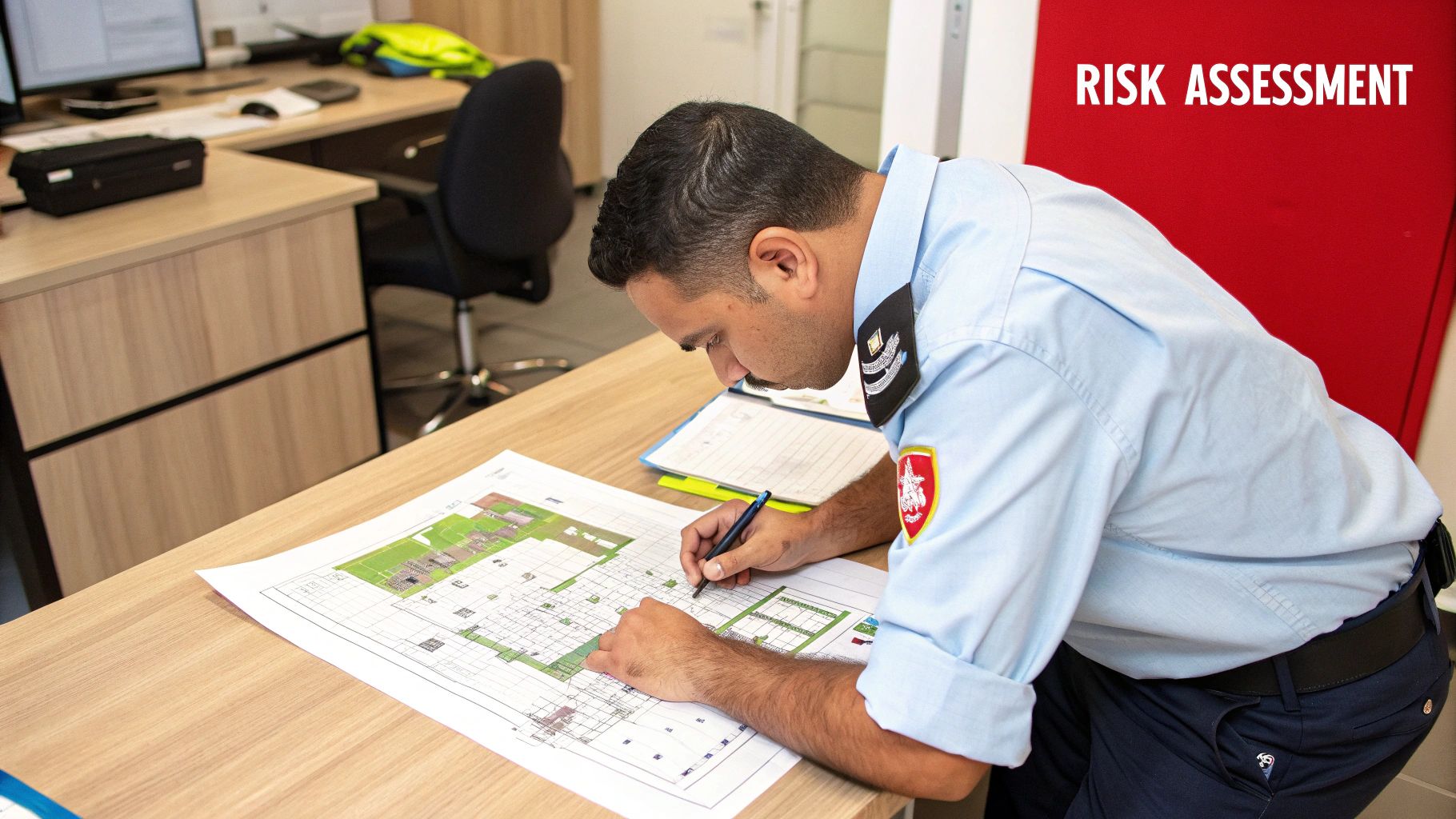
One of the most practical things you can do is conduct a physical walkthrough of your property with a critical eye. Where are the weak spots? Are there poorly lit corners of the parking garage that make employees or residents nervous after dark? Are access points uncontrolled? Is your front desk a high-stress bottleneck where tempers often flare?
An honest assessment isn’t about finding fault; it's about identifying opportunities. Every vulnerability you discover is a chance to strengthen your prevention strategy before an incident occurs, protecting both your people and your assets.
This process gives you a baseline understanding of your risk and helps define what a "win" looks like: a property where everyone feels secure because potential threats have been thoughtfully addressed. This proactive mindset is the foundation for a resilient safety plan and for understanding where professional security can fill the gaps. Our guide on employee security from workplace violence digs deeper into creating this kind of protective framework.
The stakes are high. In 2023 alone, workplace violence led to 740 fatalities in the United States. The retail sector was hit hardest with 123 deaths, followed by leisure and hospitality. For construction, which saw 46 fatalities, we know that conflicts between contractors and teams are a significant risk factor.
This chart drives home how incidents are spread across different sectors.
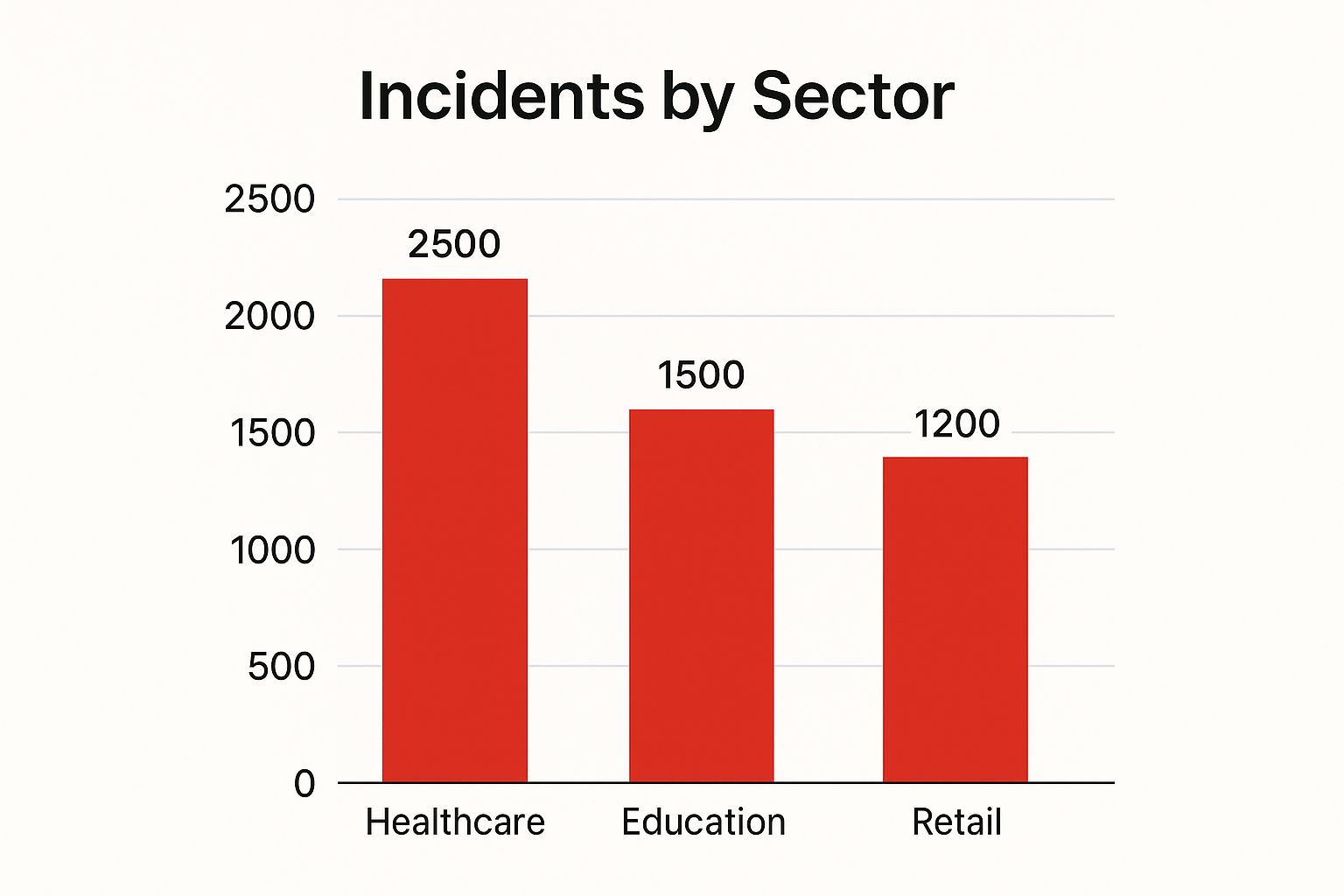
As you can see, public-facing industries like healthcare and retail deal with a much higher volume of incidents, which underscores why a one-size-fits-all approach to prevention simply doesn't work. Your strategy must be tailored to your environment.
Building Your Workplace Violence Prevention Plan
A truly safe culture is not accidental. It’s built intentionally with clear, well-communicated policies—not just a binder collecting dust on a shelf. Once you’ve assessed your risks, the next step is to put that knowledge into action by developing a workplace violence prevention plan that your team understands, trusts, and uses.
Think of this plan as your practical roadmap for handling threats, from the first report to an emergency response. Whether you're a construction superintendent managing various subcontractors or a property manager overseeing a multi-tenant building, the core components of a solid plan remain the same. The goal is a framework that is both firm and supportive.
Core Components of an Effective Plan
An effective plan is more than a list of rules; it’s a living document that guides behavior and response. At its heart, your plan needs to send a clear message: we are committed to a safe environment for everyone.
Here’s what it must include:
- A Firm Zero-Tolerance Policy: State unequivocally that any acts or threats of violence, harassment, or intimidation are prohibited and will be met with immediate, decisive action. This sets a non-negotiable expectation for all employees, tenants, and visitors.
- Confidential Reporting Procedures: This is arguably the most critical piece. People must have a clear, safe, and confidential way to report concerns without fearing retaliation. This could be a designated manager, an HR representative, or an anonymous hotline.
- Emergency Action Plans: Get specific. Detail the exact procedures for different scenarios, like an active threat, a medical emergency after an incident, or a lockdown. These plans must be tailored to your specific site and drilled regularly.
The real challenge? Making those reporting procedures feel genuinely safe. A recent survey found that only 51% of employees would report harassment if they had to reveal their identity, fearing retaliation or damage to their reputation.
A policy is only as good as the trust your team has in it. If employees believe reporting a concern will create more problems for them, your plan has already failed. Building that trust is non-negotiable.
Tailoring the Plan to Your Environment
Every property has unique risks. The emergency plan for a high-rise office building in downtown Los Angeles will look completely different from one for a sprawling construction site.
This is where Overton Security's 26 years of experience makes a difference. We specialize in helping clients develop site-specific policies that are practical and easy for teams to understand and follow. We focus on quality over quantity, ensuring you get the hands-on leadership needed to build a plan that truly works.
As you build out your plan, using comprehensive safety checklists can be a game-changer. These resources help you think through every angle, from access control to communication protocols, ensuring no detail is overlooked.
Equipping Your Team with De-Escalation Skills
Written policies are a great start, but they're only as effective as the people putting them into practice. Preventing workplace violence often comes down to the human element. You have to equip your team with the confidence and skills to defuse a tense situation before it spirals out of control.
This means moving beyond basic drills and into the nuances of de-escalation.

This training is invaluable for anyone in a public-facing role. Think about an HOA board member dealing with an angry resident, a retail manager handling an irate customer, or a front-desk employee managing a frustrated visitor. All benefit from knowing how to respond calmly and safely.
For teams who regularly face tough interactions, understanding how to handle these moments is a non-negotiable part of a complete safety strategy. It's about real-world skills, like protecting support staff from abuse.
Recognizing Early Warning Signs
The first step in stopping escalation is seeing it coming. People often give off clear behavioral cues that their stress level is rising. Training your team to spot these indicators gives them a crucial head start to adjust their approach.
Key signs to watch for include:
- Verbal Cues: A sudden shift in tone, talking much louder or faster, asking the same question repeatedly, or making threats (either direct or veiled).
- Body Language: You might see clenched fists, a rigid posture, pacing, or getting too close for comfort.
- Emotional Indicators: Look for a flushed face, heavy breathing, darting eyes, or a sudden inability to make eye contact.
When an employee can pick up on these signals, they can instantly shift from a standard customer service mindset to a safety-focused one, preparing them to manage the encounter with care.
Practical De-Escalation Techniques
Once you've spotted agitation, the goal is simple: lower the emotional temperature. The right response can guide a person back to a calmer state, while the wrong one can escalate the situation.
The core principle is to offer respect and an ear, even when you completely disagree with the person's behavior. Your primary objective is a safe outcome for everyone, not winning an argument.
Effective techniques are surprisingly straightforward. Use calm, non-judgmental language. Actively listen without interrupting. And always maintain a safe physical distance.
These skills are a cornerstone of how we prepare Overton Security officers. We go beyond basic protocols, training our team in customer service and advanced conflict resolution. Our security officers are not just a uniform; they are a reassuring, professional presence capable of defusing situations with communication first.
Because we focus on retaining high-quality professionals, our clients benefit from a consistent, skilled team. This commitment to officer stability and retention means the security professionals protecting your property are not just trained—they are experienced in handling the unique challenges of your environment.
Integrating Physical Security with Smart Technology
A solid strategy for preventing workplace violence blends human expertise with the right physical security measures. While policies and training are non-negotiable, the physical environment itself is a powerful deterrent. Practical upgrades can create a space where employees and visitors feel safe and potential aggressors feel watched.
This isn't just about installing gadgets. It's about creating a complete security ecosystem where every piece works together to reduce risk.

Key Physical Security Upgrades
For facility directors and property managers, focusing on a few key areas can make a world of difference. These measures are all about controlling access to your property and ensuring everything that happens is visible.
- Modern Access Control: Today's systems use key cards, fobs, or biometric scanners to create a clear record of who enters and exits any area. This means you can instantly revoke access for a terminated employee or lock down sensitive zones at a moment's notice.
- Strategic Surveillance: High-quality surveillance cameras in the right spots do more than just record events; they actively discourage bad behavior. Visible cameras in parking lots, entrances, and common areas send a powerful message: this property is monitored.
- Proper Lighting: Dark, poorly lit areas like parking garages, walkways, and stairwells create vulnerability. Upgrading to bright, reliable LED lighting is one of the most effective and affordable security enhancements you can make.
- Panic Buttons: For high-risk spots like front desks, reception areas, or HR offices, a discreet panic button is a lifeline. These devices let an employee silently alert security or law enforcement to a dangerous situation.
Technology is a powerful tool, but it works best when it supports and empowers trained professionals. The goal is to create an environment where smart systems provide real-time information to officers who can respond effectively.
Blending People and Technology
This is where the Overton Security model shines. We don't just set up tech; we connect these physical measures directly to our service, creating a security program that’s both transparent and accountable.
Our GPS-enabled patrols are tracked in real-time. Our security officers use digital reporting systems to document every patrol stop and observation with time-stamped photos. This gives a property manager in Los Angeles or a business owner in San Jose clear, verifiable oversight of their entire security operation. It’s peace of mind, delivered by blending human expertise with smart technology. If you're weighing your options, our guide on how to choose a security company in San Jose offers insights into what to look for in a modern security partner.
Fostering a Culture of Awareness and Support
True workplace violence prevention goes beyond policies and cameras. You can have the right hardware and manuals, but if your company culture isn't healthy, you're missing the biggest piece of the puzzle. It comes down to creating an environment where safety is a shared responsibility and every person on your team feels seen, heard, and valued.
This is where 'soft skills' become your strongest asset. It starts with building a foundation of open communication. Your employees must feel psychologically safe enough to raise a concern, report a tense situation, or talk about their own stress without worrying about backlash.
Think of it like creating a culture of security against cyber threats; you're building a collective mindset where everyone is looking out for each other. This proactive, supportive atmosphere can defuse the internal conflicts that often escalate.
Investing in Employee Well-Being
Building this culture means recognizing that your team members are whole people. Their personal well-being has a direct impact on their professional conduct. When someone is dealing with overwhelming stress, mental health struggles, or a crisis at home, those feelings don't just vanish when they clock in.
Providing robust support systems is a core safety strategy. These can include:
- Employee Assistance Programs (EAPs): Giving employees a confidential line to mental health professionals or other support services provides a private outlet for managing stress before it hits a boiling point.
- Regular Safety Meetings: These shouldn't be lectures. Make them quick, frequent check-ins to keep safety top-of-mind. This creates a natural forum for people to talk about new concerns or reinforce best practices.
- Clear Channels for Feedback: An open-door policy or an anonymous suggestion box gives employees a voice, making them feel like partners in their own safety.
Even with decades of progress since the Occupational Safety and Health Act was passed, the work is far from over. The incident rate of serious workplace violence injuries has climbed to 4.3 per 10,000 workers. This sobering statistic, highlighted in the latest Death on the Job report, shows just how critical these preventive measures are.
A positive, supportive culture is your first line of defense. When people feel respected and cared for, they are more likely to look out for one another and invest in maintaining a safe environment for everyone.
At Overton Security, this philosophy is at the heart of how we operate. We know that by providing a supportive environment for our own officers—with fair pay, hands-on leadership, and a commitment to their well-being—we deliver a more professional and effective presence for our clients. It proves that focusing on quality over quantity isn't just a business model; it’s a fundamental safety strategy.
Partnering with Professionals for Lasting Safety
Putting together a complete workplace violence prevention plan is a significant undertaking. You have risk assessments, policy development, employee training, and technology integration to manage. For it to work, every piece needs to fit together perfectly.
This is where bringing in a trusted security partner can change the game. It turns a complex challenge into a managed, effective solution that gives you true peace of mind.
A professional team connects all the dots. They can walk your property and spot vulnerabilities you might miss, help you draft practical policies, and provide the physical security presence needed to make it all work. The goal is a holistic program where every component supports the others.
Why Experience Matters in Prevention
With 26 years in the security industry, we at Overton Security know that real prevention isn't a one-size-fits-all product. It’s a hands-on service built on deep experience and personalized attention.
We intentionally maintain a low manager-to-client ratio. This ensures your property gets the focus it deserves directly from our leadership team. We take the time to truly understand your specific risks and build a plan that works for your environment.
That commitment extends to our officers on the ground. We invest in high-quality, well-supported professionals who are trained not just to watch, but to be a calming, capable presence. Their expertise is often the most critical layer in preventing incidents before they start.
A proactive security strategy is one of the soundest investments a property manager or business owner can make. It’s about protecting your people, safeguarding your assets, and ensuring operational continuity with confidence.
By blending human expertise with smart technology like GPS-enabled patrols and digital reporting, we deliver a complete safety solution. You get highly trained personnel on-site, backed by the accountability of our real-time systems.
For properties that need a visible deterrent and the ability to respond quickly, exploring professional security patrol services is an excellent first step.
Ready to build a plan that provides lasting safety? Contact Overton Security today for a professional assessment.
Your Questions About Workplace Violence Prevention, Answered
When property managers, business owners, and HOA board members start digging into workplace violence prevention, a few practical questions almost always come up. Here are straightforward answers to what we hear most often.
How Much Is This Going to Cost?
There’s no single price tag for a prevention program. The cost depends on the size of your property, your specific risk level, and the security measures you already have in place.
Your initial investment might cover a professional risk assessment, policy development, and team training. Ongoing costs include security services, tech maintenance, and yearly refresher training.
However, the cost of doing nothing is almost always higher. A single incident can lead to legal fees, operational downtime, and a damaged reputation. Think of prevention as a critical investment in your people's safety and your business's future, not just another expense.
What Are Our Legal Responsibilities Here in California?
For California employers, the rules are clear, especially with laws like SB 553 (which adds Labor Code 6401.9). This law requires nearly every employer to create, implement, and maintain a detailed Workplace Violence Prevention Plan. It also mandates annual employee training and regular reviews to ensure the plan is effective.
The bottom line is that having a plan is a legal requirement. The law pushes for proactive steps, like identifying hazards, establishing clear reporting processes, and keeping meticulous records of every incident and investigation. Staying compliant protects your business and, more importantly, your team.
Okay, What's the Very First Step We Should Take?
Start with a thorough, site-specific risk assessment. You can't build a plan that works if you don't know where your weak spots are.
This means walking your property with a critical eye, talking to employees about their concerns, and looking for potential hazards. This could be anything from an unsecured back entrance to a public-facing role where tensions often run high. This foundational step will shape every other part of your strategy, ensuring you put your resources where they’ll do the most good.
A professional assessment can cut through the noise and give you a clear path forward. With over 26 years of experience, Overton Security helps California businesses develop effective and compliant safety programs that make sense for the real world. Contact us to secure your property and protect your people.