
Does that sinking feeling when you review inventory numbers that just don't match reality sound familiar? As a retail or property manager, you know this gap—what we call inventory shrink—isn't just a number on a spreadsheet. It's a direct hit to your bottom line, chipping away at your stability and your ability to grow.
It's Time to Face the Reality of Modern Retail Shrink
For most retailers, protecting your assets has become a much bigger challenge than just stopping the occasional shoplifter. Today's threats are more coordinated, more frequent, and carry a much bigger financial punch than ever before. This new reality demands a strategic pivot—moving from simply reacting to theft to proactively building a secure environment from the ground up.
This is where professional retail loss prevention services become a mission-critical investment. Smart businesses understand that security is not just another cost but a core strategy for protecting profits. A well-designed security program does more than just catch thieves; it creates a safe, welcoming atmosphere that empowers your staff, protects your merchandise, and gives genuine customers a reason to keep coming back.
The Staggering Cost of Doing Nothing
Ignoring the signs of rising shrink is no longer a sustainable option. The financial toll of retail theft has climbed to alarming levels, putting immense pressure on businesses of all sizes. The latest data paints a sobering picture.
Retail theft losses have skyrocketed. Projections from CapitalOne suggest they could reach an incredible $115 billion by 2025, a massive leap from $86.6 billion in 2022. The National Retail Federation (NRF) corroborates this, reporting that shrink—which covers everything from shoplifting and employee theft to administrative errors—reached $112.1 billion in 2022. That’s a nearly 20% jump in just a couple of years, highlighting why a proactive approach is essential for survival. You can discover more insights about these shoplifting statistics and see how they're impacting the industry.
Navigating this environment requires a partner who has seen it all. At Overton Security, we’ve spent 26 years crafting commercial and retail security solutions that are laser-focused on effective loss prevention, deterring loitering, and creating genuinely safe places to shop and work.
A truly effective loss prevention strategy is about more than just security guards at the door. It's an integrated system of people, processes, and technology designed to protect your bottom line while enhancing the customer experience.
Moving Beyond Just "Having a Guard"
An effective security partner understands that no two retail environments are the same. A high-end jewelry boutique faces entirely different risks than a sprawling shopping plaza or a standalone big-box store. The right approach is always a blend of visible deterrence and smart, behind-the-scenes support.
This could include a mix of services like:
- Visible Onsite Officers: Uniformed guards are a powerful, immediate deterrent to casual crime while also providing a reassuring, helpful presence for customers and staff.
- Strategic Mobile Patrols: A cost-effective way to maintain a consistent security presence across larger properties, like shopping centers and their parking lots, ensuring all areas are monitored.
- Procedural Support: Assisting your management team to ensure security protocols are consistently followed by every employee, on every shift.
When you partner with an experienced provider, you're not just hiring guards; you're gaining a dedicated team committed to protecting your business. This frees you to focus on what you do best: serving your customers and building your brand.
The Building Blocks of a Strong Security Program
An effective security strategy isn’t about finding one silver-bullet solution. It’s about building a layered system where every piece reinforces the others. Think of it like a fortress; you don’t just have a wall, you have a moat, watchtowers, and guards. Modern retail loss prevention works the same way, blending the irreplaceable judgment of trained officers with the unwavering consistency of smart technology.
When these elements work in sync, they create a protective shield far stronger than any single component could ever be. Understanding how these pieces fit together is the key to moving beyond simply reacting to incidents and building a proactive defense that stops threats before they impact your bottom line.
The Human Element: Onsite Guards and Mobile Patrols
Nothing sends a clearer message than a sharp, professional security officer on-site. The human presence remains the most powerful psychological deterrent, signaling to opportunists that your property is actively protected. But their role goes much deeper than just standing watch.
-
Onsite Security Guards: These officers are your frontline defense. Stationed at key locations, they manage access, observe customer behavior for red flags, and provide an immediate, in-person response when an incident occurs. They also bring a sense of safety and reassurance to employees and legitimate customers, contributing to a welcoming environment.
-
Mobile Vehicle Patrols: For larger retail centers, sprawling parking lots, or properties with multiple buildings, dedicated vehicle patrols are an incredibly efficient and effective solution. These patrols create a widespread, visible security presence, covering far more ground than a foot patrol ever could. They are essential for deterring loitering, vandalism, and vehicle break-ins.
At Overton Security, we believe our officers are our greatest asset. That’s why we invest heavily in their training, support, and retention—a world away from the "burn and churn" approach so common in the security industry. A well-supported, professional officer is more observant, more engaged, and ultimately, better equipped to protect your business.
Integrating Technology for Smarter Security
Human expertise is powerful, but it's even better when it’s amplified by technology that provides accountability and oversight. The right tech ensures your security plan is being executed exactly as designed, every single shift. It’s this blend of people and platforms that creates real security confidence. You can explore more about the role of technology in modern retail security solutions in our detailed guide.
Let's face it, the challenge of organized retail crime is growing, making a robust security posture non-negotiable. Recent data shows a startling trend: shoplifting incidents have surged 93% since 2019, and a staggering 84% of retailers report an increase in violence during these crimes. In response, 64% of retailers have expanded their loss prevention teams, and 42% have increased their budgets for third-party security—a clear sign that professional support is essential.
This chart breaks down the primary drivers behind retail shrink, helping to visualize where your security resources can make the biggest impact.
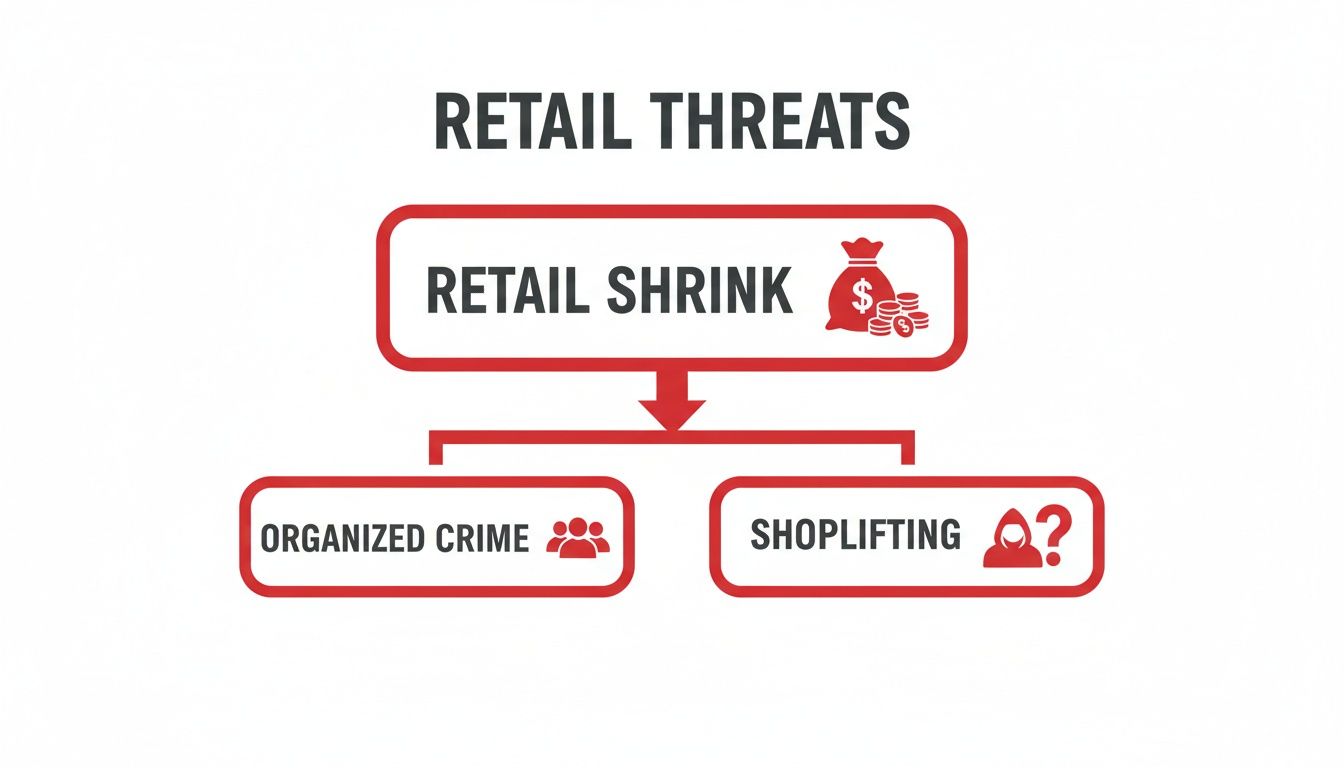
As you can see, both coordinated criminal efforts and individual acts contribute significantly to losses, which is why a multi-faceted defense is the only effective approach.
This table helps illustrate the difference between proactive strategies designed to prevent incidents and reactive measures taken after an event occurs, helping you understand the value of a comprehensive security plan.
Comparing Proactive vs. Reactive Loss Prevention Measures
| Measure Type | Strategy Example | Primary Goal | Overton Service Alignment |
|---|---|---|---|
| Proactive | Visible uniformed security guards at entrances, regular mobile patrols of the parking lot. | Deter potential threats before an incident occurs; create a perception of high risk for offenders. | Onsite Guards, Mobile Patrols |
| Reactive | Filing an incident report after a theft, reviewing CCTV footage post-event. | Document the loss, gather evidence for law enforcement, and identify vulnerabilities for future prevention. | Real-Time Incident Reporting, Guard Tour Management System |
| Proactive | Using a GPS-enabled guard tour system to ensure all critical areas are checked on schedule. | Ensure consistent security coverage and accountability; identify and correct patrol deviations in real-time. | GPS-Enabled Guard Tour System |
| Reactive | Contacting law enforcement after an aggressive shoplifter has already left the premises. | Apprehend the suspect and recover stolen goods after the fact. | 24/7 Security Operations Center (SOC) Support |
A balanced approach that prioritizes proactive measures while having strong reactive capabilities is the hallmark of an effective loss prevention program.
The Power of Real-Time Accountability
How do you know your security investment is working? The answer lies in transparent, verifiable data. Old-school paper logs and simple check-in sheets are no longer sufficient. Modern loss prevention services depend on systems that provide undeniable proof of performance.
A security program without accountability is just a security suggestion. Real-time, verifiable data transforms your strategy from a concept into a measurable operation that delivers consistent results.
This is where Overton Security truly stands apart. We utilize a GPS-enabled guard tour management system that puts transparency front and center. Our officers use handheld devices to scan checkpoints throughout your property, creating a time-stamped digital record of their patrols.
This system also allows them to file detailed incident reports—complete with photos—in real-time. That information is instantly available to you and our 24/7 Security Operations Center (SOC), ensuring you always have a pulse on what's happening at your site. It’s total transparency and immediate awareness, right at your fingertips.
Pinpointing Your Biggest Security Vulnerabilities

Any effective loss prevention strategy must start with a critical question: where are you most exposed? Every store, from a high-end boutique to a sprawling shopping center, has its own unique weak points. A successful security plan isn't about applying a generic solution; it’s about conducting a proper diagnosis to find and fix your specific vulnerabilities.
These risks fall into two main categories: external threats that come from outside your organization, and internal threats that develop from within. Gaining a handle on both is the essential first step toward building a security posture that truly protects your assets from every angle.
Understanding External Threats
External threats are often the first thing people think of when they hear about retail shrink. These challenges range from highly coordinated criminal rings to simple crimes of opportunity, and each demands a different approach.
-
Organized Retail Crime (ORC): This is a completely different challenge than casual shoplifting. ORC involves sophisticated networks stealing high-value goods in bulk for resale. They often work with unnerving precision, targeting specific products and exploiting known security gaps.
-
Opportunistic Shoplifting: This is the typical individual acting alone, often on impulse. While a single incident may not seem significant, the cumulative effect of small-scale theft can seriously damage your bottom line over time.
-
Loitering and Vandalism: When people linger at your entrances or in the parking lot without purpose, it can create an unwelcoming atmosphere for paying customers. It can also escalate to more serious problems like vandalism or harassment.
Data is key to fighting these threats effectively. Recent findings show that a small group of repeat offenders is responsible for a massive portion of retail crime losses. Research from over two million incidents found that while the median loss per event is just $51, the average loss jumps to $215 due to large ORC heists. Even more shocking? Just 10% of known offenders are responsible for 68% of the total loss value. This highlights the disproportionate damage these organized groups can cause.
A proactive security presence does far more than just stop theft—it helps you reclaim your environment. By deterring loitering and addressing minor issues before they escalate, you create a space where customers feel safe and your employees feel supported.
Addressing Internal Vulnerabilities
While external threats grab headlines, internal issues can be just as destructive—and are often much harder to detect. These weak points are typically tangled up in your people, processes, and policies. When looking for vulnerabilities, you need to consider everything from comprehensive strategies for securing physical entry points to procedural gaps in your day-to-day operations.
Internal risks include things like:
-
Employee Theft: It's a sensitive but important topic. This can range from pocketing cash from the register to complex fraudulent return schemes and manipulated inventory records. It doesn't just eat into profits; it erodes trust within your team.
-
Procedural Gaps: Inconsistent cash handling, lax inventory management, or security rules that are not enforced—all these create opportunities for theft, both internal and external. A policy is only effective if it's followed every single time.
-
Administrative Errors: Sometimes, losses stem from honest mistakes. Simple errors in receiving, pricing, or record-keeping can create significant inventory discrepancies that look exactly like theft on paper.
This is where a professional security partner like Overton Security becomes a game-changer. With 26 years of experience, we act as a neutral, objective ally. We know how to uphold policies calmly and consistently. Our officers are trained to be a visible deterrent to misconduct from any source, and our detailed digital reports give management clear, unbiased insights into what’s happening on the floor. These reports often illuminate procedural blind spots, helping you strengthen your internal controls and reduce losses from every direction.
Measuring the True ROI of Your Security Investment
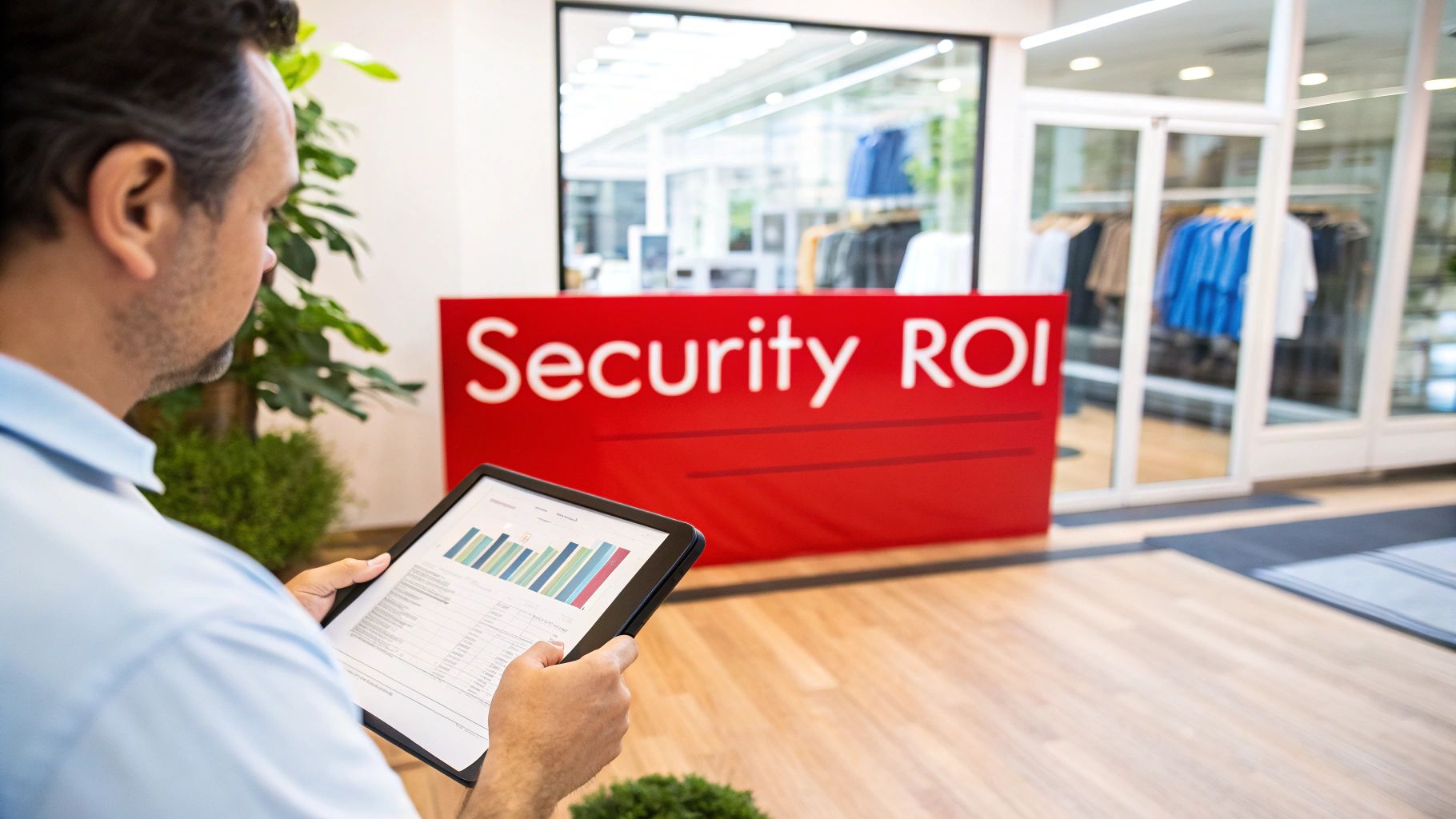
Discussing the security budget with stakeholders doesn't have to be a defensive conversation. Smart retail loss prevention isn't just another expense; it's a direct strategy for protecting your profits. The key is to reframe the discussion from cost to return on investment (ROI), which extends far beyond just stopping shoplifters.
To build a compelling case, you need to look at both the financial gains and the powerful, though less obvious, operational wins. The real value of a professional security partner is the total positive impact they have on your business's health, stability, and growth.
Calculating the Direct Financial Returns
The clearest path to measuring ROI starts with the hard numbers. These are the tangible metrics that show up directly on your profit and loss statement. A well-executed security program should deliver clear improvements in these key areas.
Start by tracking these financial indicators:
- Reduction in Inventory Shrink: This is your most direct metric. Compare your shrink rates before and after implementing professional security. The difference is the dollar amount of inventory you've saved from loss.
- Fewer Incidents of Vandalism: Professional security patrols are a significant deterrent to property damage. Track your savings on repairs like graffiti removal, broken windows, and other vandalism-related costs.
- Lower Insurance Premiums: It’s a fact that many insurance carriers offer lower premiums to businesses with proactive security measures, like onsite guards or actively monitored systems. This can result in a significant annual saving.
When planning any technology upgrade, understanding the initial and ongoing costs is critical for an accurate ROI calculation. This is true whether you're calculating the true cost of technology investments like outdoor LED signs or implementing a new camera system. Similarly, understanding how security guard services determine their bill rates brings much-needed clarity to your budget and helps you evaluate proposals professionally.
The Powerful Intangible Benefits
While hard numbers are essential, some of the biggest wins from professional security don't appear on a spreadsheet. These intangible returns foster a healthier business culture, a more resilient team, and a brand that customers trust.
An investment in security is an investment in stability. When employees feel safe and customers feel welcome, you create the ideal conditions for sustainable growth and long-term profitability.
These benefits may be harder to quantify, but their impact is undeniable:
- Improved Employee Morale and Retention: A safe workplace isn't a perk; it's a fundamental expectation. When your team isn't worried about aggression, harassment, or theft, morale improves, and costly employee turnover decreases.
- Enhanced Customer Experience: Shoppers are far more likely to visit, stay longer, and spend more when they feel secure. A visible, professional security presence eliminates the unease caused by loitering or disruptive behavior.
- Stronger Brand Reputation: Your store's reputation is one of its most valuable assets. A clear commitment to safety communicates to your community, staff, and customers that you care, building lasting trust and loyalty.
Ultimately, measuring the ROI of retail loss prevention requires looking at the whole picture. It's the combined impact of reduced shrink, lower operational costs, a more productive team, and a thriving, welcoming store that delivers the true return.
How to Select the Right Security Partner for Your Business
Choosing a provider for your retail loss prevention services is one of the most important decisions you'll make. This isn't just about hiring a guard; it's about finding a partner who will protect your assets, support your staff, and enhance the customer experience. With so many options available, it’s easy to feel overwhelmed.
The key is to ask the right questions and focus on true indicators of quality. This allows you to confidently select a partner who delivers long-term value, not just the lowest price tag. You're looking for a true extension of your team, which means digging into their experience, the quality of their people, and their operational transparency.
Look for Verifiable Industry Experience
In the security world, experience isn’t just a number—it’s a library of solved problems and crises averted. A company with deep roots in the industry has seen it all and understands the unique rhythm and risks of a retail environment. A long history, like Overton Security's 26 years of service, demonstrates stability and the ability to adapt to new threats.
When you speak with potential providers, get specific:
- Retail-Specific Experience: Ask about their work with businesses like yours—similar in size, industry, and location. A team that knows the challenges of a busy Los Angeles shopping plaza will be far more effective than one that primarily patrols industrial parks.
- Management Expertise: How long has their leadership team been in the security industry? Hands-on leaders who have grown with their company tend to build a culture focused on high service standards and client satisfaction.
Prioritize Officer Training and Retention
A security company is only as good as the officers they place at your location. High employee turnover is a major red flag in this industry, as it almost always leads to inconsistent service, undertrained guards, and officers who are unfamiliar with your site. A company that invests in its people is directly investing in the quality of your protection.
Choosing a security partner that invests in its officers is one of the most effective risk-management decisions you can make. Well-supported, professional officers are more vigilant, engaged, and capable of representing your brand with pride.
Look for a company that actively counters the industry's "burn and churn" reputation. Ask them directly: What is your approach to employee retention? Do you offer competitive pay, benefits, and a clear career path? A commitment to their officers is a strong sign you've found a company focused on quality over quantity.
Demand Technological Transparency
In today's world, there is no excuse for a lack of accountability. A modern security partner should use technology for more than just cameras; they should use it to provide you with undeniable proof of service. Vague promises and paper logs are relics of the past and have no place in professional retail loss prevention.
Ensure any potential partner can provide:
- Real-Time Reporting: The ability to receive digital reports, complete with photos and notes, as incidents unfold.
- GPS-Verified Patrols: A system using checkpoints to create a time-stamped, verifiable record of every patrol, proving all critical areas were checked.
- 24/7 Oversight: A dedicated Security Operations Center (SOC) that is always active, supporting officers in the field and serving as a central hub for communication and dispatch.
This level of transparency, a core part of the Overton Security approach, is what builds genuine trust. It gives you the peace of mind that your investment is delivering the consistent, measurable results you expect.
Putting Your Loss Prevention Plan Into Action
A strategy on paper is one thing; turning it into a real-world shield for your business is what truly matters. Moving from plan to action can seem like a major undertaking, but with the right security partner, it’s a straightforward process designed to enhance your protection from day one without disrupting your operations. This is where ideas become a tangible, active defense for your store.
It all starts with a deep understanding of how your business operates. A partnership with an experienced provider like Overton Security doesn’t begin with a generic quote—it starts with a comprehensive site assessment. Our leadership team personally walks your property to pinpoint specific vulnerabilities, from camera blind spots in your layout to weak points in your cash-handling procedures. This hands-on risk analysis forms the bedrock of your entire security program.
Developing Your Custom Security Protocols
Once we’ve mapped out the risks, the next step is to build your custom security protocols, often called post orders. Think of this as the specific playbook your officers will follow, tailored precisely to your location. It details everything from patrol routes and checkpoint locations to emergency contacts and how to handle suspicious behavior.
This is not a one-size-fits-all template. Your post orders will be built around your store's hours, peak traffic times, and specific concerns. You can see a variety of these custom approaches in our guide to effective retail loss prevention strategies.
The best security plan is one that feels like a natural extension of your own operations. Custom protocols ensure that security officers are there to support your business goals, not just stand guard.
With a solid plan in place, we move to officer selection and training. We don't just send the next available person. Instead, we handpick individuals whose experience and temperament are a perfect match for your environment. Those officers are then trained specifically on your site, using your custom post orders, so they are fully prepared before their first shift begins.
This hands-on approach, refined over our 26 years of experience, removes the uncertainty from implementation. We manage the details of staffing, training, and logistics so you can focus on what you do best: running your business. Your strategy becomes our operational reality, creating a more secure future for your customers, your employees, and your bottom line.
Common Questions About Retail Security Services
Deciding to bring in professional loss prevention is a significant step—and a smart one. But it's natural to have questions about the cost, the methods, and whether it’s the right decision for your specific stores. We hear these questions frequently from retail and property managers, so let's address a few of the most common ones.
Getting these answers should help you move forward with confidence, knowing you're making a sound choice to protect your business.
How Can I Justify The Cost of Professional Security To My Stakeholders?
This is often the first question, and the key is to frame it as an investment with a clear return, not just an expense. Look beyond the upfront cost and focus on the total ROI.
Of course, an effective loss prevention service reduces direct theft and shrink. That’s the most obvious benefit. But the value goes much deeper. You're also reducing costs associated with vandalism, lowering your liability risks, and often, you can even negotiate for lower insurance premiums.
Don't forget the "softer" benefits. A secure shopping environment makes your employees feel safer, which boosts morale and helps with retention. It also makes customers feel more comfortable, encouraging them to shop longer and return more often. With Overton Security, our detailed digital reports provide hard data on every patrol and incident, making it simple to show stakeholders exactly what they're paying for and the positive impact it's having.
Are Visible Security Guards Enough Or Do I Need Technology Too?
A uniformed guard is an excellent deterrent—there's no question. Their presence alone can prevent a great deal of opportunistic crime. But the most effective strategies pair that human expertise with smart, modern technology. It's a powerful combination.
Think of it this way: a guard provides the immediate presence and judgment, while technology like our GPS-enabled tour systems ensures every corner of your property is covered consistently and accountably. You're not just hoping the patrols are happening; you have the data to prove it.
Our 24/7 Security Operations Center (SOC) acts as a force multiplier, providing another set of expert eyes on your property at all times. This blended approach, a cornerstone of our operations at Overton Security, creates layers of protection that are far more robust than either element alone.
“A security program without accountability is just a security suggestion. Real-time, verifiable data transforms your strategy from a concept into a measurable operation that delivers consistent results.”
This integration is what elevates a standard security presence into a dynamic, responsive loss prevention system.
My Retail Center Has Unique Needs. Can You Create A Custom Security Plan?
Absolutely. In fact, we insist on it. A "one-size-fits-all" security plan is a recipe for failure, leaving obvious gaps for criminals to exploit. We know that every property is different, with its own unique traffic patterns, high-risk zones, and operational needs.
Our process always begins with a thorough site assessment led by our hands-on leadership team, not just a salesperson. From there, we build your security plan from the ground up, creating customized post orders and training our officers specifically for your site. They learn your priorities and become a genuine extension of your own team.
Because we maintain a low manager-to-client ratio, we stay nimble and can adjust your plan as your needs evolve. This client-first model isn't just a talking point; it's the foundation of our 26-year history of success. We are here to deliver real service, not just coverage.
Ready to build a loss prevention strategy that actually protects your profits and elevates your brand? The team at Overton Security is here to help you develop a customized security plan that fits your business perfectly. Contact us today for a complimentary security assessment.