
Effective security for concerts isn't something you can throw together last minute. It's a strategic blueprint, carefully developed long before the first fan ever lines up. For an event planner, this process means a detailed risk assessment of the venue and crowd, close collaboration with every stakeholder, and a clear, actionable plan to mitigate threats before they start.
The goal is simple: ensure a safe and memorable experience for attendees, artists, and staff.
Building Your Concert Security Blueprint
Crafting a reliable concert security plan starts by developing truly effective event management plans that account for every possible scenario. Simply hiring guards and placing them at the doors isn't a strategy; it’s a liability. A professional security partner always begins with a foundational phase that is methodical, collaborative, and built around the unique variables of your event.
Every concert is different. A sold-out arena show for a high-energy rock band in Los Angeles has a completely different risk profile than an outdoor jazz festival in a public park. The artist's profile, expected crowd demographics, and the venue's physical layout all dictate the security approach. The key is to identify and address vulnerabilities before they can be exploited.
The Foundational Risk Assessment
Everything starts with a comprehensive risk assessment. This is far more than a quick walkthrough; it's a deep-dive analysis of the entire event ecosystem. With over 26 years of hands-on experience, our team has learned to look far beyond the obvious to protect our clients' interests.
A proper assessment evaluates key areas like:
- Venue Vulnerabilities: Identifying unsecured perimeter points, blind spots in camera coverage, and potential chokepoints where crowd flow could become dangerous.
- Audience Dynamics: Considering the expected behavior of the crowd. Is this an all-ages event, a high-energy mosh pit, or a more relaxed, seated audience?
- Artist-Specific Threats: Evaluating any known risks or threat history associated with the performer, their entourage, or even their fanbase.
- External Factors: Assessing risks from the surrounding area, such as traffic congestion, local crime patterns, or the potential for protest activity.
A proactive security plan is built on foresight, not reaction. By identifying potential risks—from crowd surges to medical emergencies—during the planning phase, you transform your security team from simple observers into active protectors of the event experience.
To organize this process, we use a framework that helps us systematically evaluate and prepare for each potential issue.
Concert Security Risk Assessment Framework
This table outlines the key areas we examine to build a comprehensive security strategy from the ground up.
| Risk Category | Specific Threats to Consider | Recommended Mitigation Strategy |
|---|---|---|
| Venue & Perimeter | Unsecured entry points, fence jumpers, poor lighting, blind spots. | Layered perimeter fencing, roving patrols, comprehensive CCTV coverage, credential checks at multiple points. |
| Crowd Dynamics | Surges, crushing, mosh pit injuries, fights, medical emergencies. | Barrier placement strategy, trained crowd management teams, clear ingress/egress routes, on-site EMS. |
| Access Control | Counterfeit tickets, unauthorized personnel backstage, prohibited items. | Magnetometers and/or wanding, thorough bag checks, strict credential enforcement, clear "prohibited items" list. |
| Artist & Staff | Overly aggressive fans, stalkers, backstage security breaches. | Dedicated artist protection detail, secure "green room" protocols, controlled access to all production areas. |
| External Threats | Local crime, protest activity, vehicular threats, severe weather. | Liaise with local police, monitor social media for chatter, establish weather contingency plans and evacuation routes. |
By breaking down the risks this way, we can ensure no stone is left unturned and that resources are allocated where they'll have the greatest impact.
Classifying Risks And Creating A Threat Matrix
Once we've identified the potential risks, the next step is to classify them. We do this by creating a threat matrix that prioritizes each risk based on its likelihood and potential impact. This is how you allocate resources intelligently, ensuring the most significant threats receive the most robust defenses. For example, the risk of unauthorized access at a massive festival is high, demanding a multi-layered approach to perimeter security and credential checks.
The infographic below shows how these core steps flow together to build a truly resilient plan.
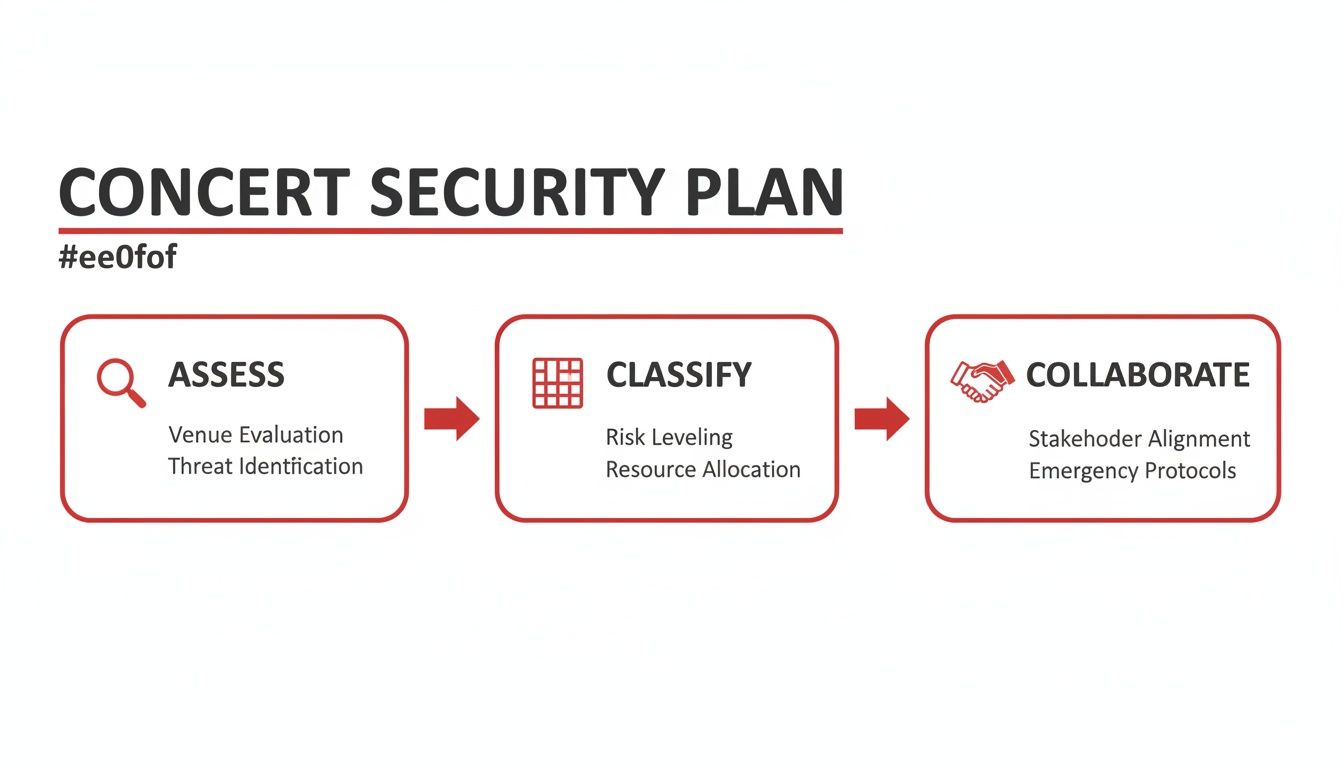
As you can see, a strong plan moves logically from assessing risks, to classifying them, and finally, to collaborating with all the key partners involved.
The Importance Of Early Collaboration
No security plan can operate in a vacuum. From day one, constant collaboration with venue management, local law enforcement, and emergency medical services is absolutely critical. This unified approach ensures everyone knows their role, communication channels are clear, and all response protocols are fully integrated.
When all parties are aligned, the security posture becomes seamless and professional. It provides peace of mind for event planners and, most importantly, a safe environment for every fan.
Deploying Your Security Team for Maximum Impact
Once the risk assessment is complete, it’s time to focus on the human element. Effective concert security isn't just about meeting a headcount; it's about smart, strategic deployment. You need the right people in the right places at the right time to create a reassuring presence that keeps things running smoothly.
A solid deployment strategy goes beyond just placing a guard at every gate. We believe in a layered security model where different teams have clear, distinct roles that all work together. This approach ensures every vulnerability flagged in your assessment is covered by a dedicated team.
Layering Your Staffing Model
Picture your security setup as a series of concentric rings, with each one serving a specific purpose. This layered approach is designed to address potential issues early, long before they can escalate and impact the guest experience.
A comprehensive model almost always includes these core teams:
- Perimeter Security: This is your outermost layer. These officers patrol fence lines, parking lots, and the surrounding grounds. Their job is to deter unauthorized entry and monitor activity outside the official event space.
- Access Control & Screening: Positioned at the entrances, this team is responsible for managing the flow of people coming in. They handle bag checks, operate metal detectors, and ensure ingress is as safe and efficient as possible.
- Stage & Backstage Security: This is a specialized crew dedicated to protecting the artists, their team, and high-value production equipment. They maintain tight control over sensitive areas like the stage, green rooms, and production offices.
- Roaming Crowd Management Teams: These highly visible officers move through the audience. They are trained to spot signs of distress, de-escalate minor conflicts, and act as the eyes and ears on the floor.
- Dedicated Response Units: Think of this as your mobile quick-reaction force. This specialized team is held in reserve to respond quickly to medical emergencies, major disturbances, or any other critical incident.
An experienced security officer does more than just stand watch; they read the environment. A seasoned professional can distinguish between harmless fan excitement and the subtle signs of escalating tension, allowing them to intervene with calm de-escalation before a situation spirals.
Adapting Staffing to the Scenario
The exact number of officers and their placement depends entirely on the event's unique profile. A massive, high-energy rock festival at an outdoor venue will require a much heavier security presence than an intimate acoustic show in a historic theater.
For the rock festival, you'd likely need a strong contingent of roaming teams in the mosh pit area and a robust perimeter patrol to manage a wide-open boundary. The theater show, on the other hand, might prioritize sophisticated access control and discreet backstage security, with fewer crowd management officers needed for a seated audience.
This is where a security partner’s experience really shines—knowing precisely how to scale and adapt the deployment strategy is key. You can find more details on how we approach different events by checking out our guide on hiring security for events.
Why Experienced Officers Matter
At Overton Security, we place a huge emphasis on officer retention. We know from our 26 years of experience that a consistent, professional team is the single most valuable asset in event security. A well-trained, long-term officer is infinitely better at proactive threat identification and de-escalation than a temporary hire.
Our commitment to supporting our people means you get a team that is not just present, but fully engaged, capable, and dedicated to the success of your concert. Investing in our officers directly translates to a safer, more positive experience for every person who walks through your gates.
Integrating Technology for Better Situational Awareness
The best security plans don't just put boots on the ground; they pair seasoned human expertise with the precision of smart technology. Relying solely on officers can lead to a reactive strategy. When you integrate the right tech, you transform your security posture into a proactive force that helps identify potential issues before they impact the fan experience.
Technology is the ultimate force multiplier. It gives our officers better intelligence, allowing them to make faster, smarter decisions. It's all about creating a complete, real-time picture of the event environment. This allows a central command to monitor the entire venue simultaneously, providing crucial support to teams managing the crowd firsthand. Tools like intelligent security systems and smart surveillance cameras are no longer optional—they're essential for modern security operations.
The Role of the Security Operations Center
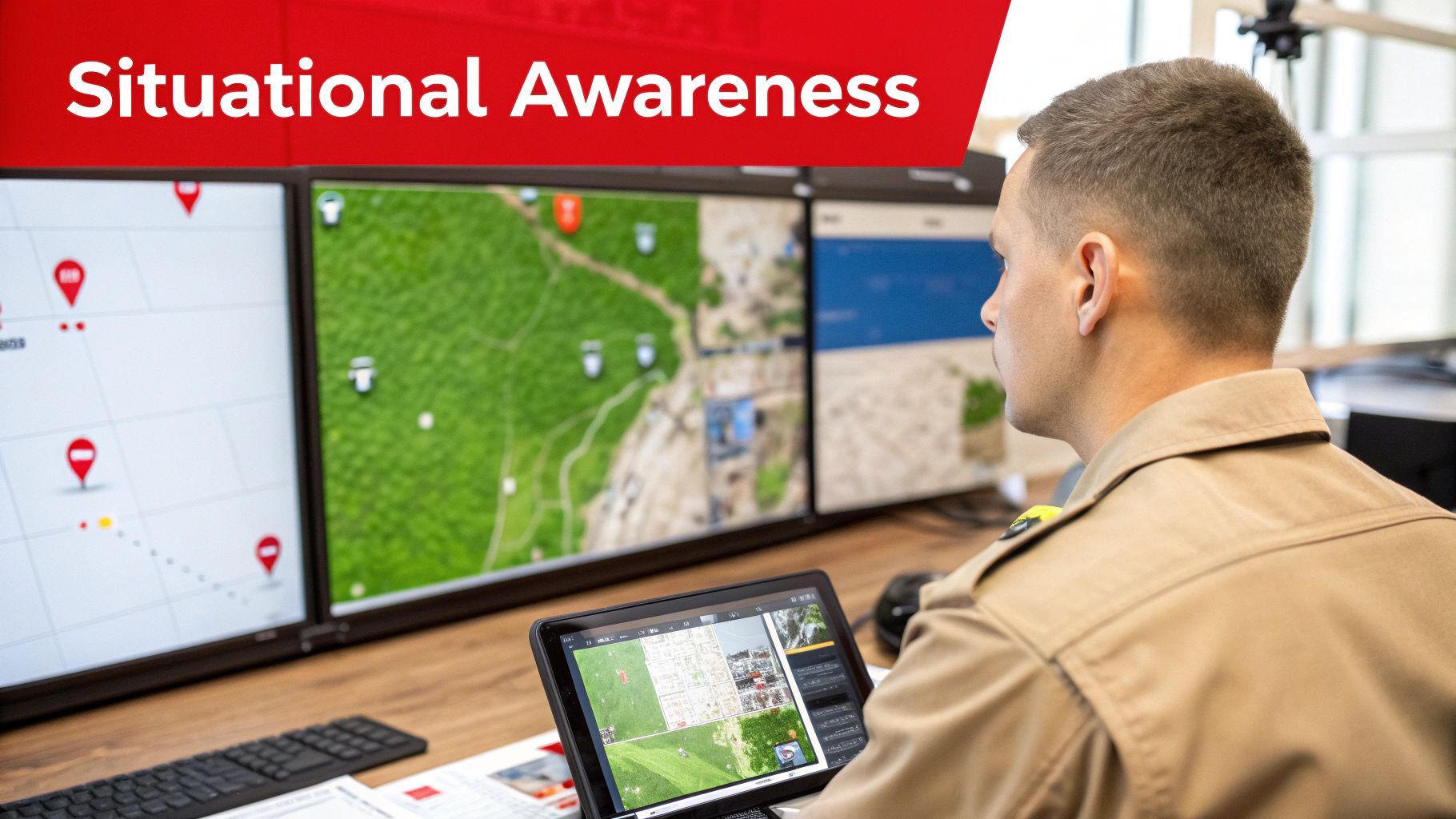
At the heart of our tech-forward approach is our 24/7 Security Operations Center (SOC). Think of the SOC as the nerve center for your concert. It’s a dedicated facility where our specialists provide real-time oversight and support to every officer deployed at your venue. This isn't just someone watching monitors; it's an active layer of accountability and support.
From our SOC, the team can:
- Track Officer Locations: We know the real-time GPS location of every officer, ensuring they’re correctly positioned and can be dispatched instantly to an incident.
- Oversee Patrol Completion: Our guard tour management system verifies that all required patrols are completed on schedule.
- Provide Immediate Backup: The SOC acts as an instant communications hub, coordinating between officers, venue staff, and local law enforcement during an emergency.
- Monitor Live Feeds: We keep eyes on critical areas through integrated camera systems, spotting potential issues that an officer on the ground might not see.
This constant oversight provides event planners with the confidence that the security plan is being executed exactly as designed.
Transparency Through GPS-Enabled Guard Tours
A common question from event organizers is, "How do I know the security plan is actually being followed?" We answer that with technology-driven transparency. Our officers use a GPS-enabled guard tour management system that documents every move.
Here’s how it works: Officers scan checkpoints at key locations around the venue with a handheld device. Every scan is time-stamped and logged, creating a detailed digital record of each patrol. This system eliminates guesswork and provides you with clear, concise reports confirming that all protocols were followed. This kind of real-time accountability is fundamental to the trust we build with our clients.
Technology doesn't replace the need for skilled officers; it empowers them. Giving a great team better tools and real-time data allows them to be more effective, more responsive, and ultimately, better protectors of the event.
Tackling Modern Digital Threats
Concert security isn't just about what happens at the physical perimeter anymore. Digital threats, from sophisticated ticket fraud to online disruptions, are a growing concern and must be part of the plan.
Digital threats are reshaping the industry. We're seeing major shifts in access control, with technologies like blockchain ticketing and zero-trust architectures becoming standard to fight fraud, which can affect up to 15% of tickets at major shows. In response, around 80% of top-tier events now use facial recognition with encrypted e-tickets, a combination that has slashed fraud incidents by over 60%.
AI-enabled cameras also play a massive role here. These systems can be set to detect anomalies in crowd density, identifying potential crushing risks before they become critical. Our approach to remote video monitoring leverages this technology to give officers a heads-up on developing situations, allowing them to step in proactively. It’s a perfect example of how smart tech enhances situational awareness, turning raw data into actionable intelligence.
Mastering Crowd Management and Safe Egress
Managing thousands of passionate, energized fans is both an art and a science. The energy in a venue when the music starts is incredible, but that same energy requires a steady, professional hand to keep things safe. Effective crowd management is all about maintaining a positive atmosphere from the moment the first fan arrives until the very last person heads home.
It starts with engineering a smooth entry, or ingress. Bottlenecks at the gates don't just frustrate people; they can quickly become dangerous pressure points. Our approach involves using strategic barricade placements and wide, clear pathways to keep lines moving and prevent unsafe crowding. Once people are inside, we apply the same logic, using barriers to create designated zones and buffer areas around sensitive spots like soundboards or medical tents.
Proactive Crowd Monitoring and De-escalation
A huge part of strong security for concerts is being proactive. Our officers, bringing our company's 26 years of field experience to the table, are trained to read crowd dynamics. They know how to spot the difference between harmless fun and the subtle signs of rising tension that might signal a dispute or medical issue.
Catching these signs early is crucial. An experienced officer can often step in and de-escalate a potential conflict with a calm, non-confrontational presence before it boils over. This ability to act decisively, yet calmly, is the hallmark of a truly professional team.
In recent years, crowd management has become much more data-driven. Tragic incidents have underscored the dangers of uncontrolled surges. By 2025, industry reports show that over 70% of major concerts are using predictive analytics to monitor crowd density. This tech helps cut surge risks by up to 40% by giving teams a heads-up to open new zones or reinforce exit routes. You can dig deeper into these outdoor surveillance trends and their impact.
Designing a Flawless Egress Strategy
Getting fans in safely is a huge focus, but getting them out is arguably even more critical. A poorly planned egress can turn a fantastic concert into a chaotic and hazardous situation in minutes. When the show ends, you have thousands of people all trying to leave at once, creating immense pressure on every exit.
A solid egress plan is designed long before show day and includes several key elements:
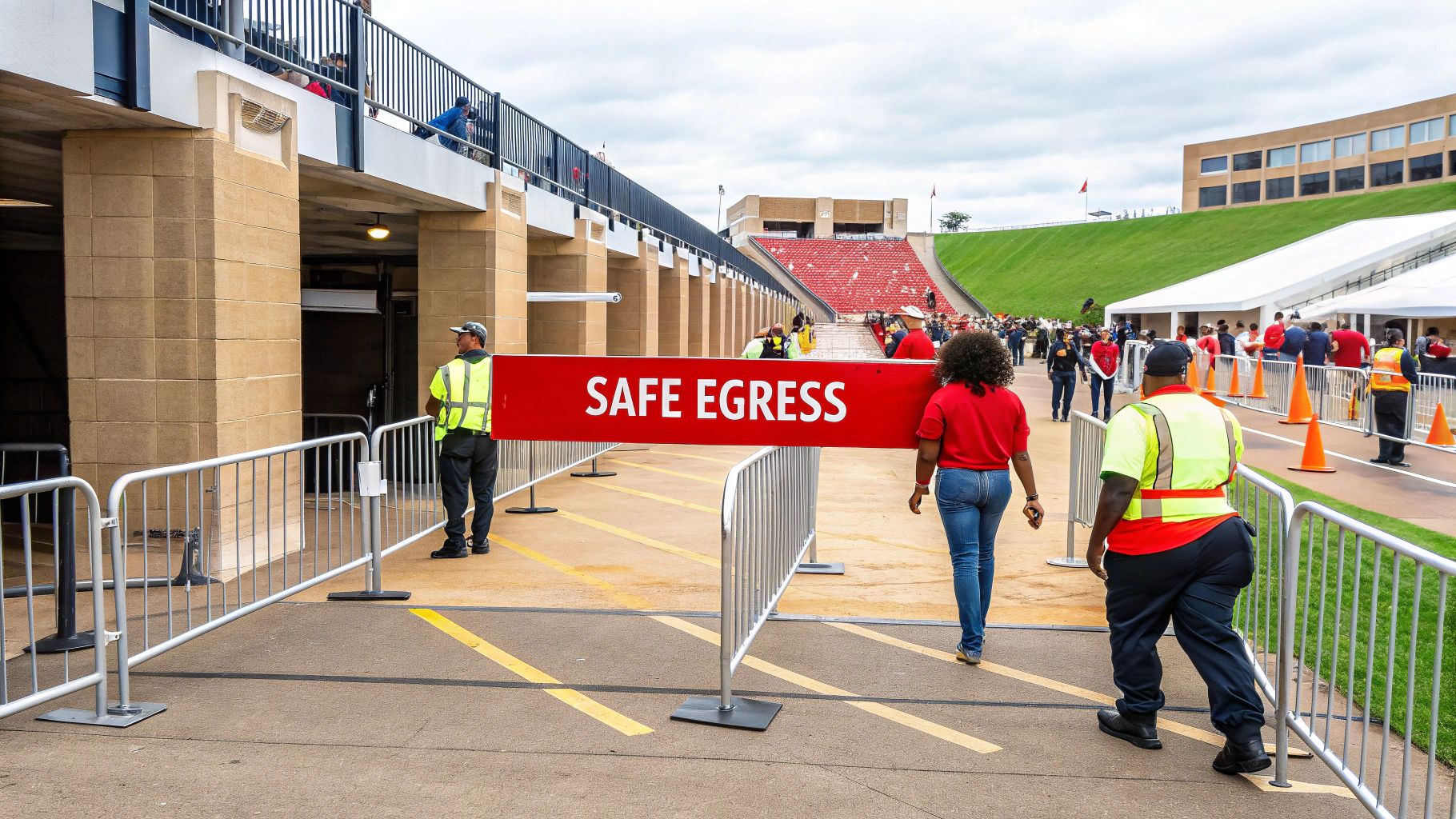
- Clearly Marked Exits: Every exit route needs to be numerous, completely unobstructed, and well-lit. Signage must be impossible to miss, even in a dark, crowded venue.
- Phased Lighting and Audio Cues: Instead of abruptly killing the lights and music, we recommend gradually bringing up the house lights while playing outro music. This provides a subtle cue that the show is over, discouraging a mad dash for the doors.
- Officer Placement at Chokepoints: We strategically position security personnel at key chokepoints—like narrow hallways, stairwells, and main gates—to keep the flow orderly and prevent dangerous crowding.
- Emergency Evacuation Routes: The plan must map out distinct, pre-planned evacuation routes for emergencies that are separate from the standard exits. Officers need to be trained to direct attendees down these routes calmly and efficiently.
The success of a concert's security is often judged by how smoothly it ends. A well-managed, orderly exit is the final, lasting impression you leave with attendees, reinforcing their feeling of safety and a positive overall experience.
Ultimately, a seamless egress is the final piece of the puzzle. It ensures the night's excitement concludes with a safe, organized departure, capping off a memorable event for all the right reasons. This is the kind of meticulous attention to detail that separates a basic security presence from a true security partnership.
Preparing for the Unexpected with Emergency Response Protocols
Even with the most detailed security plan, incidents can happen. A sudden medical issue, a severe weather event, or a legitimate threat can test any team. This is why a solid Emergency Response Plan (ERP) isn't just a document—it’s the playbook our team lives by when it matters most.
An effective ERP removes the guesswork from a crisis. It gives every officer on the ground, from the front gate to backstage, clear and actionable steps for their specific role. That clarity is what allows for a calm, professional response that keeps everyone safe.
Establishing a Clear Chain of Command
In a high-stress situation, confusion is the biggest enemy. The single most critical piece of any ERP is a crystal-clear chain of command. Everyone on site needs to know who makes the final call, who they report to, and how vital information is communicated.
This structure eliminates conflicting orders and ensures a unified response. We establish a central point of contact—usually a security supervisor embedded in the event command post—who becomes the hub for coordinating our team, the venue staff, and outside emergency services. Without that, a response can quickly become disorganized.
A well-rehearsed emergency plan transforms chaos into coordinated action. When every officer understands their role and the chain of command is clear, the team can respond with confidence and precision, ensuring the safety of attendees and staff alike.
Customizing Protocols for Every Scenario
A generic emergency plan is not sufficient for a live concert. Your ERP must be tailored with specific game plans for the scenarios identified in your risk assessment.
These protocols need to cover the essentials:
- Medical Emergencies: How to spot someone in distress, clear a path for EMS, secure the medical tent, and communicate effectively with paramedics.
- Severe Weather: Plans for communicating weather alerts, directing people to shelter, and executing an orderly evacuation if the venue is no longer safe.
- Active Threats: Coordinated lockdown or evacuation procedures, clear communication to prevent panic, and a plan to brief law enforcement with critical intel upon their arrival.
- Fire Safety: Defined evacuation routes, pre-planned assembly points, and specific officer roles for moving crowds away from danger. This is a fundamental part of any fire watch plan.
Each of these protocols is spelled out in our customized post orders, which act as a field guide for our officers. This ensures that no matter what happens, the response is consistent, swift, and follows best practices.
Seamless Coordination with Emergency Services
Our security team is the first line of defense, but we don't operate in a silo. A huge part of the ERP is building a seamless connection with local first responders—police, fire, and ambulance services.
This coordination starts well before showtime. We meet with local agencies to walk them through our security layout, map out access routes for their vehicles, and establish communication channels. If an incident occurs, our on-site command post is their direct line, feeding them real-time updates that help them arrive on scene faster and better informed. To see how we achieve this, you can learn about our emergency communications system and how it fits into our overall strategy.
Post-Event Reporting and Continuous Improvement
The job isn't done when the last fan goes home. After any major incident, we conduct a thorough debrief and complete detailed reports. It's how we maintain high standards and continuously improve.
Here’s what our process looks like:
- Detailed Incident Reports: Involved officers complete comprehensive digital reports with photos and witness statements while the details are still fresh.
- Team Debriefing: We bring key security personnel together to review the incident from every angle. What went well? What could be improved next time?
- Lessons Learned Analysis: We take what we learned from the debrief and use it to refine our protocols, training, or staffing for future events.
This commitment to learning from every experience is a core part of how we operate. It ensures that with every event, our strategies get sharper and our team is even more prepared, giving our clients the confidence that they're in good hands.
Why Professional Concert Security Is Non-Negotiable
The entire landscape of live events has shifted. Today, professional security for concerts isn't just a good idea; it's an absolute necessity. Public awareness is at an all-time high, regulations are stricter, and the dynamics of a modern crowd are more complex than ever. A basic security presence is no longer enough—you need a team that truly understands the unique energy and potential risks of a live audience.
This is where real-world experience makes all the difference. With 26 years in the field, Overton Security has seen firsthand how the security needs for concerts have evolved. We have always focused on quality over quantity, building our reputation on giving every event the hands-on attention it needs to be safe and successful. Our low manager-to-client ratio isn't just a selling point; it means you get a stable, professional team that knows your venue and your crowd.
A Partnership Built on Trust and Technology
When you hire a security provider, you are placing the safety of every artist, fan, and crew member in their hands. The global event security market is projected to hit $30 billion by 2025. This reflects a massive industry-wide shift toward recognizing that sophisticated, smart security solutions are now essential. You can get a deeper look into these concert security challenges and market trends.
We tackle these modern challenges by blending our highly-skilled officers with the right technology. This includes 24/7 SOC oversight, GPS-tracked patrols, and detailed digital reports that give you a clear picture of everything happening on the ground. We aim to be more than a vendor; we strive to be a dedicated partner, committed to ensuring every concert is a safe and memorable experience for all the right reasons.
Common Questions About Concert Security Planning
Even with a detailed security plan, questions will arise. After 26 years securing concerts across California—from intimate venues in San Diego to massive festivals in San Francisco—we've heard just about everything from promoters, venue managers, and artists. We’ve pulled together the questions that come up most often to give you straightforward answers.
How Do You Determine the Right Number of Guards?
There is no simple formula. A standard guard-to-guest ratio doesn't account for the unique variables of an event. We always start with a baseline, but the final number comes from a thorough risk assessment.
We look at everything: the venue's layout, the artist's fan base, expected crowd demographics, and even local city ordinances. A high-energy electronic music festival requires a much denser, more visible security presence than a seated acoustic show. It’s all about tailoring the team to the specific risks of that show, on that night.
Venue Security vs. a Dedicated Event Team—What's the Difference?
This is a common point of confusion. It’s easy to think, "the venue has guards, we're covered," but it's not that simple.
Venue Security are the experts on the building itself. They know the permanent access points, fire exits, and the general property. They handle the baseline, day-to-day safety of the physical location.
A Dedicated Event Security Team, like ours, comes in to build and run a security plan specifically for your concert. We work closely with the venue's staff, but our focus is on managing dynamic crowd movements, securing the stage and backstage areas, and executing emergency plans designed for your specific audience and performer.
How Does Technology Actually Make a Concert Safer?
Think of technology as a force multiplier for our officers. It gives our people on the ground better intelligence, allowing them to make smarter, faster decisions when every second is critical.
Our 24/7 Security Operations Center (SOC) acts as a real-time command hub, providing the on-site team with an immediate layer of backup and oversight. On the ground, GPS tracking is about accountability, giving you proof that patrols are happening as planned. We can also deploy AI-powered cameras that can flag potential issues, like dangerous overcrowding in a specific section, before it becomes a problem. This allows our teams to step in and de-escalate proactively.
The single most overlooked part of concert security is often the egress—how everyone gets out. Planners spend so much energy on getting people in smoothly, but a chaotic, poorly managed exit can be just as dangerous as a breach at the front gate.
A well-planned exit is more than just opening the doors. It's the final impression you leave with every fan, proving their safety was your top priority from the moment they arrived to the moment they left. Getting that right is the hallmark of a truly professional security operation.
When you’re planning your next show, you need a security partner who understands the stakes. Overton Security brings 26 years of experience to the table, creating safe and memorable experiences for fans and artists alike. Contact us today to discuss your event security needs.