
When it comes to workplace fire prevention, we're not just talking about having a few fire extinguishers on the wall. A truly effective strategy combines smart planning, thorough training, and consistent equipment maintenance. The goal is simple: identify and address fire hazards before they ever have a chance to ignite.
This goes beyond just ticking compliance boxes. It's about building a resilient workplace that protects your people, your property, and your operational continuity. Being proactive is, without a doubt, the single most effective way to manage fire risk.
Why Proactive Fire Prevention Is Non-Negotiable
If you're a property manager, facilities director, or business owner, the thought of a fire can be a persistent concern. It’s easy to slip into a reactive mindset where fire safety is just a checklist: install extinguishers, test alarms, meet the code. While those steps are absolutely critical, they represent the baseline, not the complete strategy.
True fire prevention is a proactive business function—and one of the most important investments you can make. The real cost of a fire goes far beyond structural damage. It sends a ripple effect through an organization that can disrupt even a financially healthy company. When you understand these hidden costs, fire prevention stops looking like an expense and starts looking like essential business preservation.
The True Costs of a Fire Incident
When a fire breaks out, the immediate focus is on getting people to safety and controlling the damage. But for the business, the fire is just the beginning. The aftermath can unleash a cascade of secondary losses that are often more destructive than the flames themselves.
Consider what really happens after the smoke clears:
- Operational Disruption: A fire can halt your operations for weeks, if not months, leading to a complete stop in revenue.
- Legal and Regulatory Liabilities: After a fire, agencies like Cal/OSHA will investigate. Failing to meet safety standards can lead to significant fines and serious legal consequences.
- Loss of Customer Trust: For a shopping center or a residential community, a fire can shatter your reputation. Customers and tenants may lose confidence and not return.
- Irreplaceable Data Loss: Critical business records, client files, and intellectual property can be wiped out in an instant, with no chance of recovery.
Here’s the most important thing to remember: the overwhelming majority of workplace fires are preventable. They are rarely random accidents. More often, they are the predictable result of overlooked hazards, insufficient training, or a safety culture that has become complacent.
Shifting from Reaction to Resilience
This reality presents an opportunity to shift your mindset from reactive concern to proactive confidence. A strategic fire prevention plan doesn't just satisfy an inspector's checklist; it builds resilience directly into your organization. It empowers your team, protects your assets, and ensures business continuity.
With 26 years of hands-on experience, we at Overton Security understand that effective prevention is the perfect blend of human expertise and smart systems. Our entire approach is built around creating a secure environment where risks are identified and neutralized long before they can escalate. By partnering with a dedicated security provider, you turn your fire safety plan from a document on a shelf into a living, breathing shield for your business.
Identifying Common Fire Hazards in Your Workplace
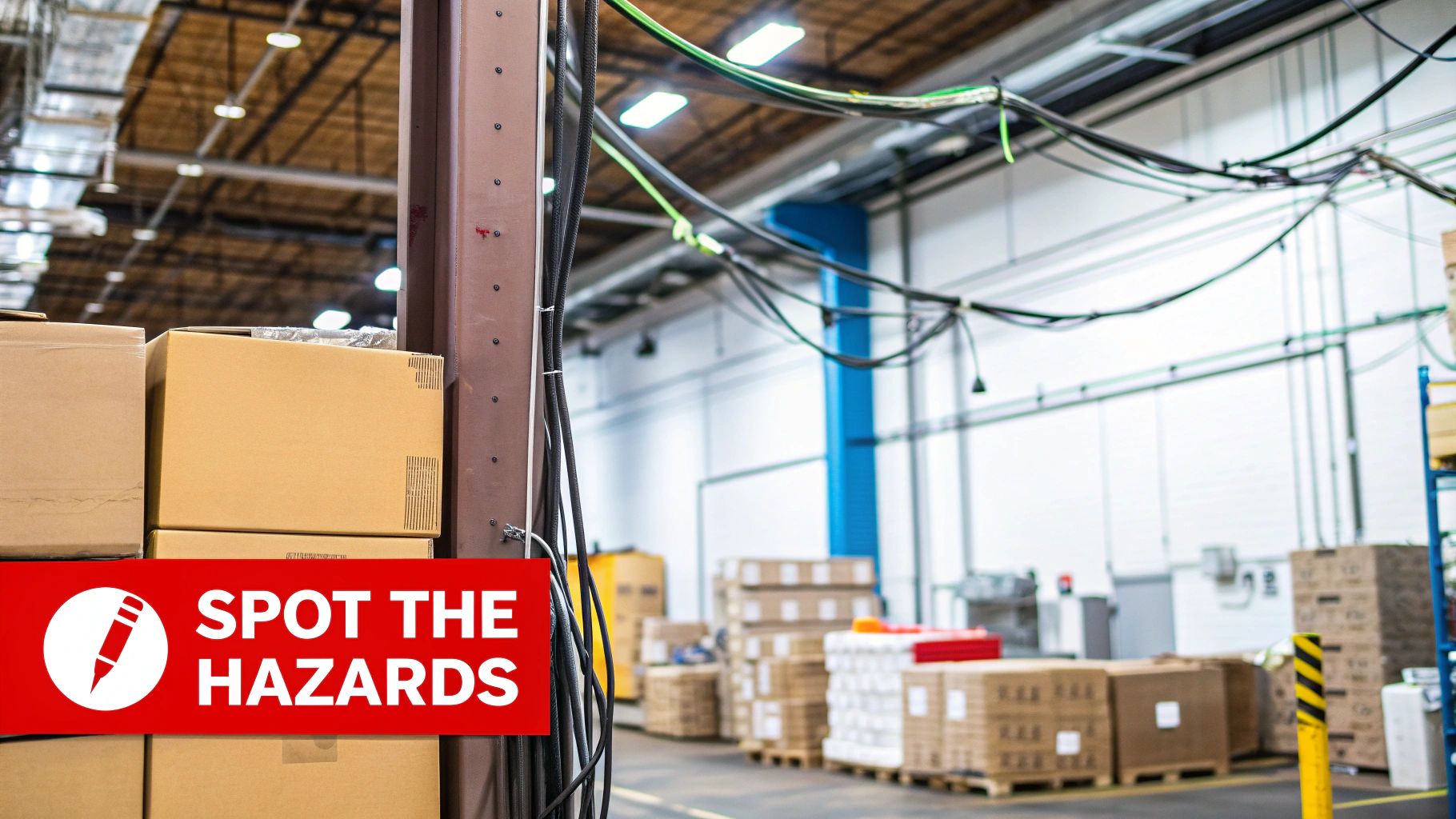
Effective fire prevention starts with knowing what you’re looking for. Most fire hazards aren't dramatic or obvious; they're the small things hiding in plain sight, developing slowly over time until they become a significant risk.
To truly protect a property, you have to move beyond a generic checklist. You need to walk through your own facility with a trained eye, spotting the specific threats that could turn a normal day into a disaster. Most of these risks fall into a few key categories.
Electrical and Equipment Failures
Your building’s electrical system is its lifeblood, but when overloaded or poorly maintained, it becomes a top ignition source. All it takes is one faulty wire or a circuit pushed beyond its limits to generate enough heat to spark a fire.
Watch out for these classic electrical risks:
- Overloaded Power Strips and Circuits: Daisy-chaining power strips or plugging heavy-duty equipment into a single outlet is an invitation for an electrical fire.
- Frayed or Damaged Wiring: Worn-out cords with exposed wires are a disaster waiting to happen, creating a serious risk of sparks and short circuits.
- Outdated Electrical Systems: Older buildings often have wiring that wasn't designed for the power demands of modern technology, which can lead to dangerous overheating.
It’s also crucial not to overlook everyday appliances. For example, ensuring regular expert dryer vent cleaning can mitigate a significant and often overlooked fire risk, particularly in facilities with laundry services or residential communities.
Poor Storage and Housekeeping
How you store materials and manage waste directly impacts your fire risk. Clutter doesn't just provide more fuel for a fire to consume—it can also block emergency exits and life-saving equipment, turning a manageable situation into a chaotic one.
Keep a sharp eye on these common housekeeping issues:
- Improper Storage of Combustible Materials: Oily rags, cleaning chemicals, and even stacks of cardboard need to be kept in designated containers far away from heat sources.
- Blocked Fire Exits and Egress Routes: Piling boxes in a hallway or propping open a fire door, even "just for a minute," can have tragic results. All escape routes must be kept clear. Always.
- Accumulated Trash and Debris: Overflowing dumpsters parked too close to the building are a tempting target and provide an easy fuel source for a fire.
A clean, organized worksite is a safer worksite. Consistent housekeeping is one of the most cost-effective and powerful fire prevention tools available to any business owner or property manager.
Human Factors and Training Gaps
Ultimately, your people are your greatest asset in preventing fires. But without proper awareness and training, they can also become your biggest liability. Complacency is the enemy of safety, which makes ongoing training an absolute must.
Common human-driven risks include:
- Lack of Staff Training: An employee who doesn't know how to use a fire extinguisher or is unsure of the evacuation plan can lose precious seconds in a crisis.
- Unauthorized Smoking: A carelessly discarded cigarette butt remains a top cause of fires, especially when it lands near flammable materials or dry landscaping.
- Negligent Hot Work: Jobs that create sparks, like welding or grinding, demand strict safety protocols. A formal "hot work permit" system is essential to prevent sparks from igniting nearby materials.
To help you get a clearer picture of these risks, we've put together a quick-reference table.
Common Fire Hazards and Key Prevention Measures
| Hazard Category | Specific Examples | Primary Prevention Strategy |
|---|---|---|
| Electrical & Equipment | Overloaded circuits, frayed cords, faulty appliances | Regular inspections, professional maintenance, proper use |
| Poor Housekeeping | Blocked exits, improper combustible storage, trash buildup | Daily cleaning protocols, clear egress routes, proper disposal |
| Human Factors | Lack of training, unauthorized smoking, unsafe hot work | Consistent employee training, clear safety policies, permits |
By actively looking for these common hazards, you shift your fire prevention strategy from a document on a shelf into a living, breathing process. This hands-on approach is the only way to build a truly resilient and safe environment.
How to Build an Effective Fire Prevention Plan
A fire prevention plan (FPP) needs to be more than just a document gathering dust. It should be a living guide your whole team can actually use when seconds count. Creating one might feel like a large task, but if you break it down into logical steps, it's completely manageable. The goal is a plan that doesn't just check a box for compliance, but genuinely keeps people safe.
It all starts with a realistic look at your specific environment. A generic template won't cut it. A high-rise office in Los Angeles has entirely different risks than a sprawling construction site in San Jose. A plan that actually works is built on detailed, site-specific knowledge.
The infographic below breaks down the basic flow of putting together a solid fire prevention plan.
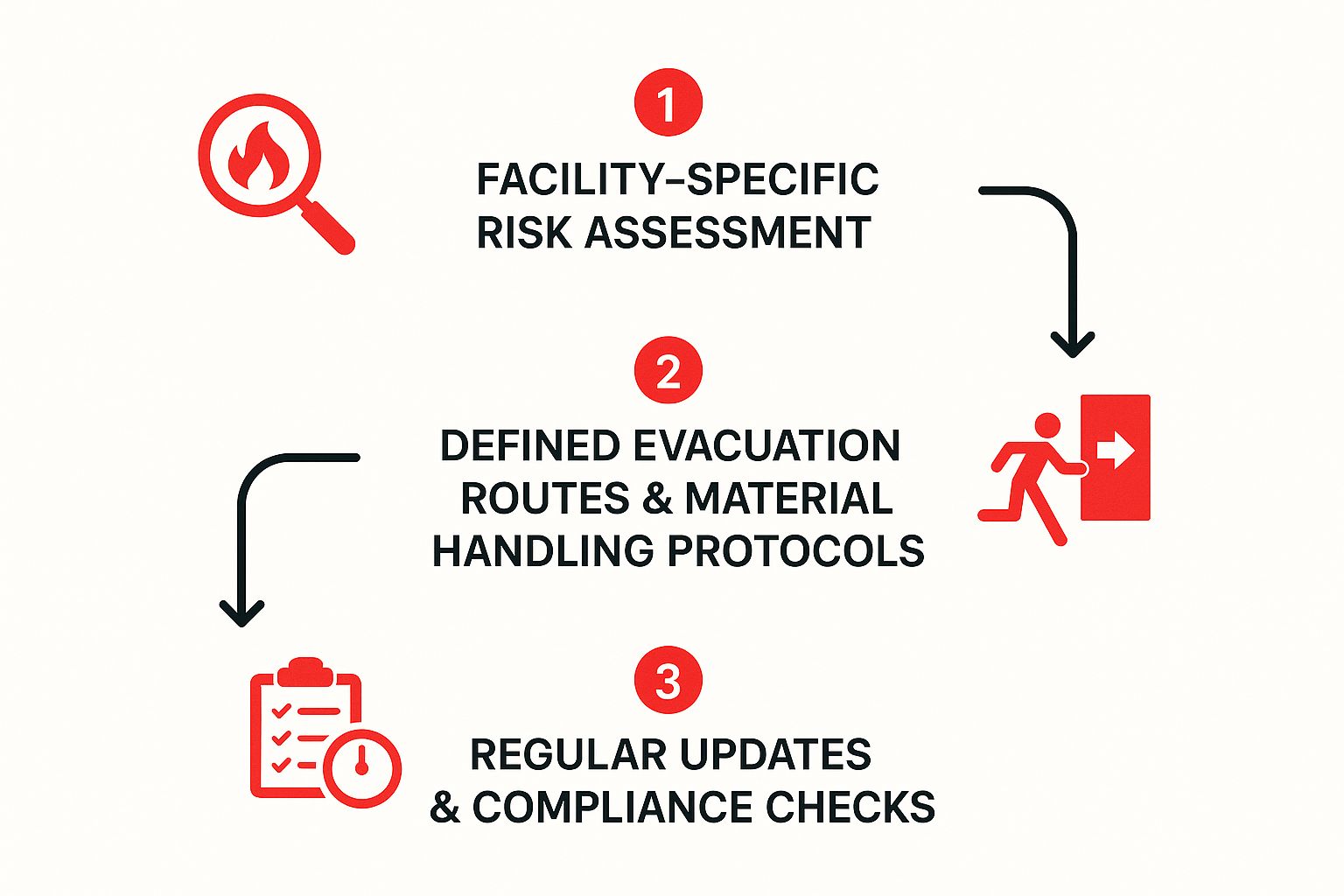
As you can see, a good plan isn't a "one-and-done" task. It's a continuous cycle: assess, implement, and refine.
Conduct a Thorough Risk Assessment
First, you need to perform a detailed risk assessment. This is more than a quick scan for the obvious hazards we talked about earlier. It means methodically walking through your entire property to pinpoint anything that could start a fire and anything that could fuel it.
Your assessment should document:
- Major Fire Hazards: Make a comprehensive list of all potential sources. Think electrical panels, HVAC systems, chemical storage, and even kitchen equipment.
- Handling of Hazardous Materials: Note the types of flammable or combustible materials you have, where they're kept, and the safety rules for using them.
- Potential Ignition Sources: Identify anything that could create a spark or get hot enough to ignite something. This includes machinery, areas where welding happens, and temporary space heaters.
This assessment becomes the bedrock of your entire fire prevention strategy. It shows you where to focus your efforts.
Define Control Measures and Emergency Procedures
Once you know your risks, the next step is to create clear rules to manage them and spell out what to do if a fire does break out. This is the "how-to" section of your plan, turning your findings into actionable steps for your team.
Key things to include are:
- Waste Control: Have strict procedures for managing flammable trash, like oily rags or cardboard, making sure it’s put in designated metal bins and taken out frequently.
- Maintenance Schedules: Set up a regular maintenance calendar for any equipment that produces heat to stop malfunctions before they can cause a fire.
- Employee Responsibilities: Assign specific people or job titles the responsibility for maintaining equipment and controlling fuel sources. When people know it's their job, it gets done.
A well-defined plan removes guesswork during a high-stress event. When every team member knows their specific role—from who calls 911 to who ensures an area is clear—the response becomes faster, calmer, and far more effective.
Establish Clear Evacuation Routes and Protocols
In an emergency, confusion is your enemy. It can be just as dangerous as the fire itself. Your FPP must lay out clearly marked and unobstructed evacuation routes. Every single person—employee, visitor, contractor—should be able to easily find the primary and secondary ways out from wherever they are.
This section of the plan needs to have:
- Detailed Site Maps: Post diagrams showing exit routes, assembly points, and the locations of fire extinguishers and alarm pull stations. Make them easy to see and understand.
- Designated Assembly Points: Pick safe, open areas a good distance from the building where everyone can gather for a head count.
- Emergency Contact Information: Have a list ready with the names and numbers for key company personnel and local emergency services.
For commercial properties, having these procedures nailed down is a core part of keeping tenants safe. A clear plan shows everyone that their well-being is the top priority.
Using Modern Technology for Smarter Fire Safety
When we think about workplace fire prevention, traditional smoke alarms and sprinklers usually come to mind. While those are absolutely critical, today’s technology offers a smarter, more proactive layer of protection that can identify a risk long before it has a chance to ignite.
For facilities directors and property managers, these tools are a game-changer. They transform fire safety from a reactive scramble into a predictive science. This new standard is built on integrated systems where smart heat detectors, AI-powered systems flagging electrical issues, and centralized monitoring platforms all work together. It’s a powerful network keeping a constant watch over your property.
The Power of Integrated and Predictive Systems
Imagine getting an alert on your phone about an overheating circuit in the server room, hours before it could spark a fire. That's the reality of predictive technology. These systems don't just wait for smoke; they learn the normal rhythm of your building and flag any deviation from that baseline immediately.
This approach delivers a steady stream of real-time data to your team and, just as importantly, to a dedicated 24/7 Security Operations Center (SOC). It’s a unified network where alarm panels, sprinklers, and CCTV are all linked, allowing for remote oversight and much faster, more informed decisions.
This is where a partner like Overton Security really makes a difference. Our SOC isn’t just waiting for an alarm to go off. Our hands-on leadership team and professional officers actively monitor the health of your systems, verify every alert, and provide a direct line to emergency services to guarantee the fastest and most accurate response possible.
From Data to Actionable Intelligence
Having advanced technology is one thing, but turning its data into decisive action is what truly matters. A smart fire safety system should empower your team with clarity and speed during a crisis, not overwhelm them with noise.
Here’s how these systems translate raw data into life-saving action:
- Instantaneous Alerts: The second a sensor detects an issue—be it a sudden temperature spike or a whiff of carbon monoxide—it sends a notification to designated personnel and our SOC.
- Pinpoint Location Data: Instead of a generic building-wide alarm, the system tells responders the exact location of the hazard, saving precious seconds.
- Automated Responses: Systems can be programmed to take immediate action, like shutting down HVAC units to stop smoke from spreading or unlocking specific doors to clear evacuation routes.
An integrated system acts as your building's central nervous system for fire safety. It senses a problem, communicates it instantly, and triggers a coordinated response, all within seconds.
This level of detail is invaluable. For example, our officers in the field receive alerts directly from the SOC, complete with floor plans and live camera feeds from the affected area. You can get a better sense of how this works by reading our property manager guide to remote video monitoring. This ensures that when help arrives, they already have a clear picture of the situation. Some companies are even enhancing training with tools like augmented reality safety programs to provide real-time hazard identification.
Ultimately, this technology doesn’t replace people—it empowers them. By blending smart systems with the human expertise of our trained officers and SOC operators, Overton provides a level of proactive workplace fire prevention that sets a new standard for safety and peace of mind.
Training Your Team to Be Your First Line of Defense
Your fire prevention plan, all the alarms, and every extinguisher are only as effective as the people trained to use them. While technology and clear procedures are a huge piece of the puzzle, a well-trained team is what turns a potential disaster into a controlled situation. They are your first and most important line of defense.
When you treat ongoing safety education as a genuine investment—not just a box to check for compliance—you build a powerful culture of awareness. A team that feels prepared and confident is a team that acts decisively, protecting themselves, their coworkers, and your business.
From Complacency to Competence
One of the greatest risks in any workplace is safety complacency. Over time, it's natural for people to get used to the daily routine, perhaps even tuning out alarms or forgetting the key steps of an emergency plan. Consistent, engaging training is the only way to combat this.
An effective program goes far beyond just pointing out the fire exits. It’s about building muscle memory so that when an emergency strikes, the response is automatic and correct, not panicked.
This isn't just theory; it's a persistent challenge for businesses. Workplace safety violations, often tied directly to gaps in training, are still alarmingly common. You can explore the findings in OSHA’s recent violation report to see just how critical this is. The data makes it clear: routine training isn't optional, it's essential.
Core Components of Effective Fire Safety Training
A solid training program should give every employee the knowledge to both prevent fires and react properly if one starts. This means drilling down on a few non-negotiable pillars of fire safety.
Make sure your training always covers:
- Hazard Recognition: Teach your team how to spot the common culprits we discussed earlier, like frayed wires, blocked exits, or improperly stored chemicals. More importantly, empower them to speak up and report issues immediately.
- Emergency Plan Execution: Everyone must know the evacuation routes from their specific work area, where the designated assembly point is, and who to check in with once they're safely outside.
- Alarm Response Protocols: Train your staff to treat every alarm like the real deal. They need to know how to operate a manual pull station and exactly what to say when they call 911.
A well-rehearsed team is a calm team. Regular drills take the panic out of an emergency, replacing fear with a clear sense of purpose and direction. This systematic practice is crucial for effective workplace fire prevention.
Mastering the P.A.S.S. Method for Extinguishers
Knowing how to use a fire extinguisher can mean the difference between a minor incident and a full-blown catastrophe. The best way to teach this is with the simple but incredibly effective P.A.S.S. method.
It’s a simple acronym that breaks down into four easy steps:
- Pull: Pull the pin on the extinguisher.
- Aim: Aim the nozzle low, at the base of the fire.
- Squeeze: Squeeze the lever slowly and evenly.
- Sweep: Sweep the nozzle from side to side across the base of the flames.
Reading about it is one thing, but nothing beats hands-on practice. Letting your team actually discharge an extinguisher in a safe, controlled environment builds the confidence they'll need in a real situation. Partnering with a security provider like Overton ensures your team gets professional, real-world instruction that reinforces these life-saving skills.
Partnering with Professionals for Comprehensive Safety
True workplace fire safety is built in layers. While technology and training are essential, a professional security partner transforms your strategy from passive to active. An on-site security presence moves beyond automated alerts, adding a vital layer of human observation, judgment, and immediate response.
For property managers and business owners, this partnership provides invaluable peace of mind. A trained security officer does far more than just watch a camera feed—they become an extension of your safety team, actively patrolling your facility with a clear purpose. This consistent presence is a powerful deterrent and an early warning system rolled into one.
From Passive Monitoring to Active Prevention
The real value of a professional security officer is their ability to identify and address risks before they have a chance to escalate. This proactive approach isn't just a talking point; it's the core of Overton Security’s philosophy, refined over our 26-year history of protecting commercial, residential, and industrial properties.
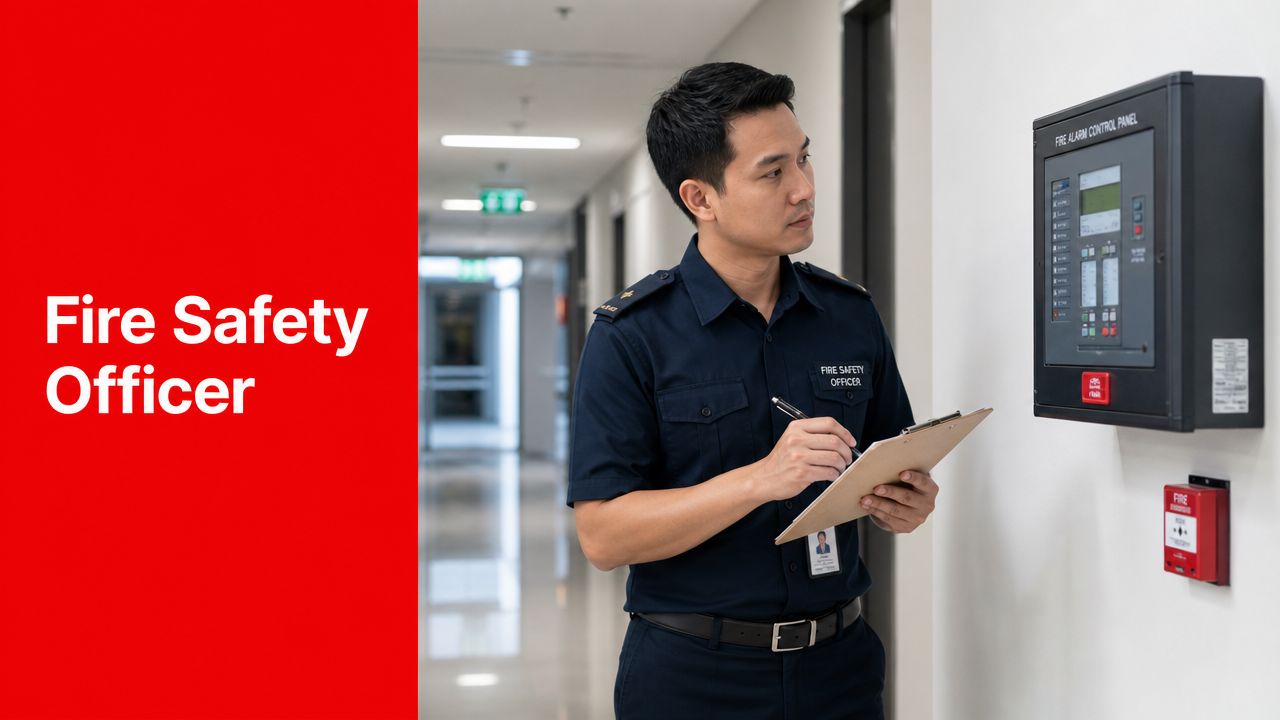
Our officers conduct thorough patrols with specific fire safety objectives in mind:
- Ensuring Clear Egress: They make sure fire lanes, emergency exits, and hallways stay completely unobstructed—a common oversight in busy workplaces.
- Verifying Equipment Accessibility: Officers check that fire extinguishers, alarm pull stations, and other critical equipment are visible and easy to access, not blocked by boxes or machinery.
- Spotting and Reporting Hazards: It could be the subtle smell of burning plastic near an electrical panel or an unauthorized propane tank on a construction site. Our officers are trained to notice when something is out of place and report it immediately through our real-time digital reporting system.
During an actual emergency, their role becomes even more critical. An officer on the scene provides a calm, authoritative presence to guide evacuations, assist anyone who needs help, and serve as a direct point of contact for first responders, giving them accurate information the moment they arrive.
A professional security officer bridges the gap between your fire prevention plan and its real-world execution. They ensure that the safety protocols you've established on paper are consistently followed day in and day out.
This human element is becoming even more essential as fire protection systems grow more complex. Globally, the fire protection systems market is projected to surge from USD 75 billion in 2024 to over USD 160 billion by 2035, driven by smarter, integrated technologies. You can discover more insights about this growing market on SphericalInsights.com.
Having trained personnel on-site ensures these advanced systems are supported by expert human oversight. With our low manager-to-client ratio and hands-on leadership, Overton delivers a reliable partnership dedicated to protecting your people and property.
Frequently Asked Questions About Fire Prevention
To wrap things up, let's address some of the most common questions we hear from property managers, business owners, and facilities directors. Our goal is to provide clear, actionable information you can use right away.
How Often Should We Conduct Fire Drills?
The standard recommendation is to hold a fire drill at least once a year, but that’s just a baseline. For facilities with higher risks—like those with hazardous materials or a complex layout—quarterly drills are a much smarter practice.
Consistency is what matters most. Regular drills build "muscle memory," which allows your team to respond calmly and automatically instead of with panic. This is how you turn your fire prevention plan from a document into a life-saving skill.
What Is the Most Common Cause of Workplace Fires?
Year after year, faulty or misused electrical equipment is one of the biggest culprits. This covers everything from overloaded power strips and frayed extension cords to aging wiring and machinery that hasn't been properly maintained.
The good news is that these incidents are almost always preventable. A few key habits can make a significant difference:
- Schedule professional inspections of your building’s entire electrical system on a regular basis.
- Train employees on simple best practices, like never daisy-chaining power strips or using damaged cords.
- Establish a clear maintenance schedule for any equipment that produces heat.
Who Is Responsible for Workplace Fire Prevention?
While the employer or property owner is ultimately responsible for providing a safe environment and meeting regulatory requirements, a true culture of safety is a shared responsibility.
Every person on your team has a role to play. Senior management must fund and champion safety initiatives, while employees need to follow procedures and feel empowered to report hazards. A solid plan gives everyone ownership over fire prevention, making it a natural part of the daily routine.
True fire safety isn't just one person’s job; it's a collective commitment. When everyone understands their role, the entire organization becomes safer and more resilient against potential threats.
What Should Our First Step Be in Improving Fire Safety?
Before you do anything else, conduct a comprehensive, site-specific fire risk assessment. You can't build an effective plan if you don't know where your unique vulnerabilities are. A generic checklist simply won't be enough.
Walk your property with a critical eye, specifically looking for ignition sources, fuel sources, and any gaps in your current procedures. This hands-on assessment will be the foundation for every other action you take, from upgrading equipment to refining your employee training programs.
A proactive strategy is the only way to effectively manage fire risk. For over 26 years, Overton Security has helped businesses across California build resilient safety programs that protect people and property. Contact us today to learn how our expert security services can strengthen your workplace fire prevention plan.