A lot of property managers are carrying more cash risk than they should.
It usually shows up in ordinary places. A retail center has several tenants making daily deposits. A mixed-use property has restaurants closing late and asking supervisors to hold funds until morning. A facilities director is trying to support an ATM, a payment kiosk, or a seasonal event with heavy cash volume, while also keeping staff out of avoidable risk. In Los Angeles, San Francisco, San Jose, and other busy California markets, that risk compounds fast when pickup procedures are informal.
That's where armored truck services move from “nice to have” to operational necessity. They remove staff from the weakest link in the chain, which is the handoff between cash collection and secure deposit. They also create discipline around timing, custody, documentation, and incident response.
The industry itself reflects how essential that role has become. The U.S. armored transportation services market represents $4.3 billion in 2026, according to IBISWorld's armored transportation services industry profile. For property managers, that matters less as a market statistic and more as proof that secure transport is a core part of how banking, retail, and commercial operations function every day.
Your Guide to Secure Asset Transportation
If you're responsible for a property where money changes hands, unmanaged transport risk is still your problem even when it happens off the lease line.
A tenant's employee walking deposits to a personal vehicle at closing time creates exposure for the tenant, the property, and your onsite team. A building engineer storing sensitive receipts or valuables overnight because “the bank run can wait until tomorrow” creates a different kind of vulnerability. Neither arrangement is stable, and neither holds up well after an incident review.
Where armored transport fits
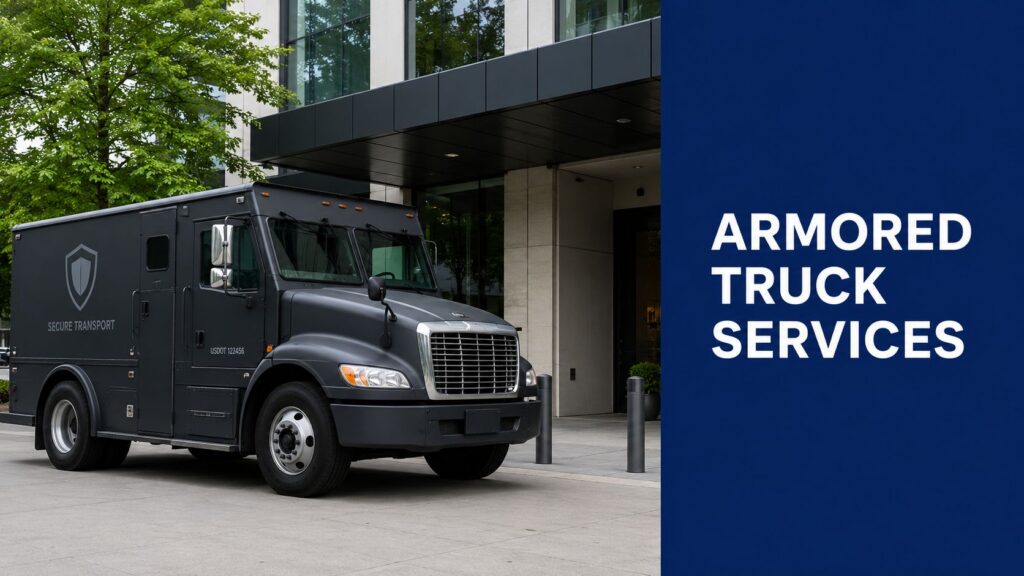
Armored truck services are built to solve one specific problem. They transfer high-value assets from one controlled point to another under professional custody, documented procedures, and hardened security measures.
For a property manager, that can mean:
- Retail deposit pickups for tenants with routine cash volume
- Scheduled service windows that reduce late-night staff exposure
- Controlled handoff points in loading zones, management offices, or designated secure rooms
- Cleaner chain-of-custody practices for internal audits and tenant coordination
The goal isn't just moving cash. It's reducing improvisation.
Practical rule: If staff are making judgment calls about where to store deposits, when to move them, or who should escort them, your process is too loose.
Why managers should treat this as operations, not overhead
The strongest programs treat transport the same way they treat access control, fire life safety, or after-hours incident response. It's part of site operations.
That's especially true for managers balancing multiple users at one location. A shopping center in Los Angeles may need recurring pickups for restaurants, a pharmacy, and a grocery tenant. A commercial campus in San Francisco may need periodic secure transfer for payment instruments or sensitive materials. In both cases, the right starting point is a formal asset protection plan, not an ad hoc favor from onsite staff. A useful benchmark is the broader discipline behind asset protection services, where documentation, custody, and accountability matter as much as the physical handoff itself.
Understanding the Types of Armored Truck Services
An armored truck is often associated with cash pickups. That's only one lane.
A better comparison is the mail system. Standard mail, certified delivery, parcel service, and a secure box all solve different problems. Armored transport works the same way. The vehicle may look similar from the outside, but the service model behind it changes based on what's being moved, how often, and how tightly the handoff must be controlled.

Cash-in-Transit
Cash-in-Transit, often shortened to CIT, is the most common service for property managers. It handles the scheduled pickup and delivery of currency, coin, receipts, and similar high-value items between a business location and a bank, processing center, or secure destination.
This is the right fit when tenants generate regular deposits and don't want employees making runs after closing. It's also useful when the property wants a predictable pickup pattern instead of repeated off-site movement by different staff members.
For managers, CIT is less about the truck and more about consistency. Everyone knows the pickup window, the handoff location, and the responsibility line.
ATM servicing
ATM service is a narrower and more controlled function. It includes replenishing cash, removing funds, and supporting maintenance activity tied to the machine's operation.
A retail property, office campus, hospital, or transit-adjacent site may host an ATM that needs service without disrupting public access or creating unnecessary visibility. That usually requires tighter coordination around timing, access routes, and who on the property is notified in advance.
Vaulting and secure storage
Some clients don't need immediate bank delivery every time. They need secure off-site storage under controlled custody.
Vaulting services fill that gap. They can be useful when timing, reconciliation, or internal processing creates a delay between pickup and final deposit. They also support situations where documents or other sensitive materials need stronger storage conditions than the property can provide onsite.
Valuables and specialty transport
Not every assignment involves cash. Some properties need protected transport for jewelry, data backups, records, or other sensitive items. Others may need specialized handling for precious commodities.
A practical example is a luxury retail environment with high-value merchandise transfers, or a corporate facility moving critical media and records between locations. The transport standard is still built on custody, route planning, and verification, but the packaging, handoff protocol, and documentation may differ from standard retail deposits.
The right question isn't “Do we need an armored truck?” It's “What exactly are we moving, who touches it, and what proof do we need afterward?”
The Pillars of High-Quality Security Protocols
The truck gets the attention. The system behind it is what keeps the assignment safe.
Weak providers rely on the vehicle's appearance to sell confidence. Strong providers know true protection comes from trained personnel, disciplined procedures, and constant oversight. When one layer is thin, the others have to work harder.

Personnel standards matter first
Federal and industry standards require 32 hours of formal basic training plus 8 hours of pre-assignment training for armored personnel, as outlined in the Department of Justice training reference. That baseline exists for a reason. This work combines driving, custody, emergency response, and defensive awareness in a high-risk environment.
A serious provider should be able to explain how personnel are prepared for:
- Ballistics awareness and defensive posture
- Emergency response during attempted interference or vehicle issues
- Route security and disciplined arrival-departure procedures
- Stress performance when timing, public exposure, or tenant coordination gets messy
Drivers and crew members also need practical vehicle discipline. Even if a resource is aimed at commercial driving more broadly, the fundamentals in these vital safety practices for aspiring truckers are relevant because armored work still depends on hazard awareness, controlled maneuvering, and sound decision-making behind the wheel.
Technology has to prove, not just promise
Most providers say they use GPS. That's no longer enough by itself.
A property manager should expect a service model that supports real-time visibility, documented checkpoints, incident reporting, and supervisory review. The strongest operations pair vehicle tracking with digital field reporting so there's a record of what happened, when it happened, and who completed the handoff.
That's the difference between “we can see where the truck was” and “we can verify what the crew did.”
Procedures close the gaps
Good armored operations don't let convenience override discipline.
Look for evidence of:
| Security element | What it should accomplish |
|---|---|
| Route control | Reduce predictability and avoid routine exposure |
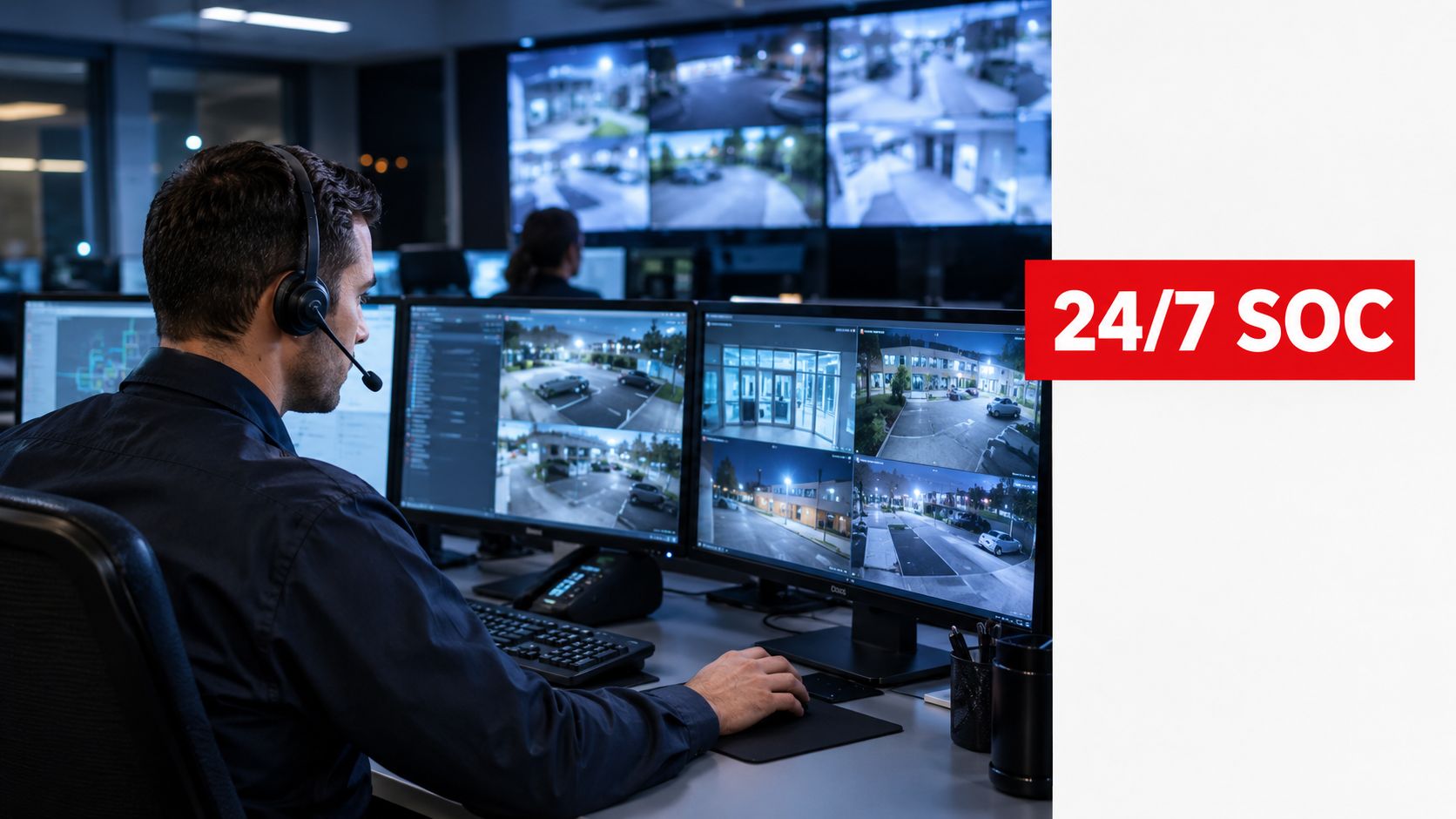
| Crew communication | Keep field teams connected to supervision or a SOC |
| Handoff protocol | Define exactly where and how custody changes hands |
| Exception handling | Set procedures for delays, failed contacts, and site issues |
The vehicle itself also matters. In the CIT world, modern armored trucks built on the Ford F-550 chassis with B4-level ballistic armoring are described as carrying an effective payload of 7,000 to 10,000 lbs, according to Armormax's 2026 cash transport vehicle overview. For clients, that translates into a practical point: the best fleets balance armor, crew space, and usable load capacity instead of sacrificing operations for appearance.
Decoding Pricing Drivers and Insurance
Armored transport pricing isn't random. It reflects exposure, labor, vehicle demands, and the level of control the client expects.
That's why the cheapest proposal often turns out to be the least complete one. If a provider is vague about service windows, custody terms, or incident handling, you're not looking at efficiency. You're looking at omitted risk.
What usually drives cost
A recurring pickup at a stable location is one thing. A route with difficult access, irregular timing, heavy public foot traffic, or high-value contents is another.
Common pricing drivers include:
- Service frequency. Daily service is structured differently from occasional or event-based pickups.
- Distance and route complexity. Urban congestion, loading constraints, and multi-stop assignments change staffing and timing.
- Asset profile. Cash, checks, sensitive records, and specialty valuables don't all require the same handling.
- Risk environment. Late-night retail, isolated access points, and highly visible pickup locations can increase the security burden.
Personnel standards affect price too. Armed guards on armored assignments must complete firearms training and often obtain state permits to carry exposed firearms, a higher qualification level than unarmed roles, as noted in this armored car overview). That added training, permitting, and liability environment is part of what clients are paying for.
Client lens: Don't ask only, “What does this route cost?” Ask, “What risk does this route transfer off my staff and property?”
Insurance deserves its own review
Insurance language can create false confidence if nobody slows down and reads it.
You want clarity on when the provider's responsibility begins, how custody is defined, what exclusions apply, and what documentation is required after a loss or discrepancy. It also helps to understand related coverage concepts like Motor truck cargo coverage, because transport liability often turns on very specific policy terms.
A separate concern is how your own internal investigations and documentation process would hold up if a claim ever involved disputed timing, missing property, or conflicting statements. That's where disciplined reporting practices, similar to the standards used in insurance claim investigations, become useful. They help management teams establish facts quickly and limit confusion after an incident.
The wrong buying approach
The wrong approach is buying a route the way you'd buy janitorial hours.
The better approach is to compare service models. Who controls the chain of custody? Who documents exceptions? Who supervises the crew in real time? Those answers tell you more than a flat rate ever will.
Navigating California's Regulatory Requirements
California property managers don't need to become compliance officers, but they do need to know when a transport arrangement creates regulatory exposure.
That's especially important in mixed-use environments where one property may host banks, retailers, cannabis-adjacent operators, medical offices, or event activity with different handling requirements. A provider that works well in one context may create problems in another if it doesn't understand the compliance line.
The FinCEN distinction that matters
Under FinCEN rules, an armored car business is not considered a money transmitter when it only provides secure transport for banks or government entities and doesn't participate in the underlying transaction. But if the service involves a non-financial institution or the provider takes more than a custodial interest in the funds, the company must register as a money transmitter and maintain an anti-money laundering program, as explained in FinCEN's armored car ruling.
That sounds technical. In practice, it means the provider's role has to stay within the right lane.
Why this matters to property managers
If a provider casually describes itself as “handling” funds without clearly separating transport from transaction activity, that should trigger questions.
Ask for plain-language answers to these points:
- Who takes custody, and when
- Whether the provider does anything beyond transport
- What type of clients and destinations they serve
- How they address anti-money laundering obligations when applicable
A discerning client doesn't need every legal detail. They need confidence that the provider understands where transport ends and regulated financial activity begins.
California-specific caution
California adds its own practical layer through licensing expectations, armed personnel requirements, site access rules, and local operating conditions. In cities like Los Angeles, San Diego, and San Jose, the issue often isn't just the statute. It's whether the provider can execute compliantly in dense, high-traffic environments without improvising on your property.
A compliant provider should be able to explain its role in simple language. If the answer is murky, the service model probably is too.
That's one reason mature operators use written post instructions, designated contact points, and documented handoff procedures. Compliance failures rarely begin with a dramatic event. They usually begin with ambiguity.
How to Evaluate and Integrate an Armored Service Provider
Most procurement mistakes happen before the first pickup. The provider gets selected on appearance, price, or a generic promise of GPS tracking, then everyone discovers the gaps during rollout.
A better process is structured and a little skeptical. If a company is going to handle high-value assets on your property, it should be easy for them to answer hard questions.

What to verify before award
Start with credentials, but don't stop there.
Review these areas closely:
- Licensing and insurance. Confirm the provider's authority to operate, the status of armed personnel where applicable, and the actual insurance scope tied to transport duties.
- Training and supervision. Ask how crews are onboarded, who monitors field activity, and what happens when a route goes off script.
- Fleet and equipment. Look at vehicle condition, communication tools, and whether the equipment matches the assignment.
- Service fit. A retail center in Los Angeles won't have the same needs as a suburban office park in Sacramento or a medical campus in San Jose.
The accountability question most buyers miss
The most important question is often the least asked. How do you verify, in real time, that service occurred as reported?
ProcurementIQ's market intelligence notes that clients should demand auditable proof such as NFC-tagged checkpoints with time-stamped reports, not just vague GPS claims. The same source states that 68% of property managers face security fraud from unverified logs, which is why this issue can't be treated as a minor reporting preference in ProcurementIQ's armored transport market guidance.
That changes the evaluation standard. “Digital” isn't the benchmark. Auditable is.
“If a provider can't show you who scanned where, at what time, and with what supporting report, you're relying on trust where you should be relying on records.”
A practical interview checklist
Use questions that force specifics:
| Ask this | Why it matters |
|---|---|
| How is each stop verified? | Separates real accountability from marketing language |
| What documentation does the client receive? | Determines whether audits and disputes can be resolved cleanly |
| Who monitors crews during active routes? | Shows whether supervision is live or only after the fact |
| How are exceptions handled onsite? | Reveals whether the provider has discipline under pressure |
You should also ask how the provider coordinates with property management, tenant contacts, loading dock staff, and after-hours teams. A smooth operation depends on everyone understanding the pickup point, notification process, and escalation path.
Integration on the property side
Selection is only half the job. Integration is where good plans either settle in or break down.
For a clean rollout:
- Designate one property lead who owns communication with the provider.
- Choose controlled handoff locations that avoid public bottlenecks and unnecessary audience.
- Train onsite staff and key tenants on what to do, and just as important, what not to do.
- Document exception procedures for missed pickups, delays, lockouts, or unexpected tenant changes.
A similar mindset applies when selecting secure transport for temporary, high-attention environments. This guide on key considerations when choosing a secure transportation provider for sensitive events is useful because event logistics often expose the same weaknesses seen in poorly planned property pickups.
Frequently Asked Questions from Property Managers
Can one provider handle pickups for multiple tenants at the same property
Yes, if the program is designed that way from the start.
The property manager should establish which tenants are participating, where the handoff point will be, who has authority to release deposits, and how missed or late handoffs are handled. The provider should then build the route and reporting around those realities instead of forcing every tenant into a one-size-fits-all routine. Multi-tenant retail and mixed-use properties usually work best when management coordinates the framework and tenants follow a common procedure.
Can we schedule one-off or occasional armored truck services
In many cases, yes.
That's common for seasonal peaks, special events, large periodic payments, or temporary operational needs. The key is giving the provider enough detail in advance. They'll need to understand the pickup environment, timing, access conditions, and the nature of the assets involved. Occasional service still needs the same discipline as recurring service, especially when the property team is less familiar with the process.
What is our staff's role during pickup, and how do we keep them safe
Your staff's role should be narrow and clearly defined.
They should know where the handoff occurs, who the authorized contact is, what documentation they're expected to confirm, and when they must step back. They should not improvise escorts, hold side conversations during transfer, or alter pickup routines without approval. The safest programs reduce staff involvement to coordination, controlled access, and immediate reporting of any exception.
A good rule is simple. Property staff should support the process, not become part of the security detail.
If your property team is reviewing transport risk, route accountability, or tenant cash-handling procedures, Overton Security can help you evaluate the operation with a practical, California-focused lens. The right plan doesn't just add coverage. It gives your staff clearer procedures, your tenants more confidence, and your property stronger control over a high-stakes part of daily operations.