A superintendent opens the gate before sunrise and finds a trailer open, materials gone, and the crew asking what they can work on now. In a few minutes, a theft becomes a schedule problem, a documentation problem, and often an insurance problem.
That is why construction site theft prevention has to be built as a program, not handled as a few locks and cameras added late. Effective sites combine physical barriers, monitored technology, clear site rules, and documentation that holds up after an incident. The goal is to reduce the chance of a loss and put the team in a stronger position if something still gets through.
Good security protects production as much as property.
A missing generator or pallet of copper does more than raise costs. It can stall the next trade, create disputes over responsibility, and send project managers back through delivery logs, footage, and inventory records instead of keeping work on track. Risk on a jobsite can be managed, but it takes a layered system that matches how the site operates day to day.
Why Construction Sites Are Prime Targets for Theft
Construction sites offer exactly what thieves look for. They contain valuable tools, easy-to-resell materials, temporary storage areas, changing crews, and periods of low visibility after hours. A site can look busy and controlled during the day, then turn into a soft target once trades leave.
The scale of the problem is well established. Industry estimates place annual construction theft losses between $300 million and $1 billion, and National Equipment Registry data indicates that only about 22.7% of stolen construction equipment is ever recovered according to Overton Security's summary of construction theft risk. Once equipment or materials leave the site, the odds shift against you quickly.
Why thieves choose jobsites
A construction project creates openings that many other properties don't have:
- Temporary boundaries: Fencing, gates, and storage areas often change as the project evolves.
- High turnover at access points: Deliveries, subcontractors, inspectors, and vendors all need entry.
- Visible assets: Copper, wire, generators, skid steers, hand tools, and fuel are easy to identify and move.
- After-hours gaps: Even a well-run site can become quiet and under-observed overnight or on weekends.
Practical rule: If a thief can see it, reach it, and move it without being challenged, it's at risk.
The real issue is predictability
Most sites don't fail because they had no security at all. They fail because their controls were inconsistent. One gate stays propped open. One trailer isn't locked at the end of shift. One delivery gets waved through without verification. Those small lapses create a pattern, and patterns get noticed.
That's why effective construction site theft prevention is rarely about one dramatic measure. It's about layered control. Delay entry. Limit access. Increase visibility. Track assets. Document movement. Make the site harder to study and harder to exploit.
For property managers, superintendents, and risk teams, that's a useful shift in mindset. Theft isn't just a criminal event. It's an operational problem with security consequences, and operations can be improved.
Establishing Your First Line of Defense
The first layer is physical. Before adding cameras, analytics, or patrol schedules, the site needs a perimeter that clearly defines where public access ends and controlled access begins.
That starts with boundaries that are complete, not partial. Gaps, temporary openings, and unmonitored side entries undermine everything else.
Build a perimeter that actually controls movement
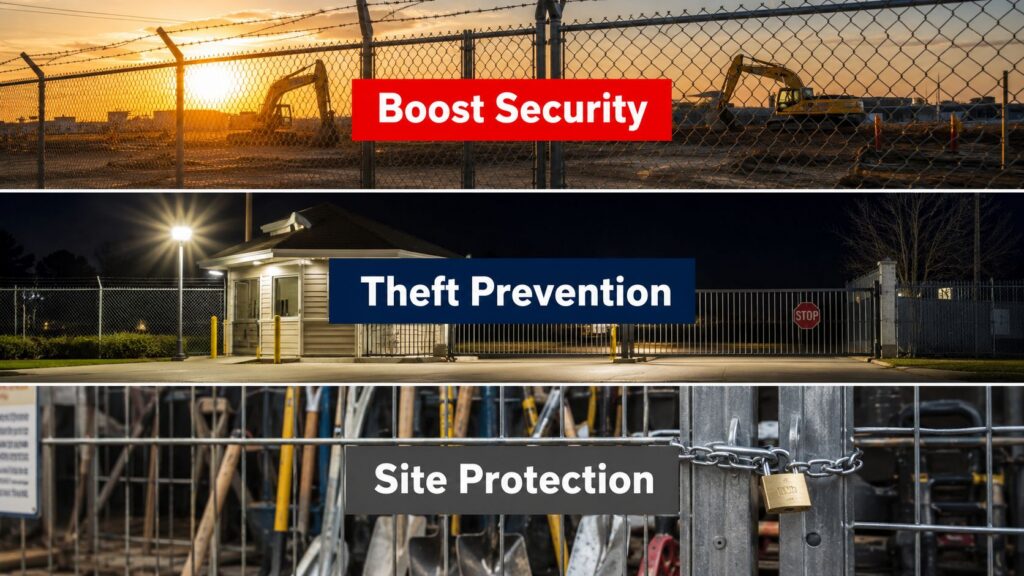
Industry benchmarks call for a six-foot fence, warning signage at roughly 50-foot intervals, and lighting at about 100-foot intervals to reduce concealment opportunities and discourage trespassing after dark, as outlined in Truelook's construction theft prevention guidance.

A perimeter works best when it does three things at once:
- Shows control: A continuous fence tells people the site is managed and monitored.
- Forces decisions: Limited entry points make it harder to drift in unnoticed.
- Buys time: Even basic barriers create delay, and delay matters when detection is in place.
Narrow the number of ways in and out
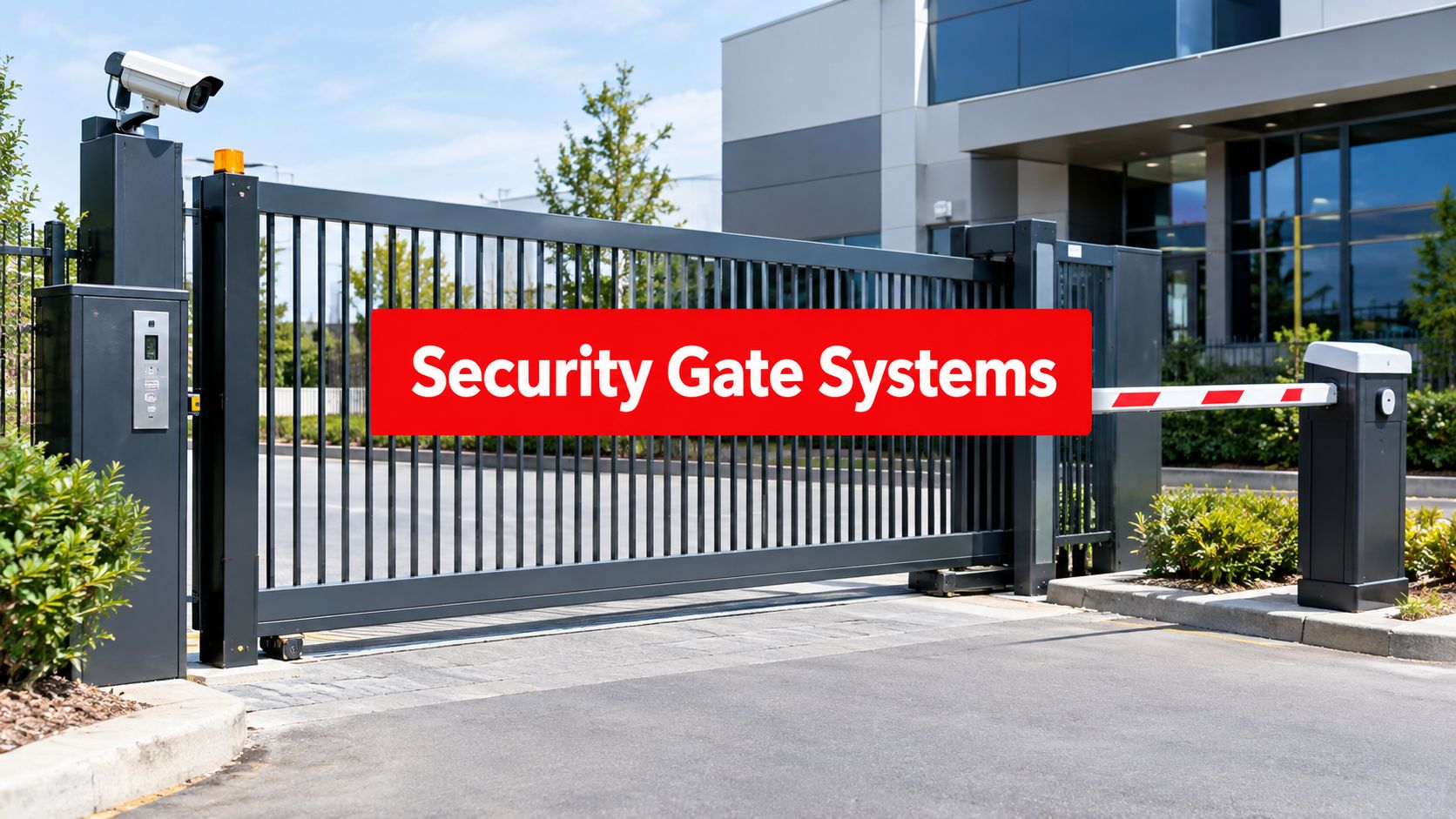
A common mistake is treating every practical opening as an acceptable access point. It isn't. Restrict the site to one or two gates whenever the layout allows it. One gate can be dedicated to workforce entry and the other to deliveries or equipment movement.
That single decision improves nearly every other security function:
- Badging and sign-in become realistic
- Vehicle checks become manageable
- Camera coverage becomes more efficient
- Supervisors can verify who should still be onsite late in the day
This is also where Crime Prevention Through Environmental Design principles become practical, not theoretical. Sightlines, lighting, controlled entry, and territorial definition all work together when the perimeter is intentionally designed.
A fence doesn't stop every intrusion. It creates friction. Good security uses that friction to trigger visibility, accountability, and response.
Treat lighting as a control, not a convenience
Too many jobsites light for work, not for security. Those are different objectives. Work lighting supports tasks. Security lighting removes hiding places, reveals movement near gates and storage areas, and helps cameras capture useful footage instead of silhouettes.
Focus lighting on:
- Gate approaches
- Trailer rows
- Material laydown areas
- Equipment parking
- Blind corners created by temporary walls or stacked materials
If the site changes weekly, the lighting plan should change with it. Static placement on a dynamic site leaves predictable dead zones.
Leveraging Surveillance and Active Monitoring
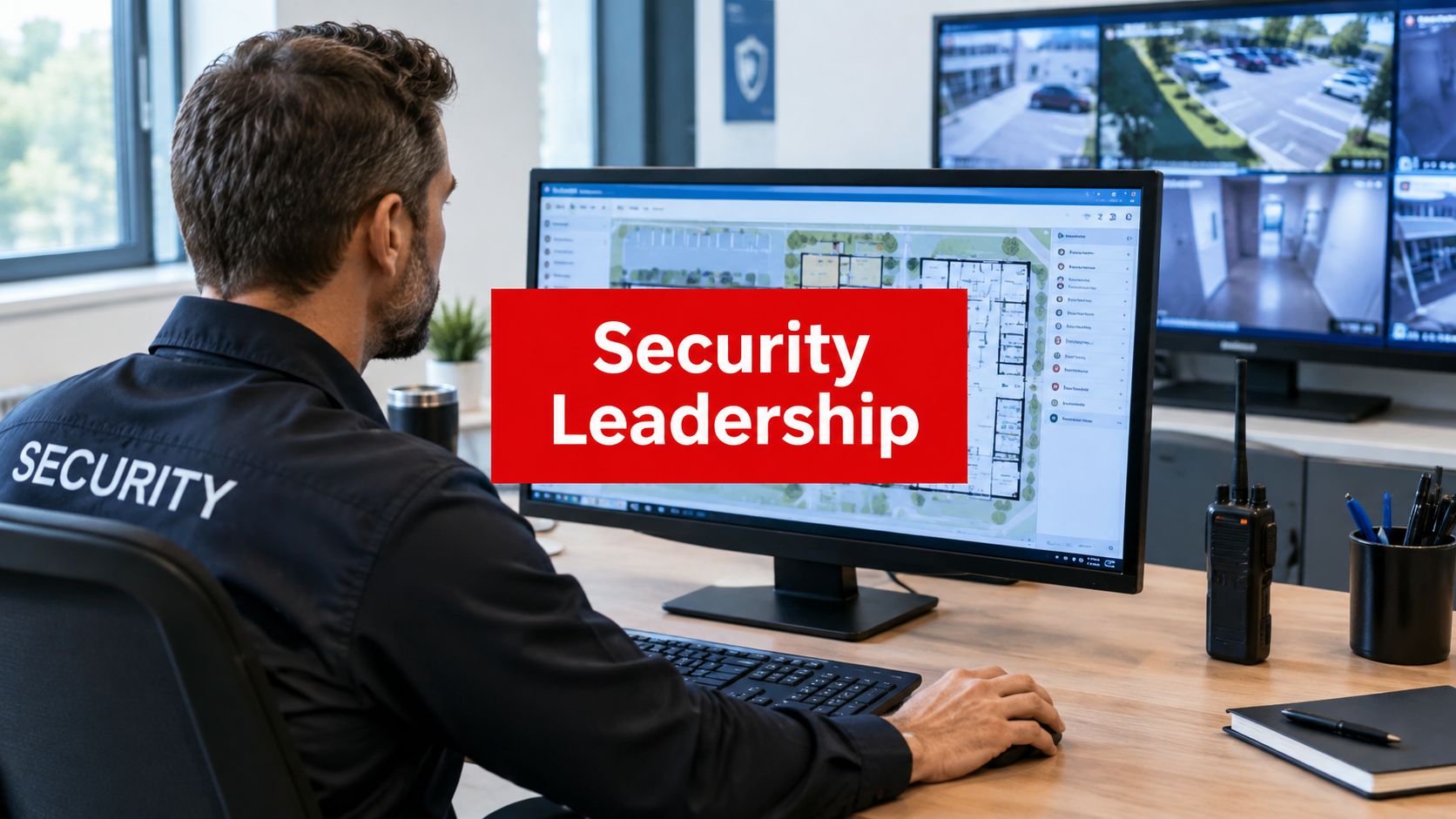
At 2:13 a.m., a pickup rolls past a dark laydown yard, stops near a container, and two people are out of the truck in seconds. If the site only records video, that footage may help after the loss. If the site is actively monitored, the response can start while the theft is still in progress.
Cameras are one part of the security program. Their value is not limited to deterrence. They also create a usable record for supervisors, investigators, and insurers, provided the system captures the right areas, retains footage long enough, and ties alerts to a clear response process.

What cameras do well and where they fall short
A good camera plan answers operational questions quickly. Which vehicle entered after hours? Who opened the container row? Was the skid steer parked where it should have been at shift close? Did the same person or vehicle make repeated passes over several days?
Placement drives whether footage is useful or frustrating. A camera pointed too wide may show movement but miss faces, plates, or hand activity at a lock. A camera pointed too tight can miss how a suspect approached or where they went next. This guide on where to put surveillance cameras on a property is a practical starting point, but construction sites need regular adjustment as trailers move, materials stack up, and phases change.
Cameras still do not make decisions. They record, detect, and flag activity. Someone has to determine whether that activity is authorized, accidental, or a theft in progress.
Why active oversight changes outcomes
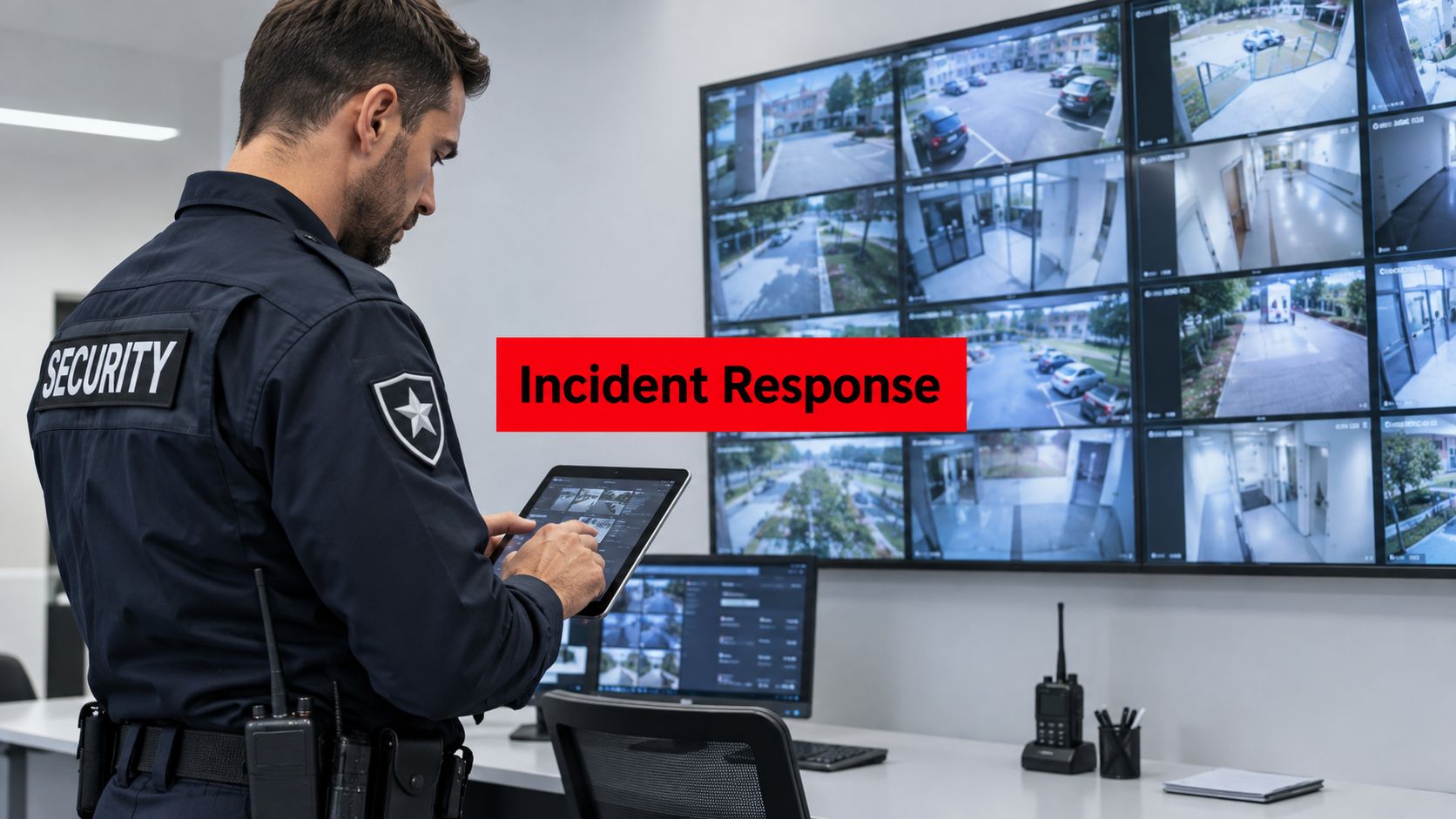
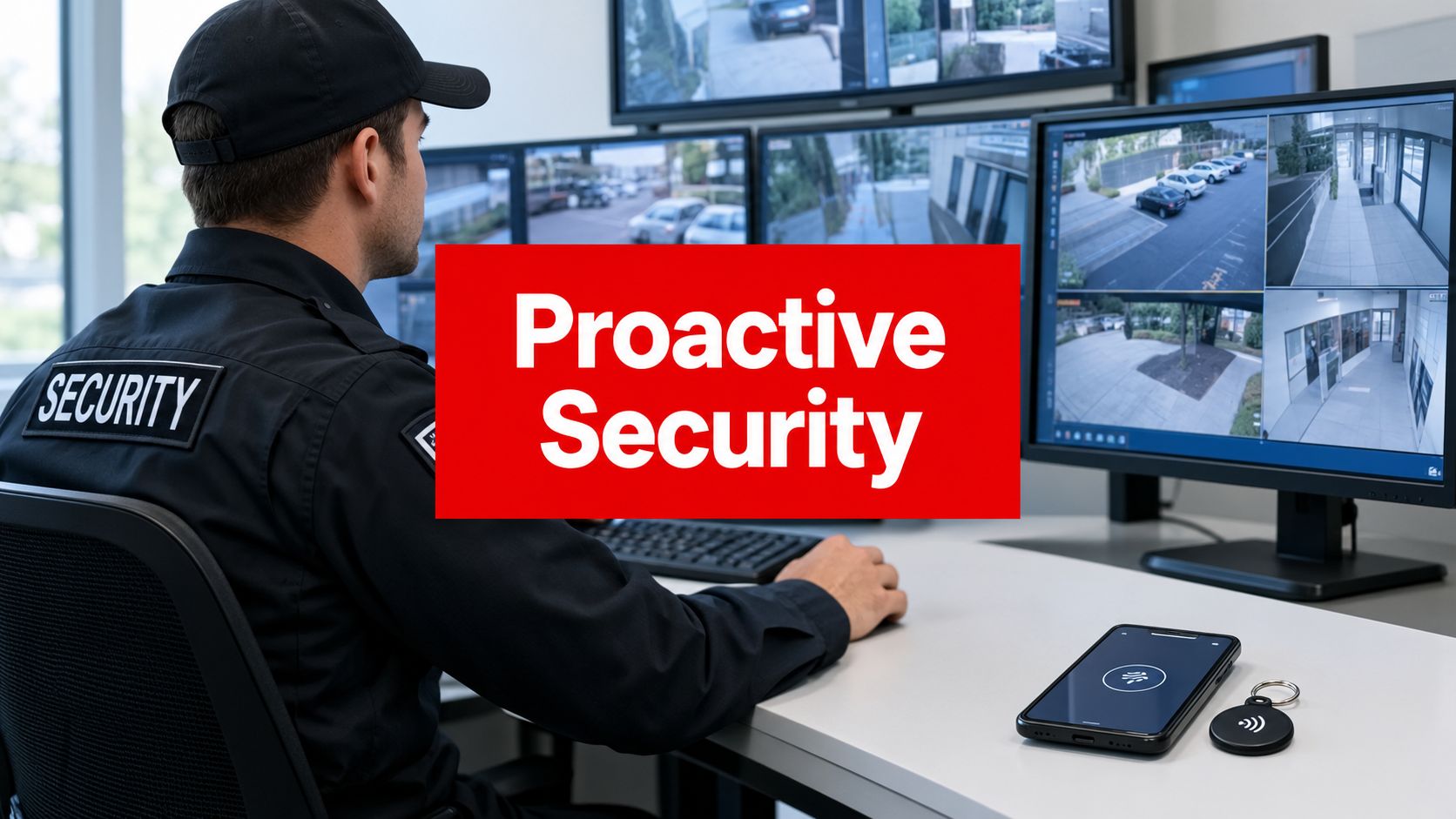
Active monitoring turns video from evidence into an operating tool. Motion analytics, trip lines, intrusion zones, and after-hours schedules can all help, but they only work if the site has a response path that people follow under pressure.
That response path should be defined before the first alert comes in:
- Who reviews the alert
- What gets verified on video before escalating
- Who receives the call first, site supervisor, patrol, or law enforcement
- What information is documented at the time of the event
- How footage, timestamps, and incident notes are preserved for claims and internal review
Many jobsites underperform regarding this issue. They buy cameras, switch on notifications, and assume the system is handled. Then an alert fires at 1:40 a.m., nobody is sure whether the activity is expected, and the event is reviewed the next morning after tools or copper are already gone.
For contractors running multiple projects, central oversight usually produces better results than leaving each site to improvise. Overton Security, for example, uses remote monitoring, a 24/7 Security Operations Center, and digital field reporting to create a documented chain from alert to action. That structure helps with interruption in the moment, and it also strengthens post-incident recovery because footage, officer activity, and event notes are already organized.
Recorded video helps prove what happened. Verified alerts, documented response steps, and preserved evidence put a contractor in a much better position to reduce loss and support an insurance claim.
Integrating the Human Element on Your Jobsite
At 6:15 a.m., the gate opens, trucks stack up, a new subcontractor crew arrives, and somebody props a side entrance for convenience. That is the point in the day when a jobsite either runs on clear security habits or starts creating blind spots.
People close many of those gaps faster than hardware can. Cameras record. Alerts fire. A trained officer, supervisor, or foreman can spot the delivery that does not match the schedule, the worker in the wrong area, or the missing lock that nobody reported at closeout.

Stationed officers and patrol officers solve different problems
A stationed unarmed officer fits sites with active gates, steady deliveries, and frequent subcontractor turnover. The job is part access control, part observation, part documentation. The officer checks credentials, logs visitors, challenges tailgating, and records exceptions while they are still fresh.
Mobile patrol covers a different risk. It works well on larger properties, projects with multiple access points, or jobs that sit quiet for long stretches after hours. Patrol units check locks, walk fence lines, inspect containers, and give the site some unpredictability, which matters because repeat thieves study routines.
| Security role | Best use on a construction site |
|---|---|
| Stationed officer | Gate control, visitor verification, delivery screening, visible front-end deterrence |
| Mobile patrol | After-hours perimeter checks, lock inspections, spot checks across large sites |
| Supervisor or site lead coordination | Aligning security activity with schedule changes, deliveries, and shifting risk areas |
The best results usually come from combining these roles with clear reporting rules. A guard who notices a broken latch but never logs it cannot help the PM support a claim later. A supervisor who knows a late concrete pour is scheduled can prevent a bad police call and keep the incident record clean.
The quality of the officer matters more than the uniform
A weak program can look organized on paper and still fail in the field. The post is filled. The checklist exists. Nobody on shift knows the difference between normal crew movement and a problem.
That is why site-specific instructions matter. Good security post orders tell officers what belongs on that project, what does not, who has authority after hours, where high-value items are stored, and how to document anything out of pattern. Generic orders create generic performance.
Good documentation also protects the contractor after the event. If an officer notes the time, access point, vehicle description, and who was notified, the record is immediately more useful for internal review and insurance follow-up.
Internal theft deserves attention too
Loss during working hours is common on active sites. Small tools get borrowed and never returned. Materials leave in personal vehicles. Equipment gets moved without approval, then nobody can say who last had it.
The answer is control without creating daily friction. Crews will follow standards that are simple, visible, and applied evenly.
A practical setup includes:
- Tool sign-out by crew or individual
- Written subcontractor storage rules
- Restricted control of equipment keys and fuel cards
- Standard worker and vendor identification
- Consistent expectations for badges, vests, and marked workwear
Clear identification helps more than many contractors expect. It shortens gate checks, makes unauthorized presence easier to challenge, and improves witness descriptions after an incident. For teams reviewing practical options for branded, trade-ready uniforms, Arklavo custom workwear is a useful reference.
Human oversight is not a substitute for physical security and monitoring. It is the operating layer that makes those investments work together, and it gives you the written record needed to reduce loss and recover faster when something does go wrong.
Securing High-Value Tools and Materials
A strong perimeter reduces opportunity. It doesn't remove it. The next layer is asset control, especially for the items that disappear fastest or cost the most to replace.
That starts with a simple assumption. If a tool, material, or machine can be moved easily and isn't being tracked closely, it needs tighter control by the end of the shift.
Focus on the assets thieves actually want
One cited study found that only about 7% of stolen assets from construction sites were recovered, which is why prevention and fast discrepancy detection matter far more than post-theft recovery, according to Protos Security's construction theft prevention guidance.
That low recovery reality changes the conversation. Asset control isn't clerical work. It's one of the most practical forms of construction site theft prevention.
A workable end-of-day control routine
The most effective routines are usually the simplest ones. Crews will follow them if they fit the rhythm of the site.
A dependable process often includes:
- Lock up small, high-value items: Power tools, lasers, batteries, copper fittings, and specialty equipment belong in locked gang boxes, sheds, or containers.
- Immobilize larger equipment: Chain, block, or otherwise secure equipment that can be towed, loaded, or quickly started.
- Reconcile before the site clears: Compare issued tools and staged materials against the day's log while foremen and crews are still present.
- Separate delivery and storage zones: Don't let incoming material blur into long-term laydown inventory.
- Track serial numbers and identifiers: If an item has a serial number, manufacturer mark, or equipment ID, record it before there's a problem.
Most losses are easier to stop at 4:30 p.m. than to investigate at 6:00 a.m. the next morning.
Use technology where it carries its weight
Not every site needs the same level of tagging. But when equipment is expensive, mobile, or shared across projects, asset-level tracking is usually worth the effort.
Useful options include:
- GPS tags for mobile equipment when movement outside approved areas is a concern.
- RFID or barcode check-out systems for tools that move between crews.
- Geofencing alerts for assets that should never leave the site after hours.
- Tamper-resistant identification marks in more than one location on equipment.
The key is to match the control to the asset. A skid steer, a spool of copper, and a box of cordless batteries don't need the same process. They do need a process.
Building a Resilient Security Program
Monday starts with a cut lock, an open container, and three different stories about who was last on site. The true loss is not only the missing equipment. It is the confusion that follows when no one can confirm access, produce current inventory records, or hand the insurer a clean file.
A security program prevents that second failure.
A fence, camera trailer, and guard post each solve part of the problem. A real program assigns ownership, sets procedures, and creates records that support both deterrence and recovery. The goal is simple: reduce the chance of theft, detect issues early, respond in a controlled way, and document the facts well enough for police reports, internal review, and insurance claims.

Documentation is part of prevention
Teams often treat documentation as office work that starts after a loss. On construction sites, that approach creates delays and weak claims files. Public guidance on construction theft prevention regularly points to the same basics: keep clear inventories, record serial numbers, maintain photos, and report losses promptly. Those steps help establish what was on site, what was taken, and what can be recovered.
That record should already be in place before anything goes missing.
A workable documentation package usually includes:
- Current tool and equipment inventories
- Photos of major assets, storage areas, and laydown zones
- Serial numbers, equipment IDs, and identifying marks
- Delivery logs and visitor or vendor sign-in records
- Access records for gates, keys, badges, and shared codes
- Incident forms with a clear reporting chain
Write procedures people will actually use
Plans fail when they read well in a binder but do not fit the pace of the job. Good procedures are short, assigned to specific roles, and checked often enough to hold up under schedule pressure.
Use plain operating rules such as these:
| Program area | What should be defined |
|---|---|
| Shift closeout | Who checks locks, containers, gates, lighting, and parked equipment |
| After-hours access | Who approves it, how it is logged, and when that approval expires |
| Incident response | Who is called first, what gets photographed, and who preserves the scene |
| Claims support | Who pulls serial numbers, inventory records, witness notes, and police report details |
Build for recovery, not only deterrence
Sites with the best outcomes after a theft usually do one thing well. They can reconstruct events fast. If a trailer is forced open, the team should be able to identify what belonged there, who had access, what camera view covered the area, and what records support the loss.
That is resilience in practice. It is less about adding one more device and more about making the whole system hold together when something goes wrong.
The strongest construction site theft prevention plan depends on layers, clear ownership, and records that stand up under scrutiny.
Owners, general contractors, and property teams get better results when site security is treated as an operating program instead of a collection of hardware. Risks become easier to spot. Response gets faster. Claims and internal reviews are easier to support with facts.
If you are reviewing options for Overton Security, the next step is a site-specific assessment that examines perimeter control, monitoring coverage, officer deployment, asset handling, and documentation workflows together. That review helps construction teams build a security program that fits the project, the schedule, and the actual risk.