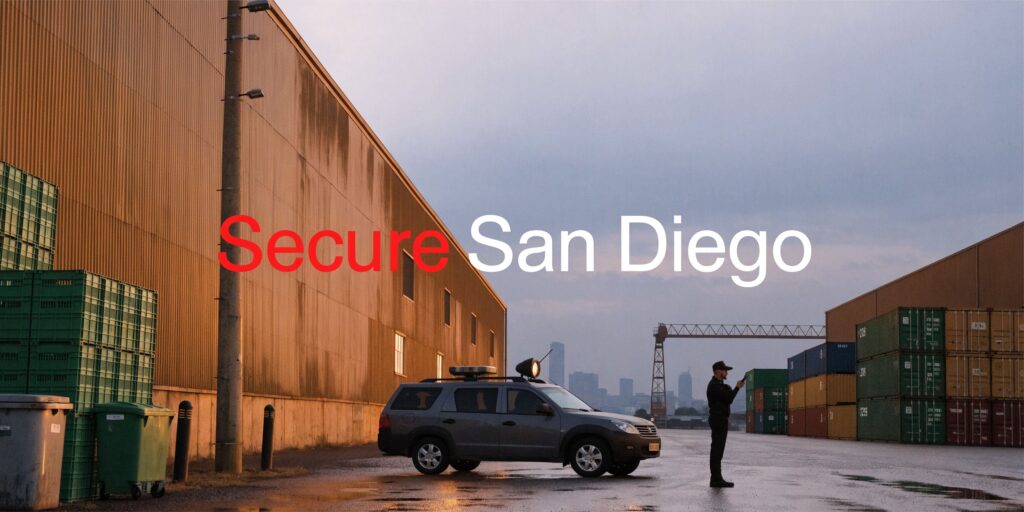
A lot of industrial security decisions get made after a bad night. An alarm hits at 3 a.m. A dock door is found open at first shift. Someone notices fencing has been cut over the weekend, or a yard supervisor walks in Monday morning and finds copper, tools, or palletized inventory missing.
That’s usually when a facility manager starts asking a better question. Not “Do we need security?” but “What kind of patrol program will prevent this from happening again?”
For San Diego warehouses, manufacturing plants, distribution yards, and construction-adjacent industrial properties, the answer usually isn’t just more cameras or a guard sitting in one spot. It’s a patrol program that works like an after-hours operating layer. Officers check the property when your team isn’t there, verify that gates, docks, trailers, and access points are secure, document problems in real time, and respond before a small issue becomes downtime, damage, or a claim.
Protecting Your San Diego Industrial Property Around the Clock
A well-run industrial site can still be vulnerable after hours. The operation may be tight during the day, but nights, weekends, and holiday periods create gaps. Trailers sit loaded. Equipment stays in the yard. Exterior doors get propped for convenience. One missed lockup can turn into a costly morning.
That’s where industrial security patrol San Diego services earn their value. The patrol team becomes the property’s eyes and ears when supervisors, engineers, and operations staff are off-site.

What calm, systematic coverage looks like
The strongest patrol programs don’t rely on guesswork. They rely on repeatable routines:
- Perimeter checks: Officers verify fencing, gates, locks, and vulnerable exterior points.
- Yard inspections: Patrols look for signs of tampering around trailers, cages, loading areas, and parked equipment.
- Access control support: Officers challenge unauthorized persons, manage visitor or vendor exceptions, and watch for tailgating.
- Incident documentation: Every issue gets logged clearly so management can act on facts, not assumptions.
Practical rule: The best patrols don’t just catch criminals. They catch operational sloppiness before it creates loss.
A good patrol officer notices things that static systems often miss. A chain hanging loose on a side gate. A door that latches but doesn’t lock. A recurring sensor fault that conditions staff to ignore alerts. Those details matter because industrial losses often start with routine failures, not dramatic breaches.
Why facility managers treat patrols as operations support
Security patrols protect property, but they also support continuity. When officers document recurring issues, report unsafe conditions, and preserve a clear activity record, they help managers reduce disruption. That’s why experienced facility teams often treat patrol service as part of site management, not just as an emergency expense.
Understanding Industrial Security Patrols for San Diego Sites
Industrial patrols are easiest to understand when you stop thinking of them as “someone driving by” and start thinking of them as a roaming building superintendent with security authority. The officer’s job isn’t only to be seen. It’s to check the physical health of the site after hours and act on what they find.
The three practical functions
Most effective patrol programs come down to three jobs.
Deter
Visible patrol presence changes behavior. A marked vehicle entering the yard, an officer checking dock lines, or a patrol walking trailer rows makes the property feel active. That matters at industrial sites because opportunistic theft and trespassing usually target locations that look unwatched.
Detect
Detection is where professional patrols separate themselves from casual coverage. Officers look for what’s out of place:
- Unsecured access points
- Signs of forced entry
- Unusual vehicle presence
- People in restricted areas
- Lighting failures or blind spots
- Tampering around inventory, equipment, or fencing
A patrol officer should know the difference between normal after-hours activity and something that needs escalation.
Document
If a patrol happened but nobody can prove where the officer went, what was checked, and what was found, management is left with weak accountability. Documentation is what turns a patrol from a vague service into a management tool.
Digital reports, checkpoint scans, photos, and time-stamped notes help facility managers track patterns and follow up. That’s especially useful when the same issue keeps appearing at the same gate, door, dock, or section of fence. For a local example of how industrial patrol programs are structured, see this overview of industrial site security in San Diego.
How patrols differ from static guard posts
A fixed-post officer and a patrol officer solve different problems.
A stationary guard works well when you need constant front-gate control, lobby coverage, truck check-in support, or a dedicated presence in a single area.
A mobile or circulating patrol works better when the site has:
- Large perimeters
- Multiple structures
- Exterior yards
- Trailer parking
- Blind spots behind buildings
- Varying risk by time of night
A parked guard can observe one zone well. A patrol officer can test the whole property.
The strongest industrial programs often combine both approaches. But where budget or layout requires prioritization, patrols usually provide broader after-hours coverage for industrial environments.
The Unique Security Risks Facing San Diego Industrial Zones
A San Diego facility manager can arrive at 6:00 a.m. and find no obvious break-in, yet the shift is already off schedule. A pedestrian gate did not latch overnight. Two pallets were moved near the fence line. A dock door was left partially secured. By the time operations sorts out what happened, security, maintenance, shipping, and supervision are all pulled into the same problem.
That pattern shows up often in industrial environments because the risk is tied to the property’s design and operating hours as much as the neighborhood. Large yards, long fence lines, outdoor storage, truck traffic, and limited after-hours staffing create openings that get tested repeatedly. In San Diego, those openings matter even more around port-influenced corridors, logistics clusters, and multi-tenant industrial parks where vehicle movement and foot traffic can blend together after dark.
Why industrial properties attract repeat problems
Industrial sites hold items that are easy to remove, resell, strip, or damage. Tools, copper, batteries, fuel, catalytic converters, packaged goods, and machinery components all have a ready market. Some losses come from organized theft. Some come from trespassers, opportunists, or former vendors and workers who still understand the layout.
The weak points are usually predictable:
- Trailer rows and loading docks
- Laydown yards and equipment storage
- Back entrances and service corridors
- Exterior cages and material storage
- Vacant areas during tenant turnover or expansion work
A good patrol plan starts by treating those areas as recurring risk points, not one-time exceptions.
The business impact reaches operations first
The business impact goes beyond stolen property. A cut fence can trigger an insurance claim, but a damaged gate operator can also delay inbound trucks. Missing tools can idle a maintenance crew. Tampering at an electrical panel or access point can force an emergency service call, create a safety issue, or leave a tenant asking why the property was unprotected.
That is where patrols produce measurable return. They reduce avoidable downtime, catch small failures before they become repair tickets, and document conditions clearly enough for management to act. For many sites, the value is not just stopping a thief. It is preventing a security issue from turning into a scheduling, tenant-retention, or claims problem.
This also connects to site safety. Facilities that store PPE, tools, and hazardous-task equipment need tighter after-hours control because missing or damaged supplies can affect the next shift. The complete guide to safety supplies is a useful reminder that supply security and worker readiness are tied together on active industrial properties.
Why San Diego sites need local thinking
San Diego industrial zones do not all behave the same way. Port-adjacent properties deal with heavier overnight movement and more legitimate vehicle activity to sort from suspicious activity. Otay Mesa and cross-border freight corridors face different traffic patterns than a smaller warehouse cluster farther inland. Older industrial parks often have lighting gaps, patched fencing, and access layouts that were never designed for current tenant use.
Generic patrol coverage misses those details. Site-specific mobile patrol services in San Diego work better when the route, timing, and reporting are built around the property’s actual pressure points, such as vulnerable fence runs, blind dock approaches, and periods when trailers sit unattended.
From a management standpoint, local knowledge matters because accountability matters. A patrol program should show where the officer went, what was checked, what exceptions were found, and how quickly those exceptions were escalated. That turns patrols into an operating control, not just a line item on the budget.
The Anatomy of a Modern Industrial Security Patrol
At 2:15 a.m., the difference between a routine patrol and a useful one shows up fast. A gate that did not latch, a reefer trailer left in the wrong place, lights out along a fence line, a delivery truck that should not still be on-site. Industrial patrols are built to catch those problems before they turn into theft, downtime, claims, or a 5 a.m. call to the facility manager.

Vehicle patrol and foot patrol serve different purposes
Vehicle patrol covers distance. It is the practical choice for roadways, employee lots, trailer rows, fence lines, yards, and exterior access points where an officer needs to move quickly and stay visible.
Foot patrol handles the closer inspection work. Officers can test doors, inspect locks, check dock areas, clear blind corners, look for tampering, and confirm that pedestrian gates and utility areas are secure.
Strong industrial programs use both methods on purpose. The vehicle covers the property efficiently. The officer gets out where inspection quality matters. On a larger San Diego site, that combination helps management control labor cost without giving up attention at the places where losses usually start.
Access control and perimeter discipline affect daily operations
At an industrial property, patrols support more than deterrence. They help control how the site operates after hours.
That includes verifying who is entering, documenting vehicle activity, checking exceptions against site instructions, and watching for patterns that deserve follow-up, such as repeated loitering near trailer bays, a side gate propped open for convenience, or a vendor arriving outside the approved window. Good patrols reinforce internal operations discipline, especially during hours when it tends to slip.
Randomized timing matters here. If the same route happens in the same order every night, anyone watching the site can read it. A better patrol plan mixes scheduled checkpoint verification with route variation, so docks, gates, and vulnerable perimeter sections are still checked consistently without becoming predictable.
The technology behind accountable patrols
A modern patrol program should give a facility manager proof, not just reassurance. If an officer says a gate was checked or a loading area was clear, the reporting system should back that up.
Useful patrol systems usually include:
- GPS activity records: to confirm the patrol occurred where and when it was supposed to
- Checkpoint scans: to show that specific gates, docks, buildings, and yard locations were checked
- Digital incident reports: to document exceptions clearly for security, operations, and maintenance teams
- Photo capture: to show actual site conditions, damage, lighting failures, or access issues
- Escalation procedures: to move urgent issues to the right contact without delay
A staffed operations center adds another layer of control. It can monitor officer activity, handle dispatch changes, support escalations, and reduce the confusion that often follows overnight incidents.
One example of that operating model appears in mobile patrol services in San Diego, where GPS-tracked patrol activity and digital reporting are part of the service structure.
Patrols work better when they align with safety operations
Many after-hours findings are not strictly security issues. They are operating issues with security consequences.
An officer may find a blocked fire lane, unsecured chemicals, a damaged pedestrian path light, an open maintenance cage, or staging materials left where they create both theft exposure and safety risk. Catching those conditions early protects inventory, reduces accident potential, and helps the next shift start cleanly. That is where patrols earn real operational value, especially on busy industrial properties near freight corridors and port traffic where overnight activity never fully stops.
Facility teams that want better results usually connect patrol reporting with maintenance, EH&S, and property management workflows. The patrol log becomes a record of exceptions that can be assigned, tracked, and closed. For teams reviewing that side of site readiness, this complete guide to safety supplies is a useful reference.
Choosing a Reliable Industrial Security Partner in San Diego
A poor vendor choice usually shows up at 2:15 a.m. The gate alarm trips, no one can confirm whether the officer checked the south fence line, and the incident report the next morning says only “site secure.” For an industrial property manager, that is not a minor service gap. It is lost time, weak accountability, and a higher chance that theft, trespass, or operational disruption gets missed until the day shift walks in.

Start with licensing, then verify how the account will actually run
Licensing matters, but it is only the entry requirement. California security providers and officers are regulated through the Bureau of Security and Investigative Services. That tells you the company can legally operate. It does not tell you whether the account manager visits the site, whether patrol tours are GPS-verified, or whether supervisors catch performance drift before it becomes your problem.
Training deserves the same treatment. Ask what new officers learn before they are assigned to an industrial property, how site training is documented, and who signs off that they understand your access rules, trailer yards, utility areas, and after-hours escalation process. A vendor that cannot answer those questions clearly will usually struggle on a busy San Diego industrial site, especially near port traffic, freight corridors, and mixed-use areas where after-hours activity is harder to read.
Questions that expose service quality fast
Procurement teams often ask whether a firm is licensed and insured. Facility managers need to go further.
- Who owns the account day to day? Ask for the operations manager or field supervisor structure, not just the sales contact.
- How is patrol completion verified? Look for GPS tour data, time-stamped checkpoints, exception alerts, and supervisor review.
- What does a usable incident report contain? It should include exact location, time, photos when relevant, actions taken, and who was notified.
- How are recurring problems handled? Good providers track patterns such as repeat fence cuts, dock door violations, or trespass at the same perimeter segment.
- How do patrol findings reach operations? The report should help maintenance, property management, and EH&S close issues, not just document that an officer walked the site.
These questions get to ROI. A patrol program has value when it reduces loss, shortens response time, and gives your team a record they can act on.
Look for evidence of discipline, not promises
Strong vendors usually show their operating habits early. They ask for site maps. They want contact trees. They review prior incidents. They push to build site-specific security post orders before the first patrol starts.
That is a good sign because industrial patrol quality comes from execution standards, not marketing language.
A reliable partner should also show how its reporting fits into the way modern facilities are managed. If a patrol finds a broken pedestrian gate, a dark dock area, or unsecured material staged near the fence, that information should move into the client’s workflow quickly enough to assign, track, and close. On San Diego properties, where port-adjacent movement, contractor traffic, and overnight logistics can blur the line between security and operations, that level of accountability turns patrols into an operating control, not just a guard line item.
Some buyers get distracted by newer tools such as drones, analytics, or expanded remote monitoring. Those can help. They do not replace stable staffing, active supervision, clean post orders, and reports your team can use the same morning.
Customizing Your Patrol Plan Post Orders and Scheduling
A patrol program gets effective when the officer has a site-specific playbook. In security, that playbook is the post order. It tells the officer what matters on your property, what to check, what normal looks like, and what requires escalation.
For managers who want to understand how these instructions are structured, this overview of security post orders is a useful reference.
What strong post orders include
A usable industrial post order should cover:
- Critical checkpoints: Gates, dock doors, trailer rows, cages, roof access, utility rooms
- Property-specific risks: Copper storage, vulnerable fencing, recurring trespass zones, alarm trouble points
- Access rules: Approved vendors, late truck arrivals, badge exceptions, lockup procedures
- Escalation contacts: Who to call for maintenance, management, law enforcement, or fire response
- Documentation standards: What requires a report, photo set, or immediate notification
If those instructions are missing, patrol quality usually depends too much on the individual officer. That’s not a reliable system.
Sample Industrial Patrol Frequency Recommendations
| Property Type / Risk Level | Recommended Patrols (Per 12-Hour Night Shift) | Key Focus Areas |
|---|---|---|
| Small manufacturing facility / Lower risk | Scheduled and randomized checks across the shift | Perimeter doors, alarm conditions, lighting, employee parking |
| Warehouse with exterior storage / Moderate risk | Frequent patrols with varied timing | Dock doors, trailer lines, fence integrity, yard access points |
| Logistics yard or port-adjacent property / Higher risk | High-frequency patrol pattern with both vehicle and foot verification | Gates, loaded trailers, visitor vehicle activity, blind spots, cargo areas |
| Multi-tenant industrial park / Variable risk | Staggered patrols matched to tenant activity and vacancy exposure | Shared access roads, vacant suites, rear service corridors, utility areas |
Scheduling should follow risk, not habit
Many properties default to the same patrol schedule every night because it’s easy to administer. That’s a mistake. Patrol timing should reflect shipment schedules, staffing gaps, known trouble windows, and layout vulnerabilities.
If the property has predictable blind periods, the patrol schedule shouldn’t be predictable.
What Drives the Cost of Industrial Security Patrols
Patrol pricing makes more sense when you stop looking only at hourly rate and start looking at service design. The least expensive proposal on paper may provide the least useful coverage in practice.
The main variables behind cost
Several choices shape patrol cost:
- Dedicated or shared patrols: A dedicated vehicle focused on one site offers tighter response and more consistency. Shared patrol routes can be efficient when the property needs scheduled checks rather than constant exclusivity.
- Patrol frequency and duration: More visits, longer inspections, and more foot verification increase labor and supervision requirements.
- Property complexity: Large yards, multiple structures, trailer parking, and strict access protocols require more disciplined coverage.
- Officer qualification level: Some sites need a more specialized officer profile based on operations, hours, or stakeholder expectations.
- Reporting and oversight tools: GPS verification, digital reporting, photo documentation, and round-the-clock operational support add value because they improve accountability.
What to compare besides price
When reviewing proposals, compare the actual service output.
Ask:
- How many patrol touches happen during the shift?
- Which checkpoints are mandatory every visit?
- Is route completion verified?
- How are alarm calls handled?
- What documentation reaches management by the next morning?
A cheaper patrol that misses vulnerable doors, doesn’t vary timing, and provides weak reports can cost more over time than a better-run program. The return isn’t only loss prevention. It’s also fewer surprises, cleaner follow-up, and better control over after-hours conditions.
FAQs About Industrial Patrols in San Diego
What happens when a patrol officer finds an incident after hours
The officer should first secure personal safety, then assess and document the scene, notify the proper contact based on post orders, and preserve relevant details for management. That may include photos, notes on access conditions, and a clear timeline of actions taken.
If the event involves a crime, hazard, or urgent threat, escalation should move immediately to the designated manager and emergency responders as required. The key is disciplined reporting, not improvised communication.
Can industrial patrols help with insurance and liability issues
They can support those conversations because documented patrol activity shows that the property had active oversight, checkpoint verification, and a record of observed conditions. That won’t guarantee a pricing change or claim outcome, but it does strengthen your file when questions arise about response, property condition, or due diligence.
The most useful reports are specific. A vague note that “site was checked” won’t carry much weight.
How do you make sure overnight patrol officers stay accountable
Accountability comes from supervision systems, not trust alone. Strong programs use GPS verification, checkpoint scans, digital activity logs, and real-time escalation protocols. Supervisory follow-up also matters, especially when a site has recurring issues or complex post orders.
For the property manager, the test is simple. If you can review where the officer went, what was checked, what was found, and what was done next, the patrol program is probably being run correctly.
If you're evaluating industrial security patrol San Diego options, Overton Security is one provider to review for GPS-documented patrols, customized post orders, vehicle patrol coverage, and 24/7 SOC-supported oversight. For facility managers, the right next step is usually a site-specific assessment that maps your real risks, after-hours activity, and reporting needs before choosing a patrol schedule.