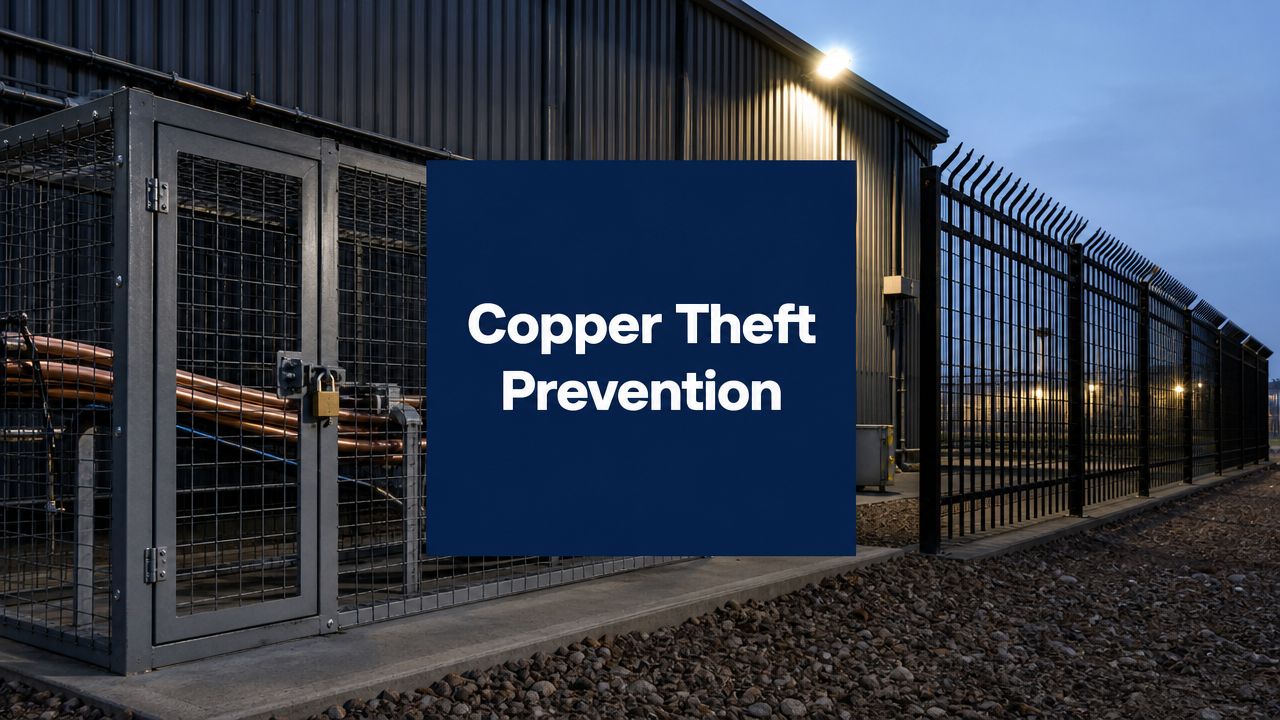

As a facility director or construction superintendent in San Diego, security isn't just another item on a checklist—it's a critical investment in operational continuity. A secure site is built on a smart blend of physical deterrents, professional eyes on the ground, and modern technology. It's the only way to proactively address risks like theft, vandalism, and unauthorized access that can bring a project to a screeching halt.
Why San Diego Industrial Sites Are Major Targets
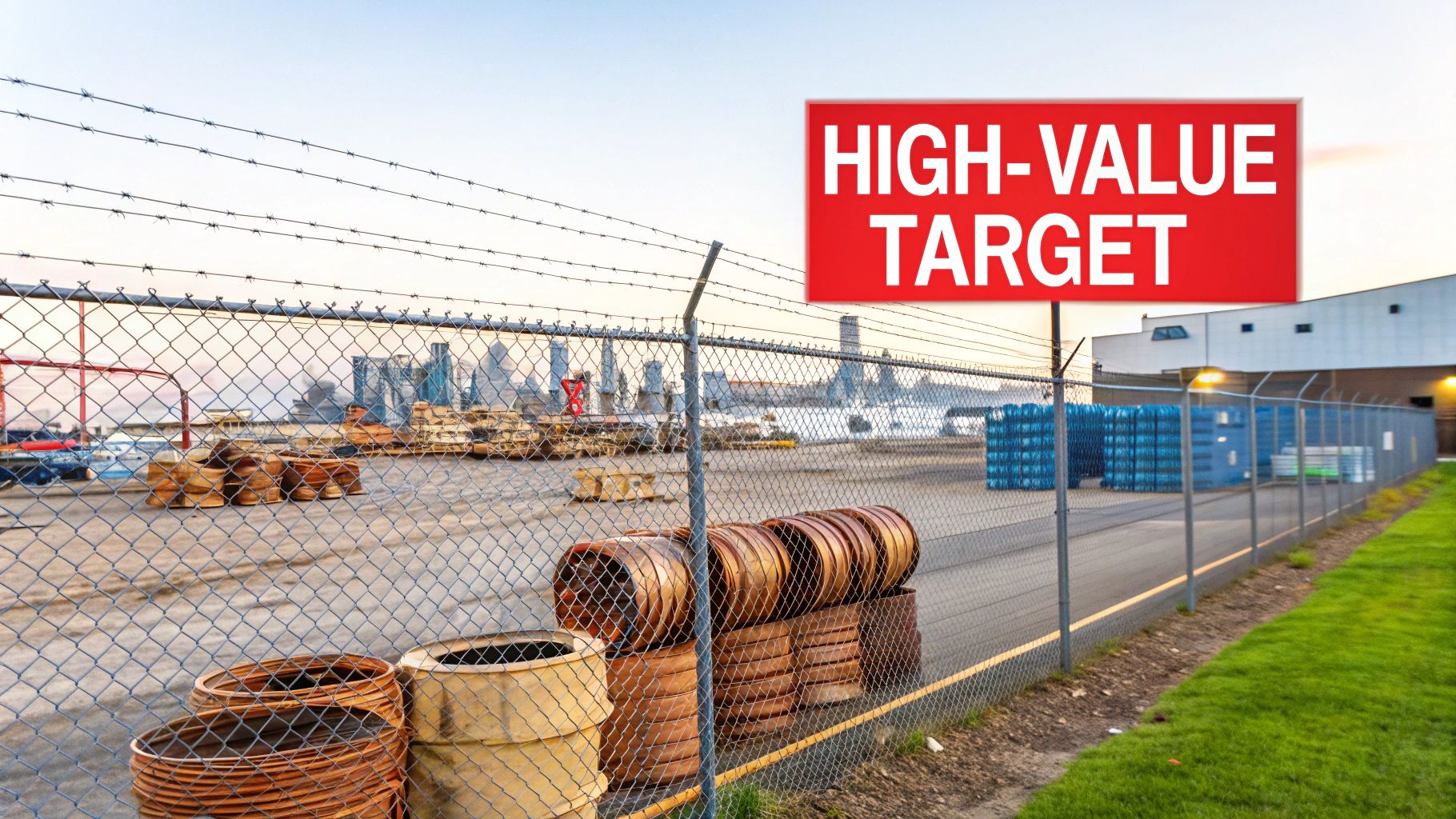
San Diego’s booming economy and constant development are a double-edged sword. While growth is excellent for business, it also paints a target on every warehouse, manufacturing plant, and construction site in the county. The very assets that drive your operation—heavy machinery, raw materials, and tools—are precisely what thieves are looking for.
This isn't just a feeling; local data confirms the risk. San Diego’s property crime rate is 18.9 incidents per 1,000 residents, which is notably higher than the national average. In practical terms, this means your chances of being a victim are about 1 in 53. With construction and industrial theft making up a significant portion of that statistic, the risk is real and growing alongside the city. You can learn more about the local crime landscape and how it affects sites like yours.
The Anatomy of an Attractive Target
What makes a criminal choose one industrial site over another? It often comes down to a combination of vulnerabilities. If you’re managing a site, you are juggling inherent challenges that, if left unaddressed, can create an open invitation for criminals.
These are the weak spots thieves love to exploit:
- High-Value Materials: Copper wire, lumber, catalytic converters, and power tools are prime targets. They are easy to grab and have a high resale value on the black market.
- Expensive Equipment: A generator, forklift, or excavator left on-site overnight represents a massive potential loss. The cost isn't just replacement; it's the operational downtime that follows.
- Expansive and Porous Perimeters: Large sites with multiple gates, temporary fencing, and changing layouts create blind spots that are difficult to monitor effectively.
- Predictable Routines: If your site is empty from Friday evening to Monday morning, you’ve just given criminals a reliable window of opportunity to strike.
This combination creates a low-risk, high-reward scenario for thieves. An unlocked gate, a dark yard, or no visible security patrol is an invitation for a serious incident.
The goal of proactive security is not just to react to incidents but to create an environment where criminals view your site as too difficult, too risky, and not worth the effort.
Shifting from Expense to Investment
It’s tempting to view security as just another expense on the budget. For anyone responsible for a project’s timeline and bottom line, however, that perspective is dangerously short-sighted. A well-designed security plan isn't an overhead cost; it’s a direct investment in operational stability.
The true cost of a stolen piece of equipment goes far beyond its sticker price. You must also factor in the lost productivity of the crew, project delays while sourcing a replacement, and the administrative burden of police and insurance claims.
When you weigh these cascading consequences against the cost of a professional security solution, the return on investment becomes clear. A thoughtful security plan directly protects your assets, your schedule, and your company’s reputation for reliability.
The True Cost of a Security Breach on Your Site
When equipment or materials vanish from a San Diego industrial site, it's easy to focus on the replacement cost. But that’s just the tip of the iceberg. The real financial damage runs much deeper, sending ripples through your entire project and impacting your bottom line. For facility directors and construction superintendents, viewing security as a critical risk management strategy—not just an expense—is key.
A security incident isn't a simple loss. It's a direct blow to your operational momentum, with consequences that cascade faster and hit harder than you might expect.
The Domino Effect of a Single Incident
A security breach is the first domino to fall. The immediate loss of a generator doesn't just stop the work that depended on it. It forces the entire crew scheduled to use it to stand idle, burning through payroll while you scramble for a replacement.
That first domino immediately knocks over the next one: project delays. In a competitive market, your timeline is everything. A single day of lost work can push back every subsequent phase, opening the door to contractual penalties, frustrated clients, and a tarnished reputation.
A security breach isn't a one-time event. It's the start of a chain reaction of financial and operational pain that can haunt a project for weeks, or even months.
Beyond Replacement Value: The Real Financial Blows
The financial impact doesn't stop with lost productivity and delays. The aftermath brings a new set of challenges that decision-makers must account for.
These compounding costs add up quickly:
- Skyrocketing Insurance Premiums: A history of theft claims is a red flag for insurers. It’s a fast track to higher rates that, over time, can cost far more than the stolen item itself.
- The Scramble for Specialized Equipment: Replacing standard tools is an annoyance. Sourcing a specialized piece of machinery, however, can take weeks, injecting lengthy and unpredictable delays.
- Administrative Overload: Suddenly, your team is bogged down filing police reports, coordinating with insurance adjusters, and rescheduling work. That time is stolen directly from the project's progress.
The scale of this problem is staggering. Construction site theft across the United States, including right here in San Diego, costs the industry between $300 million and $1 billion every year. Even more telling, 70% of construction workers witness theft on their job sites annually, and a third of all projects face delays because of it. You can see more of these eye-opening construction site theft statistics on getsafeandsound.com.
This isn't just a nuisance; it's an industry-wide crisis that demands a robust plan. For more on this, check out our guide on developing a security incident response plan.
Ultimately, proactive industrial site security in San Diego isn't just about stopping thieves. It's about protecting your timeline, your budget, and your ability to deliver. When you invest in a comprehensive security strategy, you're making a direct investment in the financial health and success of your entire operation.
Building a Multi-Layered Security Defense
When securing an industrial site, relying on a single, impenetrable wall is a recipe for failure. A more effective approach is to think of your security in layers.
Each layer serves to deter, detect, delay, and respond to different threats. This creates a defense-in-depth that is far more resilient than any single solution. If one line of defense is breached, another is there to stop the threat. For facility directors and construction superintendents in San Diego, this is the only reliable way to protect high-value assets and keep projects on schedule.
The ripple effect of just one security breach can be devastating, extending well beyond the initial loss.
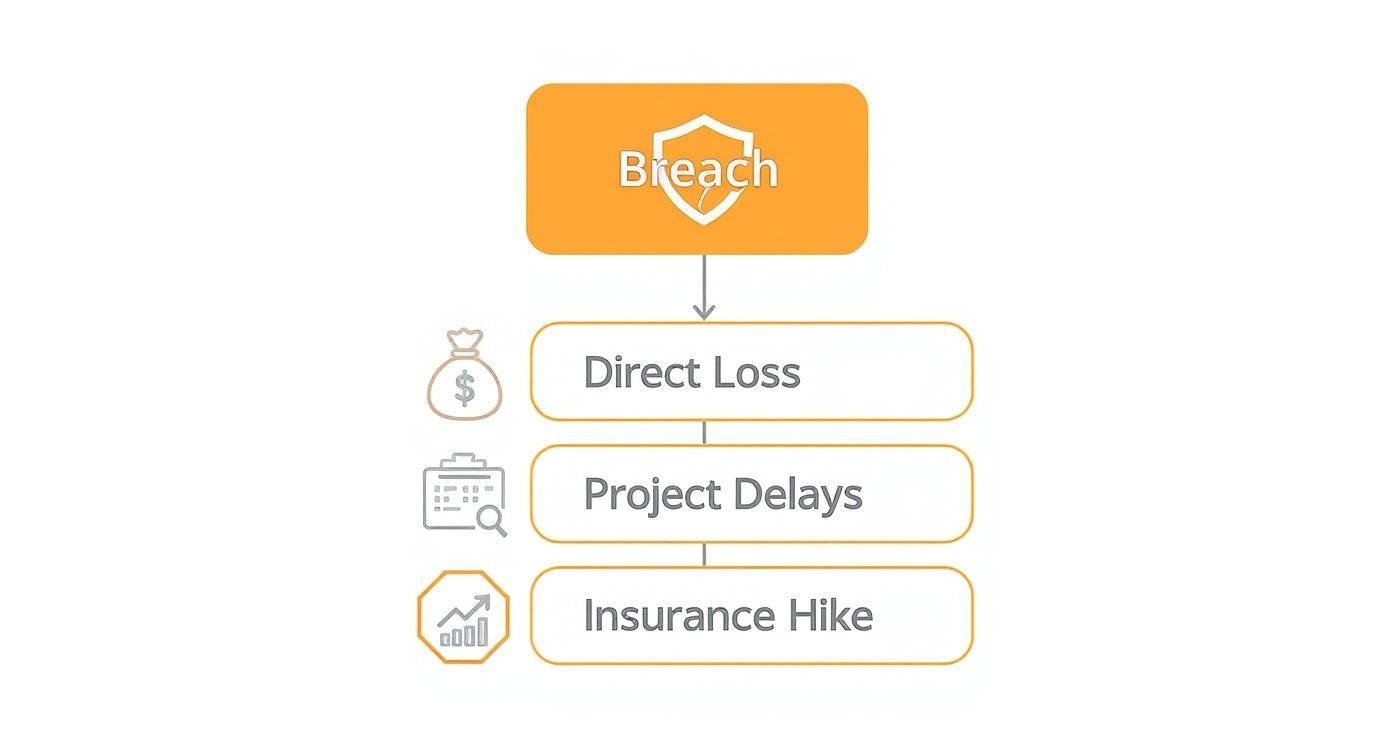
As you can see, the direct cost of stolen equipment is just the first domino. It sets off a chain reaction that hits your entire operation where it hurts—the bottom line.
A well-designed security plan needs several core layers working in concert.
| Security Layer | Primary Function | Threats Mitigated |
|---|---|---|
| Physical Deterrents | Create a "hard target" and discourage opportunistic threats. | Casual trespassing, petty theft, vandalism. |
| Visible Presence | Introduce an active, human element to observe and respond. | Planned theft, unauthorized entry, loitering. |
| Smart Technology | Provide 24/7 monitoring, evidence gathering, and accountability. | After-hours breaches, covert theft, fraudulent claims. |
| Procedural Controls | Manage internal access and mitigate risks from within. | Internal theft, unauthorized access by vendors/ex-employees. |
By weaving these elements together, you create a security net with no easy gaps for criminals to exploit.
Layer 1: Physical Deterrents
Your first layer of defense is about making your site look like a difficult target. The goal is simple: make a potential criminal’s job as challenging and visible as possible from the start. Strong physical deterrents send a clear message that this site is protected and not worth the risk.
This foundational layer includes the basics every site needs:
- Robust Fencing: A high, well-maintained perimeter fence is your first line of defense. It creates a clear boundary and a physical obstacle.
- Strategic Lighting: Well-lit yards, entry points, and storage areas eliminate shadows where thieves can hide.
- Clear Signage: Never underestimate the power of a sign. Prominently displayed warnings about security patrols, video surveillance, and no trespassing can make an amateur thief think twice.
Layer 2: Visible Presence
While fences and lights are crucial, nothing deters crime quite like a professional security officer on the ground. This active layer introduces a human who can observe, use judgment, and take immediate action. It’s what transforms your site from an empty lot into an actively monitored environment.
A visible presence can be achieved in a couple of key ways:
- On-Site Security Guards: A uniformed officer stationed at a key entry point or walking the grounds is a powerful psychological deterrent.
- Mobile Security Patrols: For larger sites, marked patrol vehicles conducting random but frequent checks are incredibly effective. This unpredictability keeps would-be thieves off-balance.
At Overton Security, we know our trained officers are the heart of any effective security plan. They actively observe, document, and respond, providing a level of protection that a camera alone cannot match.
Layer 3: Smart Technology Integration
The third layer weaves technology into your security fabric, acting as a force multiplier for your physical and human defenses. Modern security tech provides eyes on the site 24/7, gathers crucial evidence, and ensures accountability. As you plan, understanding the cost of security cameras installation is a key part of budgeting for a comprehensive surveillance system.
Technology should support and enhance human expertise, not replace it. The right integration provides real-time visibility and actionable intelligence, allowing for faster, more informed responses.
Key technologies we deploy for industrial sites include:
- High-Definition Surveillance Cameras: Positioned to cover vulnerable areas like loading docks, fuel tanks, and all access points.
- GPS-Enabled Guard Tour Systems: Our officers use systems that provide time-stamped, verifiable proof of their patrols, giving you complete transparency.
- Motion-Activated Sensors and Alarms: These systems can instantly alert our 24/7 Security Operations Center to unauthorized activity, triggering an immediate response.
Layer 4: Procedural Controls
The final layer turns inward, focusing on the policies and procedures that control access to your site and assets. This layer is critical for mitigating internal risks and ensuring your own operations don't create security holes.
Think of these controls as your site's operational rulebook:
- Strict Access Control: This means having firm protocols for visitor check-ins, employee credentialing, and vehicle logging. You can dive deeper with our guide to access control best practices.
- Inventory Management: Locking up high-value materials and maintaining a clear chain of custody closes opportunities for internal theft.
- Emergency Response Plans: Having clear, practiced protocols for handling a theft, fire, or medical emergency ensures a calm, coordinated, and effective response.
By combining these four layers, you create a dynamic and resilient security posture. An effective industrial site security San Diego plan addresses threats from every angle, protecting your assets, people, and profitability around the clock.
Understanding the Threats You Will Actually Face
To effectively secure an industrial site, you have to know who you're defending it against. A vague concern about "crime" won't suffice. An effective security strategy is an informed defense, one that anticipates the specific risks targeting industrial facilities in the San Diego area. It’s about moving past abstract fears to focus on real-world problems.
These threats are often calculated efforts by people who know what they’re looking for. From organized rings targeting high-value materials to opportunistic thieves taking advantage of a poorly lit corner, each threat demands a specific response.
The Most Common Threats at San Diego Industrial Sites
While every property is unique, we see clear patterns in criminal activity. The challenges facing a logistics yard near the port differ from those at a manufacturing plant in an industrial park, but they all fall into a few key categories.
The most common risks we see include:
- Organized Material Theft: This is far more than petty crime. We’re talking about coordinated crews targeting copper wiring, catalytic converters, lumber, and other materials with high resale value. These groups often scout locations and know how to get in and out quickly.
- Opportunistic Equipment Theft: An unsecured generator, unlocked tool container, or forklift with keys left in it are magnets for thieves. This type of theft is a crime of opportunity, usually happening after hours when a security protocol has been overlooked.
- Vandalism and Trespassing: These might seem less severe, but they can cause massive disruptions. Broken windows, graffiti, and damage to machinery can halt your operation and lead to expensive repairs. Furthermore, every trespasser is a liability risk.
Data-Driven Insights into Local Crime
Recent security reports paint a clear picture of the risks in major industrial hubs like San Diego. For instance, data shows that theft is the single most frequently reported crime at industrial sites, accounting for 35% of all incidents within a one-mile radius, followed by simple assault at 15%.
"In San Diego, the Port area… falls within a high-risk zone with an average BaseScore of 83 for crime. Trespassing is the most frequently reported offense in this area, with 4,191 incidents assessed within a 1-mile radius."
This data isn't meant to cause alarm—it's meant to prepare you. The presence of 64 reports of organized crime in that same area shows that your industrial site security in San Diego needs to be ready for more than just a casual trespasser. You can dig into the full findings in the U.S. Manufacturing Reshoring Security Report 2025. This intelligence helps you build a defense that matches the reality on the ground.
The Insider Threat You Cannot Ignore
While we often focus on threats from outside the fence, a significant percentage of losses at industrial sites actually comes from within. This can range from an employee quietly taking home tools to a disgruntled ex-employee sharing details about your security vulnerabilities.
Insider threats are particularly challenging because these individuals already have legitimate access and know your site's layout and procedures. A truly comprehensive security plan must include procedural controls—like strict access protocols and tight inventory management—to address these internal risks just as seriously as external ones. When you understand the full spectrum of threats, you can finally put a security solution in place that is truly prepared.
Choosing a Security Partner You Can Trust

Once you’ve mapped out the specific risks your San Diego facility faces, the most important step is choosing the right security partner. This decision is about more than comparing hourly rates. You need a company with a philosophy that matches your need for reliable, consistent protection.
Think of it as an investment in a trusted partnership. It's about finding a team that sees your site’s security as a shared responsibility. This is where the right provider makes all the difference, turning a security plan from a static document into a living, breathing reality.
Quality Over Quantity: A Philosophy You Can Rely On
For over 26 years, Overton Security has built its reputation on a simple but powerful principle: quality over quantity. In an industry often focused on rapid expansion, we’ve always taken a more deliberate path. This approach allows us to maintain the high standards and hands-on management our clients expect.
What does that mean for your industrial site? It means you are never just an account number. Our commitment to a low manager-to-client ratio is a core part of that promise.
Your dedicated manager has the time and resources to be a true partner—visiting your site regularly, understanding its unique challenges, and being available the moment you need to address a concern. This hands-on approach keeps your security plan sharp and adaptable.
Blending Human Expertise with Smart Technology
Real security at an industrial site in San Diego requires a smart blend of skilled professionals and modern technology. Relying on just one or the other leaves serious blind spots. At Overton Security, we integrate these elements to create a system built on accountability and transparency.
Our highly trained security officers are the bedrock of our service. They bring the critical thinking, active deterrence, and immediate response that no camera or sensor can replace.
We then empower them with tools that provide complete peace of mind:
- GPS-Enabled Patrols: Every patrol route is tracked and verified. You receive time-stamped proof that every critical checkpoint was inspected as scheduled.
- Detailed Digital Reports: Officers document everything as it happens, complete with photos and incident notes. These reports are delivered directly to you, providing a clear record of all activity.
- 24/7 SOC Oversight: Our Security Operations Center provides constant support for our officers, acting as another layer of monitoring and dispatching backup when needed.
Investing in Officers Who Stay
The security industry is known for high employee turnover—a "burn and churn" model that leads to inconsistent service. That’s a pattern we refuse to accept. We believe that investing in our people is the most important investment we can make for our clients.
By offering competitive pay, solid benefits, and genuine career growth opportunities, we attract and retain top-tier security professionals. Our low turnover rate means the officers assigned to your site truly get to know its layout, routines, and vulnerabilities. That consistency is the foundation of an effective security program. Learning what separates trustworthy security guard companies in San Diego in our detailed guide is crucial.
Ultimately, our commitment to our officers translates directly into the reliable, professional security your San Diego industrial site deserves. It’s how we’ve built trust for more than two decades.
Common Questions on San Diego Industrial Security
When facility directors and construction superintendents explore security options, many practical questions arise. Getting clear, direct answers is key to protecting your site effectively. Here are some of the most common questions we hear.
Do We Really Need On-Site Guards, or Is Technology Enough?
This is a frequent question, and the honest answer is that for a high-risk industrial environment, technology alone is rarely enough. Cameras and alarms are excellent for detection and gathering evidence after an incident. They are passive tools; they record a crime, they don’t stop it.
A professional security officer, on the other hand, is an active, thinking deterrent. They can spot unusual behavior a camera might miss, physically check a gate, and respond to a problem in seconds. The best solution is a blend: smart tech for constant oversight, backed by the judgment and immediate response of a trained professional.
Technology acts as your eyes and ears, but a skilled officer acts as your hands and feet. One without the other leaves a major gap in your defenses.
How Can We Justify the Cost of Professional Security?
While it's easy to see security as an expense, it’s more accurate to view it as an investment in operational stability. The real question isn’t what security costs, but what a single major incident could cost you.
Imagine a $30,000 generator is stolen. The financial hit isn't just the replacement cost. You also face:
- Project Delays: A stolen generator can bring work to a halt, triggering contractual penalties.
- Increased Insurance Premiums: A history of claims will drive your rates up for years to come.
- Wasted Labor Costs: An idle crew still on the payroll is a direct drain on your project’s budget.
When you weigh these cascading costs against the predictable, budgeted cost of a professional security plan, the ROI becomes clear. Good security isn't an expense; it directly protects your bottom line.
What Makes a Good Industrial Security Officer?
Not every security officer is suited for the unique challenges of an industrial site. A great officer for this environment needs a specific skill set beyond just watching a gate.
We look for a few key traits:
- Situational Awareness: The ability to notice small details—like an unfamiliar car loitering nearby or a section of fence that looks tampered with.
- Strong Communication Skills: They must write clear, detailed incident reports and communicate effectively with your team and first responders.
- Proactive Mindset: A good officer doesn't just wait for something to happen. They actively look for potential weak spots and bring them to your attention.
- Calm Under Pressure: In an emergency, they are your first line of response and must be able to think clearly and act decisively.
At Overton Security, we focus on retaining career-minded officers who possess these traits, ensuring the person protecting your assets is a true security professional.
How Do We Know the Patrols Are Actually Happening?
This is a valid concern and a major weak point for less reputable security companies. Accountability is everything. Any modern security partner should provide verifiable proof that they’re doing the job you hired them for.
We use a GPS-enabled guard tour management system to provide total transparency. Our officers scan checkpoints at key locations, creating a time-stamped digital record of their patrol. You get detailed daily activity reports—often with photos—so you can see for yourself what was checked and when. This technology eliminates guesswork and provides the confidence you need in your industrial site security San Diego coverage.
Ready to secure your site with a partner you can trust? The team at Overton Security brings 26 years of experience protecting industrial and construction assets across San Diego. Contact us today for a complimentary site assessment.