
For retail and property managers, inventory shrinkage isn’t just a number on a spreadsheet; it's a direct threat to profitability. The financial impact of theft, fraud, and administrative errors can be significant, especially in a competitive market. Addressing this challenge requires more than reacting to losses after they occur—it demands a proactive, multi-layered approach that blends smart technology, intelligent store design, and well-trained personnel.
This guide moves beyond generic advice to provide nine essential loss prevention strategies retail leaders can implement. We'll explore actionable tactics tailored for today’s commercial properties, from leveraging video surveillance to enhancing employee training. Each strategy is designed to safeguard your assets, reduce losses, and foster a culture of security that protects your bottom line and provides peace of mind.
1. Deploying Electronic Article Surveillance (EAS)
A cornerstone of modern retail security, Electronic Article Surveillance (EAS) is a proven, technology-driven method for deterring theft. This strategy is one of the most effective loss prevention strategies retail managers can implement due to its dual function as both a deterrent and a detection tool. The system operates on a straightforward principle: security tags are attached to merchandise, and detection antennas are installed at store exits.
When a customer makes a purchase, the tag is deactivated by a cashier. If an item with an active tag passes through the antennas, an alarm is triggered, immediately notifying staff of a potential theft. This visible technology acts as a powerful psychological deterrent for opportunistic shoplifters while providing a reliable first line of defense.
Implementation and Best Practices
To maximize the effectiveness of an EAS system, consider these reassuring steps:
- Optimize Pedestal Placement: Ensure detection antennas are placed 4-6 feet apart. This creates a reliable detection field without impeding customer traffic flow.
- Prioritize Staff Training: Your team is crucial to the system's success. Conduct regular, calm training on consistent tag deactivation, proper removal, and the correct protocol for responding to an alarm.
- Conduct Regular System Checks: Technology is only effective when it's functional. Test your EAS system weekly, checking alarm sensitivity and response to identify and fix any potential issues before they can be exploited.
- Maximize Deterrent Visibility: Use clear signage at all entrances. A simple sign stating "This Store is Protected by Electronic Surveillance" can persuade many potential thieves to reconsider.
The following infographic highlights key performance metrics associated with a well-implemented EAS system.
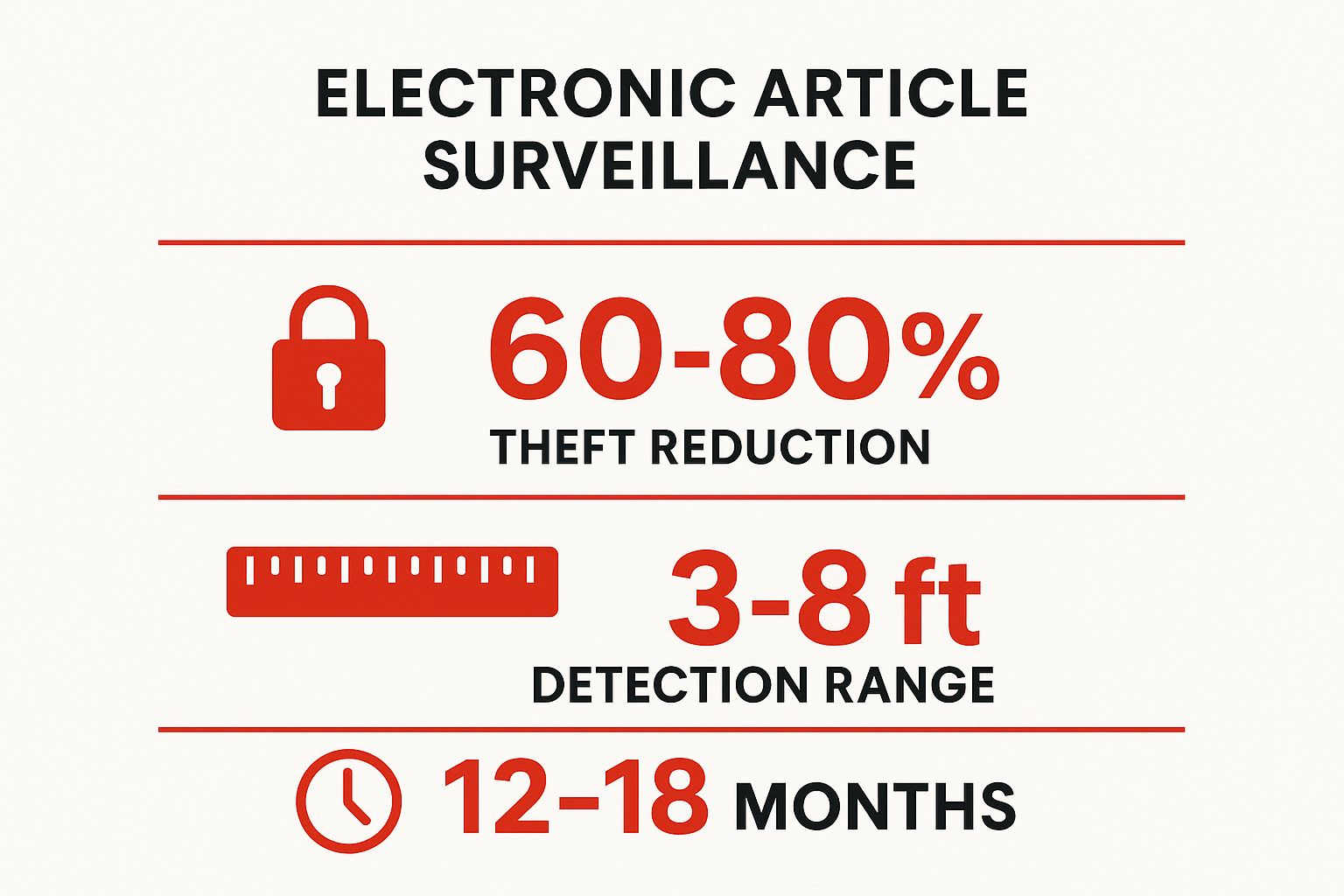
As the data shows, the significant potential for theft reduction makes EAS a compelling choice for retailers focused on protecting their bottom line.
2. CCTV Video Surveillance Systems
Comprehensive video monitoring, or CCTV, stands as a critical technology for modern loss prevention strategies retail managers can leverage. Today’s systems have evolved far beyond simple recording; they serve as proactive tools that monitor retail environments, deter theft, and provide crucial evidence for investigations. High-definition cameras and cloud-based storage work together to identify suspicious behaviors and secure assets.
This technology provides a constant set of eyes across your property, from high-traffic entrances to vulnerable stockrooms. By capturing clear footage, retailers can not only identify individuals involved in an incident but also analyze patterns to prevent future losses. It’s a powerful layer of defense that provides both a deterrent and a detailed record of events.

Implementation and Best Practices
A surveillance system's effectiveness depends on its strategic implementation and consistent management. Follow these best practices to maximize your investment:
- Strategic Camera Placement: Position cameras to cover critical points like cash registers, entrances, exits, and known high-theft zones. A mix of visible cameras for deterrence and discreet ones for evidence collection is highly effective.
- Ensure High-Quality Footage: Invest in cameras with sufficient resolution and ensure all monitored areas are well-lit. Poor lighting can render even the best cameras useless, so conduct regular checks during both day and night conditions.
- Staff Training on Privacy and Procedures: Your team must understand the legal boundaries of surveillance. Provide clear training on privacy laws, proper video handling procedures, and how to use footage ethically for incident reporting.
- Perform Regular Maintenance: Technology requires upkeep. We recommend routine maintenance to clean camera lenses, check for obstructions, and confirm the recording system is functioning correctly to avoid gaps in coverage.
3. Strategic Store Layout and Design
A store's physical layout is one of the most powerful yet often overlooked loss prevention strategies retail managers can deploy. Far more than an aesthetic choice, strategic design uses principles of environmental psychology to actively discourage theft. This approach focuses on maximizing visibility, eliminating blind spots, and creating natural surveillance opportunities for staff.

By intentionally arranging fixtures and traffic flow, you can make it significantly more difficult for shoplifters to operate unnoticed. For instance, open-plan stores with centrally located staff create an environment of constant, low-key observation. This strategy integrates security directly into the shopping experience, creating a safer environment that feels open and welcoming to legitimate customers.
Implementation and Best practices
To leverage your store's design as a security asset, integrate these proven practices:
- Enhance Sight Lines at Checkout: Position registers and service counters so they have a clear, unobstructed view of high-value merchandise, entrances, and exits. This creates a natural "command center" for your team.
- Eliminate Hiding Spots: Use low-profile shelving and strategically placed end caps to prevent the creation of secluded corners or alcoves. The goal is to ensure no area of the sales floor is completely hidden from view.
- Install Convex Mirrors: Place large, convex mirrors in corners, at the ends of long aisles, and in any identified blind spots. This low-cost tool dramatically extends the visual range of your employees.
- Maintain Clear and Bright Exits: Keep entrance and exit areas well-lit and free of clutter from displays or signage. A clear path ensures that anyone entering or leaving the store is easily visible to staff.
4. Inventory Management and Cycle Counting
Effective inventory management is a fundamental component of any successful retail operation and one of the most proactive loss prevention strategies retail managers can leverage. This strategy centers on the systematic tracking of stock to swiftly identify discrepancies between physical inventory and system records. By knowing precisely what you have and where it is, you can pinpoint losses from theft or administrative errors before they escalate.
Modern systems enhance this process with technologies like RFID and barcode scanning, which provide real-time inventory visibility. This precision not only deters internal and external theft but also improves operational efficiency and profitability, making it a win for any business owner.

Implementation and Best Practices
To integrate robust inventory controls and reduce shrink, consider these actionable steps:
- Prioritize High-Risk Items: Focus your cycle counting efforts on merchandise that is high-value, high-demand, or frequently targeted for theft. This targeted approach maximizes resource efficiency.
- Vary Count Schedules: Conduct counts at unpredictable times, including different days and shifts. This irregularity helps uncover patterns of internal theft that might otherwise be concealed.
- Implement Segregation of Duties: Ensure that the employees responsible for receiving, stocking, and selling merchandise are not the same ones conducting inventory counts. This separation of roles creates a system of checks and balances.
- Leverage Mobile Technology: Use mobile devices and scanners for efficient, real-time data entry during counts. This minimizes human error and speeds up the reconciliation process.
- Reconcile Regularly: Make it a standard procedure to promptly investigate and reconcile any discrepancies. Timely action is crucial to identifying the root cause of the loss.
5. Employee Training and Awareness Programs
While technology is a powerful tool, your employees are the most dynamic and critical asset in your security framework. Comprehensive employee training is one of the most effective loss prevention strategies retail managers can champion because it transforms your entire team into a proactive security force. This approach focuses on educating staff to identify suspicious behaviors and contribute to a store-wide culture of security awareness.
A well-trained employee can deter theft simply through attentive customer service, a method that simultaneously boosts sales and prevents shrink. When employees know what to look for and how to respond calmly, they create an environment where would-be thieves feel seen and are less likely to act. It's about empowerment, not enforcement.
Implementation and Best Practices
To build a robust training program that empowers your team, integrate these actionable steps:
- Emphasize Service as a Deterrent: Train staff that the primary defense against theft is exceptional customer service. Simple actions like greeting every customer and offering assistance make honest shoppers feel welcome and potential thieves feel watched.
- Utilize Role-Playing Scenarios: Conduct regular training sessions that simulate common theft situations. This builds confidence and muscle memory for real-world incidents in a safe, controlled setting.
- Provide Clear Response Protocols: Your team must know exactly what to do and what not to do. Clearly define procedures for observing suspicious behavior and communicating with management or security. Never encourage direct confrontation.
- Hold Regular Security Briefings: Dedicate a few minutes in team meetings to discuss recent incidents or high-risk products. This keeps security top-of-mind and allows staff to share valuable on-the-floor observations.
- Recognize and Reward Vigilance: Acknowledge employees who successfully prevent loss through proper procedure. This reinforces positive behavior and demonstrates that their contribution is valued.
6. Customer Service Excellence
Transforming customer service from a sales function into a security asset is one of the most effective loss prevention strategies retail businesses can adopt. This approach involves training employees to greet, assist, and maintain helpful contact with every shopper. It operates on a simple, powerful principle: thieves thrive on anonymity and avoid stores where staff are attentive and engaged.
Excellent customer service creates an environment of natural surveillance that deters potential shoplifters. By making every customer feel seen and valued, you enhance the shopping experience, build loyalty, and simultaneously create a powerful deterrent. This is a win-win for both your sales and security goals.
Implementation and Best Practices
To integrate customer service excellence into your loss prevention plan, focus on these key actions:
- Train for Engagement, Not Suspicion: Instruct your team to approach all customers with genuine offers of assistance. Teach them to use open-ended questions like, "What brings you in today?" This fosters a welcoming atmosphere while letting potential thieves know they have been noticed.
- Implement the 10-Foot Rule: This classic rule requires employees to make eye contact, smile, and greet any customer within a ten-foot radius. This simple, consistent interaction is a cornerstone of proactive customer service.
- Strategic Staff Placement: Position employees in high-value or high-theft areas. A visible and available staff member in the electronics or designer handbag section is a more effective deterrent than a camera alone.
- Document and Communicate: Train staff to discreetly note and report unusual or suspicious behaviors to management. This creates a valuable log of information that can help identify patterns without escalating a situation on the floor.
7. Access Control and Restricted Areas
Controlling who can access specific areas of your store is a fundamental yet powerful loss prevention strategy. This involves implementing physical and electronic systems to limit entry to high-value merchandise storage, back offices, and stockrooms. By creating a clear distinction between public and employee-only zones, you drastically reduce opportunities for theft.
This approach is highly effective because it directly secures your most vulnerable assets. For instance, locked showcases for small, high-value items prevent simple grab-and-run thefts. Similarly, restricting backroom access to authorized personnel prevents merchandise from disappearing before it hits the sales floor. This creates a secure, accountable environment where access is managed.
Implementation and Best Practices
To effectively integrate access control without disrupting operations, consider these key steps:
- Balance Security and Sales: Use transparent, locked cases for high-value goods to maintain product visibility. Ensure staff are available to quickly assist customers, preventing lost sales due to wait times.
- Implement Tiered Access: Not every employee needs access to every area. Assign access levels based on job responsibilities using the principle of least privilege to minimize risk.
- Train for Rapid Response: Your team's ability to quickly unlock merchandise for legitimate customers is crucial. Develop a simple, efficient process and train staff to execute it smoothly.
- Audit Access Logs Regularly: If using an electronic system, review access logs weekly. Look for unusual patterns, such as after-hours access, which can be early indicators of a security gap.
For a deeper dive into system setup and management, you can learn more about access control best practices on overtonsecurity.com.
8. Point-of-Sale (POS) Security and Transaction Monitoring
While external threats get attention, a significant portion of retail shrinkage originates internally at the point-of-sale. Implementing robust POS security is one of the most crucial loss prevention strategies retail managers can use to combat internal theft. These advanced systems track every transaction, flagging unusual patterns that may indicate fraud, such as excessive voids or suspicious refunds.
This strategy moves beyond simple surveillance by transforming transaction data into actionable intelligence. By identifying anomalies in real-time, loss prevention teams can intervene quickly, turning a reactive process into a proactive defense against internal losses.
Implementation and Best Practices
To effectively deploy POS monitoring and protect your assets from the inside out, consider these best practices:
- Establish Smart Thresholds: Set realistic alert thresholds for activities like voids or returns. This minimizes false alarms, allowing your team to focus on genuinely suspicious behavior.
- Focus on Pattern Recognition: Train staff to identify recurring patterns. An employee consistently processing no-receipt returns is a more significant red flag than a one-off event.
- Integrate with Video Surveillance: Combine POS data with corresponding video footage. This creates clear evidence for investigations and provides a complete picture of an event.
- Use Data for Coaching: Frame the system as a tool for training and operational improvement. Reviewing flagged transactions can reveal process gaps, helping honest employees perform their jobs more securely.
9. Security Personnel and Loss Prevention Officers
While technology is a powerful ally, the human element remains one of the most effective loss prevention strategies retail managers can deploy. Trained security personnel and Loss Prevention Officers (LPOs) provide a dynamic, responsive security layer that technology alone cannot replicate. Their role extends beyond simply standing guard; they use observation and customer service skills to deter theft and maintain a safe shopping environment.
The visible presence of a uniformed officer is a strong deterrent. At Overton Security, we focus on providing professional officers who are retained and supported, not subjected to the "burn and churn" common in the industry. Our hands-on leadership and commitment to quality over quantity ensure you have a reliable partner. A well-trained officer can de-escalate situations, act as a reliable first responder, and offer reassurance to both customers and staff.
Implementation and Best Practices
To integrate security personnel effectively into your retail environment, focus on these key practices:
- Balance Presence with Comfort: Position uniformed officers near entrances and high-value areas for maximum deterrence. Ensure their approach is welcoming, not intimidating, to maintain a positive customer atmosphere.
- Prioritize Specialized Training: Ensure all officers receive rigorous, ongoing training in de-escalation techniques and local laws. This protects your business and ensures all interactions are handled professionally.
- Leverage Smart Technology: Our officers are equipped with GPS-enabled patrol systems and provide detailed digital reports, giving you real-time accountability and blending human expertise with smart technology.
- Focus on Deterrence Over Confrontation: The primary goal should always be preventing theft through presence and vigilance. Officers should be trained to observe, report, and engage according to strict protocols that prioritize safety.
For a deeper look into structuring your security team, you can learn more about retail security guard services on overtonsecurity.com. Properly selected personnel are a proactive investment in protecting your assets.
Loss Prevention Strategies Comparison Matrix
| Security Method | Implementation Complexity | Resource Requirements | Expected Outcomes | Ideal Use Cases | Key Advantages |
|---|---|---|---|---|---|
| Electronic Article Surveillance (EAS) | Moderate (2-4 weeks setup) | Hardware installation, tag management | 60-80% theft reduction, 12-18 months ROI | Retail stores needing tech deterrent | Proven theft reduction, cost-effective, 24/7 operation |
| CCTV Video Surveillance Systems | High (hardware + software + setup) | Cameras, cloud storage, AI analytics, monitoring staff | 15-25% shrink reduction, real-time alerts | Large stores requiring detailed monitoring | Deterrent + evidence, AI analytics, remote access |
| Strategic Store Layout and Design | Low to Moderate (depends on changes) | Design expertise, lighting, fixtures | 10-30% improvement with combined strategies | Stores emphasizing natural surveillance | Low cost, enhances customer experience, natural staff surveillance |
| Inventory Management & Cycle Counting | Moderate to High (tech and process) | RFID/barcode tech, staff training, audit processes | 95-99.9% inventory accuracy, early theft detection | Stores with complex inventories | Early detection, accuracy improvements, data-driven decisions |
| Employee Training and Awareness Programs | Low to Moderate (ongoing training) | Training materials, time investment | 15-40% loss reduction when well implemented | Any retail environment | Low cost, builds security culture, improves service |
| Customer Service Excellence | Low (staff training and culture) | Staff engagement/time, training | 10-25% sales increase + theft reduction | Stores focusing on customer interaction | Enhances sales and security, no tech cost, natural deterrent |
| Access Control and Restricted Areas | Moderate (installation of systems) | Electronic locks, training, maintenance | 50-80% theft reduction on secured items | Stores with high-value merchandise | Prevents unauthorized access, clear accountability |
| Point-of-Sale Security & Monitoring | High (software + training) | Monitoring software, analytics, staff training | 85-95% accuracy detecting internal theft | Stores needing internal fraud control | Detects internal theft, automated alerts, detailed reporting |
| Security Personnel & Loss Prevention Officers | High (hiring & training required) | Salaries, training, legal compliance | 3:1 to 7:1 ROI, 45%+ theft reduction | Stores requiring human deterrents | Strong visible deterrent, trained for confrontation, flexible roles |
A Strategic Partnership for Proactive Loss Prevention
Navigating the landscape of retail shrinkage requires more than a single solution; it demands a layered, integrated defense. We’ve detailed nine essential pillars of a robust security framework, from leveraging technology like EAS and advanced CCTV systems to cultivating a security-conscious culture through employee training and superior customer service.
These components achieve their maximum potential when woven together into a cohesive strategy. Effective loss prevention is not a static checklist but a dynamic discipline. It’s about creating an environment where opportunities for theft are minimized, accountability is clear, and both employees and customers feel safe. This proactive posture transforms security from a reactive cost center into a strategic asset that protects your bottom line.
The Human Element in a Tech-Driven World
While technology provides critical tools, the human element remains the most vital component of a successful loss prevention program. Trained security professionals and vigilant employees are your first and last lines of defense. They interpret the data from your CCTV, engage with customers to deter shoplifters, and enforce access control policies. Their professionalism and expertise act as a powerful deterrent that technology alone cannot replicate.
A comprehensive approach that blends smart technology with skilled human oversight is the gold standard. The loss prevention strategies retail managers implement must be holistic, covering everything from the stockroom to the sales floor. By committing to this multifaceted approach, you create a resilient business prepared to counter both internal and external threats, ensuring long-term profitability and stability.
Ready to elevate your security from a simple necessity to a strategic advantage? With 26 years of experience, the experts at Overton Security specialize in creating customized loss prevention solutions that integrate seamlessly with your operations. Contact us today for a comprehensive site assessment and discover how our hands-on leadership and quality-focused approach can help protect your assets and secure your peace of mind.