
For San Diego property managers and facilities directors, is there a more important goal than creating a safe, welcoming retail environment? A secure shopping center builds shopper confidence, protects tenant investments, and enhances your property's reputation. Yet, the challenges—from organized retail crime to managing crowd flow—are more complex than ever. A truly effective security plan must be layered, proactive, and tailored to the unique dynamics of your shopping center.
This guide provides a clear, actionable framework for enhancing your mall security in San Diego. We will explore six essential components of a comprehensive strategy that blends smart technology with the irreplaceable value of professional human oversight. By understanding how these layers work together, you can make informed decisions to build a security program that addresses modern threats while elevating the overall guest experience.
We'll break down each component, from advanced surveillance to professional officer patrols and integrated alarm systems. You will learn how these elements work in concert to keep your property secure, your tenants satisfied, and your shoppers feeling safe and valued.
1. Layer 1: Comprehensive CCTV Surveillance with AI-Powered Analytics
The foundation of any modern mall security strategy is a robust, intelligent video surveillance system. The days of relying on grainy, passive recordings are long gone. Today’s advanced systems integrate high-definition cameras with AI-driven analytics to create a proactive digital security layer that monitors every corner of a retail environment.
This technology acts as a digital first responder. It can autonomously detect unusual crowd formations, identify specific suspicious behaviors, and track vehicles through complex parking structures. For property managers overseeing high-traffic centers, this capability shifts security from a reactive, evidence-gathering function to a proactive, incident-prevention model.
How AI-Powered Surveillance Works for Malls
Unlike traditional systems that require constant human monitoring, AI analytics sift through video footage in real-time to flag anomalies. Key applications in a mall setting include:
- Loitering Detection: The system can automatically alert security personnel if an individual or group remains in a sensitive area, like a service corridor or near an ATM, for an unusual length of time.
- Crowd Formation Alerts: It can detect sudden, dense gatherings of people—a potential indicator of a fight, flash mob, or medical emergency—allowing for a rapid response.
- License Plate Recognition (LPR): Cameras at entry and exit points can log vehicle plates, helping to identify and track vehicles associated with past incidents or BOLO (Be On the Lookout) alerts.
- Object Left Behind: The system can flag unattended bags or packages, a critical tool for identifying potential security threats.
A large San Diego retail center could leverage video analytics to monitor high-value storefronts, sending instant alerts to on-site officers if pre-defined suspicious behaviors are detected. Similarly, another center might use crowd management tools during the holiday season to optimize foot traffic and prevent overcrowding in key areas.
Key Insight: The true value of an AI-powered CCTV system lies in its ability to augment human security officers. It provides them with actionable intelligence in real-time, allowing a smaller team to cover more ground with greater efficiency and awareness.
Actionable Tips for Implementation
To maximize the effectiveness of your surveillance system:
- Strategic Camera Placement: Ensure complete coverage of all entry/exit points, parking structures, food courts, public restrooms, and service corridors.
- Optimize Lighting: All monitored areas must have adequate lighting, especially after hours, to ensure cameras capture clear, usable footage.
- Develop a Data Retention Policy: Create a clear policy that balances security needs with California's privacy laws, defining how long footage is stored and who can access it.
- Comprehensive Staff Training: Your security team must be thoroughly trained on the system's features and the protocols for responding to every type of automated alert.
2. Uniformed Security Officer Patrols
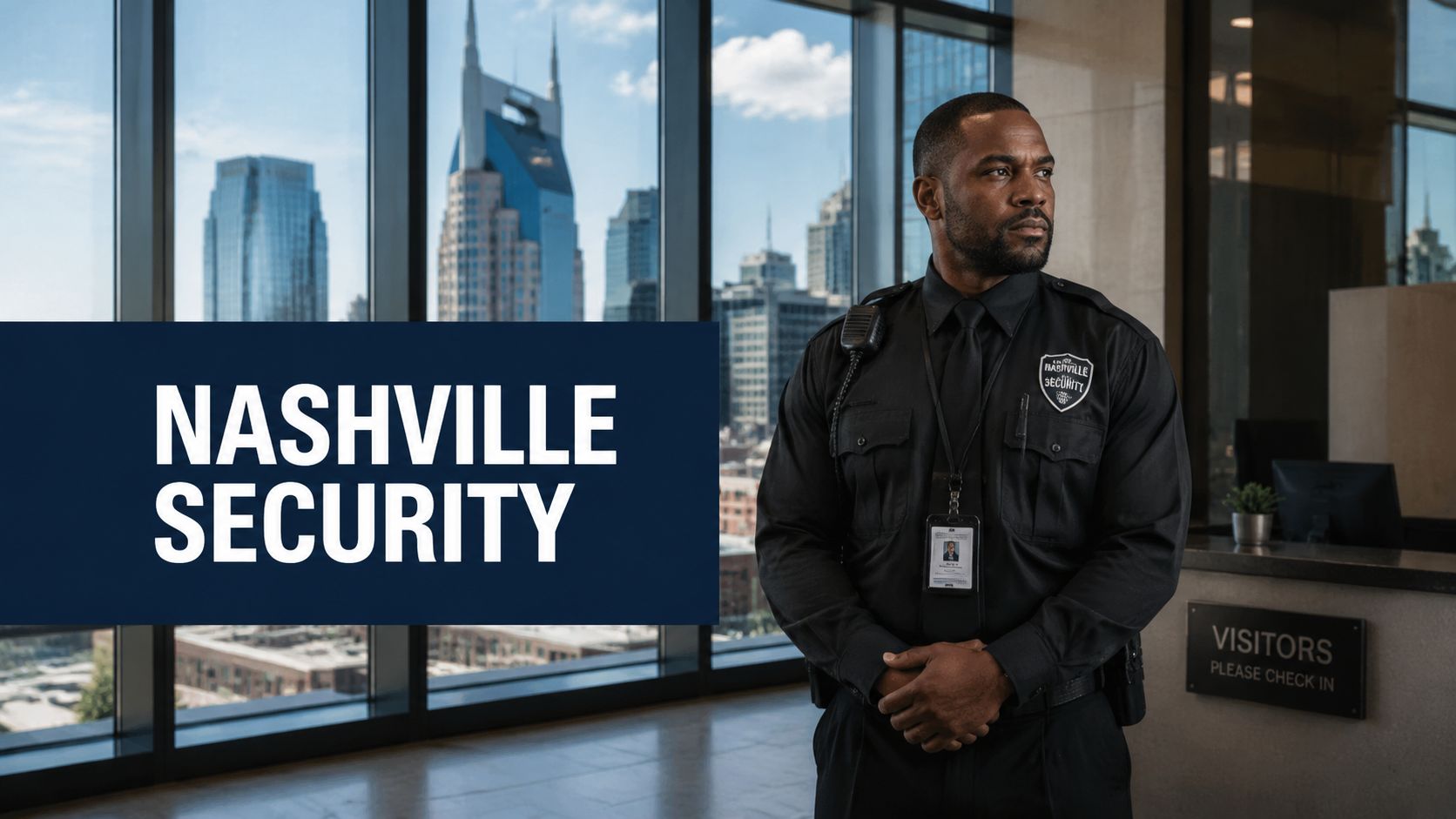
While technology provides critical oversight, the physical presence of highly-trained personnel remains an irreplaceable component of effective mall security in San Diego. Uniformed security officers conducting regular foot and vehicle patrols serve as the most visible deterrent to potential wrongdoers. Their presence reassures shoppers and tenants, creating a tangible sense of safety and order.
These professionals are far more than just a visual deterrent; they are on-the-ground first responders. Trained in customer service, conflict de-escalation, and emergency protocols, they handle everything from providing directions to shoppers to managing security incidents until law enforcement arrives. This human element is essential for building trust and providing immediate, intelligent responses to unpredictable situations.
How Professional Patrols Work for Malls
A professional security presence is a dynamic asset that adapts to the mall’s daily rhythm. The goal is to provide comprehensive coverage that is both visible and unpredictable. Key functions in a retail environment include:
- Deterrence Through Visibility: Regular, marked-vehicle patrols of parking lots and foot patrols through common areas and service corridors discourage opportunistic crimes like vehicle break-ins and shoplifting.
- Rapid Incident Response: Officers are strategically positioned to respond swiftly to alarms, medical emergencies, or reports of disorderly conduct, minimizing disruption.
- Customer Service & Support: Acting as mall ambassadors, officers assist patrons, enforce property rules consistently, and report maintenance issues, contributing to a premium visitor experience.
- Access Control: They monitor restricted areas and delivery bays, ensuring only authorized personnel gain entry and preventing unauthorized access to sensitive zones.
At Overton Security, our 26 years of experience have shown that a hands-on approach delivers consistent results. We focus on quality over quantity, with a low manager-to-client ratio that ensures our teams receive the support and oversight needed to excel. By investing in our officers, we provide our clients with reliable, professional uniformed security officer patrols that become an integral part of the property's success.
Key Insight: The effectiveness of a uniformed officer program is directly tied to the quality of their training and the support they receive. A well-supported, professional officer is not just a guard but a proactive risk manager and a positive representative of the property's brand.
Actionable Tips for Implementation
To build a successful on-site security program:
- Vet Your Security Partner: Select a company with proven retail experience, proper state licensing (BSIS), comprehensive insurance, and a reputation for retaining quality officers.
- Establish Clear Patrol Directives: Work with your provider to develop specific, yet varied, patrol routes that cover all critical areas, including parking structures and exterior perimeters.
- Prioritize Mall-Specific Training: Ensure officers are trained not only on general security protocols but also on your mall's specific layout, emergency plans, and customer service standards.
- Foster Open Communication: Maintain regular contact between mall management and the security team to discuss trends, review incident reports, and adapt strategies.
3. Electronic Access Control Systems
While surveillance monitors public spaces, controlling who accesses private, sensitive areas is an equally critical component of mall security. Electronic access control systems provide a sophisticated solution for managing entry to restricted zones like administrative offices, utility rooms, and inventory storage. By replacing traditional keys with modern credentials, property managers gain granular, real-time control over their facility.
These systems are the gatekeepers of a mall’s operational core, ensuring only authorized personnel can enter high-value or high-risk areas. For a comprehensive mall security San Diego strategy, access control is non-negotiable. It moves security beyond simple locks and creates an auditable, intelligent barrier that protects assets, data, and critical infrastructure.
How Electronic Access Control Works for Malls
Access control systems use electronic readers, credentials (like keycards, fobs, or mobile apps), and a central management server to grant or deny entry. This technology creates a detailed digital footprint of every access attempt. Key applications in a mall environment include:
- Time-Based Access: Granting maintenance staff access to specific utility closets only during their scheduled shifts, automatically revoking it afterward.
- Role-Based Permissions: Ensuring that retail tenant staff can only access their specific back-of-house areas and not those of other stores or mall management offices.
- Instant Credential Revocation: Immediately deactivating the access card of a terminated employee to prevent unauthorized re-entry.
- Audit Trails: Generating detailed reports of who accessed which door and at what time, providing invaluable data for investigations.
For example, a facility can use an access control system to secure its back-of-house corridors and loading docks, while also protecting its central administrative offices. These systems are essential for maintaining operational integrity and preventing unauthorized movement.
Key Insight: The primary advantage of an electronic access control system is its ability to provide centralized, real-time command over every secure entry point. It transforms facility access from a static, physical challenge into a dynamic, manageable digital process.
Actionable Tips for Implementation
To properly deploy an access control system, consider these best practices:
- Establish Clear Authorization Procedures: Create a formal, documented process for requesting, approving, and revoking access permissions for all employees and vendors.
- Regularly Audit User Permissions: Schedule quarterly or semi-annual reviews of all access logs and user permissions to remove outdated credentials and identify unusual activity.
- Implement Backup Power: Ensure critical access points, especially main entryways and server rooms, are connected to an uninterruptible power supply (UPS) to maintain security during an outage.
- Plan for Emergency Overrides: Develop and train staff on clear manual override procedures to ensure safe egress during emergencies like fires or active threats.
4. Integrated Alarm and Intrusion Detection Systems
Beyond visual surveillance, a critical security layer involves a network of sensors designed to detect unauthorized physical access. An integrated alarm and intrusion detection system is the silent guardian that protects a mall's assets after hours and secures sensitive areas around the clock. This technology creates a digital perimeter around individual stores and common areas, providing instant alerts for any breach.
For retail center managers, this system is indispensable for loss prevention and property protection. It moves beyond passive monitoring by actively identifying physical threats like break-ins or vandalism in real-time. When a sensor is triggered, an immediate signal is sent to a 24/7 security operations center and on-site personnel, enabling a rapid response before significant loss or damage can occur.
How Intrusion Detection Works for Malls
These systems are a web of interconnected sensors that provide comprehensive coverage. Each type of sensor serves a specific purpose, working together to eliminate vulnerabilities. Key applications for effective mall security in San Diego include:
- Door and Window Contacts: Magnetic sensors trigger an alarm the moment a secured door, window, or access panel is opened, providing the first line of defense.
- Motion Detectors: Infrared (IR) or dual-tech sensors detect movement within a protected zone, crucial for monitoring large open spaces like atriums or food courts after closing.
- Glass Break Sensors: Acoustic sensors are calibrated to detect the specific frequency of shattering glass, offering immediate alerts for storefront smash-and-grab attempts.
- Panic/Duress Buttons: Discreetly placed buttons allow tenants and mall staff to manually trigger an alarm during an emergency for an immediate response.
For example, an anchor store at a mall could use an integrated system that combines door contacts on all entrances with motion detectors covering the sales floor. If a breach occurs after hours, the system can simultaneously notify a monitoring center and the mall's mobile patrol units for immediate dispatch.
Key Insight: The power of an integrated alarm system is its ability to provide immediate, definitive alerts. Unlike video which may require interpretation, a triggered sensor is a clear, unambiguous signal of a security event that demands an instant, protocol-driven response.
Actionable Tips for Implementation
To ensure your alarm system is reliable and effective:
- Strategic Sensor Placement: Work with a security expert to place sensors that provide overlapping coverage and minimize false alarms, focusing on all potential entry points.
- Regular System Testing: Conduct weekly or monthly tests of all sensors, contacts, and communication signals to ensure every component is functioning correctly.
- Coordinate Alarm Response: Establish clear protocols with your security provider and local San Diego law enforcement for verified alarm responses to ensure priority dispatch.
- Comprehensive Staff Training: Ensure all relevant staff and tenants are trained on proper arming and disarming procedures, as well as the protocol for accidental alarm activation.
5. Emergency Communication and Mass Notification Systems
In a crisis, clear and immediate communication can be the most critical tool for ensuring safety and managing chaos. Modern emergency communication platforms go far beyond a simple PA system, creating a multi-layered network that can instantly deliver vital information across a sprawling mall property. This technology is the nerve center of an effective emergency response plan.
For property managers of large San Diego retail centers, a mass notification system is essential for handling everything from a security threat to a sudden weather emergency. It allows a central command to disseminate consistent, pre-scripted, or live messages simultaneously through various channels, preventing panic and guiding people to safety with unified instructions.
How Mass Notification Works for Malls
These systems integrate multiple communication outlets into a single, easy-to-use platform. With the push of a button, security leaders can launch a coordinated alert campaign. Key applications in a mall security San Diego context include:
- Multi-Channel Alerts: Messages can be broadcast simultaneously over PA systems, sent as text messages (SMS) to tenant and staff mobile phones, and displayed on digital signage.
- Geo-Targeted Messaging: Systems can target specific zones within the mall, allowing for localized instructions, such as directing shoppers in one wing to shelter-in-place while another area is evacuated.
- Two-Way Communication: Advanced platforms can allow security personnel to receive real-time updates from tenants or staff, providing valuable situational awareness.
- Pre-Scripted Templates: A library of ready-to-go messages for various scenarios ensures alerts are fast, clear, and accurate, even under extreme pressure.
For example, a major San Diego shopping destination could use a system to send an evacuation notice to all store managers via SMS while simultaneously broadcasting instructions over the public address system. This integration ensures that the message is received by the widest possible audience.
Key Insight: The primary value of a mass notification system is its ability to eliminate confusion and information delays during a high-stress event. By delivering a single, authoritative message across multiple platforms, it empowers people to take appropriate action, saving critical seconds.
Actionable Tips for Implementation
To ensure your communication system is effective when it matters most:
- Maintain Updated Databases: Regularly update contact lists for all tenants, mall employees, and key stakeholders to ensure messages are received.
- Coordinate with Local Agencies: Integrate your system and protocols with the San Diego Police and Fire-Rescue Departments to ensure seamless communication.
- Conduct Regular Drills: Run scheduled and unscheduled drills to test the system's technical performance and train staff on how to react to different types of alerts.
- Ensure Multilingual Capabilities: Given San Diego’s diverse population, your pre-scripted messages should be available in multiple languages, such as Spanish, to ensure comprehension.
6. Retail Loss Prevention and Anti-Theft Technology
Beyond general mall-wide security, individual retail tenants require a specialized layer of defense focused on protecting their merchandise. This is where dedicated loss prevention and anti-theft technology comes in, creating an environment that actively deters shoplifting and helps manage inventory shrinkage. These systems are essential for maintaining profitability in a high-traffic retail setting.
This technology provides a direct, product-level security measure that complements the broader surveillance and patrol strategies of the mall. From electronic tags that trigger alarms to intelligent systems that monitor transactions, these tools are designed to intervene at the most critical point: when a theft is in progress. For tenants in a busy San Diego shopping center, this isn't a luxury; it's a fundamental component of a sound business strategy.
How Anti-Theft Technology Works for Retailers
Modern loss prevention combines several technologies to create a multi-faceted defense against theft. These systems work together to protect assets from the sales floor to the exit doors. Key applications include:
- Electronic Article Surveillance (EAS): These are the ubiquitous security tags and labels attached to merchandise. Pedestals at store exits use radio-frequency (RF) or acousto-magnetic (AM) technology to detect active tags, triggering an alarm.
- RFID Tracking: Radio-Frequency Identification goes a step further than EAS, allowing for real-time inventory tracking of individual items. This helps identify exactly what was stolen and when.
- Point-of-Sale (POS) Monitoring: This involves integrating video surveillance with transaction data. It can automatically flag suspicious activities like fraudulent returns or excessive voided transactions.
- Intelligent Video for Theft Detection: AI analytics can be trained to recognize specific theft-related behaviors, such as a person concealing an item in a bag or tampering with security tags.
Major department stores in San Diego's premier malls frequently use EAS technology to protect high-value goods. For example, a retailer might use these systems to secure designer handbags, while an electronics store could use them to protect display models. Discover more about how these systems fit into a larger security plan by exploring various retail loss prevention strategies on overtonsecurity.com.
Key Insight: Effective loss prevention is not just about technology; it's about process. The best systems integrate seamlessly with well-trained staff who understand how to respond to alarms, manage tagged merchandise, and provide excellent customer service.
Actionable Tips for Implementation
To get the most out of your retail security technology:
- Comprehensive Staff Training: Ensure all employees are thoroughly trained on how to properly apply and remove tags, respond to EAS alarms, and follow store-specific protocols.
- Regular System Maintenance: Routinely test and maintain all EAS pedestals, deactivators, and tags to prevent false alarms and ensure the system is functioning correctly.
- Coordinate with Mall Security: Develop a clear communication plan with the mall's central security team to address and document shoplifting incidents effectively.
- Analyze Theft Patterns: Use data from your POS and inventory systems to identify which items are most frequently stolen and at what times, allowing you to adjust security measures.
Mall Security Solutions Comparison Matrix
| Security Solution | Implementation Complexity | Resource Requirements | Expected Outcomes | Ideal Use Cases | Key Advantages |
|---|---|---|---|---|---|
| Comprehensive CCTV Surveillance Systems with Video Analytics | High – advanced hardware and AI integration | High – costly equipment and skilled staff | Continuous real-time monitoring, incident detection | Large retail spaces with high foot traffic | 24/7 monitoring, remote access, AI analytics |
| Uniformed Security Officer Patrols | Medium – depends on staffing and training | High – ongoing labor and supervision | Immediate human response, visible deterrence | Malls requiring personal interaction and rapid incident response | Flexible, customer-facing, strong deterrent |
| Electronic Access Control Systems | Medium-High – technology deployment and integration | Medium-High – system setup and admin staff | Controlled restricted access, audit trails | Securing back-of-house and restricted areas | Precise access control, scalable, remote management |
| Integrated Alarm and Intrusion Detection Systems | Medium – sensor network installation | Medium – maintenance and monitoring services | Automated breach detection and alerts | Retail stores and mall common areas | 24/7 protection, cost-effective, customizable zones |
| Emergency Communication and Mass Notification Systems | High – complex multi-channel integration | High – installation, maintenance, and training | Rapid emergency alerts and coordination | Large facilities with diverse emergency scenarios | Multi-channel alerts, targeted messaging, regulatory compliance |
| Retail Loss Prevention and Anti-Theft Technology | Medium – technology setup with ongoing maintenance | Medium – training and tag maintenance | Theft reduction, inventory accuracy | Retail stores focused on shrinkage control | Real-time alerts, integrates with inventory systems, cost-effective deterrent |
Partnering for a Safer Retail Future: Your Next Step
Creating a truly secure and inviting retail environment in San Diego is not about implementing a single solution; it’s about weaving a sophisticated, multi-layered strategy. We’ve explored the essential pillars of modern mall security, from intelligent CCTV surveillance to the responsive presence of uniformed officer patrols. We've covered the precision of electronic access control, the alerts from integrated alarm systems, the clarity of emergency communication, and the targeted defense of retail loss prevention technology.
This integrated approach transforms security from a collection of disparate tools into a cohesive, intelligent ecosystem. It’s where smart technology provides constant vigilance, while highly-trained personnel deliver the crucial human element of judgment, de-escalation, and decisive action. An access control system can prevent unauthorized entry, but a professional officer is needed to manage the situation if an unauthorized individual is already inside. Likewise, video analytics can flag suspicious behavior, but a security team is required to investigate and respond appropriately.
The Overarching Value of a Holistic Security Strategy
For San Diego mall and retail center managers, a robust security program directly impacts the bottom line and brand reputation. The "win" is an environment where shoppers feel safe, tenants thrive, and risks are proactively managed.
- Enhanced Shopper Confidence: A visible, professional security presence makes visitors feel safe, encouraging them to stay longer and return more often. This sense of security is a powerful competitive differentiator.
- Reduced Liability and Risk: Proactive monitoring, detailed digital reporting, and swift incident response create a clear record of due diligence, mitigating legal and financial risks.
- Improved Tenant Relations: Retail tenants value a secure environment that protects their staff, customers, and merchandise. A comprehensive security plan is a key selling point for attracting and retaining high-quality tenants.
- Operational Efficiency: Modern security technology automates routine monitoring, freeing up on-site personnel to focus on higher-value tasks like customer assistance and proactive patrols.
Ultimately, the goal of superior mall security in San Diego is to create an environment where commerce can flourish unimpeded. It’s about building a space where families feel comfortable and potential threats are deterred long before they become incidents. By moving from a reactive to a proactive security posture, you are investing in the long-term success and vitality of your retail destination.
Ready to build a comprehensive security strategy that protects your assets and enhances your property's reputation? Contact the experts at Overton Security for a complimentary site assessment. With 26 years of dedicated experience, we specialize in designing and implementing integrated security solutions tailored to the unique challenges of retail environments in the San Diego area.