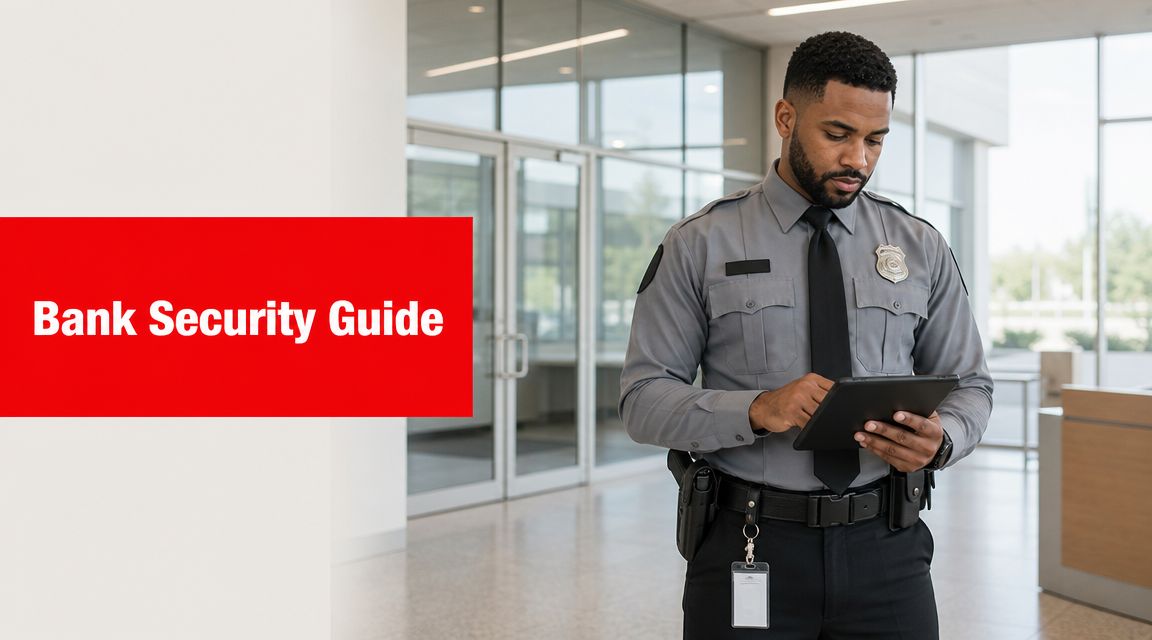

Is a uniformed security officer simply a guard, or are they a proactive ambassador for your property's safety? For today's property managers, HOA boards, and business owners, the answer is clear: a professional officer is your first line of defense, creating a tangible sense of security for everyone on site. They are a visible, reassuring presence designed to spot and handle risks long before they escalate into serious problems.
The Role of a Modern Uniformed Security Officer
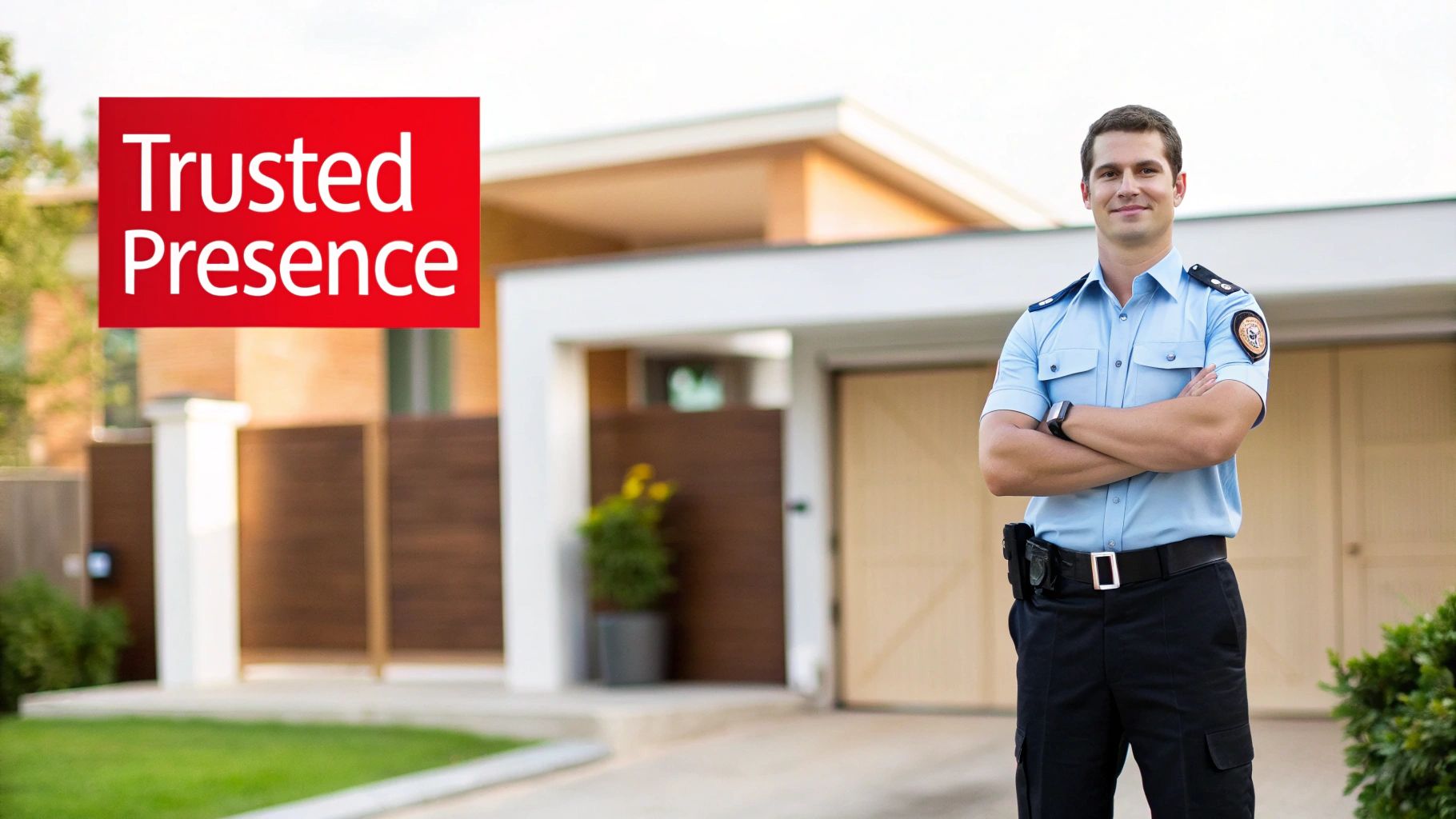
For property managers and facilities directors, the image of a uniformed officer evokes steadfast reliability—and for good reason. More than just a watchful eye, these professionals are the clearest sign of your commitment to safety. Their presence alone is a powerful deterrent, actively discouraging theft, vandalism, and unauthorized access before an incident ever occurs.
A modern uniformed security officer is trained to be a dynamic part of your team. They bring the human element to your security plan, capable of observation, critical thinking, and decisive action in ways technology simply can't match. This on-the-ground expertise is invaluable for building a secure and genuinely welcoming environment.
A Foundation of Proactive Defense
The primary role of a uniformed security officer is to create a proactive security posture. Instead of only reacting to incidents, the goal is to prevent them from happening in the first place. This is achieved through consistent, visible patrols and a professional demeanor that clearly communicates control and order.
This forward-thinking approach doesn't just protect physical assets; it enhances the experience for everyone on the property.
- For residents and employees, it builds a sense of well-being and community safety.
- For customers and visitors, it shows the property is well-managed and professional.
- For potential wrongdoers, it sends an unmistakable message: this property is monitored and protected.
To quickly see how these roles translate into direct benefits, consider this breakdown:
Key Roles of a Uniformed Security Officer at a Glance
| Function | Primary Goal | Benefit to Your Property |
|---|---|---|
| Visible Deterrence | Discourage potential criminals before they act. | Reduces incidents of theft, vandalism, and trespassing. |
| Access Control | Ensure only authorized individuals enter the premises. | Prevents unauthorized entry and enhances safety for occupants. |
| Patrols & Observation | Identify and report security risks or policy violations. | Catches issues like safety hazards or suspicious activity early. |
| Incident Response | Act as the first responder to security or medical events. | Provides immediate, professional handling of emergencies. |
| Customer Service | Assist visitors, tenants, and employees with directions or help. | Creates a welcoming, professional, and helpful atmosphere. |
Each of these functions contributes to a safer, more stable environment for your property.
An Investment in Stability and Safety
More and more organizations are seeing the immense value of professional security personnel. The global physical security services industry was valued at $405 billion in 2023, with projections nearing $500 billion by 2026. This significant investment shows a clear understanding that a trained officer is essential for protecting assets and maintaining a safe environment. You can dig deeper into these global security market trends and what they mean for property management.
The real value of a uniformed security officer is in their ability to deter problems just by being there. This quiet prevention is often the most effective security of all, saving clients from the costs and headaches of incidents before they even start.
At Overton Security, we see our officers as an extension of your team. With our 26-year history built on quality and consistency, we focus on training officers to be both vigilant protectors and courteous representatives of your brand.
What Does a Uniformed Security Officer Actually Do?
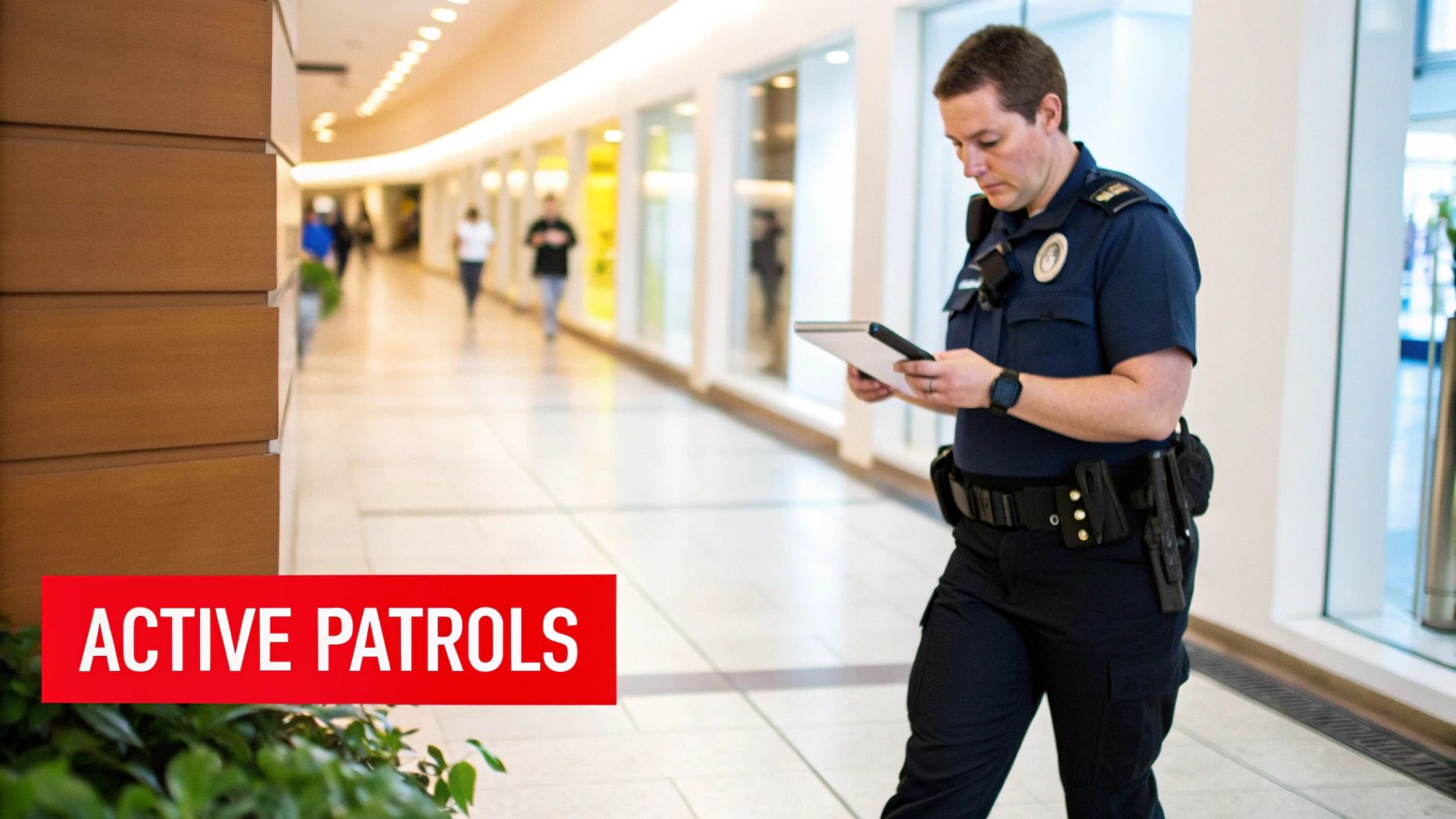
The role of a modern uniformed security officer goes far beyond standing at a post. Their job is a dynamic mix of proactive defense, quick-thinking response, and professional ambassadorship, all designed to protect your property and enhance its reputation. When you understand these core duties, you begin to see just how much value an officer brings to your daily operations.
These aren't just separate tasks on a checklist. Think of them as interconnected gears working together to create a solid security posture that covers everything from prevention to customer service.
Proactive Patrols and Observation
The most fundamental duty of an officer is to be seen. Consistent, visible patrols are a powerful deterrent, sending a clear message that your property is actively monitored. But during these rounds, an officer is doing more than just walking a pre-set route; they're conducting a detailed, ongoing assessment of their surroundings.
Their mission is to spot vulnerabilities before anyone can exploit them. This means checking for unlocked doors, a broken fence, malfunctioning lights, or any other potential safety hazard. This constant observation is a key piece of any effective risk management strategy and, alongside other proven strategies to prevent home break-ins, it’s one of the best ways to stop trouble before it starts.
Professional Access Control
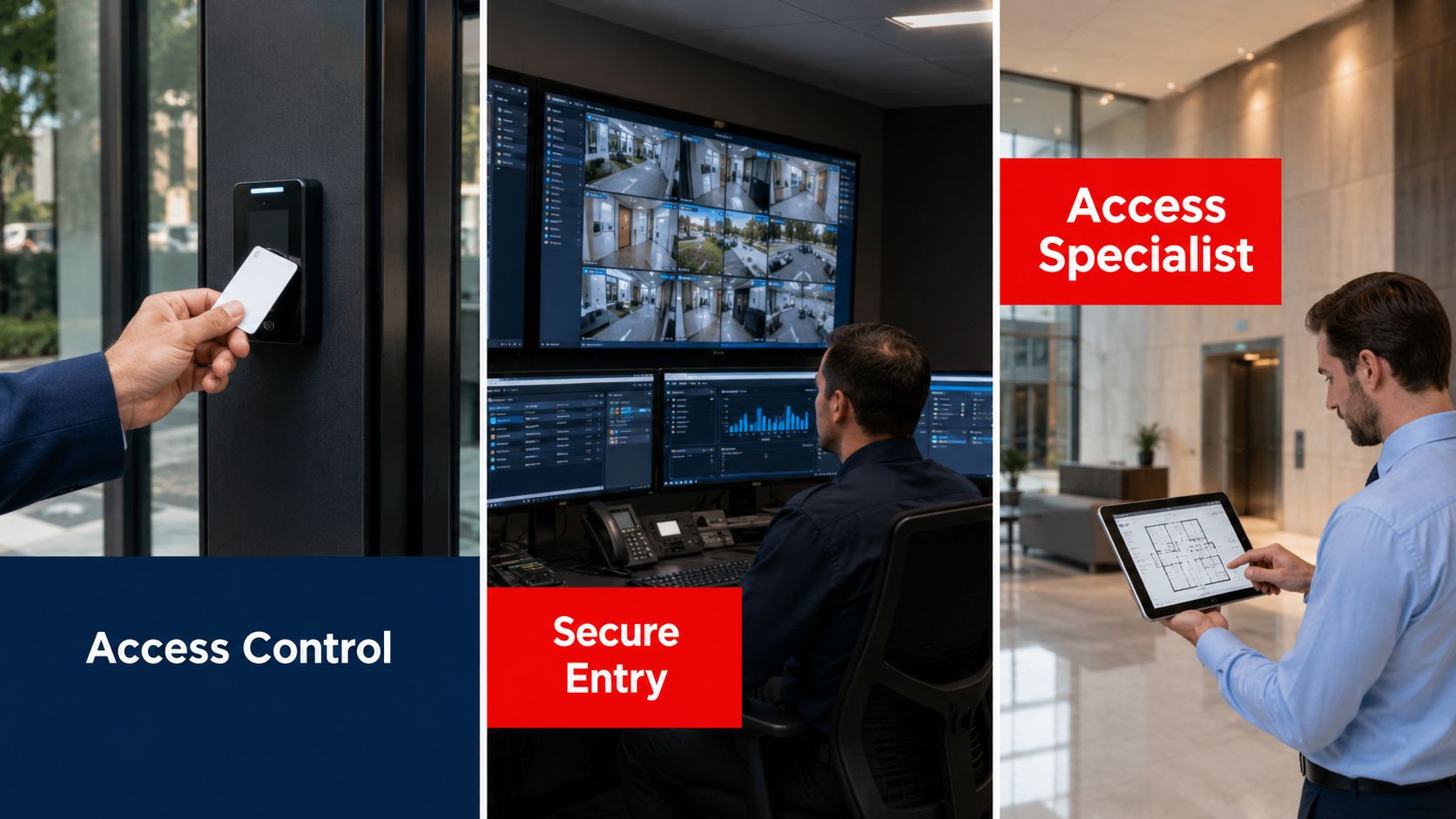
Controlling who comes and goes is critical for keeping a site secure. A uniformed security officer acts as a professional gatekeeper, ensuring only authorized individuals—employees, residents, verified vendors, and welcome guests—can enter.
This isn’t about being confrontational; it’s about calmly following protocols with courtesy and professionalism.
- Verifying Credentials: Professionally checking IDs and confirming appointments.
- Managing Visitor Logs: Keeping accurate records of who is on the property at all times.
- Directing Traffic: Guiding deliveries and visitor vehicles to the right spots to prevent confusion or backups.
Proper access control reduces the risk of internal theft, trespassing, and other disruptions. To see how Overton’s professionals manage this firsthand, check out our onsite security guard services.
Rapid and Calm Incident Response
When an incident does occur, a trained officer is your immediate first responder. Whether it's a medical emergency, a fire alarm, a dispute, or a security breach, their ability to react quickly and professionally is essential. Overton Security officers are trained in de-escalation techniques, allowing them to manage conflicts calmly and prevent a situation from spiraling.
A well-trained officer’s calm and decisive action during an incident not only resolves the immediate issue but also provides profound reassurance to tenants and employees, reinforcing their sense of safety.
After any event, accurate documentation is vital. Our officers create detailed digital incident reports, often including photos, which are invaluable for internal reviews, insurance claims, and any necessary police follow-up. This commitment to thorough reporting gives property managers a clear and accurate record of what happened.
A Welcoming Customer Service Presence
Beyond their security duties, officers are often the very first people visitors interact with at your property. Their role as a brand ambassador should never be underestimated. A helpful, courteous officer who can provide directions, assist a visitor, or just offer a friendly hello contributes immensely to a positive atmosphere.
This customer-first mindset is especially important in settings like residential communities, corporate lobbies, and retail centers. It changes the perception of security from an intimidating figure to a helpful resource, improving the overall experience for everyone. An officer who is both a protector and a professional concierge elevates your property’s reputation and makes people feel truly welcome.
Why the Uniform Is a Powerful Security Tool
A security officer’s uniform is much more than just attire—it’s one of the most effective tools they carry. Its psychological impact starts working the moment someone sees it, communicating authority, professionalism, and safety without a single word being spoken.
For any property manager or business owner, a crisp, professional uniform instantly signals that you take security seriously. It tells everyone that the environment is well-managed and secure.
This immediate visual cue is a powerful deterrent. Opportunistic criminals look for easy targets. The clear presence of a professional uniformed security officer makes them think twice, suggesting the property is protected, organized, and not worth the risk. It’s a proactive measure that often stops incidents before they begin.
Creating an Atmosphere of Safety and Authority
The uniform is an undeniable symbol of legitimate authority. It creates a clear distinction between a bystander and a trained professional who is there to maintain order and keep people safe.
This visual authority helps an officer command respect and handle situations more effectively, whether they're enforcing property rules or directing people during an emergency. This effect extends to everyone on site. Employees, residents, and visitors feel a genuine sense of reassurance when they see a uniformed officer. The uniform becomes a beacon of safety, letting them know that help is nearby and that their well-being is a priority.
A Recognizable Point of Contact
In a crowded lobby, a sprawling residential community, or a busy retail center, being able to quickly spot security personnel is critical. A distinct uniform makes the officer an easily recognizable resource for anyone who needs assistance, has a question, or wants to report a concern.
- For visitors, the officer becomes a helpful guide for directions or information.
- For employees, they are the go-to person for reporting a safety hazard or suspicious activity.
- During an incident, the uniform allows emergency responders to quickly identify their security contact on site.
This instant recognition removes confusion and ensures help can be found quickly, which enhances both safety and the overall customer experience. The growing importance of this professional presentation is reflected in the security uniform market, which is valued at $124 million in 2025 and is projected to expand steadily. As more organizations recognize the uniform as a key part of their security strategy, this market continues to grow. You can discover more insights about security uniform market trends on Data Insights Market.
At Overton Security, we understand that our officers are a direct reflection of your brand. Our high standards for appearance—from pressed uniforms to professional grooming—are rooted in our 26-year commitment to representing our clients with the pride and quality they deserve.
Ultimately, the uniform makes a statement. It tells the world that you are serious about security, invested in your property, and committed to the safety of your people. It reinforces the officer’s training and purpose, turning their presence into a constant, reassuring message of protection and order.
Where Uniformed Security Delivers the Greatest Impact
The value of a uniformed security officer isn’t an abstract concept; it’s highly specific to the environment. The role adapts to meet the unique challenges of different properties. An officer might be a friendly, customer-service-focused presence in a retail center one day and a vigilant asset protector on a construction site the next.
For property managers and business owners, understanding these nuances is key to building a security program that works. A one-size-fits-all strategy simply doesn't cut it. You need a security partner who understands the distinct pain points of your industry and can deploy officers with the right training and mindset to solve them.
This is how a simple uniform translates into tangible security benefits—it establishes authority, makes the officer instantly recognizable, and creates an undeniable sense of safety.
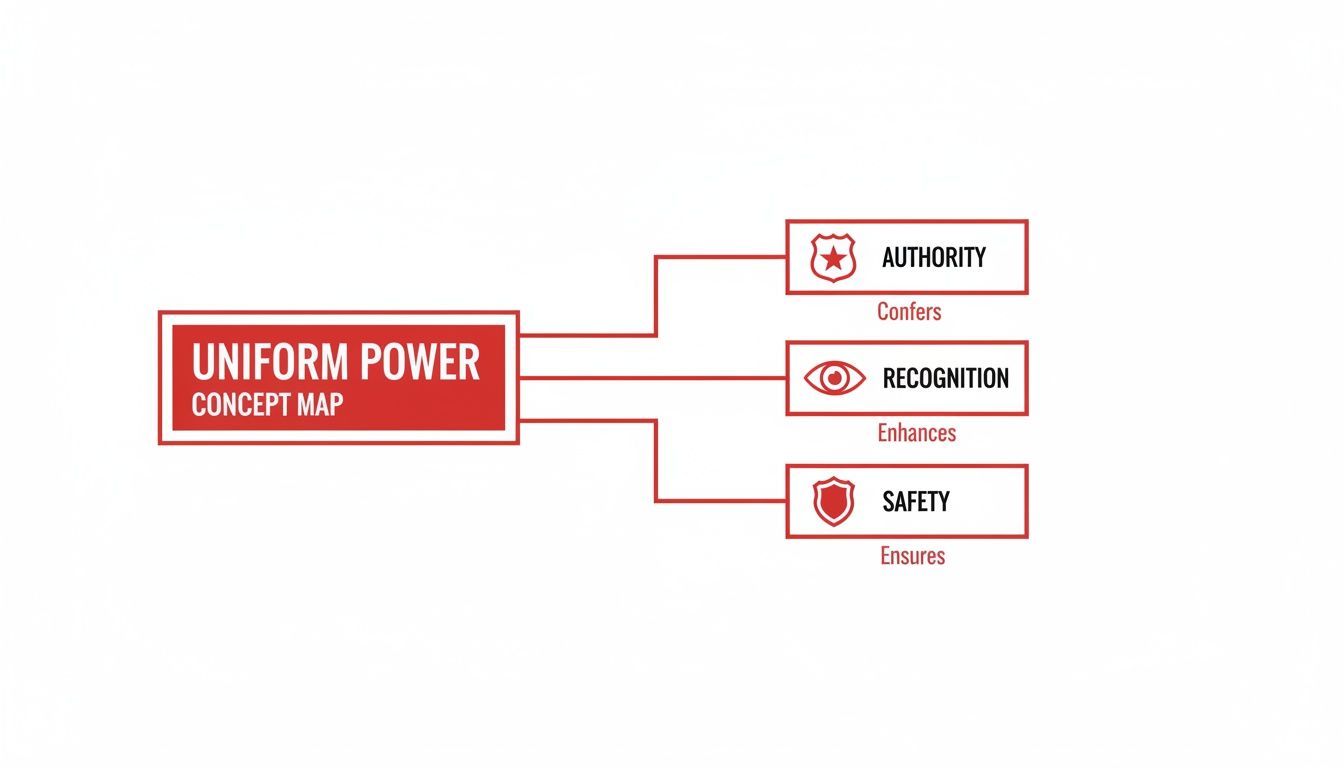
This psychological impact is a core part of what makes a uniformed officer so effective, no matter where they are posted.
The responsibilities of a uniformed officer can shift dramatically depending on the industry. The following table breaks down how the role adapts to different environments, showing the versatility and specific value they bring to each one.
How Security Officer Roles Adapt Across Industries
| Property Type | Primary Security Concern | Key Officer Responsibilities |
|---|---|---|
| Residential Communities | Resident safety, package theft, unauthorized access to amenities | Manage access control for pools/gyms, deter package theft, enforce parking, respond to noise complaints. |
| Active Construction Sites | Theft of materials and equipment, vandalism, trespassing | Maintain strict site access logs, conduct perimeter patrols, secure high-value assets after hours. |
| Bustling Retail Centers | Shoplifting, loitering, customer safety, organized retail crime | Act as a visual deterrent to theft, assist shoppers, manage unruly behavior, and provide a rapid response to incidents. |
| Healthcare Facilities | Patient and staff safety, access control to sensitive areas, de-escalation of volatile situations | Monitor entry points, manage visitor access, patrol campus, and respond to medical or security alerts with specialized training. |
| Corporate Offices | Access control, visitor management, protection of intellectual property, employee safety | Screen visitors at reception, patrol office floors, monitor CCTV, and respond to emergencies or security alarms. |
As you can see, the core function—to protect people and property—remains the same, but the day-to-day execution is tailored to solve very specific problems.
For Residential Communities and HOAs
In residential settings, a uniformed security officer wears two hats: protector of property and guardian of community peace. For HOA board members and property managers, the main goal is creating a safe, welcoming environment where residents feel secure and shared assets are protected.
The officer becomes the face of the community's commitment to safety. Their presence helps manage who uses the pool or fitness center, ensuring they're reserved for residents and their guests. They also act as a powerful deterrent against problems like package theft, a frustrating and growing issue for many communities.
Beyond these core duties, a professional officer elevates the entire resident experience. They provide a reassuring presence at night, enforce parking rules fairly, and handle noise complaints with diplomacy. They are an essential part of maintaining a harmonious and desirable place to live.
For Active Construction Sites
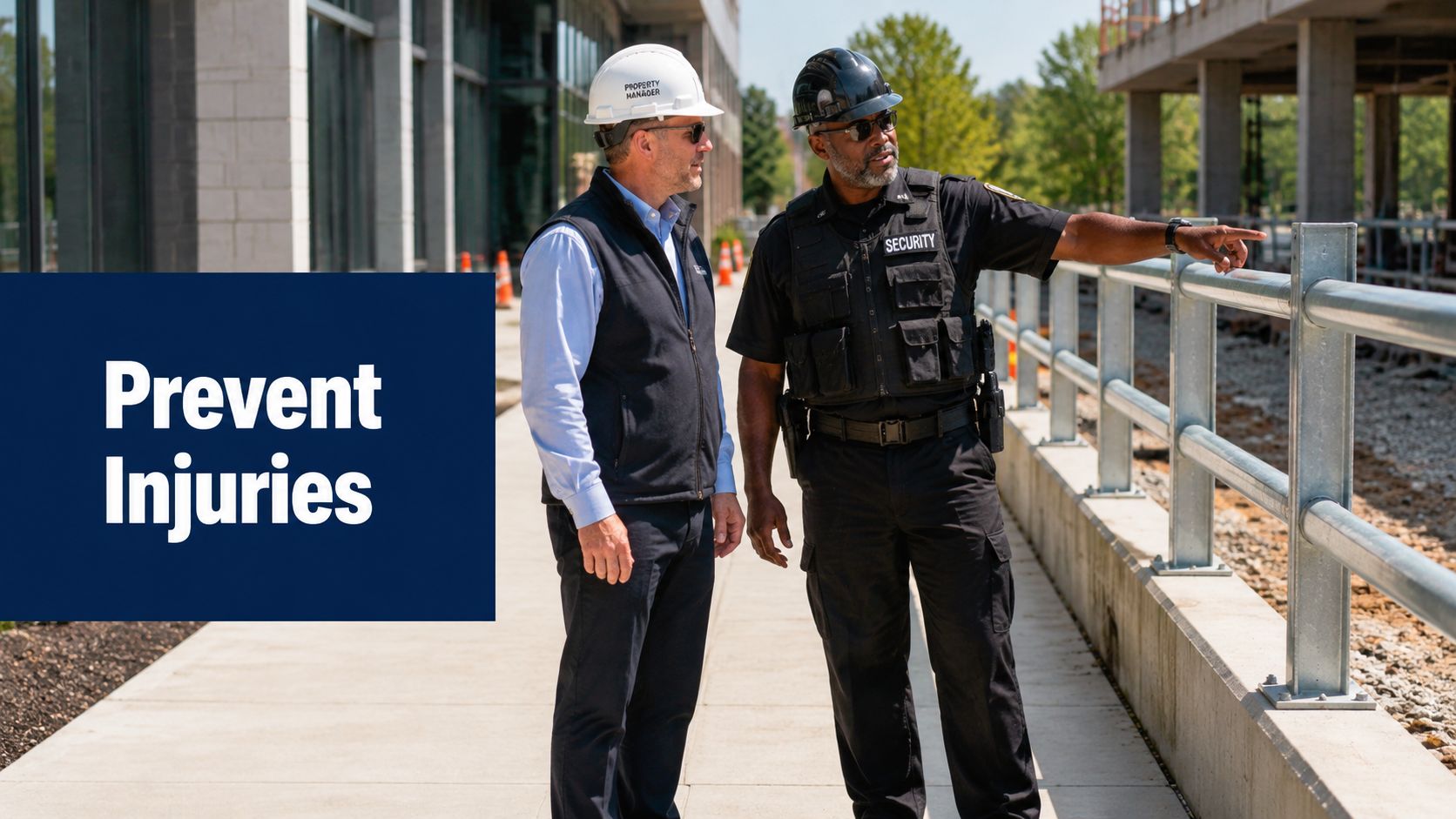
Construction sites are uniquely vulnerable. They are temporary operations filled with high-value equipment, tools, and raw materials like copper wire that are prime targets for theft and vandalism, especially after hours. A single break-in can result in thousands of dollars in losses and throw project timelines into chaos.
Here, the uniformed officer’s role is laser-focused on asset protection and access control.
- Access Control: The officer maintains a meticulous log of every person and vehicle entering or leaving the site, making sure only authorized contractors and deliveries get through.
- Perimeter Patrols: They walk the site perimeter regularly, checking for fence breaches, unsecured equipment, and any signs of trespassing.
- Deterrence: Their marked vehicle and visible presence are often the single most effective tool against opportunistic thieves who strike overnight or on weekends.
By preventing these losses before they happen, an officer directly protects the project’s budget and schedule, delivering immense value to the construction superintendent.
For Bustling Retail Centers
In a retail environment, security is a delicate balance between safety and customer experience. A uniformed officer is critical for loss prevention, but they must also be approachable and helpful to shoppers. Their presence needs to feel reassuring, not intimidating.
They are there to deter common retail headaches like loitering, panhandling, and the growing threat of organized retail crime, all of which can make customers feel unsafe and drive business away. Officers are trained to handle these situations professionally, preserving a welcoming atmosphere without causing a scene.
For retail managers, the ideal officer is a brand ambassador who makes customers feel secure while protecting the bottom line. Their ability to calmly de-escalate conflicts and assist shoppers adds a layer of professionalism that enhances the property's reputation.
They also serve as the first responder for everything from medical emergencies to lost children, acting as a reliable point of contact for shoppers and store employees alike. This blend of security and service is what makes a modern shopping center successful.
The Overton Difference in Training and Technology
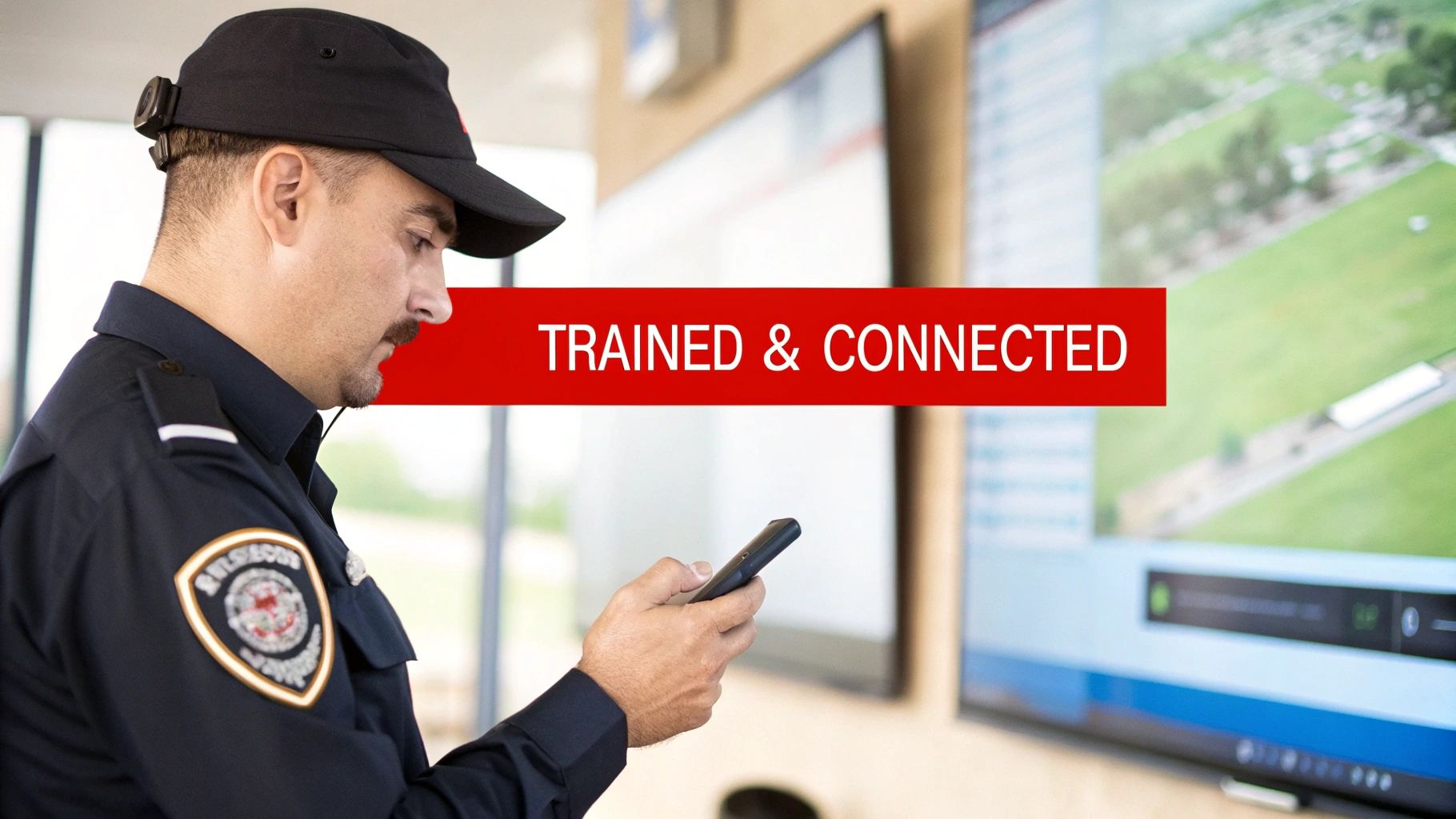
What separates an effective uniformed security officer from just a person in a uniform? It all comes down to the support structure behind them—the blend of excellent training, smart technology, and a company culture that values their work. At Overton Security, we know an officer is only as good as the system that empowers them.
For over 26 years, we’ve been building that system. While much of the security industry runs on a high-volume, "burn and churn" model, we've always focused on quality over quantity. We invest in our people and our technology to ensure the officer protecting your property is motivated, accountable, and connected to a larger support network.
This approach makes a significant difference in the quality of service you receive. It transforms security from a passive checkpoint into an active, intelligent, and transparent asset for your property.
The Power of Technology-Driven Accountability
For any property manager, transparency isn't just nice to have; it's essential. You need to know that your security protocols are being followed, which is why we equip our officers with a GPS-enabled Guard Tour Management System (GTMS). This isn't just about tracking people—it's about creating undeniable proof of service.
Our officers use devices to scan checkpoints across your property. Every scan creates a real-time, time-stamped record of their patrol, guaranteeing every critical area is inspected right on schedule. This system gives you:
- Complete Visibility: Get detailed digital reports showing patrol times, locations, and any incident reports filed, complete with photos.
- Real-Time Incident Reporting: Officers can document and report issues—a broken gate, a water leak, or suspicious activity—the moment they spot it.
- Peace of Mind: You never have to wonder if patrols were completed. The data is clear and always available for your review.
Of course, modern security relies heavily on tech, making it critical to understand the robust security practices for technology platforms that keep these vital systems running safely.
A 24/7 Security Operations Center Behind Every Officer
No officer ever works alone. Every uniformed officer in the field is backed by our 24/7 Security Operations Center (SOC). Think of the SOC as a mission control hub that provides an extra set of eyes, real-time support, and immediate backup for every person on duty.
A lone officer is just one person. An officer connected to a 24/7 SOC is part of an integrated team, capable of coordinating a much larger and more effective response to any situation.
Our SOC operators monitor officer activity, perform wellness checks, and act as a direct line for assistance or emergency escalation. If an incident occurs, the SOC can dispatch additional support, coordinate with law enforcement, and ensure every protocol is followed precisely. It’s a level of support an isolated officer simply can't provide.
Investing in People, Not Just Posts
The biggest differentiator in the security industry is officer retention. High turnover means inconsistent service, poorly trained staff, and a revolving door of unfamiliar faces at your property. Overton Security breaks that cycle by building a culture of respect and professionalism.
We believe that a supported officer is a motivated officer. It's a simple idea, but it guides everything we do. That's why we invest in our team through:
- Competitive Compensation: We offer better pay and benefits to attract and retain high-caliber professionals who view security as a career.
- Ongoing Professional Development: Basic licensing is just the start. We provide specialized training that's relevant to the sites our officers protect. You can learn more about our in-depth approach in our guide to security officer training programs.
- A Supportive Culture: With hands-on leadership and a low manager-to-client ratio, our officers receive the guidance and support they need to succeed.
This people-first approach means you get a stable, professional, and dedicated uniformed security officer who knows your property, understands your needs, and is genuinely committed to keeping it safe.
How to Choose the Right Security Partner
Selecting a security provider is a significant decision. It directly impacts your property's safety, your reputation, and your bottom line. With so many companies to choose from, how do you cut through the noise and find a partner who truly delivers on their promises?
It comes down to asking the right questions—ones that go beyond a sales pitch and reveal a company's real commitment to quality and accountability. With our 26 years of experience, we know what separates a reliable security firm from one that just puts a body in a uniform. Use this as your guide to making an informed choice.
Verifying Foundational Credentials
Before discussing patrol routes or technology, you must start with the basics. Any reputable security provider should be able to produce the following documents immediately.
- State Licensing: Are they fully licensed to operate as a security provider in California? This is a legal requirement that ensures they meet the state's minimum operational and ethical standards.
- Comprehensive Insurance: Ask for their certificate of insurance. Make sure they carry sufficient general liability, workers' compensation, and commercial auto coverage to shield you from potential liability.
If a company hesitates or makes excuses when you ask for these documents, it's a major red flag.
Digging into Officer Training and Support
Once the fundamentals are confirmed, it's time to focus on the people who will be on your property. The quality of the officer you get is a direct reflection of how much their employer invests in them.
The most common point of failure in security contracts is officer performance, which almost always stems from a lack of training, support, and professional respect from their employer.
To get a real sense of a company's culture, ask specific questions:
- Training Programs: What training do you provide beyond the state-mandated basics? Ask about their approach to site-specific training, de-escalation tactics, and customer service.
- Supervision and Support: What's your manager-to-client ratio? A low ratio is a positive sign, indicating more hands-on support and frequent site visits to ensure everything is running smoothly.
- Technology and Reporting: How do you hold your officers accountable? Ask to see a demo of their guard tour management system and look at examples of their digital incident reports.
For a much deeper dive, check out our guide on the top 5 considerations when choosing a security outsourcing partner. It breaks down exactly what to look for to find a team that genuinely values transparency and reliability.
Frequently Asked Questions
When property managers and business owners consider bringing a uniformed security officer on site, a few key questions always come up. Here are the most common ones we hear.
What Is the Minimum Shift Length for an Officer?
The right shift length is whatever your property needs to be secure. We build our service plans around your specific risks and operational goals.
Some clients need short-term coverage for a one-off event, while others require a full-time, 24/7 onsite presence. We work with you to determine the most effective and budget-conscious schedule, whether that means having an officer at a gate during business hours or running patrols through the night.
Are Your Uniformed Security Officers Armed or Unarmed?
We provide both armed and unarmed security officers. The right choice depends on a careful risk assessment of your property, your industry, and your specific security objectives.
For many properties, a highly visible, unarmed uniformed officer is a powerful and sufficient deterrent. In other environments with a higher perceived threat level, an armed officer might be the more appropriate choice. We will guide you through this decision, ensuring the level of protection is a perfect match for your needs.
How Does Overton Ensure Officer Accountability on Site?
Accountability is the core of our service. We don't just rely on good people—we back them up with smart technology that provides complete transparency.
- GPS-Enabled Guard Tour System: Every uniformed officer uses a system that gives you real-time, time-stamped proof of their patrols and activities. You can see where they are and what they're doing.
- 24/7 SOC Oversight: Our Security Operations Center is always on, actively monitoring our officers' status. This adds another layer of supervision and provides immediate support if they need it.
- Detailed Digital Reports: You get comprehensive daily activity and incident reports sent directly to you, often with photos attached. You’ll always be in the loop about what's happening on your property.
This commitment means you get exactly what you're paying for—reliable, verifiable security, every single shift.
Ready to secure your property with a professional, accountable, and reliable uniformed security officer? Contact Overton Security today for a complimentary security assessment and see how our 26 years of experience can protect your investment.
Request Your Free Security Consultation at overtonsecurity.com