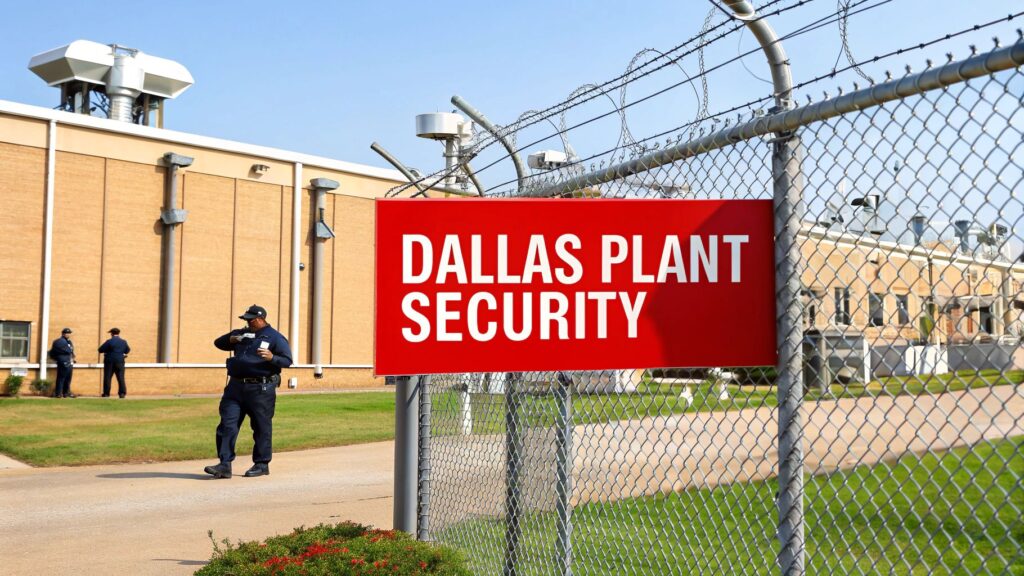
Is your Dallas manufacturing plant truly secure, or are there vulnerabilities you haven't considered? Securing an industrial facility is a complex puzzle, piecing together physical barriers, smart technology, and highly-trained security professionals. The goal is to create a shield against theft, vandalism, and any disruption that could throw a wrench in your operations.
As the Dallas-Fort Worth area continues its incredible industrial boom, these facilities are becoming bigger targets. A proactive security strategy is no longer a "nice-to-have"—it's an absolute must for protecting your assets and keeping your business running smoothly.
The Growing Need for Plant Security in Dallas
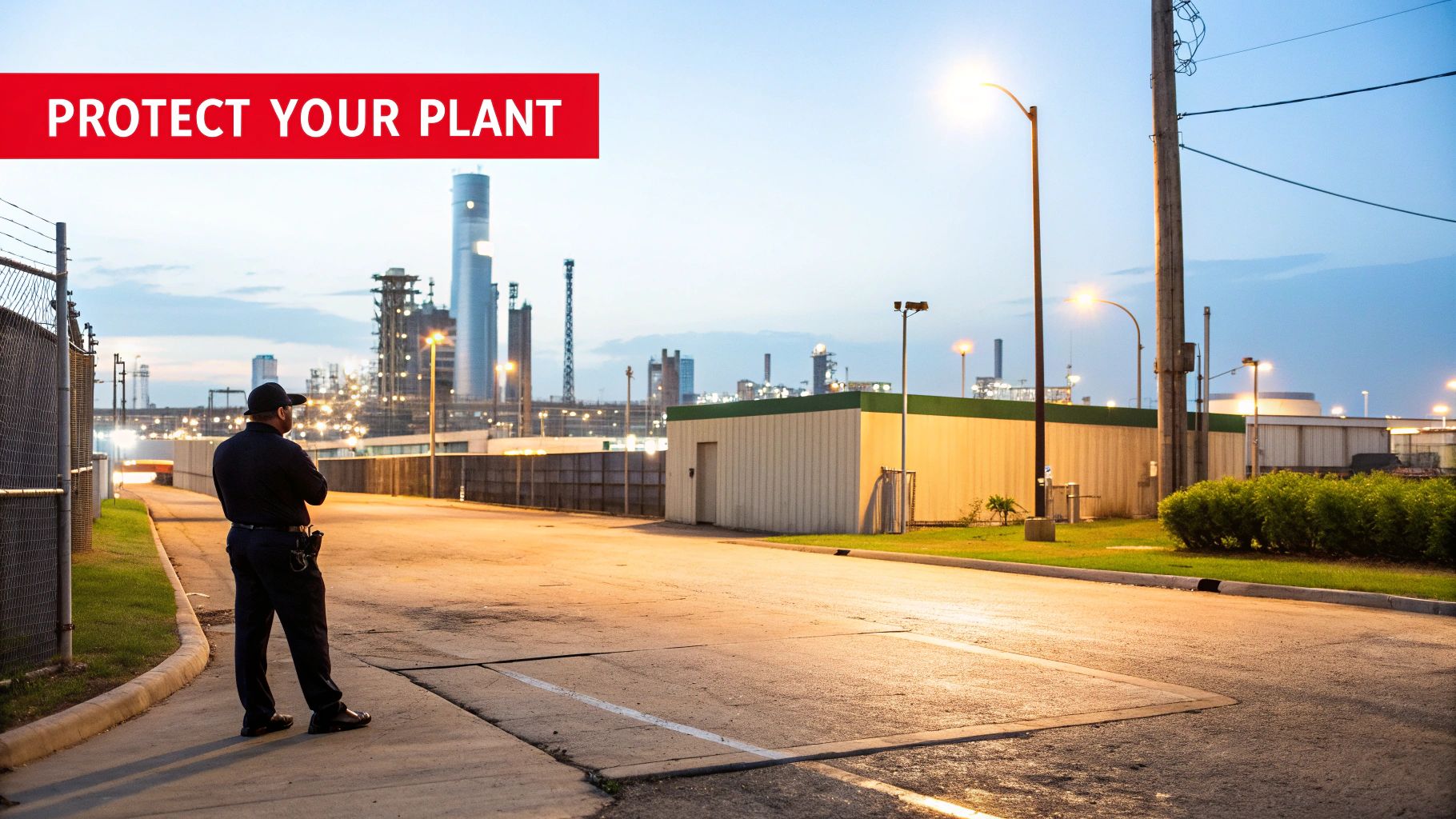
Dallas has become a powerhouse for industry and manufacturing. But that rapid growth, while great for the economy, brings its own set of challenges that can keep plant managers and facilities directors up at night. Every new facility and every expansion introduces fresh vulnerabilities.
This boom has created a unique security landscape. A Q1 2025 Dallas-Fort Worth Industrial Market Insights report revealed the region’s industrial vacancy rate climbed to 9.2%. A big reason for this is the staggering 115 million square feet of new space built since 2023. That surge means many brand-new, empty buildings are potential targets for trespassing, equipment theft, and vandalism. You can review the details yourself by checking out the full DFW industrial market report.
Addressing Modern Industrial Threats
The security concerns for a modern plant go far beyond a simple chain-link fence. Facility managers are juggling a whole range of threats that can impact everything from production schedules to the safety of their team.
It boils down to a few key challenges:
- Asset Protection: You have to secure high-value raw materials, finished products, and expensive machinery from theft—both from outside actors and internal sources.
- Access Control: It's a constant balancing act of managing who comes and goes. You need to keep employees, contractors, and visitors flowing through while keeping unauthorized individuals out of sensitive areas.
- Perimeter Security: Protecting sprawling properties with multiple entry points is a significant task. Deterring trespassers and vandals requires more than just a gate.
- Operational Continuity: Your security measures can't get in the way of getting the job done. They need to support a safe, efficient workflow, not hinder it.
A truly effective security plan is not just about preventing incidents; it’s about creating an environment where your operations can thrive without disruption. It provides peace of mind, allowing you to focus on your core business.
Why a Proactive Strategy is Essential
Waiting for an incident to occur is the most expensive strategy a business can adopt. A proactive security plan helps you identify and address risks before they turn into major losses. This isn't just about installing cameras; it requires a genuine understanding of your facility's unique rhythm, its layout, and its potential weak spots.
Plus, with today's reliance on connected machinery and systems, robust IT services for manufacturing plants are a critical piece of the operational security puzzle.
At Overton Security, we bring 26 years of experience to the table, partnering with facility managers to build these kinds of forward-thinking plans. We know that effective Dallas plant security is a powerful mix of human expertise and the right technology. You can learn more about our tailored security solutions for businesses to see what a comprehensive strategy could look like for you.
How to Conduct a Security Risk Assessment
Before you invest in new security measures, you need a clear map of where you're vulnerable. That’s exactly what a security risk assessment provides—a practical, methodical way to identify potential threats to your Dallas plant and understand the real-world risks they pose. It’s about creating a data-driven security plan that fits your facility's unique layout, operations, and location.
Think of it as a diagnostic exam for your property. A doctor runs tests before prescribing treatment, and a risk assessment gives you the critical information needed to make smart, effective security decisions. This helps you put your budget where it counts, focusing on the areas that need the most protection.
Identifying Your Unique Vulnerabilities
The first step is to look at your facility from every possible angle. This means examining both the external and internal factors that could be creating security gaps. A thorough assessment is more than just walking the fence line—it’s about understanding the specific context of your operation right here in the Dallas industrial landscape.
Key areas to evaluate include:
- Physical Perimeter: Take a close look at your fencing, gates, lighting, and any natural barriers. Are there blind spots for cameras? Are locks and access points truly secure?
- Access Control Points: How are you managing the flow of employees, visitors, and delivery drivers? Do you have clear, consistent procedures for verification and logging?
- Operational Weak Points: Examine your shipping and receiving docks, storage yards, and production floors. Where are high-value materials kept, and what are the protocols for handling them?
- Internal Threats: Don't forget to consider the potential for employee theft or simple negligence. Are sensitive areas properly restricted, and are security protocols clearly communicated and enforced?
A successful assessment provides a 360-degree view of your plant, identifying not just the obvious threats like a broken fence, but also the subtle operational risks that can lead to significant losses.
A systematic approach is the best way to ensure nothing gets missed. The table below outlines a foundational checklist for conducting a thorough risk assessment for any industrial facility in the Dallas area.
Key Areas for a Plant Security Risk Assessment
| Assessment Area | Key Vulnerabilities to Check | Recommended Action |
|---|---|---|
| Perimeter Security | Gaps in fencing, poor lighting, overgrown vegetation, unsecured gates | Repair fences, upgrade to LED lighting, clear brush, and install access control on all gates. |
| Access Control | Unmonitored entry points, lack of visitor logs, weak employee ID verification | Implement a formal visitor management system and require badged access for all personnel. |
| Shipping & Receiving | Unsecured loading docks, inconsistent driver check-in, lack of cargo inspection | Secure dock doors when not in use, create a standardized check-in process, and conduct random inspections. |
| Asset Protection | Unsecured storage of high-value goods, poor inventory tracking, open tool cribs | Relocate valuable assets to a secure, monitored area and implement a checkout system for tools/equipment. |
| Surveillance System | Camera blind spots, low-resolution footage, inadequate data storage, no remote monitoring | Conduct a camera audit to eliminate blind spots, upgrade to high-definition cameras, and ensure sufficient recording capacity. |
| Internal Threats | Lack of background checks, poor security awareness, unrestricted access to sensitive areas | Implement comprehensive pre-employment screening and regular security training for all staff. |
Using a structured guide like this helps you move from a general "walk-around" to a detailed, actionable analysis of your plant's specific security posture.
Analyzing the Local Threat Landscape
Understanding the hyper-local environment around your plant is absolutely crucial for effective Dallas plant security. Your proximity to major highways, the security of neighboring facilities, and local crime trends all shape your risk profile. This is where real data makes all the difference.
For example, a recent analysis highlighted the specific challenges facing industrial zones right here in our area. The U.S. Manufacturing Reshoring Security Report 2025 gave Dallas an industrial security risk score of 68 out of 100, indicating a moderate-to-high threat level. The report noted that theft and unauthorized access are particularly common issues, with a 22% increase in reported incidents between 2023 and 2025. You can dig into the specifics by exploring the findings of the 2025 reshoring security report.
This kind of information transforms your assessment from a simple walkthrough into a strategic analysis, helping you anticipate the threats most likely to affect your location.
Creating an Actionable Security Plan
Once you've identified and analyzed the risks, the final step is to build a prioritized action plan. This isn't just a wish list; your plan should outline specific, measurable steps to address each vulnerability, complete with assigned responsibilities and realistic timelines.
This is where partnering with an experienced security provider becomes invaluable. With over 26 years of experience, Overton Security can help you make sense of your assessment findings and turn them into a security program that actually works. We’ll help you create a strategy that integrates physical security measures, trained personnel, and smart technology. For a deeper dive, check out our guide on the core principles of securing a building effectively. A well-executed plan ensures your security investment delivers tangible results and lasting peace of mind.
Building Your Physical Security Foundation
Once you've mapped out your weak spots, it's time to build a layered defense. Real-world Dallas plant security isn't about finding a single solution. It’s about creating a strong foundation with multiple physical security measures that work in concert. This approach establishes overlapping fields of protection, making it significantly harder for anyone to breach your property and disrupt your operations.
The strategy is simple: start from the outside and work your way in. Your perimeter is the first line of defense, serving as both a physical barrier and a psychological deterrent. From there, every layer you add—access points, building interiors, and high-value areas—presents a new challenge, ensuring that even if one layer is compromised, others are ready to stop or slow down an intruder.
Securing the Perimeter
Your security posture begins at your property line. A solid perimeter clearly defines your territory and is the first thing a potential trespasser must overcome. Think of it as the outer wall of a fortress; its job is to discourage casual opportunists and force a real effort from determined intruders.
For any industrial facility, this means getting a few key elements right:
- Robust Fencing: A well-maintained, high-quality fence is non-negotiable. It needs to be tall enough to make climbing difficult and free of any damage or gaps.
- Controlled Gates: Every gate, whether for vehicles or pedestrians, must be secure and ideally monitored. Controlling access here ensures only authorized individuals are getting onto the grounds.
- Strategic Lighting: A well-lit perimeter, along with parking lots and building exteriors, eliminates potential hiding spots. It also makes it much easier for both cameras and security officers to spot unusual activity after dark.
A secure perimeter does more than just keep people out; it sends a clear message that your facility is monitored and protected, which is often enough to deter opportunistic criminals.
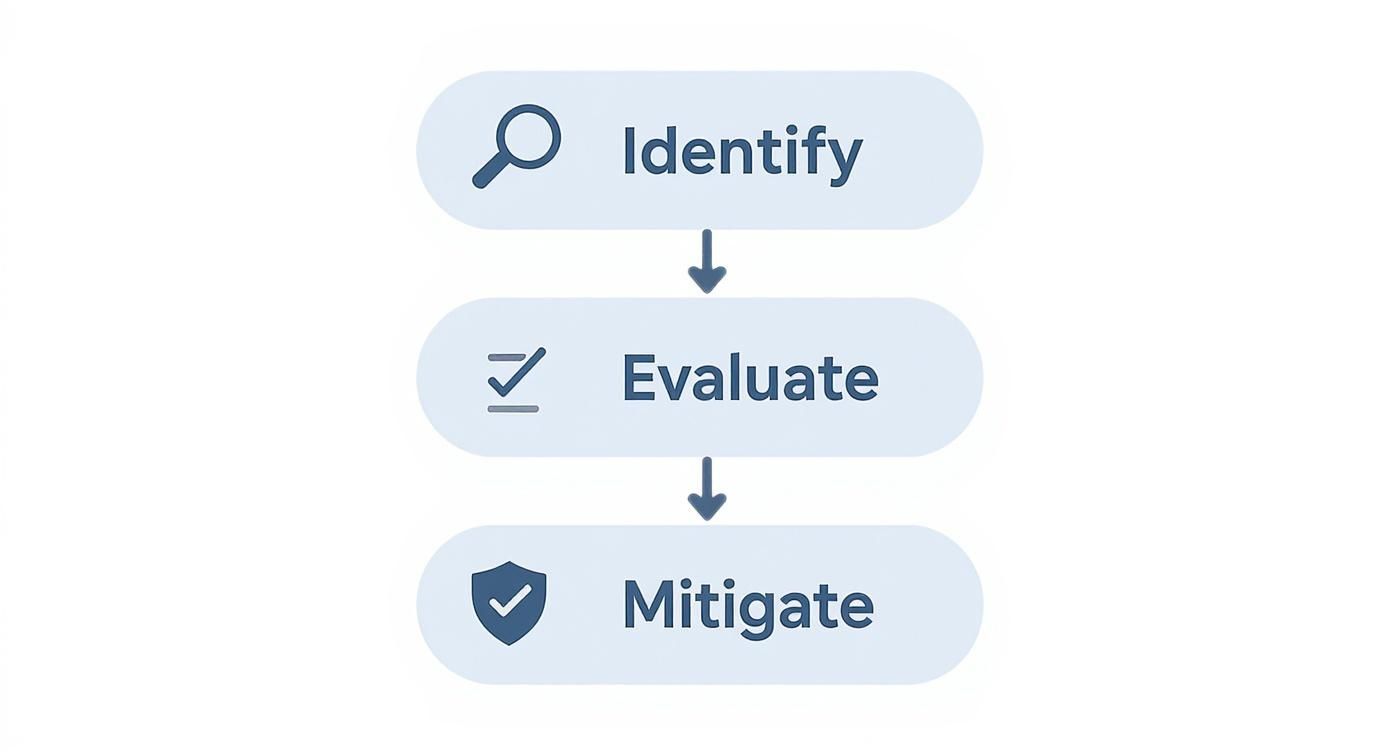
Being proactive with risk management means you're identifying, evaluating, and handling these physical threats before they become incidents.
This straightforward process—spotting potential threats, understanding their likelihood and impact, and then putting measures in place—ensures your security investments are aimed at the right places and tackle your biggest vulnerabilities first.
Managing Access and Surveillance
With a solid perimeter in place, your focus can shift to controlling who and what comes through your entry points. This next layer is all about managing the daily flow of employees, visitors, and deliveries while using surveillance to keep an eye on everything.
A significant piece of this puzzle is managing your loading docks. A critical part of building your physical security foundation is ensuring the integrity of these high-traffic areas by carefully choosing the best dock lock for loading dock security. Beyond physical locks, you need a comprehensive access control system. This could involve key cards, biometric scanners, or a formal visitor check-in process handled by a professional security officer. The goal is to have a clear record of every person who enters and leaves.
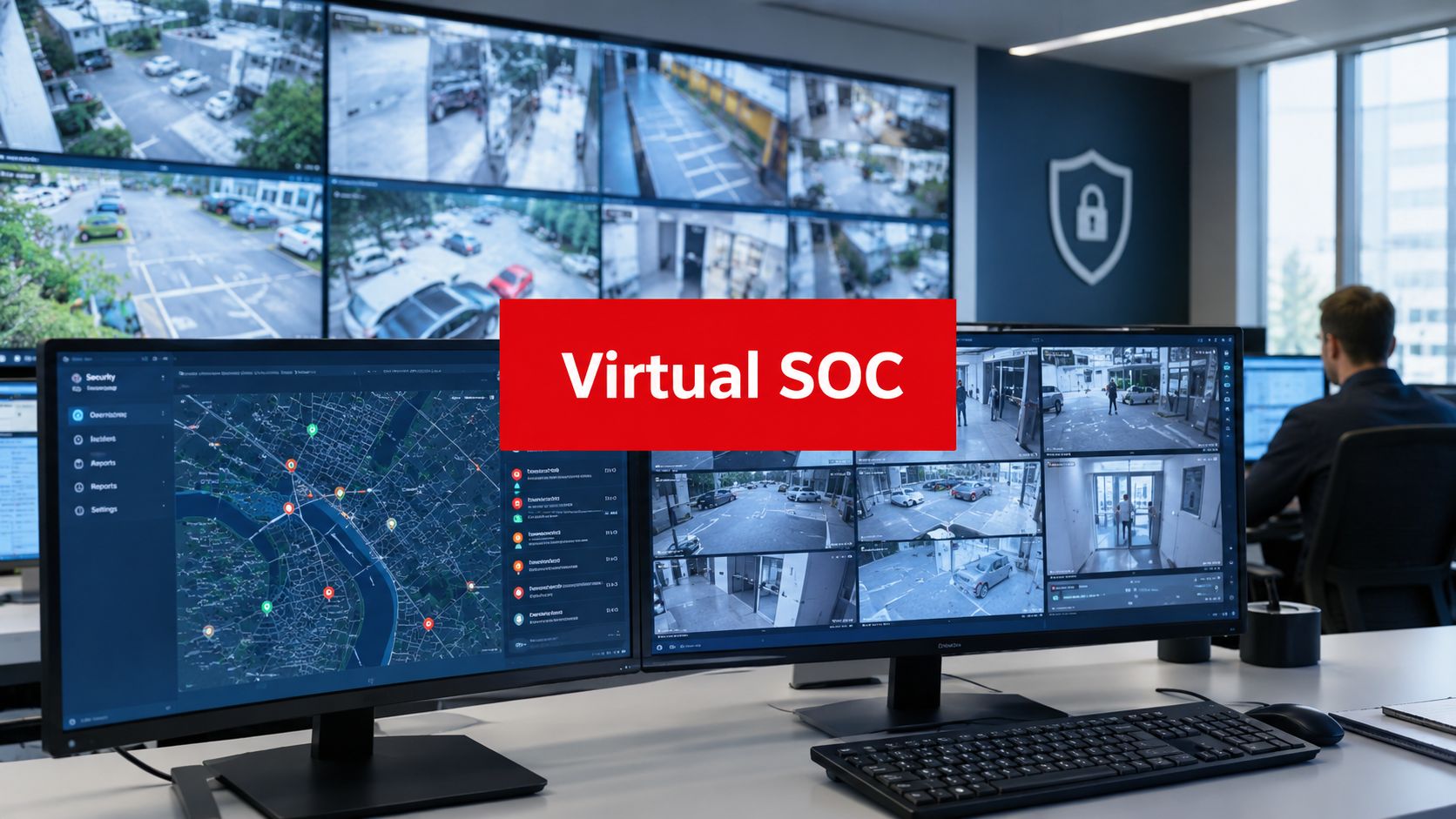
At the same time, modern surveillance technology acts as your eyes on the ground, 24/7. High-definition cameras placed in strategic spots don't just deter theft and vandalism; they also provide clear evidence if an incident does occur. This allows for real-time monitoring of sensitive areas and helps security personnel respond much more effectively.
The Overton Difference: Blending People and Technology
Technology is an incredible asset, but it can’t reason, adapt, or respond with human judgment. This is where the Overton Security model truly shines. For 26 years, we’ve focused on blending these physical security systems with the irreplaceable expertise of highly trained security officers.
Our approach ensures your cameras, access controls, and alarms aren't just passive devices. They become active tools used by our professionals to maintain a proactive security stance. Our officers don’t just watch a screen; they interpret what they're seeing, patrol your grounds with purpose, and provide a physical presence that technology alone can never replicate. With our low manager-to-client ratio and hands-on leadership, we make sure this integrated system is always performing at its peak, giving you a seamless and accountable security presence you can rely on.
Weaving Human Insight with Smart Technology

Technology is a fantastic tool, but it's only as good as the people operating it. For any Dallas manufacturing facility, installing a few cameras isn’t a real security strategy. The real power comes when you blend smart technology with the judgment and experience of trained professionals.
This combination creates a security posture that’s both proactive and accountable. It’s what turns passive monitoring into an active defense. Every alert from a sensor or camera feed is analyzed by someone who can think on their feet, assess the situation, and decide on the right course of action. This is the difference between simply recording an incident and stopping one before it starts.
The Role of On-Site Security Officers
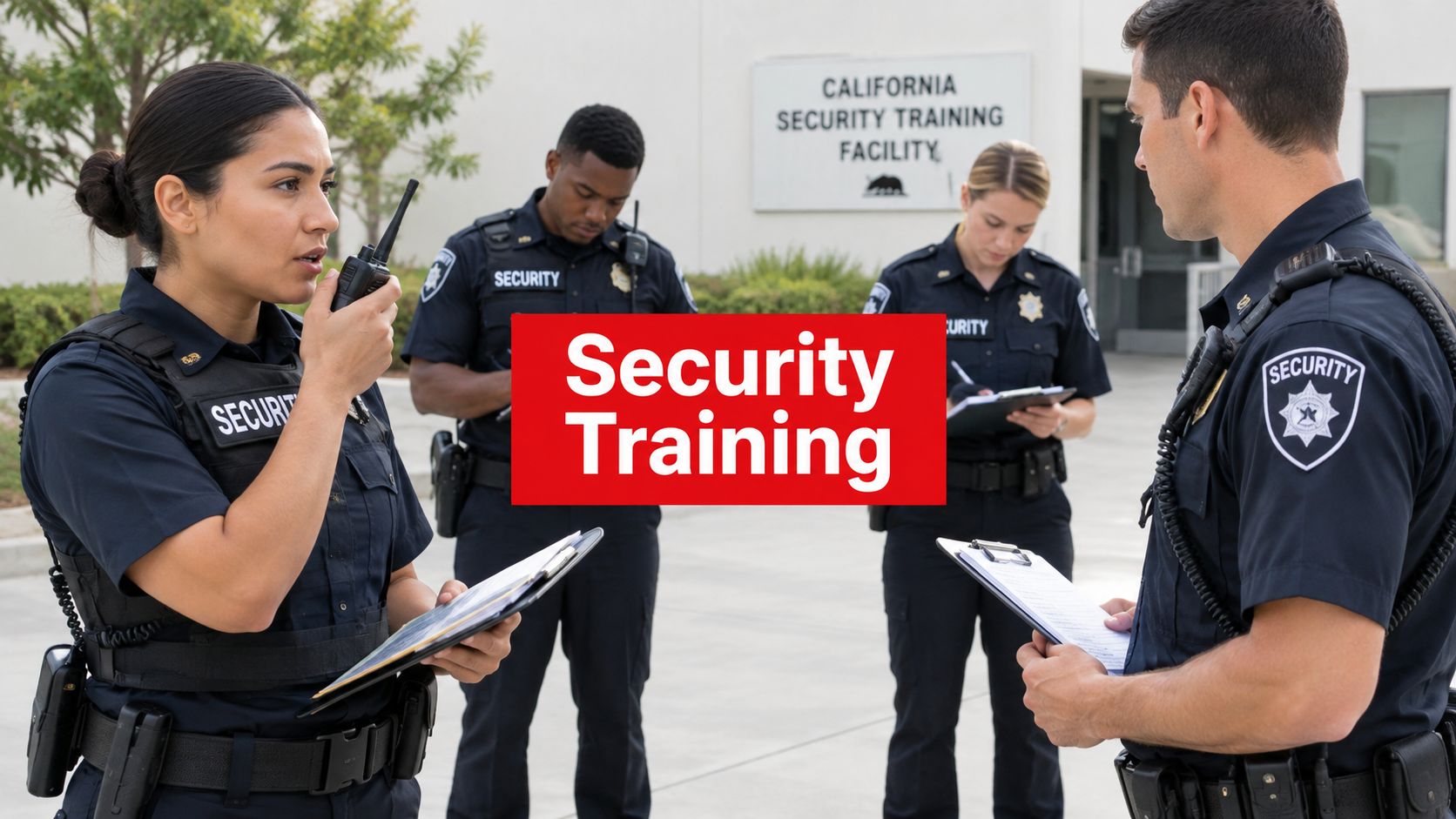
The most visible piece of this puzzle is the on-site security officer. These professionals are much more than just a uniform at the gate—they’re the human face of your entire security program. Their presence alone is a powerful deterrent, sending a clear signal that your plant is well-protected.
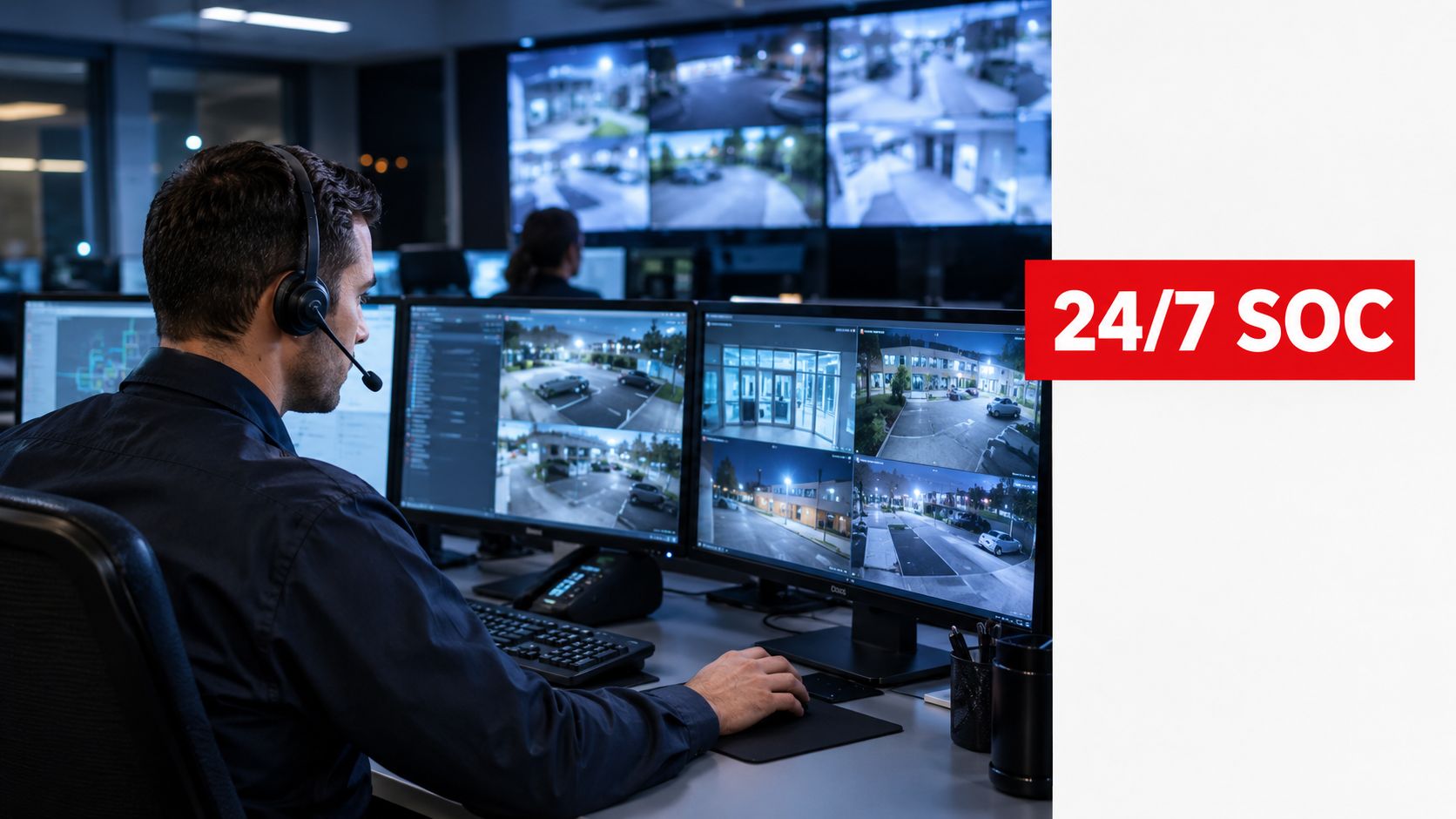
But their role goes far deeper. On-site officers manage access, conduct regular patrols through your most critical areas, and serve as your first line of defense when an incident occurs. With Overton Security, our officers are supported by our 24/7 Security Operations Center (SOC), giving them real-time backup and oversight to handle any situation that arises.
Taking Patrols to the Next Level with Verifiable Tech
For a sprawling industrial site, mobile patrols are a smart way to cover a lot of ground efficiently. The key concern for facility directors, however, has always been accountability. How do you know patrols are being done correctly? This is where technology provides the proof.
At Overton, we equip our patrol officers with a GPS-enabled guard tour management system. This technology requires officers to scan specific checkpoints across your property, creating a time-stamped, verifiable digital record of their entire route.
This system removes any guesswork. You receive detailed reports, complete with photos and notes, giving you a clear picture of what’s happening at your facility, even when you aren’t there. It’s accountability you can see and trust.
Creating a Coordinated Security Ecosystem
The strongest security plans don't rely on a single solution. Instead, they layer different services to cover every possible angle. Each service plays a unique role, and finding the right mix for your facility's needs and budget is key to building a defense that truly works.
To help you see how these pieces fit together, here's a quick comparison of the core security solutions that form a comprehensive strategy.
Comparing Security Solutions for Dallas Plants
Choosing the right blend of security services is crucial for creating a robust, layered defense. This table breaks down the primary functions and ideal uses for each service, helping you understand how they can work together to protect your facility.
| Security Service | Primary Function | Best For | Overton Advantage |
|---|---|---|---|
| On-Site Guards | Provide a constant, visible presence, manage access control, and offer immediate incident response. | High-traffic facilities, sensitive access points, and areas requiring 24/7 monitoring. | Our low manager-to-client ratio ensures officers are well-supported and aligned with your goals. |
| Mobile Patrols | Conduct scheduled or random patrols to deter trespassers, check for security breaches, and secure perimeters. | Large properties, industrial parks, and facilities needing after-hours or weekend coverage. | GPS-verified patrols and detailed digital reports provide complete transparency and accountability. |
| 24/7 SOC Oversight | Offers remote monitoring, dispatch support for officers, and real-time incident escalation and coordination. | Augmenting on-site staff, monitoring alarm systems, and providing an extra layer of support. | Our SOC acts as a force multiplier, enhancing the effectiveness and safety of our field officers. |
By strategically combining these services, you create a security net that is far more resilient than any single solution could be. This integrated approach, backed by our 26 years of experience and hands-on leadership, ensures your Dallas plant gets the reliable, forward-thinking protection it deserves.
Protecting Your Plant from Digital Threats
In any modern manufacturing plant, physical security is only half the battle. A strong fence can't stop a digital threat, and today, your operations are driven by interconnected digital systems. That makes cybersecurity a critical, non-negotiable part of your overall Dallas plant security. It’s no longer just an IT issue.
A digital breach can be just as damaging as a physical one. A ransomware attack could paralyze your production lines, a hacker could steal sensitive intellectual property, or an intruder could remotely disable your access controls and surveillance cameras. As a plant manager or facility director, understanding this risk is essential to truly protect your facility.
The Blurry Line Between Physical and Cyber Security
Inside an industrial facility, the lines between the digital and physical worlds have all but disappeared. The systems controlling your machinery, monitoring your environment, and managing your supply chain are all potential entry points for an attack. This is why you need a security posture that covers every angle.
Here are a few common vulnerabilities facility managers should be aware of:
- Operational Technology (OT): This is the technology that controls your physical processes—think robotic arms on an assembly line or climate controls in a sensitive storage area. A breach here causes immediate, real-world disruption.
- Industrial Control Systems (ICS): This is the hardware and software that monitors and controls your industrial equipment. If compromised, an attacker could manipulate machinery, leading to equipment damage or unsafe conditions for your team.
- Networked Security Devices: Your IP cameras, digital access card readers, and alarm systems are all connected to your network. If that network isn't secure, these devices can be disabled remotely, leaving your entire facility exposed.
Understanding the Digital Threat Landscape in Dallas
The threat of a cyberattack isn't a far-off concept; it's a real and present danger for manufacturers right here in Texas. In 2025, the Dallas area became a major target. The Dallas Fed Manufacturing Survey for July 2025 revealed that 78% of Texas manufacturers reported dealing with at least one cybersecurity incident in the past year.
These weren't minor issues, either—they ranged from disruptive ransomware attacks to major data breaches. The problem was highlighted when a major Dallas-area mortgage lender was hit, compromising the data of 1.18 million Texans. You can get more details on these trends and explore the top cybersecurity threats in Texas.
This data brings a critical point home for plant managers: your ability to stay operational depends on securing both your physical and digital assets. A weak link in one directly puts the other at risk.
Building a Collaborative Defense
As a facility director, you don’t need to become a cybersecurity expert. However, it's vital to champion a security-first culture and ensure your physical security team and IT specialists are communicating. This partnership is the secret to creating a defense that truly works.
The goal of this collaboration is simple: identify every point where your digital and physical systems connect and make sure those intersections are secure. By working together, your teams can develop protocols that protect your entire operation. This integrated approach ensures your security strategy is resilient enough to handle threats, whether they come through a gate or a network cable. With 26 years of experience, we at Overton Security understand how these domains overlap and can help you build a strategy that covers every vulnerability.
Choosing the Right Security Partner for Your Facility
Selecting a security partner is one of the most important decisions a facility director will make. It directly impacts your operational stability, the safety of your assets, and your peace of mind. A good partnership is built on far more than a service contract; it’s founded on trust, open communication, and a shared commitment to your facility's success.
A true security partnership involves regular performance reviews and honest conversations about emerging threats. It’s less about just placing a guard at a post and more about weaving a dedicated security team into the fabric of your facility's culture. That's how you build a security program that remains sharp and responsive year after year.
Experience and Stability You Can Depend On
When you’re evaluating providers for Dallas plant security, look for a track record of consistency and real-world expertise. With 26 years of experience, Overton Security has always focused on quality over quantity. We maintain a low manager-to-client ratio by design, which allows our leadership to remain hands-on and genuinely understand the unique challenges of your site.
What does that mean for you? It means you get attentive, personalized service from people who know your facility. We're in the business of building long-term relationships, not just chasing the next contract. Our stability becomes your advantage, giving you a rock-solid security foundation to build on.
A security partner's value is measured not just by their presence, but by their commitment to your success. It’s about having a team that knows your property, understands your goals, and consistently delivers on its promises.
A Commitment to Professional Officers
Ultimately, any security program is only as effective as the officers on the ground. The security industry is known for high turnover, which can lead to inconsistent service and officers who don't know your facility's specific protocols. We simply don't operate that way.
Overton is built around supporting and retaining top-tier security professionals. We invest in our people, which means the officers assigned to your plant are experienced, motivated, and committed to their work. This focus on retention provides you with a consistent team that knows the ins and outs of your site. For a deeper dive on this, check out our guide on what to consider when hiring a security agency.
Protecting your facility is a team effort. It demands a partner who listens, adapts, and brings proven strategies to the table. Let's start a conversation. We would be glad to work with you to understand your unique challenges and build a reliable, lasting security strategy for your Dallas plant.
Frequently Asked Questions
When it comes to protecting your facility, having questions is natural. Here are some straightforward answers to the topics we hear most often from plant managers and facility directors working to strengthen their Dallas plant security.
What Is the First Step to Improve My Plant's Security in Dallas?
The first and most important step is a comprehensive security risk assessment. This isn’t a quick walk-through; it's a deep dive into your facility’s specific vulnerabilities, considering everything from its physical layout and location to your day-to-day operations.
A professional assessment uncovers weak spots you might not even be aware of—in your perimeter, access control points, and even your internal processes. Think of it as the blueprint for your entire security strategy. An approach like the one we take at Overton Security gives you a data-driven foundation to build a security plan that’s both effective and cost-efficient.
How Do I Balance Security Costs with My Operational Budget?
This is a common concern for every facilities director. The key is to view security not as an expense, but as an investment in operational continuity. A well-designed program prevents costly incidents like theft, equipment damage, and downtime, delivering a significant return on investment.
A trusted security partner will work with your budget to create a scalable plan. You might start with a practical mix of mobile patrols and surveillance, then add on-site officers as your needs or budget evolve. We focus on integrated solutions that blend technology with a human presence to maximize the value of your security spend.
A proactive security investment is always less expensive than the cost of a significant incident. The goal is to prevent losses, not just react to them.
Are Security Officers Still Necessary with Modern Camera Technology?
Absolutely. Cameras are fantastic tools for deterrence and for gathering evidence after an incident, but they are fundamentally reactive—they record what’s happening. A professional security officer, on the other hand, is proactive. They provide an on-the-ground presence that technology alone cannot match.
An officer can:
- Respond immediately to a situation, often de-escalating a problem before it worsens.
- Make intelligent decisions on the fly, adapting to threats in a way a camera system can't.
- Manage access control with human judgment, spotting suspicious behavior that an automated system might miss.
The most effective approach for robust Dallas plant security is a seamless blend of both. We use smart technology to make our highly-trained officers even more effective, giving you a complete, responsive security posture that covers all your bases.
Ready to build a security strategy that provides real peace of mind? The team at Overton Security has over 26 years of experience protecting facilities like yours. Contact us today to start a conversation about your Dallas plant's unique security needs.