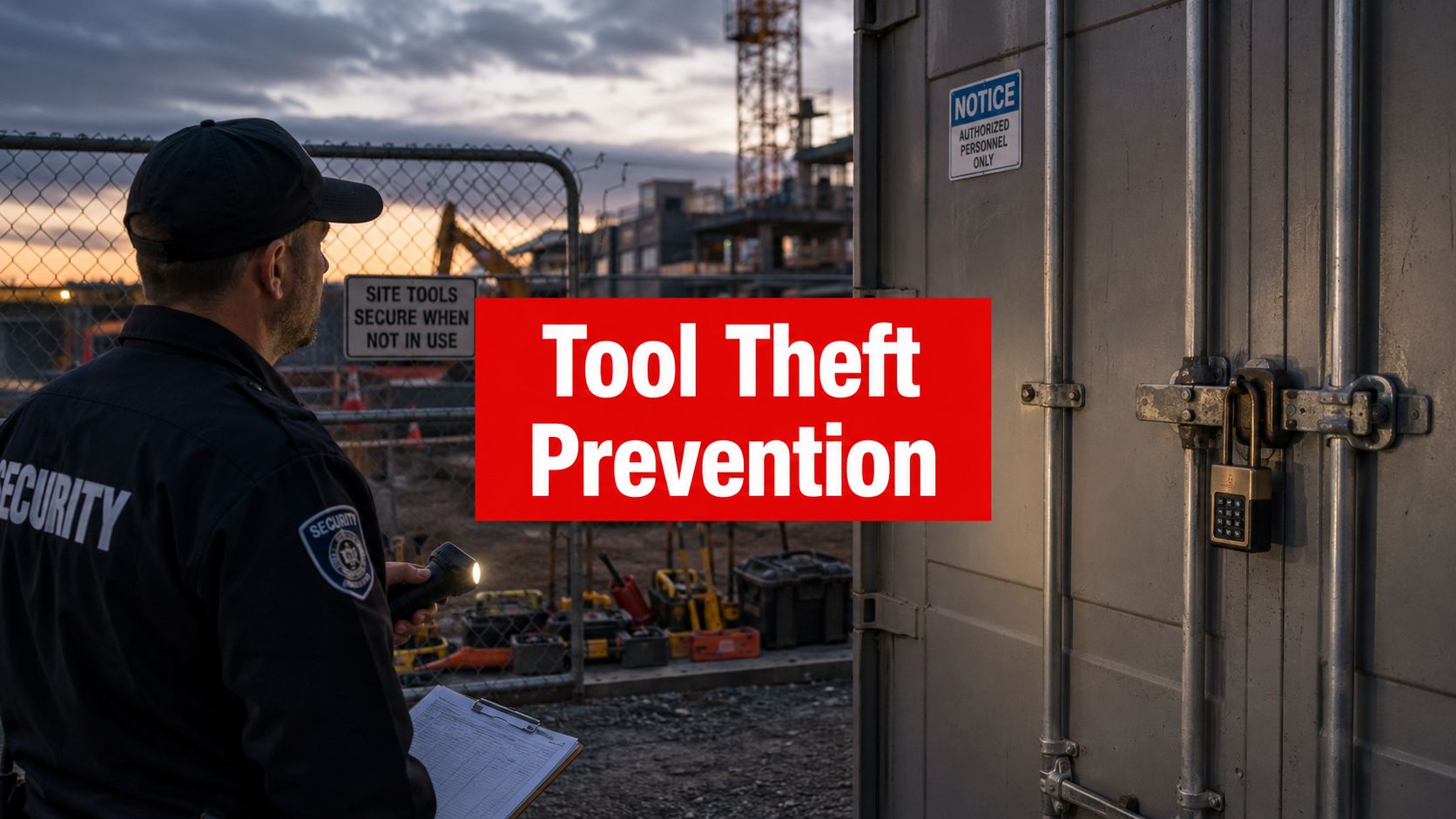

Is your Dallas-Fort Worth property as secure and well-managed as it could be? In a market growing this fast, DFW site management is more than just locking gates—it’s the strategic work of keeping a property secure, maintained, and running smoothly. A proactive approach brings together risk assessment, professional on-site teams, and smart technology to oversee everything from massive industrial parks to busy construction sites. The goal is simple: turn potential liabilities into secure, well-managed assets.
The New Era of Property Management in DFW
The Dallas-Fort Worth area isn't just growing; it's exploding with new businesses, residents, and development. For property managers, HOA board members, and construction superintendents, this boom presents both immense opportunities and a new set of challenges. Suddenly, you're responsible for empty industrial warehouses, sprawling construction zones, and packed residential communities—all demanding a smarter approach to site management.
Reacting to incidents as they happen is no longer a viable strategy; it's a liability. Proactive DFW site management has become a crucial advantage. It’s about shifting from basic security to creating a controlled environment that actively protects assets, keeps people safe, and ultimately boosts the property's value. This modern approach is built on a few core pillars.
Key Pillars of a Modern Strategy
A solid management plan isn't a single service you can buy off the shelf. It’s an integrated system, built from the ground up to handle the unique pressures of your property. It demands a thoughtful mix of human expertise and reliable processes.
The most successful strategies always include:
- Comprehensive Risk Assessments: Before anything else, you must know your weak spots. A thorough assessment identifies every vulnerability, from obvious access points and perimeter gaps to the specific threats your site faces, like theft, vandalism, or trespassing.
- A Blend of Personnel and Technology: The best-run sites don't choose between people and tech; they combine them. The visible presence of professional security officers, paired with the accountability of tools like GPS tracking and digital reporting, creates a powerful, integrated solution.
- Customized Operational Protocols: A one-size-fits-all plan is bound to fall short in a market as diverse as DFW. Your strategy must be tailored to your property's reality, whether that’s a retail center that needs customer-friendly security or a construction site that requires strict after-hours patrols.
A well-executed site management plan does more than just prevent loss—it builds confidence. When tenants, employees, or residents see a secure and orderly environment, it sends a clear message: this is a professionally managed and valuable asset.
Think of this guide as your starting point for navigating the complexities of DFW’s growth. By understanding these core principles, you can turn potential headaches into well-managed, secure properties. It all comes down to establishing control, ensuring consistency, and building a foundation for long-term success.
Identifying Your Property's Unique Risk Profile
Effective DFW site management begins with an honest look at your property's specific weaknesses. A generic, one-size-fits-all security plan rarely works. Your property, whether it’s an industrial park in Irving, a retail center in Plano, or a construction zone in Frisco, has its own distinct risk profile.
To build a strategy that truly protects it, you must conduct a detailed risk assessment. This means systematically identifying potential threats, evaluating how your current security measures hold up, and finding the gaps that need to be addressed.
From Access Points to Liability Concerns
A practical risk assessment breaks down your property into manageable pieces, analyzing each one for potential weak points. This isn't about looking for trouble; it's about getting ahead of it. When you know where an incident is most likely to occur, you can put your resources where they’ll do the most good.
Your assessment should zero in on three main areas:
- Physical Access Points: Walk every inch of your property and examine how someone can get in. This includes main entrances, service doors, loading docks, perimeter fencing, and even unlocked windows. Are they monitored? Are the locks secure? How are visitors managed?
- Credible On-Site Threats: What are the most likely risks for your type of property? For a construction site, the primary concern is often theft of materials or equipment. For a retail center, it might be vandalism, loitering, or incidents in the parking lot.
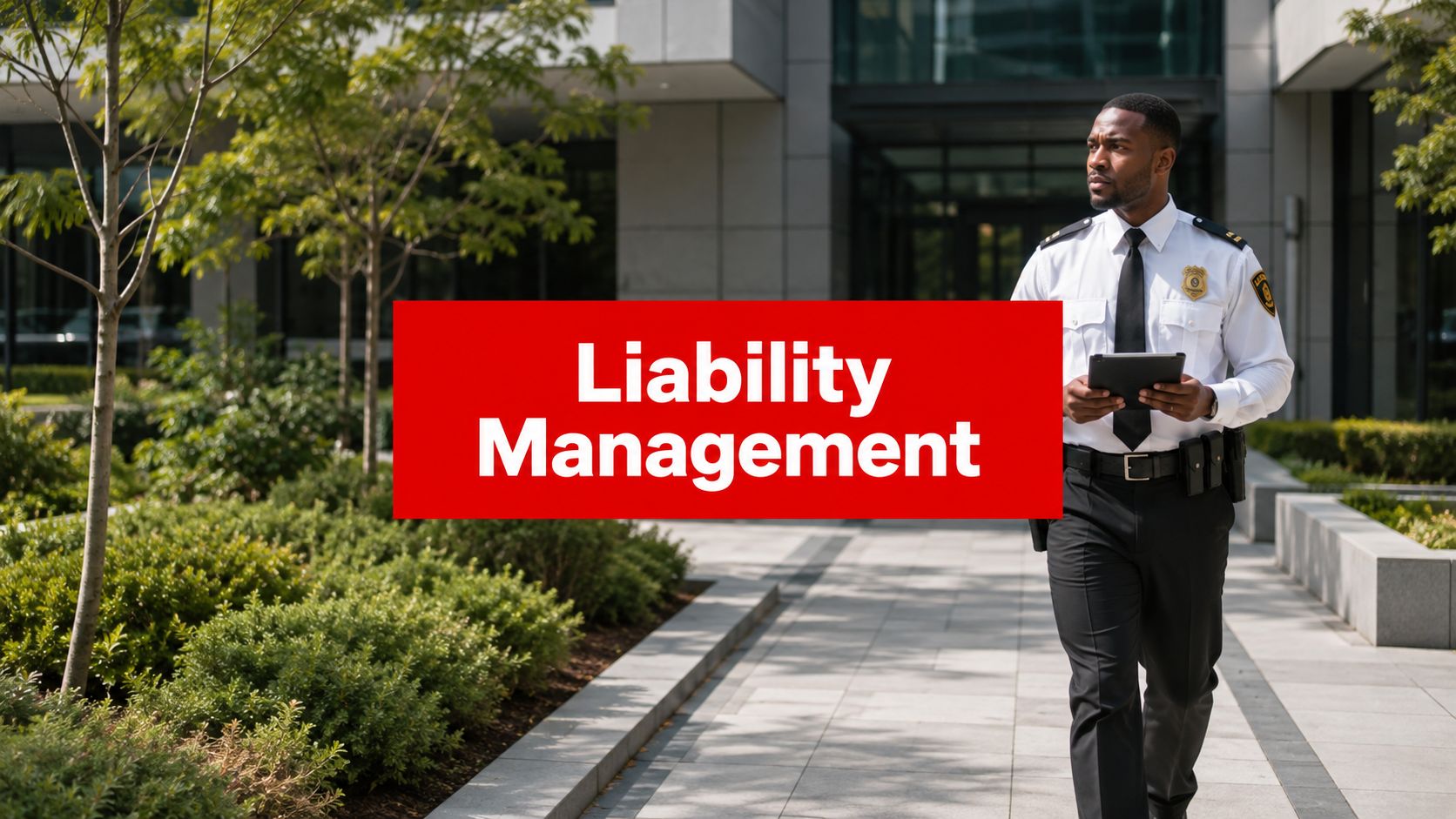
- Liability and Safety Hazards: Beyond crime, look for potential safety issues like poor lighting in common areas, trip hazards, or unsecured areas where someone could wander in and get hurt. Addressing these doesn't just improve safety; it also minimizes your legal exposure.
Setting up a solid risk management system ties all this together. It gives you a structured way to identify, assess, and address potential threats, forming the backbone of your unique risk profile.
This infographic shows how proactive management is key to protecting assets, ensuring safety, and boosting property value.
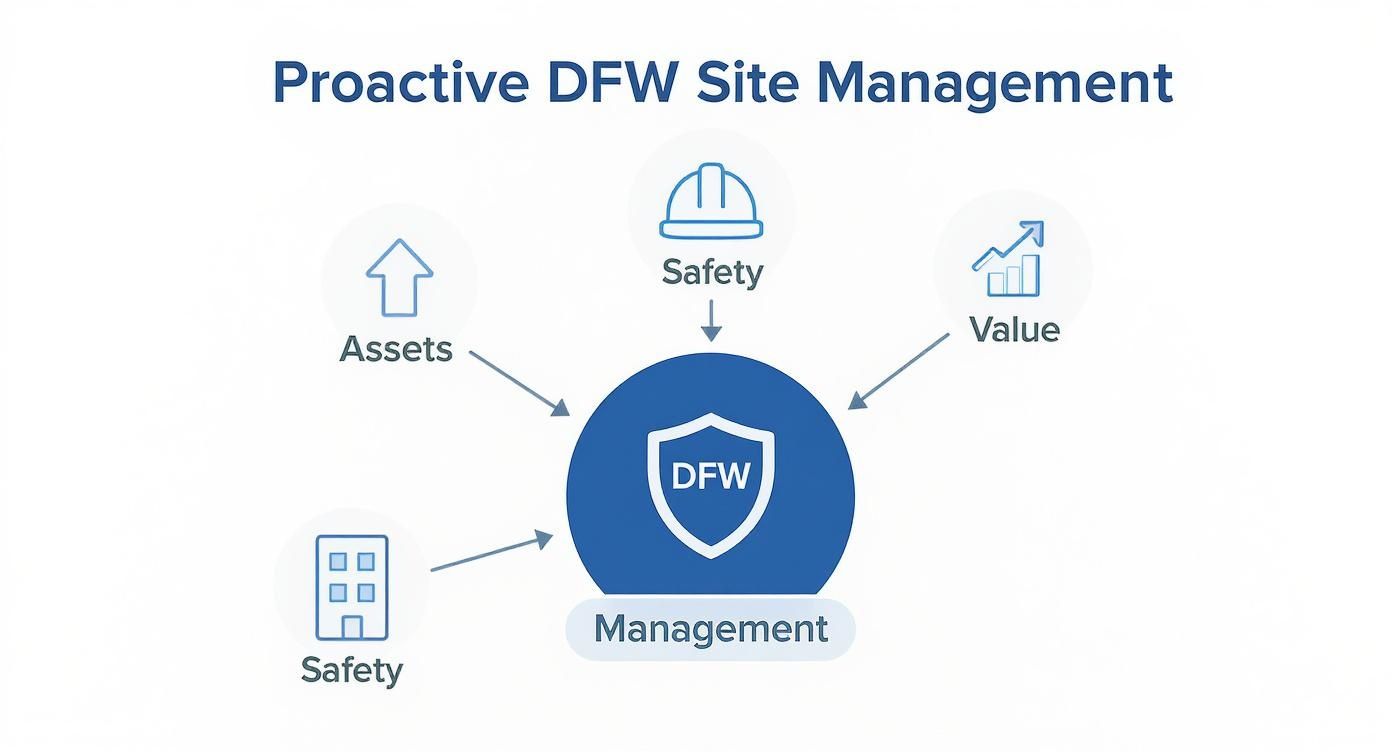
As you can see, a strong management strategy acts as the central shield protecting these three core pillars of a successful property.
Different property types in the Dallas-Fort Worth area face very different challenges. The table below breaks down some of the most common risks and where your management focus should be.
Key Risk Factors by DFW Property Type
| Property Type | Primary Security Risk | Key Management Focus |
|---|---|---|
| Retail Center | Shoplifting, vandalism, parking lot incidents | Visible officer presence, CCTV monitoring, traffic control |
| Industrial/Warehouse | After-hours break-ins, cargo theft, employee theft | Access control, perimeter security, inventory tracking |
| Construction Site | Theft of materials & equipment, trespassing | 24/7 surveillance, mobile patrols, gate control |
| Residential HOA | Package theft, unauthorized parking, vandalism | Regular patrols, resident communication, rule enforcement |
| Office Building | Unauthorized access, data center breaches, theft | Visitor management, lobby security, after-hours access |
Understanding these distinctions is the first step toward building a security plan that is truly effective for your specific environment.
Creating a Tailored Security Profile
Once you have a clear picture of your vulnerabilities, you can start building a security profile that directly counters them. This profile becomes the blueprint for all your security decisions, from staffing to technology. It ensures every action you take is deliberate and contributes to a safer environment.
A well-defined risk profile turns security from an expense into a strategic investment. It allows you to focus your budget on solutions that address your most pressing concerns, rather than wasting resources on generic measures that don't fit your needs.
For example, a residential HOA’s profile would likely prioritize visible patrols to deter package thieves and enforce parking rules, which helps create a feeling of community safety. An industrial warehouse, on the other hand, needs a profile centered on tight access control, after-hours perimeter security, and inventory protection. This tailored approach ensures your security plan is not only effective but also efficient, giving you the biggest impact for your investment and true peace of mind.
Securing Assets Amid DFW's Industrial Boom
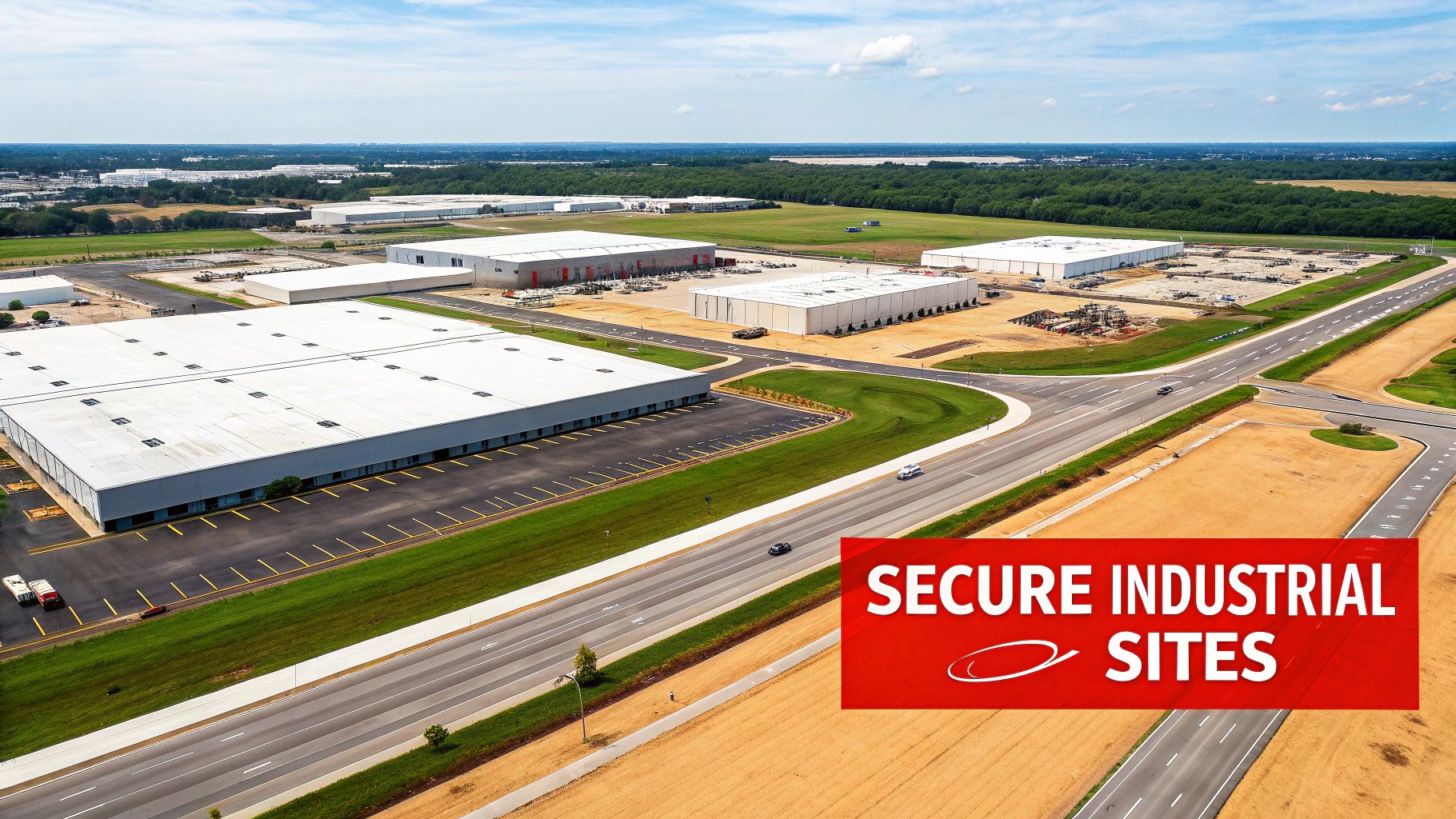
The Dallas-Fort Worth metroplex is changing fast, with new industrial development appearing at an incredible rate. For property managers and asset holders, this boom presents a huge challenge for DFW site management: how do you secure massive, often empty, industrial properties?
These sprawling warehouses and logistics centers are incredibly valuable, but their size and vacancy can make them targets for theft, vandalism, trespassing, and unauthorized encampments. Protecting these buildings requires a strategy that understands the unique vulnerabilities of the industrial sector.
The Challenge of High Vacancy Rates
The building frenzy in DFW has created a unique problem. Since 2023, the market has seen over 115 million square feet of new industrial space come online. The catch? Just under 40% of the space delivered since 2023 is still waiting for a tenant. For a deeper dive into the numbers, the DFW industrial market insights from Bradford tell the full story.
This means that for every busy warehouse, there's another sitting empty and vulnerable. In this environment, proactive security isn't just a good idea; it's a critical part of protecting your investment from day one.
Vacancy doesn't have to mean vulnerability. An empty property can be just as secure as an occupied one—it all comes down to having the right site management plan that establishes control and maintains a constant, visible presence.
Core Strategies for Industrial Site Security
Securing a large industrial property requires a different approach than managing a retail center or office park. You’re not just managing public access; you're trying to prevent any unauthorized access at all. The best plans blend physical deterrence with smart, modern monitoring.
Here’s what works:
- Dedicated Mobile Patrols: High-visibility patrols arriving at random intervals are one of your best defenses. While a stationary guard can be observed and avoided, a mobile patrol creates an unpredictable presence that makes potential intruders think twice. Officers can check fence lines, verify doors are locked, and quickly investigate any red flags.
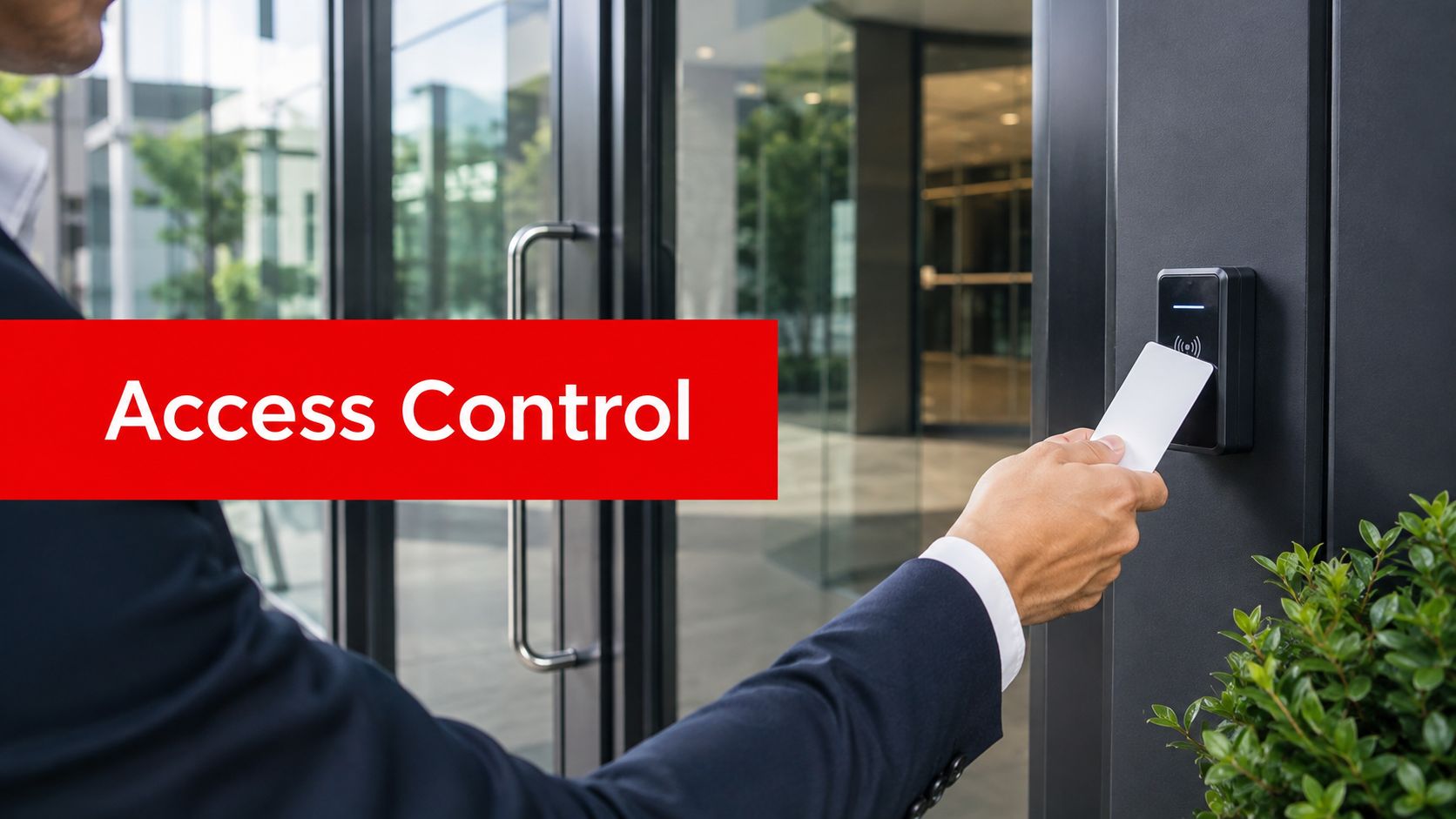
- Integrated Access Control: Even on a vacant site, every entry point needs to be secured. This includes main gates and loading docks, but also less obvious spots like service entrances and rooftop hatches. A combination of heavy-duty locks, alarms, and regular hands-on checks keeps the building sealed.
- 24/7 Surveillance and Monitoring: Technology acts as your eyes and ears when your team isn't physically on site. Well-placed cameras linked to a 24/7 Security Operations Center (SOC) provide constant oversight, spotting motion, alerting your patrol team, and capturing solid evidence if an incident occurs.
Protecting Assets from Day One
The job of DFW site management for an industrial property begins the moment the construction crew leaves. The longer a building sits unprotected, the greater the risk of theft or damage that can delay a lease and lead to costly repairs.
A proactive approach means having a clear plan ready to go.
- Secure the Perimeter: First, establish a hard boundary. Ensure all fences are intact, lock every gate with high-quality chains and locks, and post clear "No Trespassing" signs.
- Light Up the Area: A well-lit environment is a simple but effective deterrent. Good exterior lighting, especially around entry points and loading docks, is crucial. Motion-activated floodlights are even better.
- Implement a Patrol Schedule: Get a professional vehicle patrol service on-site immediately. Their presence alone sends a powerful message that the property is being watched, often stopping potential intruders before they even try.
By putting these foundational security measures in place, property managers can effectively handle the risks that come with vacant industrial sites, making sure these valuable assets stay safe and secure until the new tenant moves in.
Building Your On-Site Security Team

A security strategy is only as strong as the people who execute it. Once you’ve identified your risks and locked down physical assets, the focus shifts to the human element. Effective DFW site management is about building a reliable, professional on-site presence that can deter threats, respond to incidents, and maintain a safe environment.
Many property managers know the frustration of dealing with inconsistent service, high officer turnover, and a lack of accountability. Choosing the right staffing model—and more importantly, the right security partner—is a critical decision that directly impacts your property’s safety and reputation.
Choosing the Right Staffing Model
Your property’s unique risk profile dictates the kind of security presence you need. A high-traffic retail center has vastly different requirements than a quiet residential community or a sprawling construction site after hours. Understanding the main models is the first step toward building a team that fits your operational needs and budget.
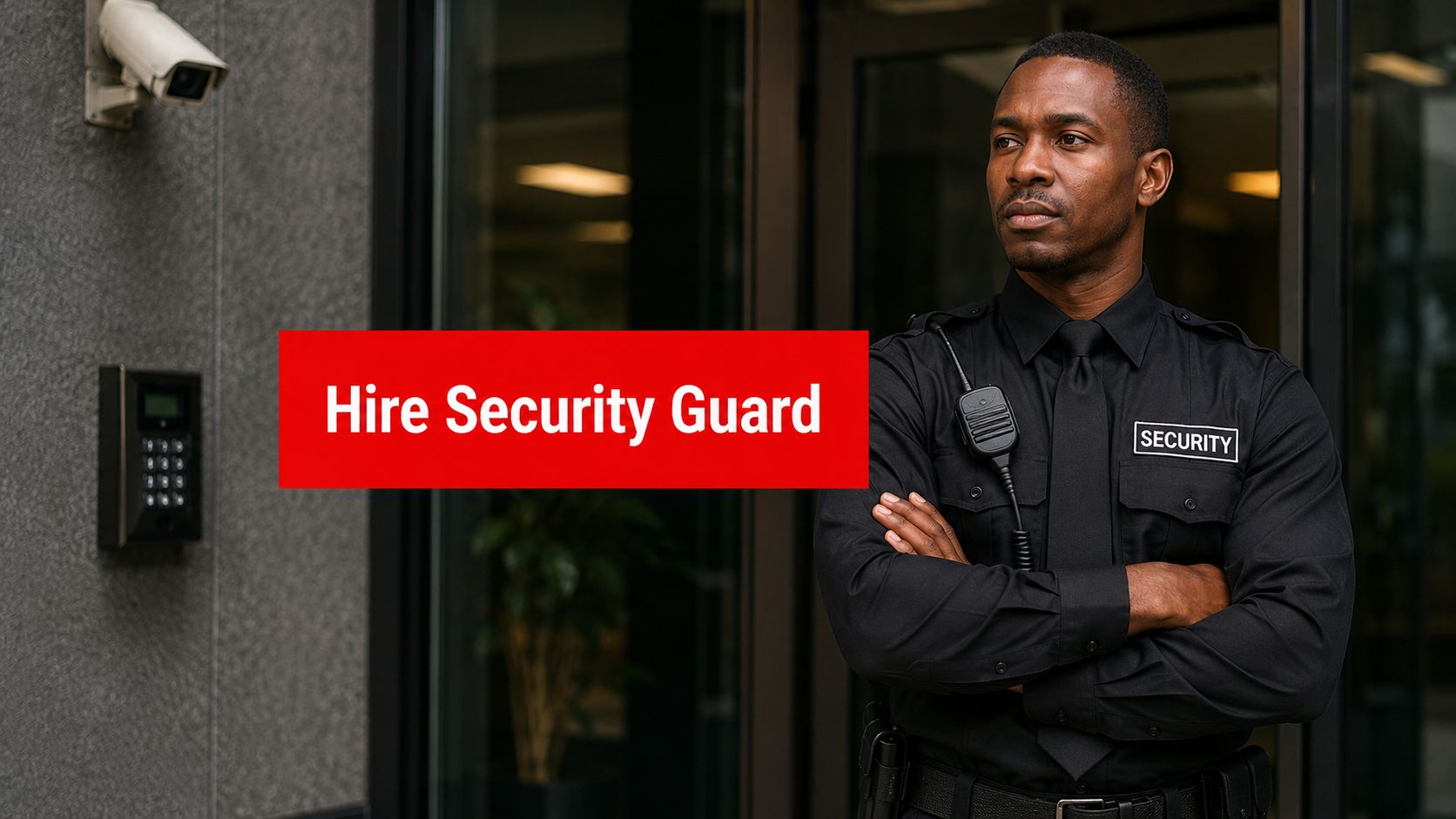
- Dedicated On-Site Officers: For properties requiring a constant, visible presence, a stationed guard is the gold standard. They become an integral part of your daily operations, handling access control, monitoring surveillance, and providing an immediate response. This model is ideal for corporate offices, busy residential lobbies, and high-value industrial sites.
- Mobile Vehicle Patrols: For larger properties or portfolios of sites, mobile patrols offer an effective blend of visibility and cost-efficiency. Marked patrol vehicles making random but regular checks create a powerful deterrent. This approach is perfect for industrial parks, construction sites, and retail centers that need after-hours monitoring.
- Professional Concierge Services: In Class A office buildings and luxury high-rises, security must be balanced with hospitality. Concierge officers are trained to be ambassadors for your property, managing visitor access and maintaining a welcoming atmosphere while upholding strict security protocols.
Overcoming the Industry Pain Point of Unreliable Service
The single biggest complaint in the security industry is unreliable service, which almost always stems from high employee turnover. The "burn and churn" approach, where officers are treated as disposable, leads to inconsistent coverage and a team that simply isn't invested in your property's safety. For property managers who depend on reliability, this is a major pain point.
A truly effective partner for DFW site management puts its people first. With 26 years of experience, Overton Security was built on a different philosophy.
By investing in our officers with competitive pay, benefits, and real career paths, we foster a culture of professionalism and retention. A stable, experienced team means you get consistent service from officers who know your property, understand its unique challenges, and are genuinely committed to its protection.
This commitment to our team is backed by hands-on leadership and a low manager-to-client ratio, ensuring every account gets the attention it deserves. Your property ends up protected by a team that is as invested in its safety as you are, providing the peace of mind that comes from a true partnership. For those new to the process, our guide offers valuable insights on how to hire security guards and what to look for in a quality provider.
Using Technology for Smarter Site Management
Today, top-tier security blends seasoned professionals on the ground with smart technology backing them up. For effective DFW site management, a physical presence is only part of the solution. The right tools bring transparency and accountability, shifting your security from a reactive measure to a proactive, data-driven operation.
Think of it as giving your property a digital nervous system. This system provides a clear window into all security activities for property managers, HOA boards, and construction superintendents. It simplifies communication, generates verifiable logs, and helps ensure every protocol is followed. When you pair human expertise with intelligent tech, the result is a security posture that’s not just stronger, but far more efficient.
This screenshot from our own technology and reporting services shows how modern platforms pull all that crucial security data into one place.
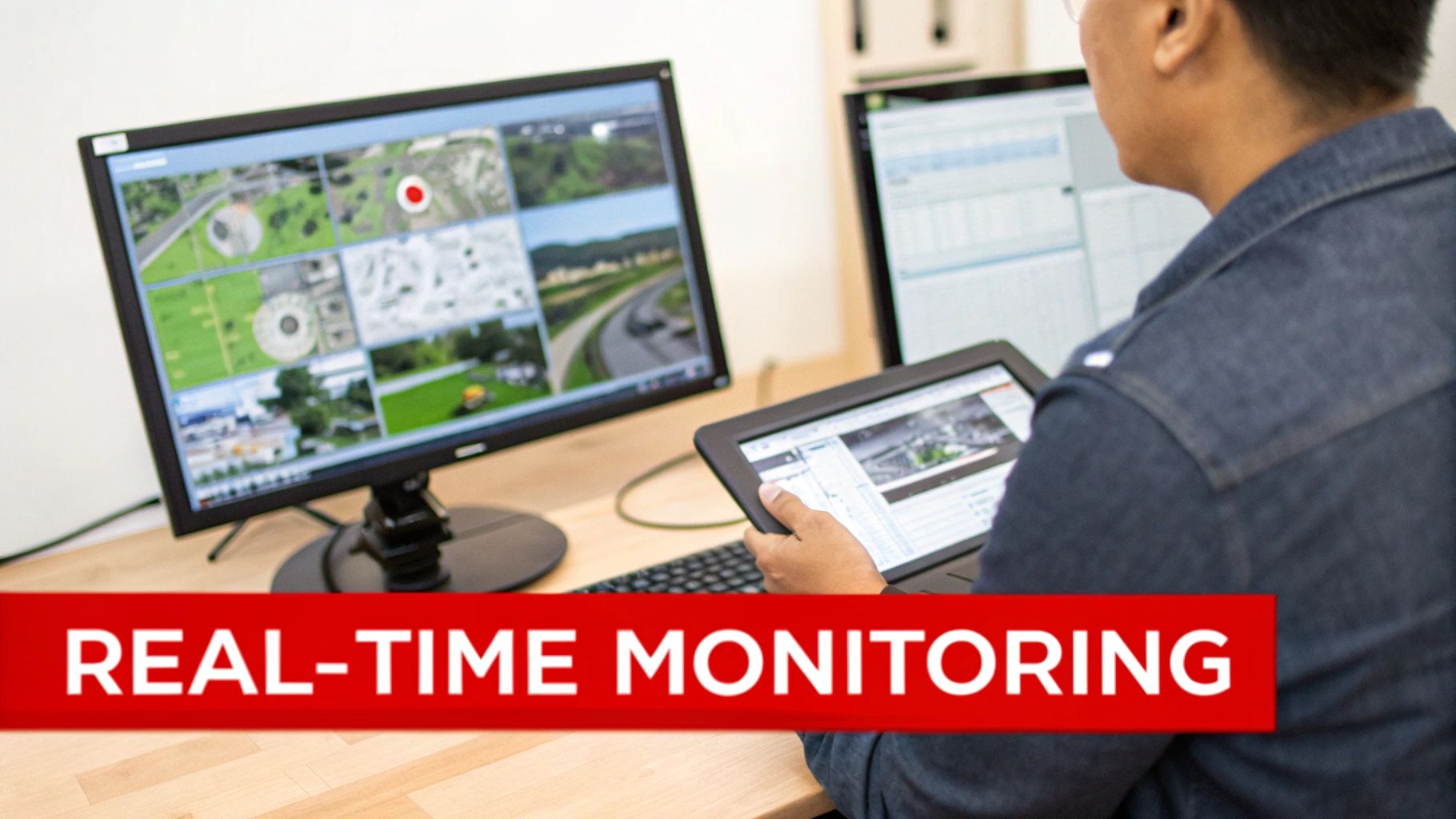
The dashboard gives you a quick, at-a-glance overview of patrols, reported incidents, and officer activity, creating total transparency for property managers.
Core Technologies for Accountability
A few key technologies serve as the backbone for any modern site management strategy. These tools aren't just for watching; they're for verifying and communicating. They answer the key question every property manager has: "Is my security plan actually being carried out as agreed?"
- GPS-Enabled Patrol Tracking: This technology provides real-time location data for every officer and vehicle on your property. It’s the undeniable proof of service that confirms patrols are covering every designated area.
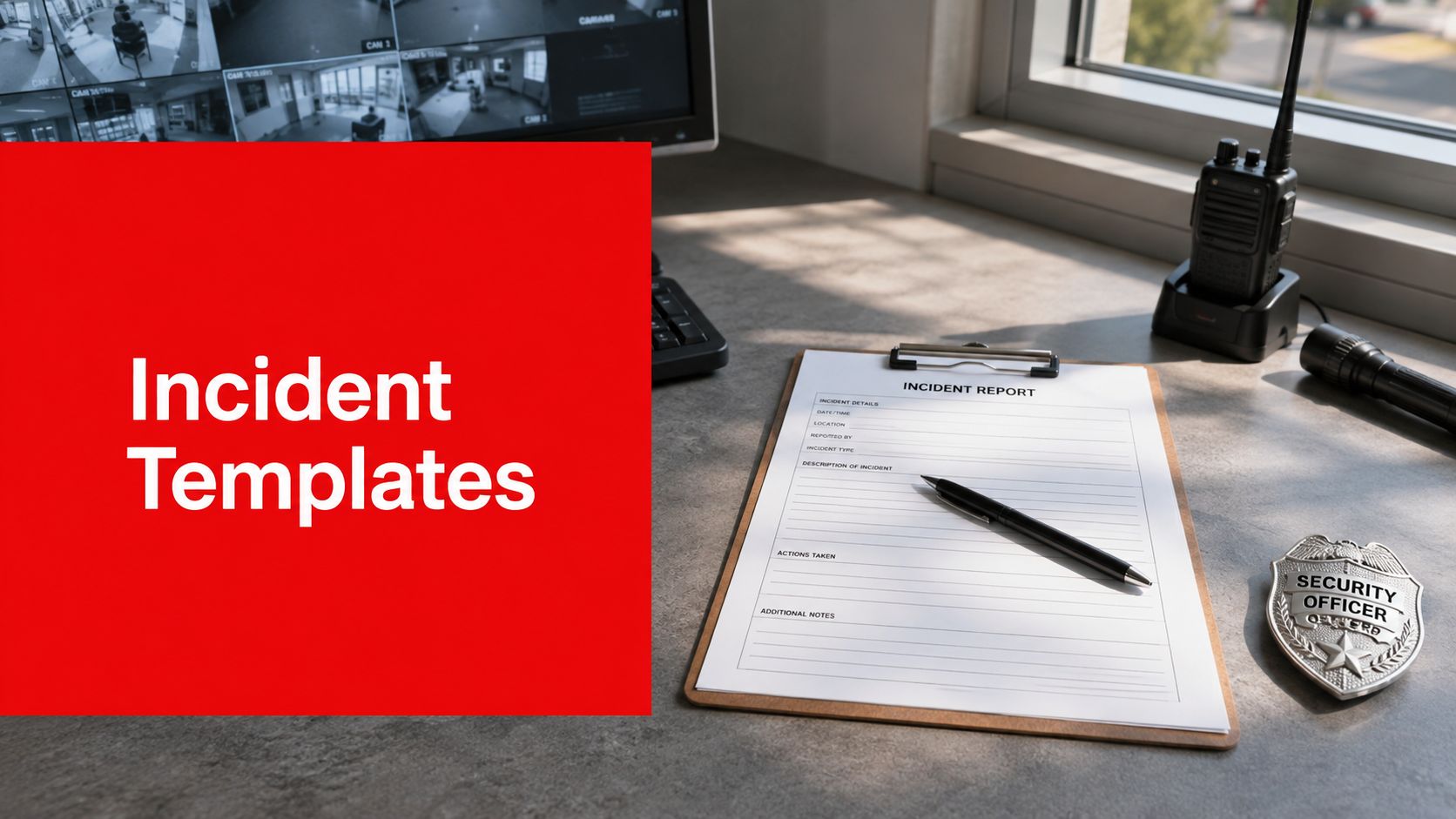
- Real-Time Digital Reporting: The days of handwritten reports are over. Officers can now file detailed digital reports—complete with photos and time-stamped notes—right from the field using a tablet or smartphone.
- 24/7 Security Operations Center (SOC) Oversight: A central command hub acts as a force multiplier for your on-site team. SOC operators can monitor live camera feeds, track officer wellness checks, and provide immediate dispatch support when an incident occurs.
The Power of Data-Driven Decisions
This tech integration does more than track what's happening now; it generates a wealth of actionable data. Over time, you can analyze incident reports to spot recurring problems, like a specific gate that’s frequently left unsecured or a rise in loitering in a certain area. This data lets you make smart adjustments to patrol routes, update security protocols, and make informed decisions to prevent future issues.
Technology transforms accountability from a promise into a verifiable reality. It provides clients with the peace of mind that comes from seeing exactly what is happening on their property, documented in real time.
For properties with more complex surveillance needs, it’s also smart to look into options like remote video monitoring, which combines intelligent cameras with live professional oversight.
To fully embrace smarter operations, DFW property managers can also explore strategies for optimizing electric vehicle fleet management. By weaving these technological threads together, your DFW site management strategy becomes smarter, more transparent, and far more effective at protecting your assets.
Turning Security into a Competitive Advantage
In a market as dynamic as Dallas-Fort Worth, sharp property managers know that site management isn't just an operational cost—it's a powerful tool for attracting and retaining great tenants. A safe, well-kept environment isn't just a line item; it's the very thing that can make your asset stand out.
From a tenant's perspective, the look and feel of a property matters. A visible, professional security presence and meticulously maintained grounds create an immediate sense of value and safety. This perception is invaluable for elevating your property's reputation in a crowded field.
From Cost Center to Value Driver
The old way of thinking viewed security as a necessary expense. That mindset is outdated. Proactive DFW site management flips the script, turning that investment into a genuine value driver for your property.
A well-secured site naturally sees fewer incidents of theft and vandalism, which directly protects your bottom line. But it goes deeper than loss prevention. A solid security program is a powerful leasing and retention tool. Tenants who feel safe are far more likely to renew their leases and recommend the property, creating stability and a more predictable return on your investment.
A well-managed site sends a clear message to the market: this property is professionally operated, its tenants are valued, and the asset is protected. That reputation for quality and safety is an invaluable competitive edge.
Thriving in a Competitive Leasing Market
The DFW industrial sector is a perfect example. Even with constant new construction, tenant demand remains strong. Recent data shows the industrial market absorbed nearly 3.2 million square feet in Q3 2025 alone.
With projections hitting 19.8 million square feet for the full year, the competition to land and keep high-quality tenants is fierce. This is exactly where proactive site management gives you an undeniable advantage. To get a better handle on the market, you can explore more on these DFW industrial trends and see just how competitive the landscape is.
How Proactive Management Enhances Property Value
When you invest in a comprehensive security plan, it creates a ripple effect that boosts the overall value of your DFW property. This isn't just about preventing negative events; it's about actively creating a positive, high-value environment.
Here’s how it breaks down into real-world benefits:
- Enhanced Tenant and Visitor Experience: A visible but friendly security presence improves daily life for everyone on site, fostering a welcoming and orderly atmosphere.
- Reduced Liability and Insurance Costs: A proactive safety plan, backed by regular patrols and detailed reporting, demonstrates a serious commitment to mitigating risk and can often lead to lower insurance premiums.
- Improved Asset Preservation: Consistent patrols are great for spotting maintenance issues—like water leaks or damaged fencing—before they become expensive repairs, protecting the physical asset.
- Increased Marketability: Properties with a reputation for being safe and professionally managed are simply easier to lease and can often command higher rental rates.
Strategic DFW site management is one of the smartest investments a property owner can make. It transforms an operational task into a powerful asset that protects your property, supports your tenants, and drives long-term value.
Common Questions About DFW Site Management
If you're a property manager or business owner in DFW, you likely have some practical questions about what it takes to implement a solid security plan. Let's address some of the most common concerns we hear.
How Much Does Professional Site Management Cost?
The cost depends on your specific needs—factors like the number of coverage hours, required officer duties, and whether a dedicated patrol vehicle is part of the plan. A quality partner will start with a thorough risk assessment to build a custom plan that fits your budget without compromising on safety. The real goal is to deliver a solution where the value of protecting your assets far outweighs the investment.
How Quickly Can Security Services Be Implemented?
This comes down to the complexity of your site. For a straightforward service like mobile patrols, we can often have a team operational within a few days. For dedicated on-site officers who require specific training and post orders, the process might take a week or two. A professional provider will always focus on a smooth, efficient start-up to get your property secured as quickly as possible.
The most effective security plans are built on clarity and partnership. A good provider will walk you through every step, ensuring you feel confident and informed from day one.
What Makes a Security Partner Reliable?
When it comes to DFW site management, reliability is built on a few key, measurable factors:
- Low Officer Turnover: A company that invests in its people provides more consistent, knowledgeable service. You get dedicated officers who know your property and are committed to its protection.
- Transparent Technology: You should never have to guess if your security team is doing its job. Tools like GPS tracking and real-time digital reports offer verifiable proof of service and total peace of mind.
- Hands-On Leadership: Look for a low manager-to-client ratio. It’s a strong indicator that your property will receive the direct attention it deserves from senior leadership, rather than being lost in a massive portfolio.
When these elements come together, they create a security program you can truly count on. By focusing on these fundamentals, you can ensure your property is protected by a team that's as dedicated to its safety as you are.
Ready to create a secure, well-managed environment for your DFW property? Contact Overton Security today for a complimentary security consultation and learn how our 26 years of experience can protect your investment.