

Staring at unexplained losses on your balance sheet is a frustrating, all-too-common reality for many business owners and property managers. The core idea behind loss prevention is refreshingly simple: it's a set of proactive business strategies designed to protect your profits by finding and reducing 'shrinkage.'
Shrinkage is that costly gap between the inventory you have on your books and the assets you actually have on hand. For a business owner, closing that gap is a win.
Defining Loss Prevention Beyond the Dictionary
It's helpful to think of loss prevention less as a textbook term and more like maintaining a property. You don't just wait to fix burst pipes when they happen (reacting to thefts); you insulate them against the cold to stop them from freezing in the first place (preventive measures).
That’s the essence of loss prevention. It’s a comprehensive approach to safeguarding your company's financial health by proactively spotting and neutralizing risks before they can hit your bottom line.
This concept goes far beyond catching a shoplifter in a retail store. For commercial properties, it could mean preventing expensive equipment theft from a construction site in Los Angeles or stopping vendor fraud at a busy distribution center in San Jose. No matter the business, the goal is always the same: close the gaps where value can disappear.
The Four Pillars of Loss Prevention
A successful strategy looks at losses from every angle, protecting you from threats that are both external and internal. A good way to visualize this is through the four pillars that a complete loss prevention strategy is built on.
| Pillar | Description | Example Scenario |
|---|---|---|
| External Theft | Losses caused by individuals outside the organization. This is the most visible type of shrink. | A shoplifter concealing merchandise or an organized retail crime group coordinating a large-scale theft. |
| Internal Theft | Losses caused by a company's own employees, contractors, or other trusted insiders. | An employee stealing cash from the register, voiding transactions to pocket money, or taking merchandise. |
| Administrative Errors | Preventable losses that stem from simple human mistakes, process failures, or system inaccuracies. | Incorrect pricing on items, paperwork errors during receiving, or inventory miscounts that lead to ordering mistakes. |
| Vendor Fraud | Deception or theft originating from suppliers, delivery personnel, or other third-party service providers. | A vendor intentionally short-shipping an order but billing for the full amount, or overbilling for services rendered. |
As you can see, a solid plan requires looking at risks from every direction—not just what’s walking out the front door.
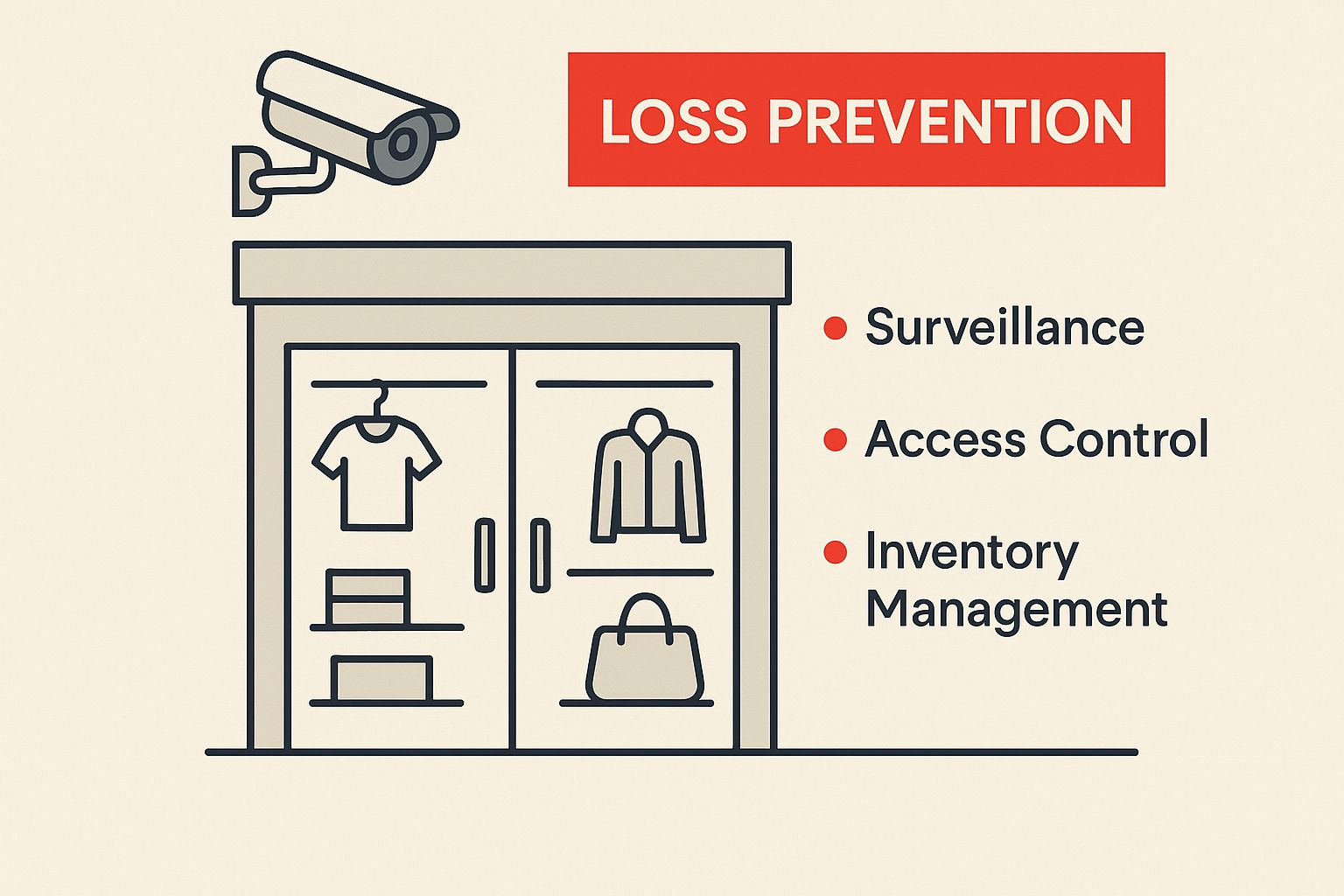
The infographic below helps visualize how all these different components fit together into one complete loss prevention framework.
Why It Matters to Your Bottom Line
The financial impact of all these combined losses—the shrinkage—is significant.
According to the National Retail Federation (NRF), the U.S. retail sector alone was hit with nearly $95 billion in losses in 2021 because of it. Now, consider that many retailers operate on lean profit margins of just 2-4%. Losses of that magnitude can be devastating. You can dig deeper into these critical retail loss statistics on Netsuite.com.
Understanding this financial threat is the first step toward building a resilient security plan that provides true peace of mind—a core value Overton Security has delivered for over 26 years.
Uncovering the Real Sources of Business Shrinkage
When most people hear "shrinkage," their minds jump straight to shoplifters. While that’s part of the story, focusing only on external theft is like trying to fix a leaky bucket by only patching one hole. The truth is, preventable losses spring from multiple sources, and some of them are quietly draining your profits from the inside.
A realistic loss prevention strategy has to account for every way value can vanish from a business. To truly get a handle on it, you need to understand the four primary drivers of shrinkage—each one demanding its own unique game plan.
External Theft
This is the one everyone knows. It covers everything from a teenager grabbing a single item to highly organized retail crime (ORC) rings hitting multiple locations. But this isn't just a retail problem. For a construction superintendent in Los Angeles, external theft might be the disappearance of expensive tools or copper wire. For a facilities director in San Jose, it could be building materials walking off a job site.
Internal Theft
It's a tough reality, but a significant portion of business losses often comes from within. Employee theft can be much harder to spot because it's carried out by people you've hired and trusted. This can be as simple as a cashier pocketing cash, a warehouse worker sneaking out merchandise, or even a contractor over-billing for their services. A big part of stopping this is understanding the deceptive tactics people use, including knowing what social engineering is and how it can manipulate your team.
A proactive security partnership isn't just about catching thieves; it's about creating systems and a culture of accountability that deters internal misconduct before it starts. This approach protects your assets and fosters a more trustworthy environment for your entire team.
Administrative and Operational Errors
Believe it or not, a huge percentage of shrinkage isn’t malicious at all. It's often the result of human error. These administrative slip-ups can bleed a business dry without anyone realizing it.
Common mistakes include:
- Pricing Errors: Tagging an item incorrectly and selling it for less than it's worth.
- Paperwork Mistakes: Errors on receiving documents that lead to you paying for inventory that never actually arrived.
- Inventory Miscounts: Inaccurate counts that throw off your ordering and can easily mask ongoing theft.
These preventable mistakes highlight how important solid processes, consistent training, and careful oversight really are. They're the bedrock of any effective security plan.
Vendor Fraud
The final piece of this puzzle involves your third-party vendors and suppliers. This could be a delivery driver intentionally shorting a shipment or a service provider billing you for work they never actually did. Without the right checks and balances at your receiving docks and service entry points, these kinds of losses can add up incredibly fast.
Recognizing these different sources is the first real step toward building a defense that works. Front-line asset protection officers are tasked with tackling these issues every day. According to industry surveys, U.S. retailers are looking at an average shrink rate of 1.33%, a number that translates into a massive financial hit from this mix of theft and operational failures.
Ultimately, once you understand your vulnerabilities, you can start putting targeted solutions in place. For some practical next steps, you can explore our expert guide on how to reduce shrinkage.
Implementing Effective Loss Prevention Strategies

Knowing where your losses are coming from is one thing, but taking decisive action is what actually protects your bottom line. An effective loss prevention strategy isn't just one single tactic; it's a multi-layered system where people, processes, and technology all work in concert to build a secure environment. For property managers and business owners, this means shifting from simply being aware of problems to putting practical solutions in place.
The idea is to build a defense that's visible enough to make would-be thieves think twice, but also smart enough to catch the issues that aren't so obvious. This takes a thoughtful blend of physical presence and rock-solid procedures.
Blending People and Process
At the heart of any successful program, you'll find well-defined procedures carried out by trained professionals. Technology is a fantastic tool, but without the right people managing it, its effectiveness diminishes. This is where partnering with an experienced security provider like Overton Security makes all the difference.
Here are a few foundational strategies that form the bedrock of a solid plan:
- Establishing a Visible Security Presence: The sight of a professional, uniformed security officer is one of the most powerful deterrents you can have. It sends a clear signal that your property is monitored, which often stops opportunistic theft and vandalism before it even starts.
- Implementing Modern Access Control: Controlling who comes and goes is a security fundamental. This could be anything from a friendly concierge security officer in a residential lobby to strict check-in and check-out rules for vendors on a construction site.
- Conducting Regular Process Audits: Taking a regular, hard look at your procedures for things like cash handling, inventory receiving, and customer returns helps you find and close loopholes that could be exploited. Consistent audits keep your defenses sharp.
A well-implemented loss prevention plan does more than just stop theft; it creates an atmosphere of order, safety, and accountability. This benefits not only your assets but also enhances the experience for customers and employees, fostering trust and confidence in your business.
Leveraging Technology for Support
Modern technology acts as a force multiplier, extending the reach and effectiveness of your security team. Surveillance cameras, for instance, do more than just record what happens; they enable real-time monitoring and provide crucial evidence for investigations if an incident occurs. Some businesses are even exploring advanced tools like aerial surveillance. Of course, a complete drone risk management guide is critical for any business using these tools to safeguard against potential operational losses.
This blend of human expertise with smart technology is central to our approach at Overton Security. Our officers are trained not just to be a presence, but to actively integrate with the technologies on-site. They use tools like GPS-enabled reporting systems to give clients real-time accountability, ensuring every patrol and every action is documented and transparent.
Ultimately, a strong defense is built layer by layer. For those in retail, combining these elements is absolutely essential for success. You can explore this topic further in our dedicated guide to powerful retail loss prevention strategies. By integrating a visible security presence with robust internal controls and the right technology, you create a comprehensive shield that effectively protects your assets and your profitability.
Leveraging Technology for Smarter Loss Prevention
In today's world, loss prevention goes way beyond just locks and cameras. For property managers and business owners, it’s not about becoming an IT whiz. It's about understanding which tools can make your security program smarter, more efficient, and more proactive.
Think of technology as a force multiplier for your security team. While a highly trained officer provides irreplaceable judgment and presence, the right tools extend their awareness. They help document events accurately and spot risks the human eye might miss. This blend of human expertise and supportive technology is the bedrock of any modern, effective security strategy.
Core Technologies in Modern Loss Prevention
The secret isn't chasing every new gadget that hits the market. It’s about implementing proven solutions that target your specific vulnerabilities. When these tools work together, they create a cohesive security ecosystem that protects your assets from all angles.
Three foundational technologies really stand out:
- Electronic Article Surveillance (EAS): You’ve seen these in retail stores—the tags that set off an alarm if an item passes through an exit sensor without being deactivated. They are a simple, yet powerful, deterrent against casual shoplifting.
- Advanced CCTV with AI Analytics: Modern cameras do more than just record. With artificial intelligence, they can be programmed to flag unusual activity in real time, like someone loitering in a sensitive area after hours or a car parked in a fire lane. This turns surveillance from a reactive tool into a proactive alert system.
- Point of Sale (POS) Monitoring: This software digs into transaction data to find suspicious patterns that could signal internal theft. It can automatically flag an unusual number of voids, returns without receipts, or excessive discounts from a specific employee, helping to pinpoint fraud that would otherwise fly under the radar.
Technology enhances, but it doesn't replace, human oversight. The most effective security programs use tools like advanced CCTV and digital reporting to empower professional officers, giving them the information they need to act decisively and intelligently.
When deciding on what technology to use, it's helpful to see how they stack up.
Comparing Loss Prevention Technologies
| Technology | Primary Function | Best Suited For |
|---|---|---|
| EAS Systems | Deters merchandise theft by triggering alarms at exits. | Retail environments with high-value, small-sized goods. |
| AI-Powered CCTV | Proactively monitors for unusual behavior and alerts staff. | Large properties, parking lots, and restricted areas. |
| POS Monitoring | Analyzes transaction data to detect internal fraud. | Any business with cash registers and sales transactions. |
| Access Control | Restricts entry to sensitive areas using keycards or biometrics. | Office buildings, warehouses, and server rooms. |
Each of these tools plays a distinct role, and the right mix depends entirely on the unique risks your property faces.
Integrating Technology with Human Expertise
Simply installing cameras isn't a strategy; their true value is unlocked only when they're integrated into a broader security plan. To get the most out of your investment, a comprehensive guide to security camera systems can provide the foundational knowledge you need for a smart setup.
At Overton Security, we make sure our officers are trained to use the on-site technology as part of their daily duties. Our team relies on GPS-enabled systems for verifiable patrols and creates detailed digital reports to give clients complete transparency.
This synergy ensures that technology isn't just a passive observer but an active part of your security protection. By combining our 26 years of hands-on experience with the right tech, we deliver a loss prevention solution that is both intelligent and accountable.
The True ROI of a Strong Loss Prevention Program

As a property manager or business owner, you have to justify every dollar you spend. It's easy to view a loss prevention program as just another expense, but that's a narrow perspective. A robust program isn't a cost center; it's a direct and powerful investment in your company’s financial health and stability.
The benefits go beyond just catching a few thieves. A strong program delivers a tangible return on investment (ROI) by systematically protecting your profitability. When you reduce shrinkage—even by just a small percentage—that money flows right back to your profit margin. This makes loss prevention one of the highest-impact investments you can make.
More Than Just Stopping Theft
While preventing theft is a huge part of the equation, a truly comprehensive program adds value across your entire operation. The positive effects create a ripple effect that strengthens your business in ways you might not expect, making the environment safer and more efficient for everyone.
The key benefits really stack up:
- Increased Profitability: This is the most obvious one. By cutting down on losses from theft, fraud, and simple errors, you hold onto more of the revenue you've earned. It’s a direct boost to your financial performance.
- Improved Inventory Accuracy: When you get a firm handle on shrinkage, your inventory records become far more reliable. This helps prevent frustrating stockouts on popular items and stops you from over-ordering products that just sit on the shelves.
- Enhanced Safety and Security: A visible and effective security presence makes both your customers and employees feel safer. That improved sense of security often leads to higher employee morale and a much better experience for your customers.
A well-executed loss prevention program protects more than just physical assets; it safeguards your brand's reputation for professionalism, care, and operational excellence. It shows customers and staff that you are committed to maintaining a secure and trustworthy environment.
A Global Perspective on Financial Health
Protecting your bottom line is a universal business challenge. All over the world, loss prevention involves a wide range of practices designed to secure assets, boost operational efficiency, and ensure compliance. Losses from employee theft, fraud, and operational slip-ups can seriously eat into profit margins.
The most effective strategies blend employee training, better processes, and professional oversight to drastically cut down on both shrinkage and operational waste. You can dig deeper into these global loss prevention strategies on Garda.com.
At Overton Security, we understand this. Our clients in Los Angeles, San Jose, and across California are focused on these tangible outcomes. For over 26 years, our goal has been to deliver security solutions that not only bring peace of mind but also actively contribute to our clients' financial success. By pairing highly trained officers with transparent, technology-driven reporting, we help you build a program that delivers a clear, measurable return on your investment.
Choosing the Right Partner for Your Security Needs
Putting a solid loss prevention strategy in place can feel like a massive project, but it’s not one you have to tackle on your own. For most property managers and business owners, bringing in a dedicated security specialist is far more effective than trying to build a program from the ground up. The right firm isn't just a vendor; they become a trusted partner, helping you design and manage a security plan that actually fits your property.
This isn't about just hiring a few guards. It's about building a real, long-term relationship focused on your peace of mind. A true partner brings years of specialized knowledge to the table, giving you the confidence to navigate whatever challenges come your way.
The Overton Security Difference
With 26 years of hands-on experience, we at Overton Security know that consistency and quality are everything. We made a conscious decision long ago to focus on quality over quantity, a philosophy that makes a direct impact on the service you receive. You can see this commitment in our hands-on leadership and our industry-leading officer retention rates.
A security partnership should be built on trust and transparency. It’s about having a team that is as invested in protecting your assets as you are, providing reliable support and clear communication every step of the way.
We’ve deliberately steered clear of the "burn and churn" model that plagues so much of the security industry. By investing in our people, we ensure you have professional, reliable security officers protecting your property day in and day out. Our entire company is structured to deliver a higher level of service.
Here's what that looks like in practice:
- A Low Manager-to-Client Ratio: We don't overload our managers. This simple rule means they have the time to give you hands-on attention, conduct frequent site visits, and respond immediately when you need them.
- Hands-On Leadership: Our leadership team stays actively involved with our clients. This guarantees our high standards are met consistently at every single property, from Los Angeles to San Jose.
- Commitment to Officer Retention: We believe supported officers provide superior service. We invest in top-tier training, fair pay, and real career development to build a stable, professional team you can truly depend on.
Choosing a security partner is a critical decision. It’s about finding a company that shares your goals and has a proven track record of getting the job done right.
Answering Your Questions About Loss Prevention
We get a lot of questions from property managers, HOA boards, and business owners trying to figure out the best way to build their security strategy. Let's clear up a few of the most common ones.
What Is the Difference Between Loss Prevention and Asset Protection?
It’s easy to get these two mixed up since they’re often used together, but there’s a key distinction. Think of asset protection as the big picture—it’s a broad strategy that covers all potential risks to your company's assets, whether that’s physical property, sensitive data, or even your reputation.
Loss prevention, on the other hand, is a specialized focus within that bigger picture. Its main job is to stop "shrinkage," which is the industry term for losses caused by things like theft, employee fraud, or simple administrative errors.
Here at Overton Security, we see our loss prevention services as a core piece of a much larger asset protection plan.
How Can I Implement Loss Prevention on a Limited Budget?
You don't need a massive budget to start making a real difference. Effective loss prevention often begins with smart, low-cost fundamentals that have a huge impact.
Start with rigorous employee training and crystal-clear procedures for handling cash and inventory. Simple things like regular, unscheduled spot-checks can also go a long way.
Never underestimate the power of a visible security presence. Even scheduled mobile patrols are a powerful—and very cost-effective—deterrent. A professional security partner can perform a risk assessment to make sure every dollar you spend is aimed directly at your biggest vulnerabilities.
Is Loss Prevention Only for Large Retail Businesses?
Not at all. While the term may have started in retail, the core principles apply to any organization that has valuable assets to protect.
We work with construction sites that need to protect expensive equipment from being stolen overnight. We help commercial properties secure common areas and tenant spaces. We even assist residential communities in safeguarding their amenities from vandalism.
No matter the setting, the goal is always the same: find and fix the vulnerabilities that lead to preventable losses, protecting your bottom line in the process.
A proactive security plan is your best defense against preventable losses. For over 26 years, Overton Security has helped businesses across California build effective, customized security solutions. Contact us today to discuss your property’s unique needs.