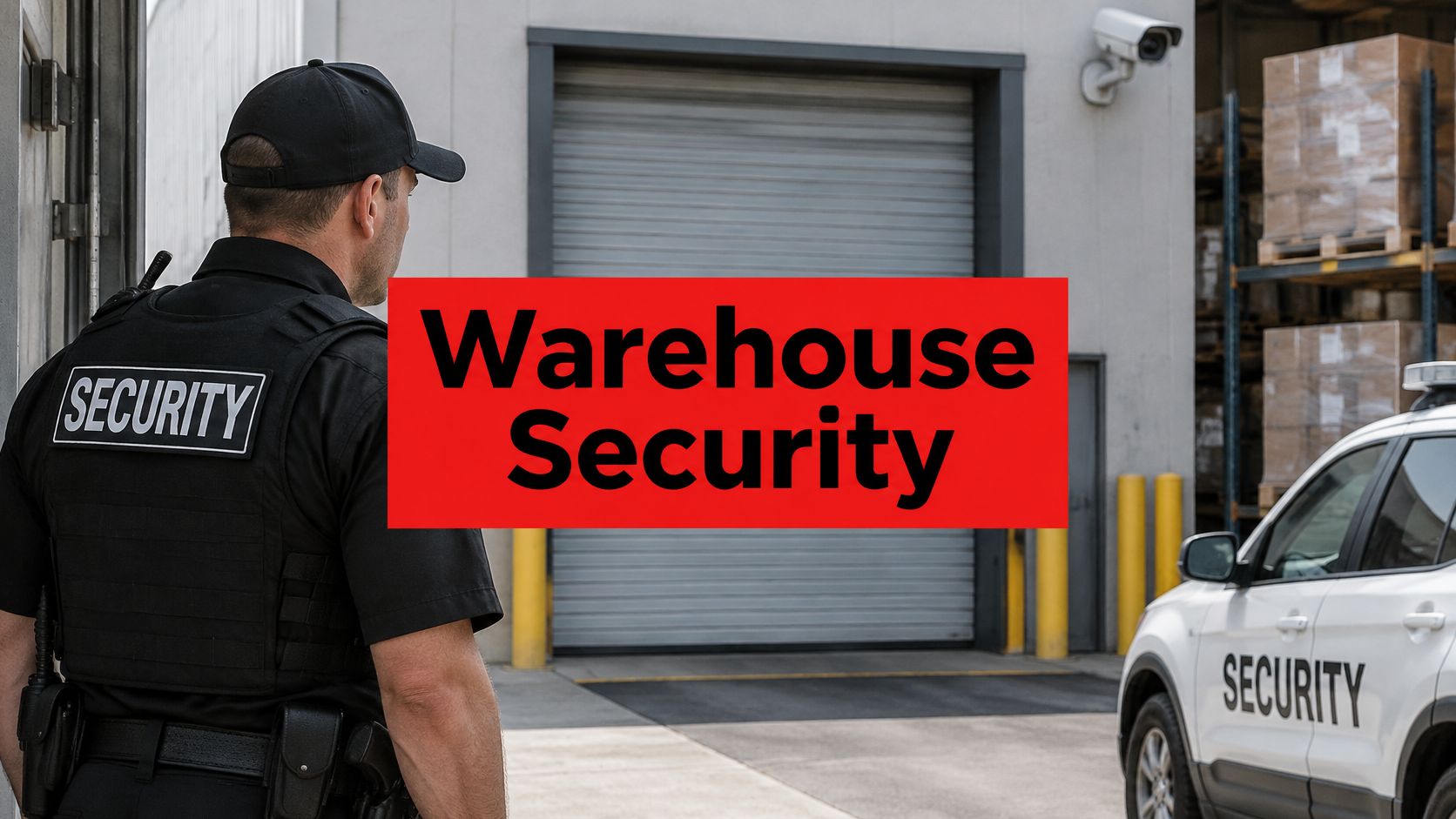

A trailer backs in a little early. The dock team is still finishing the last order, a side door is propped open for airflow, and the driver has a pickup reference that looks right. Nothing dramatic happens, but by the end of the shift nobody can say for sure who entered the staging area, when the seal was applied, or whether that door ever got checked.
That's how most warehouse losses begin. Not with a broken fence, but with one unchecked routine. Good security for warehouses treats dock doors, release paperwork, and identity checks as the first layer, then judges cameras and patrols by how quickly they produce a verified response.
Why Warehouse Security Starts at the Facility
It's close to the end of a quiet shift. A dock door sits partway open after a delivery, a contractor is still somewhere in the building, and an office trailer near the yard has its own set of keys and computers inside. A manager walking that route might reasonably ask a simple question. If something went missing tonight, could we reconstruct who had access and when?
That question matters because the facility itself is a primary theft location, not just a handoff point between trucks. The BSI Consulting and TT Club global cargo theft analysis identifies warehouses as the location for 33% of recorded thefts, ahead of parking lots at 15%, rest areas at 11%, and production facilities at 8%. Those figures change the priority list. You can't focus only on the road if the building is where a third of recorded losses occur.
What a Facility-First View Changes
A facility-first plan starts with every place a person or vehicle can enter, cross, or exit. That includes dock bays, pedestrian doors, gates, emergency exits, and temporary structures parked inside the perimeter. If your site uses modular office space for dispatch or supervision, this guide to securing on-site office space is a useful companion, because that small office often holds keys, credentials, and shipment data that deserve the same discipline as the main building.
From there, the logic is layered. Positively identify employees, visitors, vendors, and drivers at entry. Separate pedestrian and vehicle access so a driver isn't wandering through storage aisles. Restrict dock and high-value zones by credential, and keep access and video records long enough to reconstruct an incident days later. The International Warehouse Logistics Association points in the same direction, recommending alarm systems and video surveillance for cargo-handling and storage areas with recorded activity retained for a reasonable period.
A warehouse doesn't need more alerts. It needs records that connect, so one event produces one clear picture.
A practical daily check is short. Are cameras available and is lighting working? Are alarms armed, doors in the right position, and seals intact? Are there exception reports for unreturned badges or failed scans? If a manager can answer those questions each morning, the rest of the program has something solid to build on.
Mapping Risks from Dock Doors to Perimeter Gates
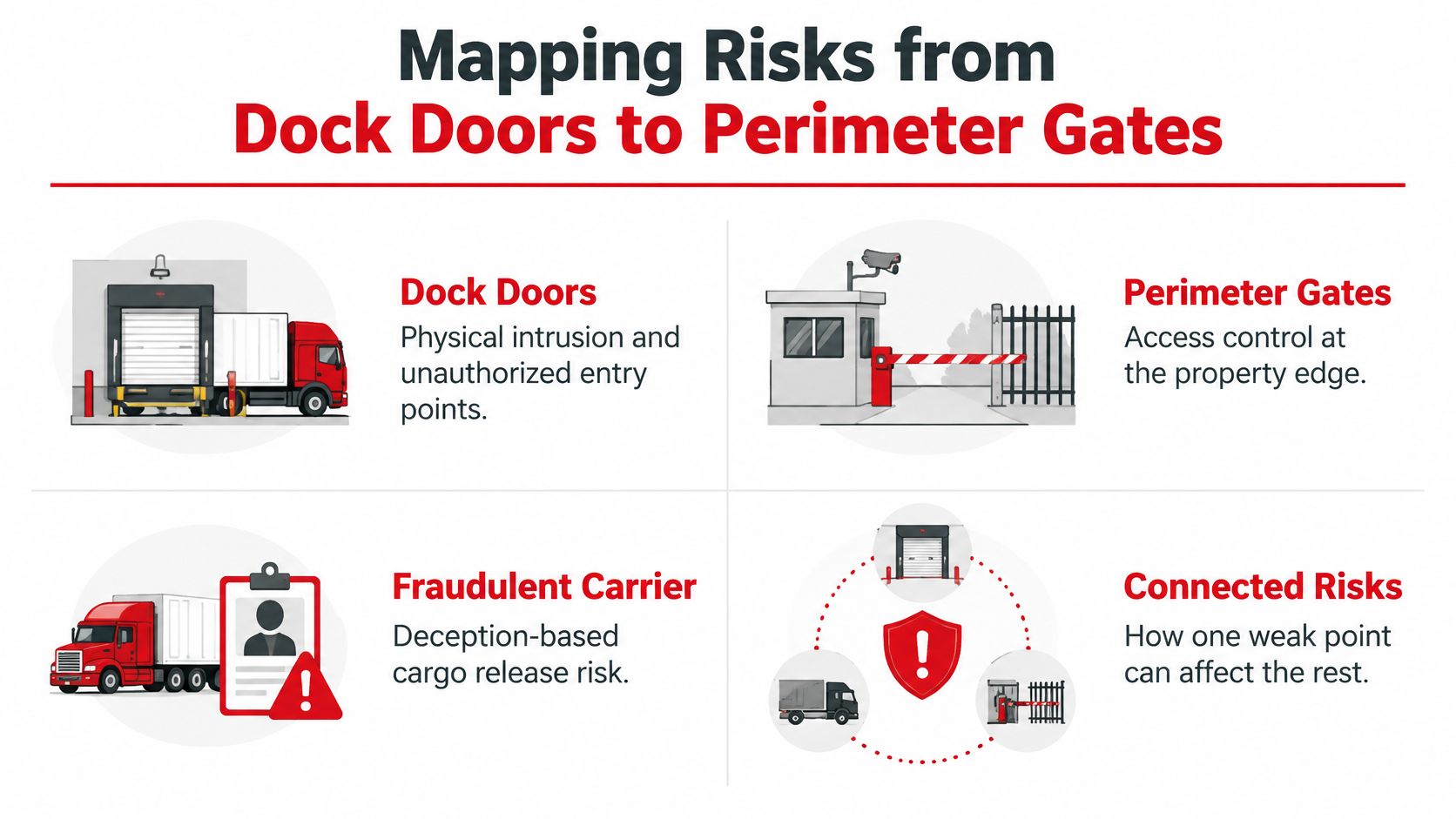
Walk any warehouse and you'll find two very different ways goods leave without permission. One is physical. Someone forces a door, slips through an open dock, or enters a yard where fencing and gates don't get inspected. The other is quieter. Someone presents the right-looking paperwork, a changed pickup reference, or a carrier identity nobody verified, and your own team releases the load.
The second path confuses many managers, because it looks like normal operations. A 2025 Munich Re Specialty summary of BSI data reported 21% of cargo theft incidents occurred at warehouses, while facility theft accounted for 16%, entire-vehicle theft for 20%, hijacking for 21%, and theft from vehicles for 14%. The mix is the point. Physical intrusion and deception often sit side by side, so controls have to address both.
Give Every Opening a Risk Tier
Start with a plain map. List every door, dock bay, gate, and emergency exit, then note what sits behind it. A door opening onto a high-value cage doesn't carry the same risk as one opening onto a break area, and it shouldn't get the same control. Tiering helps you spend attention where loss would hurt most.
The perimeter deserves the same treatment. Fences only help if gates, locks, and damaged sections get checked, which is why it can help to understand how professional fencing for Connecticut homes and businesses approaches a security fence as a system rather than a product. Inside the building, inventory technology plays a supporting role, and our overview of RFID inventory tracking for warehouse accountability explains how movement records can flag goods leaving a zone they shouldn't leave.
Locks on a safe offer a useful comparison. One lock slows a thief. Several layers, each checking something different, change the calculation. A weak appointment process can defeat a strong gate, because the gate admits the truck. A strong release process can still fail if a side door is unalarmed. Map the connections, not just the openings, and you'll see where a single gap lets someone bypass everything else you've paid for.
Access Control and Identity Verification Explained
Access control answers one question repeatedly. Is this person who they claim to be, and are they allowed in this specific area at this specific time? Most confusion comes from treating a badge as the whole answer. A badge is only a tool. The rules around issuing, retrieving, and disabling it are what make it trustworthy.
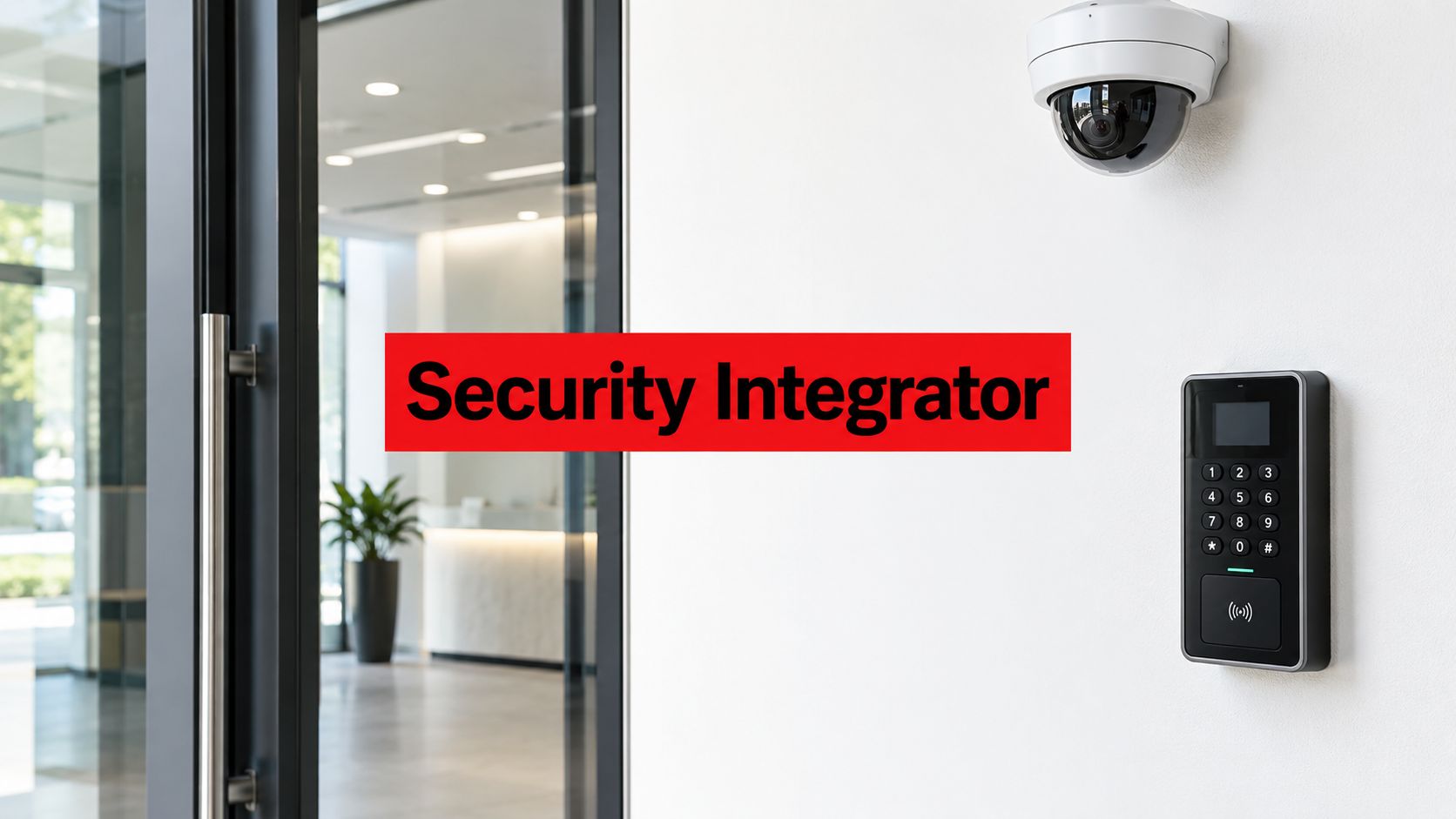
Federal workplace guidance makes the mechanics concrete. The U.S. Department of Labor workplace violence program identifies employee photo-identification badges, coded card keys for secure areas, onsite guard services, and guard assistance with visitor registration and badging in larger facilities. Each control verifies something different, and mixing them up leads to gaps.
| Control | What It Verifies |
|---|---|
| Photo badge | The person standing in front of you matches an issued identity |
| Coded card key | That credential is authorized for this door and time window |
| Visitor registration | Host, purpose, time in, and time out for someone without standing access |
| Carrier verification | The company, driver, and vehicle match the scheduled appointment |
| Release authorization | Paperwork, seal, and load details agree before goods leave |
The Door Routine That Actually Works
Visitors and contractors should enter at one point, show identification, and get logged with a named host. If they don't need the warehouse floor, they shouldn't reach it. Separating public, contractor, and operations traffic sounds basic, but it's what prevents a delivery driver from following an employee through a restricted door without anyone noticing.
Carrier checks need one extra step. Don't verify a driver using only the phone number or email in the pickup instructions, because that's exactly what a fraudulent carrier controls. Confirm carrier identity and vehicle details independently through a known contact, then match the purchase order, dock assignment, seal number, and weight record. For high-value releases, require a second person to authorize it.
Practical rule: If someone asks you to skip a step because a truck is waiting, that pressure is the reason to slow down, not speed up.
Credential hygiene closes the loop. Retrieve badges when people leave, disable lost ones the same day, and review who still has access to restricted zones. A badge system nobody audits becomes a key ring nobody controls.
Patrols, Surveillance, and Technology That Backs Them Up
Managers often ask how many cameras a warehouse needs. It's the wrong question. A camera that records a theft nobody reviews for two days hasn't protected much. A smaller system that sends a clear alert to a person who verifies it and responds has done real work. Judge technology by verified response time, not device count.
Camera placement should follow the load, not just the aisles. Cover license plates at the gate, dock doors, staging lanes, and the moment a seal is applied. Footage should be searchable by time, door, vehicle, and shipment identifier, so an investigator isn't scrubbing hours of video. Our guide to warehouse security camera systems and placement priorities walks through how coverage choices affect what you can prove later.
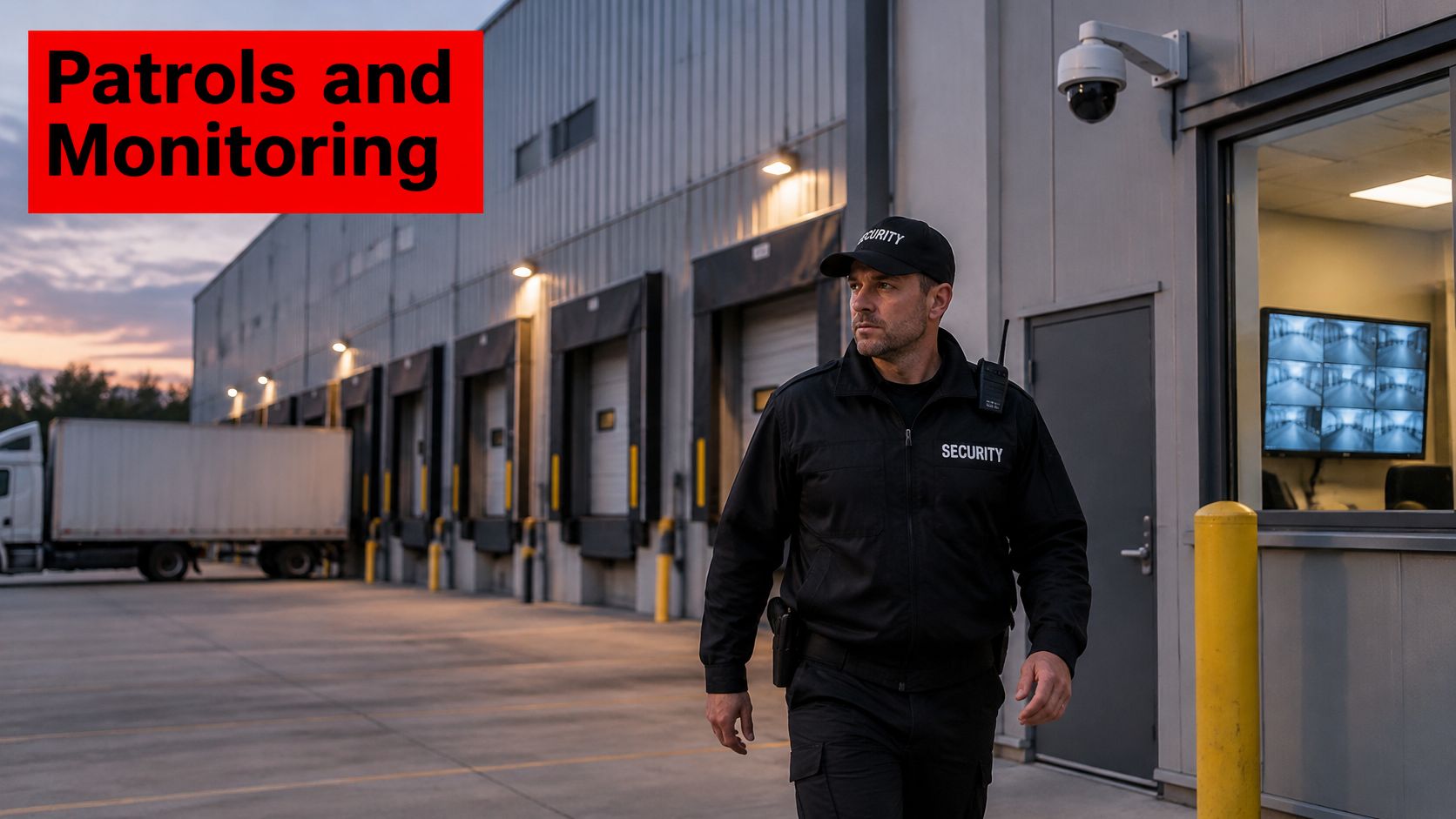
Patrols do what fixed cameras can't. A scheduled or random vehicle patrol checks whether doors are secured, gates are closed, trailers match their assigned spots, and lighting works. An onsite officer can challenge someone in the wrong zone in the moment. The officer's job isn't passive observation anymore. It's validating alerts, preserving evidence, and managing the exceptions technology flags.
Plan for the Night the Systems Go Down
That dependence carries its own risk. An MIT Center for Transportation and Logistics report on warehouse technology vulnerabilities identified 26 technology-related vulnerabilities across six categories and noted that software integration and legacy-system upgrades can create implementation problems and operational disruption. A disconnected access platform can lock out authorized staff. A malfunctioning system can flood you with false alarms or conceal real activity.
So write the degraded-mode plan before you need it. Keep manual visitor and vehicle logs ready, define who can authorize emergency access, and set backup communications for guard dispatch. Assign clear ownership among facilities, IT, operations, and your security provider. Then test recovery, because a plan nobody has rehearsed is a hope, not a procedure.
Protecting Employees and Dock Teams Every Day
Security conversations tend to focus on inventory, but the people moving that inventory face their own exposure. Threats don't always arrive as break-ins. They can arrive as an aggressive visitor at dispatch, a stranger in a restricted aisle, or a confrontation during a thinly staffed overnight shift.
The scale of workplace violence is worth stating plainly. Federal guidance cited earlier notes approximately two million people are victims of non-fatal workplace violence each year, with about 1,000 workplace homicides annually. You don't need those figures to justify common sense controls. You need them to remember that access control protects employees, not just cartons.
Where Safety Checks and Security Checks Overlap
Consider an open dock door at night. It's a security gap, since anyone can enter. It's also a fall hazard for anyone working near the edge. OSHA warehousing guidance on dock and fall hazards states exposed or open loading dock doors must be blocked or protected, and calls for a site hazard assessment to determine required personal protective equipment. An officer on patrol can verify doors are closed or protected when not in use, report a damaged barrier, and document the time and location. That single check serves both programs, while qualified safety staff still make the technical determinations.
OSHA also sets a management expectation. Under the General Duty Clause guidance on workplace violence enforcement, when an employer becomes aware of threats or indicators violence may occur, it should implement a prevention program combining engineering controls, administrative controls, and training. In a warehouse, that translates into controlled doors and protected dispatch areas, visitor authorization rules and lone-worker check-ins, and staff who know the warning signs.
Response paths should be unambiguous. An employee who spots an unbadged person should know who to call first, and officers should know when to notify management versus law enforcement. Lone workers in remote aisles or yards need scheduled check-ins with someone expecting that call. If the check-in doesn't come, the escalation shouldn't wait for a supervisor to notice.
Building Incident Reporting and Evidence Records
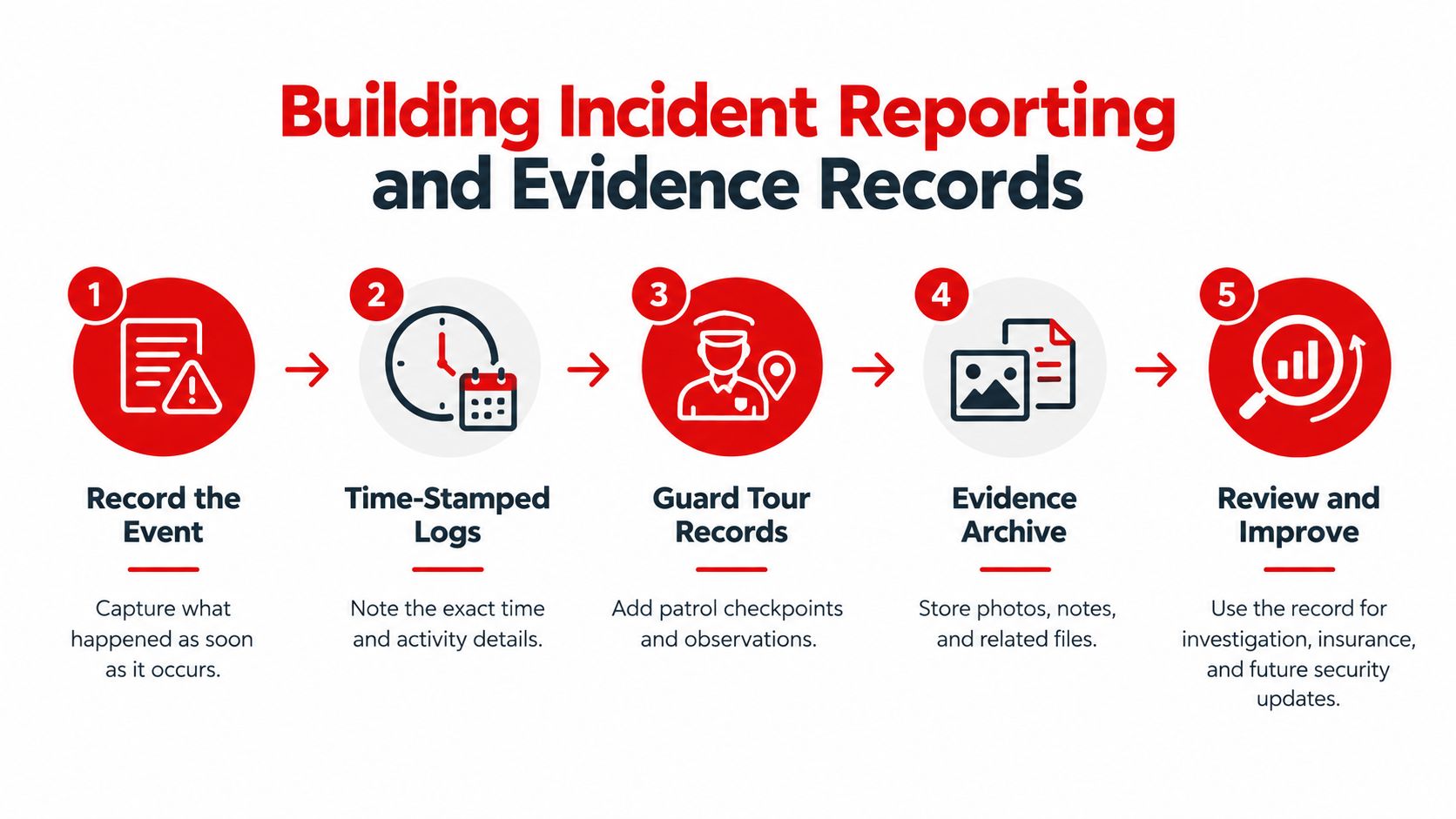
A good incident report answers the questions an investigator, insurer, or customer will ask a week later, when memories have faded. Who was on site? Which doors opened? When did the vehicle arrive and leave? A report built from memory at the end of a shift rarely survives those questions. One built from connected records usually does.
Start at the first observation. The officer records what they saw, the exact time, and the immediate action taken, whether that's securing a door, notifying a supervisor, or calling law enforcement. Photos of a damaged seal, a forced door, or a license plate should be captured then, not after the area has been cleaned up or the trailer moved.
Reconcile the Records Into One Timeline
The value appears when records meet. Badge events, visitor logs, guard tour checkpoints, shipping appointments, and inventory movements should reconcile into one sequence. A forced-door alarm, an after-hours badge event, and an unplanned trailer movement shouldn't sit in three systems as three minor alerts. Together, they're one prioritized investigation. Our explanation of security incident reporting and how reports are structured shows what a usable record contains beyond a short narrative.
Internal records matter partly because national data is incomplete. A 2024 Federal Maritime Commission report on cargo theft states the FBI's most recent Universal Crime Reporting data on cargo theft, covering 2019, recorded 721 documented incidents involving $139,677,562 in stolen property, and cautions the figure likely understates the true scale because reporting is voluntary. Your site records may be the most complete account that exists.
Close with review, not filing. Look at near misses the same way you look at losses. An unreturned badge, a failed scan, or a driver who arrived without an appointment is a free lesson. Retain the evidence, assign a corrective action, and check whether it happened. That habit is what turns reporting from paperwork into prevention.
Choosing a Security Partner for Your Warehouse
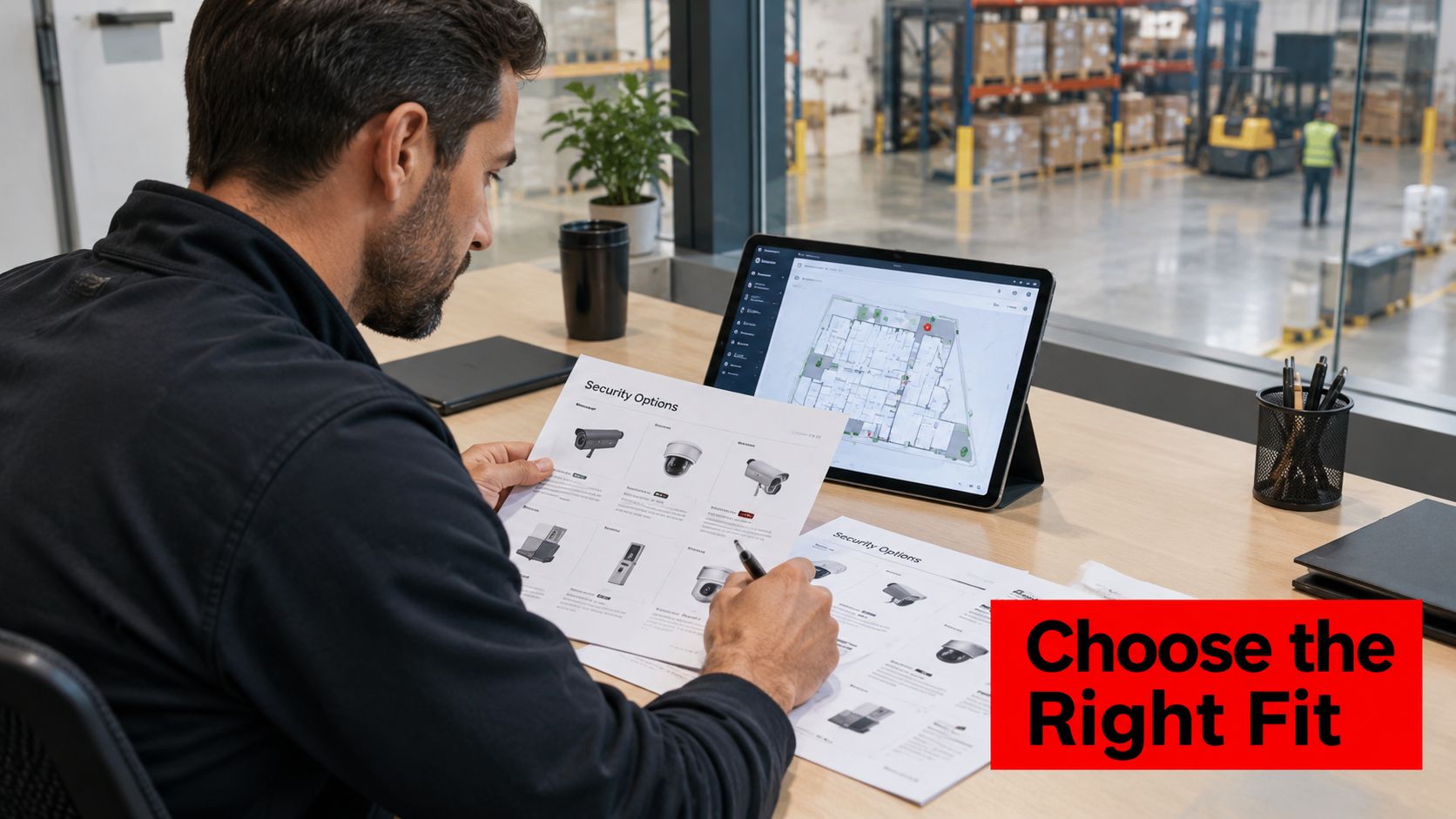
Facilities directors usually weigh four models, and the right answer depends on your hours, yard size, and release volume. Onsite guards give you continuous presence, immediate challenge of unauthorized people, and hands-on control of visitor and driver processing. They fit busy facilities where access decisions happen all day. Shared mobile patrol spreads one vehicle across several properties, which lowers cost but means the officer is elsewhere most of the night. Dedicated vehicle patrol keeps a vehicle on your site or small property group, so checks are more frequent and response is closer. Remote monitoring watches cameras and alarms from a center, which works well for verification, but someone still has to respond physically when an alert is real.
Most warehouses end up combining at least two. An onsite officer during operating hours, backed by patrols and monitoring overnight, is a common pattern for a reason. The transfer points matter too. Goods don't stop being your problem at the gate, and logistics teams who want broader context on the transport leg can explore nationwide vehicle transport topics to see how handoffs are discussed on the carrier side.
Criteria That Predict Whether Coverage Works
Ask providers specific questions and compare the answers side by side.
- Response expectations: Who verifies an alarm at 2 a.m., and what happens next, step by step?
- Documentation transparency: Do you receive time-stamped digital reports with photos, or a summary days later?
- Officer stability: Will the same trained officers work your site, or does staffing rotate constantly?
- Site specificity: Are post orders written from your layout and release process, or copied from a template?
- Degraded-mode readiness: What does the team do when access control, cameras, or power fail?
Overton Security is one option built around those criteria. The company operates a 24/7 national Security Operations Center with real-time monitoring, dispatch, and GPS tracking of officers in the field. Its GPS-enabled guard tour system uses NFC checkpoints and digital daily activity reports, so patrols and dock checks are documented as they happen. A low manager-to-client ratio means account managers carry fewer sites and visit them more often, and post orders are customized from each property's layout and risk profile. With 27 years in business and a retention focus that keeps experienced officers on the same accounts, the model suits warehouse operators in Los Angeles, San Jose, Sacramento, and other California metros who want familiar faces at their gates rather than constant turnover.
Whichever provider you choose, start with a site assessment, not a price quote. Walk the docks, gates, and high-value zones together, review your current badge and release procedures, and ask what they'd change first. A provider who asks hard questions about your paperwork before quoting patrol hours is telling you something good.
If your dock doors, visitor process, or release paperwork hasn't been reviewed against how your warehouse runs today, that's the place to start. Overton Security offers onsite officers, GPS-verified vehicle patrol, and 24/7 SOC monitoring built around custom post orders for warehouse and distribution sites. Request a site assessment and a review of your current patrol and access arrangements at Overton Security.
Work with Overton: See our warehouse and industrial security, or request a quote and we’ll walk your site with you.