
Is your office truly secure after the last person leaves for the day? It’s a question many property managers and business owners consider. In the past, a simple lock on the door might have been enough, but today’s risks are more complex. Real security in offices is a complete strategy, weaving together physical safeguards, digital defenses, and most importantly, your team. It’s a fundamental investment in business continuity and protecting what matters most: your people, your data, and your property.
The New Rules of Office Security
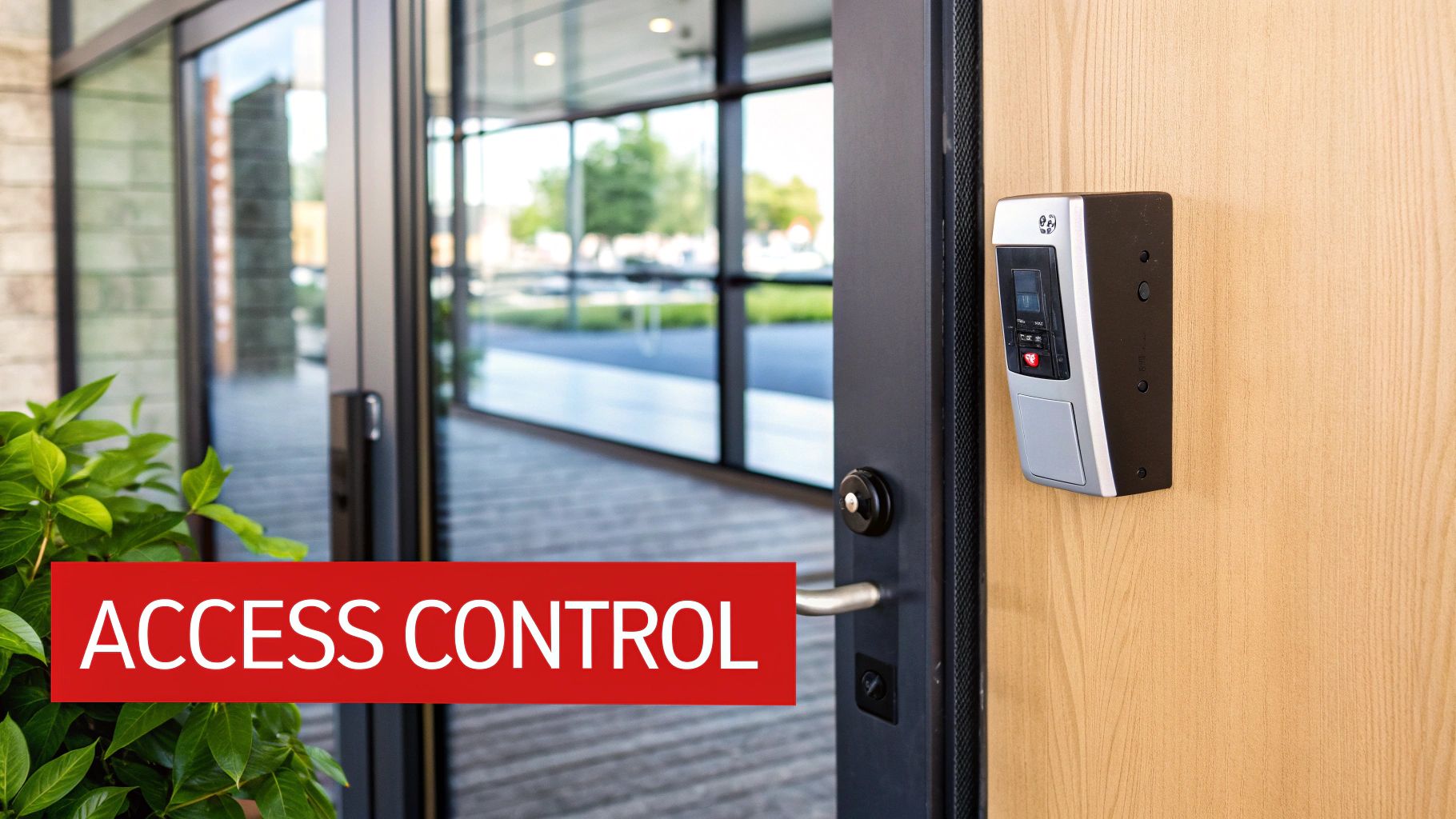
There’s a unique quiet that falls over an office after everyone’s gone home. In that quiet, it's natural to wonder: Is everything truly safe? The old-school security checklist no longer provides sufficient protection. Modern office security is an interconnected system where physical barriers, network firewalls, and human diligence work together to form a resilient shield.
This shift isn't just a trend; it's a major focus for businesses everywhere. Global spending on security is expected to reach an impressive $377 billion by 2025. This number is climbing fast, driven by increasingly complex threats. As companies adapt, getting this integrated approach right has become non-negotiable. You can read the full research about these security spending trends to see how organizations are shifting their resources.
Why a Holistic View Is Essential
Focusing on only one piece of the puzzle—like installing cameras but ignoring your network—leaves significant blind spots. A holistic strategy begins with understanding that your vulnerabilities are connected. For example, a stolen employee ID card is a physical breach, but it can quickly escalate into a catastrophic data breach—a digital disaster.
To build a genuinely secure office, you need to think in layers. This proactive, multi-faceted approach addresses risks from every possible angle. It’s about:
- Prevention: Putting measures in place that stop threats before they start, from visible security patrols to strong access control systems.
- Detection: Using technology and trained personnel to spot suspicious activity as it happens and respond immediately.
- Response: Having a clear, practiced plan to manage any incidents that do occur, minimizing damage and ensuring a smooth return to business.
A truly secure workplace is one where safety measures are so well-integrated that they empower employees and operations rather than hinder them. The goal is to build resilience, not just barriers.
This guide will show you how to construct this layered defense. We’ll explore why you should see security not as a cost, but as a crucial investment in your company’s continuity, your team’s well-being, and your brand's reputation. By embracing these principles, you can turn your office from a potential target into a fortified, productive space where your team can do their best work with complete peace of mind.
Building Your Physical Defense Layer
Think of your office’s physical security like the walls of a fortress. It's the most tangible layer, controlling who comes in and who goes out. Truly effective physical security isn't just one thing; it's a smart blend of the right technology, strategic oversight, and professional, well-trained personnel.
The goal is to create an environment that feels secure without being intimidating. That balancing act starts right at the front door.
Mastering Access and Entry Points
We've come a long way from simple metal keys, which are all too easy to lose, steal, or copy. Today, property and facility managers have far more sophisticated tools at their disposal. Modern access control systems provide a detailed digital trail of every entry and the power to instantly grant or revoke access to specific areas.
These systems are non-negotiable for creating secure zones within a building, such as a server room, executive wing, or file storage area. The key is finding the right solution that provides reliable security without creating a daily hassle for your team.
Here's a quick rundown of common technologies:
- Key Cards and Fobs: These are the workhorses of commercial real estate, offering a straightforward, cost-effective way to manage access and maintain a clear digital log.
- Biometric Systems: This is a major step up in security. By using unique traits like fingerprints or facial features, you eliminate the risk of a credential being borrowed or stolen.
- Mobile Credentials: The newest player in the game turns an employee's smartphone into their key. It's incredibly convenient and can be woven into other building management platforms.
Putting these technologies to work properly is a huge piece of the puzzle. For a more detailed look at how to design your system, you can check out our in-depth guide on access control best practices.
Comparing Physical Access Control Technologies
Choosing the right technology can feel overwhelming. This table breaks down the key differences between the most common methods to help you decide what's best for your office space.
| Technology | Security Level | Cost | User Convenience | Best For |
|---|---|---|---|---|
| Key Cards & Fobs | Medium | Low to Moderate | High | General office use, high-traffic areas, and budget-conscious facilities. |
| Biometric Systems | High | High | Medium | Securing high-value assets like data centers, executive offices, and labs. |
| Mobile Credentials | High | Moderate | Very High | Modern offices prioritizing convenience, tech integration, and a seamless user experience. |
| Traditional Keys | Low | Low | Medium | Small offices with minimal security needs or as a backup mechanical override. |
Ultimately, the best choice depends on your specific security goals, your budget, and the kind of experience you want to create for your employees and visitors.
The Role of Strategic Surveillance
While access control determines who gets in, strategic surveillance keeps an eye on what happens inside and around your property. A modern CCTV system is much more than just a recorder; it’s a powerful deterrent. And if an incident does occur, it provides valuable evidence.
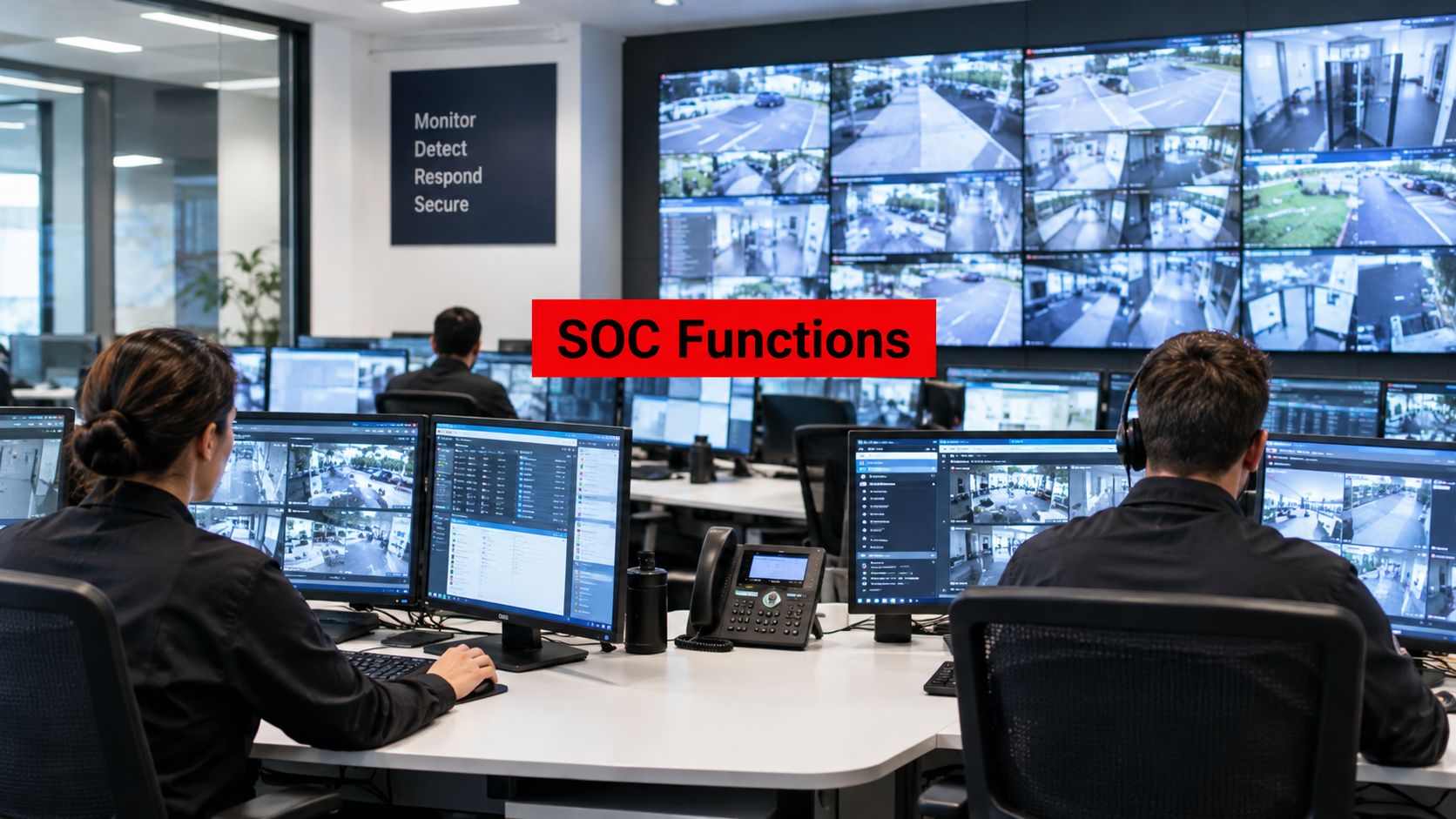
This image drives home the central role of surveillance in a modern security operation. Real-time monitoring allows a security team to spot and respond to anything out of the ordinary, instantly.
Effective camera placement is both a science and an art. You need to cover entry points, parking lots, and lobbies without making employees feel they are under constant watch. When you connect these cameras to a 24/7 Security Operations Center (SOC), you gain a constant, watchful eye over your entire property.
The Irreplaceable Human Element
As powerful as technology is, it can't replace the judgment, intuition, and sheer presence of a trained security professional. At Overton Security, we’ve built our philosophy on blending smart technology with human expertise. Our 26 years of experience have proven time and again that this combination is exceptionally effective.
Technology gives you the data, but a trained professional provides the decisive action. A camera can’t de-escalate a tense situation or provide the calm, reassuring presence of an officer on-site.
Our security officers are more than just a uniform—they’re brand ambassadors for your property. Whether they’re handling concierge duties in a Class A office tower or running mobile patrols, they are trained to be proactive and helpful. We back them with hands-on leadership and a low manager-to-client ratio, ensuring every property gets the focused attention it deserves. This fusion of human skill and real-time accountability gives facilities directors true peace of mind.
Defending Against Digital Intruders

In a modern office, the line between physical and digital security has effectively vanished. An unlocked laptop is just as risky as a propped-open door, and a weak password can be far more dangerous than a lost key.
Today, many of the biggest threats to your business don't walk through the front door—they slip in silently through your network. Understanding these digital threats is the first step toward building a solid defense.
Common Digital Threats to the Modern Office
Think of your office network as the central nervous system of your business. If it gets compromised, everything connected to it is at risk. Attackers have a few favorite methods for targeting businesses.
- Phishing and Social Engineering: This is about hacking human trust. An attacker sends a convincing but fake email, tricking an employee into clicking a malicious link or giving up their login details.
- Business Email Compromise (BEC): This is a more targeted version of phishing. Attackers impersonate executives to get someone to authorize fraudulent wire transfers, often after studying a company's communication style.
- Ransomware: This is the digital equivalent of a kidnapping. Malicious software encrypts all your critical files, making them useless until a ransom is paid. The business grinds to a halt.
These threats are a significant concern for business leaders. Ransomware remains a top cybersecurity challenge, with 45% of surveyed leaders in 2024 calling it their primary worry. The rise of Ransomware-as-a-Service (RaaS) platforms has made it easier than ever for criminals to launch sophisticated attacks.
Building Your Digital Fortress
Just like you layer physical security, your digital security needs multiple layers of protection. A single tool won't cut it. You need a coordinated strategy that protects your network from the outside while securing your data on the inside.
A strong network security plan is your foundation. This means having more than just a basic firewall; it means creating a secure perimeter that actively monitors all traffic. To build this defense, it's essential to explore comprehensive network security solutions.
Beyond the perimeter, the data itself must be protected.
Data Encryption: Think of encryption as an unbreakable lockbox for your information. Even if an intruder steals a file, the data inside is unreadable without the unique decryption key. This should be standard practice for all sensitive data.
Securing Your Wireless Environment
Your office Wi-Fi is another critical entry point that needs to be locked down. An unsecured network is an open invitation for intruders. Thankfully, implementing strict Wi-Fi policies is a simple but powerful step.
Here are three non-negotiable Wi-Fi security practices:
- Create a Separate Guest Network: Never let visitors connect to the same Wi-Fi network your employees use. A segregated guest network provides internet access without giving outsiders a direct line into your core business systems.
- Use Strong WPA3 Encryption: Ensure your network uses the latest and strongest encryption protocol available. WPA3 makes it significantly harder for unauthorized users to snoop on your wireless traffic.
- Implement a Strong Password Policy: Use complex, unique passwords for your Wi-Fi networks and change them regularly. Avoid simple, easily guessable passwords.
A security partner who understands this blend of physical and digital risk is invaluable. At Overton Security, we know that a guard patrol is even more effective when backed by a secure digital infrastructure.
Your Team Is Your Strongest Asset
You can have the most sophisticated alarm system, but it won't matter if an employee casually holds the door open for a stranger. While technology is critical, your first and most important line of defense will always be your team. They are the active, thinking layer of your security strategy, capable of spotting subtle threats a camera might miss.
When you invest in your team’s awareness, you're not just adding another security measure—you're turning every employee into a proactive defender. It all starts with creating clear, understandable policies that set a consistent security baseline for everyone.
Creating a Security-Aware Culture
Building a real security culture isn't about making people paranoid. It’s about empowerment. When your team understands the why behind the rules, they are far more likely to follow them consistently. This foundation is built on clear policies and continuous education.
A key part of a strong security posture is empowering your team. You can explore effective security awareness training to see how it can safeguard your assets and strengthen your entire organization. This kind of training is much more than a one-time session; it’s about ongoing reinforcement that keeps security top-of-mind.
Here are a few essential policies for a security-aware workplace:
- A Clear Visitor Management Protocol: Everyone needs to know the exact procedure for greeting, signing in, and escorting visitors. This simple process ensures no one is left to wander unescorted.
- A "Clean Desk" Policy: This is a surprisingly powerful habit. It means employees secure sensitive documents and lock their computers when they step away, reducing the risk of opportunistic data theft.
- An Incident Reporting Procedure: Your staff needs a simple, no-blame way to report anything that seems off—from a suspicious email to an unfamiliar face in a restricted area.
From Policy to Practice Through Training
A policy written in a handbook is useless if it isn't put into practice. This is where targeted, ongoing training makes all the difference. Your team needs to feel confident acting as your eyes and ears on the ground.
Empowered employees don't just follow rules—they become security advocates. Training gives them the tools to recognize a phishing attempt and the confidence to challenge an unbadged visitor.
For instance, regular drills on spotting phishing emails sharpen your team’s ability to recognize fraudulent messages. Role-playing exercises can also help them learn how to politely but firmly question someone without a visitor badge. This training is also vital for recognizing and de-escalating potential conflicts.
Ultimately, strong security in offices boils down to a shared sense of responsibility. When you treat your team as your most valuable security asset, you build a resilient defense that technology alone can never match.
Integrating Technology for Smarter Security
Modern security technology is about making your entire security operation smarter and more responsive. We've moved past isolated systems, like a camera that only records. Real security in today's offices comes from weaving these tools together into an intelligent, connected defense.
For example, an access control system can flag an unauthorized entry attempt after hours. An integrated system springs into action, instantly notifying your security team and pivoting the nearest camera to capture the incident. That’s the power of a unified security ecosystem.
The Rise of AI in Security Analytics
Artificial intelligence (AI) acts as a powerful force multiplier for your security team. It excels at processing massive amounts of data and spotting patterns a human could never catch. In an office setting, AI shines when applied to video surveillance.
AI-powered video analytics can turn a passive CCTV system into a proactive lookout. Rather than just recording footage, the system can be trained to recognize and flag unusual behavior as it happens. This might include:
- Loitering Detection: Identifying people lingering in sensitive areas or after business hours.
- Object Recognition: Alerting staff if a restricted door is propped open or an unfamiliar vehicle enters the parking lot.
- Behavioral Analysis: Flagging movements that could escalate into a more serious incident.
This gives security personnel a crucial head start, allowing them to intervene before a situation escalates. For a closer look at surveillance and access control options, it's worth exploring insights on Australia's top security and CCTV solutions.
On the digital front, AI is just as vital. The numbers show that businesses that find and contain a data breach within 200 days save an average of $1 million compared to those that take longer. Companies using AI to hunt down these threats do it 108 days faster on average.
Real-Time Accountability and Proof of Service
If you're a property manager or facilities director, accountability is everything. You need concrete proof that your security protocols are being followed consistently. Technology is what bridges the gap between a plan on paper and its flawless execution.
At Overton Security, this is where we blend human expertise with smart technology. We don't just tell you our officers are on patrol; we give you the data to prove it.
Technology-driven transparency isn't just a feature; it's our commitment to you. It turns security from an abstract promise into a documented, verifiable service that delivers genuine peace of mind.
We make this happen with systems that provide immediate, clear operational insights:
- GPS-Enabled Patrol Tracking: Our mobile patrol vehicles are equipped with GPS, allowing our 24/7 Security Operations Center (SOC) to see their locations in real-time for efficient routes and rapid dispatch.
- Digital Incident Reports: Officers file detailed reports from the field on mobile devices, complete with time-stamped entries, photos, and clear descriptions, giving you a full picture of activity on your property.
By bringing these tools together, our officers are amplified, not replaced. This powerful combination ensures every security action is performed, documented, and verified, giving you the solid proof of service you deserve.
Choosing the Right Security Partner
Selecting a security provider is one of the most critical decisions a property manager or business owner can make. This isn't just about hiring another vendor; it’s about finding a partner you can trust with the safety of your people and property. The right one becomes a true extension of your team, bringing proactive solutions and a sense of calm.
The security industry has many companies that prioritize volume over quality, often leading to inconsistent service. To find a true partner, you must look past the price tag and dig into their commitment to service, their experience, and their accountability.
Experience and Stability
The first thing to look for is a proven track record. A company that has been in the industry for decades, like Overton Security with its 26 years of experience, has seen it all. They understand the subtle differences between securing a Class A office tower in Los Angeles and a construction site in San Jose.
A security company that has stood the test of time has navigated industry changes and economic shifts. Their longevity is proof they know how to build lasting client relationships based on trust and consistent results.
When vetting potential partners, ask them about their history and their experience with properties just like yours. A provider who already understands your industry will be miles ahead in creating a security plan that addresses your specific risks.
A Focus on People and Support
A security company is only as good as its officers. Providers with a "burn and churn" approach, who treat officers as disposable, cannot deliver consistent quality. High turnover means you're constantly dealing with new faces on your property—people who don't know your specific rules or tenants.
To avoid this, ask some direct questions about how they treat their people:
- How do you support your officers? Look for companies that invest in their teams with competitive pay, benefits, and real opportunities for professional growth. A well-supported officer is a motivated and effective officer.
- What is your manager-to-client ratio? A low ratio is a positive sign. It indicates that their leadership is hands-on and you'll receive personalized attention from an account manager who isn't stretched too thin.
- What kind of training will officers get for my specific site? Generic training is not enough. The best partners create custom post orders and train every officer on your property’s unique procedures.
Accountability Through Technology
In this day and age, trust needs to be verified. A modern security partner should use technology to provide total transparency. You should never have to wonder if patrols were actually done or if an incident was properly logged.
Look for providers that use systems like GPS-enabled patrol tracking and real-time digital reporting. These tools offer hard proof of service, with time-stamped entries and photographic evidence confirming that every security task is being done as promised. This combination of human expertise and smart tech ensures you get the reliable, documented service you're paying for.
Frequently Asked Questions About Office Security
Diving into office security can feel overwhelming. Property managers, business owners, and facilities directors often have similar questions when building a security plan. Getting clear, practical answers is the best way to move forward with confidence.
Here are some of the most common questions we hear.
What Is the First Step I Should Take to Improve My Office Security?
Before you do anything else, conduct a comprehensive security risk assessment. Think of it as a complete physical for your building. It’s a deep dive into your premises, digital networks, and operational policies to find potential weak spots.
An assessment will highlight vulnerabilities you might have missed—like an unsecured side entrance, outdated software, or gaps in employee training. Bringing in a professional security partner to run the assessment provides a clear, prioritized roadmap so you can tackle your biggest risks first.
How Can I Balance Security with a Welcoming Office Environment?
This is a common challenge, but it's entirely solvable. The key is to blend security measures into the environment so they don't feel intrusive. Nobody wants to work in a fortress.
For instance, you can swap clunky gates for sleek, modern access control systems. You can also staff your front desk with concierge security officers who are trained in customer service as well as security protocols. The goal is "invisible security"—measures that are highly effective without making employees and guests feel constantly watched.
Is Investing in a Professional Security Service Cost-Effective for a Small Business?
Absolutely. In fact, for a small business, it's one of the smartest investments you can make. The cost of a single security breach, whether it's a physical break-in or a data leak, can be devastating. It’s not just about stolen assets; it’s the operational downtime and reputational damage that can harm a growing company.
A good security service can offer scalable solutions that fit your budget. Perhaps you don't need a dedicated on-site guard, but a mobile patrol that performs regular checks is a perfect fit. Proactive security is about preventing financial loss, making it a sound investment in your company's long-term health.
How Often Should We Review and Update Our Office Security Plan?
Your security plan should not be a "set it and forget it" document. Treat it as a living guide that adapts to new challenges. As a rule of thumb, we recommend a full review at least once a year. This keeps your plan aligned with current best practices and helps you stay ahead of new threats.
That's just the minimum. You should also update your plan immediately after any significant business change, such as an office move, a large change in employee headcount, or after any security incident.
Regular reviews are what keep your security proactive. It ensures your measures are always relevant and effective, which is the cornerstone of robust security in offices.
Ready to build a security plan that provides real peace of mind? The team at Overton Security has over 26 years of experience creating customized security solutions for businesses across California. Contact us today for a complimentary security consultation.