A property manager in San Francisco can review a city crime report showing a sharp decline, then deal with vehicle break-ins, trespassing, retail theft, or repeated after-hours access problems at the same property. That apparent contradiction is the central challenge. Citywide improvement doesn't eliminate site-specific exposure.
The right security program starts with the property, not a generic staffing package. A residential tower, construction site, retail center, parking garage, and medical office building face different access patterns, operating hours, and response requirements. The buyer's job is to match coverage, supervision, technology, and officer qualifications to those conditions.
Why San Francisco Requires a Specialized Security Approach
A mixed-use property in SoMa can have a bright lobby, controlled garage access, and professional tenants, yet still face unauthorized entry or damage in a secondary area. A residential property in Mission Bay may see a different pattern around parking and loading zones. Citywide crime figures cannot determine which entrance, garage, corridor, or perimeter needs attention at a specific site.
San Francisco reported a 25% overall decline in crime in 2025, including an 18% decrease in violent crime and a 27% decrease in property crime, according to the San Francisco Police Department's 2025 crime release. The release also reported 28 homicides, the lowest total since 1954. Those figures support a safer citywide trend, but they do not remove hyper-local exposure. A property manager still needs site observations, incident records, access reviews, and coverage matched to the hours when problems occur.

A city with a long private security tradition
San Francisco has relied on private protection for generations, not only in response to current urban pressures. A historical account of San Francisco's private police describes private security activity dating to the Gold Rush era. By 1916, the city had 985 government police officers and 1,199 private police, then called Special Police Officers. Private policing therefore exceeded public policing by about 214 officers.
The same historical source also places patrol specials in the city charter in 1857. In the 1970s, about 450 patrol specials supplemented more than 1,500 police officers. The operational lesson is clear: merchant- and neighborhood-sponsored protection has long been part of San Francisco's safety system.
Why generic coverage fails
Dense blocks, mixed-use buildings, transit activity, public-facing lobbies, underground garages, and construction zones create different post requirements within a short distance. A controlled entrance may need a stationary officer. Several buildings or a broad perimeter may require scheduled mobile patrols.
Practical rule: Design the post around the property's exposure, then assign the officer, patrol pattern, reporting process, and technology that support it.
Regulatory and staffing details also separate capable providers from generic vendors. California's BSIS training requirements affect how officers are prepared for assigned duties, while retention affects whether a property receives familiar, consistent coverage. Ask how a provider verifies training, supervises posts, and retains officers before comparing hourly rates.
The San Francisco-Oakland-Hayward metropolitan area employed 25,060 security guards, with an employment concentration of 10.34 per thousand jobs and a location quotient of 1.31, according to the Bureau of Labor Statistics security guard data. A mature local market gives property owners options, but it does not make every provider equally prepared for site-specific risk.
Types of Security Services Available in San Francisco
The useful question isn't, “Do we need guards?” It's, “Which activities must a trained security officer perform, at what times, and with what oversight?” A property may need one service or a combination of several.

Static security for controlled locations
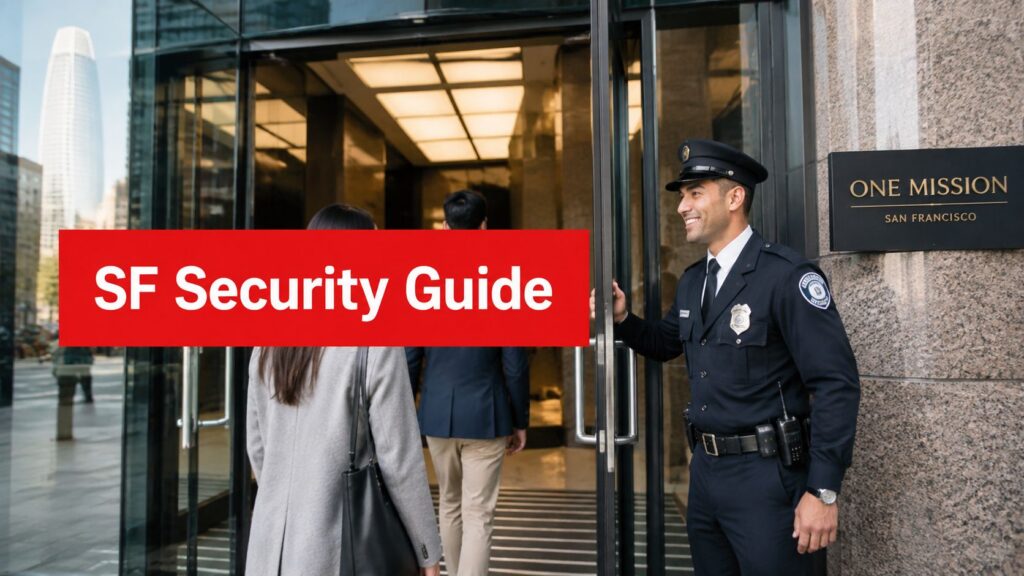
Unarmed onsite officers fit properties that need a visible, service-oriented presence. Typical duties include access control, visitor assistance, lobby observation, perimeter checks, incident documentation, and coordination with building staff. Residential towers, office buildings, medical offices, and retail properties often benefit from an officer who can deter problems while maintaining a professional tenant and customer experience.
Armed officers should be reserved for situations that justify the added responsibility, training requirements, and operational controls. The decision should follow a documented risk assessment, client policy, and legal review, not a vague assumption that more visible force automatically creates better protection.
Patrol services for wider coverage
Vehicle patrols work well for construction sites, parking facilities, industrial properties, business parks, and multi-site portfolios. Officers can inspect gates, doors, equipment areas, lighting, and signs of tampering while documenting what they find. Shared patrol programs can support several nearby locations, while dedicated patrols focus on one property or a defined group of properties.
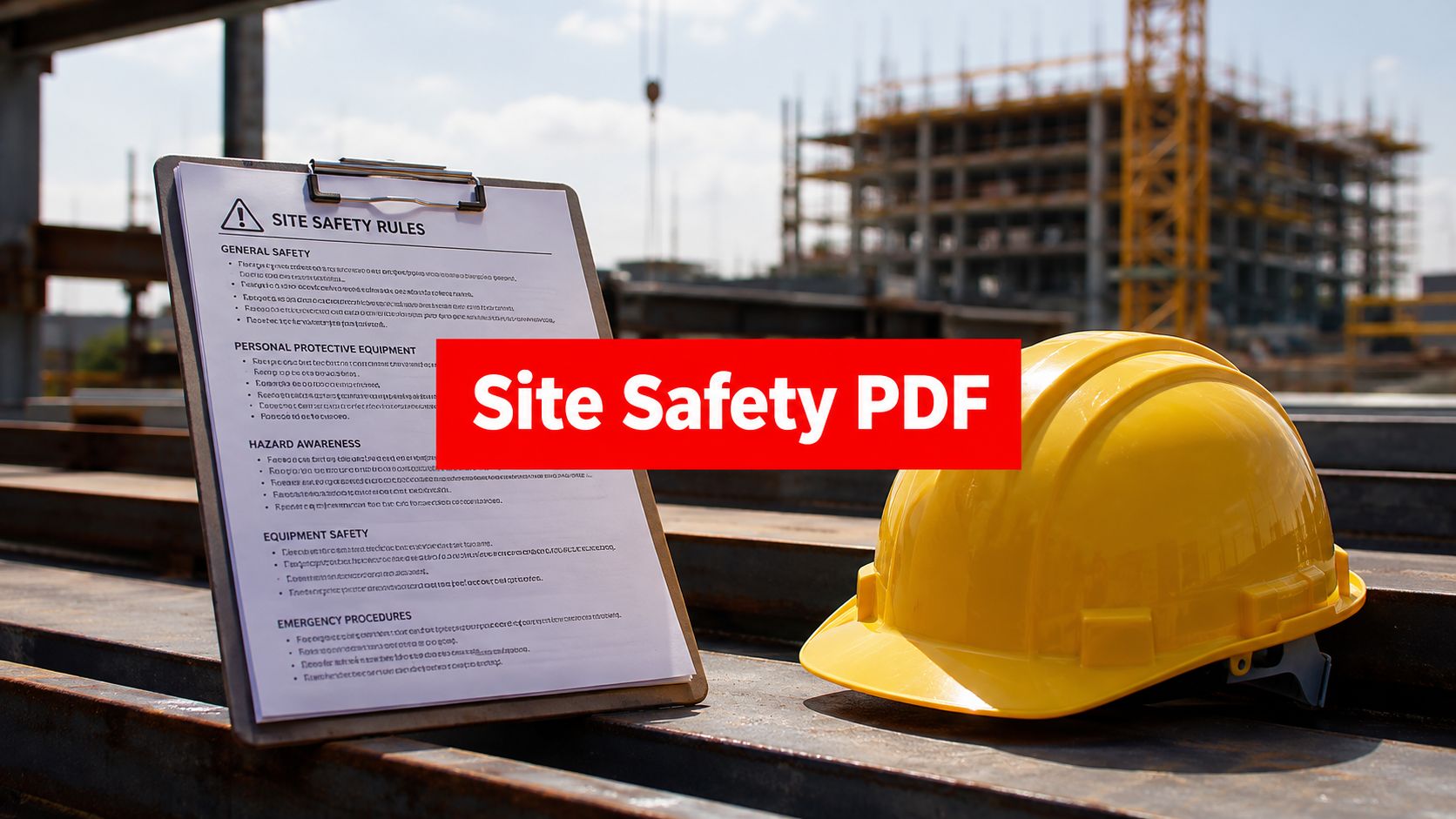
For a construction superintendent, patrol design should reflect material storage, equipment placement, perimeter gaps, and the hours when the site is inactive. Randomized checks can reduce predictability, but the patrol still needs defined checkpoints and verification.
Technology and specialized support
Remote monitoring extends coverage through cameras and a security operations center. It can help identify activity outside a guard's immediate post and support escalation when an onsite officer needs assistance. Technology should support human judgment, not replace clear procedures.
Fire watch becomes relevant when a fire protection system is offline or under maintenance. Officers must follow the required patrol and documentation process for the site rather than just remain at a desk.
Loss prevention focuses on retail theft, suspicious behavior, employee safety, and incident documentation. Concierge security combines hospitality with access control, making it a strong fit for Class A offices and high-end residential buildings.
For a broader breakdown of service models, review security guard service types. Ask each provider to map its recommendation to your actual property conditions, not just send a list of available officers.
California Licensing and Regulatory Requirements
A security vendor can sound polished and still leave a manager with unanswered compliance questions. In California, the Bureau of Security and Investigative Services, known as BSIS, sets registration and training requirements that affect how quickly a provider can staff a post.
What a registered guard must complete
California security guard registration requires a Department of Justice and FBI background check, 40 hours of mandatory training, and 8 hours of annual continuing education, according to the BSIS guard fact sheet. The requirement isn't a box to check once. It creates an ongoing compliance responsibility for both the officer and the employer.
The initial training schedule is front-loaded. A newly registered guard must complete 32 hours of security officer skills training within the first six months. Two mandatory courses must be completed within 30 days of registration or employment. That timetable matters if a property manager needs coverage quickly after an incident, a tenant change, a construction phase, or a staffing gap.
Plan for the onboarding lag
Don't assume a vendor can place a fully prepared officer on a post overnight. Before approving a start date, ask for:
- Registration verification: Confirm that assigned officers hold current California Security Guard Registration Cards.
- Training status: Request documentation showing completed training and any remaining required coursework.
- Post-order readiness: Make sure officers understand access rules, emergency contacts, patrol routes, and escalation procedures before they begin.
- Supervision coverage: Identify who reviews performance, handles absences, and responds when an incident exceeds the officer's authority.
The City and County of San Francisco's Security Guard classification provides a concrete local employment profile. It requires one year of verifiable experience, a current California Security Guard Registration Card issued by BSIS, a high school diploma or GED, and a valid state motor vehicle operator's license.
Reporting is part of the service
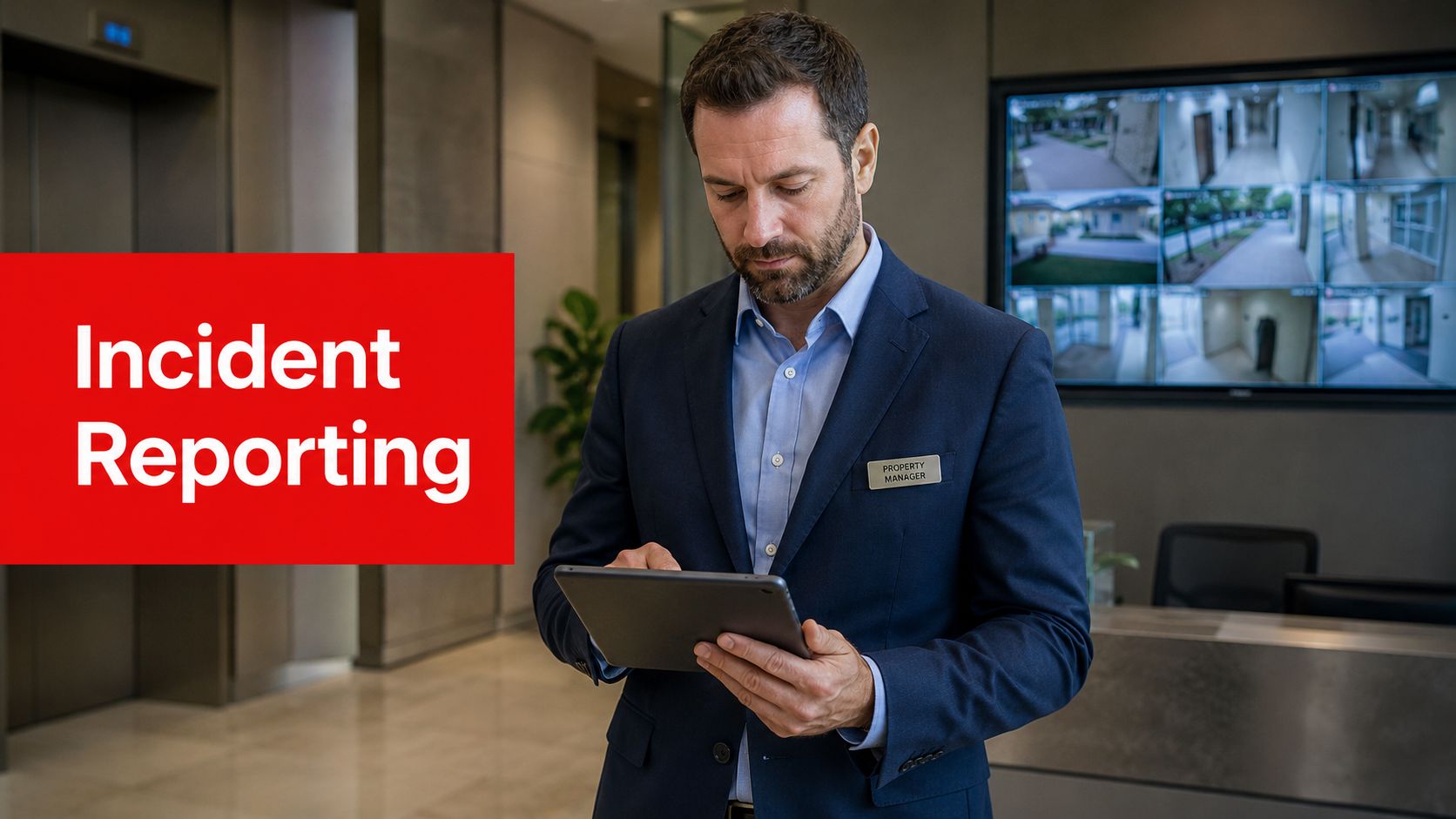
Incident reporting isn't merely an internal preference. California BSIS rules require a report within seven days when a guard is involved in a physical altercation with a member of the public while on duty. The same seven-day requirement applies to a discharge of a firearm while on duty, as described in the BSIS licensing requirements.
Your contract should therefore define who writes the report, who reviews it, how quickly the property receives it, and how supervisors follow up. Time-stamped documentation and a clear escalation chain protect the property, the officer, and the client relationship. For a practical overview of California licensing, see California security guard licensing.
Evaluating Risk Through Local Crime Data
A citywide crime decline can hide a serious exposure at one garage, loading area, or lobby. Use public data for context, then build the staffing plan around the property's layout, operating hours, assets, and nearby hot spots.
The SFPD reported declines during 2025, including a 24% decrease in robberies, a 45% drop in robberies with a firearm, a 44% decrease in motor vehicle thefts, and a 43% decrease in car break-ins, according to the department's official crime announcement. It also reported a 29% decrease in burglaries and a 22% decrease in larceny including retail theft.
Those citywide improvements do not justify removing every preventive control. A property with an exposed garage may still need vehicle patrols, lighting checks, access reviews, and incident verification. A retail center may require loss prevention and customer-facing officers even while reported larceny falls.
Hot spots require separate decisions
Early 2025 reporting showed property crime moving differently across neighborhoods. Property crime rose 29% in SoMa and 52% in Mission Bay, while SoMa became the city's highest property-crime-rate neighborhood at about 102 incidents per 1,000 residents, according to CBS News San Francisco's coverage.
That gap should shape the security budget. Document the exposure at the property, identify the specific control that addresses it, and staff for the site's actual risk rather than the citywide average.
Turn data into a deployment plan
Use the SFPD crime dashboard and reported-offense data to review patterns around the site. Then match those findings to operational controls:
- Vehicle-related offenses: Increase garage checks, inspect access points, and verify patrol completion.
- Trespassing and unauthorized entry: Strengthen lobby procedures, loading-area controls, and after-hours rounds.
- Retail theft: Position officers where customer service, observation, and rapid reporting work together.
- Construction losses: Combine perimeter inspections with equipment and material checks.
For residential properties, evaluate residential security in San Francisco against entrances, amenities, deliveries, parking, and resident experience. Require officers with the BSIS training and site knowledge needed for the assignment, then retain them through reliable supervision, fair scheduling, and clear post expectations. Review coverage regularly and change it when local conditions change, rather than preserving a static schedule out of habit.
How to Choose the Right Security Provider
Price matters, but the lowest hourly quote can become expensive when the provider repeatedly changes officers, misses patrols, or delivers weak reports. Evaluate the operating model behind the price.

Look beyond the staffing promise
Some vendors rely on a “burn and churn” approach. Officers leave, new personnel arrive without enough site familiarity, and managers spend their time retraining the post instead of managing the property. That instability weakens relationships with tenants, residents, employees, and local stakeholders.
Retention deserves direct attention because the industry has a measurable workforce challenge. A 2026 industry article reported 89% annual turnover in the U.S. security guard industry in 2024, compared with 66% across the broader private sector, as summarized in the UK government's security guarding recruitment and retention material. Ask vendors how they support officers, how they recognize strong performance, and how they respond when an assigned officer leaves.
Compare providers on operating discipline
A reliable evaluation should include more than a license and insurance certificate.
| Evaluation area | What to ask | What a strong answer includes |
|---|---|---|
| Officer continuity | Who covers the post, and how are replacements handled? | A documented relief plan and active supervision |
| Management access | Who answers after an incident or missed shift? | A named account manager and escalation contact |
| Patrol verification | How do you prove rounds occurred? | GPS-enabled tours, checkpoint records, and time-stamped reports |
| Site readiness | How are officers prepared for this property? | Customized post orders, orientation, and scenario guidance |
| Reporting quality | What does the client receive after an incident? | Clear facts, photos when appropriate, action records, and follow-up |
A low manager-to-client ratio also matters. An account manager responsible for too many properties can't provide meaningful site visits or quick problem-solving. Ask how often managers inspect the site, who reviews reports, and how the vendor identifies recurring issues.
Technology should create accountability
GPS-enabled patrols, digital Daily Activity Reports, checkpoint scans, photos, and 24/7 security operations center oversight give a manager evidence rather than assurances. Technology won't fix vague post orders or weak supervision, but it makes execution easier to review.
Ask for proof of work: A provider should show how you'll verify patrols, read reports, escalate incidents, and track corrective action.
The Overton Security Difference in Practice
A useful benchmark is a provider that treats security as an operating partnership rather than a labor transaction. Overton Security has more than 26 years of experience serving properties and organizations across California, including residential communities, retail centers, construction sites, offices, industrial properties, healthcare facilities, and government agencies.
Its stated model emphasizes quality over quantity, a low manager-to-client ratio, hands-on leadership, and officer support. That combination addresses the practical problems that property managers feel first: inconsistent staffing, slow communication, and limited visibility into what happened during a shift.
What accountability looks like onsite
Overton uses GPS-enabled patrol technology and a Guard Tour Management System. Officers scan NFC checkpoints, complete digital Daily Activity Reports, upload photos, and document incidents in real time. Clients receive detailed, time-stamped records, which makes it easier to verify patrol completion and review recurring conditions.
A 24/7 Security Operations Center supports field officers through monitoring, dispatching, wellness checks, GPS tracking, and incident escalation. That layer matters when an officer encounters a situation requiring guidance, when a patrol issue needs immediate attention, or when a manager needs a documented response outside normal business hours.
Why retention belongs in the contract discussion
Officer stability affects site knowledge. An experienced officer recognizes the delivery pattern, understands the building's access rules, knows which doors need attention, and can communicate with residents or employees without creating unnecessary friction.
Overton describes its approach as supporting and retaining professional officers through competitive pay, benefits, recognition programs, and career paths. For a buyer, the practical test is simple: ask how the company limits turnover, prepares replacements, and keeps supervisors involved when staffing changes occur.
Building a Resilient Security Strategy for Your Property
A resilient San Francisco program has four connected parts: local risk review, appropriate service selection, compliant staffing, and visible accountability.
Start with the property. Review reported offenses, identify vulnerable entrances and assets, and determine whether the site needs an onsite officer, vehicle patrol, concierge coverage, fire watch, remote monitoring, loss prevention, or a combination.
Then test the provider. Confirm BSIS registration and training practices, ask about officer retention, identify the manager responsible for the account, and require a clear incident escalation process. Make sure the vendor can demonstrate patrol completion and deliver reports that your team can use.
Don't treat security as a permanent schedule that never changes. Review incidents, patrol findings, tenant concerns, access failures, and local crime patterns. If the risk moves from a lobby to a garage or from a single property to several locations, adjust the deployment accordingly.
The goal isn't maximum staffing. It's the right coverage, performed consistently, documented clearly, and revised when conditions change.
Overton Security provides San Francisco security services including uniformed onsite officers, mobile patrols, concierge security, fire watch, construction protection, event staffing, and remote monitoring supported by a 24/7 SOC. Visit Overton Security to discuss a site-specific program built around compliance, officer stability, and verifiable accountability.