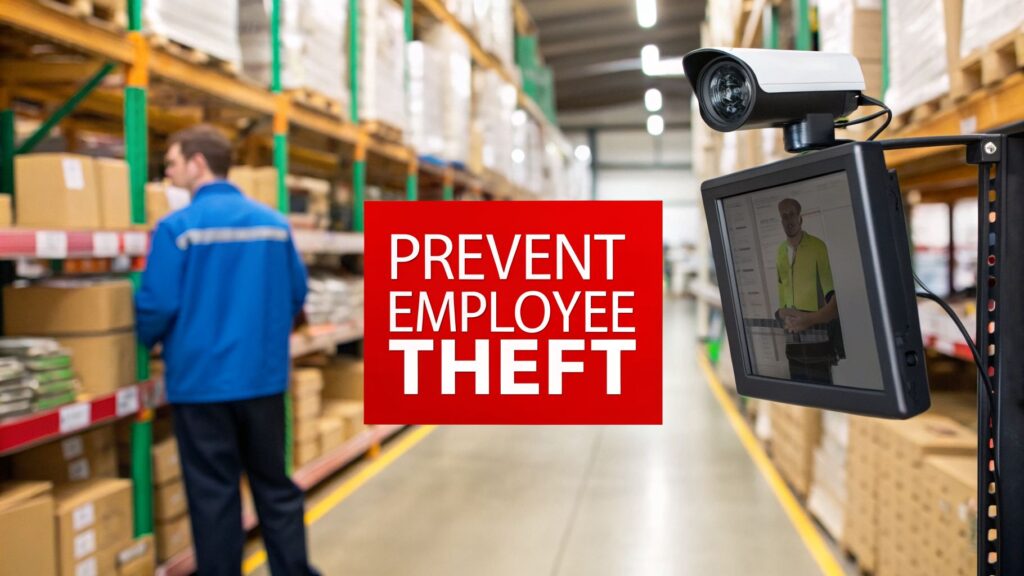
Internal theft is a quiet but persistent concern for many businesses. It rarely starts with a dramatic heist; more often, it’s the small, nagging discrepancies—the cash drawer that’s always a little short or the inventory counts that just don't add up. While this is a widespread issue, it’s one you can get under control with a calm, proactive approach.
The Hidden Cost of Internal Theft
When property managers and loss prevention directors think of employee theft, the first image that comes to mind is often someone pocketing cash from a register. While that certainly happens, the reality is much broader and often more subtle. Think of it as a silent leak draining your resources, affecting everything from profit margins to team morale.
Understanding the full scope of internal theft is the first step toward building an effective defense. It’s not just about cash. It covers a wide range of activities where company assets are misappropriated for personal gain.

The data makes it clear: this isn't a minor headache. It's a significant financial challenge that hits especially hard in retail, where cash and inventory are constantly moving.
The True Financial Impact
The numbers are genuinely startling. Employee theft is a major threat to businesses, with a staggering 75% of employees admitting to stealing from their employer at least once. Across the U.S., that adds up to an estimated $50 billion drained from businesses every single year.
The retail sector feels this pain acutely. In 2023, the industry lost $112.1 billion to inventory shrinkage, and 29% of that loss—around $32.5 billion—was attributed directly to employees. You can dig deeper into these workplace theft statistics and trends to see the full picture.
What Does Employee Theft Include?
A smart prevention plan must account for all the ways assets can be misappropriated. It’s important for managers overseeing diverse properties—from a San Jose construction site to a Los Angeles commercial building—to recognize the different forms theft can take.
This table breaks down the most common types of internal theft, offering a quick reference for what to look out for in your own environment.
Common Types of Employee Theft and Their Impact
| Type of Theft | Description | Common Examples |
|---|---|---|
| Inventory & Asset Theft | Taking physical goods, supplies, or equipment without permission. | Stealing products from a storeroom, tools from a job site, or office supplies for personal use. |
| Data & IP Theft | Stealing confidential information for personal gain or to sell. | Copying customer lists, sharing trade secrets, or taking proprietary software to a new job. |
| Time Theft | Falsifying work hours to get paid for time not worked. | "Buddy punching" for a late coworker, taking excessively long breaks, or adding unworked hours to a timesheet. |
| Financial Fraud | Manipulating financial transactions to steal money. | Creating fake expense reports, pocketing cash from a voided sale, or giving unauthorized "sweetheart" discounts. |
Recognizing these different categories is the first step. When you know what you’re looking for, you’re in a much better position to spot the warning signs and put effective safeguards in place.
Here at Overton Security, we’ve spent 26 years helping clients across California protect their assets. We know that stopping theft from an employee isn’t about reacting with alarm; it’s about having a calm, experienced, and proactive plan. This guide is designed to provide the practical insights you need to identify, investigate, and—most importantly—prevent these losses.
How to Recognize the Warning Signs of Theft
Spotting employee theft isn't usually a single "aha!" moment. It's more like noticing a handful of small things that don't quite add up. The signs are often subtle at first—small changes in behavior, unusual quirks in daily operations, or financial figures that feel off.
Most internal theft isn't caught because of one large, dramatic event. It’s uncovered by someone connecting the dots between a pattern of seemingly unrelated red flags. For property and loss prevention managers, learning to spot these indicators is a critical first step in protecting your assets. It’s about seeing the pattern before a small problem becomes a major loss.
Behavioral and Lifestyle Changes
While it's important not to jump to conclusions, some shifts in an employee's behavior can point to underlying issues. When you observe these human factors in combination with other operational red flags, it may be time to pay closer attention. The goal here is to observe, not to accuse.
For instance, is an employee suddenly protective or secretive about their work, especially concerning inventory or financial reports? This can be a sign they’re trying to hide something. It’s especially telling if they push back against oversight or refuse to let anyone else cover their duties, even when taking a vacation.
A classic warning sign is a sudden, significant change in an employee's lifestyle that doesn't seem to match their income. This could be a new luxury car, frequent expensive vacations, or other habits that seem well beyond their means. While not proof on its own, it can be a critical piece of the puzzle.
Operational and Procedural Clues
The clearest evidence of theft often emerges from your day-to-day operations. These are the measurable issues that directly impact your inventory, cash, and assets. For managers overseeing anything from a retail complex to a construction site, these are the numbers that require careful monitoring.
Look for patterns. For example, are you seeing repeat inventory shortages that are always blamed on "clerical errors" or supplier issues? That’s a major red flag. The same goes for an unusual number of customer refunds, voided sales, or "no sale" till opens that all trace back to one employee or shift.
Other clues hidden in your operations include:
- Damaged or "Spoiled" Goods: A sudden jump in items being written off as damaged, especially if they are high-value products.
- Unusual Access Times: Employees showing up in secure areas like stockrooms, server closets, or tool lockups long after closing or before opening.
- Missing Paperwork: Key documents like shipping manifests, invoices, or inventory logs frequently going "missing," which breaks the audit trail you need.
Data Discrepancies and Digital Trails
In a modern business, nearly everything leaves a digital footprint. From your access control system to your point-of-sale software, that data is one of your best tools for identifying irregularities that could signal employee theft. A system that provides a clean, unchangeable data trail is an invaluable asset.
Make it a habit to review your digital reports. Financial exception reports, for example, can automatically flag unusual activity, like one cashier applying an uncharacteristically high number of discounts. This data allows you to have a conversation based on facts, not just hunches.
These systems build accountability and make it much harder for theft to go unnoticed, whether it’s happening in a Los Angeles retail store or a San Jose warehouse.
Investigating Suspected Theft with Professionalism

When you begin to see warning signs of theft, your next steps are absolutely critical. It’s easy to rush to judgment or make accusations, but that can create a negative work environment, damage morale, and expose your company to legal risks. A poorly managed investigation can often cause more lasting harm than the theft itself.
The only way forward is with a calm, fact-based, and professional approach. Your goal isn't just to "catch" someone; it's to uncover the truth of what's happening. This process requires discretion, objectivity, and a clear plan from start to finish.
The First Step: Discreet Evidence Gathering
Before considering a conversation, your first move should be to quietly gather preliminary evidence. This is about confirming whether those red flags are just odd coincidences or part of a verifiable pattern. Your own operational data is your best starting point.
Start by digging into the documentation. This could mean cross-referencing shipping manifests with inventory logs, pulling financial exception reports from your point-of-sale system, or reviewing access control records for any unusual entries into secure areas.
An investigation should always start with objective data, not subjective feelings. Hard evidence from your systems—like access logs, financial records, or inventory reports—provides a neutral foundation to build your case, ensuring the process remains fair and unbiased.
Conducting Interviews with Care
Once you've documented a clear pattern of discrepancies, you may need to conduct interviews. This is the most sensitive part of any investigation into theft from an employee, and it must be handled with extreme care and professionalism. This is an inquiry, not an interrogation.
Frame the conversation as a routine check-in about an operational issue you’ve identified. For instance, rather than saying, "We think you're stealing from the register," you could try, "I'm reviewing our end-of-day reports and noticed a high number of voided transactions on your shifts. Can you help me understand what might be causing that?" This non-accusatory approach encourages cooperation and keeps the focus on business processes.
Follow these best practices during any investigative interview:
- Always have a witness present, typically another manager or an HR representative.
- Keep the tone calm and professional. Do not raise your voice or make threats.
- Stick to the facts. Present the data you've gathered and simply ask for an explanation.
- Document everything that is said during the meeting.
The Role of Professional Security in Investigations
This is where a professional security partner like Overton Security becomes an invaluable asset. Our uniformed security officers are trained to be expert observers and reporters, not accusers. They provide a layer of neutral, third-party documentation that strengthens your internal investigation without creating tension.
For example, if you suspect after-hours inventory theft at a San Diego warehouse, an Overton officer can be assigned to monitor and document all activity near the loading docks. Their detailed, time-stamped reports provide you with objective evidence that’s completely free from internal bias or emotion.
Our role is to provide you with the clear, factual information you need to make sound decisions. With over 26 years of experience, we understand the importance of maintaining professionalism and discretion. We empower property managers and business owners to handle suspected theft with confidence, backed by reliable data from a partner dedicated to protecting their interests.
Building Your Proactive Prevention Strategy

While knowing how to investigate theft is a crucial skill, the most effective way to handle theft from employee situations is to prevent them from happening in the first place. A proactive prevention strategy moves you out of a reactive, damage-control mode and into a position of strength. The goal is to create an environment where theft is simply too difficult, too risky, and too likely to be noticed.
This isn’t about finding a single solution. It’s about building layers of defense that work together. By weaving together clear policies, sound procedures, and visible security measures, you establish a culture of accountability that not only protects your assets but also reinforces trust with your honest employees. To do this right, you need to understand comprehensive fraud prevention strategies.
Pillar 1: Policy and Culture
The foundation of any solid prevention plan starts with your company culture and the official policies that support it. Opportunity is a significant driver of employee theft; clear rules and a positive work environment are your first and best defense.
Begin by implementing a formal, zero-tolerance anti-theft policy. This document should be crystal clear, defining what constitutes theft—from inventory and cash to company data and time—and spelling out the consequences. This leaves no gray area and ensures every employee understands expectations from day one.
A positive work culture is one of the most powerful, yet often overlooked, deterrents. When employees feel valued, respected, and fairly compensated, they are far less likely to rationalize theft. Investing in your team is an investment in your security.
This is a core part of Overton Security’s "People First" philosophy. By supporting our officers, we build the loyalty and professionalism that our clients depend on. A strong culture helps reduce the motivation for theft before it even becomes a thought.
Pillar 2: Procedural Controls
With strong policies in place, the next layer involves building procedural guardrails into your daily operations. These are the practical, repeatable actions that create accountability and make it incredibly difficult for assets to go missing without leaving a clear trail.
Key procedural controls include:
- Chain-of-Custody Protocols: For high-value assets, inventory, or cash, implement strict sign-off procedures. Every time an item changes hands, from the loading dock to the sales floor, there should be a documented handoff.
- Regular, Unannounced Audits: Don't wait for the year-end inventory count to discover discrepancies. Performing periodic spot-checks of cash drawers, inventory, or tool lockups keeps everyone accountable and helps you catch issues early.
- Segregation of Duties: Whenever possible, separate key financial responsibilities. For example, the employee who handles accounts receivable should not be the same person who reconciles the bank statements.
These procedures are designed to remove the temptation that comes with a lack of oversight. For a facilities director or property manager, they provide the hard, verifiable data needed to confirm operations are running as they should be.
Pillar 3: Physical and Digital Security
The final and most visible pillar is the integration of physical and digital security solutions. This is where a professional security partner provides a powerful, tangible deterrent that reinforces your internal policies and procedures.
The retail industry, for example, is hit particularly hard by internal theft, facing $18 billion in annual U.S. losses. Dishonest staff are responsible for thefts averaging a staggering $1,890 per incident, targeting not just merchandise but also cash and fraudulent refunds. In fact, 60% of all inventory shrinkage is attributed to employees, a figure that dwarfs external shoplifting. For businesses in major California metros like Los Angeles and San Francisco, these numbers make it clear that proactive security is not an option, but a necessity.
This is precisely where Overton’s services create a formidable barrier. Our solutions are designed to make theft difficult and risky:
- Visible Security Officers: The presence of a professional, uniformed security officer is a powerful psychological deterrent. For retail centers and commercial properties, our loss prevention services are specifically designed to mitigate these exact risks.
- Mobile Security Patrols: Our vehicle patrols secure perimeters, check access points, and provide a visible presence at unpredictable times, making after-hours theft at construction sites or warehouses a much riskier proposition.
- Guard Tour Management System (GTMS): This technology creates an undeniable digital record of patrol activity. Officers scan checkpoints and file real-time reports, giving you complete transparency and assurance that your property is being monitored effectively.
Together, these three pillars—Policy, Procedure, and Security—form a robust framework that transforms your approach to managing theft from employee. It shifts your focus from catching thieves to building an environment where theft simply isn’t a viable option.
Using Technology for Unquestionable Accountability

Strong policies are the foundation of any good security plan, but technology is what makes it ironclad. In our 26 years of service, we've seen firsthand how combining smart systems with professional oversight creates an environment of accountability. It’s not about replacing people—it’s about empowering them with the right tools to ensure every action is transparent and trustworthy.
This approach takes the guesswork out of security. Instead of relying on subjective reports, you get objective, data-driven proof. For property managers and business owners, this means you never have to wonder if your assets are truly being protected.
Verifiable Presence: Proving Patrols with GPS and NFC
How do you know for sure that a security patrol was completed properly? Our GPS-Enabled Guard Tour Management System (GTMS) answers that question with something we call verifiable presence. This isn't just a promise; it's documented proof.
Our officers carry devices that track their location via GPS, confirming they are on your property throughout their shift. To ensure every key area is checked, we place small NFC tags at critical checkpoints—like server rooms, loading docks, or the far corners of a construction site. Officers must physically scan each tag with their device, creating a digital breadcrumb trail that proves the patrol route was followed exactly as planned.
This system closes the door on opportunities for cutting corners and gives you complete peace of mind.
The Power of Real-Time Digital Reporting
The days of scribbled, hard-to-read reports filed hours after an event are long gone. Our technology allows officers to file detailed digital reports in real time, directly from the field. These aren't just blocks of text; they include time-stamped photos and videos that give you an immediate and objective look at what’s happening on your property.
If an unsecured door is found at a Los Angeles commercial building or suspicious activity is spotted near a San Jose warehouse, you receive an instant alert with visual proof. This allows you to react immediately, armed with clear, actionable information.
This commitment to real-time, transparent reporting is a cornerstone of the trust our clients place in us.
The SOC: Your Central Hub for Oversight
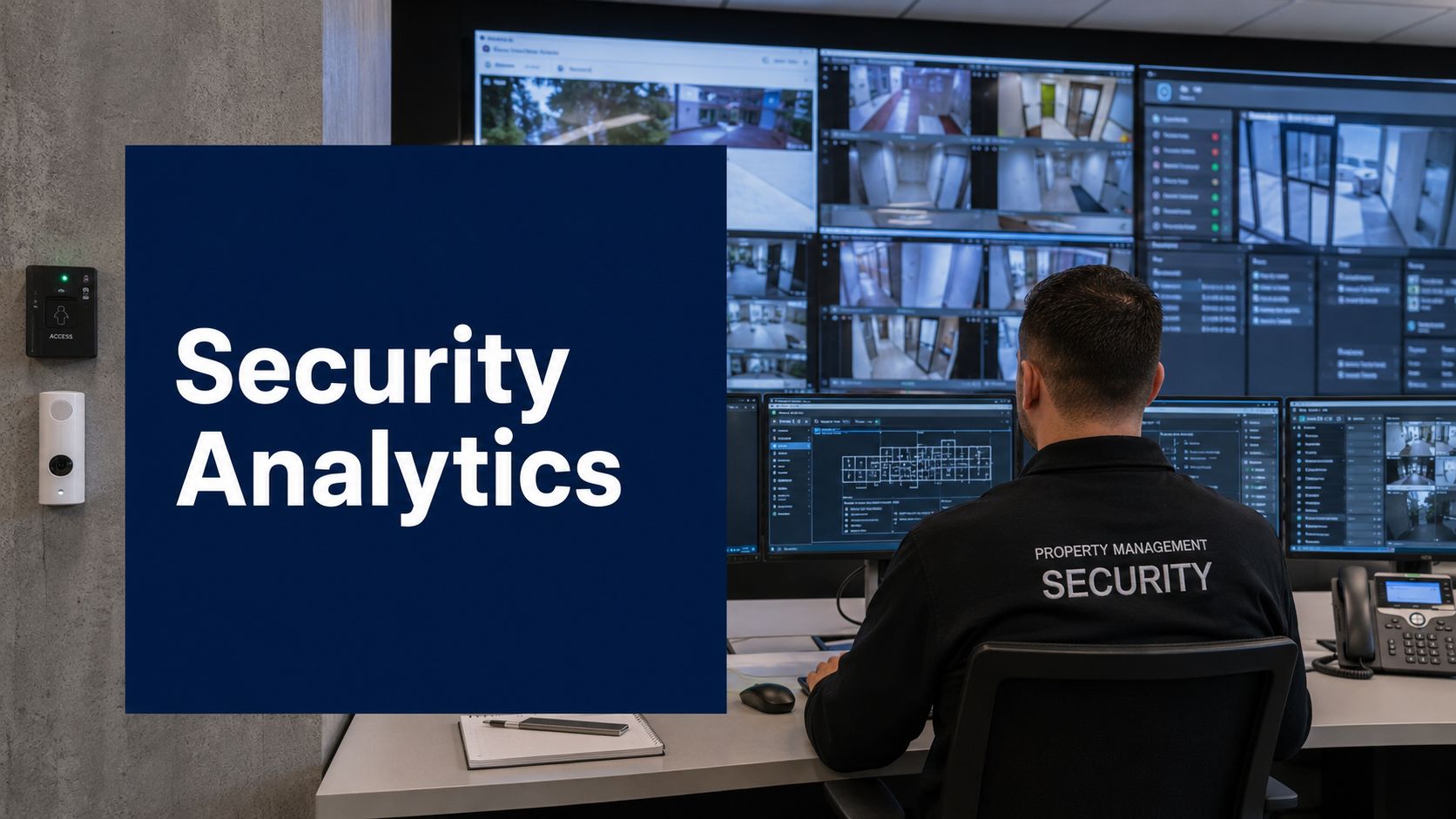
Accountability applies to our own team as well. Our 24/7 Security Operations Center (SOC) acts as a central hub, providing constant support and oversight for our officers in the field. The SOC monitors GPS locations, reviews reports as they come in, and ensures every officer is following the specific post orders for your site.
This central command ensures a consistent, high level of service and adds another layer of protection for your property. If you need this kind of comprehensive oversight, you can learn more about our remote security camera monitoring services and how they work hand-in-hand with our on-site teams.
Asset misappropriation by employees is the most common type of occupational fraud globally, making up 89% of all cases and costing companies an average of 5% of their yearly revenue. In major hubs like California, where cargo theft is a significant concern, employees enabling these breaches add another layer of risk for warehouses and logistics centers. Even with security spending, gaps can remain, making transparent systems like GTMS and professional patrols essential. You can explore more details on workplace theft statistics to see a full breakdown of these trends.
Choosing a Security Partner You Can Trust
Dealing with the consequences of employee theft—the financial losses, operational disruptions, and broken trust—is something no business owner or property manager wants to face. The solution isn’t just another policy manual; it's finding a security partner who understands these challenges and can provide genuine peace of mind.
This is where Overton Security steps in. With 26 years of proven experience, we do more than just fill a post; we deliver confidence and reliability. Our "People First" philosophy means we invest in our officers, building a professional, stable team you can count on. It’s a world away from the high-turnover model that is all too common in the security industry.
Hands-On Service and Transparent Technology
What makes our approach different is a real commitment to hands-on service. We maintain a low manager-to-client ratio, so your account never gets lost in the shuffle. Our leadership stays involved, ensuring your needs receive the expert attention they deserve. This hands-on structure is what lets us build security plans truly customized to your property’s unique vulnerabilities.
Our technology isn't just a feature; it's the foundation of our transparent service. From GPS-enabled patrols and real-time digital reports to 24/7 SOC oversight, we provide you with undeniable proof of service. We build trust on verifiable results, not just promises.
A solid prevention strategy often means layering different professional services. For example, finding a certified access control installer you can trust is a huge step in hardening your physical defenses. In the same way, choosing the right security firm is just as vital for protecting your assets from the inside out. As a premier California security guard company, we know how to integrate our professional officers with your existing systems to create a comprehensive shield against loss.
A Customized Plan for Your Property
We know a retail center in Los Angeles has completely different risks than a construction site in San Jose. That’s why we don’t offer one-size-fits-all security.
Our process always starts with a thorough security assessment of your site. This allows us to map out your unique operational risks and design a plan that addresses them directly. At the end of the day, our job is to protect your assets by making theft difficult, risky, and far more likely to be caught.
If you’re ready to stop reacting to theft and start proactively preventing it, we're here to help. Our team can show you how a dedicated security partner can safeguard your business, your property, and your peace of mind.
Frequently Asked Questions About Employee Theft
When you suspect an employee of theft, questions can arise quickly. What can I do? Who should I tell? It’s a challenging situation for any property manager or business owner. Let's walk through some of the most common concerns with clear, practical answers.
Can I Terminate an Employee for Suspected Theft?
Firing an employee based on a hunch is one of the riskiest moves a manager can make. An accusation of theft from an employee without solid proof can lead to a potential wrongful termination lawsuit.
Before taking any disciplinary action, you need to complete a thorough, fact-based investigation. It is always best to involve your HR department and legal counsel to ensure you’re following established procedures. The goal is to act on documented evidence, not suspicion.
What Is the First Step After Discovering Potential Theft?
The absolute first step is also the most difficult: stay calm and do not make any accusations. Jumping to conclusions or confronting someone immediately can compromise your investigation and cause unnecessary alarm.
Your priority is to quietly begin gathering information. This isn't the time for a company-wide announcement. Instead, begin reviewing the documentation connected to the discrepancy:
- Check financial exception reports from your point-of-sale system.
- Pull inventory logs and match them against receiving documents.
- Review access control records for any entries at unusual times or in restricted areas.
This initial data collection provides the objective foundation you need before deciding on your next steps.
How Can We Prove Employee Theft Without Direct Evidence?
Proving theft without a video of someone taking cash from a register is about building a case from patterns and connecting the dots. A single error or one-time discrepancy can often be explained as a mistake. A recurring pattern is much harder to dismiss.
Strong evidence often comes from correlating data from multiple systems. For example, if cash shortages consistently occur on shifts where one employee also has an unusually high number of "voided" transactions, you are building a powerful, data-driven case.
This is exactly where technology like our Guard Tour Management System (GTMS) becomes invaluable. It creates an undeniable, time-stamped record of a person's presence and actions, helping you connect activities that might otherwise seem unrelated. A well-documented pattern of behavior is often sufficient to justify disciplinary action, even without a confession.
Protecting your assets requires a proactive and experienced partner. Overton Security has spent over 26 years creating customized security solutions that deter theft and provide total accountability. Contact us for a security assessment and learn how our combination of professional officers and transparent technology can secure your property.