
Think of your building's fire protection system—the sprinklers, the alarms—as its silent, automated guardian. It’s always on, always alert. But what happens when that system has to be taken offline for maintenance, or it suddenly malfunctions? That’s when your property is at its most vulnerable, and it's precisely when a fire watch becomes an absolute necessity.
A fire watch isn't just a passive standby. It's an active surveillance measure where trained personnel patrol your property continuously, serving as the human eyes and ears that replace your automated systems. Their sole job is to spot signs of fire, ensure everyone can get out safely, and make sure you're legally covered until your primary protection is back up and running.
The Role of a Fire Watch in Property Safety
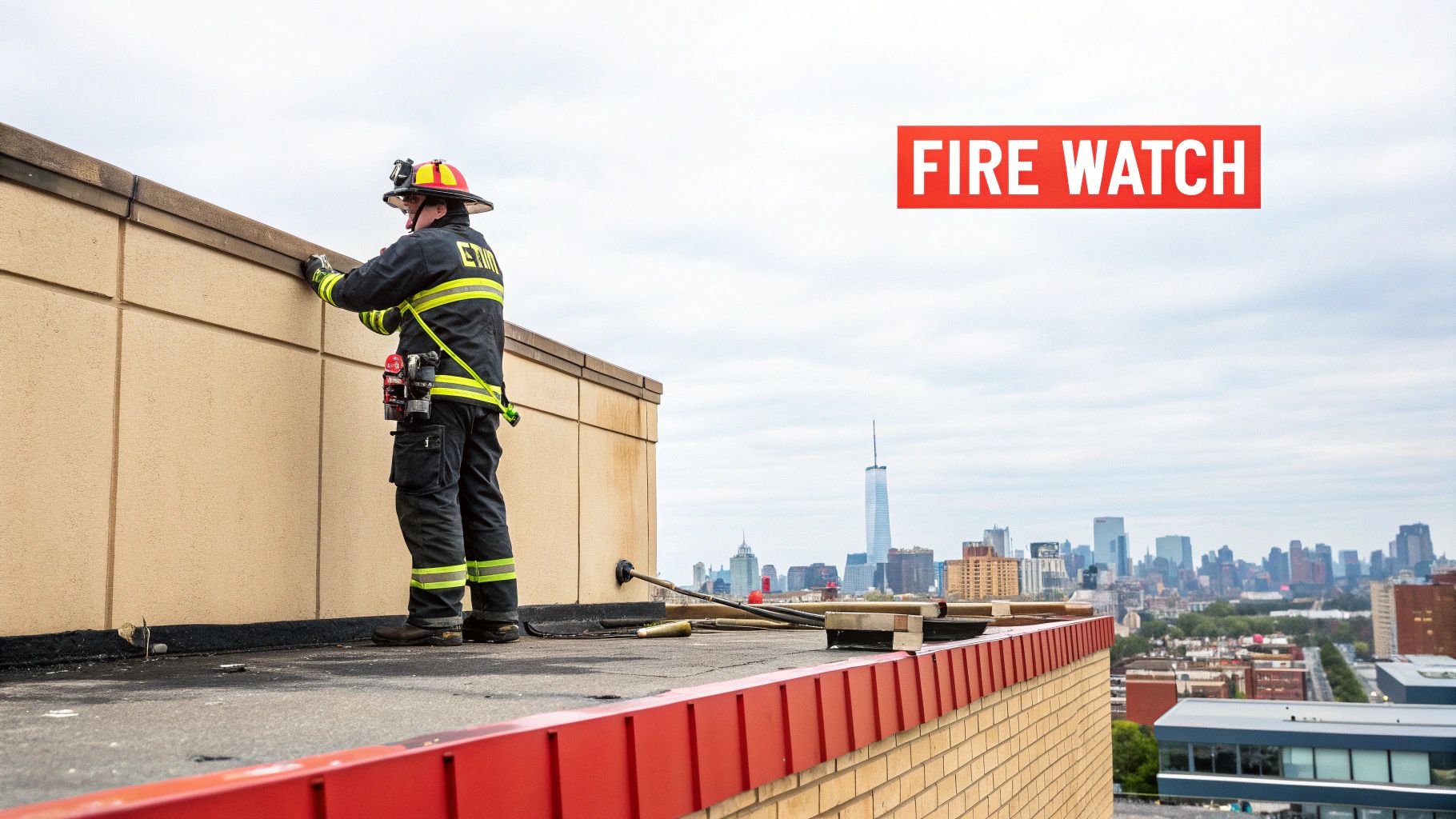
When a fire suppression system goes down, you're left with a critical safety gap. A professional fire watch service closes that gap immediately. These are not just bodies on-site; they are trained officers dedicated to patrolling every inch of your property, looking for the earliest signs of fire or any potential hazards that could lead to one.
This is a critical layer of protection for property managers, tenants, and irreplaceable assets. It’s the human element that ensures nothing is left to chance when technology fails.
More Than Just a Requirement
While a fire watch is often mandated by the local fire marshal, its true value goes far beyond just ticking a compliance box. Think of it as an active risk management strategy. By having a dedicated professional on your property, you're taking a clear, decisive step to:
- Protect Occupants: The top priority is always people. A fire watch ensures a rapid response and an orderly evacuation if an emergency breaks out, safeguarding the well-being of everyone in the building.
- Prevent Property Loss: Catching smoke or flames early can be the difference between a small, contained incident and a catastrophic fire that results in total loss.
- Maintain Operational Continuity: Nothing shuts down a business faster than a safety violation. A fire watch helps you avoid costly shutdowns ordered by fire officials, allowing your operations to continue safely and without interruption.
To give you a clearer picture, here’s a quick breakdown of what a fire watch entails.
Fire Watch at a Glance
| Component | Description |
|---|---|
| Purpose | To provide temporary, active fire monitoring when a building's primary fire safety systems are offline. |
| Personnel | Trained officers responsible for continuous patrols and hazard detection. |
| Core Duty | To identify signs of fire, notify emergency services, and assist with building evacuation. |
| Key Trigger | Typically required when a fire system is down for more than 4 hours in a 24-hour period. |
| Authority | Mandated by fire marshals and outlined in national codes like NFPA 101. |
Ultimately, a fire watch is your first line of defense during a system outage, providing peace of mind and tangible protection.
Understanding the Legal Mandate
This isn't just a good idea—it's the law. Regulations from the National Fire Protection Association (NFPA) spell out the requirements for a fire watch in codes like NFPA 101 (Life Safety Code) and NFPA 25 (Standard for the Inspection, Testing, and Maintenance of Water-Based Fire Protection Systems).
One of the most common triggers is when a fire protection system is out of commission for more than four hours within any 24-hour period. For property managers and construction superintendents, knowing this rule is crucial for avoiding hefty fines and, more importantly, for ensuring the site remains safe. You can learn more about specific mandates for fire watch procedures on government safety websites.
The Core Duties of a Fire Watch Officer
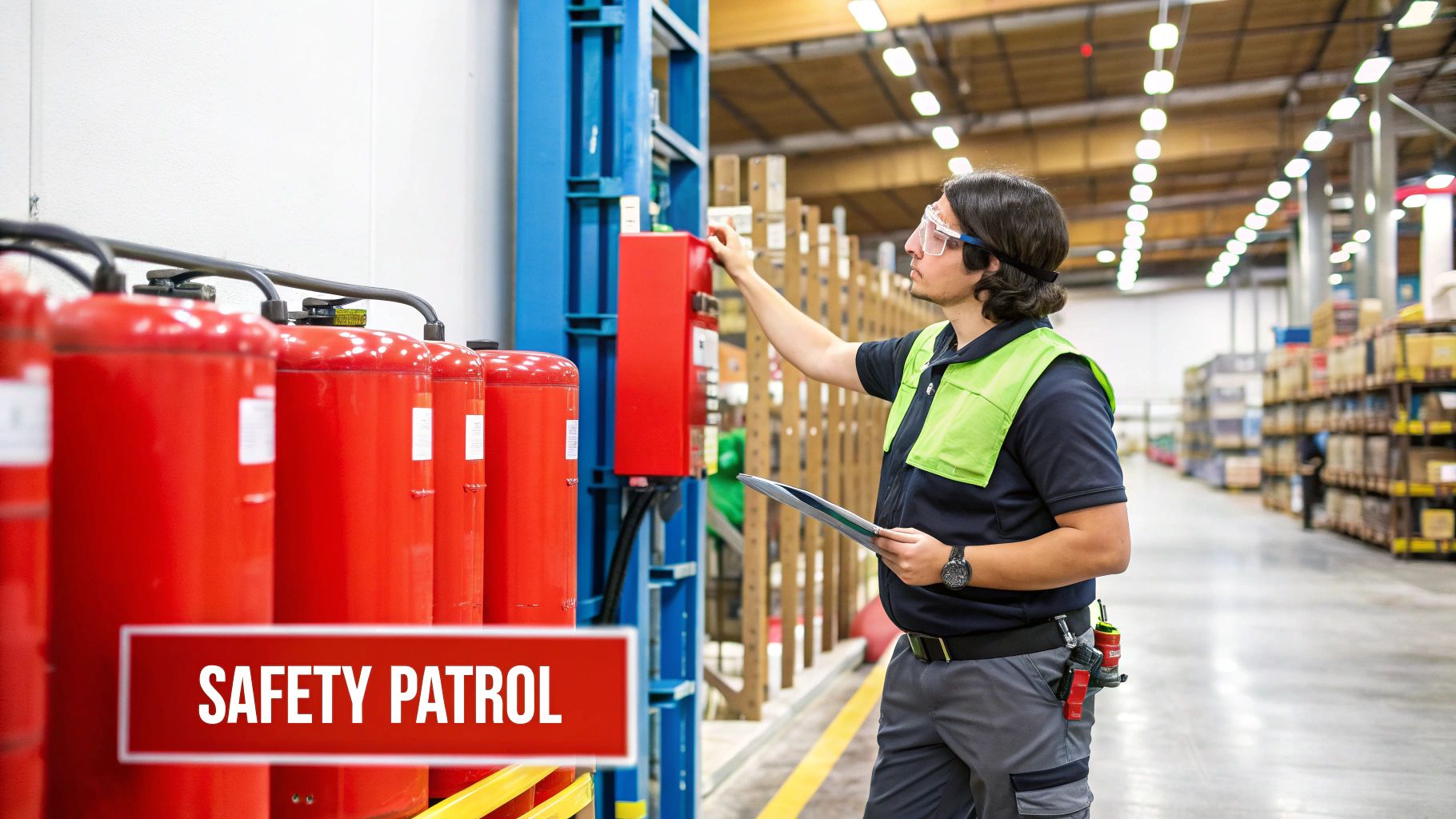
A professional fire watch officer does a lot more than just walk around a building. Their role is active, methodical, and completely focused on fire safety and prevention. It’s a job that demands disciplined patrol, careful documentation, and a constant state of emergency readiness.
For any property manager or construction superintendent, understanding these duties is the key to seeing the real value a trained officer brings to your site. It transforms a simple requirement into genuine peace of mind.
The most fundamental duty is conducting regular, uninterrupted patrols. These aren’t just aimless strolls; they are systematic tours covering the entire property, including every high-risk area you've designated. Patrols are usually required at set intervals, often every 30 to 60 minutes, to make sure no corner of the facility goes unmonitored for long.
This consistent presence is what makes a fire watch truly work. It's the human element stepping in to replace the automated sensors of a broken alarm system, providing a constant, thinking set of eyes on your property.
Hazard Identification and Mitigation
Beyond simply looking for smoke or flames, a skilled fire watch officer is trained to spot potential fire hazards before they have a chance to ignite. Think of them as your on-the-ground risk assessor, actively searching for dangerous conditions that are easy to miss during a busy day.
This proactive mindset means they're looking for issues like:
- Blocked Egress Routes: Making sure all fire exits, hallways, and stairwells are clear and passable.
- Improperly Stored Materials: Spotting flammable liquids or combustible trash stored too close to an ignition source.
- Electrical Hazards: Noticing overloaded circuits, frayed wires, or dangerous use of extension cords.
- Malfunctioning Equipment: Recognizing the signs of overheating machinery or other equipment-related risks.
When a hazard is found, the officer’s first job is to take immediate action if possible—like moving a cart that's blocking an exit. For bigger problems, they document and report the issue to property management so it can be fixed right away.
Meticulous Record-Keeping and Reporting
A critical—and legally essential—duty is maintaining a detailed fire watch log. This log is your official proof of compliance for the fire marshal and your insurance company. Just saying patrols were done isn't enough; you need a verifiable, time-stamped record.
A professional fire watch service provides more than just a presence; they provide proof. Detailed, time-stamped digital logs are non-negotiable, as they serve as your official record of due diligence and compliance, shielding you from liability.
At Overton Security, our officers use a GPS-enabled system to log every single patrol in real-time. These digital reports include timestamps, the specific locations checked, and notes on any observations or actions taken. This level of transparency gives our clients complete confidence that their property is being diligently monitored.
The consistent patrolling and reporting in a fire watch share a lot in common with our standard security patrol services, which also depend on technology to ensure accountability.
Understanding When a Fire Watch Is Legally Required
If you're a property manager or construction superintendent, knowing exactly when a fire watch becomes a legal necessity isn't just good practice—it's non-negotiable. Getting this wrong can lead to costly operational shutdowns ordered by the fire marshal, steep fines, or worst of all, a preventable tragedy. Understanding the specific triggers is the key to staying compliant and keeping everyone on your property safe.
The most common trigger is a problem with your building's fire protection system, whether you planned for it or not. This could be anything from scheduled sprinkler system repairs and fire alarm panel replacements to an unexpected equipment failure that leaves your building exposed. Other events, like a power outage that knocks out your alarm systems or a water main break that starves your sprinklers, will almost always demand an immediate fire watch.
The Critical Timeframe for Compliance
There's a key rule of thumb that comes straight from the National Fire Protection Association (NFPA) codes, which are widely adopted across the country. It establishes a very clear timeline for when you have to act.
According to the NFPA, any time a fire system is impaired for more than 4 hours in a 24-hour period, you are required to have a fire watch in place.
This isn't a suggestion; it's a mandate. It's designed to make sure a building is never left vulnerable for too long. The stakes are incredibly high. Data shows that buildings with a down fire protection system and no fire watch see their fire risk jump by as much as 40-60%. You can learn more about how these requirements protect properties and people at GuardianSecurity.com.
Hot Work and High-Risk Activities
Another major trigger, especially on active construction sites, is hot work. This covers any job that creates sparks, open flames, or intense heat—think welding, grinding, or torch-cutting. Because of the obvious ignition risk, a dedicated fire watch is almost always required. This patrol must last for the entire duration of the work and for a set period afterward (usually 30-60 minutes) to stand guard against smoldering embers that could flare up later.
This decision tree gives you a simple look at the process.
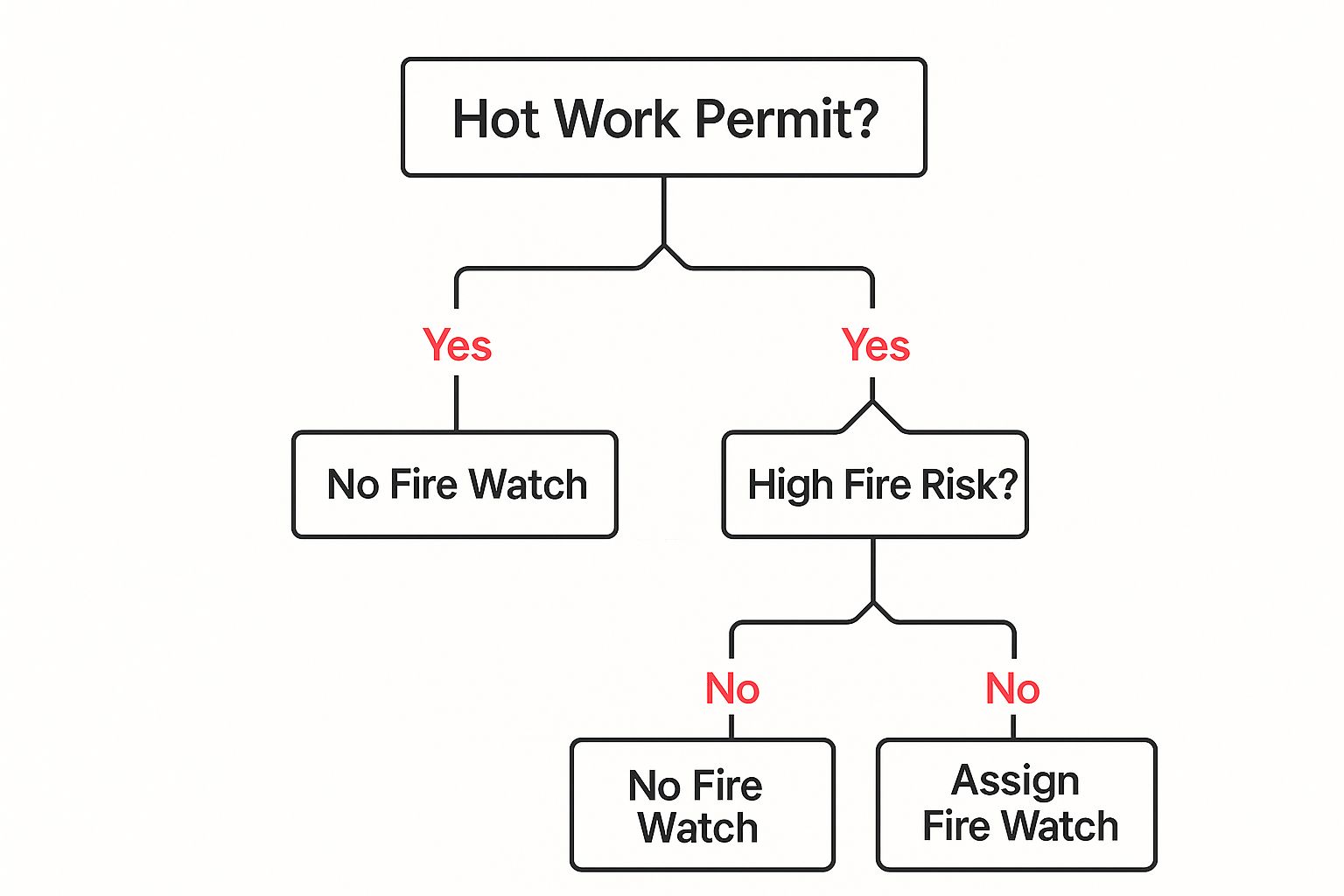
As you can see, it all starts with getting a hot work permit. That permit kicks off a risk assessment, which is what ultimately determines if a fire watch is needed to keep the site safe.
The Value of Hiring a Professional Fire Watch Service
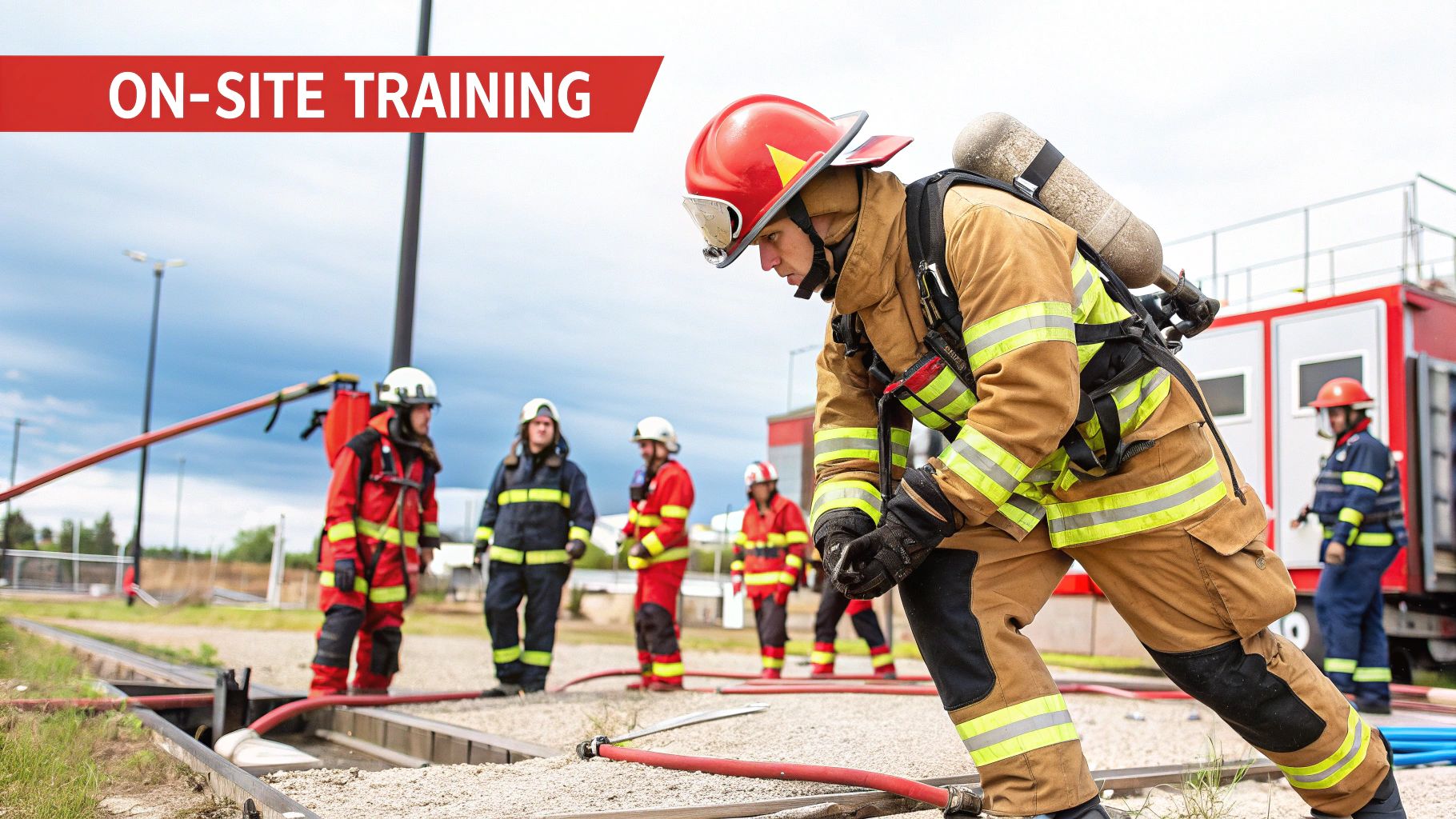
Sure, meeting regulatory requirements is often the immediate reason you're looking for a fire watch. But the real value of bringing in a professional service goes far beyond just ticking a box for the fire marshal. Partnering with a dedicated provider like Overton Security is a direct investment in managing risk, keeping your business running, and securing genuine peace of mind. It’s a strategic move that protects your property, your people, and your bottom line.
Think about the alternative for a moment. It can be tempting to assign this critical job to an untrained maintenance worker or an employee who's already juggling other responsibilities. It might feel like you're saving money, but you're actually taking on enormous liability and opening the door to devastating mistakes. An employee with divided attention can easily miss the subtle signs of a developing fire hazard.
In contrast, a professional fire watch officer has one job and one job only: to ensure the safety of your property. Their focus isn't split, and their attention is never compromised.
The Professional Difference in an Emergency
The most important distinction becomes crystal clear when an actual emergency breaks out. An untrained staff member is likely to panic, forget evacuation routes, or struggle to communicate clearly with first responders. A trained security officer, however, is prepared to act calmly and decisively, guiding people to safety and giving the fire department the crucial information they need the moment they arrive.
That level of readiness can be the difference between a minor, controlled incident and an absolute catastrophe. With over 26 years of experience, we at Overton Security know an officer’s true worth is proven by how they respond under pressure.
The ROI for a professional fire watch isn't measured in prevented fines alone. It's about reducing your liability, ensuring your business doesn't shut down, and letting your team focus on their jobs, all with the confidence that your property is in capable hands.
Protecting Your Operations and Bottom Line
A stop-work order from a fire marshal can grind your entire operation to a halt. This leads to expensive delays, blown project budgets, and a logistical nightmare. Hiring a professional service that provides transparent, real-time reporting shows you're taking safety seriously, which keeps your site compliant and operational.
Of course, choosing the right partner is key to getting these benefits. To make sure you're hiring a truly qualified provider, you need a solid process for vetting your options. Our guide on how to hire security guards gives you valuable insights that apply directly to selecting a fire watch service, helping you ask the right questions about their training, reporting systems, and experience.
Ultimately, a professional service delivers a return that far outweighs the initial cost.
How to Select the Right Fire Watch Provider
Choosing a fire watch provider isn’t just another vendor to check off your list. It's about bringing in a trusted partner to protect your property and the people inside it when your fire systems are down. The truth is, not all security companies are truly equipped to handle this critical responsibility.
To make the right choice, you have to cut through the sales pitches and ask the tough questions. It’s the only way to separate the genuinely professional services from the ones that just don't measure up. A reliable fire watch partner should be able to prove their qualifications without a moment's hesitation. Sure, you'll check for licensing and insurance—that's the bare minimum. But you need to dig much deeper to ensure they’re truly prepared for this specific, high-stakes duty.
Key Questions to Ask Potential Providers
Your goal here is simple: confirm their expertise, see how they ensure accountability, and understand their real-world experience. A quality provider won't just tolerate these questions; they'll welcome them and have clear, transparent answers ready to go.
Here are the essential points you need to cover:
- Do your officers get specific fire watch training? General security training simply isn’t enough. Fire watch officers need specialized knowledge on identifying fire hazards, properly using extinguishers, managing emergency evacuations, and—critically—maintaining a legally compliant log.
- What technology do you use for reporting and accountability? Your provider absolutely must offer transparent, real-time digital logs. These reports are your legal proof that you’ve met your obligations. At Overton Security, we use a GPS-enabled system that documents every single patrol with a verifiable timestamp, leaving no room for doubt and ensuring complete accountability.
- Can you share your experience with properties like mine? A company that mostly guards retail stores might not grasp the unique risks of a high-rise apartment building or a bustling construction site. Look for a team with a proven track record in your specific environment.
- How do you ensure your officers are reliable? With over 26 years in business, we’ve learned that taking care of our officers is the secret to consistent, high-quality service. We invest in our team to avoid the “burn and churn” so common in the industry. Ask about a company's officer support systems and retention; a high turnover rate is almost always a major red flag.
Selecting a fire watch provider is one of the most important decisions a property manager can make during a system impairment. The right partner provides more than coverage; they deliver documented proof of diligence, expert oversight, and genuine peace of mind.
Taking the time to choose carefully is crucial. For more general advice that’s just as relevant here, take a look at our guide on what to look for when hiring a security agency.
Common Questions About Fire Watch Services
When a fire marshal tells you your fire systems are down and you need a fire watch, a dozen questions probably pop into your head. It's a situation most property managers and business owners hope to never face, but it happens. We've gathered the most common questions we hear to give you clear, practical answers so you can act with confidence.
Getting the right information is the first step. Understanding the specifics cuts through the confusion and shows just how critical a professional approach is to keeping people and property safe.
Can My Own Staff Perform a Fire Watch?
This is easily the most common question we get, and the answer is a firm "no." While some local rules might seem a bit vague, putting one of your own employees on this duty is a massive liability. A fire watch officer's one and only job is the watch itself.
Asking an employee to juggle their regular tasks with this critical safety duty is a recipe for disaster. It creates dangerous distractions and exposes your entire organization to immense risk.
Professional fire watch officers are trained for this specific role. They know:
- The systematic patrol routes required to be compliant.
- How to spot subtle fire hazards that an untrained person would easily miss.
- How to communicate calmly and effectively with 911 dispatchers and first responders.
Hiring a professional isn't just about ticking a box for the fire marshal; it's about a genuinely higher standard of safety.
What Kind of Reporting Should I Expect?
You should expect—and demand—detailed and verifiable documentation. A professional fire watch isn't complete without a continuous log that records every single patrol. This log needs to show timestamps, the specific locations checked, and notes on anything unusual observed. This isn't just paperwork; it’s your legal proof of due diligence.
At Overton Security, we use a GPS-enabled digital reporting system. This gives our clients a transparent, real-time record of all fire watch activities. This documentation is your official evidence of compliance for both fire marshals and insurance providers.
How Long Must a Fire Watch Continue?
The rule is simple: the fire watch must stay active for the entire time your fire protection system is down. It only ends after the system has been fully repaired, tested, and officially signed off as operational by the repair company or the local fire department.
Don't be tempted to cut it short. Stopping the watch even an hour too soon is a serious violation. It leaves your property and everyone in it completely exposed and can lead to heavy fines or even a forced shutdown. Continuous coverage is non-negotiable until your automated systems are 100% back online.
When your property's safety is on the line, you need a partner with proven experience and unwavering reliability. For over 26 years, Overton Security has provided professional, compliant fire watch services for clients across California.
Protect your assets and ensure compliance with a team you can trust. Learn more about how we can support you by visiting us at https://www.overtonsecurity.com.