A property manager usually feels the pressure before the paperwork shows it. The cash room is busy, the store closes, the deposit has to move, and a single weak handoff can turn a normal end-of-day routine into a liability issue that touches operations, insurance, and tenant confidence.
That's why cash and transit should be treated as part of site security, not just a vendor pickup. If your property handles retail revenue, HOA dues, parking collections, or ATM cash, the core question is not whether money leaves the site safely, it's who controls the staging area, the handoff, the documentation, and the fallback plan when something goes wrong.
What Cash and Transit Security Actually Means for Your Property
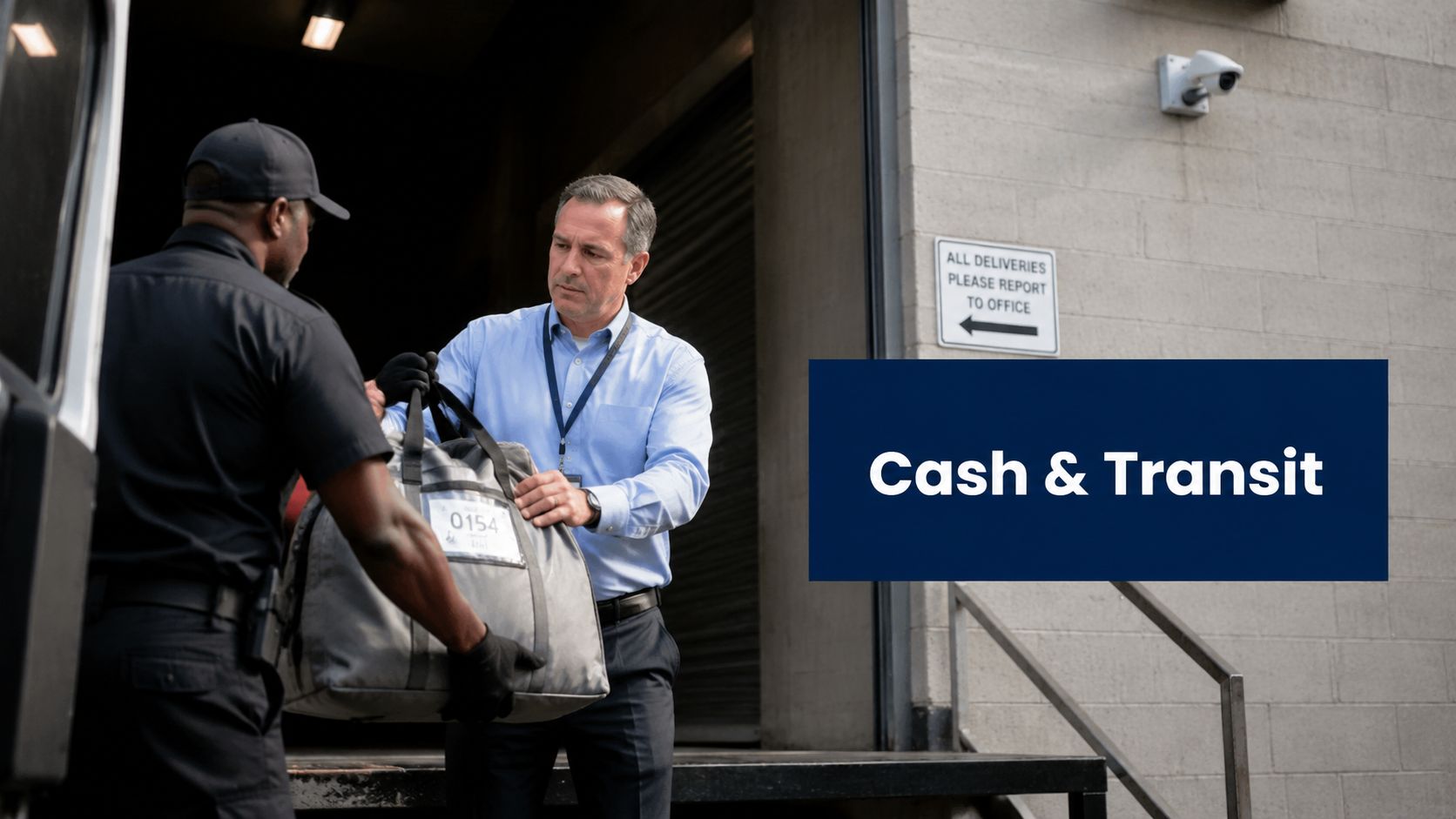
A retail manager can do everything right inside the store and still leave a gap at the curb. The cash gets counted, the bag is sealed, the vendor arrives, and everyone assumes responsibility has shifted cleanly. In practice, the vulnerable moment is often the short stretch between the safe, the loading point, and the vehicle.

For a property manager, cash-in-transit security means managing the movement of cash, valuables, and sensitive documents between your site and a bank, processing center, or secure destination. That can include armored vehicle pickup, escorted movement, cash staging inside a back-of-house area, and the handoff point where your staff, your security team, and the vendor all intersect.
The handoff is your risk point
The easiest mistake is assuming the vendor owns the whole problem once the vehicle arrives. The property still controls access, lighting, visibility, interior circulation, and who can watch the transfer. If a site's loading route is exposed, cluttered, or easy to box in, the risk sits with the property long before the bag reaches the truck.
Practical rule: if the transfer point is visible, predictable, and poorly controlled, it's part of your security perimeter.
That's why cash and transit planning has to be property-specific. A shopping center, a condo tower, a medical office building, and a small retail plaza don't need the same procedure, but they all need a defined route, a defined receiving point, and a defined chain of accountability. The vendor may move the cash, but the site manager still owns the conditions that make the movement safe or unsafe.
Key Threats and Liability Exposures During Cash Movement

Cash movement creates a narrow window where a site is exposed, and that window is where most operational mistakes show up. The physical bag may be small, but the risk around it is not. The FATF's study on physical cash transportation shows documented cases ranging from USD 3 million to EUR 3.4 billion, which is a good reminder that transit isn't a low-stakes back-office task, it can involve very large and high-risk movements (FATF study on physical cash transportation).
Where the risk usually comes from
The threats are usually practical, not dramatic. Internal theft, sloppy access control, a vendor that can be observed too easily, or a driver who gets pinned at a predictable point can all create a bad outcome without anyone forcing a front-page scenario.
- Internal theft or collusion: one employee knows the schedule, the route, and the handoff habits. That knowledge matters.
- External robbery during staging: the load point is visible, or the transfer takes too long in a public or semi-public area.
- Vehicle ambush at access points: a route that looks routine to staff can also look routine to someone planning an attack.
- Social engineering: people who handle cash can be pressured into confirming times, exits, or vendor identity if verification is weak.
Liability is often shared, not shifted
Property managers sometimes treat the CIT contract like a full transfer of liability. It isn't. The vendor may carry its own obligations, but the property can still face exposure if the site layout, staffing, training, or access control made the incident easier. Insurance carriers also look closely at whether procedures were followed, not just whether a vendor was present.
The handoff zone is the most important place to document. Who opened the door, who verified the crew, who handled the bag, where the transfer occurred, and who had line-of-sight all matter when a claim or dispute starts. If those answers are fuzzy, the property inherits confusion along with the loss.
Cash transit failures usually begin as process failures. The loss is the last step, not the first.
Regulatory Requirements and Insurance Considerations
Compliance around cash movement starts with the basics and gets more demanding once people, vehicles, and handoff points are involved. Safe Work Australia's cash-in-transit guide says these operations involve workers moving cash by vehicle or by foot, and that the risk process should identify hazards such as working alone, transport, parking, lighting, traffic, site access, and site exits, then control them through tested emergency procedures, maintenance of vehicles and PPE, and fatigue-management processes (Safe Work Australia cash-in-transit guide).
For property managers, the key point is simple. If your staff touch the cash, stage the transfer, escort the route, or receive the vendor, your process needs to be documented as carefully as any other high-risk site activity. Training, incident logs, and daily reports are not paperwork for the drawer, they're the record that shows the property used a consistent control process.
What to verify before the first pickup
- Licensing and bonding: confirm the vendor is properly licensed and bonded for the service it's providing.
- Training records: ask how officers and handlers are trained on the specific site workflow.
- Insurance scope: verify whether the vendor policy and your own property policy leave any gap around loss, injury, or site-based negligence.
- Incident documentation: make sure the vendor can produce clear activity reports, exception reports, and loss documentation.
If you want a broader reference point for your own coverage review, compare property manager coverage alongside the way your cash-handling exposure is written. That conversation is usually more useful when you already know which parts of the workflow belong to your staff and which parts belong to the vendor.
Documentation matters even after the incident. Internal investigations, claim files, and vendor disputes all go faster when there's a timestamped record of who was present, what was observed, and what was done next. If your team needs a structure for post-incident follow-up, the process described in Overton Security's insurance claim investigations resource is a practical place to compare documentation habits against your own.
Armored Transport Versus Escorted Transit Services

Not every site needs an armored truck, and not every pickup should happen in a standard vehicle with a uniformed escort. The better choice depends on risk, volume, access conditions, and how exposed the handoff point is. The U.S. cash logistics market was estimated at USD 7,264.4 million in 2022 and is projected to reach USD 13,296.2 million by 2030 at 7.8% CAGR, with CIT as the largest U.S. service segment at 38.22% revenue share in 2022, which shows how much the service mix still matters operationally (market estimate).
Armored transport fits higher exposure
Armored transport is the right fit when the volume is high, the site is exposed, or the cash has to move through a public-facing environment that's difficult to control. The strength of the model is physical protection, controlled storage, and a more hardened transfer process.
That said, it's not a universal answer. Armored service adds cost, more visible security, and sometimes more scheduling complexity. It works best for larger retail centers, banks, ATMs, and properties where the risk profile justifies the added structure.
Escorted transit fits lower volume and tighter budgets
Escorted transit is more flexible. It can work when the cash volume is smaller, the route is short, and the property has strong internal controls already in place. For some HOA collections, small office buildings, and lower-risk retail environments, escorted movement may be enough if the route, timing, and staff roles are tightly defined.
The Ford Transit platform's 2025 specs show how much secure movement depends on balancing mobility and capacity, with the base Transit line-up offering a 3.5 L EcoBoost V6 delivering up to 310 hp and 400 lb-ft of torque (Ford Transit technical specifications). In practice, that trade-off matters because not every secure transfer needs a heavily fortified vehicle, but every transfer does need a defined process.
A simple way to decide
- Use armored transport when the site is high-volume, the transfer point is public, or prior incidents suggest heightened risk.
- Use escorted transit when the amount is lower, the route is controlled, and internal procedures are already strong.
- Escalate service when a property starts seeing repeated access issues, staff exposure, or unreliable handoff conditions.
For a property manager who wants a more service-specific reference, Overton's armored truck services show how CIT is framed as scheduled pickup and delivery of currency, coin, receipts, and similar items between a business location and a secure destination.
Risk Mitigation Technologies That Strengthen Cash Transit

Modern cash movement works best when the site, the vehicle, and the reporting layer are connected. A camera with no route visibility helps only so much. A GPS trace with no site control helps only so much. What reduces risk is the combination of physical hardening, controlled access, location tracking, and real-time supervision.
The stack that actually helps
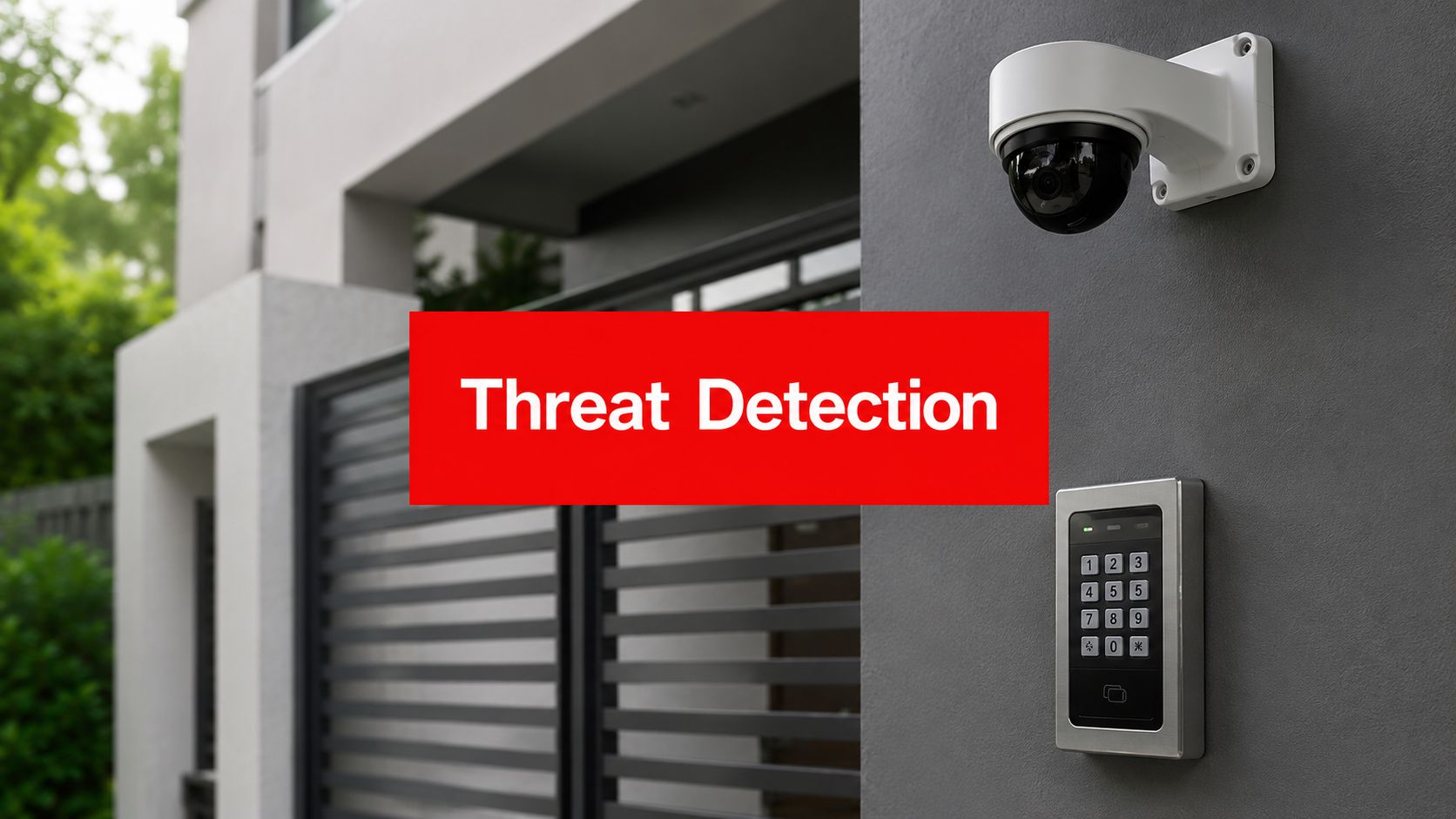
CCTV should cover the loading zone, the approach path, and the cash room or staging area. That footage doesn't stop an incident by itself, but it gives you a clean record of who approached, where the transfer occurred, and whether the site procedure was followed.
GPS tracking and geofencing add another layer. They tell the manager whether the vehicle or officer is where they're supposed to be, and they create a record that's useful if a pickup is delayed or a route changes unexpectedly. A Security Operations Center can then watch for exceptions, send escalation notices, and keep the incident trail intact.
For container security, practical sealing matters too. If you're looking at tamper-evident methods and cargo seal options, Quickfit Container Accessories cargo seals are a useful example of how physical control and documentation can work together in transit workflows.
How the layers fit together
- Physical hardening: reinforced doors, secure loading doors, and controlled staging zones.
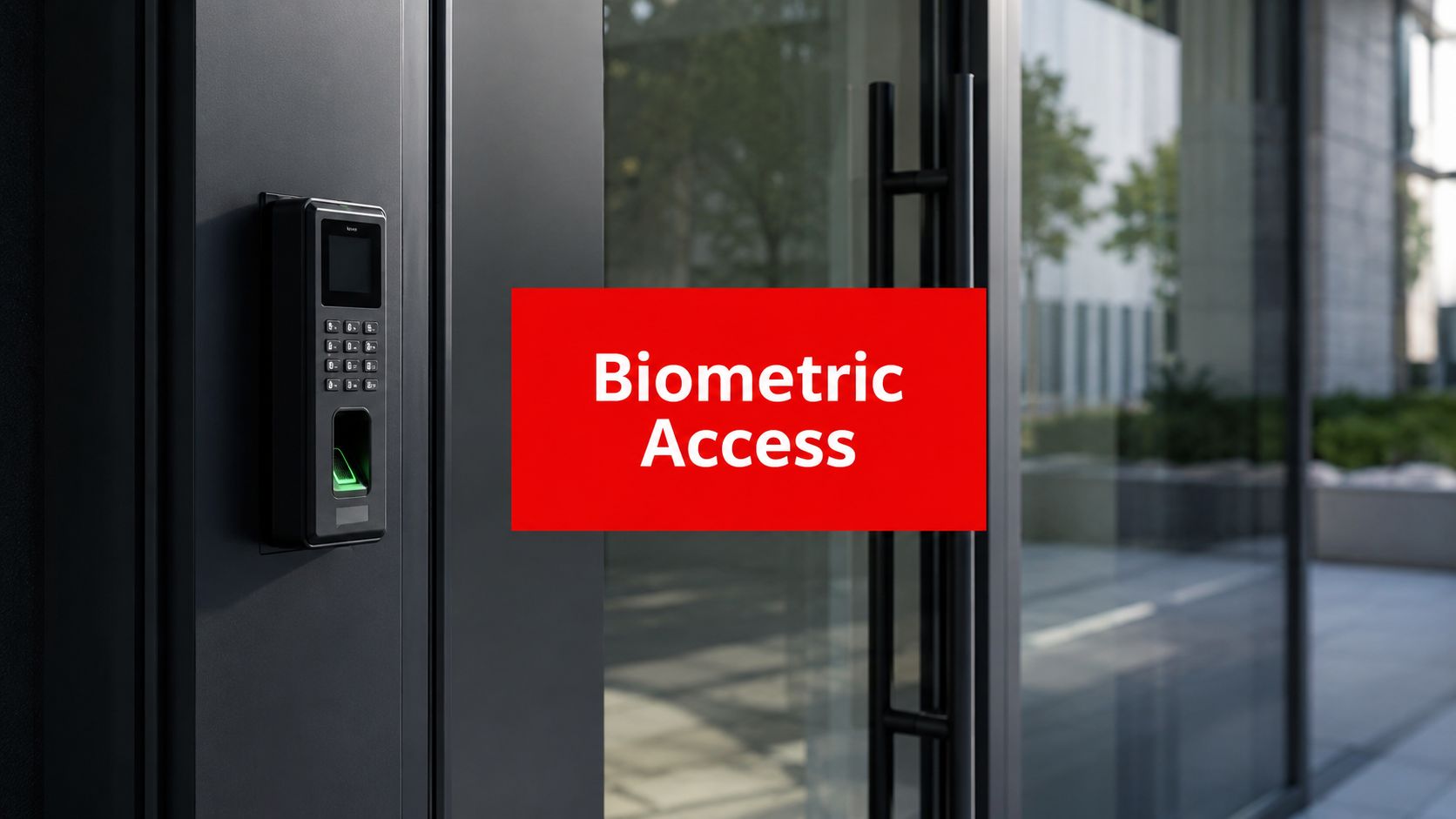
- Electronic access control: carded entry, logged access, and restricted back-of-house movement.
- GPS and geofencing: vehicle visibility and route discipline.
- Real-time monitoring and alerts: SOC oversight, exception handling, and documentation.
The market is still sizable enough to justify serious process design. Independent research estimates the worldwide CIT services market at USD 18.4 billion in 2024 and projects growth to USD 27.6 billion by 2033 at 4.6% CAGR (global market estimate). That growth tells you something practical, too. Properties are still using cash, so the right question is how to move it with more accountability, not whether to ignore the risk.
If your team wants to see how reporting fits into a broader oversight model, Overton Security's security analytics platform is the kind of toolset managers can compare against their own reporting needs.
How to Evaluate and Select a Cash Transit Vendor
Price matters, but it shouldn't be the first filter. A low-cost vendor that can't explain its training, reporting, or escalation process can create more exposure than it saves. If your site handles cash regularly, the vendor interview should feel like a risk review, not a sales call.
Use a structured comparison
| CIT Vendor Evaluation Criteria | What to Look For | Red Flags |
|---|---|---|
| Experience and track record | Clear history with similar property types | Vague references, no relevant site examples |
| Officer training and retention | Defined onboarding, refresher training, stable staffing | High turnover, weak supervision |
| Reporting transparency | Timestamped logs, incident detail, quick access to records | Missing reports, delayed explanations |
| Oversight and account management | Hands-on management, clear escalation paths | No clear account owner, slow response |
| Insurance and bonding | Adequate coverage for the service and site risk | Incomplete proof of coverage |
| Custom post orders | Site-specific route, timing, and handoff rules | One-size-fits-all procedures |
| Exit terms and service levels | Clear SLA language and off-ramp terms | Lock-in clauses, vague performance standards |
If you already manage vendors across a property portfolio, Vendmoore Enterprises' guide to vendor management for offices is a useful lens for building the same discipline into cash transport oversight.
Ask the questions that reveal how they operate
- Who owns the account day to day? You want a real contact, not just a switchboard.
- How are officers supervised? A vendor's support model matters as much as its vehicles.
- What happens after an exception? Delays, missed pickups, and access problems should have a documented response path.
- Can the service adapt to your site? Loading docks, residential access, and retail closing procedures are not interchangeable.
Practical rule: if the vendor can't describe your property's handoff in plain language, they don't understand your risk yet.
The contract should match the operating reality. Look for service levels that cover response expectations, documentation, site changes, and exit rights. A good vendor makes the process easier to manage, not harder to audit.
How Overton Security Supports Cash and Transit Operations
Overton Security's model fits the operational side of this work because it treats movement, reporting, and supervision as one system. With 26 years of experience, a low manager-to-client ratio, and a focus on officer retention, the company is set up to give property teams more hands-on account oversight than a high-turnover provider usually can. That matters when the route, the dock, and the paperwork all have to line up.
Its 24/7 Security Operations Center adds live monitoring, dispatch support, and escalation if a pickup or escort needs attention. The GPS-enabled Guard Tour Management System gives time-stamped records, and customized post orders help officers follow site-specific handoff rules instead of relying on generic instructions. Overton's approach is also built around keeping professional officers supported, which reduces the kind of inconsistency that often creates gaps in cash-handling service.
For property managers, the value is straightforward. You get a documented process, a visible chain of accountability, and a vendor relationship that's built around service consistency rather than volume.
If your property handles cash pickups, escorted transfers, or site-based handoffs, Overton Security can help you build a clearer, more accountable process around them. Visit Overton Security to review cash transit support, compare service options, and start a conversation about what fits your site.