
Does the term San Diego facility management bring to mind a simple list of maintenance and repair tasks? For many property managers and HOA board members, that’s a common starting point. However, true facility management is a much broader, more strategic discipline—it’s the art of making a property work seamlessly for the people who rely on it every day. It’s the behind-the-scenes effort that coordinates a building’s structure, its complex systems, and the essential services needed to keep it safe, efficient, and valuable.
The Art of Managing Your San Diego Property
Think of your commercial building or residential community as a sophisticated machine. It has countless moving parts—HVAC systems, electrical grids, security protocols, landscaping, and cleaning schedules. Facility management is the discipline of ensuring every one of those parts works in perfect harmony. It’s the invisible force that keeps a property running smoothly, protecting both its physical structure and the people inside.
In a competitive market like San Diego, this role is critical. Excellent facility management directly impacts your bottom line by preserving property value, reducing operational risks, and creating a safe, welcoming environment that attracts and retains high-quality tenants or residents.
More Than Just a Checklist
It's a common mistake to view facility management as a long list of reactive repair tickets. That approach leaves you constantly playing catch-up. True facility management is proactive and strategic; it's about planning for the future and optimizing how things run right now, not just fixing what breaks. It means bringing all essential services together under one cohesive plan.
This integrated approach treats seemingly separate functions—like maintenance and security—as two sides of the same coin. For instance:
- A brightly lit parking garage (a maintenance task) is also a powerful crime deterrent (a security benefit).
- Properly working access control systems (security) prevent unauthorized entry, which in turn reduces wear and tear on common areas (maintenance).
- Clear communication between janitorial staff and security officers can help spot and resolve safety hazards before an incident occurs.
An Integrated Strategy for Success
A key part of modern San Diego facility management involves using tools like Building Information Modeling (BIM) throughout a building's lifecycle. As experts on BIM for Facility Management explain, this digital-first approach helps managers visualize and coordinate everything from initial construction to daily operations.
The goal is simple but powerful: to create an environment where every system and service works together to achieve operational excellence. When maintenance, security, and tenant services are aligned, you not only protect your asset but also enhance its long-term value.
This shift from siloed tasks to a unified strategy is what separates a well-managed property from one constantly bogged down by surprise costs and disruptions. When you view your property through the lens of integrated facility management, you can build a more resilient, efficient, and secure operation. This comprehensive view is the foundation of effective San Diego site management and is the best way to protect your investment for years to come.
The Pillars Of Facility Management
To truly understand San Diego facility management, it helps to divide a manager’s extensive duties into two main categories. You can think of it like running a household: some jobs are about the house itself—the pipes, the wiring, the roof—while others are about the people living inside. For commercial and residential properties, we call these Hard Services and Soft Services.

Understanding this distinction is the first step for property owners and HOA boards to see the whole picture. It quickly reveals where your current strategy might have gaps and makes it clear why bringing in specialized partners is often the smartest move for complete coverage.
Let’s take a closer look at each one.
Hard Services: The Bones Of The Building
Hard Services are all about the physical, tangible systems that are integrated into the building. These are the nuts-and-bolts components that are often required by law and are essential for the property to function safely and legally. If it's part of the core infrastructure you can touch, it's almost certainly a hard service.
These jobs are technical by nature and demand certified professionals for installation, maintenance, and repairs. Cutting corners here isn't just a poor choice—it can lead to serious safety hazards, system failures, and significant repair bills down the road.
Key responsibilities typically include:
- HVAC Systems: Keeping the heating, ventilation, and air conditioning running smoothly is essential for comfort and air quality. Following a comprehensive commercial HVAC maintenance checklist is a perfect example of proactive hard service management.
- Electrical Systems: This covers the entire grid, from basic lighting and power outlets to emergency backup generators and ensuring compliance with all electrical codes.
- Plumbing and Water Management: This involves the constant work of managing pipes, drainage, and water supplies to prevent leaks and ensure uninterrupted service.
- Fire Safety Systems: A critical, legally mandated service that involves regular checks and maintenance of smoke alarms, sprinkler systems, fire extinguishers, and clear emergency exits.
- Structural Maintenance: This is about protecting the building's integrity—everything from the foundation and roof to the walls and windows.
Soft Services: The Human Experience
While Hard Services keep the building standing, Soft Services are focused on the people inside it. These are the tasks that make the property more secure, comfortable, and welcoming for everyone—tenants, employees, and visitors alike.
They may not always be legally mandated like a fire system, but they are absolutely essential for ensuring tenant satisfaction and retention.
In fact, Soft Services are often the first thing people notice. A spotless lobby, well-kept grounds, and a visible security officer all shape the perception of a property's quality and safety.
Common Soft Services responsibilities include:
- Security Services: This is a vital area, covering everything from on-site security officers and mobile patrols to managing access control systems and monitoring surveillance cameras.
- Janitorial and Cleaning: This includes daily cleaning of common areas, waste and recycling management, and specialized deep sanitation services.
- Landscaping and Groundskeeping: Maintaining lawns, gardens, and outdoor spaces boosts curb appeal and creates an environment people want to be in.
- Mailroom Management: In larger buildings, an organized system for mail and package delivery is a must-have service for tenants.
- Concierge and Reception Services: A professional, reassuring presence at the front desk can dramatically improve the daily experience for everyone entering the building.
To help clarify the roles, this table breaks down the key differences between the two categories.
| Service Category | Definition | Examples |
|---|---|---|
| Hard Services | Services related to the physical fabric and systems of the building; often legally required. | HVAC maintenance, electrical system repairs, plumbing, fire alarm testing, roof repairs. |
| Soft Services | Services focused on the people within the building to improve comfort, safety, and experience. | Security patrols, janitorial cleaning, landscaping, reception services, mail management. |
Ultimately, a well-run property doesn’t treat these as separate to-do lists.
A top-tier management strategy understands that Hard and Soft Services are two sides of the same coin. A burnt-out exterior light (a hard service issue) instantly becomes a security risk (a soft service problem).
When you see facility management through these two lenses, it becomes clear that a winning approach requires deep expertise in both the technical and the human side of running a property.
Navigating San Diego's Unique Challenges
Managing a facility in San Diego is a significant responsibility, and it comes with a unique set of local hurdles. To succeed, San Diego facility management requires a deep understanding of the local landscape—from our complex regulatory environment to the security concerns that come with being a major international hub.
The most effective facility directors and property managers don't see these as roadblocks. Instead, they view them as variables to be managed with a sound strategy and the right professional partners.
The Regulatory Tightrope of Title 24
One of the biggest operational factors for any California facility is the state's demanding energy efficiency standard, known as Title 24. These codes are among the most stringent in the country, dictating everything from lighting and HVAC systems to insulation and window glazing.
This creates a constant balancing act for facility managers. Compliance isn't a suggestion—failing to meet these standards can lead to fines and project delays. The primary challenges include:
- Retrofitting Older Buildings: Many of San Diego's commercial properties were built long before current codes existed, which makes upgrading them both complex and expensive.
- Keeping Up with Changes: Title 24 is updated approximately every three years, meaning managers must remain vigilant to ensure their properties stay compliant.
- Balancing Cost and Efficiency: While the long-term energy savings are beneficial, the upfront investment required for compliant equipment can strain operational budgets.
Security in a Major Border City
San Diego’s geography creates security challenges that are unique in both scale and nature. As a major metropolitan area adjacent to an international border, local properties can face a higher risk of theft, trespassing, and vandalism.
This reality makes proactive security a mandatory component of any facility management plan. Managers must consider threats to a wide range of assets, from raw materials at a construction site to valuable inventory in a commercial warehouse. For anyone managing a logistics hub, a solid security plan is mission-critical. You can explore these specific risks in our guide on warehouse security in San Diego.
A secure perimeter and visible deterrence aren't just amenities; they are fundamental parts of risk management that protect the core value of any San Diego property. Overlooking them can lead to significant financial losses and operational disruptions.
The Growing Burden of Deferred Maintenance
Beyond regulations and security, San Diego facility managers are also dealing with the pressure of rising operational costs and aging infrastructure. This is a challenge across the entire city, not just in the private sector. The City of San Diego itself faces a massive maintenance backlog for its public buildings.
A recent performance audit highlighted this issue. While the City owns over 1,600 facilities valued at more than $7.2 billion, its estimated maintenance needs have grown past $1 billion. The problem is compounded by a 46% increase in California construction costs between fiscal years 2018 and 2024, far outpacing the increase in facilities staff. You can see a full breakdown in the report on San Diego's public facility maintenance challenges.
This public-sector struggle mirrors what many private facility managers experience: being asked to do more with less while costs for labor, materials, and services continue to climb. In this environment, strategic partnerships become essential. By teaming up with expert providers for specialized services like security, managers can confidently delegate critical functions, allowing them to focus on core operations without sacrificing quality or safety.
Why Security Is a Cornerstone of Great Facility Management
Effective San Diego facility management is about much more than fixing leaks and keeping the lights on. Those tasks are essential, but they are only one piece of the puzzle. The true foundation of a well-run property—the element that protects the entire asset—is proactive, professional security.
Too often, security is treated as a separate line item or an add-on expense rather than a core part of the operational strategy. A dedicated security presence isn't just a cost; it’s an investment that directly supports a facility manager's key goals: protecting property value, ensuring business continuity, and creating a safe environment.
More Than Just a Guard at the Gate
A professional security team acts as a force multiplier for the facility manager. They are your eyes and ears on the ground, providing crucial information and addressing potential issues before they escalate into disruptive or costly emergencies. This proactive partnership is where the real value lies.
A well-secured property experiences far fewer instances of vandalism, theft, and trespassing. This isn't just about feeling safer; it translates into real dollars saved and smoother operations for you.
A strong security posture is one of the most effective ways to protect your asset. It deters unwanted activity, minimizes liability, and creates a sense of stability that tenants and visitors can feel, which in turn enhances the property's reputation and long-term value.
Connecting Security to Business Outcomes
When you integrate a professional security partner into your facility management plan, you begin to see measurable returns. Your operations shift from being reactive—constantly addressing incidents—to proactive, where risks are identified and mitigated before they can cause harm.
Here’s how dedicated security services drive those positive results:
- Reduced Liability and Insurance Costs: Consistent patrols and detailed digital incident reports create a clear record of due diligence. This commitment to safety can often lead to lower insurance premiums and reduces your exposure to liability claims.
- Increased Property Value: A property known for being safe is more attractive to potential tenants and buyers. This reputation is a powerful market differentiator that contributes to higher occupancy rates and a healthier bottom line.
- Protection of Physical Assets: Mobile patrols, on-site security officers, and reliable access control systems create layers of defense against theft and property damage, which is critical for construction sites and retail centers.
- Enhanced Tenant and Employee Retention: People want to live and work where they feel safe. A visible, professional security presence is one of the most effective ways to provide that peace of mind, leading to happier tenants and lower turnover.
An effective security partner understands that their role is to support your mission. They provide the real-time data and on-the-ground support you need to make smarter, faster decisions. By handling incidents, deterring threats, and meticulously documenting everything, they free you to focus on your other responsibilities. You can learn more about how a tailored strategy can safeguard your assets by exploring our approach to San Diego property security.
Ultimately, security isn't just about preventing negative events. It’s about building a positive and stable environment where business can thrive. It is the cornerstone that makes every other part of facility management stronger.
Creating Your Integrated Facility and Security Plan
Knowing that security is a core part of successful San Diego facility management is one thing; putting that knowledge into practice is another. An effective strategy doesn't treat security and facility operations as separate departments that only communicate when something goes wrong. Instead, it weaves them into one cohesive plan where each side supports and informs the other.
This integrated approach shifts your entire operation from reactive to proactive. It’s about building a system where your maintenance crew, management team, and security officers all work from the same playbook, guided by shared goals and real-time information. The result is a smarter, more resilient property.
Step 1: Conduct a Unified Risk Assessment
The first step is to break down the silos. A traditional facility assessment might focus on an aging HVAC unit, while a separate security assessment looks at access points. An integrated assessment examines how these areas overlap and influence one another.
Instead of running separate evaluations, bring your key people together to walk the property—this includes the facility director, maintenance lead, and your security account manager.
- Identify Overlapping Risks: Consider a poorly lit staircase. That's a maintenance issue (a burned-out bulb) but also a major security risk (a place for concealment or a trip-and-fall hazard).
- Analyze Vulnerabilities Together: Discuss how a malfunctioning gate (maintenance) undermines your access control (security), or how a lack of surveillance in a remote parking area creates both safety and liability problems.
- Prioritize Based on Impact: When you evaluate risks holistically, you get a clearer picture of which issues pose the greatest threat to both your operations and your bottom line.
Step 2: Establish Seamless Communication Protocols
Once you have a shared map of the risks, you need a clear and reliable way for everyone to communicate. In an integrated model, information must flow freely and instantly between your facility and security teams. This ensures that small observations don't fall through the cracks and become larger problems.
The core idea is simple: every team member is a potential sensor. A maintenance tech who spots a propped-open door or a security officer who notices a water leak should have an immediate way to report it to the right person.
This is where modern technology makes a difference. Using GPS-enabled systems, an officer can instantly log a maintenance issue—like a broken fence or a flickering light—complete with a time-stamped photo and the exact location. That digital report is immediately sent to the facility manager, turning a potential security gap into a documented work order in seconds.
Step 3: Leverage Centralized Oversight and Reporting
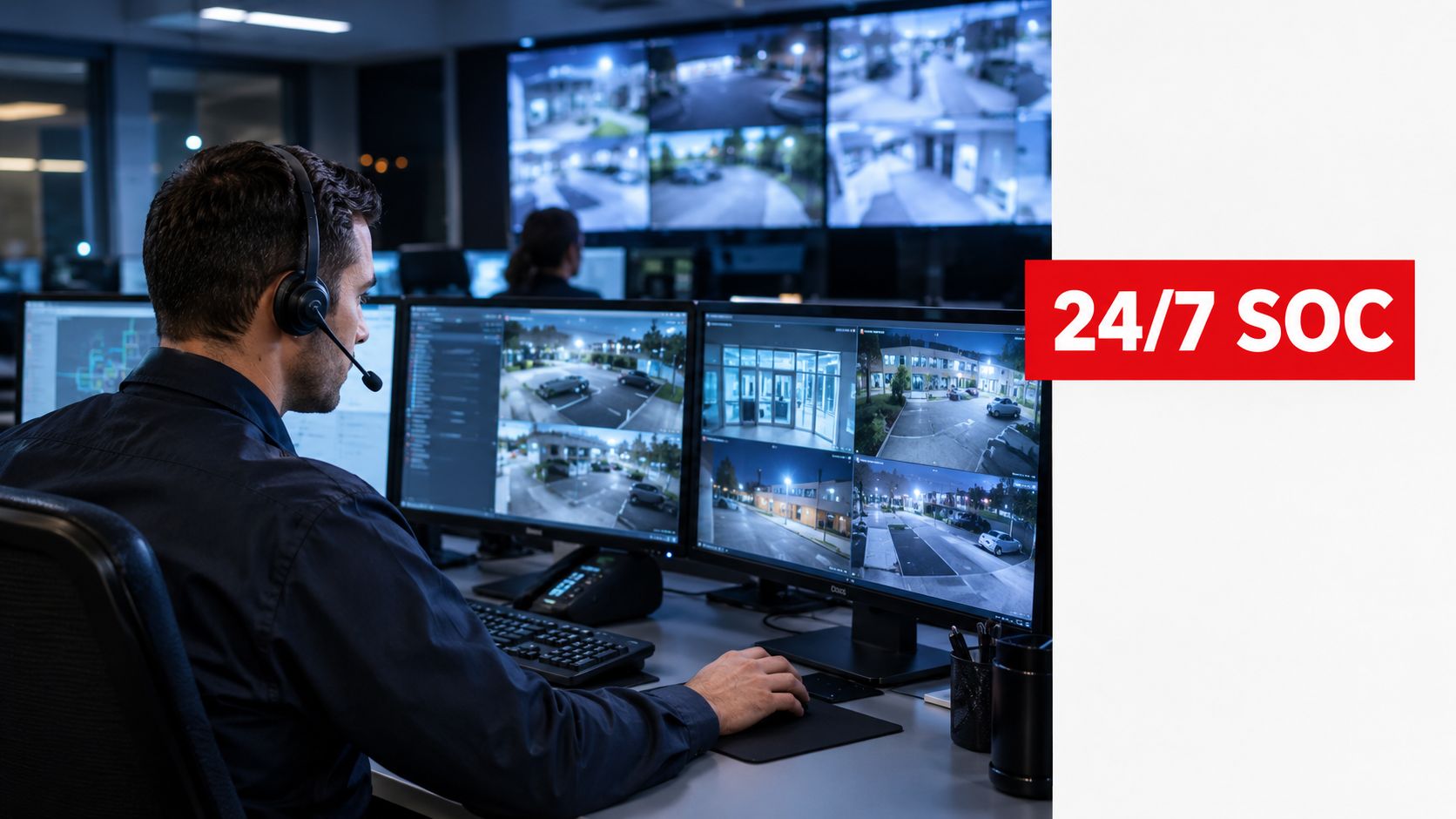
An integrated plan thrives on good data. A 24/7 Security Operations Center (SOC) can act as the nerve center for this information. It's not just for security incidents; it's a central hub that provides oversight for everything happening on the property after hours. This centralized command ensures every report, whether a security concern or a facility malfunction, is received, documented, and escalated correctly.
The infographic below illustrates how folding security into your facility plan creates a clear path from protection to value.
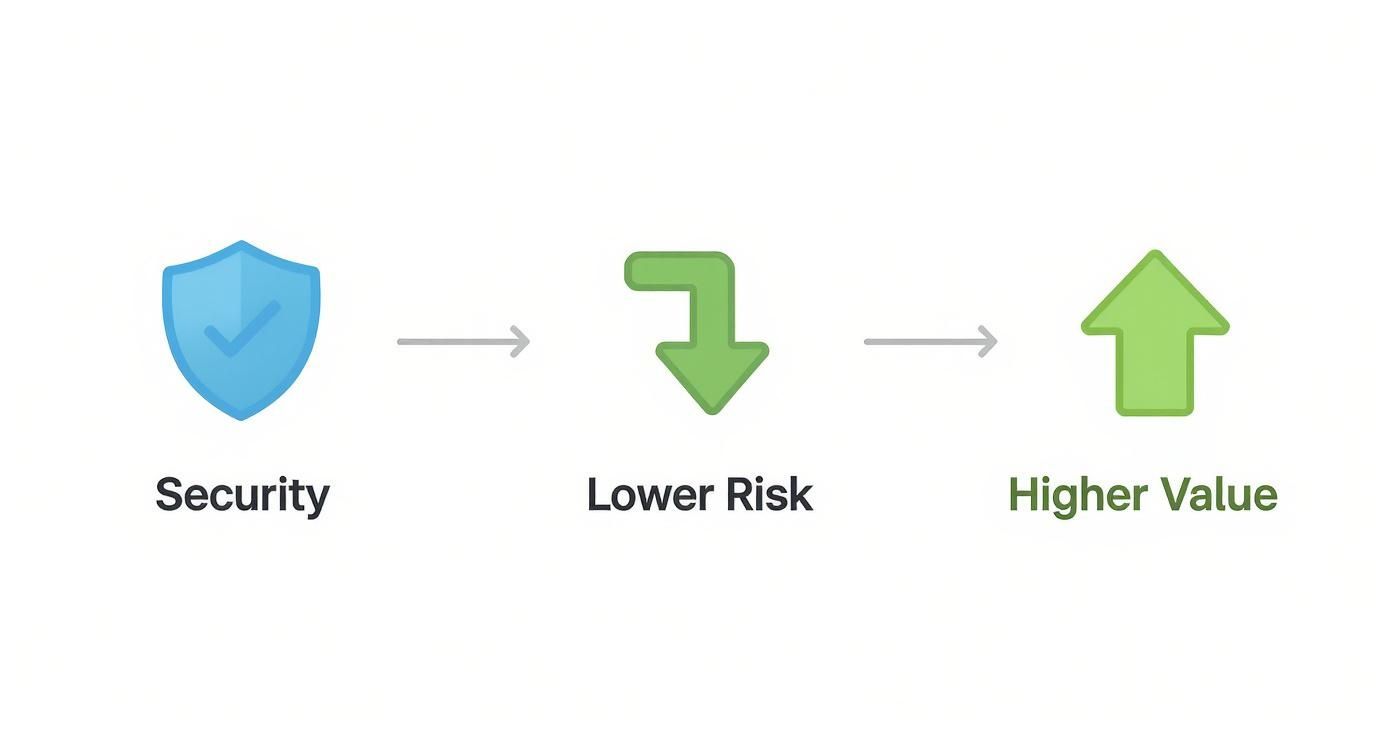
This process shows how a strategic security investment directly lowers operational risks, which in turn elevates the overall value of your asset. You can see this integration at a massive scale in public operations; for example, San Diego County's Department of General Services manages around 7.6 million square feet of property with a team that includes both maintenance engineers and security technicians. This proves how necessary a unified strategy is for managing a large, complex portfolio. You can find more details about how the county integrates these services on sandiegocounty.gov.
By merging facility operations and security protocols into one powerful strategy, you create a system of total accountability. It transforms your security provider from a simple vendor into a true strategic partner—one committed to the holistic protection and smooth operation of your property.
Choosing the Right Facility Management Partners
Your entire San Diego facility management strategy depends on the partners you choose. Every vendor, from the landscaping crew to your security provider, plays a role in protecting your asset and keeping it functional. Not all partners are created equal, especially in the security industry. Making the right choice here is foundational to your long-term success.
Many property managers are familiar with the industry’s “burn and churn” model, where security companies rely on high officer turnover. This inevitably leads to inconsistent service, missed patrols, and the constant hassle of retraining. It’s a cycle of unreliability that undermines your goals.
A true strategic partner operates on a quality over quantity principle, investing in their people so you get experienced, professional officers who know your property. This commitment to retaining staff is a clear indicator of a company that understands the value of consistency.
What to Look for in a Security Partner
When vetting security providers, it’s important to look past the price tag and examine their operational integrity. A reliable partner becomes an extension of your team, providing proactive support and transparency. The City of San Diego itself is facing an $11.87 billion infrastructure plan and numerous challenges, a stark reminder for private facility managers of the need for dependable partners who can manage their responsibilities without creating more problems. You can learn more about San Diego’s capital improvement challenges on sandiegocounty.gov.
Your security partner needs to provide clear, tangible proof of their value and accountability.
An effective security partner doesn't just fill a shift; they provide actionable intelligence and take ownership of their role in your property's success. Their performance should be a source of confidence, not a constant concern.
Your Vetting Checklist
Use this checklist to find a partner that meets the high standards your property deserves:
- Proven Local Track Record: How long have they been serving the San Diego market? Ask for references from properties similar to yours. A company with over 26 years of experience brings a deep-rooted understanding of local challenges.
- Low Manager-to-Client Ratio: If an account manager is stretched too thin, your property won't get the attention it needs. A low ratio is a sign of hands-on leadership and a commitment to quality service.
- Transparent Reporting Systems: Do they provide real-time, GPS-verified digital reports? You should have a clear window into every patrol, incident, and officer activity on your site.
- Commitment to Officer Retention: Ask about their training programs, benefits, and officer tenure. A company that invests in its people will provide you with more reliable and professional service.
Picking the right partners is the final, critical piece of the puzzle. When you prioritize accountability, experience, and a genuine commitment to quality, you're not just protecting your investment—you're building a team that will help it thrive.
Your Questions, Answered
Understanding the specifics of facility management helps clarify responsibilities and the importance of certain investments. Here are a few common questions from San Diego property owners and managers, with straightforward answers.
What Is the Main Difference Between Facility and Property Management?
It helps to think about it this way: a property manager focuses on the asset (the investment), while a facility manager focuses on the building (the physical space).
A property manager handles the commercial side of things—leases, rent collection, marketing open units, and managing the financial health of the property. Their work centers on tenants and income.
A facility manager, on the other hand, lives and breathes operations. They are the ones ensuring the HVAC system is functional, security systems are working, and the building is safe, compliant, and efficient for everyone inside.
How Can Integrated Security Actually Lower My Operating Costs?
It's easy to view security as just another expense. But smart, proactive security is an investment that can save you money in the long run. Consistent, professional patrols are one of the best ways to prevent problems, and prevention is always more cost-effective than reaction.
A dedicated security presence deters vandals, stops thieves, and keeps trespassers out. This prevents costly damage and theft before they happen. Beyond saving on repairs, this proactive stance reduces your liability risk from accidents or crime on your property, which can lead to a positive conversation with your insurance provider about lower premiums.
What Should I Look for in a San Diego Security Provider?
When vetting a security partner, look for real proof of reliability and commitment. Your must-have list should include:
- Deep Local Roots: You want a team that knows San Diego's unique challenges, not a national chain with a one-size-fits-all model.
- Airtight Digital Reporting: Insist on real-time, GPS-verified reports. You need total accountability and a clear picture of what's happening on your property.
- Happy Officers: A company that treats its people well has lower turnover. That means you get more consistent, experienced, and professional service from officers who care.
- Engaged Leadership: Ask about their manager-to-client ratio. A low ratio means your property gets the direct attention it deserves from senior staff.
Protecting your property comes down to choosing the right partners. With 26 years of on-the-ground experience in San Diego, Overton Security blends seasoned expertise with modern accountability to provide true peace of mind. To see how our security solutions can strengthen your facility management strategy, find out more at https://www.overtonsecurity.com.